Mbielu-mbielu-mbielu

Tradition: Congolese Mythology
Alternative Names: Animal with Planks Growing Out of Its Back
Category: Lizard


The Myth

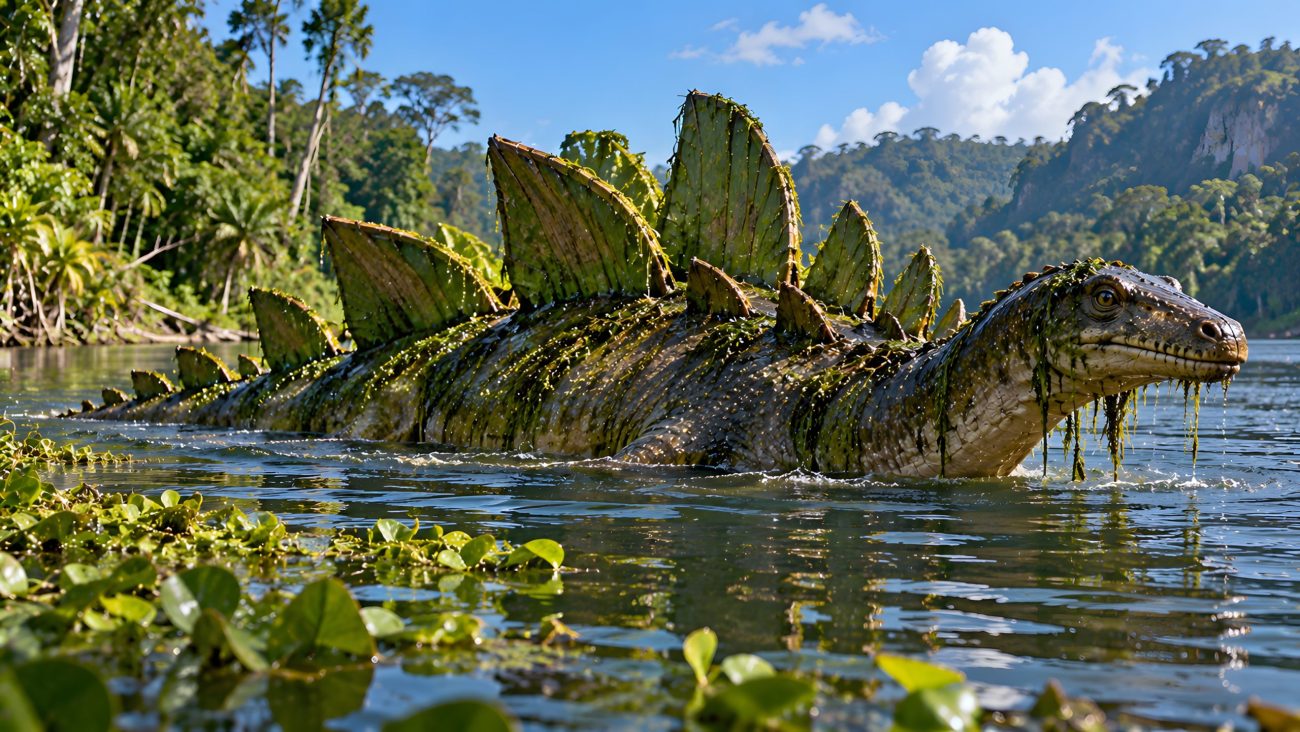
Mbielu-mbielu-mbielu is a mysterious aquatic creature reportedly sighted in the Likouala River and the surrounding rivers and lakes of the Likouala-Mossaka region of the Republic of the Congo. Its name means “the animal with planks growing out of its back,” referring to its most distinctive feature: a series of green, plank-like structures protruding from its back. Its complete appearance remains uncertain, and descriptions of the creature have not reached a consistent form.

The creature is said to spend much of its time submerged, with only its back visible above the water. Its protruding structures are often described as green, sometimes appearing covered in algae. Reports suggest that it is most active during the afternoon, when it may be seen moving through rivers and lakes before disappearing beneath the surface again.

Some have compared Mbielu-mbielu-mbielu to a surviving stegosaur, imagining that the structures on its back resemble the plates of prehistoric dinosaurs. Others have drawn similarities to the African cryptid Nguma-monene or suggested that it might be another form of Mokele-mbembe, although the latter is not usually described as having plates along its back. The creature remains an unconfirmed mystery associated with the waterways of Central Africa.


Sources

“Mbielu-mbielu-mbielu.” Wikipedia: The Free Encyclopedia. Wikimedia Foundation. Accessed October 21, 2026. https://en.wikipedia.org/wiki/Mbielu-mbielu-mbielu

Mokele-Mbembe

Tradition / Region: Congo Mythology, Bantu Mythology
Alternate Names: Mokèlé-mbèmbé
Category: Lizard, Lake dweller


The Myth

Deep within the rivers, swamps, and dense jungles of the Congo Basin, there are stories of a powerful and mysterious being known as Mokele-Mbembe. It is said to dwell in remote waterways—hidden lakes, slow-moving rivers, and thick marshlands where the water is dark and the vegetation nearly impenetrable.

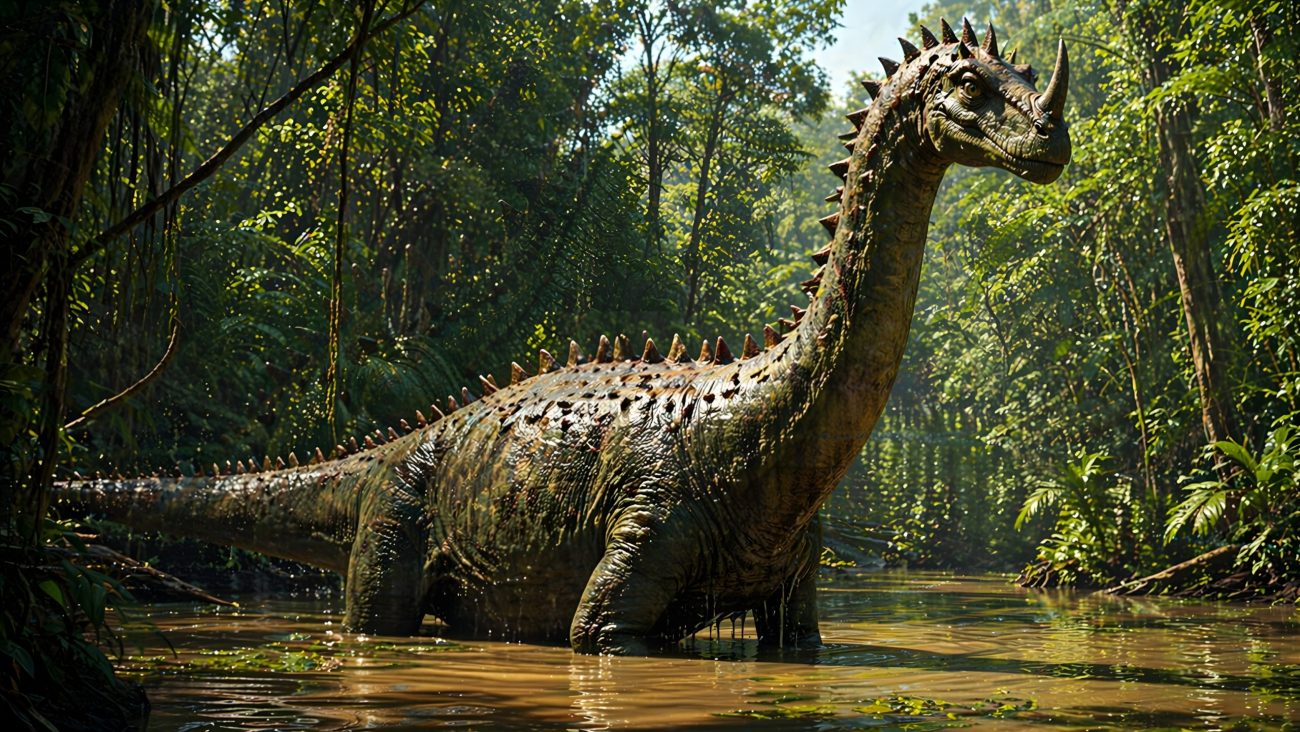
The creature is described as enormous, with a body comparable in size to an elephant or hippopotamus. Its form is unlike any ordinary animal: a heavy, muscular body, a long flexible neck, a small head often compared to that of a snake, and a long tail that moves through the water with great force. Its skin is smooth and dark, usually said to be reddish-brown or gray.

Mokele-Mbembe is not just large—it is territorial and feared.

It is said to guard certain stretches of river and will attack intruders, especially boats or canoes that pass too close. Those who encounter it risk being overturned into the water, where they may drown or disappear entirely. In many accounts, the creature destroys vessels without consuming the people, suggesting that its aggression is not driven by hunger but by dominance over its domain.

Unlike typical monsters, it is often described as herbivorous. It feeds on vegetation growing along riverbanks—particularly certain plants with large leaves or white blossoms. Despite this, it reacts violently to disturbance, making it one of the most feared beings of the waterways.

Mokele-Mbembe is said to live in deep, hidden places—caves carved into riverbanks or secluded bends in the water where the current slows. It moves between land and water, sometimes emerging during the day to feed, leaving behind paths where vegetation has been trampled or pushed aside.

Its presence is rarely seen directly. Instead, it is known through signs: massive disturbances in the water, sudden waves in otherwise still areas, broken plants along the shore, or the feeling that something enormous is moving just beneath the surface.

In some traditions, it is described almost like a guardian spirit of the river—an embodiment of its danger and power. It does not hunt humans for food, but it enforces boundaries. Those who respect the river may never encounter it. Those who intrude carelessly may not return.


Sources

Wikipedia contributors. (n.d.). Mokele-mbembe. In Wikipedia, from https://en.wikipedia.org/wiki/Mokele-mbembe