Sluagh

Tradition: Irish Mythology, Scottish Mythology
Alternative Names: Sluagh na Marbh, Sluagh, Host of the Dead, Fairy Host
Category: Fairy


The Myth

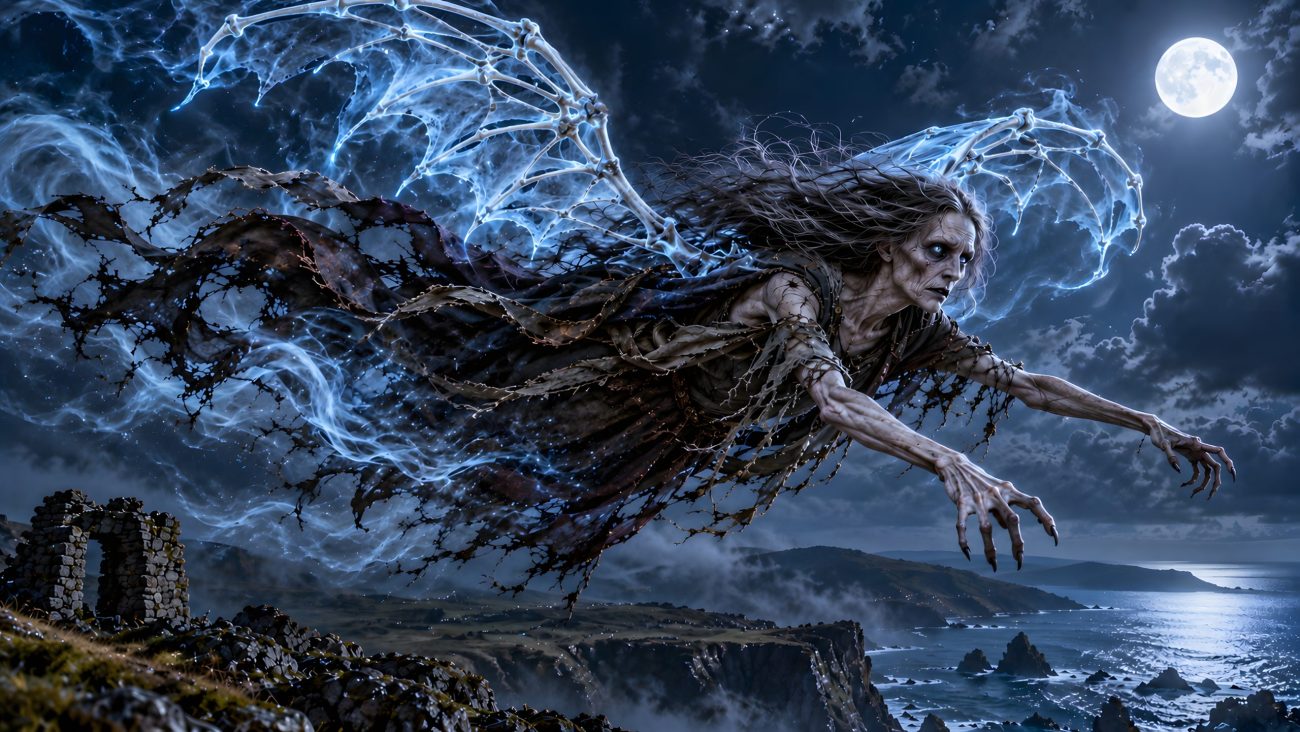
The Sluagh, or Sluagh na Marbh, were a supernatural host of the unforgiven dead who traveled through the skies in Irish and Scottish folklore. They were imagined as the souls of the dead flying together through the air, often forming a crescent-shaped mass resembling a great flock of birds. Their appearance was especially associated with the Western Isles of Scotland, where the gathering of the dead around Halloween was also understood as a gathering of the fairy host.

The Sluagh were capable of descending upon a person from any direction and carrying them away through the air. They could transport their victims enormous distances, flying from one island to another, and were generally feared as dangerous beings to mortals. Yet their nature was not entirely hostile: some traditions remembered the Sluagh rescuing people who had become trapped in dangerous clefts among the rocks. Their ability to appear suddenly from the sky and carry humans away made them an especially terrifying presence in the remote landscapes of the Scottish islands.

The Sluagh were therefore imagined as an airborne supernatural army, neither entirely belonging to the world of the living nor completely separated from the fairy realm. Their name means a “host,” “army,” or “crowd,” fitting their appearance as a great collective of spirits rather than a single creature. As the Sluagh na Marbh, the “host of the dead,” they represented the restless or unforgiven dead moving together through the night sky, particularly during the supernatural season surrounding Halloween.


Sources

“Sluagh.” Wikipedia: The Free Encyclopedia. Wikimedia Foundation. Accessed October 5, 2026.
https://en.wikipedia.org/wiki/Sluagh
Aos Sí

Tradition: Irish Mythology
Alternative Names: Aos Sídhe, Daoine Sí, Daoine Uaisle, Daoine Maithe, Sídhfir, Fair Folk
Category: Fairy


The Myth

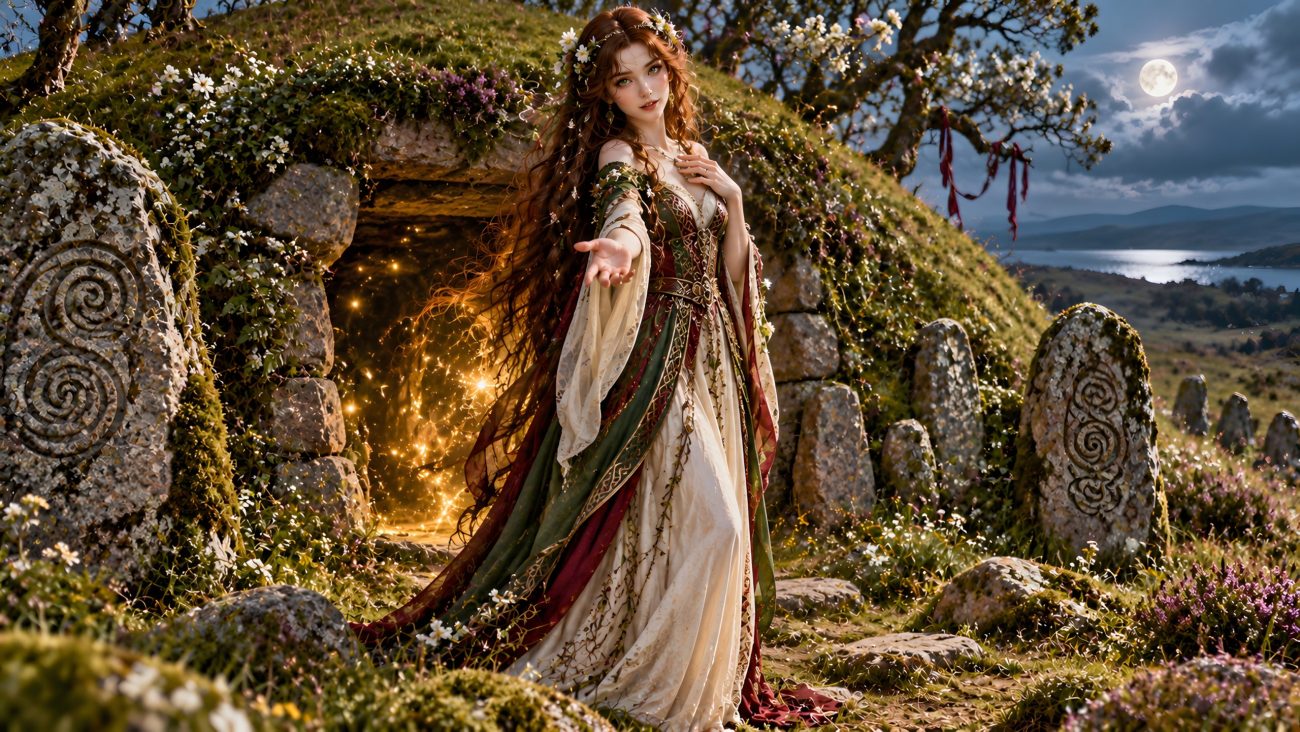
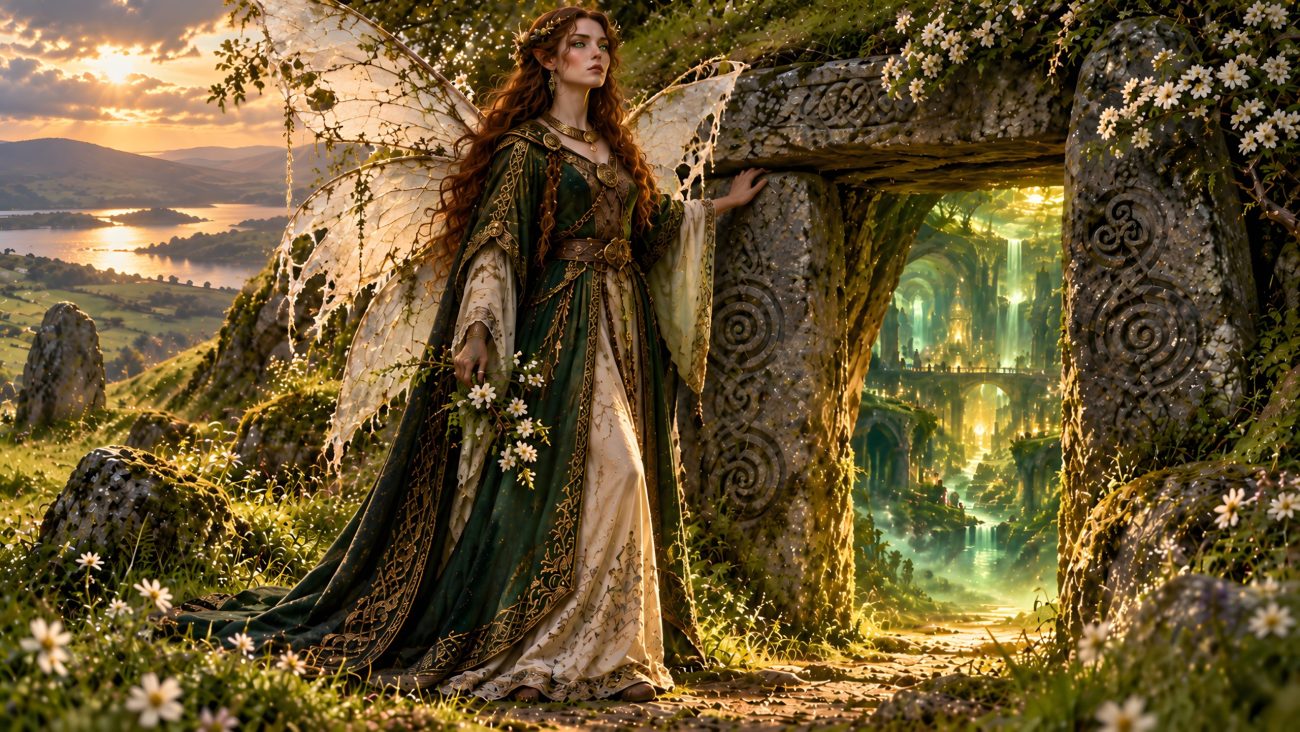
The Aos Sí are a supernatural people of Irish folklore, traditionally associated with the mysterious mounds and hills known as sí or sídhe. They are often described as extraordinarily beautiful beings, although they can also appear terrible or hideous. Their nature varies across tradition: they may be understood as descendants of the Tuatha Dé Danann, spirits of nature, divine beings, ancestors, or, in another tradition, fallen angels whose sins were not great enough to send them to Hell. In stories connecting them to the Tuatha Dé Danann, they withdrew into the Otherworld after the arrival of the Milesians and came to dwell beneath the earth in their hidden halls and fairy mounds.

The Aos Sí inhabit fairy hills, ancient mounds, fairy rings, sacred trees such as whitethorns, lakes, and forests. These places are their homes and are fiercely protected, and people who disturb them may suffer supernatural retaliation. They can drive intruders away, kidnap humans, or take children and replace them with changelings. Their presence is especially associated with liminal moments such as dusk and dawn, when the Otherworld is believed to come closest to the human world, as well as festivals such as Samhain, Bealtaine, and Midsummer. People therefore traditionally avoided offending them and left offerings to win their goodwill, often referring to them indirectly as the “Good Neighbours,” the “Fair Folk,” or simply “the Folk.”

The Aos Sí encompass many different supernatural beings and manifestations. The bean sídhe, or banshee, is a woman of the fairy mound whose wailing announces an approaching death, while other related beings include the fairy lover leanan sídhe, the fairy cat cat-sìth, the fairy dog cù-sìth, and the supernatural hosts known as the sluagh sídhe. The sídhe themselves are the mounds, halls, courts, or residences of these beings rather than the name of the people who inhabit them. Across Irish folklore, the Aos Sí therefore form a vast supernatural community inhabiting a hidden Otherworld that exists alongside the human world, capable of granting blessings and gifts but also bringing illness, misfortune, madness, or death when their boundaries are violated.


Sources

“Aos Sí.” Wikipedia: The Free Encyclopedia. Wikimedia Foundation. Accessed October 5, 2026. https://en.wikipedia.org/wiki/Aos_S%C3%AD


Gancanagh

Tradition: Irish Mythology
Alternative Names: Ganconer, Geancánach, Love-Talker
Category: Fairy


The Myth

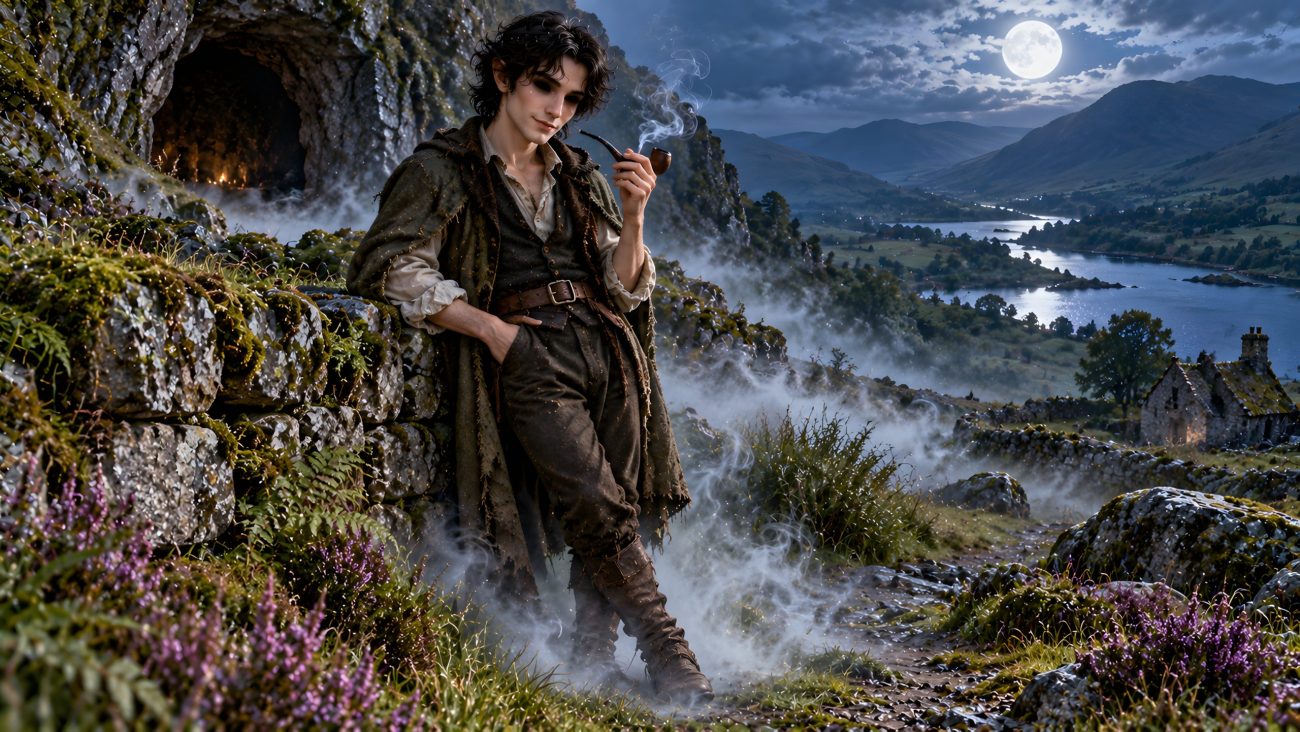
The Gancanagh was a male fairy associated with seduction and dangerous love. He was described as a small fairy man, sometimes resembling a leprechaun, and in one tradition as a handsome, dark-eyed being with no shadow. A mist accompanied his approach, and he was especially known for appearing to women such as shepherdesses and milkmaids. His name was associated with the idea of a “love-talker,” reflecting his ability to charm and seduce women. Meeting him was considered extremely unlucky, and a man who wasted his money pursuing women could be said to have met a Gancanagh.

The Gancanagh could also appear as one of a larger community of fairy people. Some traditions described little men living in caves under the leadership of Captain Dearg, the Red Captain. In one tale, a Gancanagh abducts a human woman, and her lover attempts to rescue her on Halloween night. He catches her at a crossroads, but she becomes trapped between him and the fairies and dies. In another story, a group of Gancanagh play hurling and carry away a widow’s cow into their fairyland beneath Loughleagh. The widow manages to recover the animal, but when someone nearby speaks the name of God, the cow suddenly sinks into the earth and disappears forever.

The most dangerous form of the Gancanagh was the seductive fairy who left his victims wasting away after their encounter. His beautiful appearance and enchanting manner concealed a deadly nature, and the sign of the cross could drive him away, though sometimes only after he had already ensnared his victim. Other traditions give the Gancanagh a more mischievous role, similar to that of a leprechaun: one was captured and forced to reveal where his gold was hidden, only to deceive the person holding him. Gancanaghs could also appear as fairy warriors, with Captain Dearg and his supernatural followers riding through the air.


Sources

“Gancanagh.” Wikipedia: The Free Encyclopedia. Wikimedia Foundation. Accessed October 5, 2026.


Pillywiggins

Tradition: English Mythology, Irish Mythology
Alternative Names: Pillywiggin
Category: Fairy


The Myth

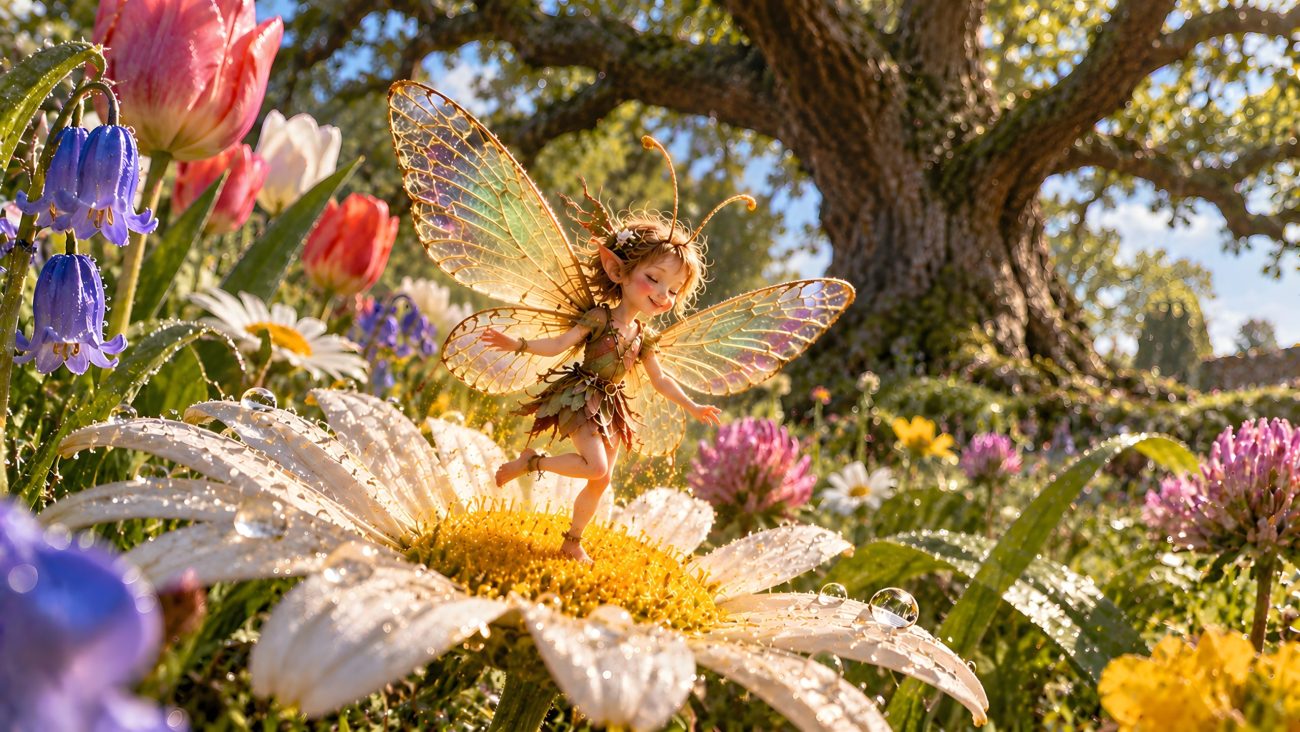
The Pillywiggins are extraordinarily tiny fairies and goblin-like nature spirits, usually only about a centimetre tall, though they are said to possess the ability to change their size. They have delicate wings and antennae resembling those of butterflies or dragonflies, and their appearance is often described as wonderfully beautiful. They live in groups and feed on dew and pollen. Their small size and winged appearance allow them to move easily among flowers, and they are sometimes imagined riding bees from blossom to blossom or appearing themselves as tiny as bees.

The Pillywiggins are guardians of small plants and flowers, living according to the rhythms of the vegetation they protect. They are particularly fond of gardens, parks, and wildflower meadows, especially places shaded by great oak trees. They spend their time dancing, playing, and moving among the flowers, largely ignoring human beings. Unlike many British fairies, they are not known for deliberately playing tricks on people, although they may occasionally appear at human celebrations such as weddings. Their strongest association is with spring flowers, and English gardening folklore particularly connects them with tulips.

The Pillywiggins are said to disappear during the colder part of the year, remaining dormant from November until spring, when the call of the cuckoo announces their return. They then resume their life among the plants, protecting the smallest flowers and celebrating the return of warmer weather. Their world is therefore closely tied to the seasonal life of the garden and forest: when the plants awaken, so do the tiny fairies that live among them.


Sources

“Pillywiggin.” Wikipedia: The Free Encyclopedia. Wikimedia Foundation. Accessed October 5, 2026. https://en.wikipedia.org/wiki/Pillywiggin


Leannán Sí

Tradition: Irish Mythology
Alternative Names: Leannan Sìth, Lhiannan Shee, Fairy Lover, Fairy Mistress
Category: Fairy


The Myth

The Leannán Sí was a beautiful fairy woman of the Aos Sí who sought the love of human beings. She would take a mortal as her lover and bind him to the fairy world through their supernatural relationship. Although she could appear as a beautiful and inspiring companion, her love was dangerous. Human lovers of the Leannán Sí were said to live short lives, even when their time with her brought extraordinary inspiration and creativity. A male Leannán Sí was also known in tradition, with at least one account describing such a spirit troubling a mortal woman.

The Leannán Sí became particularly associated with artists and poets, appearing as a supernatural source of inspiration. In the later tradition surrounding her, the artist who accepted her love could produce remarkable works under her influence, but the relationship gradually consumed him. Her inspiration came at the price of his devotion, and the longer he remained under her influence, the more his life was diminished. She was therefore both muse and captor, giving artistic brilliance while drawing the vitality of her mortal lover away.

In the version popularized by W. B. Yeats, the Leannán Sí became an especially sinister fairy mistress. She sought the love of mortals, and once a person accepted her, he belonged to her and could escape only if another mortal took his place. She was said to live upon the life of her lover, causing him to waste away, while even death could not necessarily free him from her influence. As a supernatural muse, she gave inspiration to poets whom she claimed, but her restless nature allowed them little time in the human world. Thus the gifted poet became the price of the fairy’s inspiration, his creativity flourishing while his life slowly burned away.


Sources

“Leanan sídhe.” Wikipedia: The Free Encyclopedia. Wikimedia Foundation. Accessed October 4, 2026. https://en.wikipedia.org/wiki/Leanan_s%C3%ADdhe


Clurichaun

Tradition / Region: Irish mythology
Alternate Names: Clúrachán, Clobhair-ceann, Cluracan, Cluracaun, Cluricaun, Cluricaune
Category: Gnome, Fairy


The Myth

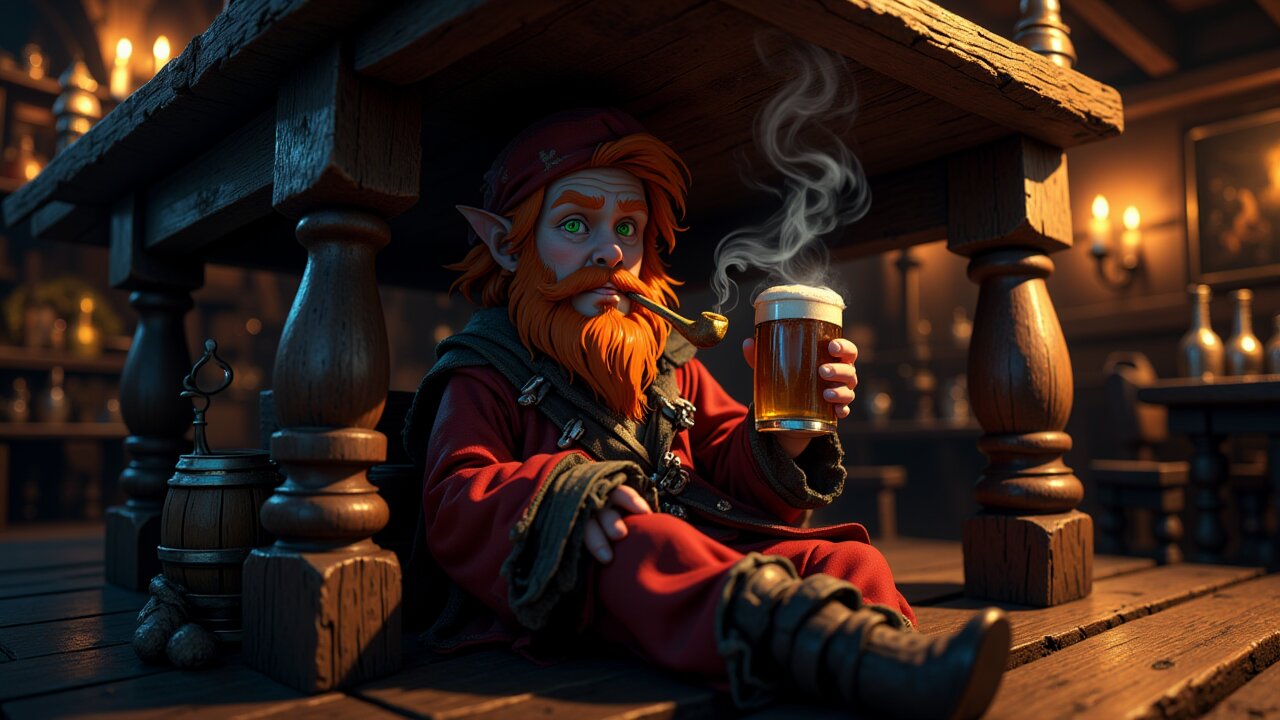
The clurichaun is a solitary fairy who loves drink above all else. He haunts breweries, pubs, wine cellars, and any place where alcohol is stored, and once he chooses a household or cellar, he is extremely difficult to get rid of.

He appears as a tiny old man, often no taller than a foot, with a red and weathered face, twinkling eyes, and a nose stained purple from constant drinking. He usually wears red—most often a red nightcap—along with fine little shoes fastened by silver buckles. Though small, his presence is loud and unmistakable: laughter, singing, banging, and drunken mischief echo wherever he settles.

At night, the clurichaun drinks whatever he can find. He rides atop wine casks like a king on a throne, draining barrels and singing merrily to himself. Servants who are careless suffer his wrath. If a tap is left running, he may wedge his own body into the barrel to stop the flow, waiting patiently until someone comes. But if he is neglected, insulted, or denied food or drink, his temper turns vicious. He pulls people from their beds, throws them down stairs, or beats them black and blue in fits of drunken fury.

Despite this, the clurichaun is not purely malicious. If treated well, he becomes fiercely loyal. He guards the cellar, protects the household’s property, and punishes dishonest servants who steal wine. Many families learned to leave him food and drink each night, fearing his anger more than his appetite.

Some tales say the clurichaun can slip through keyholes, ride through the air on reeds like a witch on a broom, or turn bog rushes into horses for midnight journeys. Others tell of unlucky men who refused to pay him for a drink and were forced into years of service, freed only by calling upon divine blessing.

Like his close cousin the leprechaun, the clurichaun is bound to place rather than people. If a household tries to flee him by moving away, he simply comes along, laughing from inside the new cellar. Once he chooses his haunt, he stays—drinking, singing, guarding, and tormenting—until the wine runs dry or the house falls to ruin.

The clurichaun is thus remembered as a spirit of excess and contradiction: drunken and dangerous, yet protective; cruel when offended, yet loyal when respected—a reminder that hospitality, once given to the unseen, must never be withdrawn.


Sources

Wikipedia contributors. (n.d.). Clurichaun. In Wikipedia, The Free Encyclopedia, from https://en.wikipedia.org/wiki/Clurichaun