Tradition: English Mythology, Irish Mythology
Alternative Names: Pillywiggin
Category: Fairy
The Myth
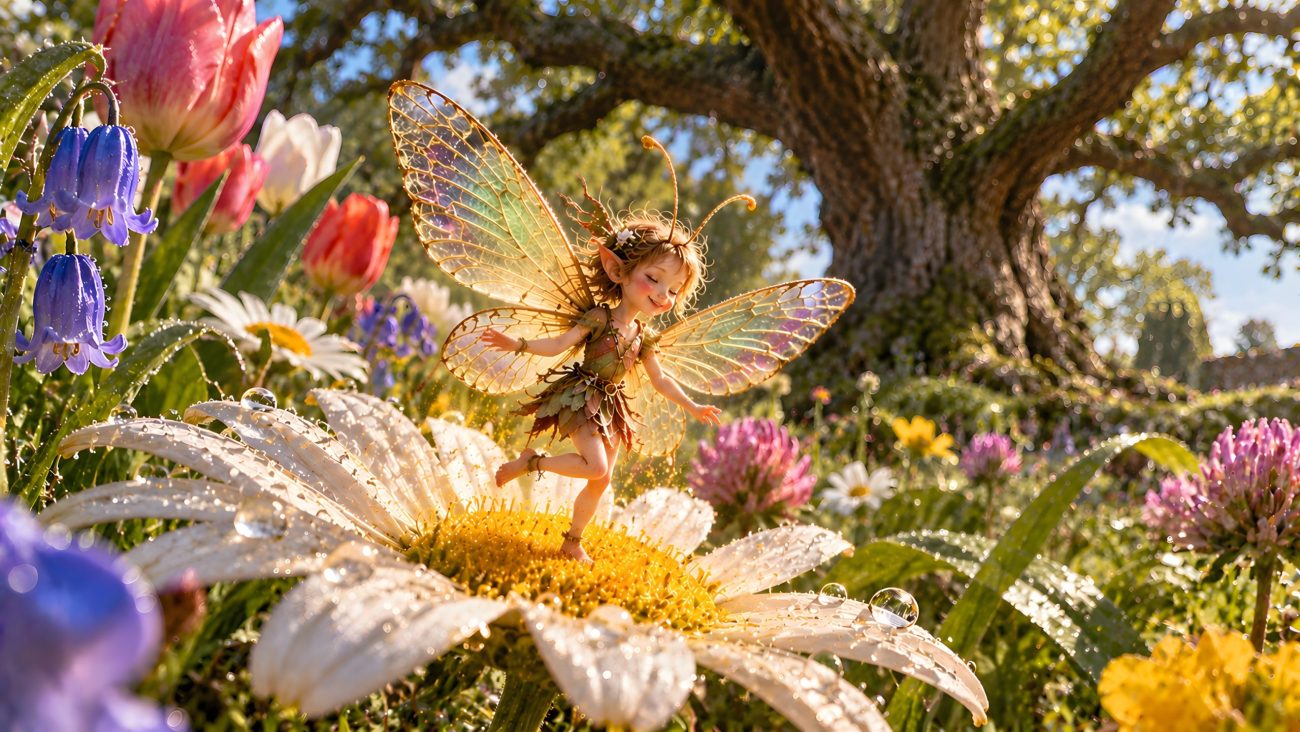
The Pillywiggins are extraordinarily tiny fairies and goblin-like nature spirits, usually only about a centimetre tall, though they are said to possess the ability to change their size. They have delicate wings and antennae resembling those of butterflies or dragonflies, and their appearance is often described as wonderfully beautiful. They live in groups and feed on dew and pollen. Their small size and winged appearance allow them to move easily among flowers, and they are sometimes imagined riding bees from blossom to blossom or appearing themselves as tiny as bees.
The Pillywiggins are guardians of small plants and flowers, living according to the rhythms of the vegetation they protect. They are particularly fond of gardens, parks, and wildflower meadows, especially places shaded by great oak trees. They spend their time dancing, playing, and moving among the flowers, largely ignoring human beings. Unlike many British fairies, they are not known for deliberately playing tricks on people, although they may occasionally appear at human celebrations such as weddings. Their strongest association is with spring flowers, and English gardening folklore particularly connects them with tulips.
The Pillywiggins are said to disappear during the colder part of the year, remaining dormant from November until spring, when the call of the cuckoo announces their return. They then resume their life among the plants, protecting the smallest flowers and celebrating the return of warmer weather. Their world is therefore closely tied to the seasonal life of the garden and forest: when the plants awaken, so do the tiny fairies that live among them.
Sources
“Pillywiggin.” Wikipedia: The Free Encyclopedia. Wikimedia Foundation. Accessed October 5, 2026. https://en.wikipedia.org/wiki/Pillywiggin