Puck

Tradition: English Mythology
Alternative Names: Robin Goodfellow, Goodfellows, Hobgoblin
Category: Fairy


The Myth

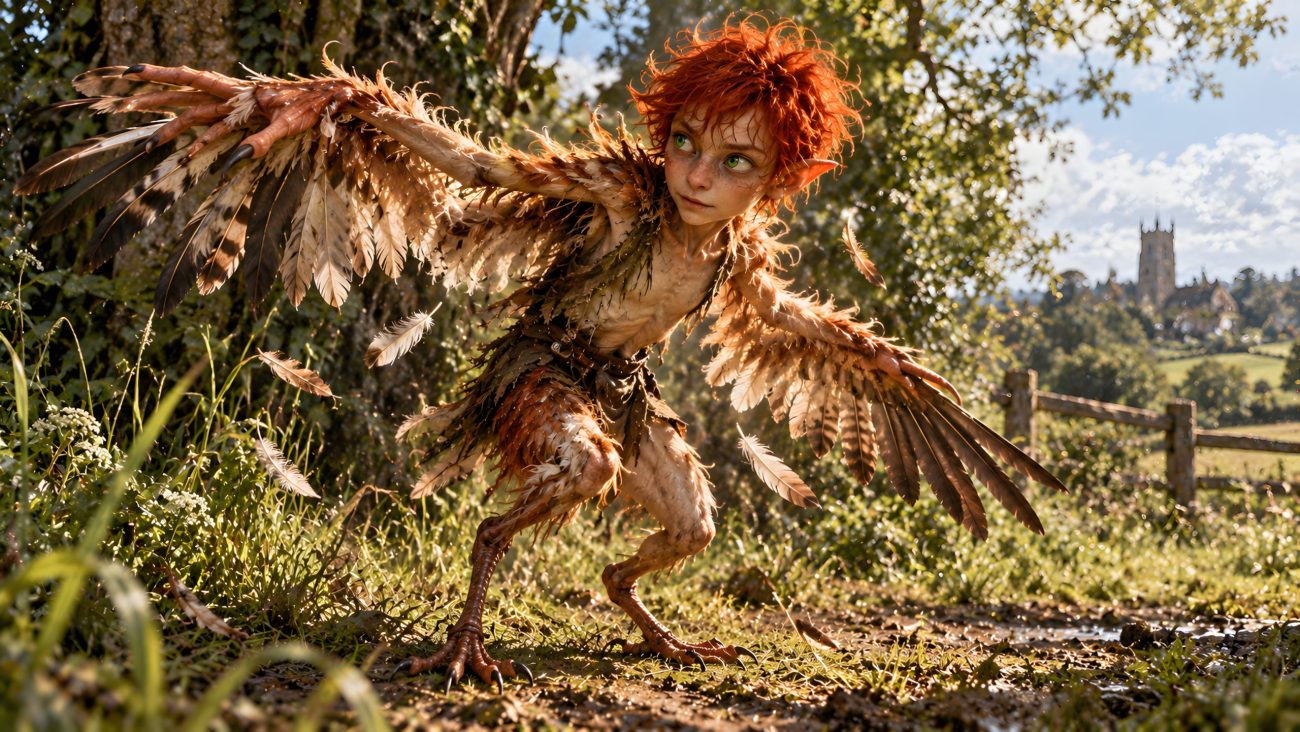
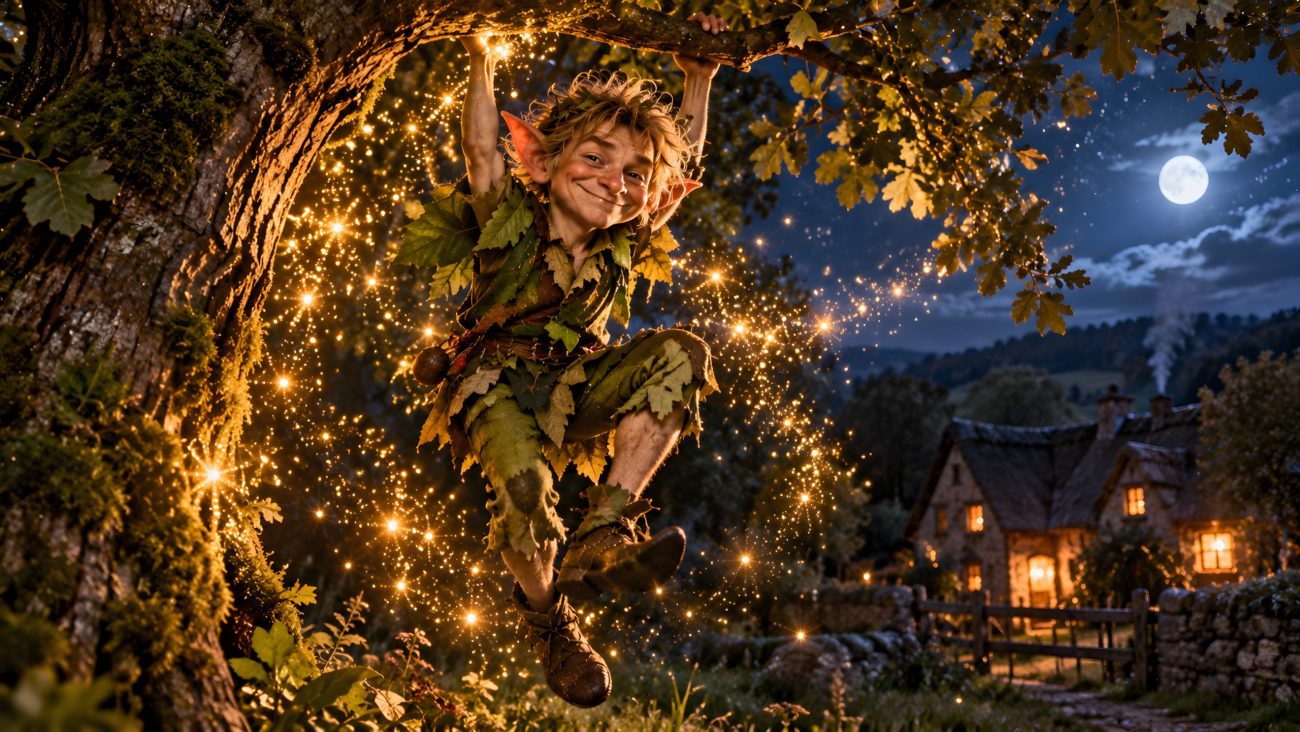
Puck is a mischievous supernatural spirit of English folklore who can appear as either a domestic fairy or a spirit of nature. As a household spirit, Puck may remain around a particular home for long periods, becoming familiar with the inhabitants while making noises, playing tricks, performing jokes, and generally causing harmless disturbances. Despite his reputation for mischief, he can also be helpful, performing small household tasks such as fine needlework, butter-churning, or other chores during the night. A household that treats him well may receive his assistance, while one that displeases or neglects him can suffer his pranks.

Puck expects offerings in return for his services, traditionally white bread and milk. If these are not provided, he may take what he believes is owed to him. He can therefore shift quickly between helpfulness and troublesome behavior, and his services may be undone by his tricks when he becomes offended. He is generally portrayed as solitary and familiar with the household he inhabits. The names Robin Goodfellow and Goodfellows were also used for such spirits, with flattering names such as “Goodfellow” or “good folk” serving to appease supernatural beings known for their mischievous nature.

Puck can also appear as a more dangerous nature spirit rather than a household helper. In this form, he belongs to the wider fairy world and may lead travelers astray or perform mischievous tricks in the countryside. His character is fundamentally ambiguous: he can be a useful domestic servant, a playful jester of the fairy court, or a troublesome supernatural creature whose harmless jokes could become more serious if his goodwill was lost. Shakespeare’s famous Puck reflects this older English tradition of the shrewd, mischievous fairy, although the folklore figure itself existed independently of the literary character.


Sources

“Puck (folklore).” Wikipedia: The Free Encyclopedia. Wikimedia Foundation. Accessed October 5, 2026.
https://en.wikipedia.org/wiki/Puck_(folklore)

Joan the Wad

Tradition: English Mythology
Alternative Names: Joan-the-Wad
Category: Fairy


The Myth

Joan the Wad is the Queen of the Pixies, the tiny supernatural beings traditionally associated with Cornwall and Devon. Her name is connected with the Cornish term wad, meaning a torch or bundle of straw. She is therefore closely associated with light and with the mysterious glowing lights that appear on lonely moors at night.

Joan the Wad is associated with Jack o’ the Lantern, the King of the Pixies, and the two may appear as supernatural will-o’-the-wisps. In this form, they wander across lonely moors and can lead travelers astray in the darkness. Joan’s torch can therefore be dangerous, drawing those who follow its light away from safety when the weather is bad.

Yet Joan’s light is not always harmful. She is also believed to use her torch to guide travelers safely home and bring them good fortune. Her supernatural light consequently has a dual nature: it can mislead those who encounter it on the moors, but it can also illuminate the way toward safety and prosperity.


Sources

“Joan the Wad.” Wikipedia: The Free Encyclopedia. Wikimedia Foundation. Accessed October 5, 2026.
https://en.wikipedia.org/wiki/Joan_the_Wad


Pillywiggins

Tradition: English Mythology, Irish Mythology
Alternative Names: Pillywiggin
Category: Fairy


The Myth

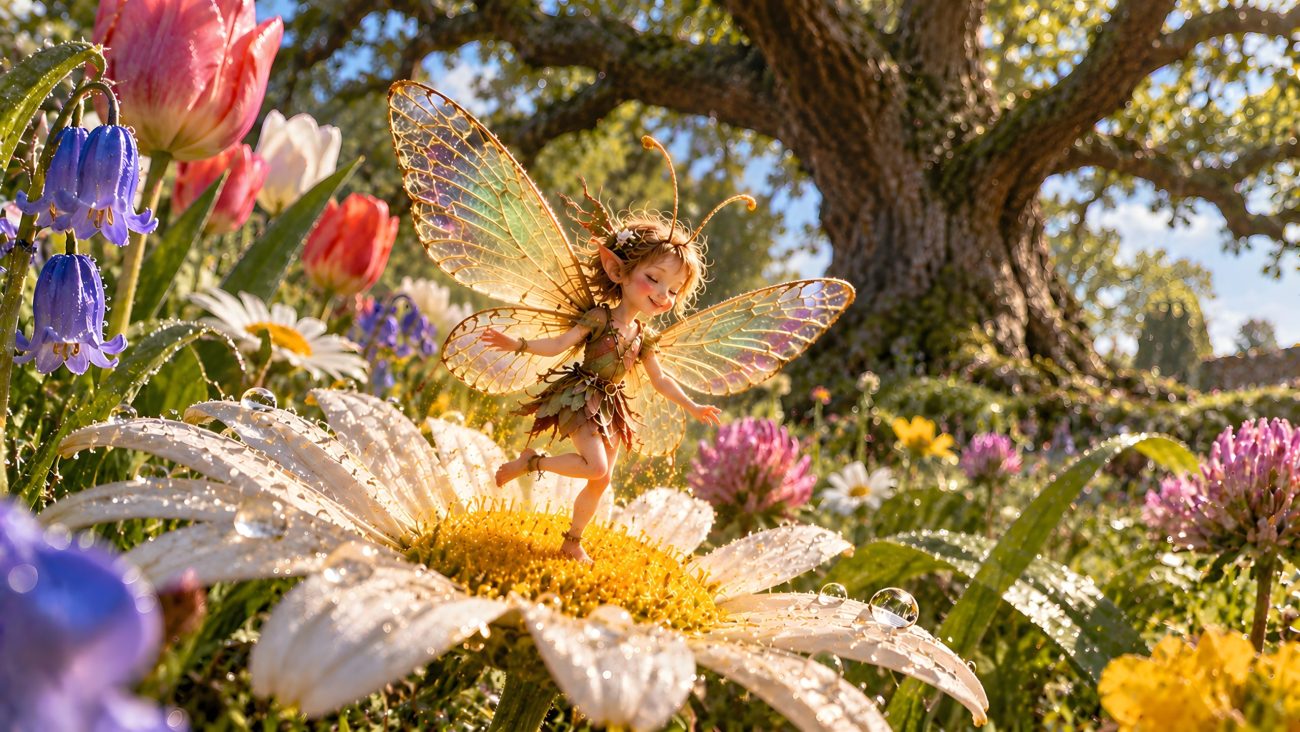
The Pillywiggins are extraordinarily tiny fairies and goblin-like nature spirits, usually only about a centimetre tall, though they are said to possess the ability to change their size. They have delicate wings and antennae resembling those of butterflies or dragonflies, and their appearance is often described as wonderfully beautiful. They live in groups and feed on dew and pollen. Their small size and winged appearance allow them to move easily among flowers, and they are sometimes imagined riding bees from blossom to blossom or appearing themselves as tiny as bees.

The Pillywiggins are guardians of small plants and flowers, living according to the rhythms of the vegetation they protect. They are particularly fond of gardens, parks, and wildflower meadows, especially places shaded by great oak trees. They spend their time dancing, playing, and moving among the flowers, largely ignoring human beings. Unlike many British fairies, they are not known for deliberately playing tricks on people, although they may occasionally appear at human celebrations such as weddings. Their strongest association is with spring flowers, and English gardening folklore particularly connects them with tulips.

The Pillywiggins are said to disappear during the colder part of the year, remaining dormant from November until spring, when the call of the cuckoo announces their return. They then resume their life among the plants, protecting the smallest flowers and celebrating the return of warmer weather. Their world is therefore closely tied to the seasonal life of the garden and forest: when the plants awaken, so do the tiny fairies that live among them.


Sources

“Pillywiggin.” Wikipedia: The Free Encyclopedia. Wikimedia Foundation. Accessed October 5, 2026. https://en.wikipedia.org/wiki/Pillywiggin


Lazy Laurence

Tradition: English Mythology
Alternative Names: Laurence, Touch of Laurence
Category: Fairy


The Myth

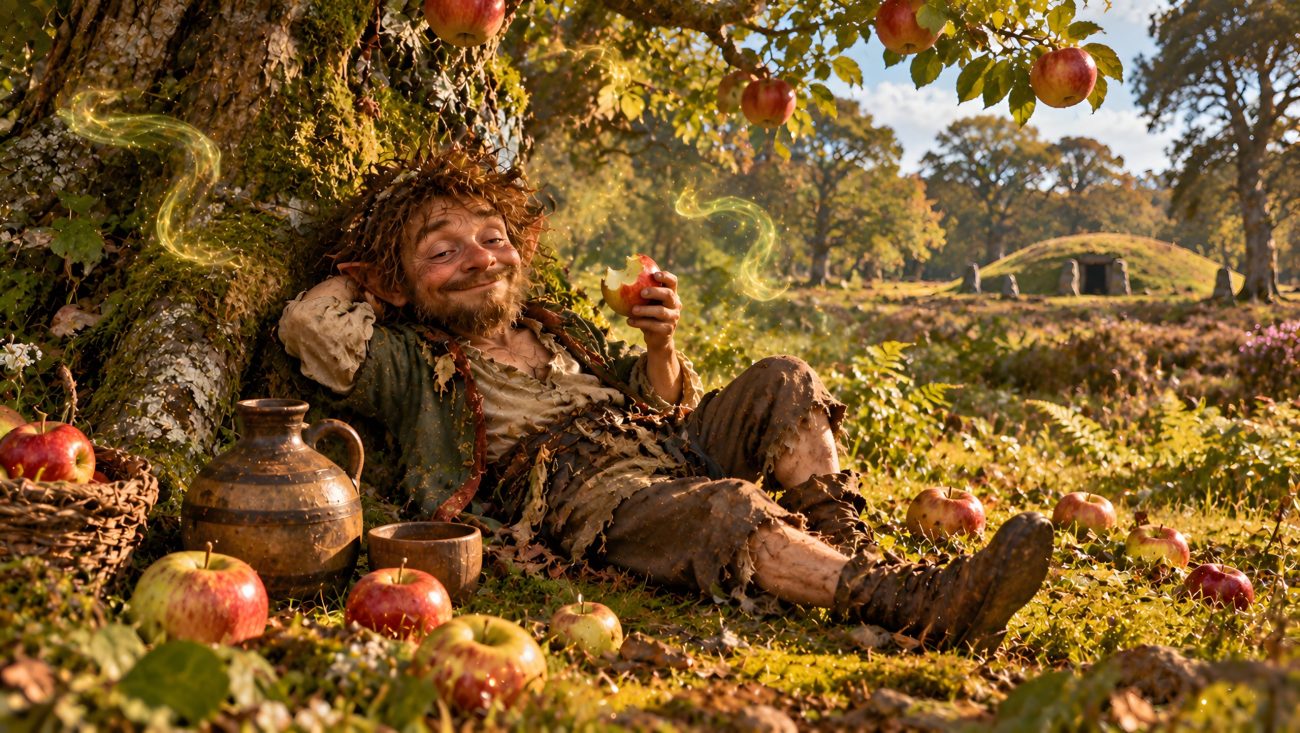
Lazy Laurence is a mischievous pixie and nature spirit associated with the New Forest of Hampshire and Dorset. He is particularly connected with orchards and apple trees, and is believed to protect orchards and the cider made from their fruit. His presence is felt through strange spells of sleepiness and confusion: he may send people dreaming beneath fruit trees, make them lazy or dithering, or give them stomach cramps. Apple gatherers and careless visitors to the forest are especially liable to feel his influence.

People once spoke of laziness as a sign that Laurence had taken hold of someone. A person who suddenly became idle might be said to have “Laurence upon him” or to have “a touch of Laurence.” He was treated with enough respect and fear that his name became attached to the local landscape, including Laurence’s Barrow, a small ancient burial mound on Beaulieu Heath. The barrow stands near other places associated with pixie lore, including Watt’s Parlour and Cold Pixies’ Cave.

Laurence’s reputation was not confined to the New Forest. Stories of him were also known in neighboring Sussex and Somerset, where he could serve as a frightening bogeyman for children, while traditions from Devon and Cornwall emphasized his laziness. In the New Forest, however, he remained especially associated with fruit trees, cider, and the strange drowsiness that could overcome people beneath their branches. His mischievous influence turned ordinary tiredness, indecision, and indigestion into signs that the elusive forest pixie had been at work.


Sources

“Lazy Laurence.” Wikipedia: The Free Encyclopedia. Wikimedia Foundation. Accessed October 5, 2026. https://en.wikipedia.org/wiki/Lazy_Laurence


Bluecap

Tradition: English Mythology
Alternative Names: Bluecap
Category: Fairy


The Myth

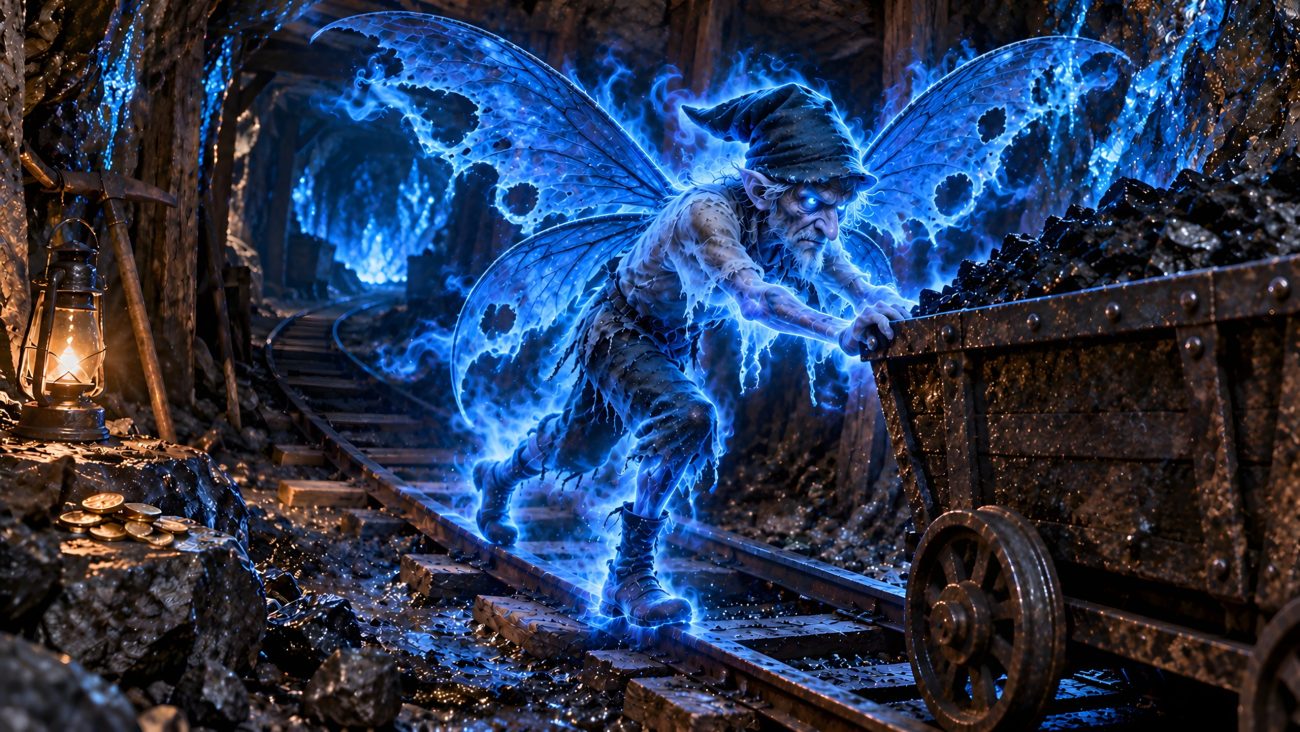
The Bluecap is a small supernatural mine spirit that appears as a flickering blue flame deep within the workings of a mine. Associated particularly with the Anglo-Scottish Borderlands, Bluecaps were generally regarded as helpful beings when treated with respect. They could lead miners toward rich deposits of valuable minerals and, like other mining spirits, could warn them of impending cave-ins and other dangers underground.

Bluecaps were also believed to be extraordinarily hard workers. Miners said that they could move heavy loads of coal through the mine, sometimes appearing as a small blue flame that settled onto a full tub of coal and carried it away with tremendous strength. Their supernatural labour was nevertheless expected to be paid like that of an ordinary mine worker. A Bluecap was owed the wages of a normal putter, the worker responsible for pushing mine wagons, and the payment had to be left for it in a secluded corner of the mine. The spirit would accept neither more nor less than what it was owed.

Not every mine spirit was so helpful. Cutty Soames, also called Old Cutty Soames, was regarded as a more troublesome being of the same general kind. Rather than assisting miners, he was known for cutting the rope or trace by which an assistant putter was attached to a loaded tub. Bluecaps therefore belonged to a hidden community of supernatural mine workers: some guided miners to wealth and helped them survive the dangers of the underground, while others could interfere with their work and put them in danger.


Sources

“Bluecap.” Wikipedia: The Free Encyclopedia. Wikimedia Foundation. Accessed October 5, 2026. https://en.wikipedia.org/wiki/Bluecap


Yallery Brown

Tradition: English Mythology
Alternative Names: Yallery-Brown
Category: Fairy


The Myth

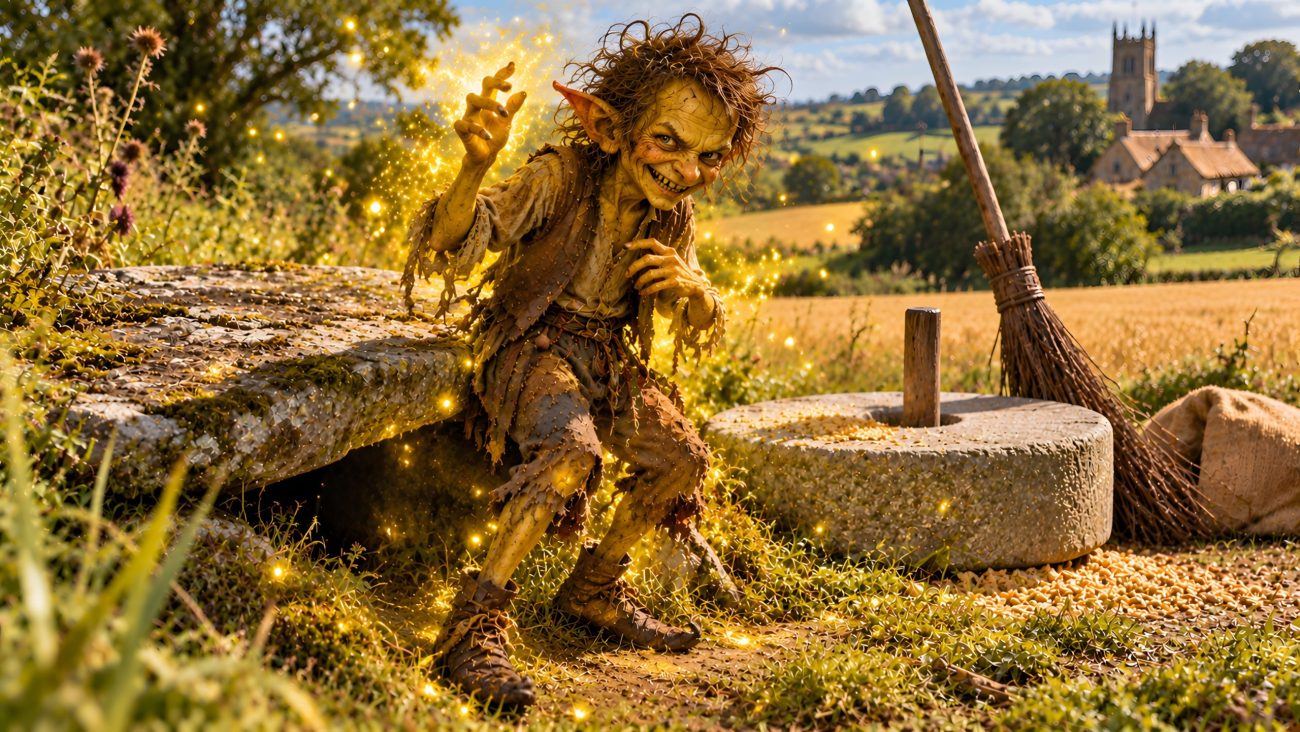
Yallery Brown was a small, ragged creature with yellow-brown skin, the colour of dark mustard, and the appearance of a little man. One day, a young labourer named Tom was resting in a field when he heard a faint whimpering, like a child crying in distress. Following the sound, he discovered the little creature trapped beneath a flat stone. Tom knew that he would have been better off leaving the strange being where it was, but the creature’s pitiful cries moved him. He lifted the stone and freed the little man, who immediately sprang up and introduced himself as Yallery Brown. In gratitude, Yallery Brown offered Tom a wish. Tom, unwilling to work harder than necessary, asked that the creature perform his daily chores for him. Yallery Brown clapped his hands and agreed.

From the following day onward, Tom’s work was mysteriously completed without him lifting a finger. His broom swept the floor by itself, while his quern ground the corn without anyone turning it. This continued day after day until the people around Tom began to suspect that he possessed supernatural powers and whispered that he was a witch or warlock. Frightened by the attention, Tom called for Yallery Brown and told him that he no longer needed his assistance. He thanked the little spirit for everything it had done. Yallery Brown immediately became furious. He had warned Tom never to thank him, for gratitude would bring misfortune, and now Tom had broken that rule. The creature withdrew his magical help and pronounced a curse upon him: no matter how hard Tom worked, he would never prosper or gain anything, and harm and mischance would follow him because he had freed Yallery Brown from beneath the stone.

Yallery Brown vanished after delivering his curse, and he kept his promise. Tom was plagued by bad luck and misfortune for the rest of his life. The gift that had once made his work effortless had become a curse, teaching him that accepting the favour of Yallery Brown came with a price.


Sources

“Yallery Brown.” Wikipedia: The Free Encyclopedia. Wikimedia Foundation. Accessed October 4, 2026. https://en.wikipedia.org/wiki/Yallery_Brown


Lunantishie

Tradition: English Mythology
Alternative Names: Lunantishie
Category: Fairy


The Myth

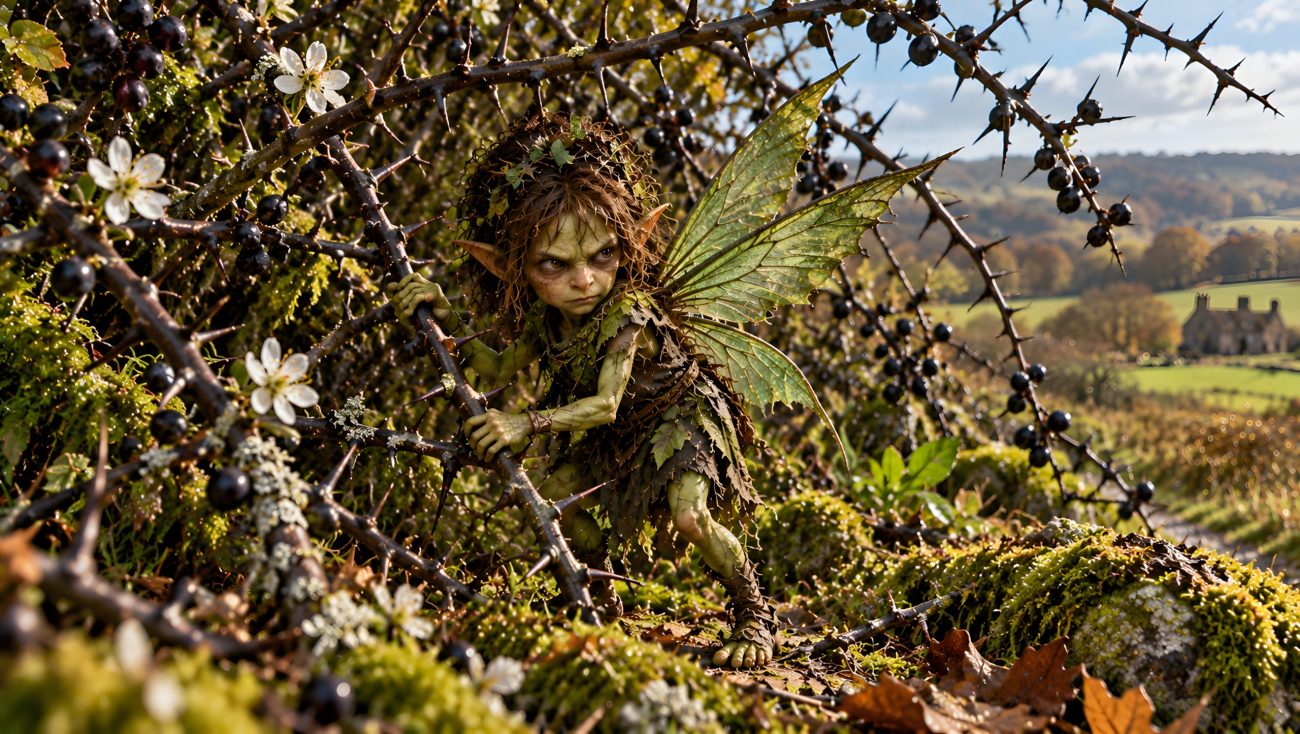
The Lunantishie are a tribe of British fairies who guard thorn bushes. They are especially associated with the blackthorn and are said to be protective of these trees and their branches.

The Lunantishie do not allow anyone to cut even the smallest twig from a thorn bush on November 11, the ancient celebration of All Saints’ Day, or on May 11, the former celebration of May Day. Anyone who cuts a branch from a thorn tree on these days risks angering the fairies, who protect their sacred bushes.

The Lunantishie are therefore guardians of the thorn bushes, defending even their smallest branches from human interference. In the traditional lore recorded for them, the thorn tree is under their protection on these particular days, making the cutting of its wood a dangerous act.


Sources

“Lunantishi.” New Bestiary (Bestiary.us). Accessed October 4, 2026. https://www.bestiary.us/lunantishi


Pixie

Tradition: English Mythology
Alternative Names: Pisky, Pixy, Pixi, Pizkie, Piskie, Pigsie
Category: Fairy


The Myth

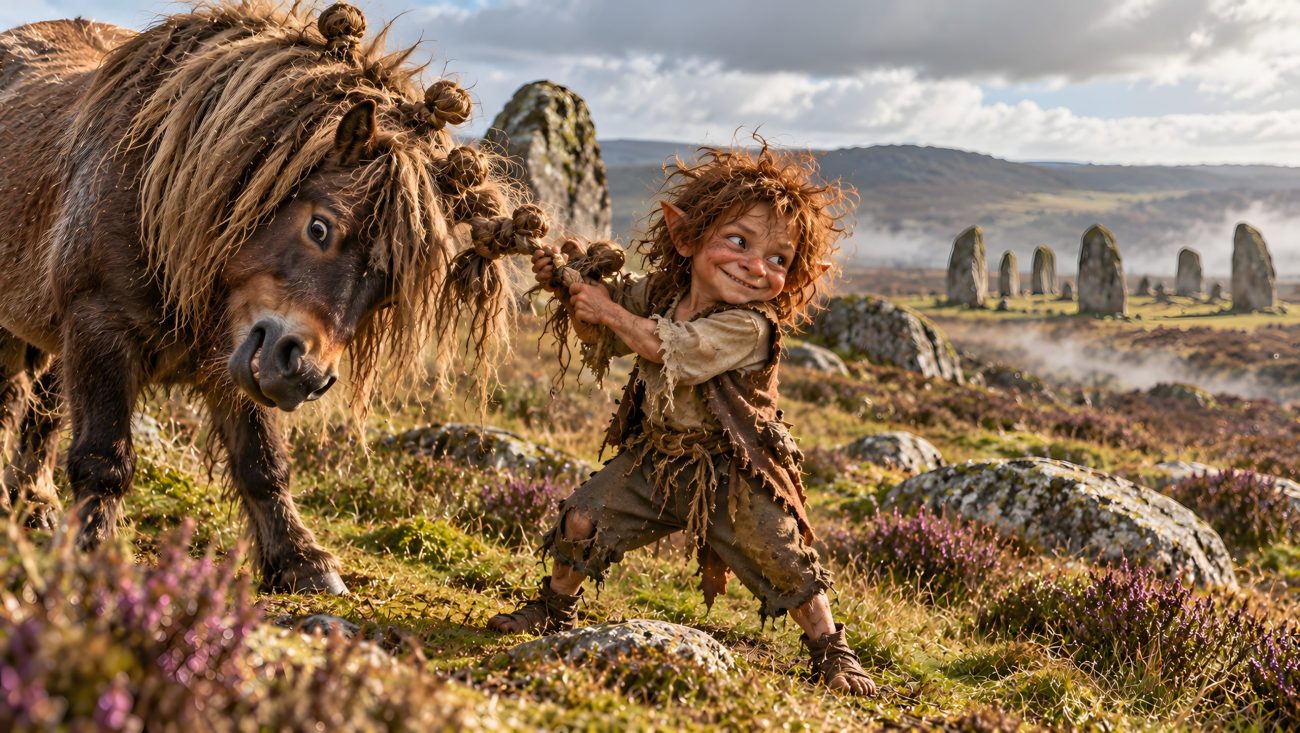
Pixies were small, mischievous supernatural beings of British folklore, particularly associated with the moorlands, hills, ancient stones and remote countryside of Cornwall and Devon. They were generally described as short, childlike creatures who enjoyed dancing, wrestling and playing outdoors through the night. They were also closely connected with ancient places such as stone circles, barrows, dolmens, ringforts and standing stones, where they were believed to dwell beneath the earth. Traditional pixies were often poorly dressed or wrapped in ragged clothing, quite different from the green clothes and pointed hats later given to them in popular imagery. They were usually friendly towards people who treated them well, but could also play tricks, mislead travellers and punish those who neglected or offended them.

The pixies of Dartmoor were particularly famous for their tricks and their relationship with horses. They could disguise themselves as bundles of rags to lure children, while at night they rode Dartmoor ponies for pleasure and sometimes tangled their manes into mysterious knots. They could also help humans, especially people in need, with household work and other tasks. Yet travellers who encountered them risked becoming “pixy-led,” wandering away from the path after being confused by the spirits. A traditional way of breaking this enchantment was to turn one’s coat inside out. Pixies could also reward kindness and consideration with good fortune, while neglecting them could bring trouble.

Many local legends preserve the playful and mysterious nature of the pixies. At Trevose Head in Cornwall, hundreds were said to gather in a circle to dance and laugh until one named Omfra lost his laugh. He searched through the ancient barrows of Cornwall and crossed the waters of Dozmary Pool before King Arthur, appearing in the form of a chough, restored it to him. Other traditions tell of pixies inhabiting caves and hidden places, fighting with fairies, helping widows, or occasionally leading people astray. They were sometimes believed to have a connection with human beings or to represent an ancient race of small people, while other traditions treated them as supernatural spirits. Whatever their origin, the pixies remained deeply tied to the wild landscapes of Cornwall and Devon, appearing as playful helpers one moment and troublesome spirits the next.


Sources

“Pixie.” Wikipedia: The Free Encyclopedia. Wikimedia Foundation. Accessed October 4, 2026. https://en.wikipedia.org/wiki/Pixie


Gaiter Spirit

Tradition: English Mythology
Alternative Names: Hyter-Spirits, Hayter-Spirits, Heather Sprites
Category: Fairy, Bird


The Myth

The Gaiter Spirits are small fairies of Lincolnshire and East Anglia, distinguished by their red hair and green eyes. They are able to transform themselves into birds, particularly martins, taking on the shape of ordinary birds while retaining their supernatural nature. Their strange ability allows them to move through the countryside in a form that hides their true identity.

The Gaiter Spirits are not simply malicious creatures. They are said to be grateful toward people who treat them well and can reward kindness, while those who behave badly may earn their displeasure. Their reputation therefore depends upon the character of the people who encounter them: generosity and good behavior can bring their favor, while cruelty or misconduct can lead to their condemnation.

The name appears in several forms, including Hyter-Spirits, Hayter-Spirits, and Heather Sprites. The surviving tradition also compares them with other British fairy beings, including the Scottish Ghillie Dhu, but the Gaiter Spirits remain particularly associated with the eastern English countryside and their remarkable ability to become birds.


Sources

“Gajterskie duhi.” New Bestiary (Bestiary.us). Accessed October 4, 2026. https://www.bestiary.us/gajterskie-duhi