Tradition: Inuit mythology, Canadian mythology Alternative Names: Umingmånguaq Category:Cow
The Myth
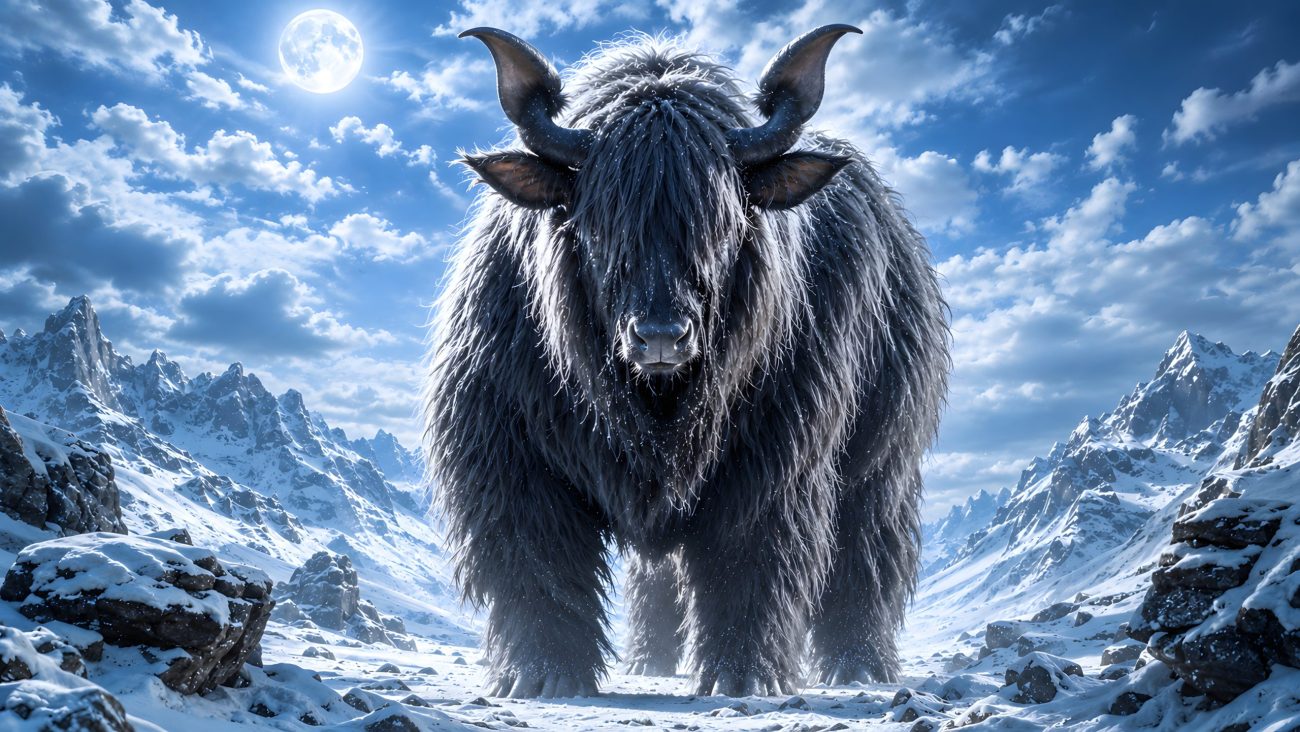
Umingmånguaq is the spirit of the musk-ox. It has no eyes and perceives everything through its ears, which grow from stems and resemble horns.
A hunter first encountered Umingmånguaq while hunting caribou. The spirit spoke to him like a human being and explained that it was simply searching for a shaman whom it could serve.
From then on, Umingmånguaq would follow the hunter wherever he went. He did not need to turn around to see whether it was there, because whenever he turned to look for it, the spirit would disappear.
Umingmånguaq was regarded as having healing powers and was said to be able to cure all ailments.
Sources
Rasmussen, Knud. Intellectual Culture of the Hudson Bay Eskimos. Copenhagen: Gyldendal, 1930. 3 vols. Vol. 1, Intellectual Culture of the Iglulik Eskimos (1929); Vol. 2, Observations on the Intellectual Culture of the Caribou Eskimos (1930); Vol. 3, Iglulik and Caribou Eskimo Tests (1930). Internet Archive
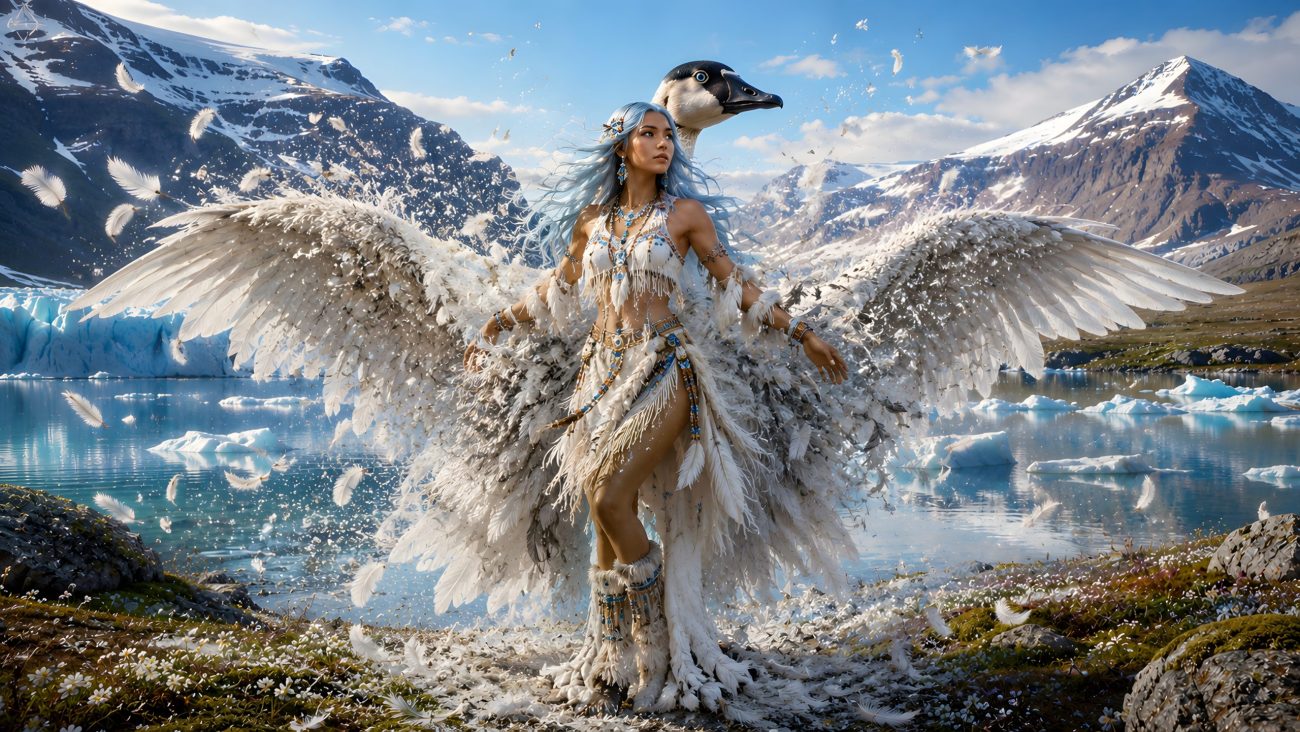
The Goose Wife is a bird maiden found in the traditions of the Inuit and other Arctic peoples. A hunter discovers a group of geese that remove their goose skins to become women while bathing in a lake. He secretly steals the skin of one of the women, preventing her from returning to bird form, and she is forced to become his wife. Together they have children, but she never forgets her home in the Land of Birds.
In time, the Goose Wife secretly gathers feathers and fashions new wings for herself and her children. Once they are complete, they transform back into birds and fly away. Determined to reunite with his family, the hunter journeys to the distant Land of Birds, where he encounters marvelous beings, including a giant who creates fish from chips of wood and helps him cross the waters to his wife’s homeland.
The ending varies among different Arctic traditions. In some versions, the hunter is reunited with his wife for a time before she departs again with the bird people. In others, he is transformed into a bird himself so he may remain with his family, while some stories end tragically, with the Goose Wife dying or the husband never truly recovering what he had lost. Despite these differences, the Goose Wife remains one of the best-known bird maiden figures of Arctic folklore.
Sources
Wikipedia contributors. (n.d.). Goose Wife (Inuit). In Wikipedia. Retrieved June 29, 2026, from https://en.wikipedia.org/wiki/Goose_Wife_(Inuit)
Tradition / Region: Inuit Mythology, Canadian Mythology Alternative names: Nanoq Tulorialik (“The Bear with the Fangs”) Category:Bear
The Myth
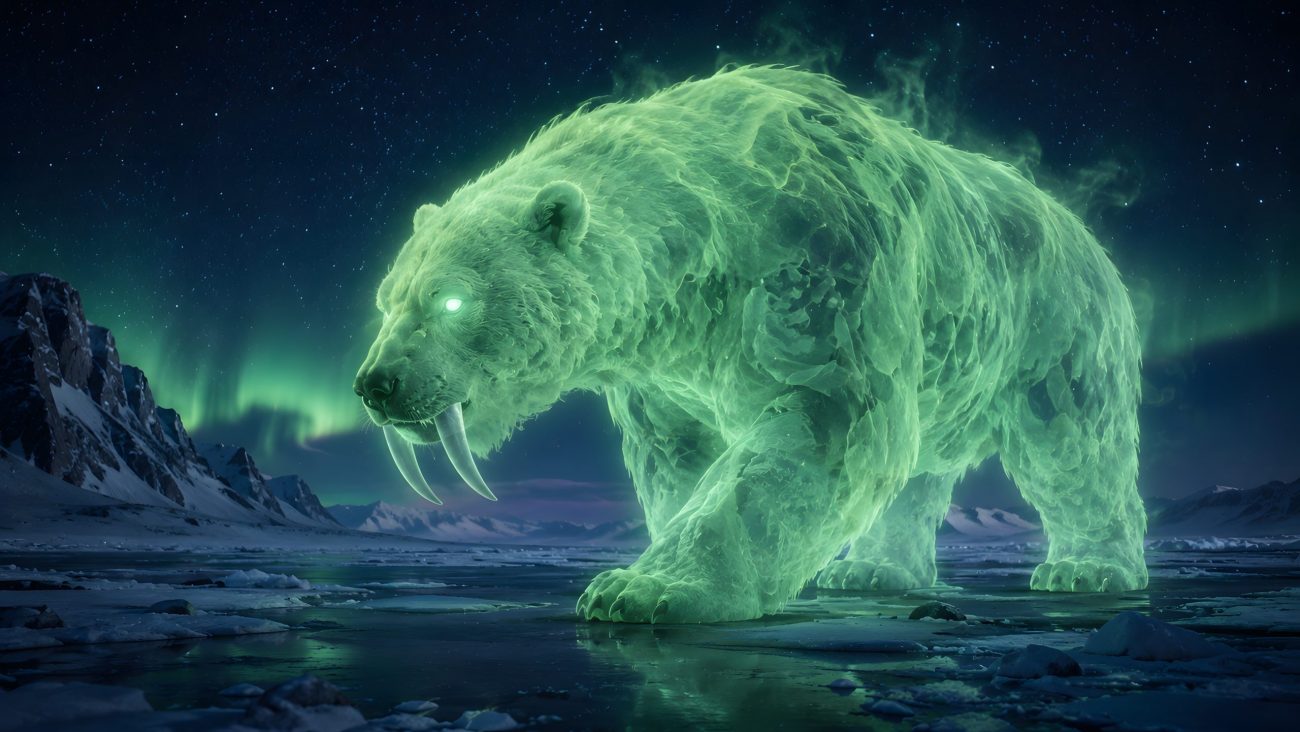
Tulorialik, the Bear with the Fangs, is a giant bear spirit and the most powerful helping spirit of the Inuit shaman Unaleq. Among his ten spirit helpers, Tulorialik was regarded as the strongest and most influential, answering whenever the shaman called upon him.
During a shamanic séance, Unaleq invoked Tulorialik in complete darkness. Hidden beneath a table covered with skins, he called the great bear spirit to enter his body. As Tulorialik arrived, those present heard the scraping of enormous claws, deep growls, the sounds of wind and rushing water, and the snorting of walruses. Through the power of the spirit, Unaleq claimed he could transform into a bear or a walrus.
On one occasion, Tulorialik was summoned to ensure the safety of a long sled journey. The bear spirit was said to travel ahead along the route, removing dangers and protecting the travelers from sickness, accidents, and death. After the séance, the shaman declared that Tulorialik had cleared the path and that the entire expedition would return safely.
Tulorialik was believed to possess immense supernatural power, and Unaleq regarded him not merely as a spirit, but as a faithful helper who came whenever he was called.
Sources
Rasmussen, K. (1930). Intellectual culture of the Hudson Bay Eskimos (Vols. 1–3). Gyldendal.
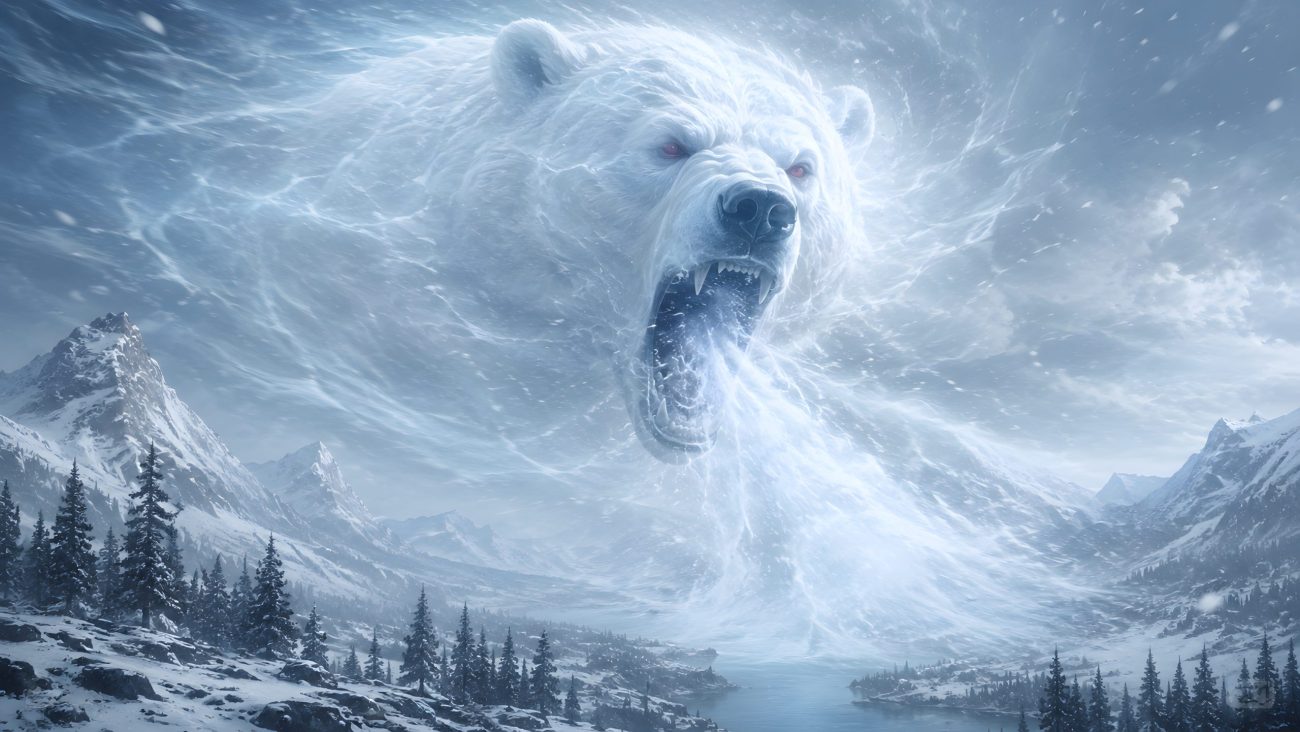
Ya-o-gah is the great bear spirit who personifies the North Wind in Haudenosaunee mythology. He serves as one of the four mighty wind spirits governed by Gǎ-oh, the giant master of the winds and the being through whom the Great Spirit moves the elements across the world.
Among the four winds, Ya-o-gah is the most destructive. His breath brings bitter cold and possesses the power to freeze and destroy the world. Despite this terrifying strength, he does not act freely, for Gǎ-oh keeps him under control and commands when the North Wind may blow.
The other winds balance Ya-o-gah’s fierce nature. The South Wind, Ne-o-ga, is gentle and warm like the rays of the sun. The West Wind, Da-jo-ji, takes the form of a panther capable of climbing mountains, tearing down forests, carrying whirlwinds upon his back, and stirring the seas into violent storms. The East Wind, O-yan-do-ne, appears as a moose whose breath chills the young clouds drifting across the sky.
Together, these four spirits maintain the natural order of the world under the guidance of Gǎ-oh, with Ya-o-gah embodying the harsh, relentless power of winter and the frozen north.
Sources
Rasmussen, K. (1930). Intellectual culture of the Hudson Bay Eskimos (Vols. 1–3). Gyldendal.
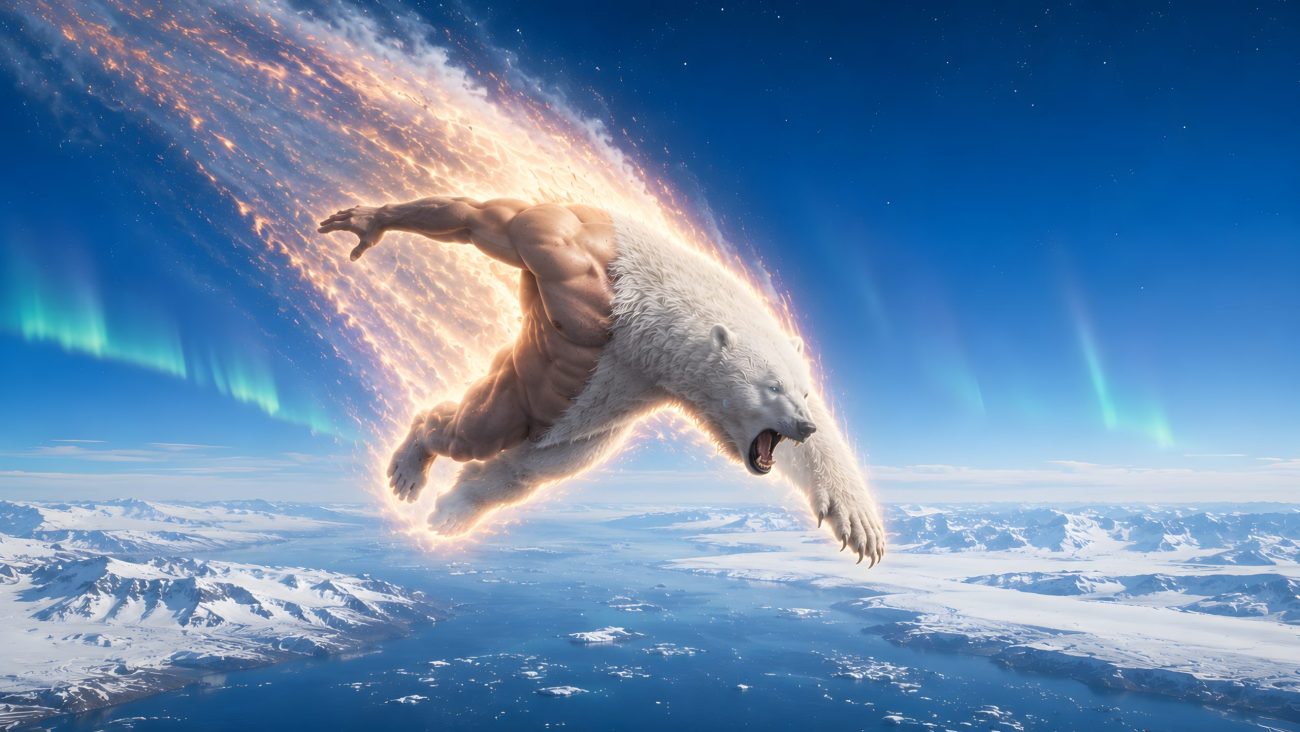
ImiEru’jap Inua is the spirit of a meteor that appears in Inuit tradition. It is described as a supernatural being with a body divided between human and bear. One side of its glowing form is that of a bear, while the other is human, and its head is human in shape but bears the tusks of a bear.
The spirit is most closely associated with the shaman Uvavnuk. One winter night, as she stepped outside her home, she saw a brilliant ball of fire descend from the sky. Before she could escape, the meteor struck her and entered her body. She immediately perceived an inner light before losing consciousness. At that moment, the spirit of the meteor entered her, transforming her into a powerful shaman.
When Uvavnuk regained consciousness, she returned to her home singing without understanding why. Filled with supernatural knowledge, she began revealing the hidden wrongdoings of everyone present. Those who confessed their misdeeds cast them away with symbolic gestures, believing themselves cleansed of evil. Whenever the spirit possessed her, she could see, hear, and know things beyond ordinary human perception.
Outside these moments of possession, Uvavnuk was an ordinary woman with no special abilities. Only when the spirit of the meteor illuminated her from within did her extraordinary powers return.
Before her death, Uvavnuk held one final ceremony and declared that humanity should never suffer from hunger. Through her connection with the spirits, she brought forth an abundance of game from beneath the earth. After her passing, her people experienced an exceptionally prosperous year, with plentiful whales, walruses, seals, and caribou, fulfilling her final blessing.
Sources
Rasmussen, K. (1930). Intellectual culture of the Hudson Bay Eskimos (Vols. 1–3). Gyldendal.
Tradition / Region: Haida Mythology, Canadian Mythology Alternate Names: Sea Wolf Category:Wolf
The Myth
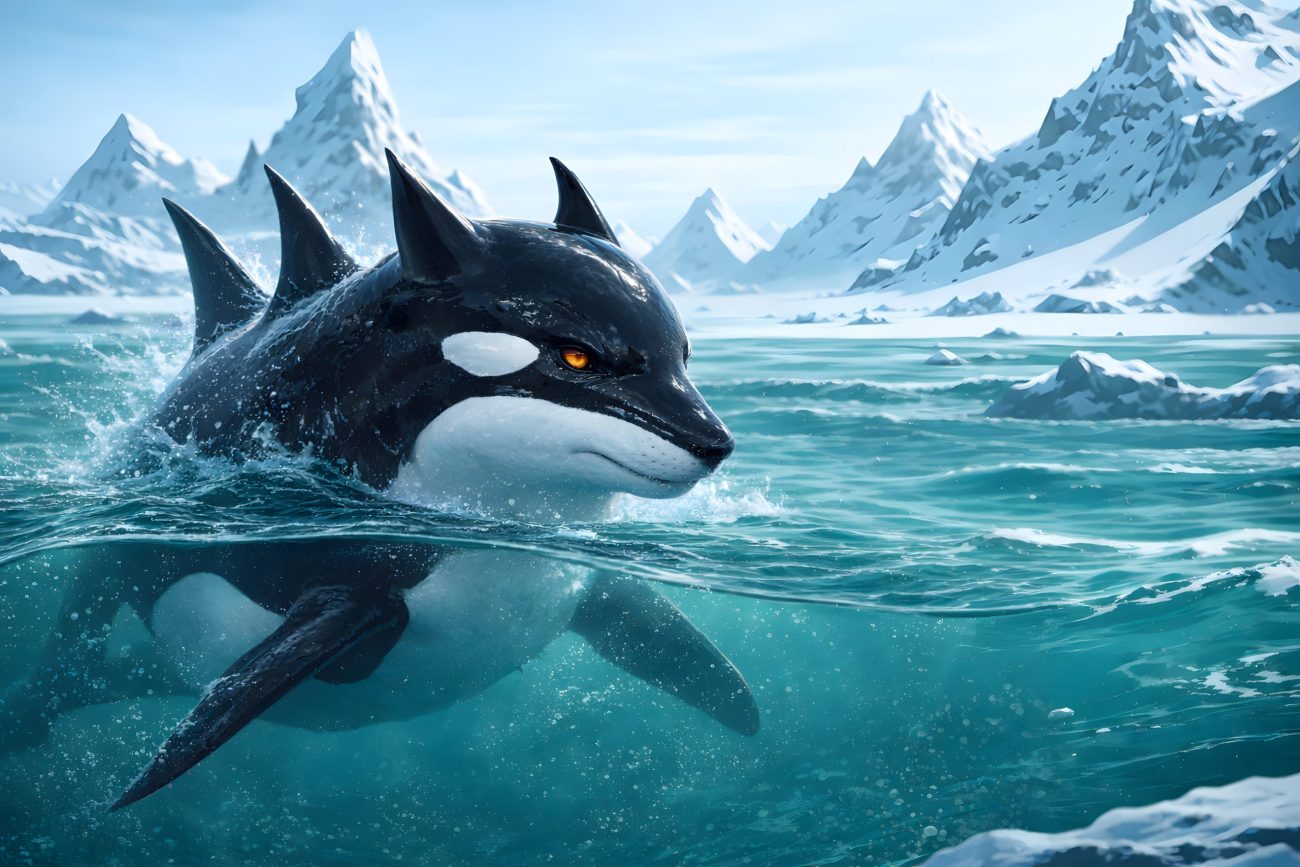
Along the stormy Pacific coast of what is now Canada, the Haida told of a powerful creature called Wasgo, the Sea Wolf. He belonged to both the ocean and the land, and could move between them by changing his shape.
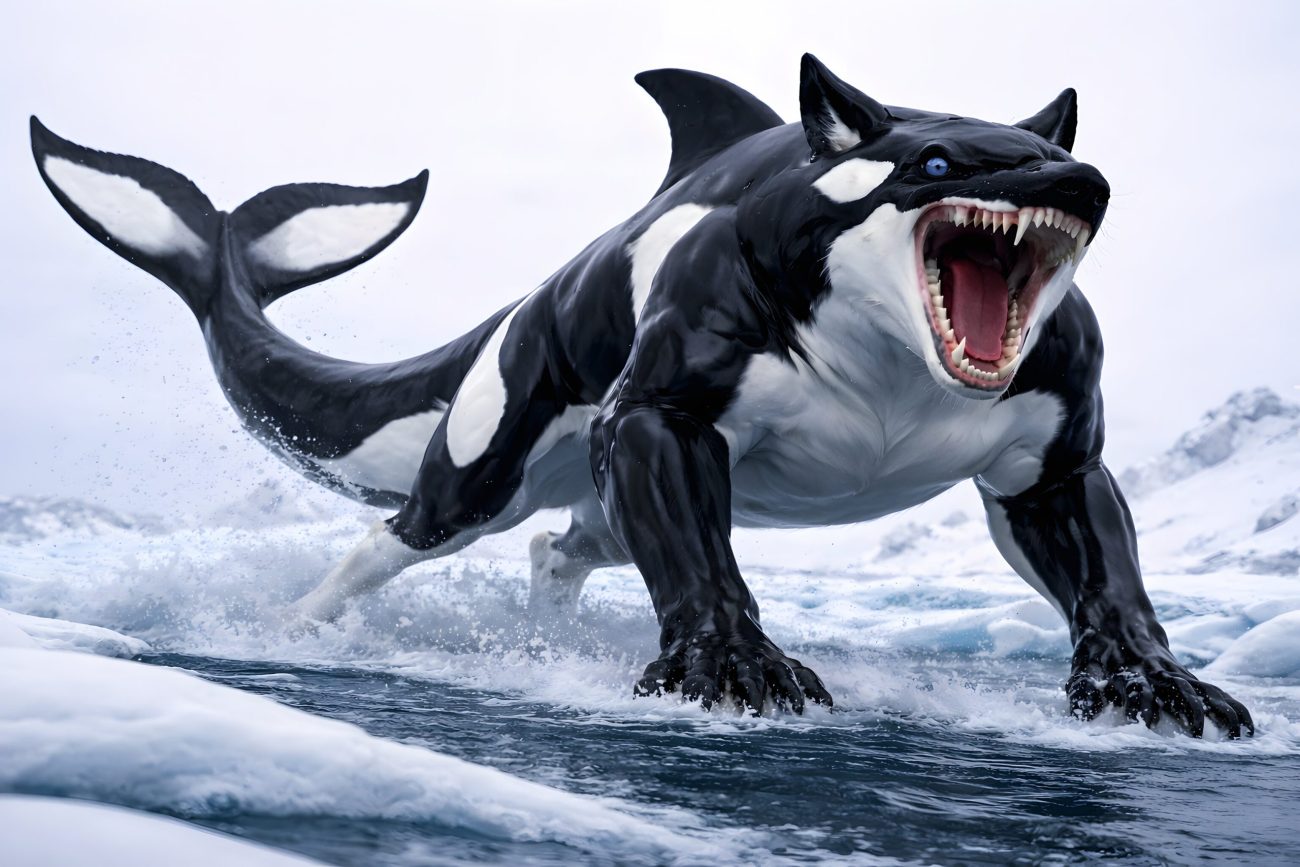
In the sea he appeared like an orca, swift and strong beneath the waves. When he came ashore he became a great wolf, roaming forests and beaches with the same power he held in the water. Because of this, people believed he ruled the boundary between sea and land, and that neither world was safe when he was near.
Wasgo was feared as a dangerous being, one who could strike from either realm. Hunters and travelers along the coast spoke of him with caution, knowing that a shape glimpsed in the surf or a shadow in the trees might be the same creature watching them from two different worlds.
Sources
Wikipedia contributors. (n.d.). Gonakadet. In Wikipedia, from https://en.wikipedia.org/wiki/Gonakadet
Among the Inuit of the Bering Sea coast there is said to live a fierce creature of both sea and land, known as the Akh’lut. In the water it appears as a killer whale, powerful and swift, ruling the cold ocean depths. But when it comes ashore, it transforms into a wolf and roams across the land.
Hunters spoke of finding wolf tracks that led across the ice and ended suddenly at the sea, or began at the water’s edge and continued inland. These signs were taken as proof that the akh’lut had shifted its shape, leaving the ocean to hunt on land or returning again to the waves.
The creature was feared for its ferocity. Whether in the form of whale or wolf, it was said to attack and kill humans who crossed its path. Thus the akh’lut was remembered as a being that moved freely between two worlds — sea and shore — belonging fully to neither.
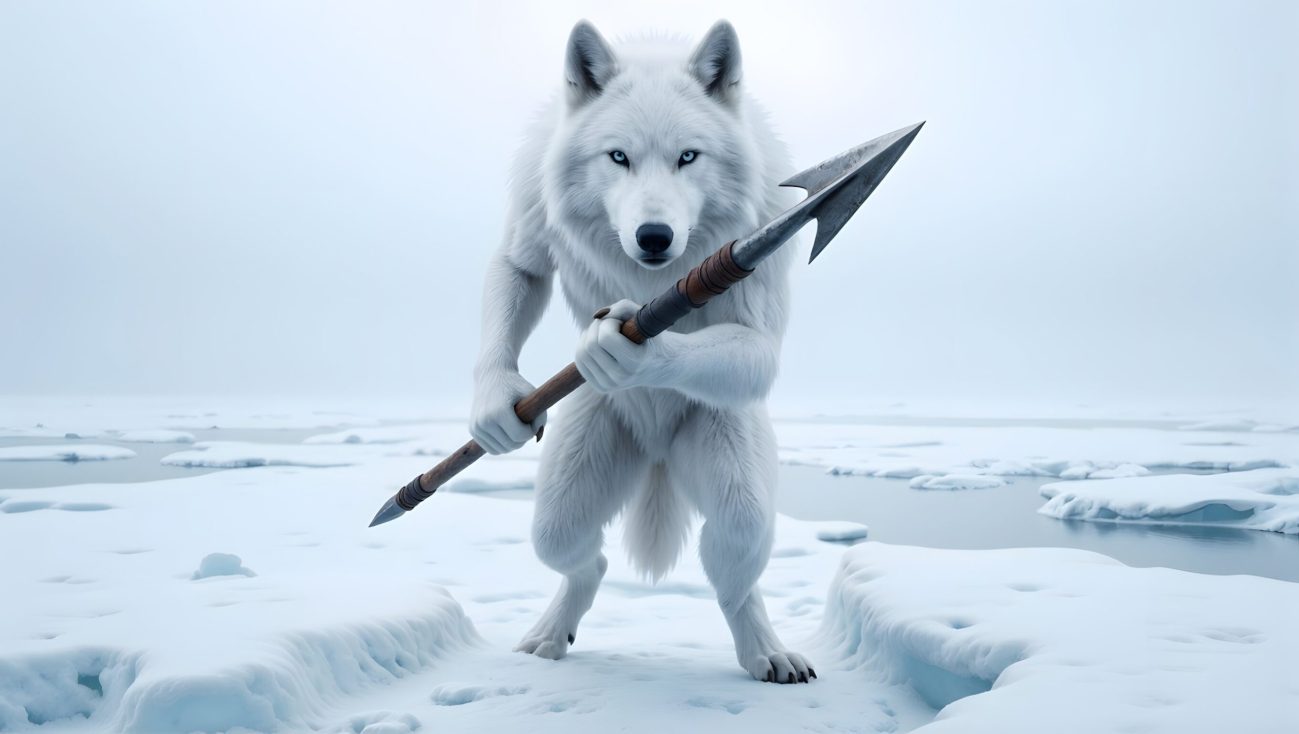
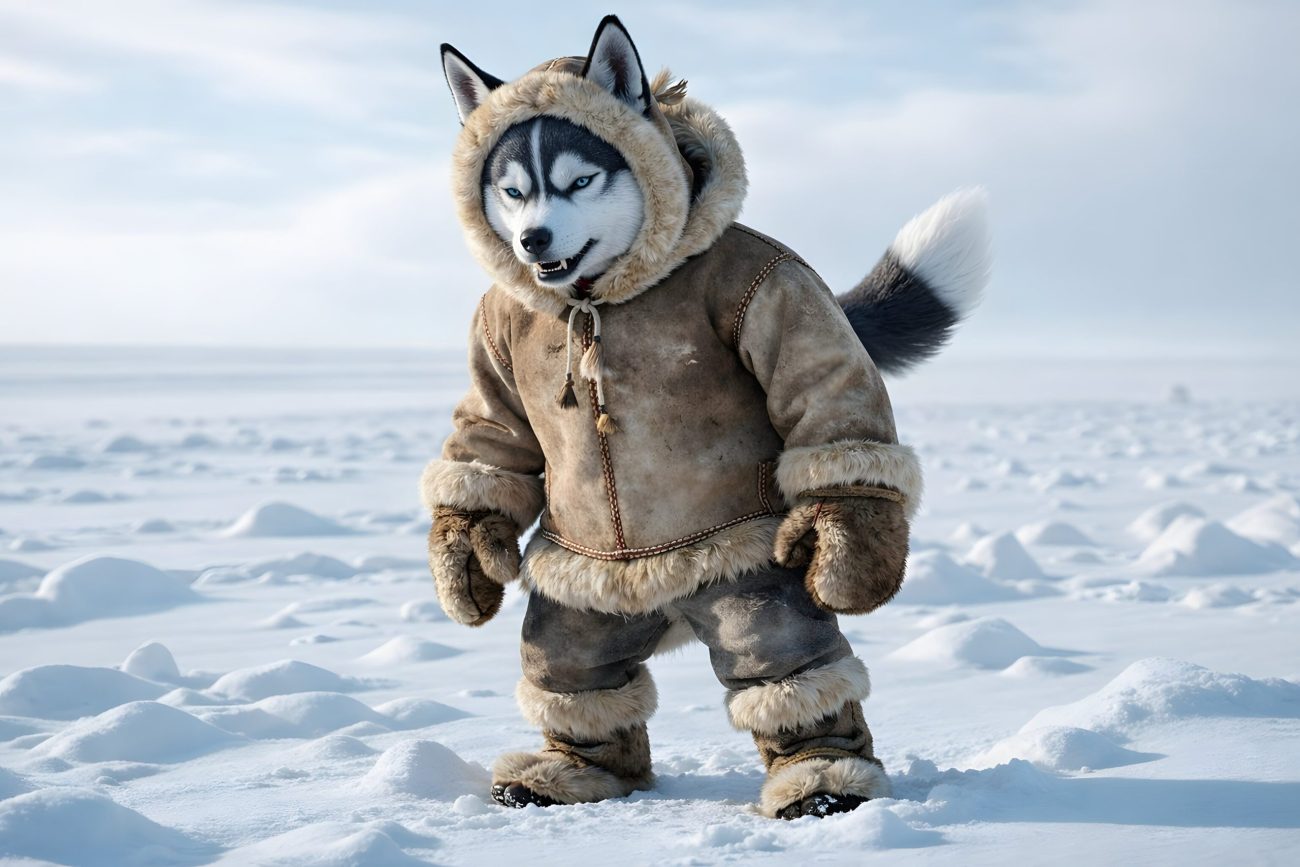
Amaguq is a wolf spirit of Inuit tradition, known for cunning, unpredictability, and the ability to change form. The name itself simply means “wolf,” yet in story it refers to something far more than an ordinary animal.
Amaguq moves between shapes and roles, sometimes appearing as a wolf, sometimes as something closer to human, and sometimes as a spirit whose presence is felt rather than seen. Like many trickster beings, it does not belong clearly to the side of good or evil.
In some tales Amaguq misleads hunters, steals food, or interferes with travel across the tundra. In others it acts as a teacher, forcing people to learn caution, humility, or cleverness in order to survive. Its actions are unpredictable: it may help or harm depending on the moment, the person, or its own whims.
Because of this, Amaguq is remembered not as a simple monster, but as a wild spirit of the northern world — a reminder that wolves, like the land itself, can be both guide and danger, both teacher and threat.
The Adlet are a race of beings spoken of in Inuit tradition. They are said to be taller than ordinary people and to live inland, away from the coast. Their form is half human and half dog: from the waist up they resemble a man, but their lower bodies are those of dogs. They run swiftly across the land and are often remembered as fierce enemies of humankind. In some stories they are cannibals, and encounters with them are dangerous and violent.
Their origin is told in an old story about a young woman named Niviarsiang, who lived with her father, Savirqong. Though many men wished to marry her, she refused every suitor. Because she would not take a husband, people came to call her “she who would not marry.”
At last, instead of choosing a man, she took a dog as her husband. The dog, named Ijirqang, had white and red spots on his coat. From this strange union ten children were born. Five of them were fully dogs, but the other five were unlike any people before them: their upper bodies were human, while their lower halves were those of dogs. These children were the first Adlet.
Ijirqang did not hunt, and the household was soon starving. The hungry children cried constantly, and Savirqong, their grandfather, was forced to bring them food. At last he grew weary of this burden. He carried his daughter, her husband, and their children out to a small island and left them there, saying that he would provide meat if the dog swam to shore each day to fetch it.
To help her husband, Niviarsiang hung a pair of boots around Ijirqang’s neck so he could carry the meat back across the water. The dog swam to shore as instructed. But when he arrived, Savirqong did not fill the boots with food. Instead, he filled them with stones. Weighted down, Ijirqang drowned in the sea.
When Niviarsiang learned what had happened, she sought revenge. She sent her young dogs across the water to attack her father. They gnawed off his hands and feet as punishment for killing their father.
Later, when Niviarsiang herself came near Savirqong in his boat, he seized his chance. He pushed her overboard. She clung to the side, trying to pull herself back in, but he cut off her fingers one by one. As they fell into the ocean, each finger changed form and became a sea creature. From them came the seals and the whales that fill the waters.
Fearing that her father might next destroy her strange children, Niviarsiang sent the Adlet away from the coast and into the interior lands. There they multiplied and became a great inland people.
Her dog children she placed in a makeshift boat and sent them across the sea. It is said that when they reached the far shore, they became the ancestors of distant northern peoples.
From that time on, the Adlet lived inland, remembered as swift, powerful, and dangerous beings whose blood was both human and animal.
Long ago, there lived a young woman named Sedna, daughter of a man who could not find a husband worthy of her—or, in some tellings, a maiden who refused every suitor who came.
At last a stranger arrived, promising riches and plenty of food. Sedna’s father agreed to the marriage, and she went away with the man. But once she reached his home, she discovered the truth: he was not a man at all, but a great bird spirit. She lived in misery among the cliffs and the screaming birds until her father returned to rescue her.
They fled together in his kayak across the sea. But the bird-spirit raised a terrible storm. Waves rose high, and the sea roared around them. Terrified that the boat would sink, Sedna’s father pushed her overboard.
She clung to the side of the kayak, begging for help. In fear for his life, her father took a knife or axe and cut off her fingers one by one. As they fell into the water, her fingers became the creatures of the sea—seals, walruses, whales, and all the animals hunted by humans.
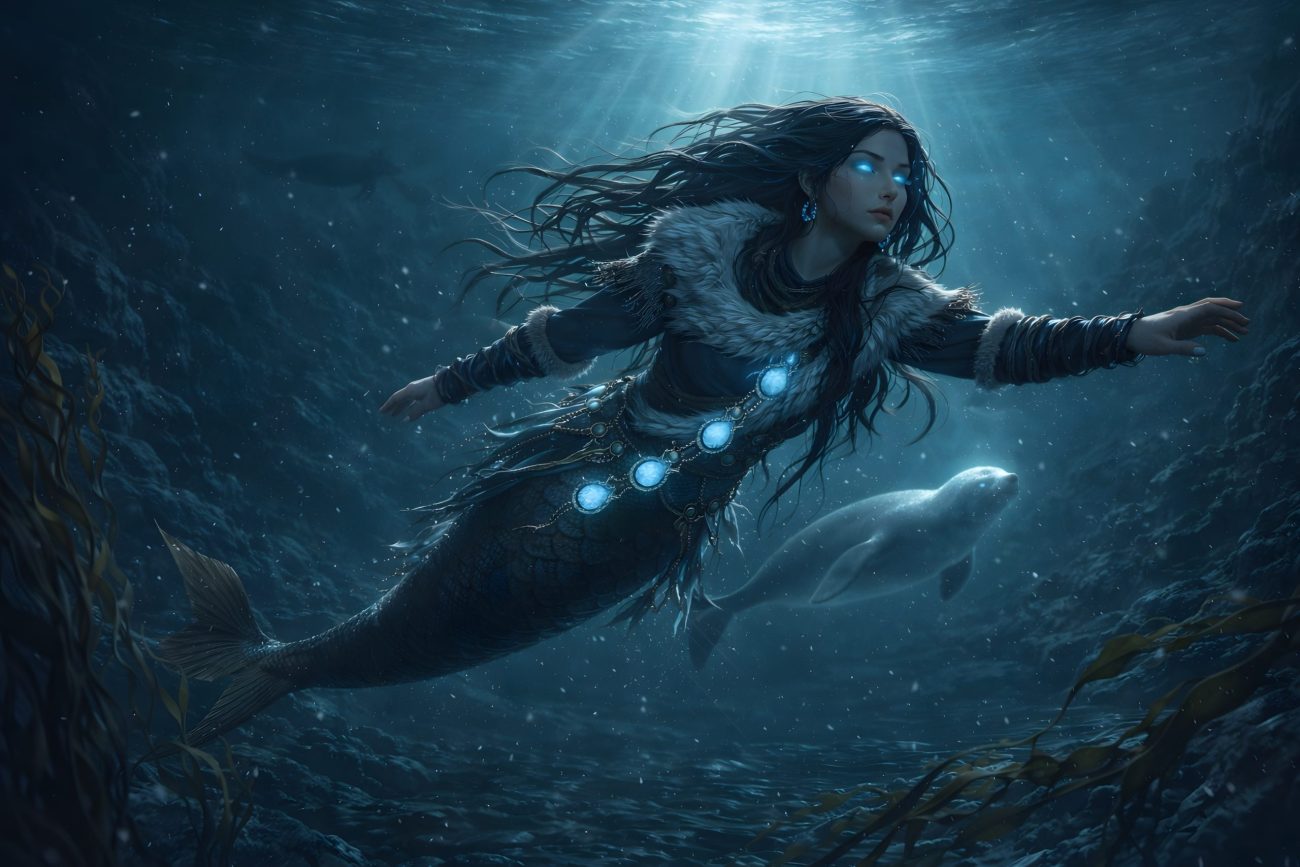
Sedna sank beneath the waves and fell to the bottom of the ocean. There she did not die. Instead she became the great mistress of the deep, ruler of the undersea world and guardian of all marine animals.
From that time on, the people believed that the success of every hunt depended on her will. When she was angered by human wrongdoing, she kept the animals hidden, and famine followed. Shamans would then journey in spirit to her underwater dwelling, where Sedna sat with tangled hair she could not comb because she had no fingers. The shaman would soothe her, wash and braid her hair, and calm her anger so she would release the animals again.
And so Sedna remains beneath the sea, watching over the creatures of the deep and deciding whether the hunters above will live or starve.
Sources
Wikipedia contributors. (n.d.). Sedna (mythology). In Wikipedia, The Free Encyclopedia. Retrieved February 14, 2026, from https://en.wikipedia.org/wiki/Sedna_(mythology)