Tradition: Canadian Mythology
Alternative Names: The Whooper, Ghost of the Dungarvon River, Ryan Garvon
Category: Ghost, Cat
The Myth
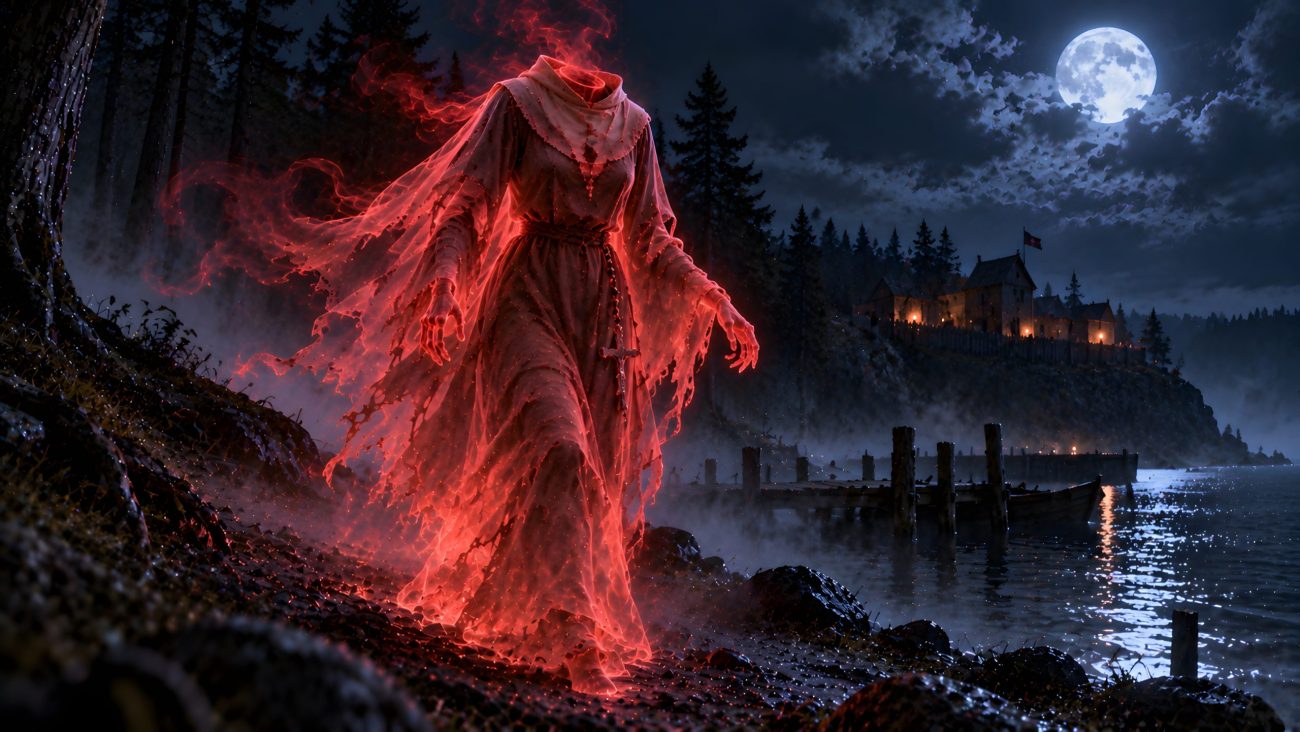
The Dungarvon Whooper is a terrifying ghost associated with the Dungarvon River in central New Brunswick, Canada. It is said to be the spirit of a young cook who was murdered in a lumber camp during the nineteenth century. In many versions of the legend, the victim was an Irishman named Ryan or Ryan Garvon, who had emigrated to Canada during the period of Irish migration following the Great Famine. Some tellings add that he had a sick mother whom he hoped to support. Although the ghost is usually invisible, certain accounts describe it as a wildcat- or puma-like creature capable of knocking down small trees with its powerful movements.
According to the best-known version of the story, the young cook was left alone at a lumber camp with the camp’s boss while the other lumberjacks were away. The boss allegedly murdered him and stole the money kept in his money belt. When the crew returned, they discovered the cook’s lifeless body, and the missing money aroused suspicions of foul play. The boss claimed that the young man had suddenly fallen ill and died before anything could be done. Because heavy snowfall made it impossible to transport the body to a distant graveyard, the lumberjacks buried him in the forest. That night, the camp was filled with terrifying whoops and screams. Believing the place to be haunted, the frightened men resolved to abandon it before dawn.
The ghost’s cries continued to haunt the woods around the young man’s grave, terrifying even the bravest lumberjacks. The supernatural sounds were interpreted as the murdered cook’s spirit protesting the injustice of his death and seeking peace. In some versions, a Roman Catholic priest named Edward Murdoch arrived from Renous and performed an exorcism at the supposed gravesite near Whooper Spring. In Michael Whelan’s celebrated 1912 song, a priest’s prayers finally quiet the haunting, allowing the region to return to peace. The story became a lasting part of New Brunswick’s lumbering folklore, passed down among woodsmen throughout the twentieth century. Although the legend’s precise origins remain uncertain, its central themes are the murder of an innocent worker, the guilt of the perpetrator, and the restless dead demanding justice before they can find peace.
Sources
“Dungarvon Whooper.” Wikipedia: The Free Encyclopedia. Wikimedia Foundation. Accessed October 16, 2026. https://en.wikipedia.org/wiki/Dungarvon_Whooper