Haakapainiži

Tradition: Kawaiisu Mythology, Chemehuevi Mythology, American Mythology
Alternative Names: The Grasshopper; Aatakapitsi
Category: Insect


The Myth

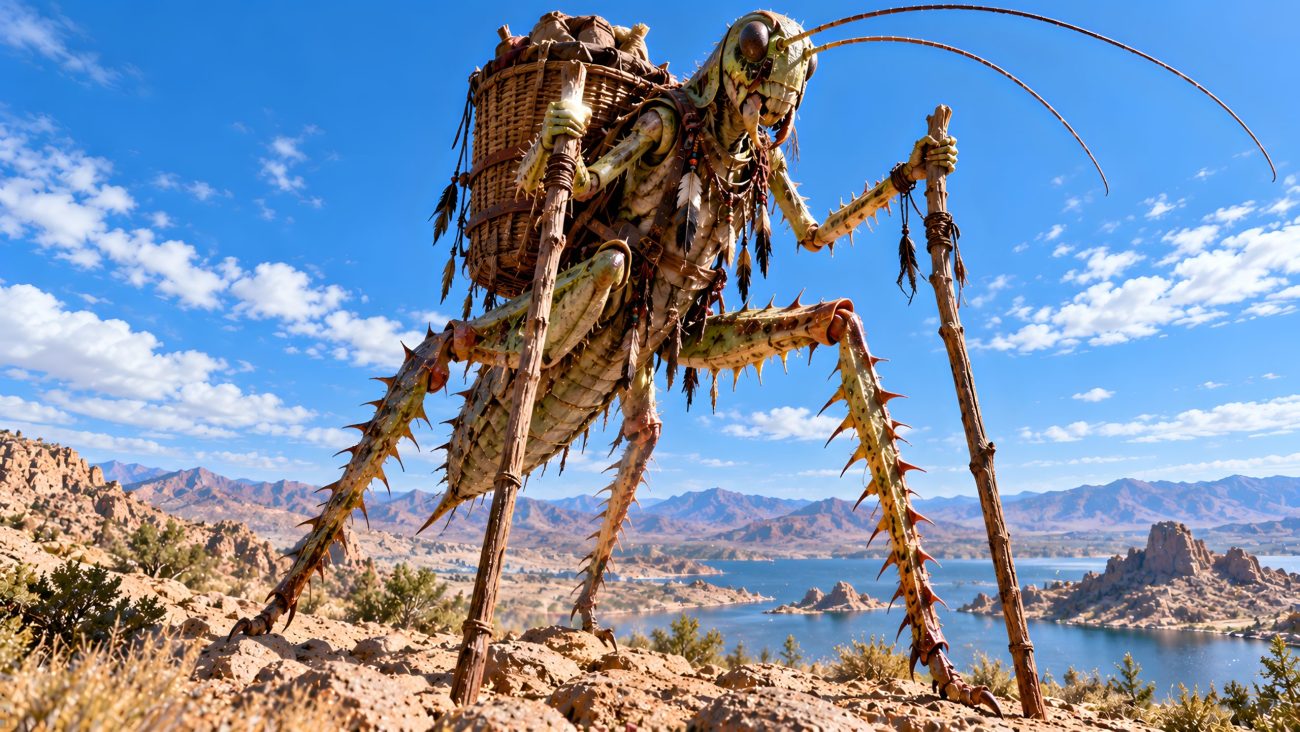
Haakapainiži is a terrifying ogre from Kawaiisu folklore in Southern California, although he is said to live on a rock in a lake in Nevada. His most familiar form is that of a gigantic grasshopper walking upright on two canes, with a basket strapped to his back. His long legs are armed with viciously sharp spikes, and each stride carries him an extraordinary distance: his legs are said to be long enough for him to walk the twenty miles between Inyokern and Onyx in a single step.

Haakapainiži can assume several forms. Besides his giant grasshopper appearance, he may appear as an enormous humanoid, a harmless-looking old man, or an entire swarm of grasshoppers. He sings as he walks, concealing his wicked intentions behind a seemingly innocent tune. His favourite prey is children, whom he captures and stuffs into the basket on his back to devour later. Parents invoke his name to frighten misbehaving children, warning them that Haakapainiži is coming.

In one tale, Haakapainiži encounters a young girl and coughs mucus into his hand before offering it to her, calling it fat for his grandchild. When she reaches for it, he throws her into his basket and carries her away to Nevada, where he eats her. He attempts the same trick on a little boy, but the child manages to escape by grabbing an overhead branch before he can be carried off.

Haakapainiži’s deceptive nature also appears in a story about the Quail Sisters. He sleeps beside them and assures them that he will lie above their heads without stretching during the night. The sisters trust him, and when they awaken unharmed, they believe he is a kind old man. However, Haakapainiži then stretches his spiked legs and gouges out their eyes.

A parallel figure in Chemehuevi folklore is Aatakapitsi, whose stories closely resemble those of Haakapainiži. In one account, Aatakapitsi attacks the Yucca Date Worm girls in the same manner as Haakapainiži attacks the Quail Sisters. Their husband, Kwanantsitsi, the Red-Tailed Hawk, restores their eyes and sets out to avenge them. Yet whenever he approaches Aatakapitsi, the giant appears to shrink until he vanishes, leaving behind only a swarm of grasshoppers. Kwanantsitsi furiously strikes the insects with a stick until they are all dead. When he steps back, he discovers that the giant’s lifeless body has finally appeared.

Haakapainiži meets his end through the cleverness of Mouse. Mouse heats a stone used for sharpening arrows in a fire, then tricks the giant into opening his mouth by promising to feed him one of his children. Mouse throws the scorching stone into Haakapainiži’s mouth, burning his insides and killing him. According to the tradition, both Mouse’s home and the petrified remains of Haakapainiži can be seen at Inyokern.


Sources

“Haakapainizi.” A Book of Creatures, August 26, 2016. https://abookofcreatures.com/2016/08/26/haakapainizi/
Moskittos

Tradition: American Mythology
Alternative Names: None recorded
Category: Insect


The Myth

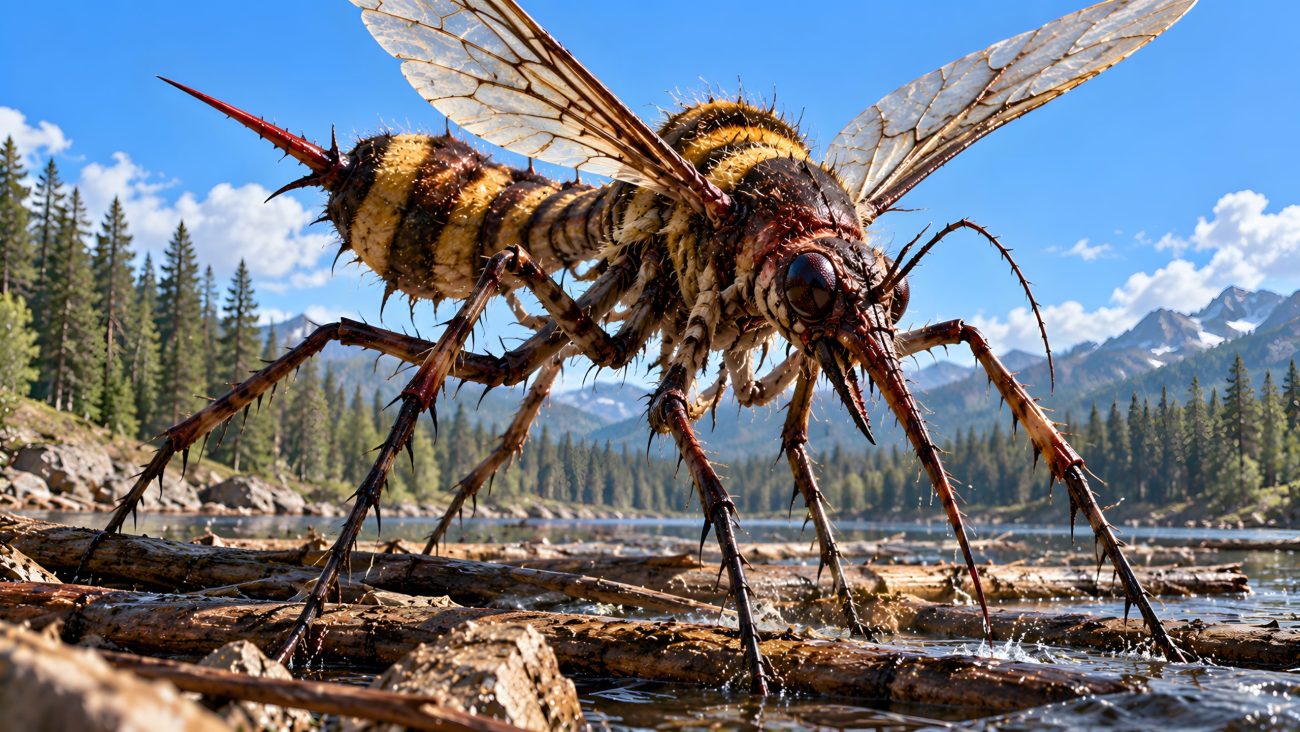
Moskittos are enormous hybrid insects from American lumberjack folklore, known for their terrifying size and unusual stingers. They originated from the giant mosquitoes of the Chippewa River, which were so large that they could straddle a stream. These monstrous insects attacked lumberjacks by plucking them from floating logs and draining their blood. They were even large enough to be tied up and used as bridges when caught straddling a stream.

To combat the mosquito menace, the legendary lumberjack Paul Bunyan introduced deadly fighting bumblebees from Texas. These aggressive bees quickly began battling the giant mosquitoes, giving the lumberjacks a temporary reprieve from their bloodthirsty attackers.

The conflict eventually ended when the mosquitoes and bumblebees made peace and hybridized, producing the moskittos. These new creatures inherited the enormous size and blood-drinking habits of the mosquitoes, along with the bees’ stinging abilities. Their most distinctive feature was having a stinger at each end of their bodies.

Fortunately, the moskittos also inherited the bumblebees’ fondness for sugar. When they discovered a shipment of sugar being transported across Lake Superior, they descended upon it and gorged themselves. They ate so much that they became too heavy to fly and drowned in the lake, ending their threat to humanity.


Sources

Countess Sica. “Moskitto.” A Book of Creatures, April 19, 2021. https://abookofcreatures.com/2021/04/19/moskitto/


Wingwak

Tradition: Algonquian Mythology, American Mythology, Canadian Mythology
Alternative Names: Wingoc
Category: Insect


The Myth

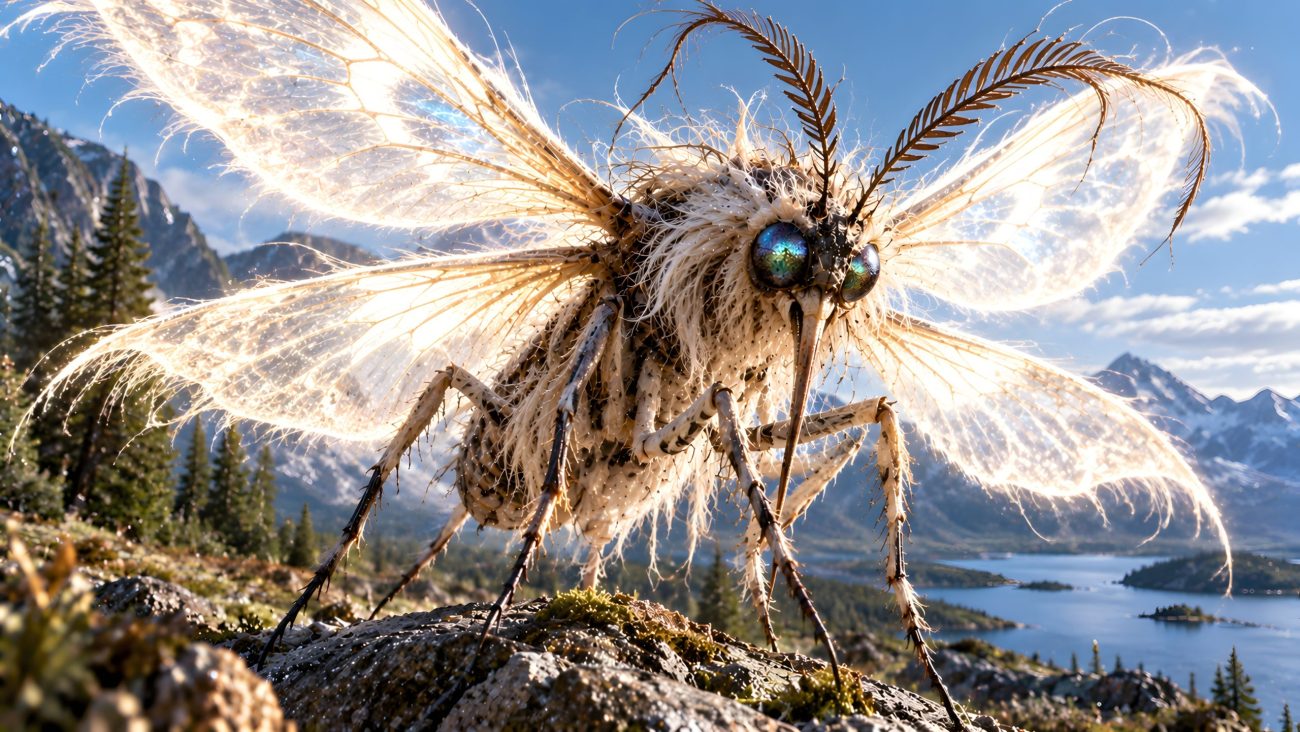
The Wingwak are tiny supernatural insects that bring sleep to human beings. They appear as somniferous flies or butterflies, gathering above people and overwhelming them with drowsiness. A person is typically visited by around five Wingwak, though larger numbers can gather when sleepiness is especially strong. Their presence turns the ordinary experience of feeling tired into the work of invisible spiritual creatures.

According to an Algonquian story, a man who was playing in the sky once fell through a hole and landed on Earth. There he discovered people sleeping, including one man who slept much more deeply than everyone else. The celestial visitor made himself a small bow and arrows and began shooting at the clouds of flies hovering above the unusually heavy sleeper. After he killed some of the Wingwak and drove the others away, the man finally awoke.

The visitor then shared his wisdom with the Algonquians. Among his warnings was a prophecy about the arrival of bearded men who would bring an end to their people. The encounter with the Wingwak thus forms part of a larger story in which a being from the sky intervenes in human affairs, first by freeing a man from overwhelming sleep and then by delivering a warning about the future.

The Wingwak also appear in expressions used to describe sleepiness. Saying that the Wingwak are killing someone means that the person is overwhelmed by the need to sleep, while remarking that there are many Wingwak conveys that everyone has fallen asleep. These expressions reflect the belief that sleep can be understood as the collective work of small supernatural insects gathering around their human victims.


Sources

“Wingoc.” A Book of Creatures, February 4, 2019. https://abookofcreatures.com/2019/02/04/wingoc/