Nasalik

Tradition: Inuit Mythology, Canadian Mythology, Greenlandic Mythology
Alternative Names: None known
Category: Forest Dweller


The Myth

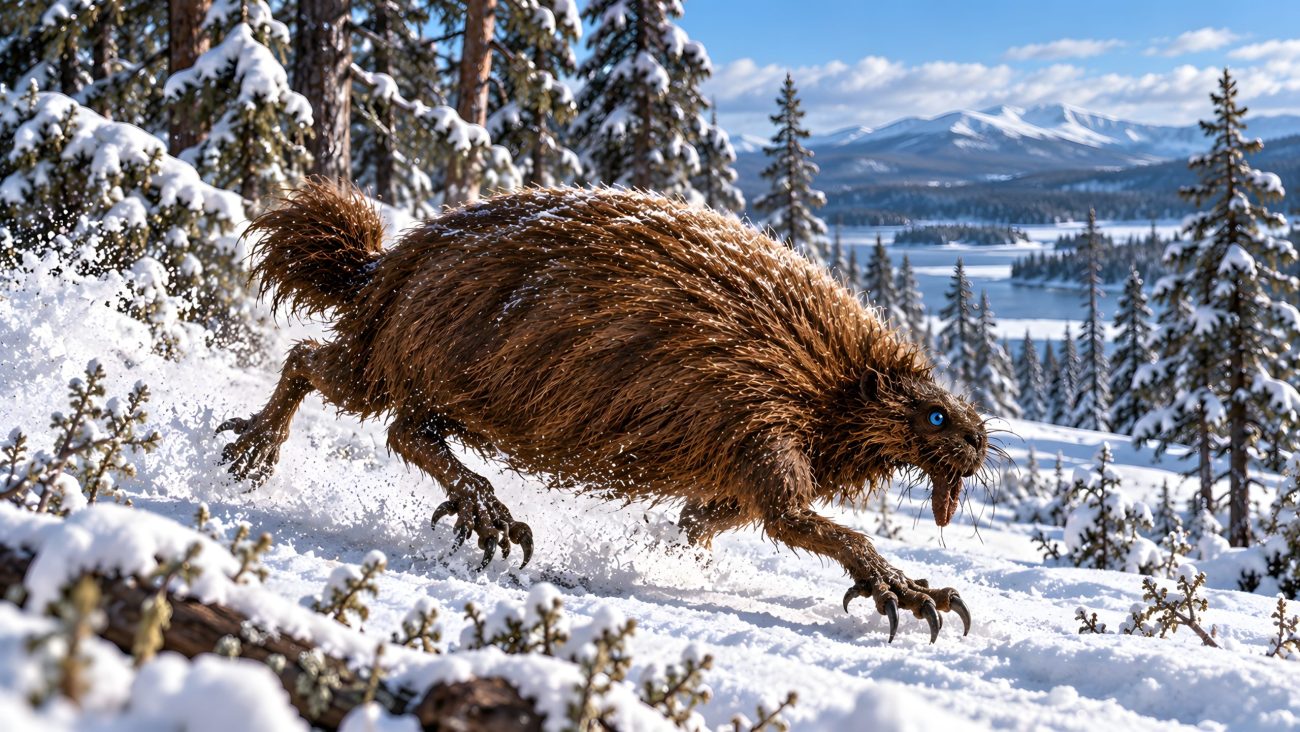
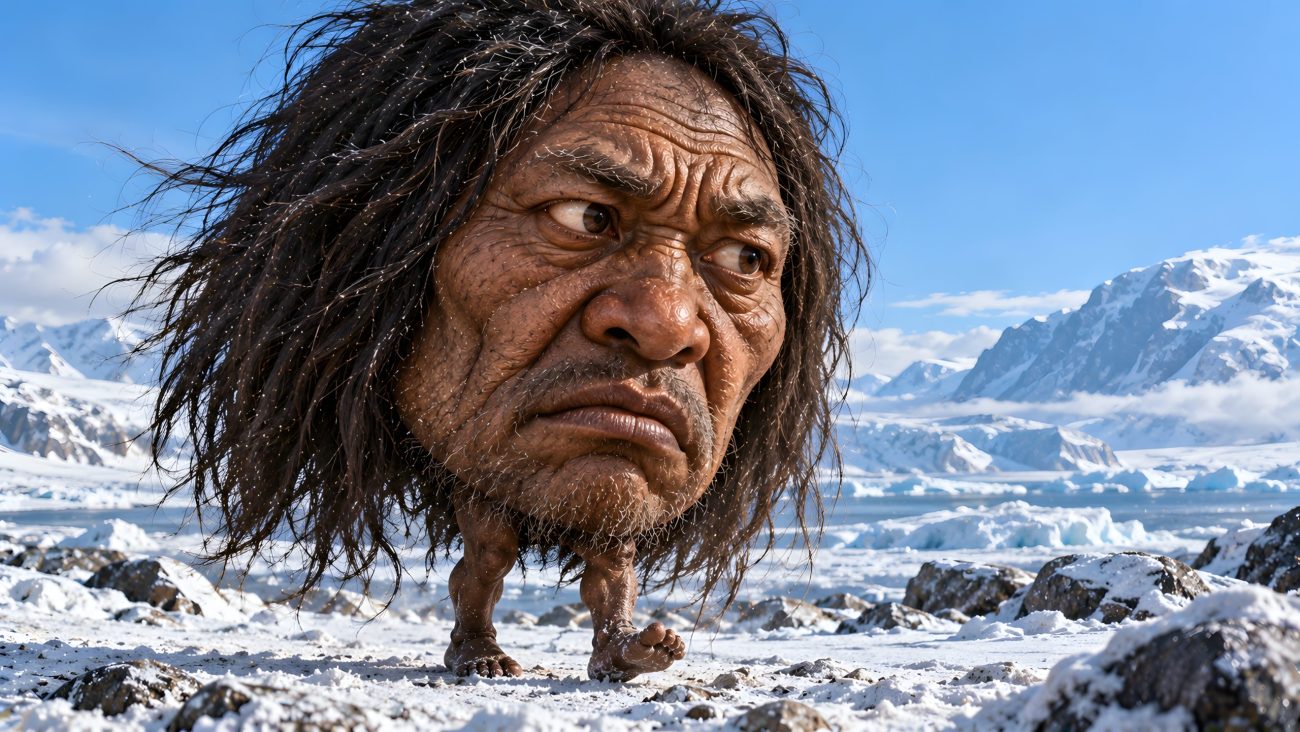
The Nasalik is a strange creature from Inuit folklore, resembling a small, hunched animal with a large, rounded body and thin, awkward legs. Its body is covered in wood-like material, and a cap sits on top of its head. Tufts of black hair grow from the wooden covering, while its eyes are level with the corners of its mouth. It has long, thin tongues extending between its legs, and its hind legs are so loose and wobbly that it struggles to walk steadily.

The Nasalik’s peculiar wooden body and unsteady gait make it an unusual sight. Its appearance combines the shape of a small animal with the strange features of a living piece of wood, giving it a distinctive place among the curious supernatural creatures of Inuit tradition.


Sources

Rasmussen, Knud. Intellectual Culture of the Hudson Bay Eskimos. Copenhagen: Gyldendal, 1930. https://archive.org/details/intellectualcult00rasm
Leprocaun

Tradition: Canadian Mythology
Alternative Names: Simiidiabolus Hibernicus Horribilis
Category: Forest Dweller


The Myth

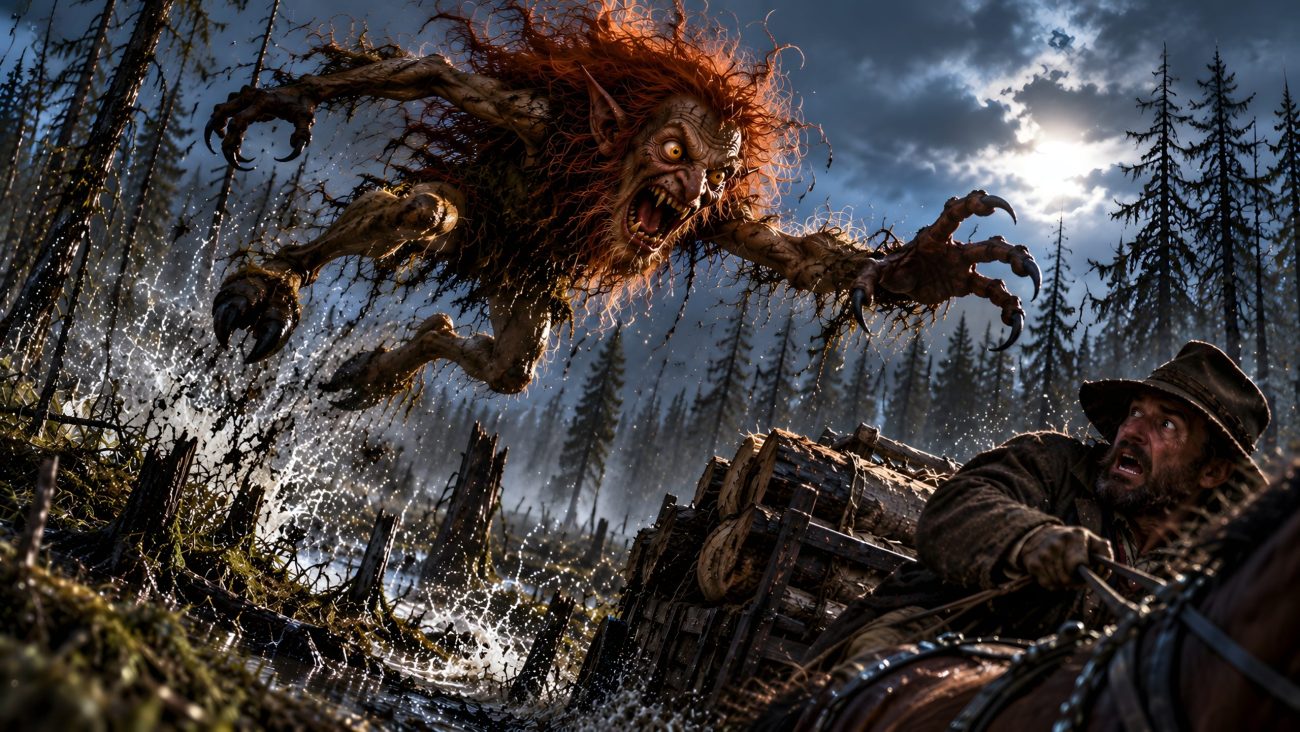
The Leprocaun is a strange, agile creature originally native to the bogs of Ireland. Once a harmless animal known for its playful antics, it was celebrated for hopping across marshes, performing somersaults, and leaping over hillocks with astonishing speed. One of its favourite tricks was to burrow into piles of drying peat before springing out suddenly, hurling clods of earth into the air until the disturbance resembled a small whirlwind. The creature was considered amusing in its native habitat, where its mischievous behaviour caused little harm.

The Leprocaun’s nature changed dramatically after several young specimens were brought to a logging camp on Canada’s Madawaska River during the early days of Upper Canada. The animals escaped into the surrounding tamarack swamps, where they multiplied and spread through the wetlands. Over time, they were occasionally spotted along the upper Ottawa River and even in northern Michigan. In these unfamiliar surroundings, the once-playful creatures became dangerous predators, prowling through tamarack and cedar forests and leaping across muskegs in search of food.

The Canadian Leprocaun became especially feared by teamsters transporting supplies along swamp roads. It would suddenly bound over their loaded wagons, snapping its teeth at the driver and reaching for him with its vicious claws. The terrified teamsters were forced to abandon their horses and loads and flee into the thick timber. Although the creature was powerful and frightening in open marshland, it struggled to pursue a fleeing person through tangled tamarack, allowing frightened travellers a chance to escape.


Sources

Cox, William T. Fearsome Creatures of the Lumberwoods, with a Few Desert and Mountain Beasts. St. Paul, MN: Press of Judd & Detweiler, Inc., 1910. https://archive.org/details/fearsomecreature00coxw


Issitoq

Tradition: Greenlandic Mythology, Canadian Mythology, Inuit Mythology
Alternative Names: Issitoq, “The Giant Eye”
Category: Spirit, Dwarf


The Myth

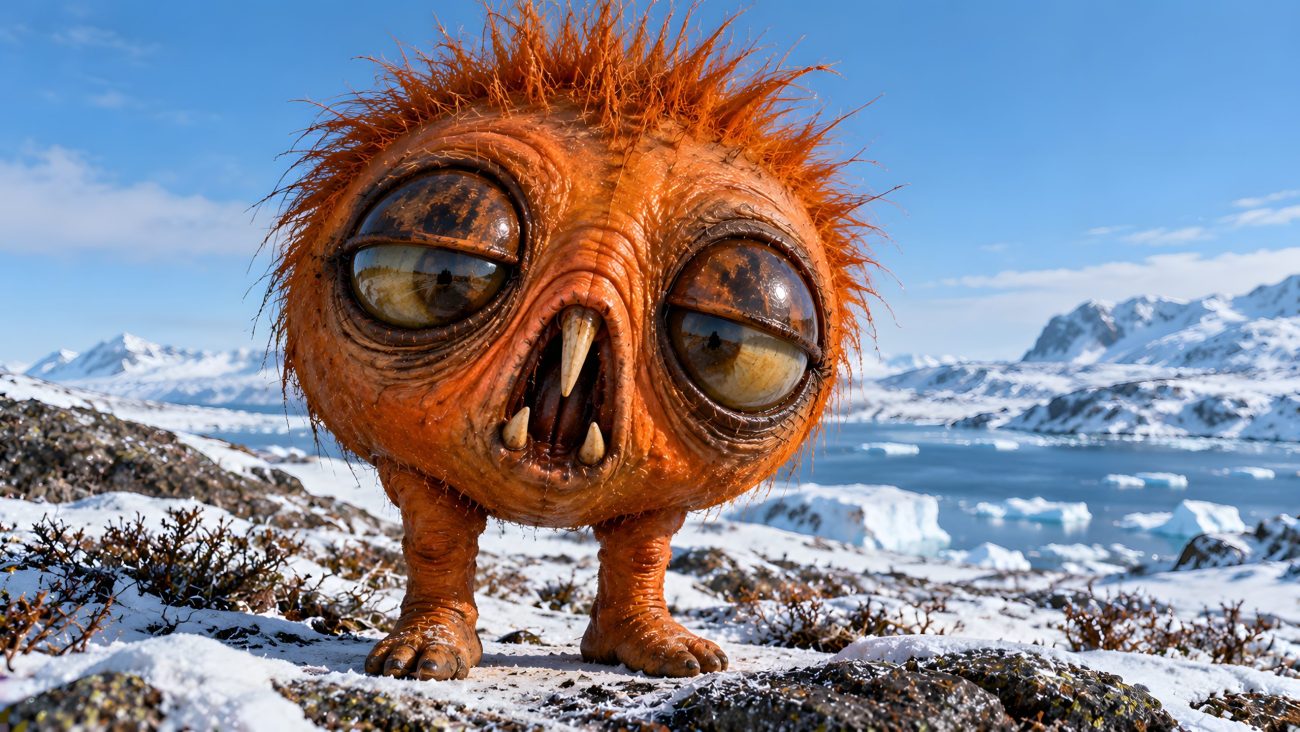
Issitoq was a gloomy helping spirit with a strange and unsettling appearance. It had only a head and legs, with short, bristly hair that stood straight upward. Its enormous eyes were each divided into two sections, while its mouth was set vertically and contained one long tooth at the top and two shorter teeth at the sides. In another depiction, Issitoq had hair made from willow twigs.

Issitoq was originally the helping spirit of a fox, but later came into the possession of Anarqåq. It was said to appear to someone who had lost their parents, approaching the grieving person and telling them not to fear it because it too struggled with sad thoughts. Issitoq would then accompany them as a helping spirit. Its particular ability was to find people who had broken a taboo, making it a spirit closely associated with the discovery and punishment of taboo violations.


Sources

Rasmussen, Knud. Intellectual Culture of the Hudson Bay Eskimos. Copenhagen: Gyldendal, 1930. 3 vols.


Katutayuk

Tradition: Greenlandic Mythology, Canadian Mythology, Inuit Mythology
Alternative Names: Katutajuit; Katutajuk; Katutayuit
Category: Dwarf


The Myth

The Katutayuk are a strange race of dwarfs with enormous human-like heads carried on tiny legs. Their bodies are extremely small, with some traditions describing them as having no arms or torsos at all, only legs extending directly from beneath their oversized heads. Other accounts say that they have only three toes.

Very little is known about the Katutayuk, but they are associated with misfortune and wandering. Their lives are said to consist of one unfortunate event after another, leaving them doomed to roam the earth without ever finding a permanent home. They wander through the wilderness, appearing in places where strange disturbances have occurred.

Their presence may sometimes be detected without seeing the creatures themselves. The sounds of the Katutayuk moving through the night can be heard in the wilderness, while their wandering may leave behind broken or overturned objects. They are also blamed for strange holes suddenly appearing in the walls of igloos. These disturbances are caused by the Katutayuk as they continue their endless wandering through the land.


Sources

“Katutajuk.” New Bestiary (Bestiary.us). Accessed October 4, 2026. https://www.bestiary.us/katutajuk


Umingmånguaq

Tradition: Inuit mythology, Canadian mythology
Alternative Names: Umingmånguaq
Category: Cow


The Myth

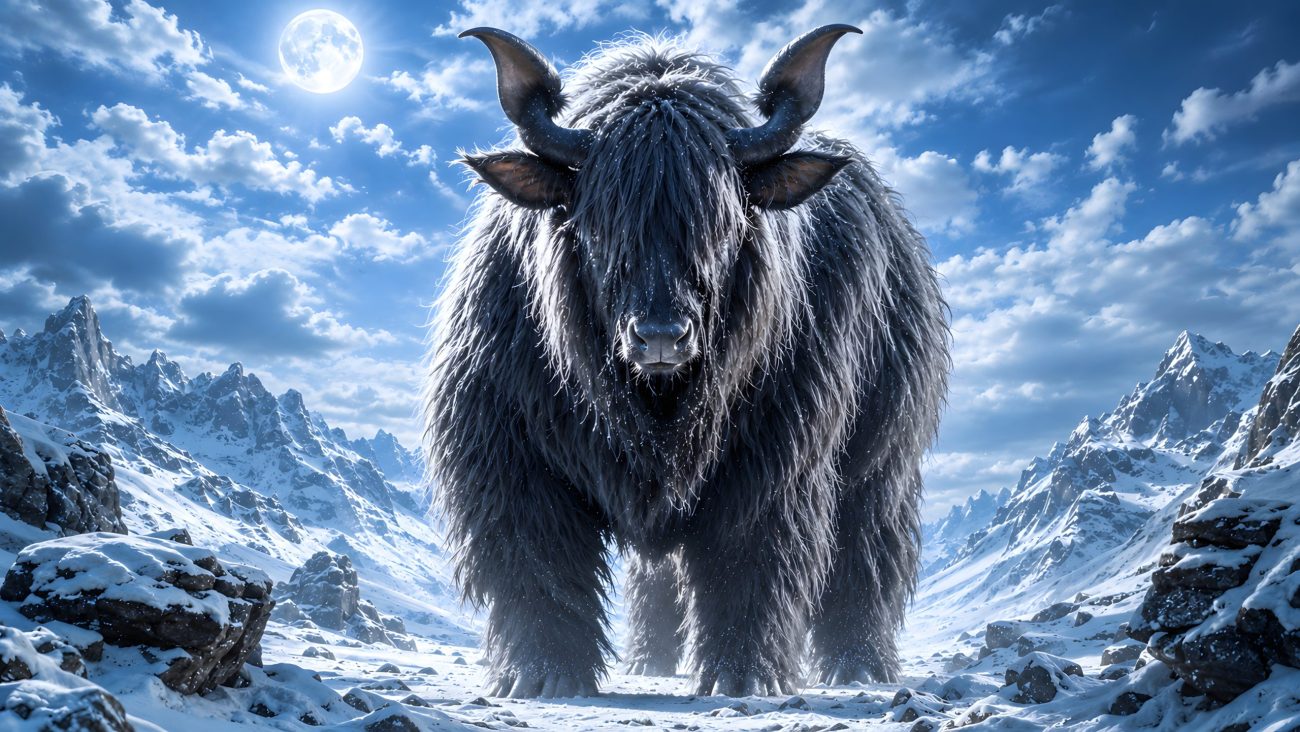
Umingmånguaq is the spirit of the musk-ox. It has no eyes and perceives everything through its ears, which grow from stems and resemble horns.

A hunter first encountered Umingmånguaq while hunting caribou. The spirit spoke to him like a human being and explained that it was simply searching for a shaman whom it could serve.

From then on, Umingmånguaq would follow the hunter wherever he went. He did not need to turn around to see whether it was there, because whenever he turned to look for it, the spirit would disappear.

Umingmånguaq was regarded as having healing powers and was said to be able to cure all ailments.


Sources

Rasmussen, Knud. Intellectual Culture of the Hudson Bay Eskimos. Copenhagen: Gyldendal, 1930. 3 vols. Vol. 1, Intellectual Culture of the Iglulik Eskimos (1929); Vol. 2, Observations on the Intellectual Culture of the Caribou Eskimos (1930); Vol. 3, Iglulik and Caribou Eskimo Tests (1930). Internet Archive


Goose Wife

Tradition / Region: Inuit Mythology, Canadian Mythology, American Mythology
Alternative names: Goose Woman; Goose Maiden
Category: Bird, Nymph


The Myth

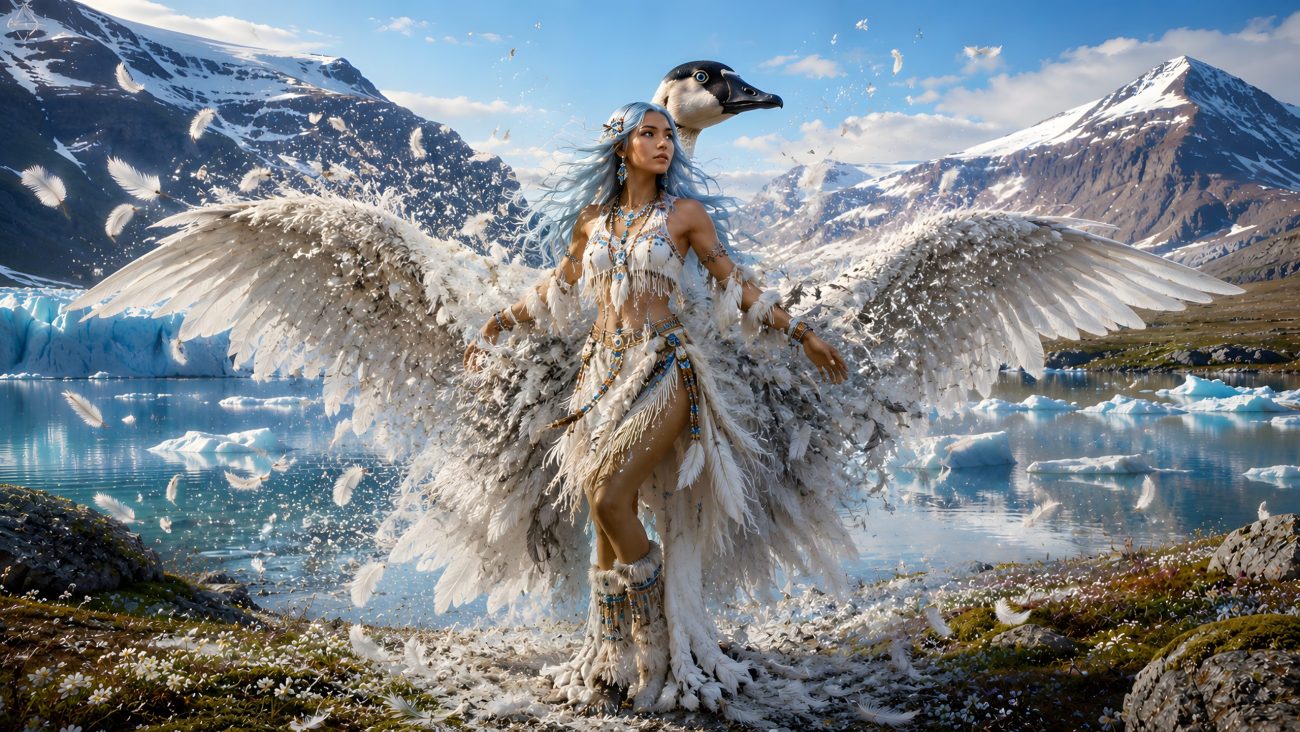
The Goose Wife is a bird maiden found in the traditions of the Inuit and other Arctic peoples. A hunter discovers a group of geese that remove their goose skins to become women while bathing in a lake. He secretly steals the skin of one of the women, preventing her from returning to bird form, and she is forced to become his wife. Together they have children, but she never forgets her home in the Land of Birds.

In time, the Goose Wife secretly gathers feathers and fashions new wings for herself and her children. Once they are complete, they transform back into birds and fly away. Determined to reunite with his family, the hunter journeys to the distant Land of Birds, where he encounters marvelous beings, including a giant who creates fish from chips of wood and helps him cross the waters to his wife’s homeland.

The ending varies among different Arctic traditions. In some versions, the hunter is reunited with his wife for a time before she departs again with the bird people. In others, he is transformed into a bird himself so he may remain with his family, while some stories end tragically, with the Goose Wife dying or the husband never truly recovering what he had lost. Despite these differences, the Goose Wife remains one of the best-known bird maiden figures of Arctic folklore.


Sources

Wikipedia contributors. (n.d.). Goose Wife (Inuit). In Wikipedia. Retrieved June 29, 2026, from https://en.wikipedia.org/wiki/Goose_Wife_(Inuit)


Tulorialik

Tradition / Region: Inuit Mythology, Canadian Mythology
Alternative names: Nanoq Tulorialik (“The Bear with the Fangs”)
Category: Bear


The Myth

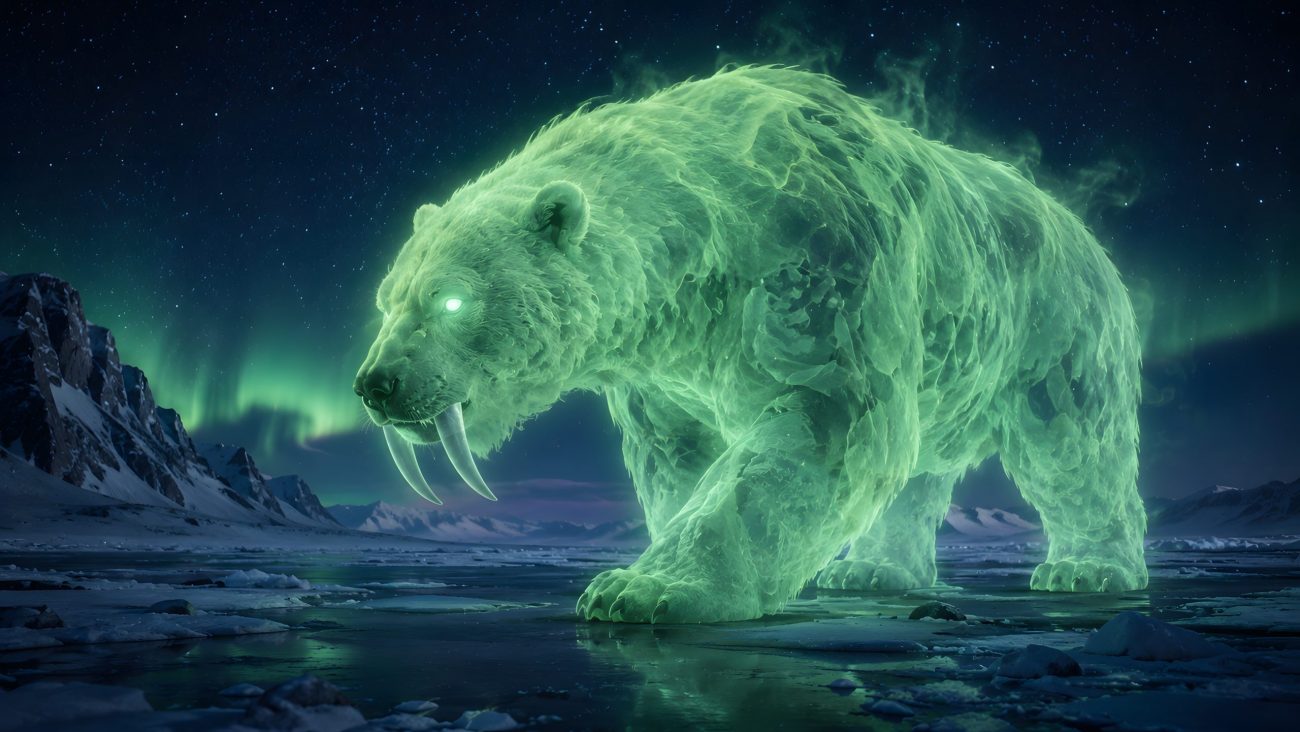
Tulorialik, the Bear with the Fangs, is a giant bear spirit and the most powerful helping spirit of the Inuit shaman Unaleq. Among his ten spirit helpers, Tulorialik was regarded as the strongest and most influential, answering whenever the shaman called upon him.

During a shamanic séance, Unaleq invoked Tulorialik in complete darkness. Hidden beneath a table covered with skins, he called the great bear spirit to enter his body. As Tulorialik arrived, those present heard the scraping of enormous claws, deep growls, the sounds of wind and rushing water, and the snorting of walruses. Through the power of the spirit, Unaleq claimed he could transform into a bear or a walrus.

On one occasion, Tulorialik was summoned to ensure the safety of a long sled journey. The bear spirit was said to travel ahead along the route, removing dangers and protecting the travelers from sickness, accidents, and death. After the séance, the shaman declared that Tulorialik had cleared the path and that the entire expedition would return safely.

Tulorialik was believed to possess immense supernatural power, and Unaleq regarded him not merely as a spirit, but as a faithful helper who came whenever he was called.


Sources

Rasmussen, K. (1930). Intellectual culture of the Hudson Bay Eskimos (Vols. 1–3). Gyldendal.


Ya-o-gah

Tradition / Region: Haudenosaunee Mythology, American Mythology, Canadian Mythology
Alternative names: Ya-oh-gah, Ya-o-gah
Category: Bear


The Myth

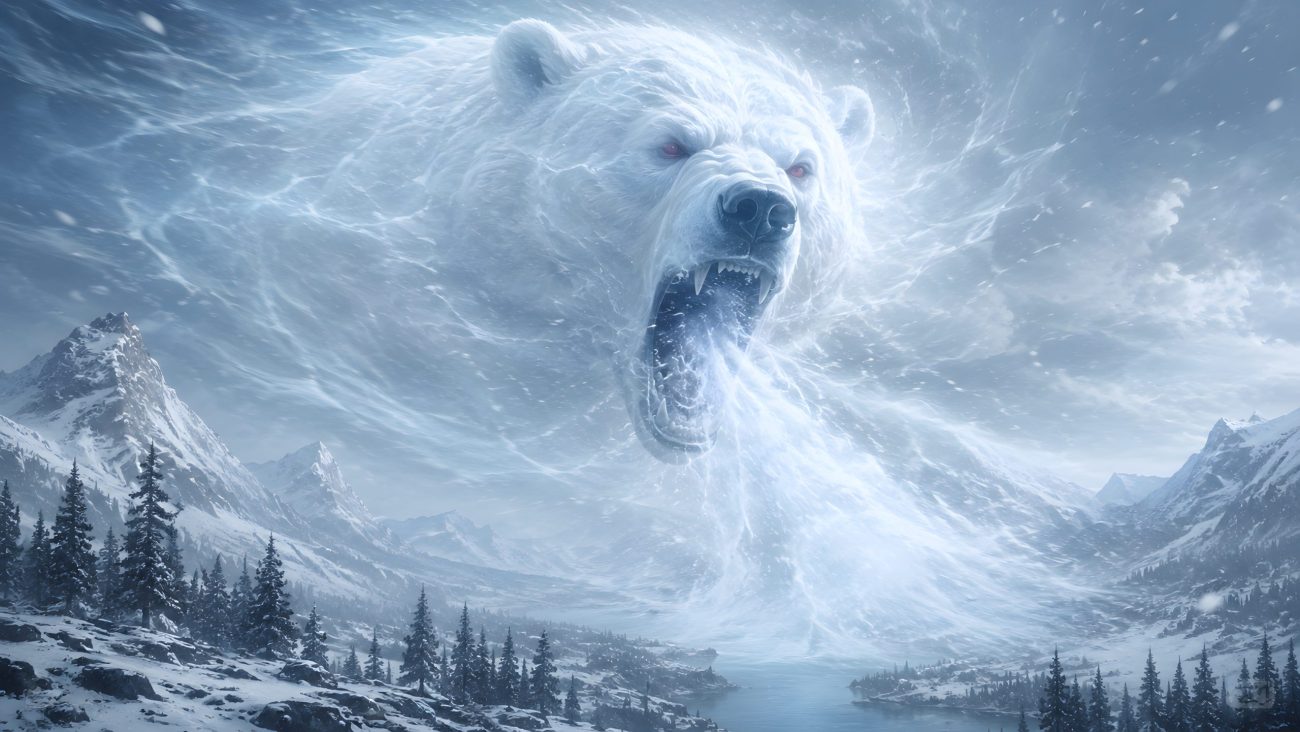
Ya-o-gah is the great bear spirit who personifies the North Wind in Haudenosaunee mythology. He serves as one of the four mighty wind spirits governed by Gǎ-oh, the giant master of the winds and the being through whom the Great Spirit moves the elements across the world.

Among the four winds, Ya-o-gah is the most destructive. His breath brings bitter cold and possesses the power to freeze and destroy the world. Despite this terrifying strength, he does not act freely, for Gǎ-oh keeps him under control and commands when the North Wind may blow.

The other winds balance Ya-o-gah’s fierce nature. The South Wind, Ne-o-ga, is gentle and warm like the rays of the sun. The West Wind, Da-jo-ji, takes the form of a panther capable of climbing mountains, tearing down forests, carrying whirlwinds upon his back, and stirring the seas into violent storms. The East Wind, O-yan-do-ne, appears as a moose whose breath chills the young clouds drifting across the sky.

Together, these four spirits maintain the natural order of the world under the guidance of Gǎ-oh, with Ya-o-gah embodying the harsh, relentless power of winter and the frozen north.


Sources

Rasmussen, K. (1930). Intellectual culture of the Hudson Bay Eskimos (Vols. 1–3). Gyldendal.


ImiEru’jap Inua

Tradition / Region: Inuit Mythology, Greenland Mythology, Canadian Mythology
Alternative names: Spirit of the Meteor
Category: Bear


The Myth

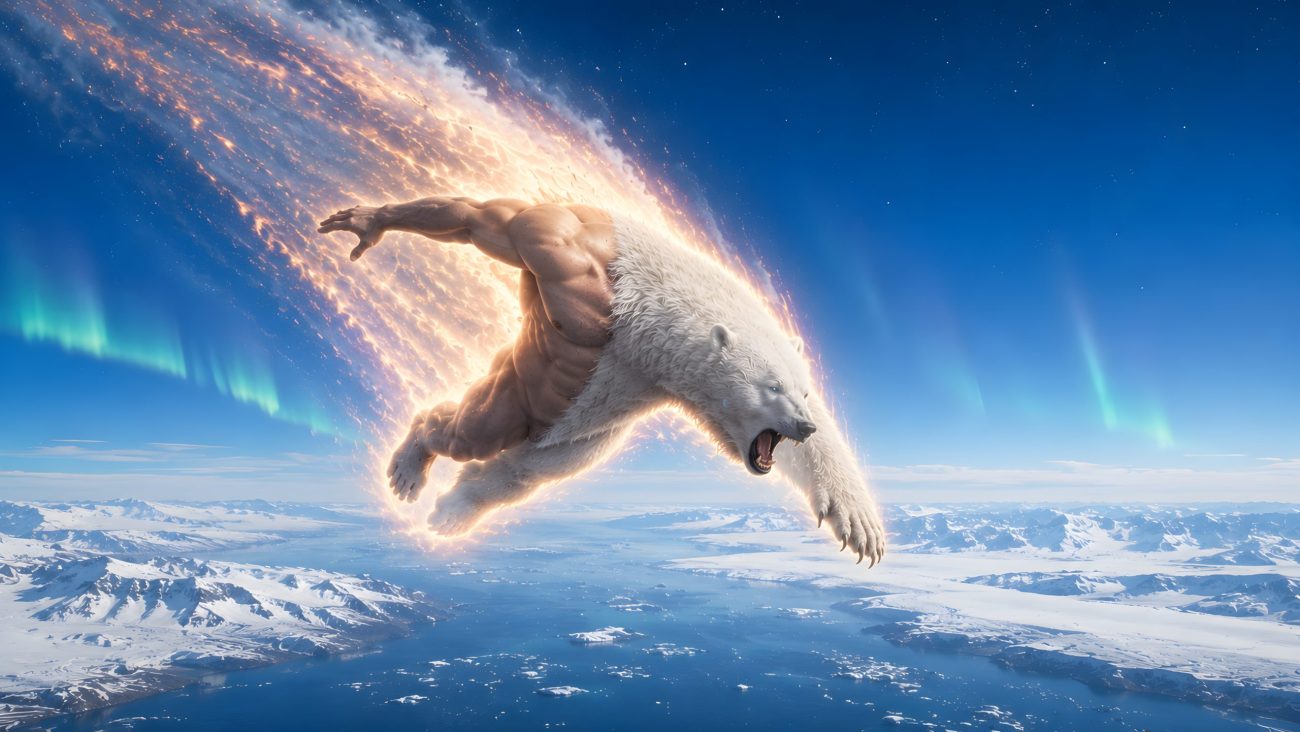
ImiEru’jap Inua is the spirit of a meteor that appears in Inuit tradition. It is described as a supernatural being with a body divided between human and bear. One side of its glowing form is that of a bear, while the other is human, and its head is human in shape but bears the tusks of a bear.

The spirit is most closely associated with the shaman Uvavnuk. One winter night, as she stepped outside her home, she saw a brilliant ball of fire descend from the sky. Before she could escape, the meteor struck her and entered her body. She immediately perceived an inner light before losing consciousness. At that moment, the spirit of the meteor entered her, transforming her into a powerful shaman.

When Uvavnuk regained consciousness, she returned to her home singing without understanding why. Filled with supernatural knowledge, she began revealing the hidden wrongdoings of everyone present. Those who confessed their misdeeds cast them away with symbolic gestures, believing themselves cleansed of evil. Whenever the spirit possessed her, she could see, hear, and know things beyond ordinary human perception.

Outside these moments of possession, Uvavnuk was an ordinary woman with no special abilities. Only when the spirit of the meteor illuminated her from within did her extraordinary powers return.

Before her death, Uvavnuk held one final ceremony and declared that humanity should never suffer from hunger. Through her connection with the spirits, she brought forth an abundance of game from beneath the earth. After her passing, her people experienced an exceptionally prosperous year, with plentiful whales, walruses, seals, and caribou, fulfilling her final blessing.


Sources

Rasmussen, K. (1930). Intellectual culture of the Hudson Bay Eskimos (Vols. 1–3). Gyldendal.


Wasgo

Tradition / Region: Haida Mythology, Canadian Mythology
Alternate Names: Sea Wolf
Category: Wolf


The Myth

Along the stormy Pacific coast of what is now Canada, the Haida told of a powerful creature called Wasgo, the Sea Wolf. He belonged to both the ocean and the land, and could move between them by changing his shape.

In the sea he appeared like an orca, swift and strong beneath the waves. When he came ashore he became a great wolf, roaming forests and beaches with the same power he held in the water. Because of this, people believed he ruled the boundary between sea and land, and that neither world was safe when he was near.

Wasgo was feared as a dangerous being, one who could strike from either realm. Hunters and travelers along the coast spoke of him with caution, knowing that a shape glimpsed in the surf or a shadow in the trees might be the same creature watching them from two different worlds.


Sources

Wikipedia contributors. (n.d.). Gonakadet. In Wikipedia, from https://en.wikipedia.org/wiki/Gonakadet