Qupqugiaq

Tradition / Region: Inuit Mythology, American Mythology, Russian Mythology
Alternative names: Kochatko (Chukchi), K’ok’satkut (Siberian Yupik)
Category: Bear


The Myth

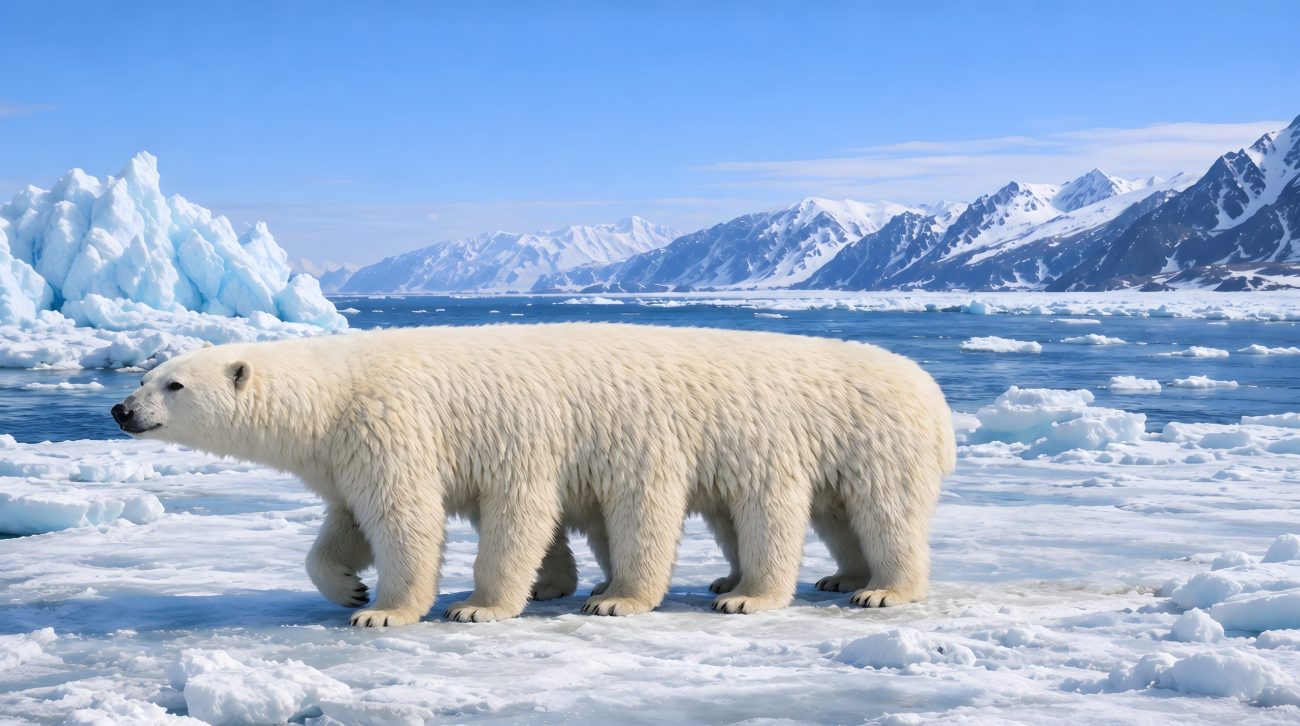
The Qupqugiaq is a gigantic bear-like creature from the folklore of the Inuit of western Alaska and the Indigenous peoples of eastern Russia. It resembles an enormous polar bear but is said to be vastly larger and stronger than any ordinary bear. Most traditions describe it as having six, eight, or even ten legs, although some accounts attribute only four legs to the beast.

Living among the sea ice, the Qupqugiaq is a powerful semi-aquatic predator capable of smashing through ice thicker than the height of a man. Its immense head is said to reach lengths of up to five feet, and its strength makes it one of the most feared creatures of the Arctic.

The beast is notorious for ambushing hunters and attacking boats. According to tradition, it sometimes lies on its back upon the ice, waving its many legs in the air while crying out as though in distress. Curious hunters who approach to investigate risk falling into its deadly trap. It is also said to imitate the call of a raven.

Stories of encounters with the Qupqugiaq have circulated among Arctic peoples for generations. One witness claimed the distance between the creature’s ears was as wide as a man’s fully outstretched arms. Another account tells of travelers who saw its enormous head rise through the sea ice before they hurried away, fearing that no ordinary ice could support such a colossal bear.


Sources

Cryptid Archives contributors. (n.d.). Qupqugiaq. In Encyclopaedia of Cryptozoology. Retrieved June 29, 2026, from https://cryptidarchives.fandom.com/wiki/Qupqugiaq
Ya-o-gah

Tradition / Region: Haudenosaunee Mythology, American Mythology, Canadian Mythology
Alternative names: Ya-oh-gah, Ya-o-gah
Category: Bear


The Myth

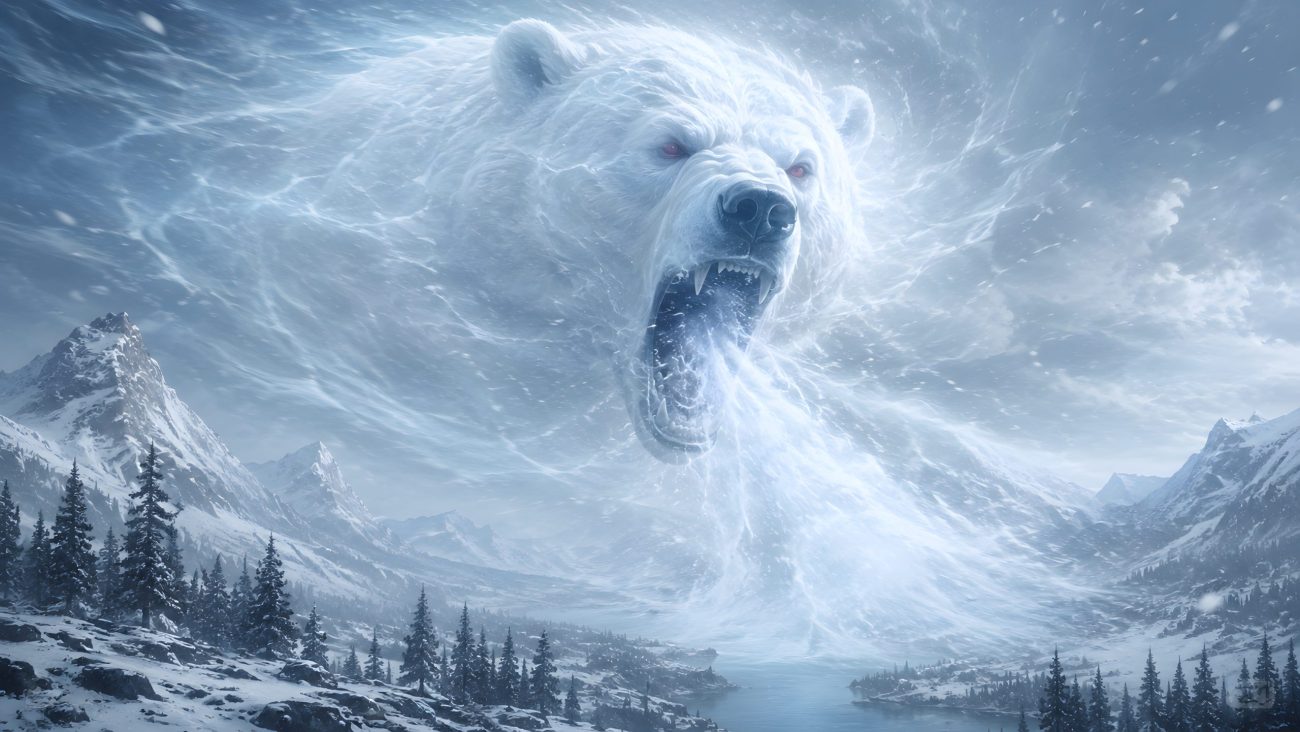
Ya-o-gah is the great bear spirit who personifies the North Wind in Haudenosaunee mythology. He serves as one of the four mighty wind spirits governed by Gǎ-oh, the giant master of the winds and the being through whom the Great Spirit moves the elements across the world.

Among the four winds, Ya-o-gah is the most destructive. His breath brings bitter cold and possesses the power to freeze and destroy the world. Despite this terrifying strength, he does not act freely, for Gǎ-oh keeps him under control and commands when the North Wind may blow.

The other winds balance Ya-o-gah’s fierce nature. The South Wind, Ne-o-ga, is gentle and warm like the rays of the sun. The West Wind, Da-jo-ji, takes the form of a panther capable of climbing mountains, tearing down forests, carrying whirlwinds upon his back, and stirring the seas into violent storms. The East Wind, O-yan-do-ne, appears as a moose whose breath chills the young clouds drifting across the sky.

Together, these four spirits maintain the natural order of the world under the guidance of Gǎ-oh, with Ya-o-gah embodying the harsh, relentless power of winter and the frozen north.


Sources

Rasmussen, K. (1930). Intellectual culture of the Hudson Bay Eskimos (Vols. 1–3). Gyldendal.


Gumberoo

Tradition / Region: American Mythology
Alternative names:
Category: Bear


The Myth

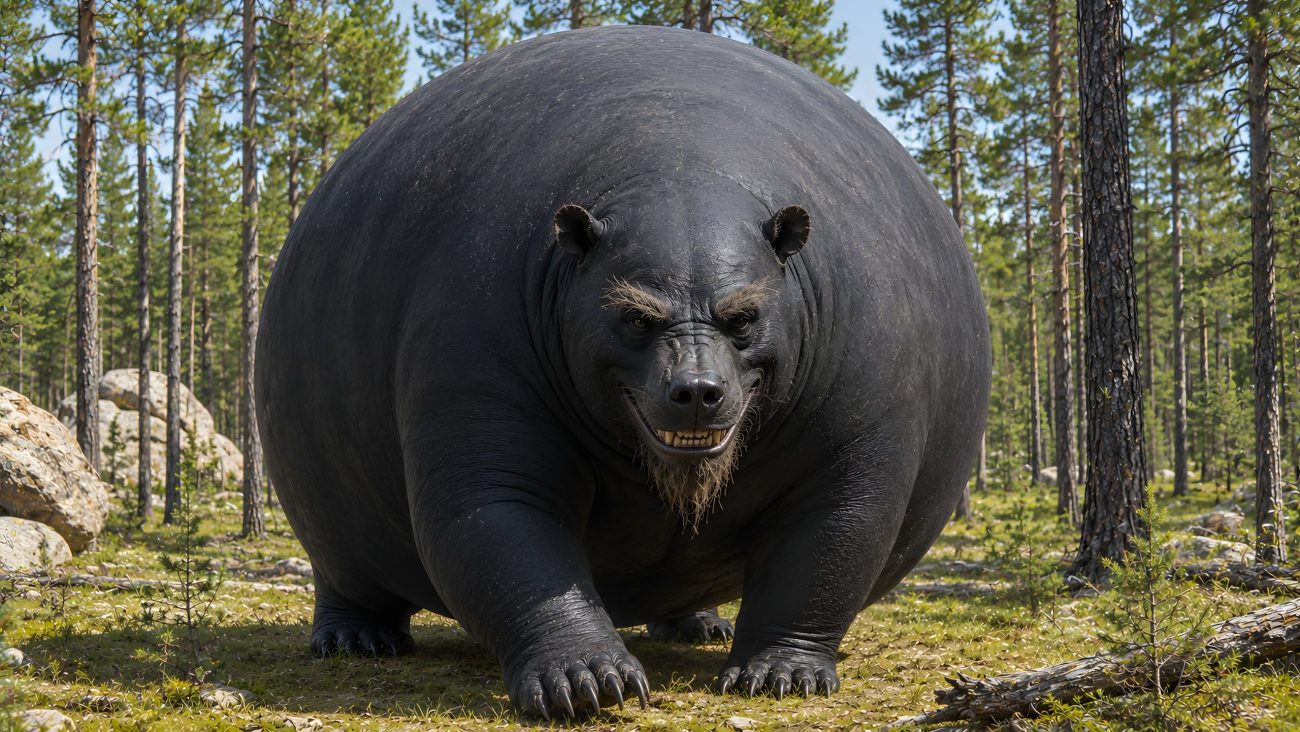
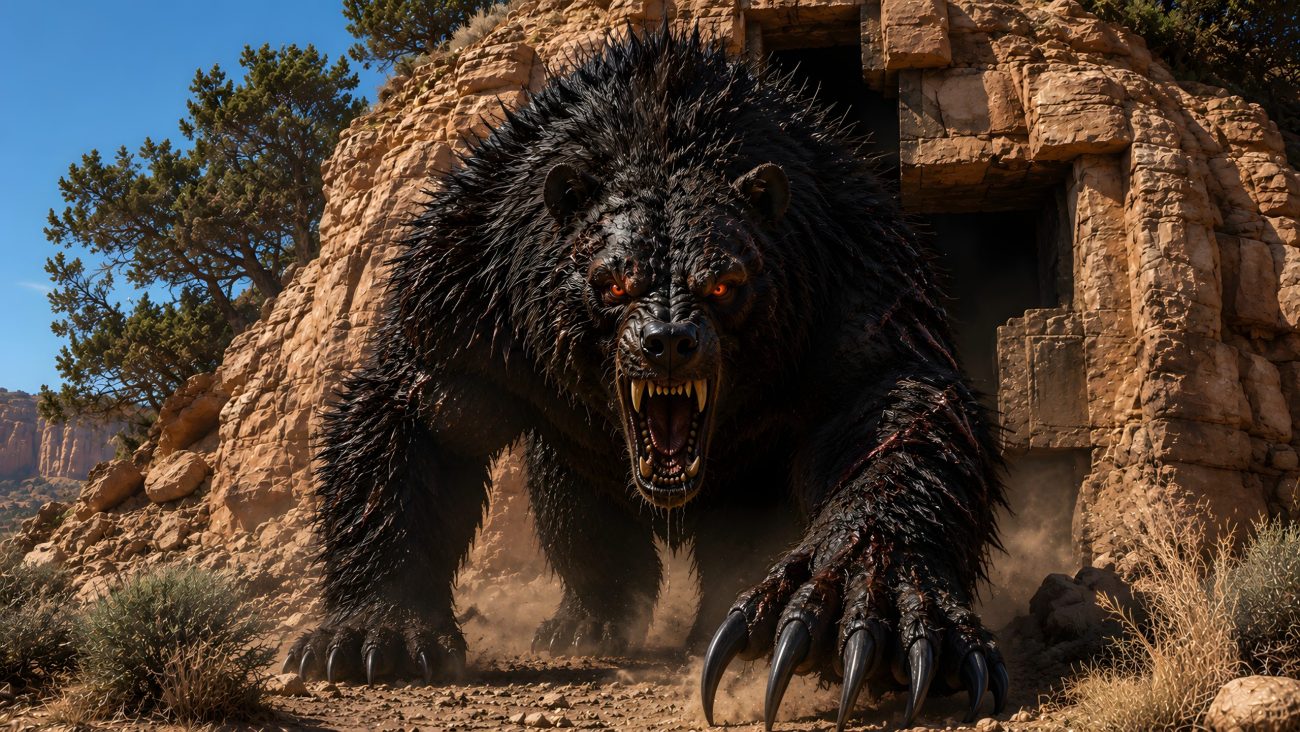
The Gumberoo is one of the legendary fearsome critters of American lumberjack folklore. It resembles an enormous, fat black bear but is completely hairless except for its thick eyebrows and the bristly hairs on its chin. Instead of fur, it possesses a smooth, coal-black hide as tough as leather.

The creature’s skin is said to be completely impervious to harm. Bullets, arrows, rocks, and other projectiles simply bounce harmlessly from its body, making the Gumberoo nearly impossible to kill by ordinary means.

Its only known weakness is fire. Although nothing can pierce its hide, flames ignite the creature instantly, causing it to burn with explosive force. According to lumberjack tales, the rarity of Gumberoos was often explained by the frequent forest fires that swept through the cedar forests, destroying the creatures in spectacular explosions.

One story tells of a man named S. W. Allen who supposedly managed to photograph a Gumberoo. However, the legend claims that even the photographic negative exploded, adding another impossible feat to the folklore surrounding the indestructible beast.


Sources

Wikipedia contributors. (n.d.). Gumberoo. In Wikipedia. Retrieved June 29, 2026, from https://en.wikipedia.org/wiki/Gumberoo


Sasnalkáhi

Tradition / Region: Navajo Mythology, American Mythology
Alternative names: The Bear that Pursues
Category: Bear


The Myth

Sasnalkáhi, “The Bear that Pursues,” was a monstrous bear counted among the Anaye, a race of dangerous beings born from unnatural unions. His fathers were said to be a smooth stone and a leg sinew. He lived in a cross-shaped cave within Tse’bahástsit, the “Rock that Frightens,” and once he began hunting, no prey could escape him.

The hero Nayenezgani set out to destroy Sasnalkáhi, carrying yucca fruit in his left hand and hard oak twigs in his right. These sacred medicinal plants protected him from the monster’s supernatural power as he approached the bear’s cave.

Nayenezgani searched each of the cave’s entrances. When he reached the northern opening, Sasnalkáhi withdrew his head and attempted to escape through the southern entrance. Anticipating the monster’s movements, Nayenezgani waited there. As soon as the great bear emerged, the hero struck and severed its head.

After defeating the beast, Nayenezgani declared that although Sasnalkáhi had brought only suffering during its life, it would now become a blessing to the people. He cut the head into three pieces and cast them in different directions. One became tsási (Yucca baccata) in the east, another became tsásitsoz (Yucca angustifolia) in the west, and the third became nóta (mescal) in the south. The creature’s nipples transformed into pinyon nuts, while pieces of fat taken from around its tail became the first bear and the first porcupine. Nayenezgani kept the left forepaw, the gall, and the windpipe as trophies of his victory.


Sources

A Book of Creatures. (2020, June 8). Sasnalkáhi. Retrieved June 29, 2026, from https://abookofcreatures.com/2020/06/08/sasnalkahi/


Ozark Howler

Tradition / Region: American Mythology
Alternative names:
Category: Bear


The Myth

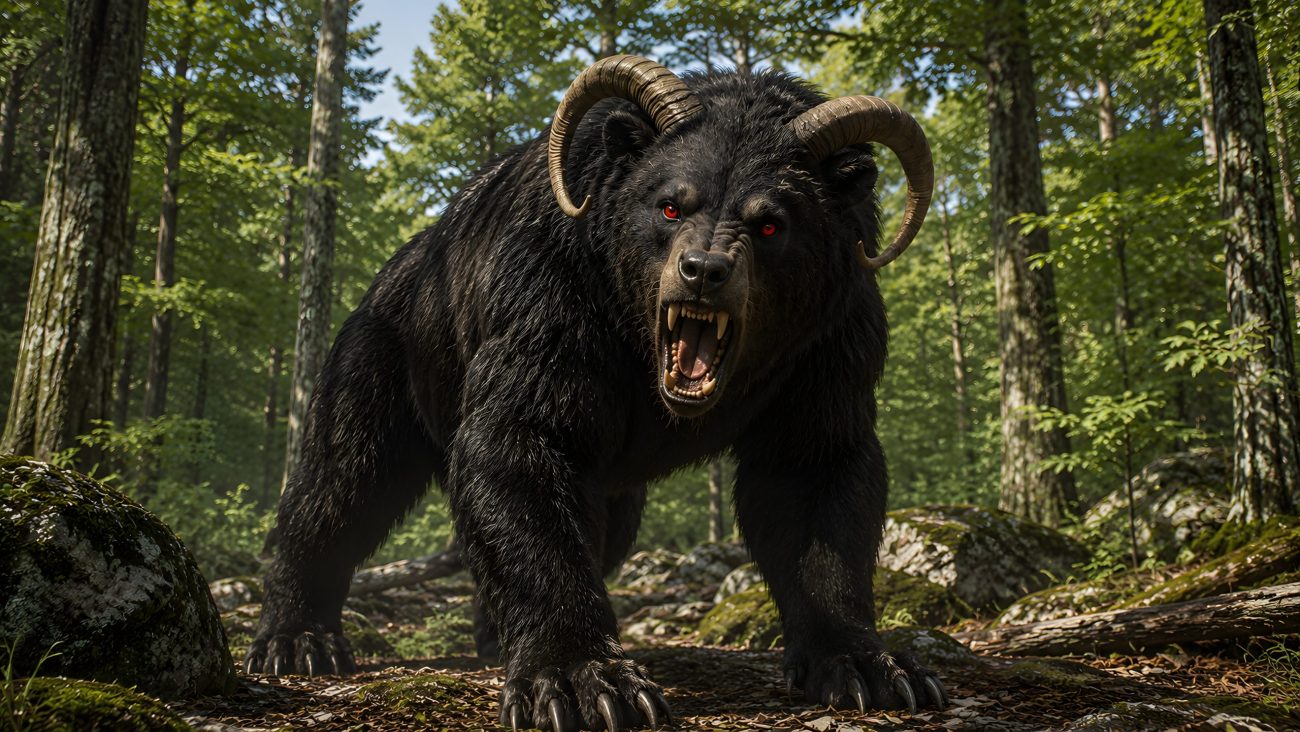
The Ozark Howler is a legendary cryptid said to inhabit the Ozark Mountains of northern Arkansas and southern Missouri. It is commonly described as a large, bear-like creature with a dark, shaggy coat that roams the remote forests. Although many consider it a myth or a case of mistaken identity, local folklore and reported sightings have kept the legend alive.

Some traditions trace the creature’s origins to the late eighteenth century, when the American frontiersman Daniel Boone reportedly claimed to have killed a large, hairy beast in the region. This account is often cited as one of the earliest stories connected to the Ozark Howler.

Reports of the creature became more common during the twentieth century. Witnesses have described encountering a large, fast-moving animal resembling a bear, though no evidence has confirmed its existence. In one reported incident from 2014, a motorist in Benton County, Arkansas, nearly collided with a large gray animal described as being about the size of a bear, prompting wildlife officials to investigate.

In 2015, photographs claimed to show the Ozark Howler were submitted to a local Arkansas television station. After reviewing the images, state wildlife officials concluded that they were a hoax. Despite the lack of verified evidence, stories of the mysterious bear-like creature continue to be part of the folklore of the Ozark Mountains.


Sources

Wikipedia contributors. (n.d.). Ozark Howler. In Wikipedia. Retrieved June 29, 2026, from https://en.wikipedia.org/wiki/Ozark_Howler