
Qupqugiaq

Tradition / Region: Inuit Mythology, American Mythology, Russian Mythology
Alternative names: Kochatko (Chukchi), K’ok’satkut (Siberian Yupik)
Category: Bear


The Myth

The Qupqugiaq is a gigantic bear-like creature from the folklore of the Inuit of western Alaska and the Indigenous peoples of eastern Russia. It resembles an enormous polar bear but is said to be vastly larger and stronger than any ordinary bear. Most traditions describe it as having six, eight, or even ten legs, although some accounts attribute only four legs to the beast.

Living among the sea ice, the Qupqugiaq is a powerful semi-aquatic predator capable of smashing through ice thicker than the height of a man. Its immense head is said to reach lengths of up to five feet, and its strength makes it one of the most feared creatures of the Arctic.

The beast is notorious for ambushing hunters and attacking boats. According to tradition, it sometimes lies on its back upon the ice, waving its many legs in the air while crying out as though in distress. Curious hunters who approach to investigate risk falling into its deadly trap. It is also said to imitate the call of a raven.

Stories of encounters with the Qupqugiaq have circulated among Arctic peoples for generations. One witness claimed the distance between the creature’s ears was as wide as a man’s fully outstretched arms. Another account tells of travelers who saw its enormous head rise through the sea ice before they hurried away, fearing that no ordinary ice could support such a colossal bear.


Sources

Cryptid Archives contributors. (n.d.). Qupqugiaq. In Encyclopaedia of Cryptozoology. Retrieved June 29, 2026, from https://cryptidarchives.fandom.com/wiki/Qupqugiaq
Medvedko

Tradition / Region: Russian Mythology, Serbian Mythology
Alternative names: Medjedović (Serbian)
Category: Bear


The Myth

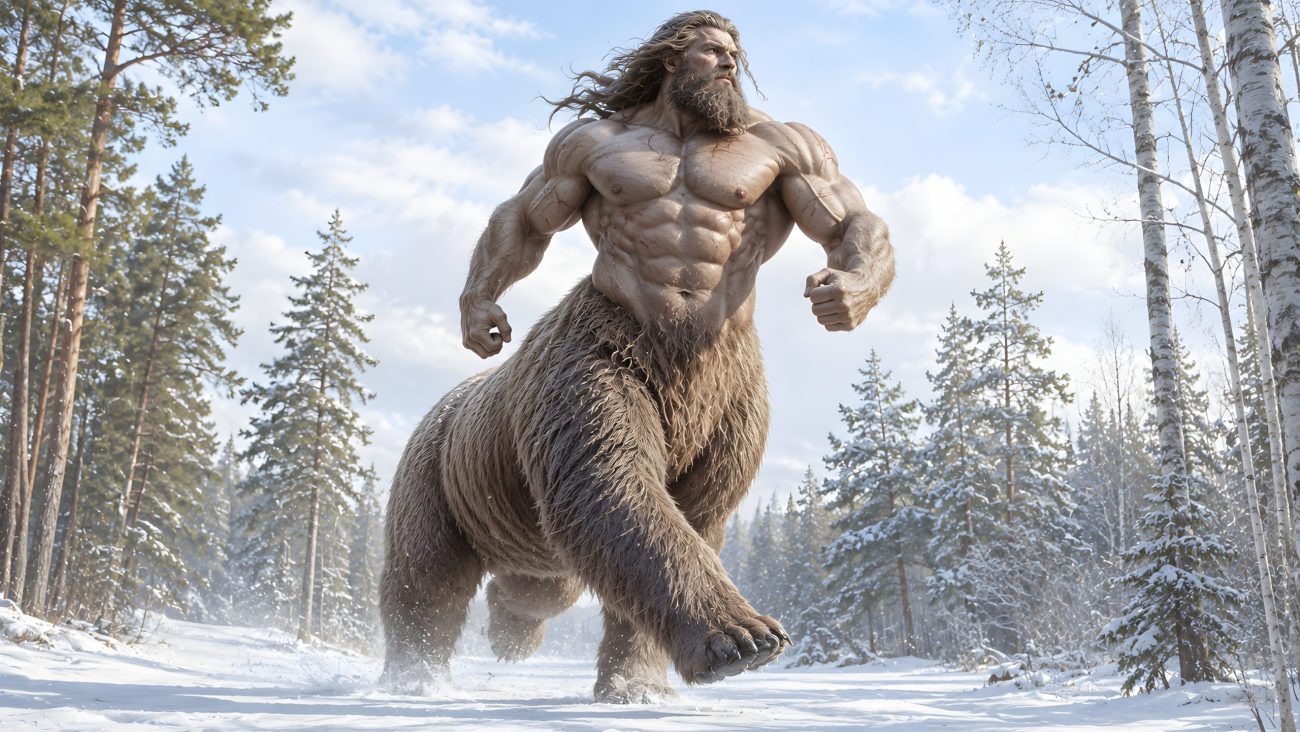
Medvedko is a legendary hero of Slavic folklore, renowned for his immense strength and his dual nature as both man and bear. He is commonly described as the son of a woman and a bear, giving him the body of a human above the waist and the form of a bear below it. Other versions simply portray him as a half-man, half-bear possessing extraordinary physical power.

Gifted with remarkable strength from birth, Medvedko performs feats far beyond the abilities of ordinary people. He uproots ancient oak trees, shatters rocks, and overcomes powerful giants and other supernatural opponents. In many tales, he serves as the heroic champion who defeats dangerous monsters and restores order.

In Russian folklore, Medvedko is often presented as a clever and resourceful hero in addition to his great strength. In Serbian tradition, where he is known as Medjedović, he is remembered for battling enormous giants, defeating them through his unmatched power and courage.

Although the details of his adventures vary across Slavic traditions, Medvedko is consistently portrayed as a mighty bear-born hero whose supernatural strength allows him to accomplish deeds impossible for ordinary humans. His stories belong to the widespread tradition of the half-bear hero found throughout Eastern and Southeastern Europe.


Sources

Bestiary.us. (n.d.). Medvedko. In New Bestiary: Encyclopedia of Imaginary Beings. Retrieved June 29, 2026, from https://www.bestiary.us/medvedko


Yalpus-Oika

Tradition / Region: Mansi Mythology, Russian Mythology
Alternative names: Konsyg-Oika
Category: Bear


The Myth

Yalpus-Oika, meaning “Old Man of the Sacred Town,” is a guardian spirit and the mythical ancestor of the Por phratry in Mansi mythology. His cult was centered for centuries at the village of Vezhakary on the Ob River, although images of the spirit were also venerated in other Mansi settlements along the Northern Sosva River.

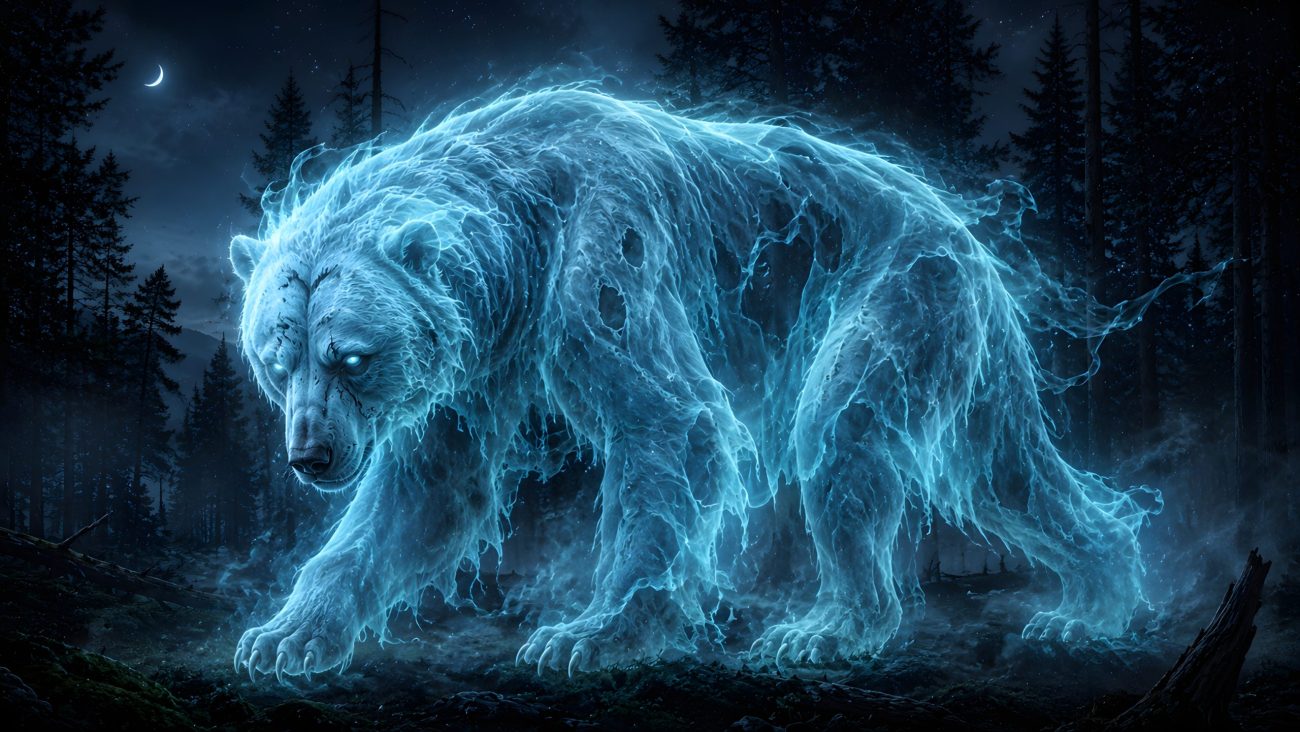
Yalpus-Oika was believed to take the form of a bear. Because the bear was regarded as sacred among the Mansi, its true name was considered taboo. Instead, respectful titles such as “Old Man with Claws,” “Old Man Living in the Forest,” and “Old Man of the Earthen House” were used when referring to either the animal or the guardian spirit.

According to traditional stories, Yalpus-Oika is the son of Kaltas-Ekwa and the brother of Mir-Susne-Hum. Other versions of the tradition instead describe Kaltas-Ekwa as his sister, particularly where she was worshipped as a local guardian spirit.

Yalpus-Oika was revered as a benevolent protector who watched over the health and well-being of his people. Many illnesses were believed to occur when a person’s shadow-soul left the body. In these cases, a shaman would call upon Yalpus-Oika to help recover the wandering soul and restore the person’s health.


Sources

Wikipedia contributors. (n.d.). Yalpus-Oyka. In Wikipedia. Retrieved June 29, 2026, from https://en.wikipedia.org/wiki/Yalpus-Oyka