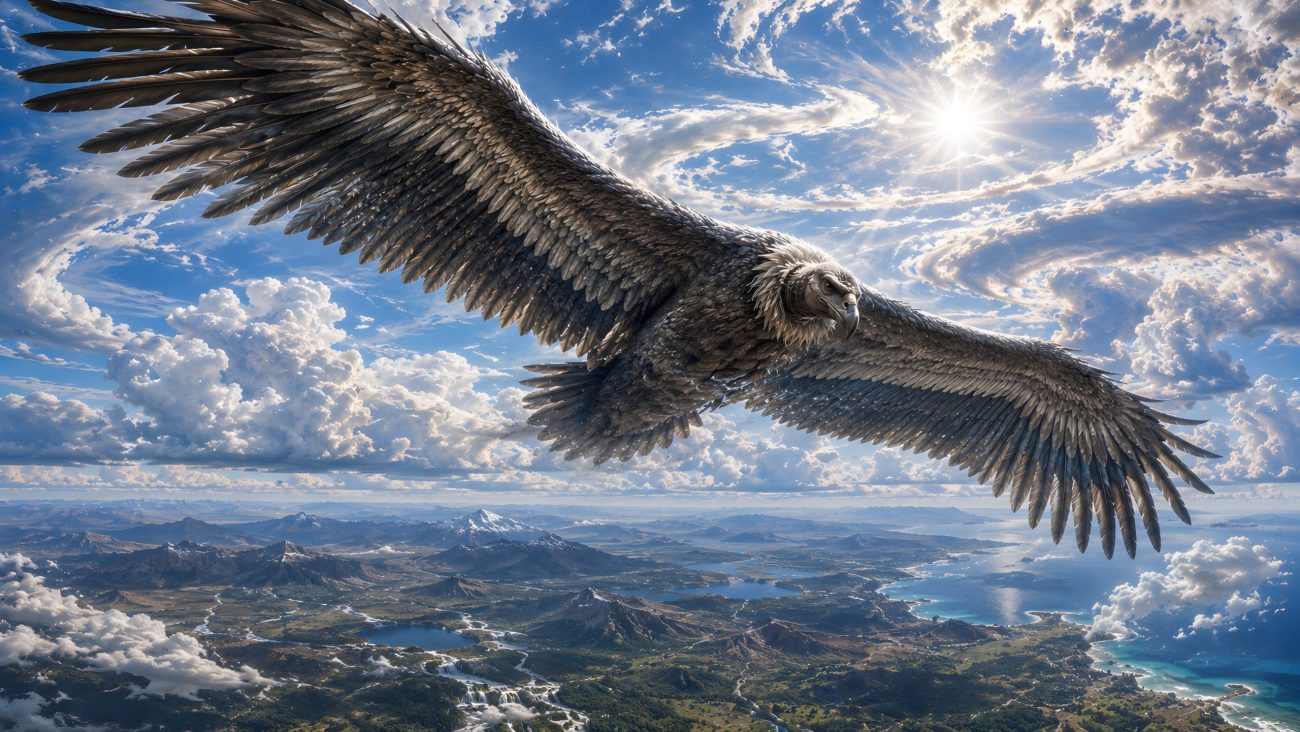
Piasa Bird

Tradition / Region: American Mythology
Alternative names: Piasa; Piasa
Category: Bird


The Myth

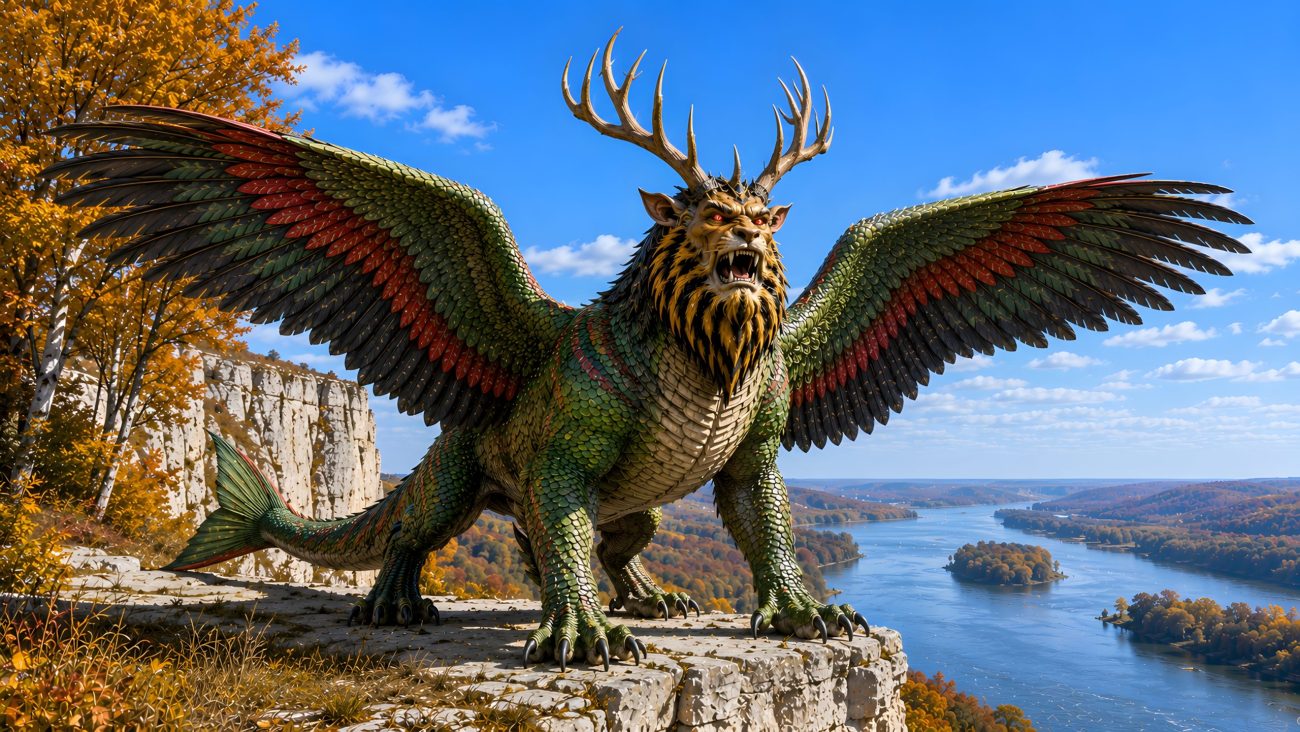
The Piasa Bird is a legendary monster of Native American tradition associated with the towering cliffs above the Mississippi River in present-day Illinois. It was depicted in a great cliff mural long before the arrival of Europeans. Later legends describe it as a terrifying winged creature with horns like a deer, red eyes, a human-like face, a body covered in scales, powerful claws, and a long tail ending in a fish’s fin. It was feared as a man-eater that swooped from its rocky home to seize human victims.

According to the best-known legend, the monster developed a taste for human flesh and repeatedly attacked nearby villages. Desperate to end its reign of terror, Chief Ouatoga prayed to the Great Spirit, who revealed a plan in a dream. The chief stood alone before the creature’s cave as bait while his bravest warriors hid nearby with poisoned arrows.

When the Piasa Bird dived toward the chief, the hidden warriors loosed a deadly volley of arrows. Mortally wounded, the great beast crashed to the ground and died, freeing the people from its attacks. To commemorate the victory, the people painted the image of the monster high upon the cliffs overlooking the Mississippi River, where it remained for generations as one of North America’s most famous legendary creatures.


Sources

Wikipedia contributors. (n.d.). Piasa. In Wikipedia. Retrieved June 29, 2026, from https://en.wikipedia.org/wiki/Piasa


Pamola

Tradition / Region: American Mythology
Alternative names: Pamolai; P-mol-a; Pomola; Bmola; Bumole
Category: Bird


The Myth

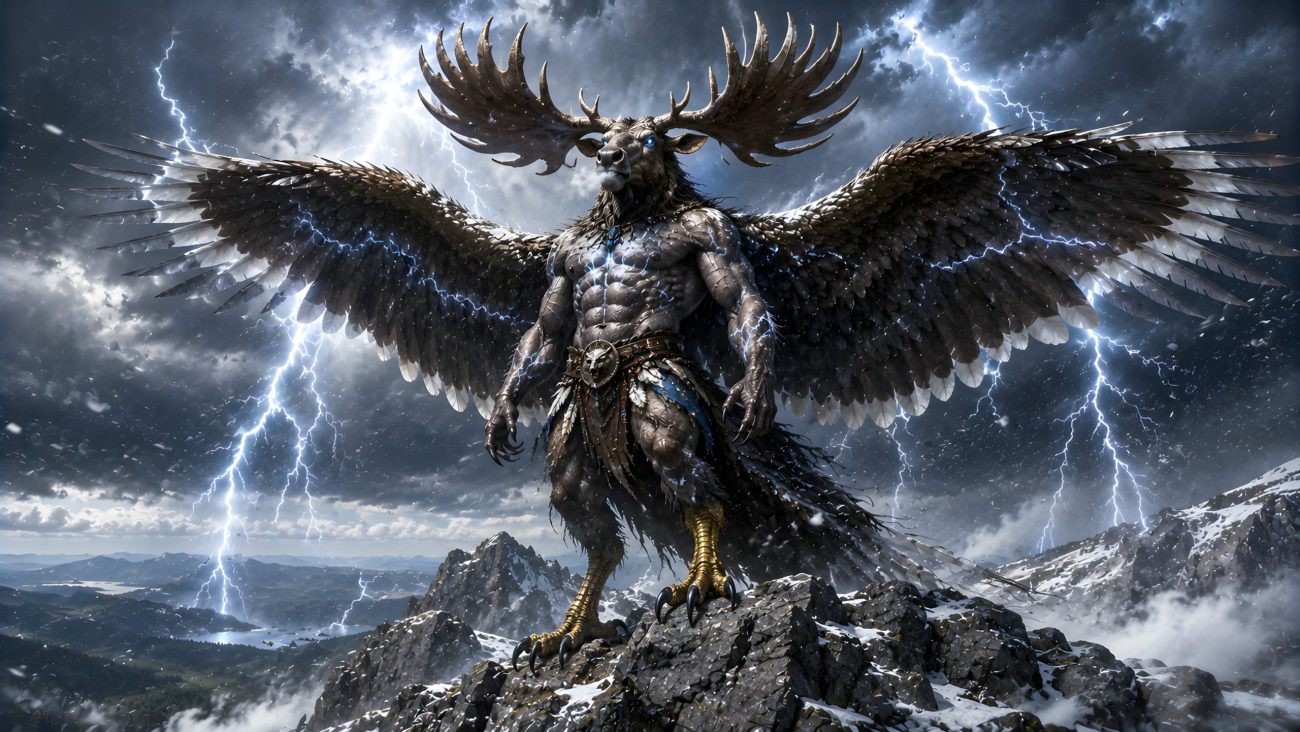
Pamola is a mighty bird spirit and thunder god of Penobscot tradition who dwells atop Mount Katahdin, the highest peak in Maine. Banished there by the culture hero Gluskab, Pamola became the sacred guardian of the mountain. He is commonly described as having the head of a moose, the body of a man, and the wings and talons of an eagle, though some traditions portray him with a gigantic human face upon an eagle’s body.

Pamola rules over storms, fierce winds, snow, dense fog, and bitter cold. It is said that he beats his great wings to summon violent weather, protecting the mountain from those who would disturb it. The Penobscot regarded Katahdin as sacred, and climbing its summit was long considered forbidden because Pamola fiercely resented human intruders.

Legends warn that Pamola carries trespassers away to Alomkik, the land of the dead near the mountain. Other stories tell how he hurled boulders at those who lingered too long on his slopes or descended from the sky to drive away anyone who dared challenge his domain. Through these tales, Pamola remains the eternal guardian of Katahdin, keeping watch over the sacred mountain with thunder and storm.


Sources

Wikipedia contributors. (n.d.). Pamola. In Wikipedia. Retrieved June 29, 2026, from https://en.wikipedia.org/wiki/Pamola.


Snallygaster

Tradition / Region: American Mythology
Alternative names: Schneller Geist
Category: Bird


The Myth

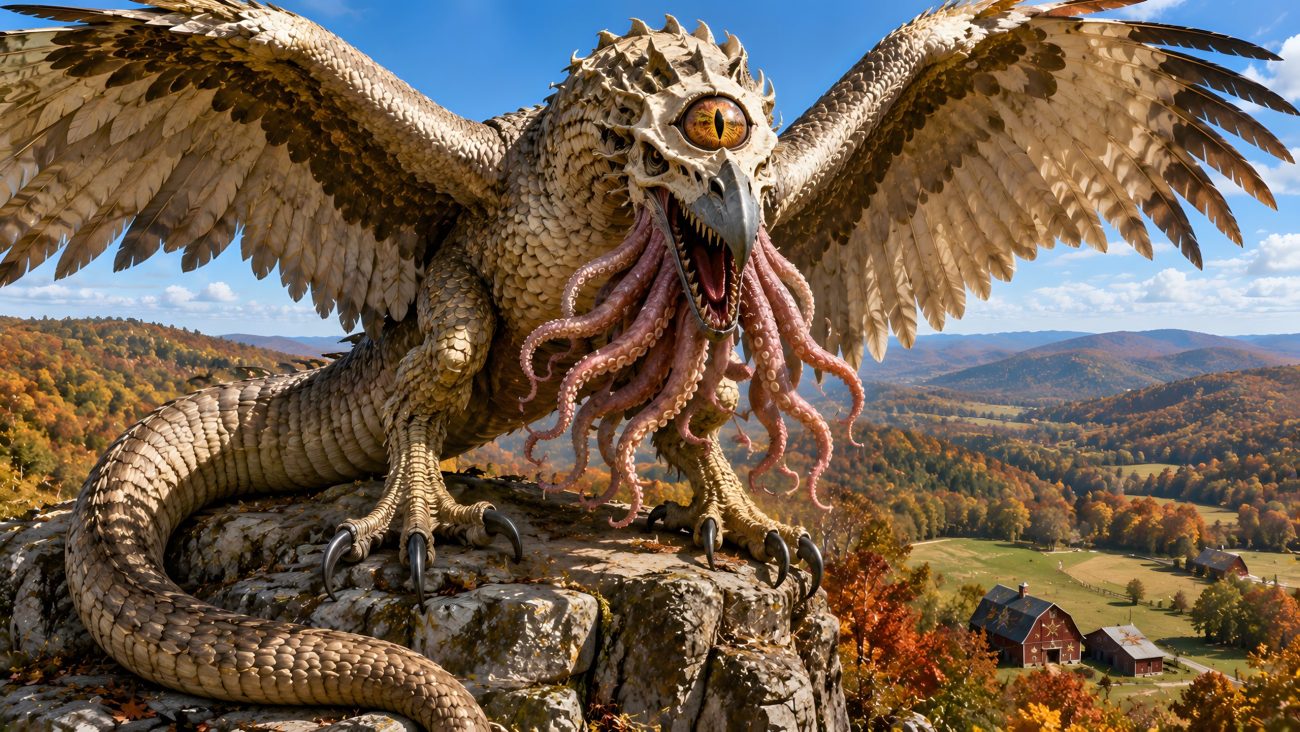
The Snallygaster is a terrifying bird-reptile monster from the folklore of Maryland, especially around Frederick County. According to early German settlers, it was a winged creature with the body of a reptile, a long metallic beak lined with razor-sharp teeth, steel-like claws, and sometimes octopus-like tentacles. Some tales also gave it a single eye in the center of its forehead. It was said to fly silently through the night before swooping down to seize people or livestock in its claws.

Early legends claimed the Snallygaster drank the blood of its victims, making it one of the most feared monsters in the region. To protect themselves, local people painted seven-pointed stars on their barns, believing the strange symbol would keep the creature away.

In 1909, reports spread across Maryland describing encounters with a huge flying beast whose enormous wings, pointed beak, iron-like claws, and piercing whistle terrified witnesses. The stories became so widespread that rewards were reportedly offered for the creature’s hide, although the wave of sightings was later revealed to have been an elaborate newspaper hoax inspired by the older German-American legend. Despite this, the Snallygaster remains one of the best-known monsters of American folklore.


Sources

Wikipedia contributors. (n.d.). Snallygaster. In Wikipedia. Retrieved June 29, 2026, from https://en.wikipedia.org/wiki/Snallygaster


Goose Wife

Tradition / Region: Inuit Mythology, Canadian Mythology, American Mythology
Alternative names: Goose Woman; Goose Maiden
Category: Bird, Nymph


The Myth

The Goose Wife is a bird maiden found in the traditions of the Inuit and other Arctic peoples. A hunter discovers a group of geese that remove their goose skins to become women while bathing in a lake. He secretly steals the skin of one of the women, preventing her from returning to bird form, and she is forced to become his wife. Together they have children, but she never forgets her home in the Land of Birds.

In time, the Goose Wife secretly gathers feathers and fashions new wings for herself and her children. Once they are complete, they transform back into birds and fly away. Determined to reunite with his family, the hunter journeys to the distant Land of Birds, where he encounters marvelous beings, including a giant who creates fish from chips of wood and helps him cross the waters to his wife’s homeland.

The ending varies among different Arctic traditions. In some versions, the hunter is reunited with his wife for a time before she departs again with the bird people. In others, he is transformed into a bird himself so he may remain with his family, while some stories end tragically, with the Goose Wife dying or the husband never truly recovering what he had lost. Despite these differences, the Goose Wife remains one of the best-known bird maiden figures of Arctic folklore.


Sources

Wikipedia contributors. (n.d.). Goose Wife (Inuit). In Wikipedia. Retrieved June 29, 2026, from https://en.wikipedia.org/wiki/Goose_Wife_(Inuit)


Dingbat

Tradition / Region: American Mythology
Alternative names: Dingbat
Category: Bird


The Myth

The Dingbat is a legendary Fearsome Critter of the Great Lakes region. It is described as a strange hybrid of bird and mammal, with a short feathered body, large wings, and a pair of short antlers.

Rather than attacking people directly, the Dingbat delights in tormenting hunters. During deer season it is said to catch bullets in mid-air before they can strike their target, drink the gasoline from hunters’ automobiles, and play countless other tricks that leave sportsmen frustrated and unsuccessful.

Because of its mischievous nature, hunters have long blamed the Dingbat whenever an apparently perfect shot inexplicably misses. Although sightings of the creature are rare, it remains one of the best-known pranksters among the legendary Fearsome Critters of North American folklore.


Sources

A Book of Creatures. (2019, October 25). Dingbat. Retrieved June 29, 2026, from https://abookofcreatures.com/2019/10/25/dingbat/


Belled Buzzard

Tradition / Region: American Mythology
Alternative names:
Category: Bird


The Myth

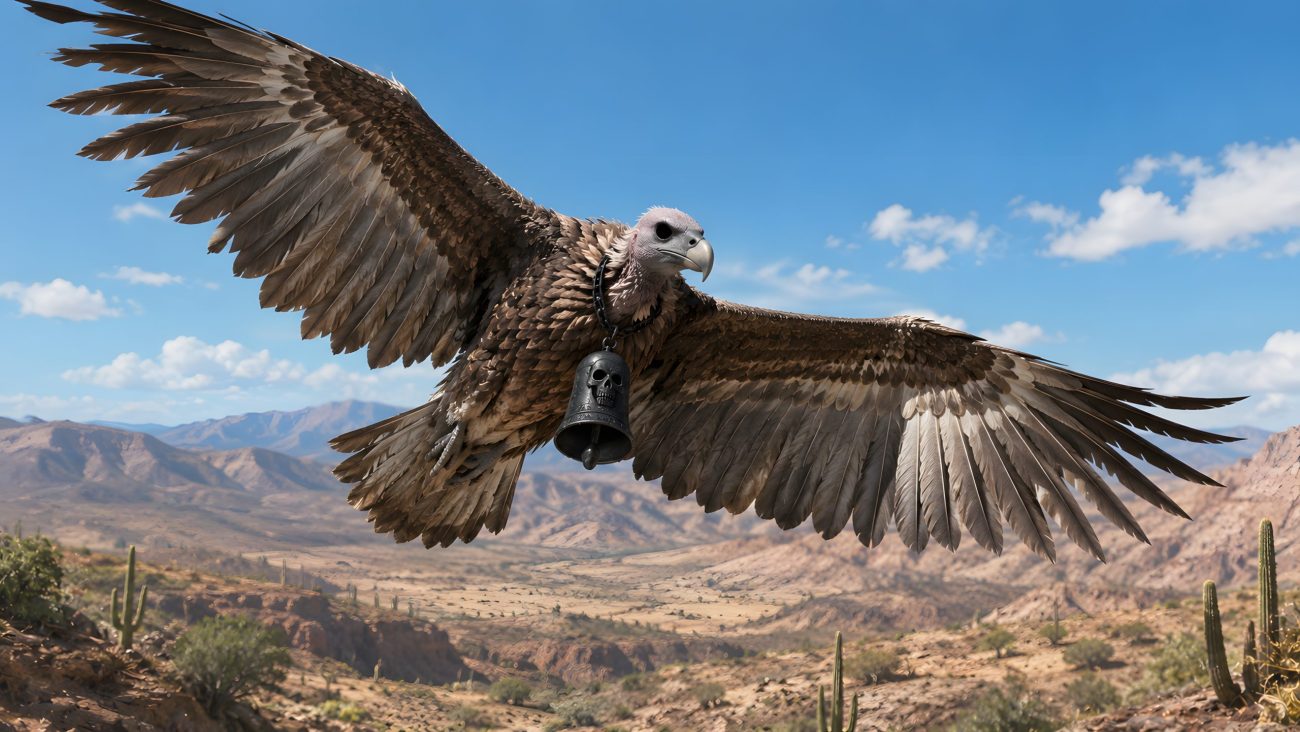
The Belled Buzzard is a legendary bird of American folklore, remembered as a harbinger of disaster. It appears as an ordinary turkey vulture except for a bell fastened around its neck, whose eerie ringing announces misfortune. Its appearance was said to foretell calamities such as epidemics, death, war, or other disasters.

The legend became especially famous after the yellow fever epidemic of 1878 in Brownsville, Tennessee. The strange bird was reported shortly before the outbreak, and many came to believe that the tolling of its bell warned of approaching tragedy. As stories spread throughout the Southern United States, sightings of the Belled Buzzard were repeatedly linked to impending doom, earning it a fearsome reputation.

Although many different buzzards were said to have been fitted with cowbells or sleigh bells over the years, popular tradition gradually treated the Belled Buzzard as a single mysterious creature that wandered from state to state for decades. Numerous people claimed to have captured, released, or even killed it, yet reports of its ghostly bell continued to appear, strengthening the belief that the bird could never truly be accounted for.

The Belled Buzzard became one of the best-known “fearsome critters” of American folklore, its mournful bell serving as an unforgettable omen that disaster was near.


Sources

Wikipedia contributors. (n.d.). Belled buzzard. In Wikipedia. Retrieved June 29, 2026, from https://en.wikipedia.org/wiki/Belled_buzzard