Three hundred li east of the previous region lies Root Mountain, a strange place filled with rivers but lacking plants and trees.
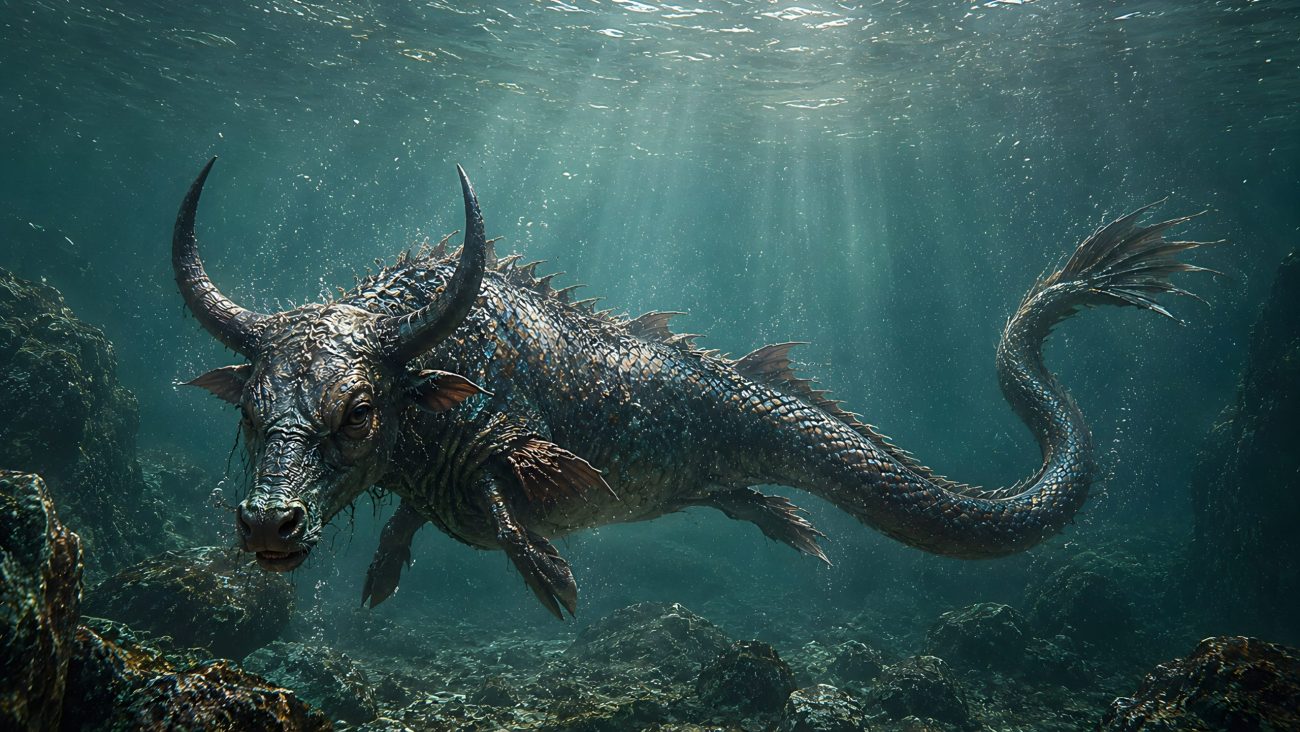
A peculiar creature lives there called the Liu. Although it is a fish, its body resembles an ox. It lives among the hills and possesses a snake’s tail, while wings and feathers grow along its ribs.
The Liu makes a sound resembling that of the Lingering-Ox and has a remarkable seasonal existence. It appears during summer and dies during winter, leading the ancient commentator Guo Pu to suggest that this description might refer to a form of hibernation.
The Liu also possesses medicinal properties. Eating it is said to prevent swellings.
Sources
Strassberg, Richard E., ed. and trans. A Chinese Bestiary: Strange Creatures from the Guideways Through Mountains and Seas. Berkeley: University of California Press, 2002.
Tradition / Region: Chinese mythology Alternate Names: Peng; Dapeng; Pengniao; Kunpeng Category: Fish
The Myth
In the Northern Sea there lives a fish called Kun. It is so vast that no one knows how many thousands of miles it spans. Its body fills the deep, and when it moves, the waters of the sea are set in motion.
When the time comes, Kun rises from the depths and transforms.
Its scales become feathers, and it becomes the great bird Peng. The Peng’s back is immeasurable, and when it spreads its wings they hang across the sky like drifting clouds. With a single beat of those wings, storms are born and the sea churns below.
When the oceans surge, the Peng takes flight, leaving the Northern Sea behind and journeying toward the Southern Sea, the Heavenly Pool. As it ascends, the small birds of the world laugh and mock it, unable to comprehend a being whose path stretches beyond the horizon. Yet the Peng does not answer them. It rises higher and higher, until earth and sky fall away beneath it.
Thus Kun and Peng are one being—fish and bird, depth and height—moving freely between sea and sky, embodying boundless transformation and the vastness of the world itself.
Tradition / Region: Chinese mythology Alternate Names: Black Fish Category: Fish
The Myth
In the ancient age of floods, Emperor Yao commanded Gun to bring the raging waters under control. For nine years Gun struggled, yet the rivers would not yield. At last, overcome by failure, he went to Yuyuan and drowned himself.
Death did not end him.
From the depths rose a vast black fish, its body dark as night. This was Xuanyu. It moved freely through river and wave, sometimes lifting its whiskers and shaking its scales so that the surface of the water rippled and stirred. When it glided across the waves, those who saw it said a river spirit had appeared.
At certain seasons, black fish and dragons were seen leaping from the water together, and people watched in fear and wonder. Some say Xuanyu later appeared where river meets sea, so immense that its presence shook the waters, causing them to surge and spray high into the air.
Thus Gun endured not as a man, but as Xuanyu—a dark spirit of the waters, carrying sorrow, power, and the memory of the floods wherever it swam.
Tradition / Region: Chinese mythology Alternate Names: — Category: Fish
The Myth
In the far western lands, at Mount Taiqi where the Guan River is born, there lives a strange fish known as the Wenyao. The river flows westward into the drifting sands, and within these waters the Wenyao make their home.
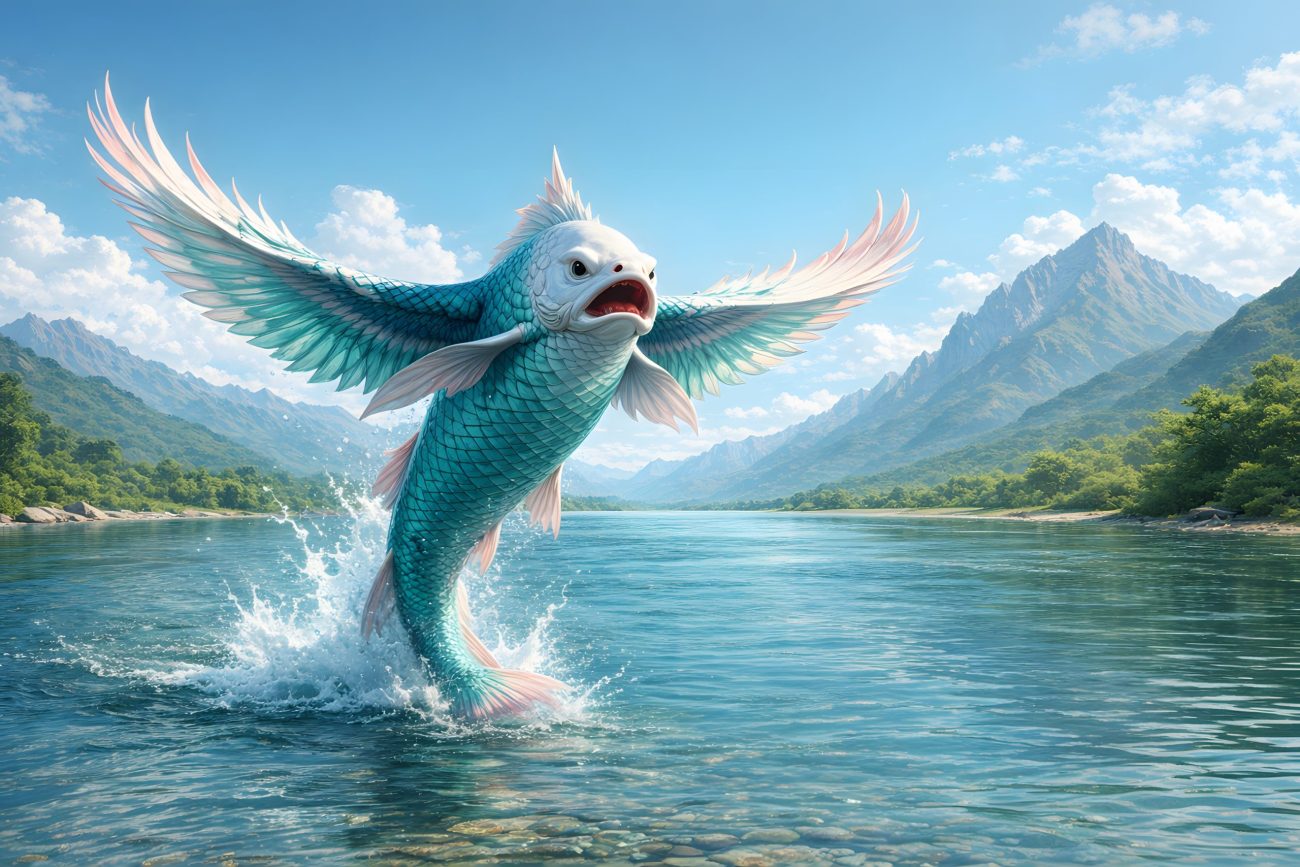
The Wenyao resembles a carp in shape, yet from its body grow wings like those of a bird. Blue-green patterns flow across its scales, its head is white as bone, and its mouth is red like fresh lacquer. By day it swims through rivers and seas; by night it takes to the air, flying between the Western Sea and the Eastern Sea.
When the Wenyao cries out, its voice is like that of a phoenix calling across the sky. Its flesh is sour and sweet to the taste, and those who eat it are cured of madness and falling sickness. It restores vital energy and replenishes the blood.
When Wenyao appear in abundance, it is taken as a sign that the year will be fruitful and the harvest great.
Tradition / Region: Chinese Mythology Alternative names: – Category: Fish, Mermaid
The Myth
In ancient times, strange beings known as renyu, or human-fish, were said to live in rivers, seas, and distant waters across the world. These creatures were neither fully human nor fully fish, but something in between. They appeared in many regions, especially in remote mountains and waterways where ordinary people rarely traveled.
Some renyu were described as fish with human features, while others had four legs and moved like animals on land. Their voices were said to sound like crying infants, a sound that echoed eerily across rivers and valleys. Though strange and unsettling, renyu were not always hostile. In certain places, eating the flesh of a renyu was believed to cure illnesses of the mind, restoring clarity and reason to those afflicted.
One well-known renyu lived in the Bursting River near Dragon-Marquis Mountain. This creature resembled a large fish, yet possessed limbs and a human-like voice. It lingered in deep waters, surfacing only rarely. Those who heard its cry often mistook it for a child in distress.
Renyu were also said to produce a mysterious oil. This substance burned with an unusually steady flame, and lamps fueled by it were believed to last for an exceptionally long time. Because of this, renyu oil was treasured and used in sacred and imperial places.
Stories also tell of female renyu who appeared as beautiful women living on remote islands or cliffs by the sea. These beings could take human form and live among people. In one tale, a man married such a woman, lived peacefully with her, and fathered children. She protected him, taught him survival skills, and shielded him from danger. But when the man was taken away from the island against his will, the renyu revealed her true nature in grief and fury, casting their children into the sea and vanishing forever.
In another story, a traveler was captured by two mysterious women on an island. They fed him daily and kept him alive, yet he felt suspended between life and death. When he learned too much about their hidden powers, they fled into the sky, abandoning him. Though he escaped, he weakened and died soon after, unable to return fully to the human world.
Renyu were also known by other names, such as child-fish, reflecting both their voices and their unsettling resemblance to human infants. Some lived in rivers, others in the sea, and each variety possessed different forms and powers. All were regarded as beings that blurred the boundary between human and animal, land and water, life and death.
In legend, the renyu are reminders of a world where the natural and supernatural were deeply intertwined—where rivers spoke, fish cried like children, and the sea concealed beings who could heal, deceive, or destroy.
Tradition / Region: Chinese Mythology Category: Fish, Shapeshifter
The Myth
In the far northern wilderness there lies a frozen lake called Shihu. For most of the year the lake is locked in ice, thawing only for fifty or sixty days around the time of the summer solstice. Within this lake lives a strange and dangerous being known as Henggongyu.
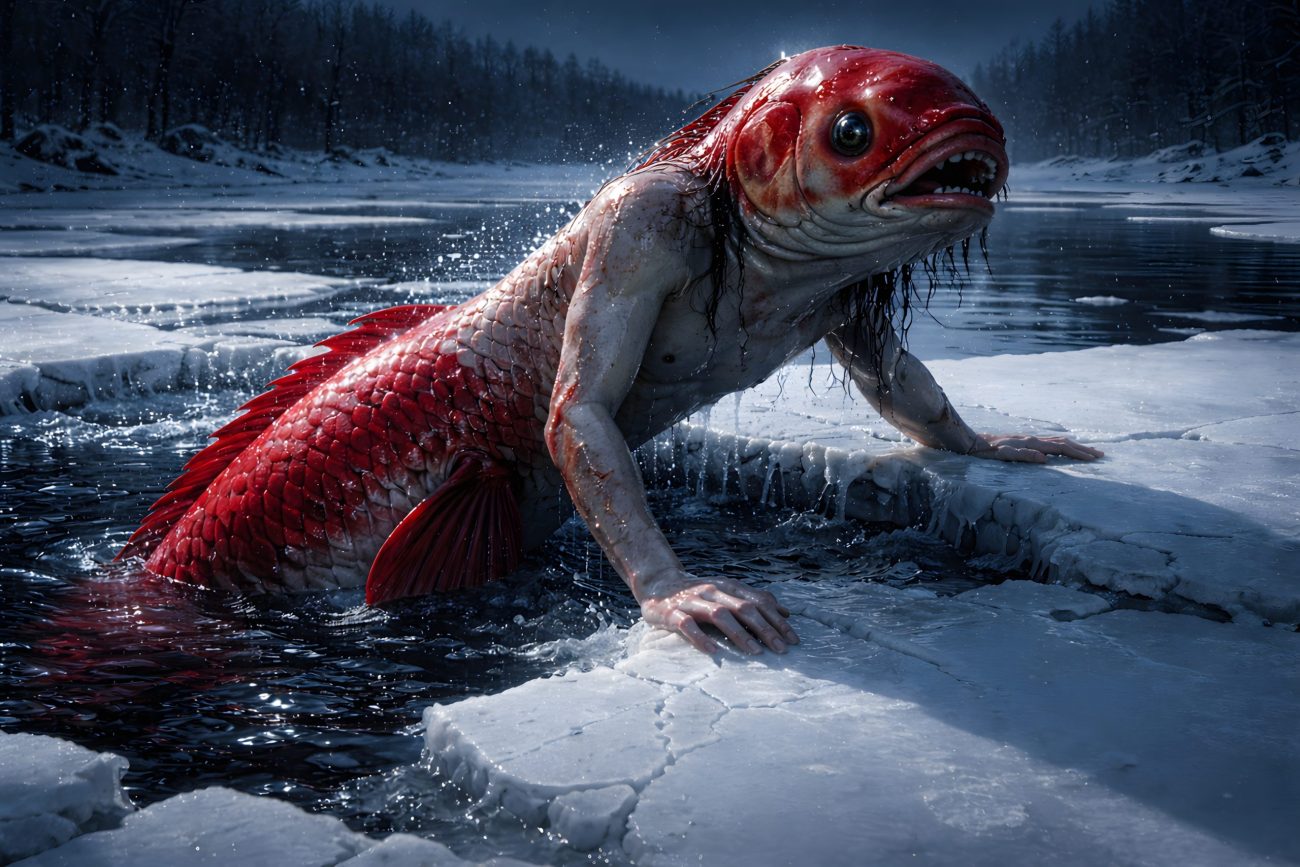
Henggongyu is said to be seven or eight feet long, shaped like a carp, and entirely red in color. During the daytime it remains hidden in the water beneath the ice. When night falls, however, it leaves the lake and transforms into a human, wandering the frozen land in human form before returning to the water by dawn.
The creature cannot be harmed by ordinary means. Needles cannot pierce it, and even boiling water cannot kill it. No matter how long it is cooked, Henggongyu survives—unless two dried plums are placed into the boiling water. Only then does the monster finally die.
Though fearsome, Henggongyu is also believed to possess powerful properties. Eating its flesh cures evil diseases, driving away illnesses caused by malignant forces. For this reason, it is both feared and sought after, a being that brings danger and healing alike.
Thus Henggongyu remains a creature of contradiction: living in a frozen lake, immune to harm, shifting between fish and human, and offering salvation only through great risk.
Tradition / Region: Chinese Mythology Alternate Names: Heluo-fish Category: Fish
The Myth
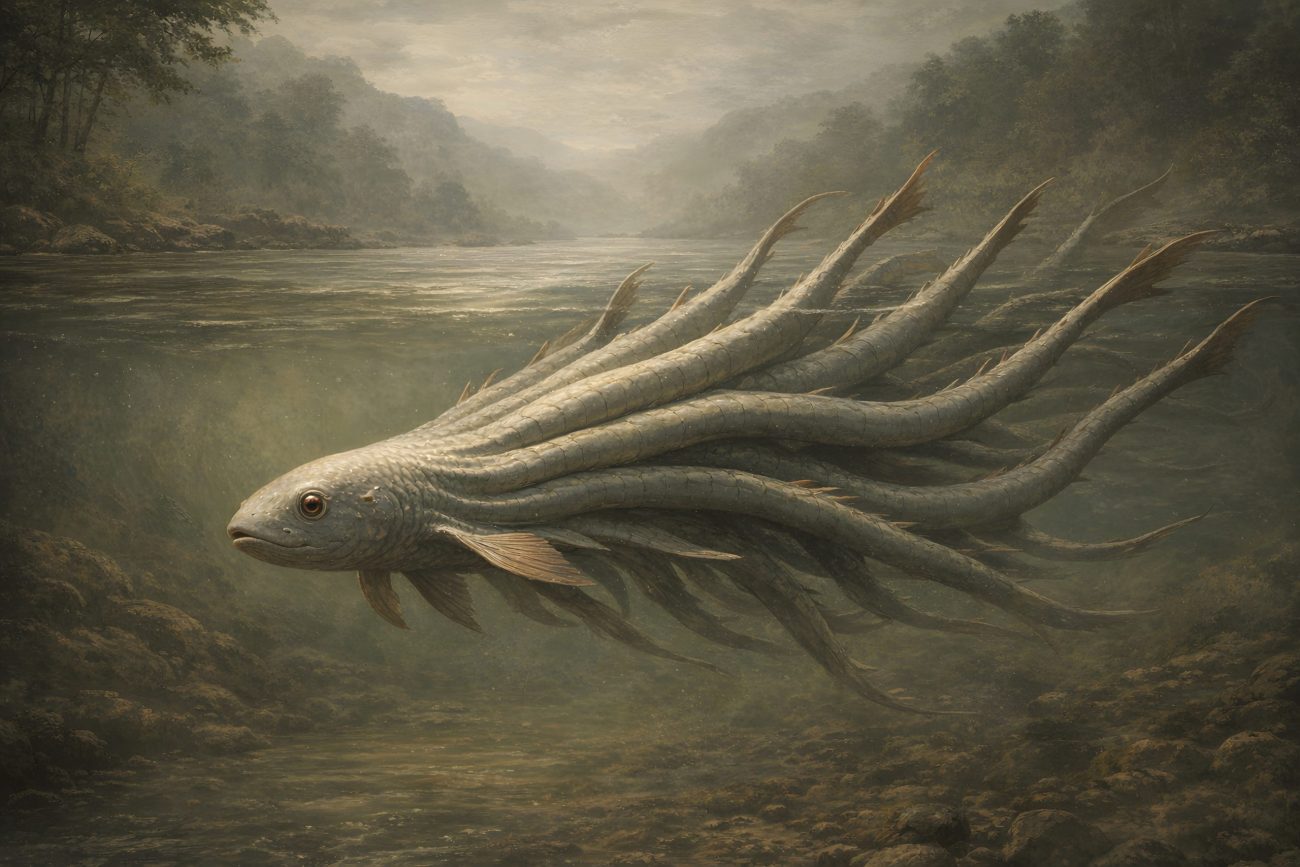
The Heluo Zhi Yu, or Heluo Fish, is said to live in the waters of the Tower River. It is a strange and unsettling creature, described as having one head and ten bodies, all moving together as a single being. When it cries out, its voice does not sound like a fish at all, but like the barking of a dog.
The flesh of the Heluo Fish is believed to possess powerful healing qualities. Those who eat it are said to be cured of tumors and severe internal illnesses, making it a creature both feared and sought after.
According to legend, the Heluo Fish is not bound to a single form. At times, it is said to transform into a Never-Old Bird, a mysterious creature that steals grains of rice from threshing tools. The bird flutters down into a mortar while stealing grain and dies there, completing its strange cycle of transformation.
Thus, the Heluo Fish is remembered as a being of many bodies and shifting shapes, whose presence links water, land, and air, and whose flesh holds both strangeness and healing power.
Tradition / Region: Chinese mythology Category: Fish, Mountain dweller
The Myth
The Ran Yi fish lives in the Wan River, which flows from Yingdi Mountain. This mountain is unlike any other: its slopes are thick with lacquer trees, metal ores and jade lie at its base, and all the birds and beasts that dwell there are said to be entirely white. From this place the Wan River rises and runs northward into Lingyang Marsh, and within its waters the Ran Yi fish can be found.
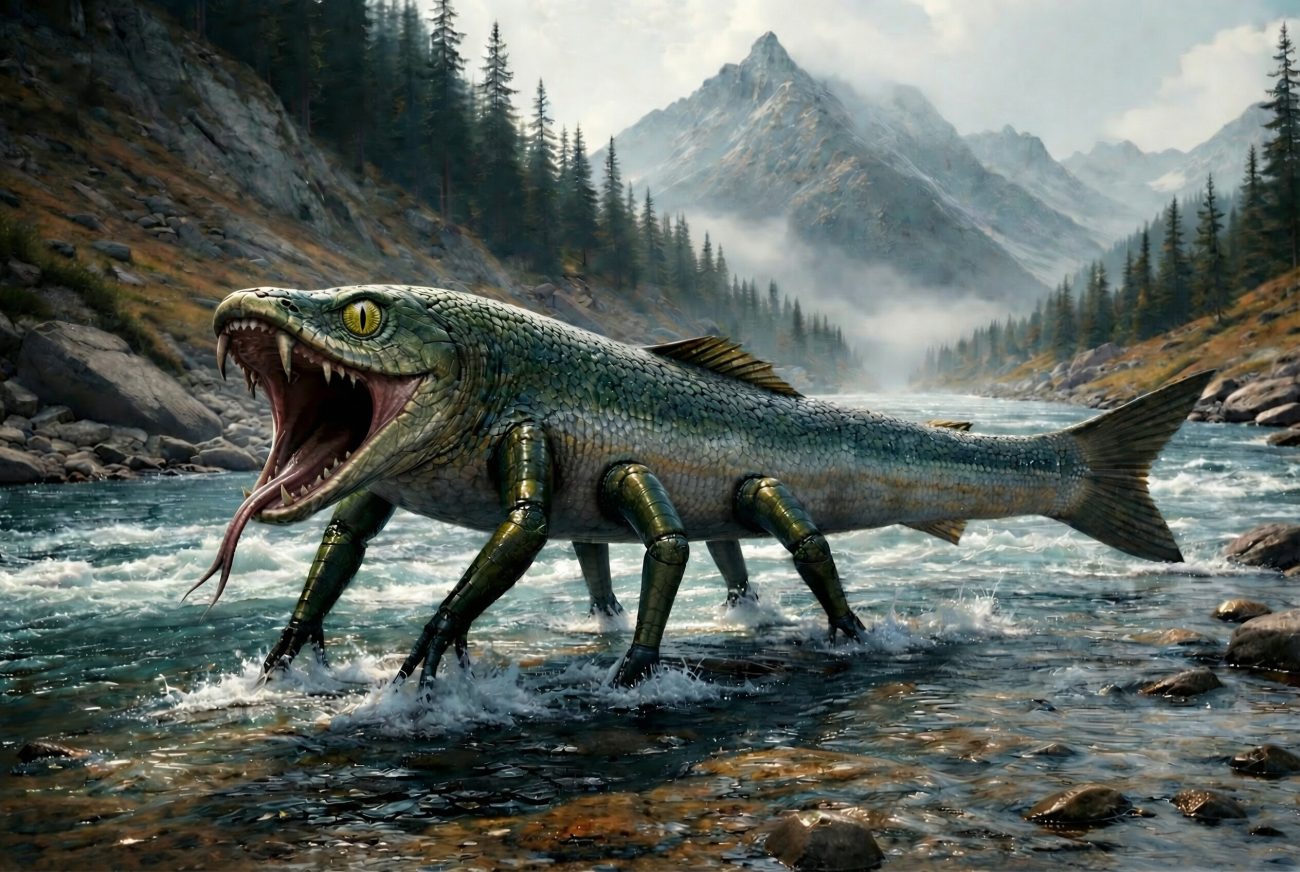
The Ran Yi fish has a fish’s body, but its head is that of a snake, and from its sides grow six legs. Its eyes resemble the ears of a horse, giving it a strange and unsettling appearance. Though it moves through water like a fish, its form marks it as something unnatural and powerful.
People believe that eating the Ran Yi fish brings protection. Those who consume it are said to be free from nightmares, untouched by disturbing dreams, and shielded from evil influences. Because of this, the Ran Yi fish is regarded not as a threat, but as a creature of warding and spiritual defense.
It remains hidden in the waters of the Wan River, tied to the strange mountain where white creatures roam and precious substances lie buried, a guardian presence within an uncanny landscape.
Tradition / Region: Chinese mythology Alternate Names: Wuyu Kuai, Wu Wang Kuaiyu, Kuaican Category: Fish
The Myth
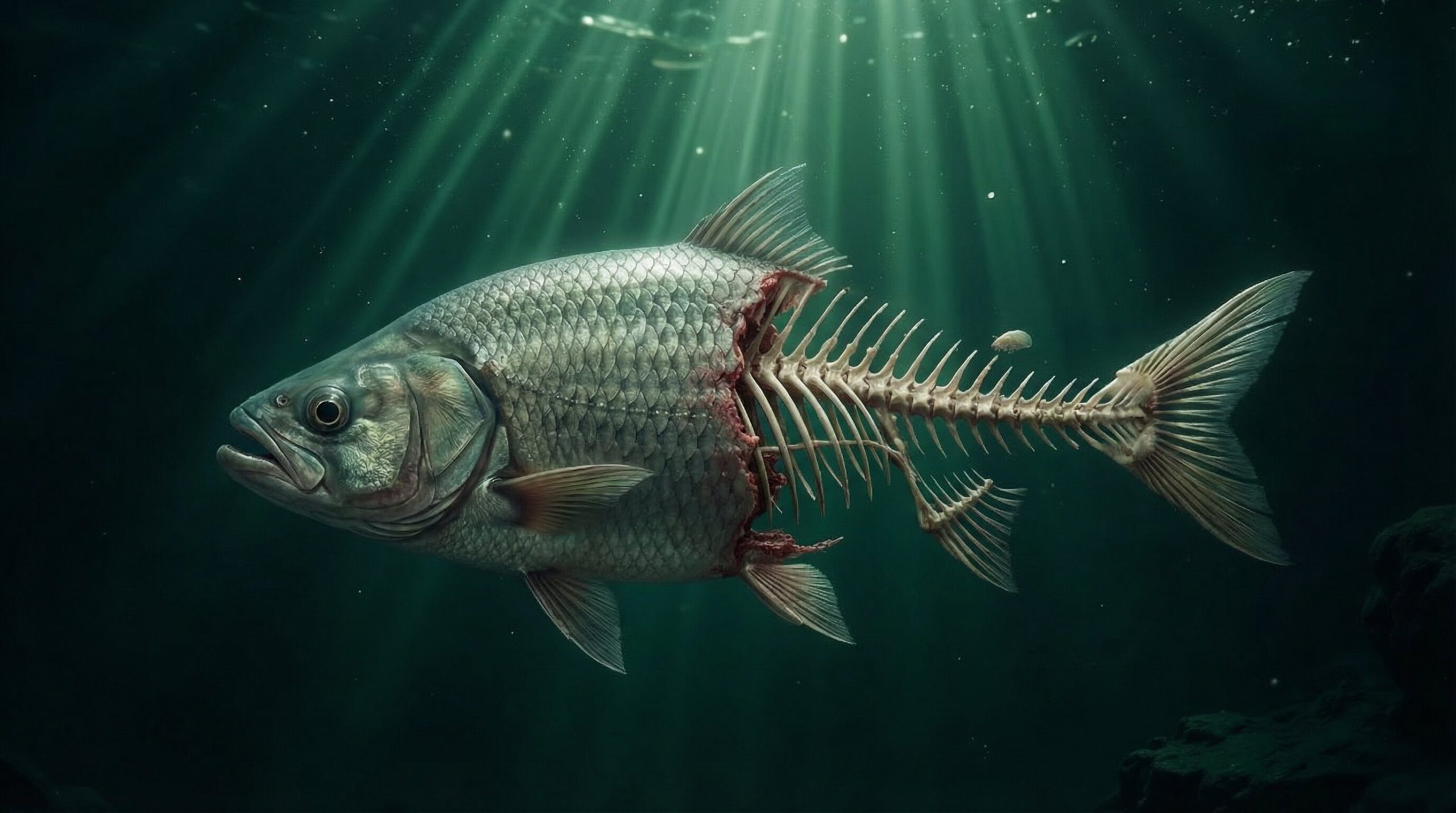
The Wangyu fish is a strange and sorrowful creature, known for having only half a body. Legend says that long ago, during the time of the Kingdom of Wu, a king—most often named King Helü, though some say it was King Sun Li—was eating a fish and left it unfinished. Displeased or careless, he cast the remaining half into the water. From this act, the fish did not die, but instead transformed, becoming the Wangyu fish, forever incomplete.
Because of this origin, the Wangyu swims through the water as a half-bodied being, a living reminder of abandonment and loss. It is said to dwell in city ponds and enclosed waters rather than open rivers or seas.
One tale tells of a Wangyu fish living in a pond within the eastern city. When the pond burst and the water drained away, the fish was left stranded and close to death, unable to escape on its own. A person nearby held up a mirror, allowing the fish to see its own reflection in the water’s surface. Mistaking its reflection for another of its kind, the Wangyu believed it had found a companion. Encouraged by the sight of what it thought was its missing half, the fish gathered its strength and leapt away, escaping side by side with its reflected image.
Thus, the Wangyu fish survives not through strength, but through illusion—forever seeking wholeness, even if only in reflection.
Tradition / Region: Chinese mythology Category: Fish
The Myth
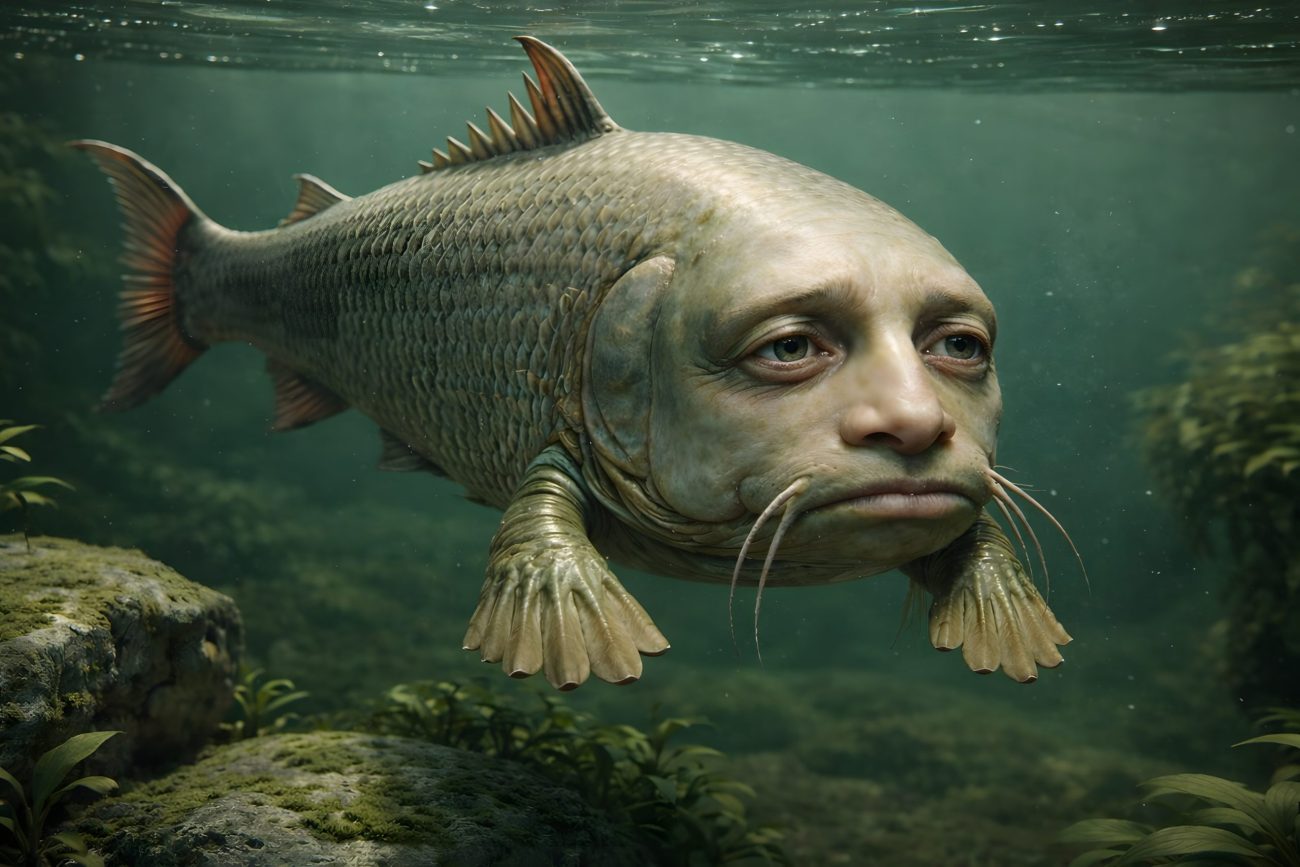
Lingyu is a strange fish of the sea, known for its human-like face and barbels shaped like hands. Its body moves through the water like an ordinary fish, yet its features mark it as something far from natural.
Lingyu lives in the sea near Lieguye Mountain, appearing and disappearing among the waves. When it emerges, the sea does not remain calm. It is said that whenever Lingyu appears, violent winds rise and storms suddenly break out, churning the water and darkening the sky.
Because of this, Lingyu is feared as an omen of chaos and upheaval. Sailors and coastal people believe its presence signals danger, and its human face is seen as a warning rather than a comfort.
Lingyu does not attack ships or people directly. Instead, it moves the sea itself, bringing sudden storms as it travels, leaving destruction in its wake before vanishing again into the depths.