Old Bull

Tradition: American Mythology
Alternative names: Old Bull
Category: Cow


The Myth

When Stone Boy was returning home, he had been trying to understand why so many buffalo had gathered near the home he shared with his uncles. He approached several groups of young buffalo, but each group fled as soon as it saw him. Stone Boy continued from one group to another, scattering them until he eventually became tired of their cowardice and began making his way home.

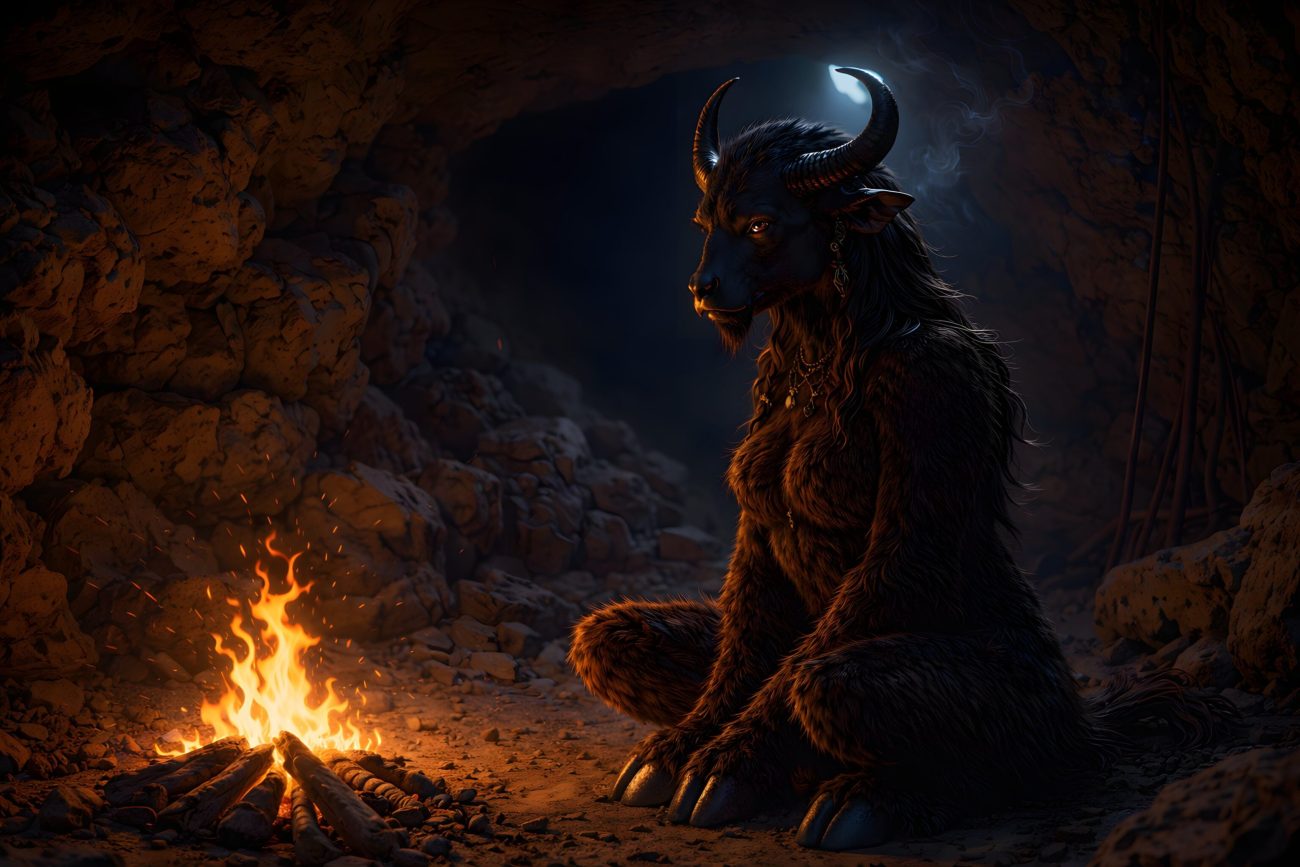
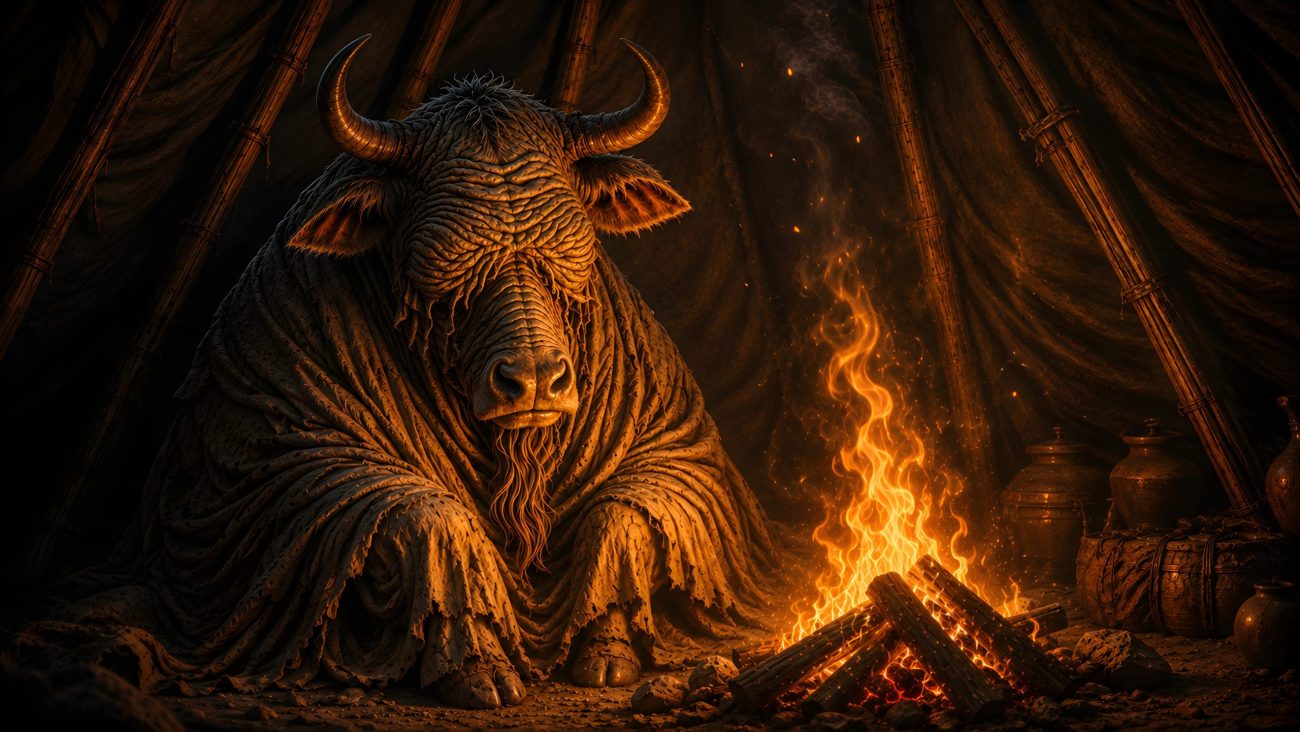
When he was about half a mile from home, he encountered an old, shaggy buffalo standing beside a large boulder. The old bull repeatedly rubbed one horn against the stone and then the other, apparently trying to sharpen them.

Stone Boy approached and discovered that the bull was extremely old and nearly blind. His horns were so blunt that he could have rubbed them against the boulder for an entire year without making them sharp enough to hurt anyone.

When Stone Boy asked what he was doing, the old bull explained that he was sharpening his horns for the coming war.

The bull revealed that the chief’s twins had been killed by Stone Boy, who had supposedly driven them over a cut bank deliberately. In response, the chief had ordered all of his buffalo to gather together. Once they had assembled, they intended to kill Stone Boy, his mother, and his uncles.

Stone Boy thanked the old bull for revealing the plan and offered to save him the trouble of continuing to sharpen his useless horns. He pointed out that the bull was too old to participate in such a war and might fall into a hole, stumble, and be trampled by the other buffalo.

The old bull, being nearly blind and unaware of what Stone Boy was doing, stood still, apparently believing that Stone Boy was helping him.

Stone Boy drew an arrow, pulled his bowstring back, and told the old bull that he would spare him the suffering of dying in the coming battle.

He then released the arrow.

The arrow struck the bull behind the foreleg with such force that it passed completely through his body and continued on until it embedded itself in a tree roughly two hundred feet away.


Sources

McLaughlin, Marie L. Myths and Legends of the Sioux. Bismarck, N.D.: Bismarck Tribune Co., 1916. Internet Archive
Mi-ni-wa-tu

Tradition: Teton Mythology, American Mythology
Alternative names: Mi-ni-wa-tu (“sea monster”)
Category: Cow


The Myth

The Mi-ni-wa-tu, meaning “sea monster,” is a creature from the folklore of the Tetons. It is said to inhabit the Missouri River.

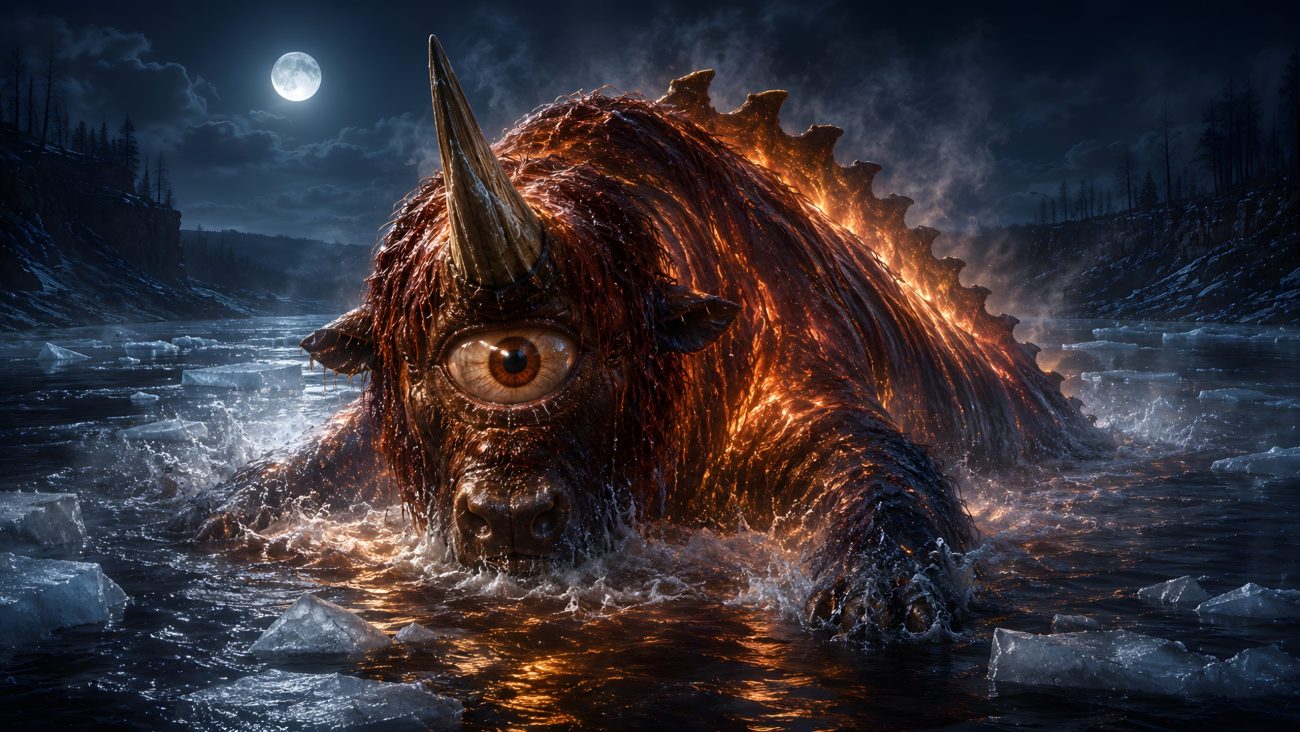
The Mi-ni-wa-tu is an amphibious creature with the body of a buffalo, covered in red hair. It has a single horn projecting from its forehead and a single eye. Its back is notched like a saw or gear.

At night, the creature can be safely seen swimming powerfully upstream. As it moves through the river, it churns the water and glows like fire. In spring, the Mi-ni-wa-tu is said to break up the ice covering the river.

Encountering one during the day is dangerous. Those who see the creature in daylight suffer confusion and loss of sight. Madness then sets in, followed by a day of convulsions, after which the unfortunate victim dies.


Sources

Countess Sica. “Mi-ni-wa-tu.” A Book of Creatures. July 29, 2015. Accessed August 29, 2026. https://abookofcreatures.com/2015/07/29/mi-ni-wa-tu/


Long Bug

Tradition: American Mythology
Alternative names: Long Bug
Category: Cow, Snake


The Myth

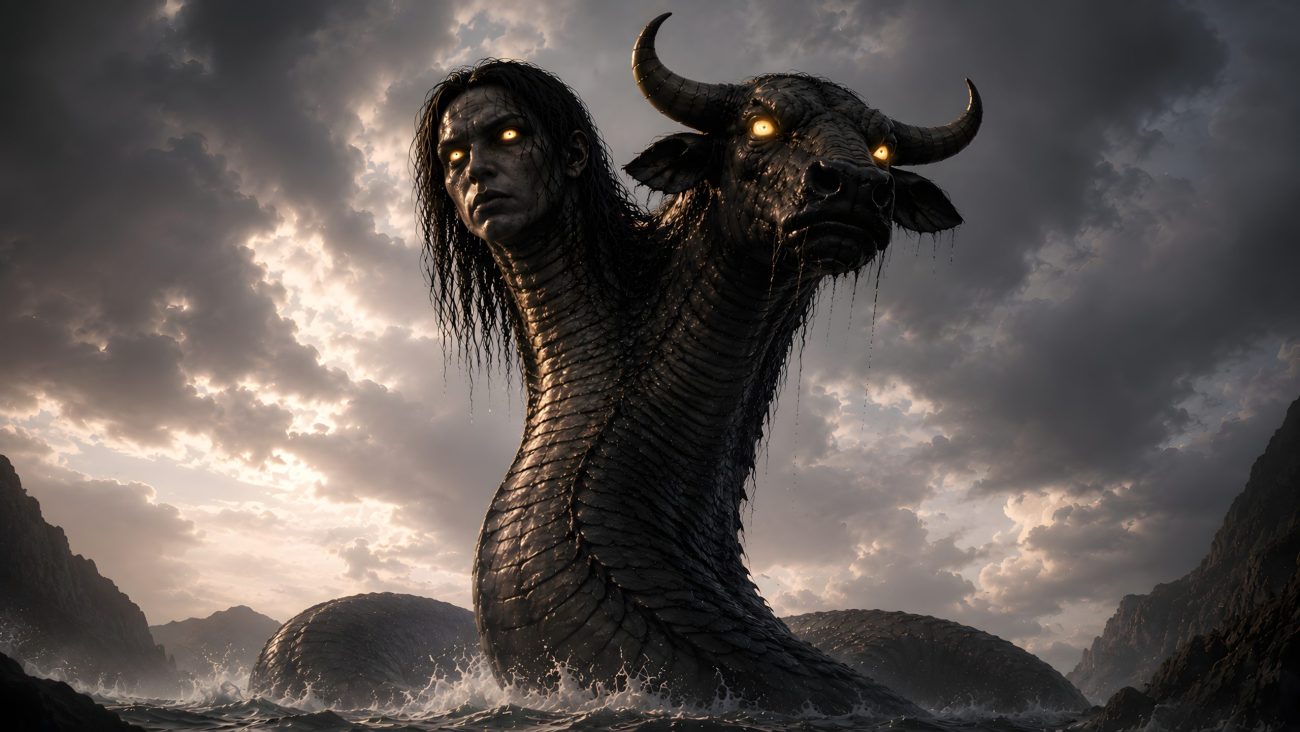
The Long Bug is described as the chief of the underwater animals, an enormous serpent-like creature with a body like a gigantic snake.

It possesses two heads, each radically different from the other. One is the head of a cow, complete with two long horns and enormous eyes as large as sunflowers. The second resembles a human head, with a long nose and a single enormous eye set in the center of its forehead. Above this eye rises one great horn.

As ruler of the underwater creatures, the Long Bug combines the forms of serpent, cow, and man into a single monstrous being.


Sources

“Long Bug.” Pantheon: Facts, Information, and Mythology. Accessed August 22, 2026. https://pantheon.org/articles/l/long_bug.html


Cursed Cow of Emerline Allen

Tradition / Region: American Mythology
Alternate Names: —
Category: Cow


The Myth

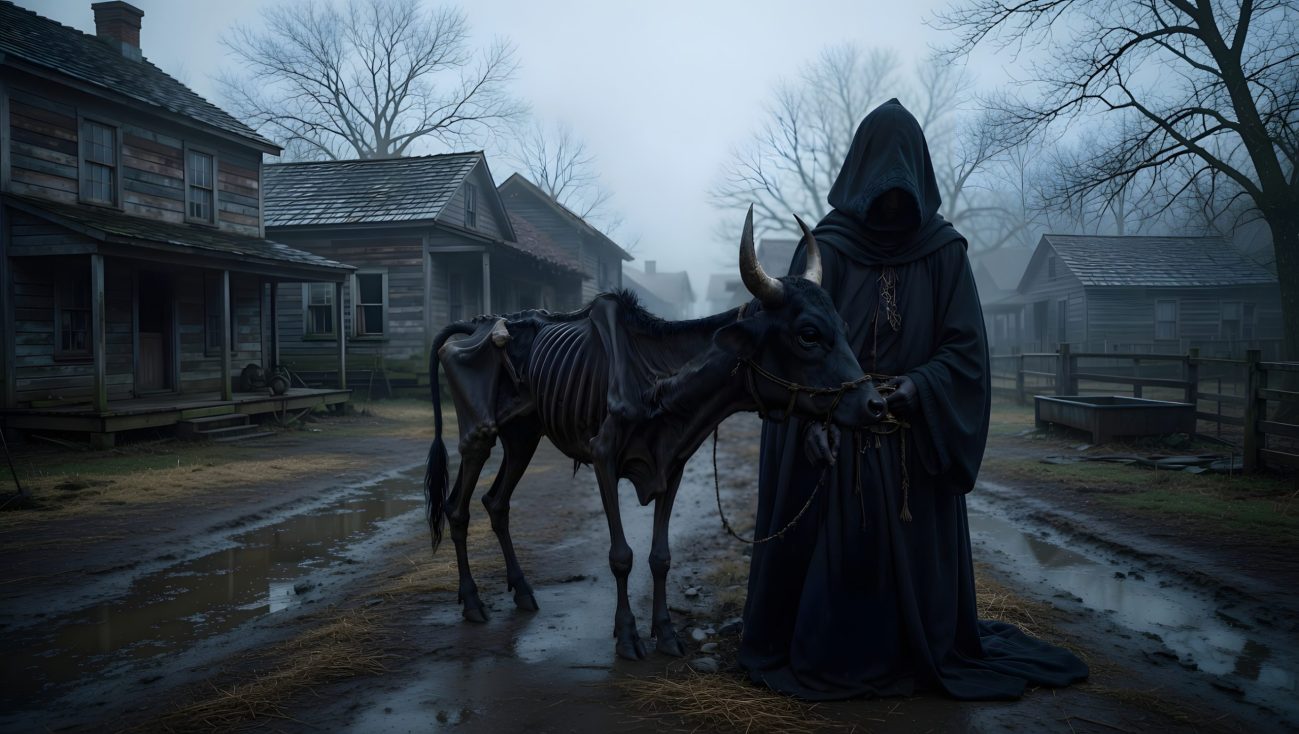
Long ago in the United States there lived an old woman named Emerline Allen, feared among her neighbors for her power to lay spells upon cattle. People said that anyone who angered her might soon see misfortune fall upon their livestock.

One night, some villagers claimed to have seen Emerline working a spell against Grandma Parker’s cow. Not long afterward, the animal stopped giving milk. Each day it yielded only a single small cup, no matter how it was tended.

Grandma Parker was told of a way to break such a curse. She was to take the little milk the cow produced, set it to boil, and cut it with a knife. By doing this, the spell would be severed, and the one who cast it would be forced to come begging.

She followed the instructions exactly. Soon after, Emerline Allen appeared at her door, asking for bread. She promised that if she were given something to eat, the cow would recover. But Grandma Parker refused her request.

With nothing given, Emerline went away in pain, and people said she suffered greatly. From that time on, the cow’s milk returned, and it gave as much as before.

Later, Emerline tried again to seek help, begging others for small things, but no one would give her anything. Left without relief, she endured her suffering alone, while the cow remained healthy and the spell never returned.


Sources

University of North Carolina at Chapel Hill, Folklore Council. (1948–1960). North Carolina Folklore, p. 307.


Buffalo Woman

Tradition / Region: Pawnee mythology, American Mythology
Alternate Names: —
Category: Cow, Hybrid


The Myth

In the earliest days, when the Pawnee still wandered and lived on roots and wild plants, a strange woman appeared at dusk near their gambling grounds. She moved in silence, her body wrapped in a covering that hid her hair, and she passed through the place where the people played before vanishing over the hills.

The next morning, her tracks were found—but they were not human footprints. They were the split hooves of an animal. Still, the people continued their games.

On another evening, the woman returned. This time she ran across the gambling ground and circled it. As she fled over the hills, a man saw her transform before his eyes into a buffalo. He pursued her for many days, until he reached a place where there was nothing but water. There, exhausted, he lost consciousness.

When he awoke, the Buffalo Woman touched him and led him into a lodge. Inside sat four ancient men, the gods of the west. They told him that the buffalo were being given to the people so they might live. They taught him how the buffalo were to be prepared and honored, showing him that the heart and tongue were sacred and must be offered in gratitude. They also entrusted him with seeds—corn, beans, squash, and tobacco—tied in buffalo hide, gifts meant to sustain the people.

Thus the Buffalo Woman was revealed as a messenger between worlds. She crossed between human and animal, bringing food, life, and sacred instruction. From that time on, the Pawnee lived by the buffalo and honored the western gods first in their offerings, remembering the woman who came at dusk and changed the fate of the people.


Sources

Dorsey, G. A. (1906). The Pawnee Mythology (Part I).


Babe

Tradition / Region: American Mythology
Alternate Names: Babe the Blue Ox
Category: Cow


The Myth

Babe the Blue Ox was the faithful companion of Paul Bunyan, the greatest lumberjack the world had ever known.

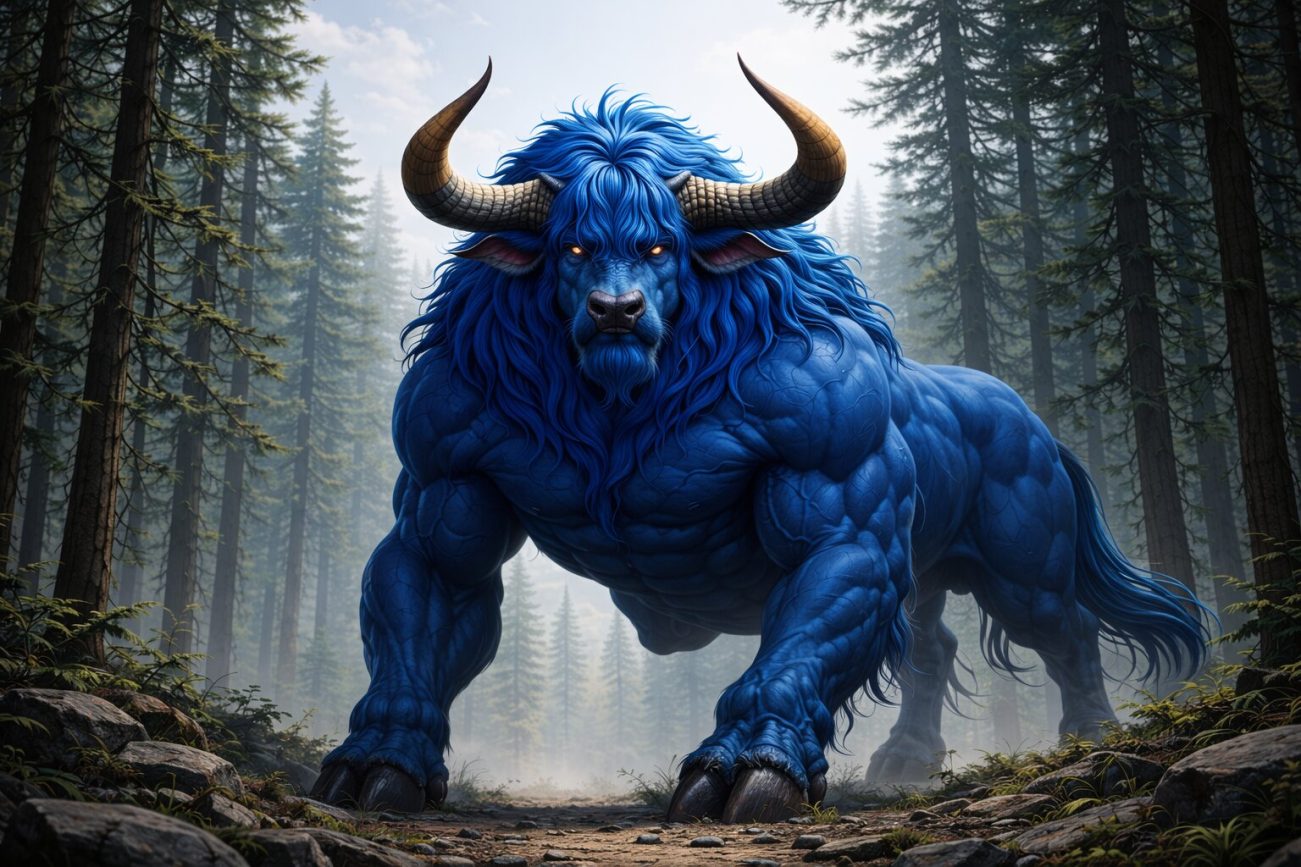
During the legendary Winter of Blue Snow, when cold gripped the land more fiercely than ever before, Paul Bunyan found a small ox calf trapped and close to freezing in the wilderness. He lifted the calf in his arms and carried it back to his camp, warming it by the fire until it survived. Though the cold left its body, it never left its hide, and the calf remained forever blue. Because of this, Bunyan named him Babe.

Babe grew with astonishing speed. Before long he became so large that his height was said to equal forty-two axe handles stacked end to end. His horns stretched so far apart that a crow would take an entire day to fly from one tip to the other.

Wherever Paul Bunyan went, Babe followed. Together they hauled entire forests, dragged logs across continents, and reshaped the land itself. It is said that their travels carved the Black Hills and that their labors tore open the earth to form the Grand Canyon. Babe moved steadily at Bunyan’s side, silent and immense, his blue form standing out against the open sky.

Thus Babe the Blue Ox became part of the legend of the land itself—a symbol of enormous strength, endless work, and the vast scale of the American frontier, where even animals could grow as large as the stories told about them.


Sources

Dixon-Kennedy, M. (1996). Native American Myth & Legend: An A–Z of People and Places. p. 35.

Encyclopedia Mythica. (n.d.). Babe. Retrieved from https://pantheon.org/articles/b/babe.html