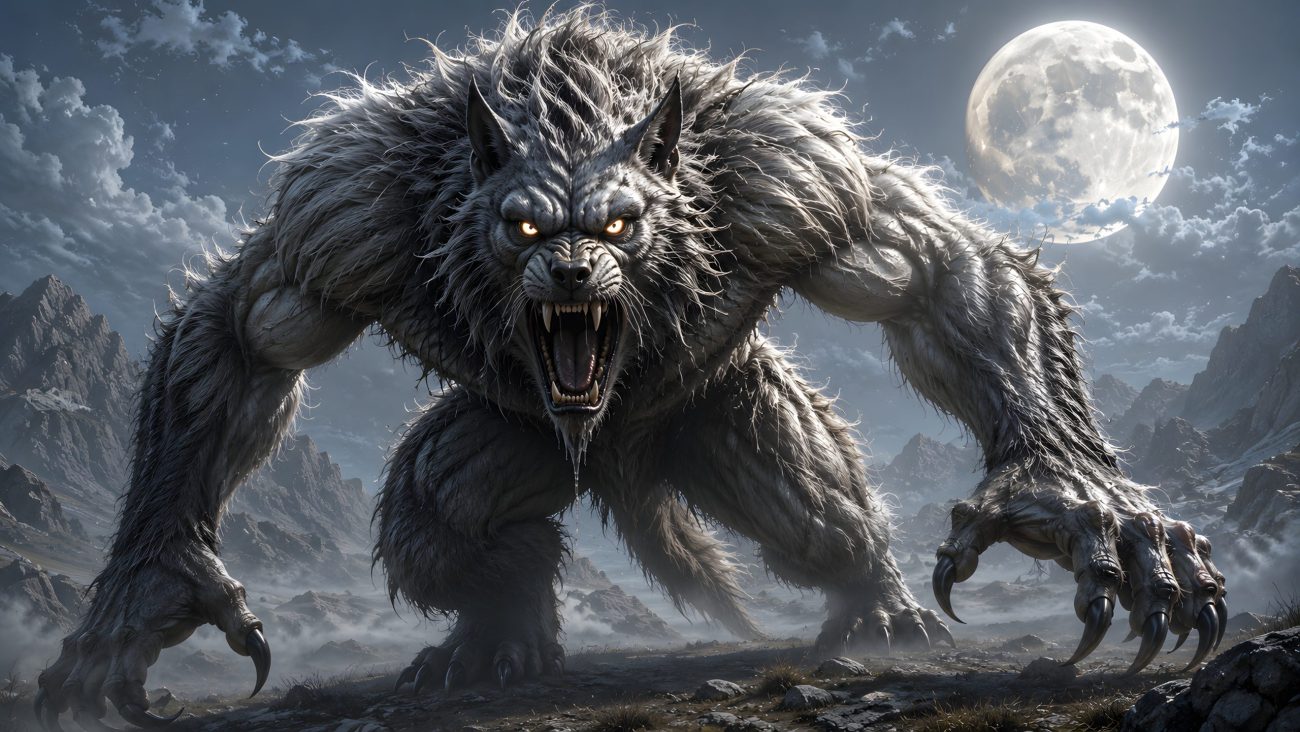
The Hombre Gato (“Catman”) is a legendary creature from Argentine folklore that combines both human and feline features.
According to the legend, the Hombre Gato emerges only at night, wandering through villages and rural areas in search of prey. It is said to attack both humans and animals under the cover of darkness, much like a werewolf.
Stories of the creature are especially common in the Argentine countryside. While many people regard the Hombre Gato as a fictional legend, others claim to have heard its eerie cries or even encountered the mysterious being during the night. The tale remains one of Argentina’s best-known modern urban legends and has inspired numerous works of fiction and documentaries.
Sources
“Hombre Gato.” Wikipedia: The Free Encyclopedia. Wikimedia Foundation. Accessed July 28, 2026. https://en.wikipedia.org/wiki/Hombre_Gato
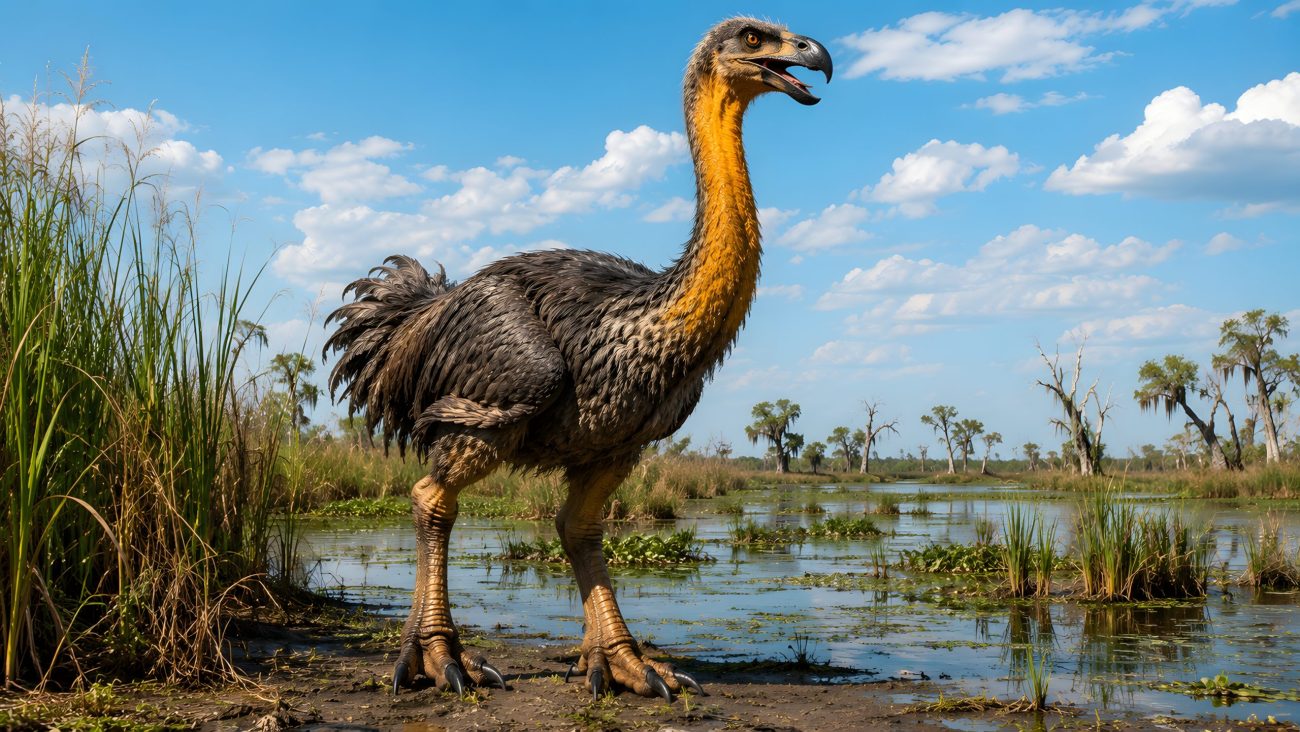
The Tuyango, known to the Mocoví as Tagänogók, is a monstrous swamp bird said to resemble a rhea but with a distinctive yellow neck. It is a fierce carnivore that hunts humans, dragging its victims back to its lair to devour them.
According to legend, the Tuyangos became infamous for their cannibalism, earning the hatred of the hawk. One day, a Tuyango returned home carrying the bodies of two slain men, only to discover that the hawk had killed all four of its chicks. Crying out in grief, the bird and its mate set out to avenge them.
The hawk outwitted the pair by asking for fire and repeatedly darting through the smoke until the bewildered Tuyangos became exhausted and confused. Seizing the opportunity, the hawk struck them down with a club and killed them both. Returning home in triumph, he assured his frightened daughter that the man-eating bird was dead, and the people rejoiced, believing the terror of the Tuyango had finally come to an end.
Sources
A Book of Creatures. (2016, November 28). Tuyango. Retrieved June 29, 2026, from https://abookofcreatures.com/2016/11/28/tuyango/
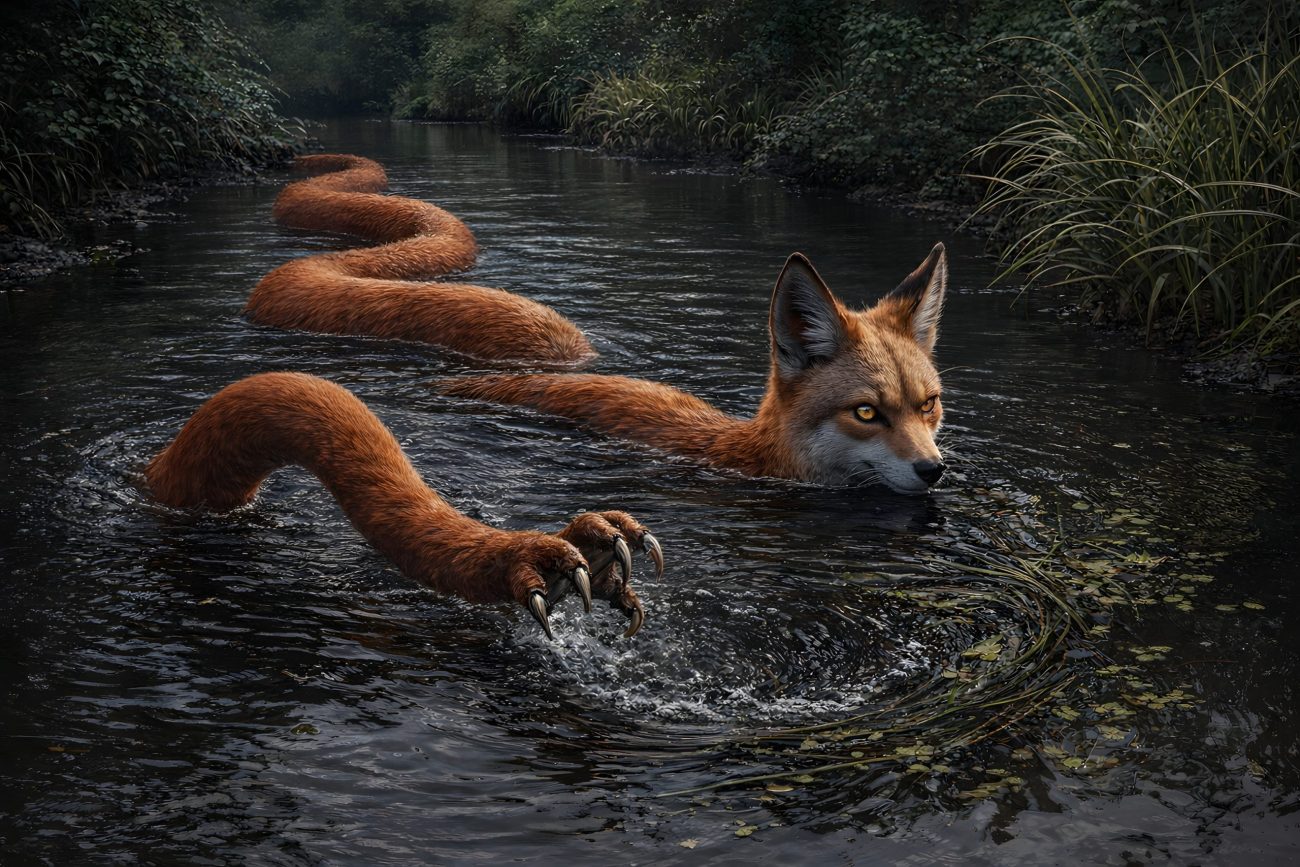
Among the Mapuche people there is a feared creature of the waters known as the Nguruvilu, whose name means “fox-serpent.” It is said to dwell in rivers, lakes, and dark channels where the current slows and deepens.
The creature is described as having the head of a fox or wildcat, with the body of a serpent or a small animal stretched long and thin. Its most terrible feature is its tail, long and powerful, tipped with claws. With this tail it snatches those who wade into the water, dragging them beneath the surface to drown or drink their blood.
People say the Nguruvilu waits in hidden places such as whirlpools, backwaters, or river crossings. Sometimes it makes the water seem shallow and safe, tempting travelers and herds to cross. But when they step into the river, the monster coils around them or their horses and pulls them down into the depths.
Stories tell of riders who scoffed at warnings and lost their animals in the river, barely escaping with their lives. Others say the creature grips people as though holding reins, controlling them like a rider controls a horse. Only with a sharp knife and great strength can one cut free from its grasp.
In some places it is said that the spirit of evil itself can take the form of the Nguruvilu. In others, it is believed the creature’s life rests in its tail, and that if the tail is cut off, the monster will die.
Because of this, people once avoided bathing or fording rivers where it was thought to dwell, choosing instead to cross by boat. Thus the Nguruvilu was remembered as a guardian of dangerous waters — a fox-headed serpent that waits beneath the surface, turning quiet rivers into places of fear.