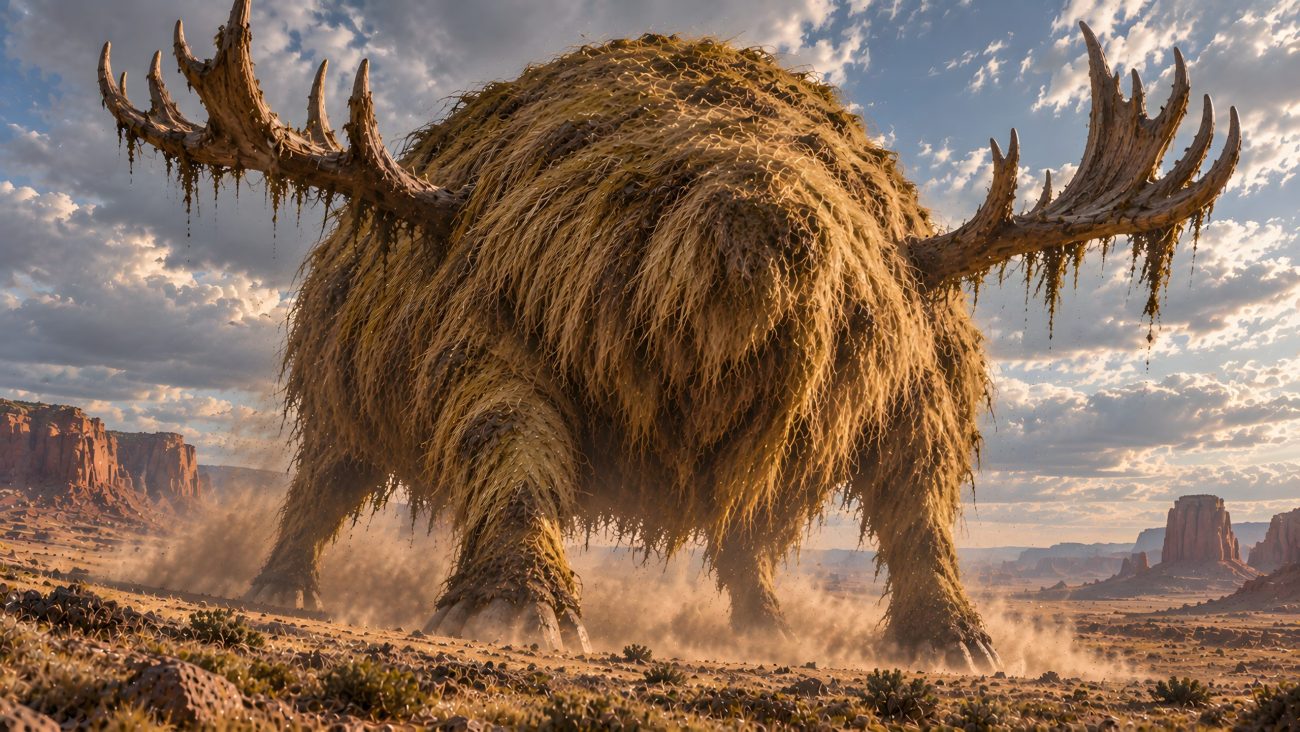
Golden-Horned Deer

Tradition / Region: Georgian Mythology
Alternate Names: Silver-Horned Deer (variant descriptions)
Category: Deer


The Myth

The Golden-Horned Deer is a legendary and highly dangerous creature from Georgian mountain folklore, particularly associated with hunting traditions in regions such as Svaneti.

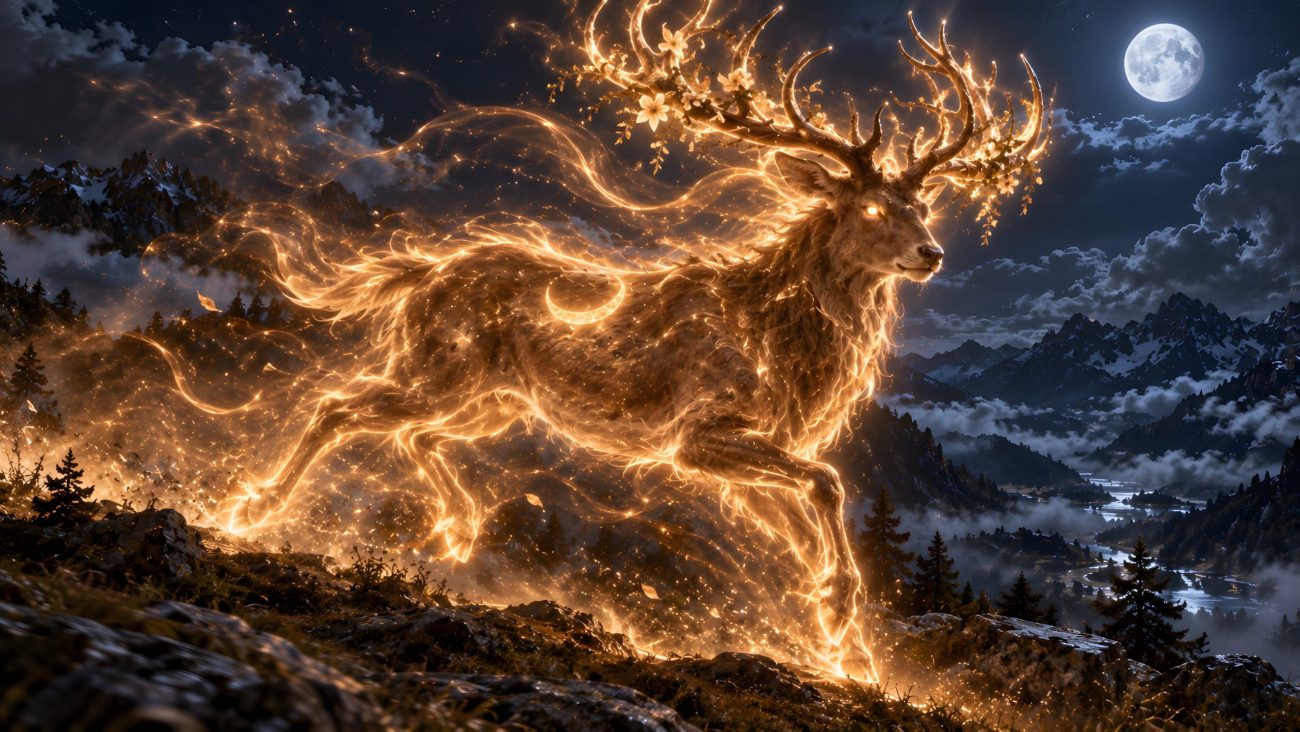
This extraordinary beast is described as a white deer whose antlers are adorned or formed from gold and silver. Its radiant horns are not merely decorative — they symbolize its supernatural nature and may possess protective or enchanted qualities. The creature is often portrayed as nearly invincible, capable of resisting or deflecting attacks that would kill ordinary animals.

The deer inhabits remote wilderness areas, far from human settlements, and is rarely encountered. However, when it is, the encounter is almost always fatal for the hunter. Many skilled and experienced hunters have attempted to kill it, yet none returned, reinforcing its reputation as a deadly and near-mythical adversary.

One well-known tale tells of a hunter named Khukhu, whose father had previously been killed by this same creature. Determined to avenge him, Khukhu tracks the deer to its resting place. Unlike others, he succeeds — after a direct confrontation, he manages to shoot and kill the beast. This victory is exceptional and highlights both the creature’s lethality and the rarity of overcoming it.

The Golden-Horned Deer represents more than just a dangerous animal. It embodies the ultimate test of a hunter’s skill, courage, and fate. Its shining horns and deadly nature place it at the boundary between the natural and supernatural world — a creature that punishes hubris and challenges those who dare to pursue it.


Sources

Tsanava, A. (1992). ქართული მითოლოგია [Georgian Mythology]. In Tbilisi: Merani P. 40.


Cross Deer

Tradition / Region: Czech Mythology
Alternate Names: Holy Stag
Category: Deer


The Myth

The Cross Deer is a sacred and supernatural stag that appears during holy times, particularly around Palm Sunday. It is not an ordinary animal, but a divine or holy manifestation tied to Christian symbolism and the sanctity of nature.

In the tale, two poachers hunted illegally on Palm Sunday and followed the tracks of a stag into the forest. Using a magical trick, they attempted to force the animal to return along its path. Soon after, the stag indeed came back—but what they saw was no ordinary creature.

The deer bore a shining cross between its antlers, glowing as if lit by the sun itself. Faced with this vision, the hunters were struck with fear and awe. Recognizing the stag as something holy, they did not dare shoot it.

After the encounter, they abandoned their hunt and rushed to church, never again daring to hunt such a creature.

The Cross Deer represents a powerful motif found across European folklore:
a sacred animal acting as a sign of divine presence and judgment. Its appearance punishes or corrects human wrongdoing, especially when sacred time—like a holy day—is violated.

Rather than attacking or harming, the Cross Deer transforms those who witness it. It forces recognition of sin and compels repentance, acting as a living boundary between the natural world and the divine.


Sources

sagen.at contributors. (n.d.). Heilige Zeit. In sagen.at, from https://www.sagen.at/texte/sagen/tschechien/watzlik/heiligezeit.html


Sun Stag

Tradition / Region: Albanian Mythology
Alternate Names: —
Category: Deer


The Myth

The Sun Stag is a benevolent animal associated with the sun, summoned to safely carry a maiden back to her home. It is distinguished from more dangerous creatures by its peaceful nature and willingness to help.

After being taken by the sun, a maiden longed to return to her mother. The sun told her to summon an animal to carry her home. First came the Kulshedra, which admitted it would devour her, and so it was rejected. Then the maiden summoned a stag. When asked what it would eat and drink, the stag replied that it would eat fresh grass and drink cold water. Satisfied, the sun chose the stag to escort her.

The stag carried the maiden on its antlers. Along the journey, it paused and told her to climb a tree while it searched for food, warning her not to come down for anyone else. When a Kulshedra approached and tried to lure her down, the maiden refused. The stag returned in time, took her again upon its antlers, and carried her safely home.

Before departing, the stag had asked that the maiden’s mother provide fresh hay in return for its help.


Sources

Albanian Literature contributors. (n.d.). Folktale 22. In Albanian Literature, from http://www.albanianliterature.net/folktales/tale_22.html

Dozon, A. (1879). Manuel de la langue chkipe ou albanaise: Grammaire, vocabulaire, chrestomathie. In Paris: Ernest Leroux (reprinted in Folklor shqiptar 1, Proza popullore, 1963). Translated by Elsie, R.


Peri

Tradition / Region: Azerbaijani mythology
Alternate Names:
Category: Nymph, Pigeon, Deer, Lake Dweller


The Myth

The Peri is a beautiful supernatural maiden, gentle by nature and radiant in form. She often appears as a pigeon or a deer, coming to ponds or rivers where she removes her animal skin and bathes as a human woman.

If someone steals this skin, the Peri is trapped and can be forced to obey, performing magic or granting favors. Yet such acts are dangerous, for Peris are not evil beings. They are kind-hearted, capable of fighting demons, and may even marry humans.

A Peri must be treated with respect. When offended or humiliated, her sorrow can turn into power, bringing misfortune or supernatural disaster. Thus she is remembered as a being of beauty and kindness, but one whose dignity must never be violated.


Sources

JAMnews.net. (2017). The magical creatures of Azerbaijani mythology. Retrieved from https://jam-news.net/azerbaijani-demons/


Anhangá

Tradition / Region: Brazilian Mythology
Alternate Names: Anhanga, Anhan, Agnan, Kaagere
Category: Deer


The Myth

Anhangá is a feared spirit known among many Indigenous peoples of Brazil. It is said to torment both the living and the dead, appearing in nature through sudden, violent sounds such as storms, tempests, and unexplained noises. The presence of Anhangá brings fear, confusion, illness, and suffering.

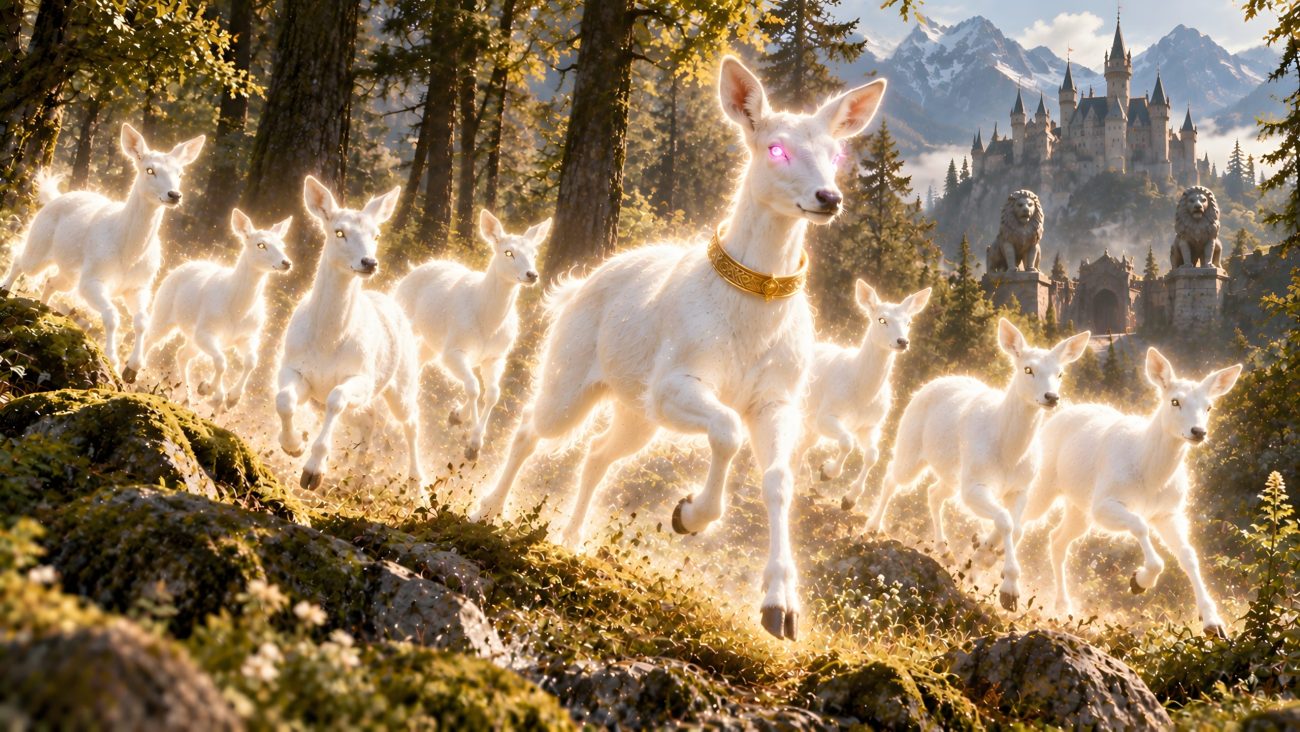
Most often, Anhangá appears in the form of a deer. Hunters describe seeing a white or red deer with burning, fiery eyes, sometimes with antlers covered in hair. This deer is not an ordinary animal but a spirit that guards wildlife. It watches over animals in open fields and forests and punishes hunters who hunt abusively, especially those who pursue females with young.

When Anhangá intervenes in a hunt, it brings fever, madness, and confusion. A hunter may lose his sense of direction, mistake one being for another, or act against his own family without realizing it. In one well-known story, a hunter chased a doe and her nursing fawn. He seized the fawn to draw the mother closer and fired his weapon. Only afterward did he discover that Anhangá had deceived him, and that he had killed his own mother, mistaking her for the animal.

Anhangá does not appear only as a deer. It is said to take many forms in order to deceive and afflict people. It may appear as birds, mammals, fish, reptiles, or strange hybrid beings. These forms include an armadillo, a pirarucu fish, a turtle, oxen, birds such as the tinamou, and human-like figures. Because of this, hunters and travelers are taught never to trust appearances in the wilderness.

The spirit is also believed to torment the souls of the dead. During funerary rituals, people feared that Anhangá would seize the soul on its journey to the Land Without Evils, a blessed place where virtuous souls were meant to go. To protect the dead, food offerings were placed near the burial site so that Anhangá would consume the offerings instead of the soul. Fires were kept burning to warm and protect the deceased and to keep Anhangá at a distance. The living encouraged the dead to keep their fires from going out.

It was believed that only the most virtuous souls — those who had defended their people and killed many enemies — reached the high mountain of the Land Without Evils. Those who failed in this were said to fall under the power of Anhangá, becoming tormented spirits themselves.

Anhangá was also feared during travel, especially over water. Storms and violent sounds were sometimes believed to be caused by the spirits of the dead associated with Anhangá. Among some groups, Anhangá was said to follow or serve Jurupari, and together they were feared as dangerous spirits capable of possession, kidnapping, and death.

Because Anhangá could change form at will, it was impossible to know when it was near. Its presence was marked by fear, illness, illusion, and the sudden reversal of fortune. Hunters, mourners, and travelers all treated the wilderness with caution, knowing that Anhangá might be watching, waiting to punish disrespect, cruelty, or weakness.


Source

Wikipedia contributors. (n.d.). Anhangá. In Wikipedia, The Free Encyclopedia, from https://en.wikipedia.org/wiki/Anhang%C3%A1