Tradition: Mapuche Mythology, Argentine Mythology, Chilean Mythology
Alternative Names: Cherruve, Cherufe
Category: Flame
The Myth
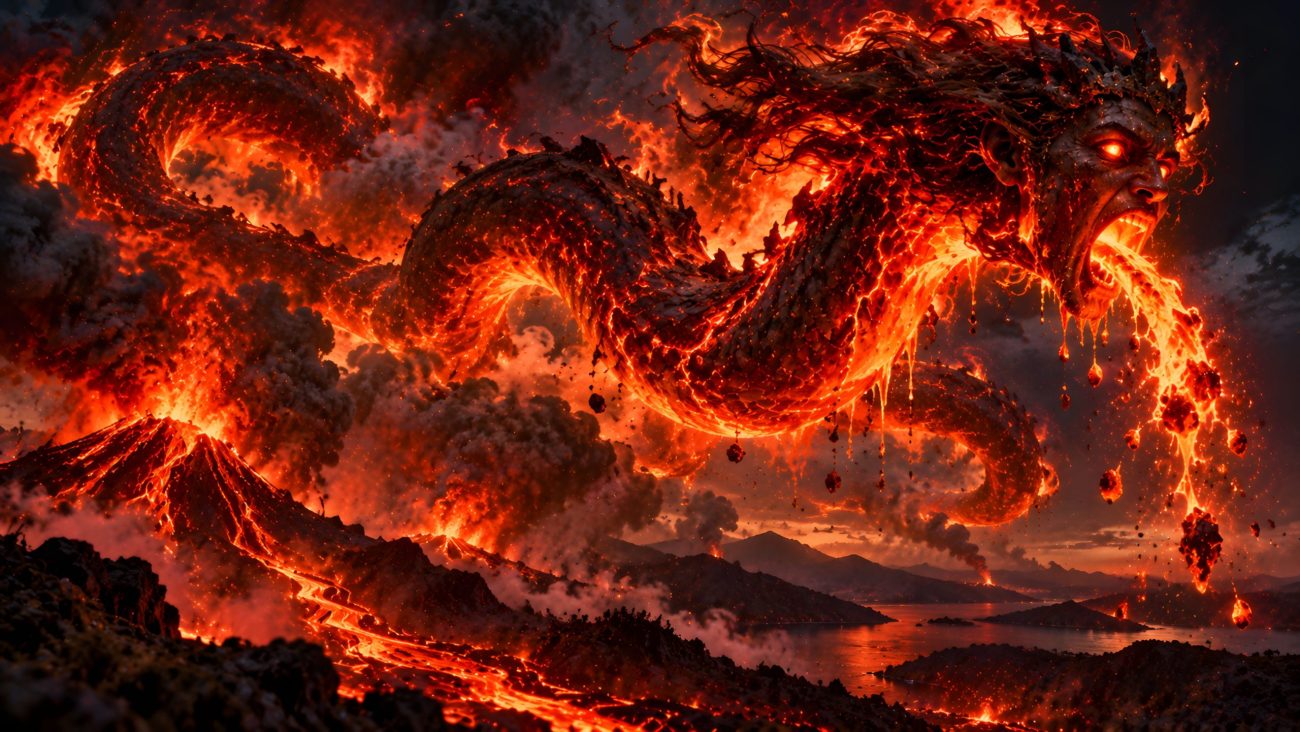
The Cherruve is a fearsome supernatural being associated with comets, meteors, volcanoes, and destructive fire. It is often described as a blazing comet streaking across the night sky, but it can also appear as a gigantic serpent with a human head and molten lava dripping from its mouth. In some regions, it takes the form of a seven-headed dragon, a fiery-eyed giant, or even a two-legged goat with burning eyes. Cherruves dwell underground and within volcanoes, emerging into the sky like flaming celestial bodies.
The appearance of a Cherruve is considered an omen of disaster, foretelling epidemics, the death of great leaders, and other misfortunes. Their movements beneath the earth cause earthquakes, while their fiery vomit becomes lava flowing down volcanic slopes. They are said to create thunder by tossing human heads through the air. Some particularly monstrous Cherruves demand the sacrifice of Mapuche maidens and threaten to withhold the flow of rivers when their demands are refused. Their forms can also include meteorites and strangely shaped volcanic rocks, which sorcerers collect and use as supernatural weapons against their enemies. These enchanted stones can be commanded to spread disease, drain blood, and bring death before returning to their masters.
Despite their destructive nature, Cherruves are also capable of love, jealousy, and grief. One Cherruve married a Cloud, and together they had a beautiful daughter named Snow, whose body was pale and delicate. The Cherruve jealously guarded his wife, but his enemy Wind abducted her, and whenever Wind carried Cloud over the volcano, her tears fell as rain while the Cherruve’s despair erupted in devastating volcanic outbursts. He became equally protective of Snow, forbidding her from leaving the mountain during daylight. Yet Snow longed to see the world beyond her home. One day, she escaped and marvelled at the sunlight, birdsong, and the colours of the world, growing happier even as her strength faded. When Wind carried her mother away once more, Snow collapsed from exhaustion. The Sun, moved by love for the beautiful girl, descended to kiss her. When her father finally found her, Snow had vanished, leaving behind only a puddle of crystalline water.
Sources
“Cherruve.” A Book of Creatures. January 22, 2016. https://abookofcreatures.com/2016/01/22/cherruve/