Pombero

Tradition / Region: Paraguay Mythology, Brazilian Mythology, Argentine Mythology
Alternative names: Pomberito, Karai Pyhare, Pyrague, Kuarahy Jára, Cho Pombé, Lord of the Night
Category: Goblin


The Myth

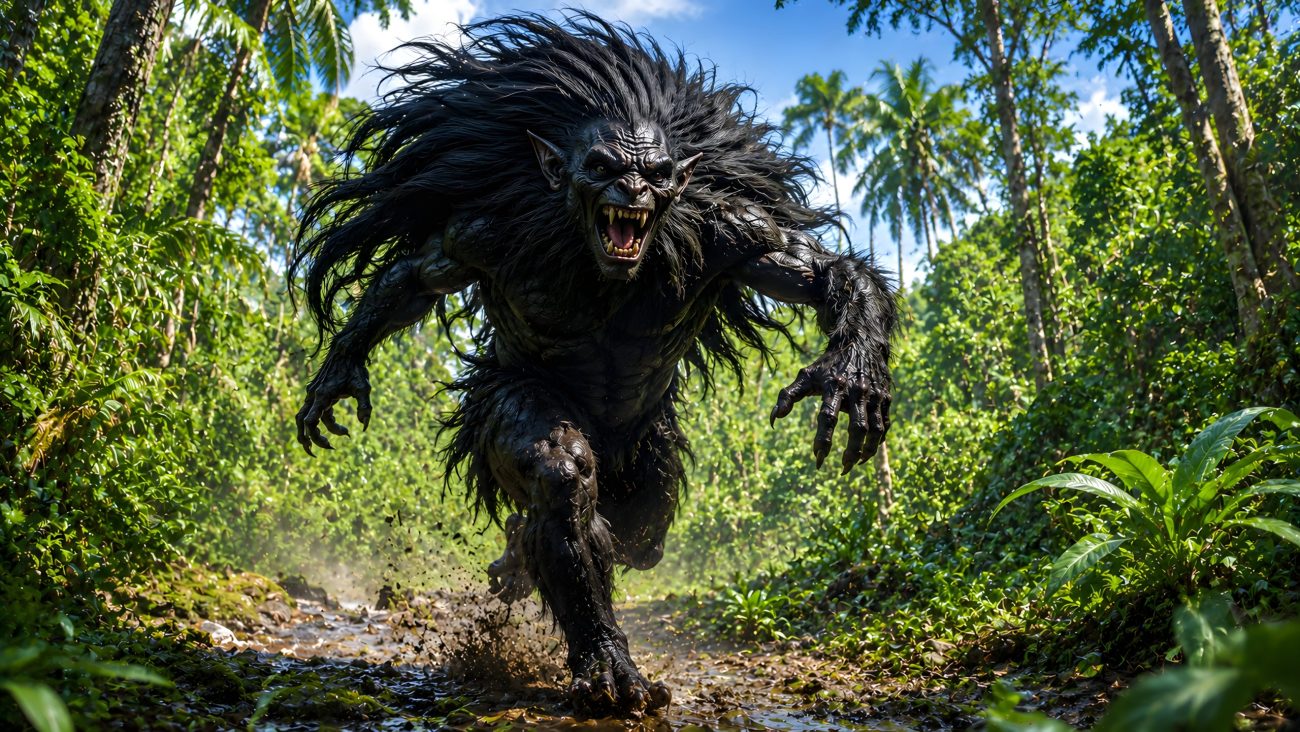
The Pombero is a mysterious nocturnal being that inhabits forests, abandoned houses, barns, and lonely rural places throughout the Guaraní-speaking world. Usually active after dark, he is known as the Lord of the Night and is one of the most feared and respected figures in Paraguayan folklore.

He is commonly described as a short, ugly humanoid with extremely short arms and hairy hands and feet. His feet allow him to move silently through the forest, while the touch of his hairy hands is said to send a cold shiver through those he touches. The Pombero possesses many supernatural abilities, including invisibility and the power to squeeze through impossibly narrow openings.

Before appearing, he often announces his presence with strange whistles and the songs of nocturnal birds, which he can imitate perfectly. Because of this, he is regarded as a protector of birds and is said to punish children who hunt them with slingshots.

Although generally considered a mischievous spirit rather than an outright monster, the Pombero delights in causing trouble. He steals eggs, honey, and chickens, scatters grain and food stores, releases livestock, and frightens horses so that riders are thrown to the ground.

He is also associated with mysterious pregnancies and is sometimes blamed for fathering children born unusually hairy or unattractive. In darker traditions, he is said to kidnap lonely or ungrateful young women, force his affection upon them, and violate them. Similar stories are also attributed to the Guaraní being Kurupi.

Because of his unpredictable nature, people seek to appease the Pombero with offerings. Cigars and rum are his favorite gifts, though honey is also considered acceptable. Families in rural Paraguay often leave these offerings outside at night to prevent his mischief.

Those who regularly honor him may gain his friendship. A satisfied Pombero is believed to protect homes, animals, and possessions, and sometimes rewards his benefactors with small gifts of his own.

Thus, the Pombero remains one of the most enduring figures of Guaraní folklore—a silent lord of the forests who walks unseen through the night, bringing either mischief or protection depending on how he is treated.


Sources

Wikipedia contributors. (n.d.). Pombero. In Wikipedia. Retrieved June 13, 2026, from https://en.wikipedia.org/wiki/Pombero


Luison

Tradition / Region: Paraguay Mythology, Argentine Mythology
Alternate Names: Luisõ, Luisón, Lobizón
Category: Dog


The Myth

Luison is one of the seven monstrous sons born to Tau, a spirit of evil, and Kerana, a mortal woman. Of their seven children, Luison is the seventh and most accursed. He is feared throughout Guaraní tradition and in parts of Paraguay, Argentina, and neighboring regions.

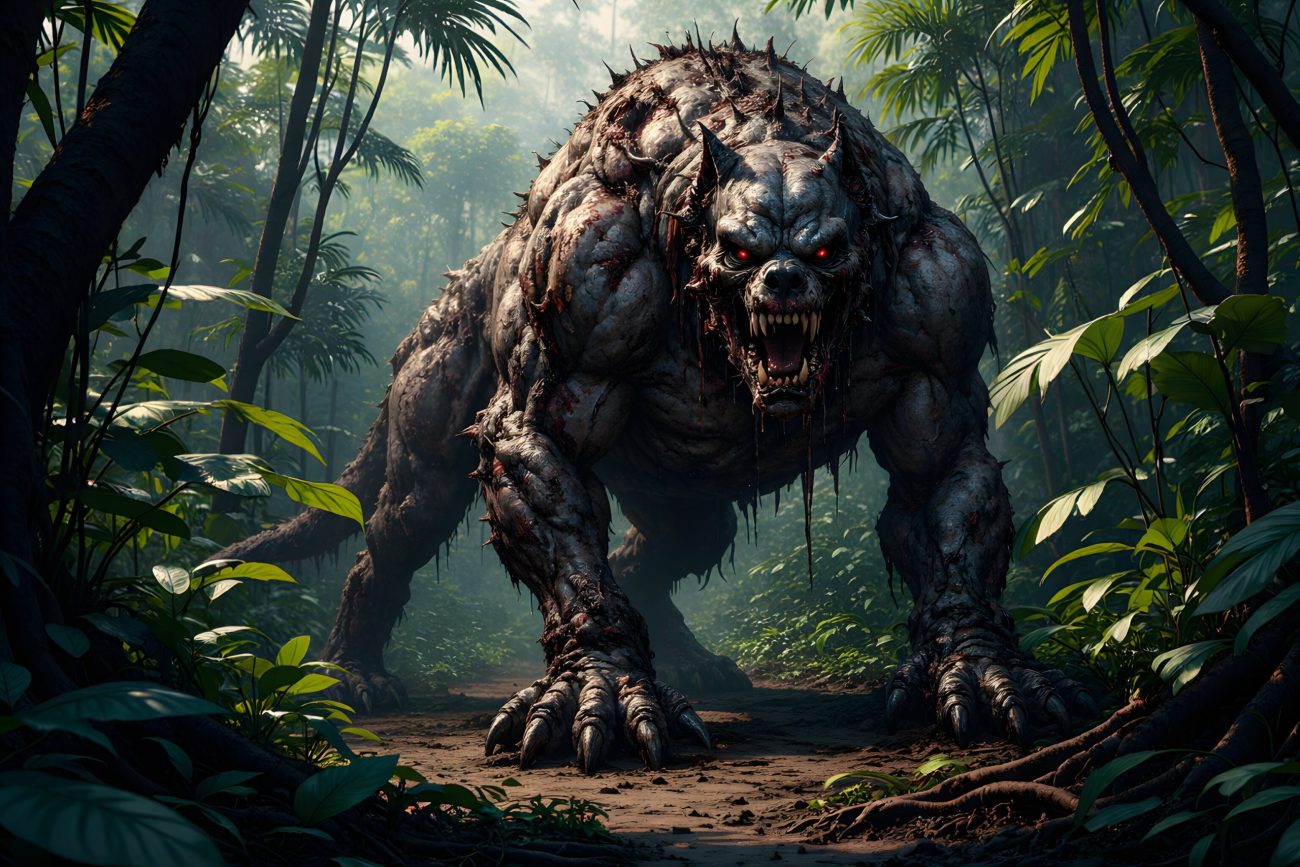
Luison appears as a hideous, giant dog-like creature, grotesque in form and repulsive to behold. He prowls at night, haunting graveyards and lonely places, feeding on carrion and the corruption of the dead.

According to the legend, the curse did not remain only with the original beast. It spread into the human world. Families believed that if a household had seven sons in succession, the youngest would be destined to become Luison. On his thirteenth birthday, the transformation would begin. The boy would change into a monstrous dog-creature and wander the night, driven by hunger and doom.

Because of this belief, traditions arose to prevent the curse. In some regions, the seventh son would be given special protection, baptized with powerful rituals, or even adopted by a godfather of high status so the curse could be broken.

Though feared as a devourer of the dead, Luison is also remembered as a tragic figure — a being born not by choice, but by fate, condemned to roam between the worlds of the living and the dead.


Sources

Wikipedia contributors. (n.d.). Luison. In Wikipedia, from https://en.wikipedia.org/wiki/Luison


El Toro el Súpay

Tradition / Region: Argentine Mythology
Alternate Names: Devil Bull; Toro Supray
Category: Cow


The Myth

In the lands of Santiago del Estero, near the Saladillo River, people speak of a fearsome creature called the Toro el Súpay.

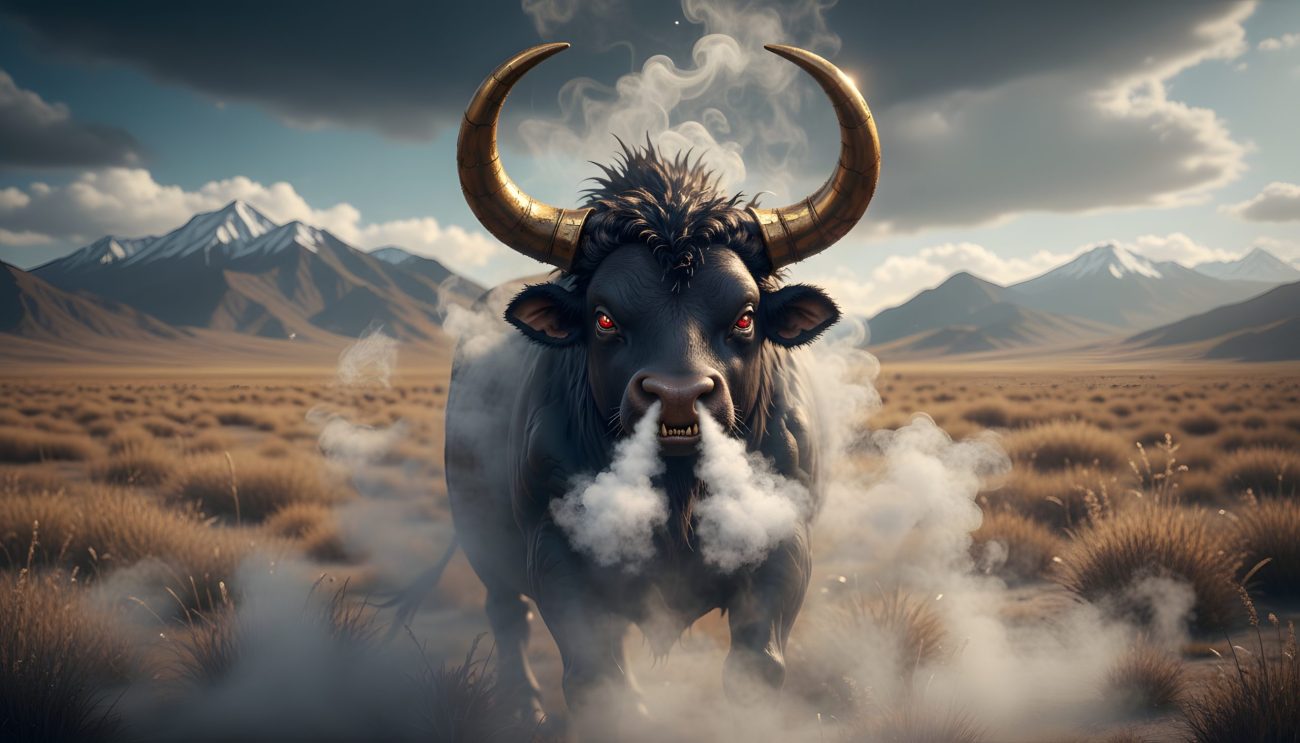
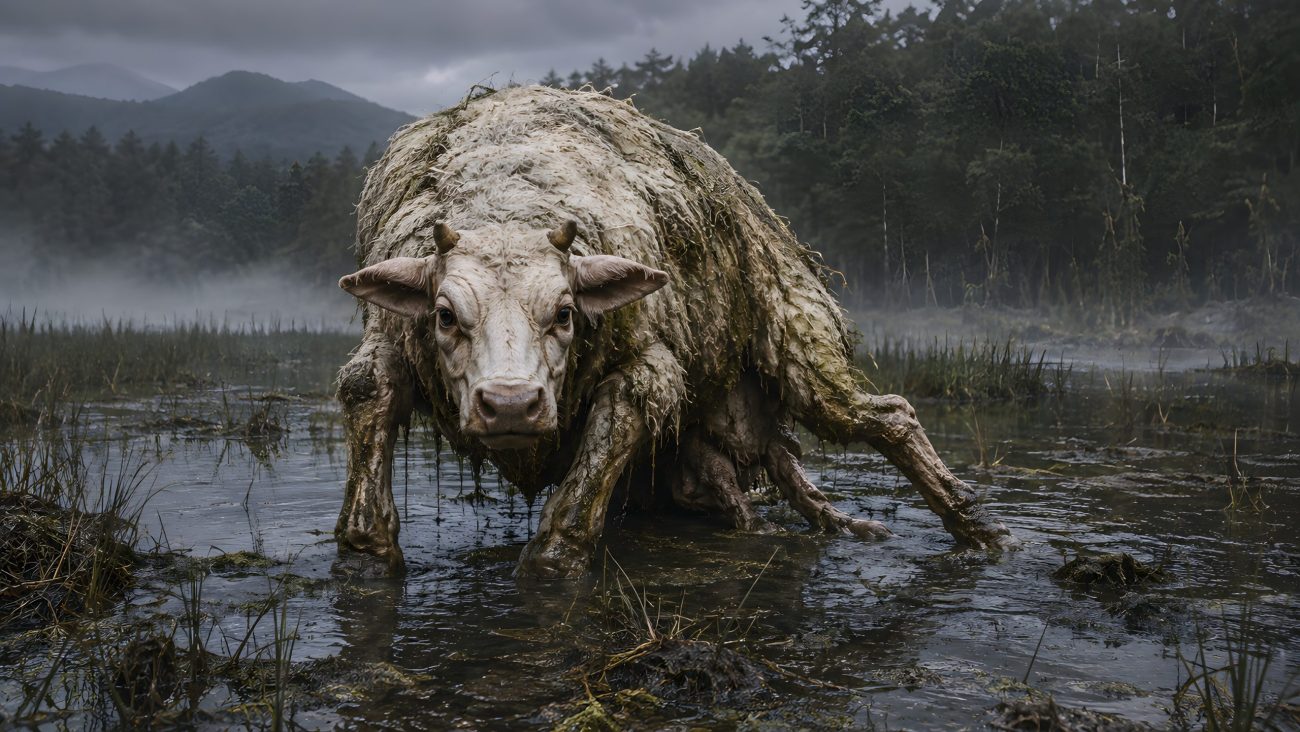
This bull is said to be enormous beyond any natural size. Its head appears partly human and partly bovine, set upon a strong upright neck. Its mane and tail bristle, and smoke pours from its nostrils. Some say its horns shine like gold, flashing in the light as it moves.

Though terrible to behold, the bull is not always a bringer of harm. It is believed to guard the herds of the one who owns it, ensuring that livestock thrive and multiply beyond ordinary fortune. Yet such prosperity is never free, for people say the owner must have made a pact with the Supay, the devil of the region.

The truth of this bond is revealed only when the master dies. At that moment, the Toro el Súpay gathers the soul of the dead and drives away every animal belonging to him. By dawn, while mourners may still sit beside the body, the corrals stand empty, and no beast remains.

Thus the Toro el Súpay is remembered as a bull of dark blessing, one that brings wealth in life but claims all in death, leaving behind only silence where herds once stood.


Sources

Colombres, A. (1984). Seres sobrenaturales de la cultura popular argentina. Ediciones Del Sol, p. 48.


Cuero

Tradition / Region: Chilean Mythology, Argentine Mythology
Alternate Names:
Category: Cow


The Myth

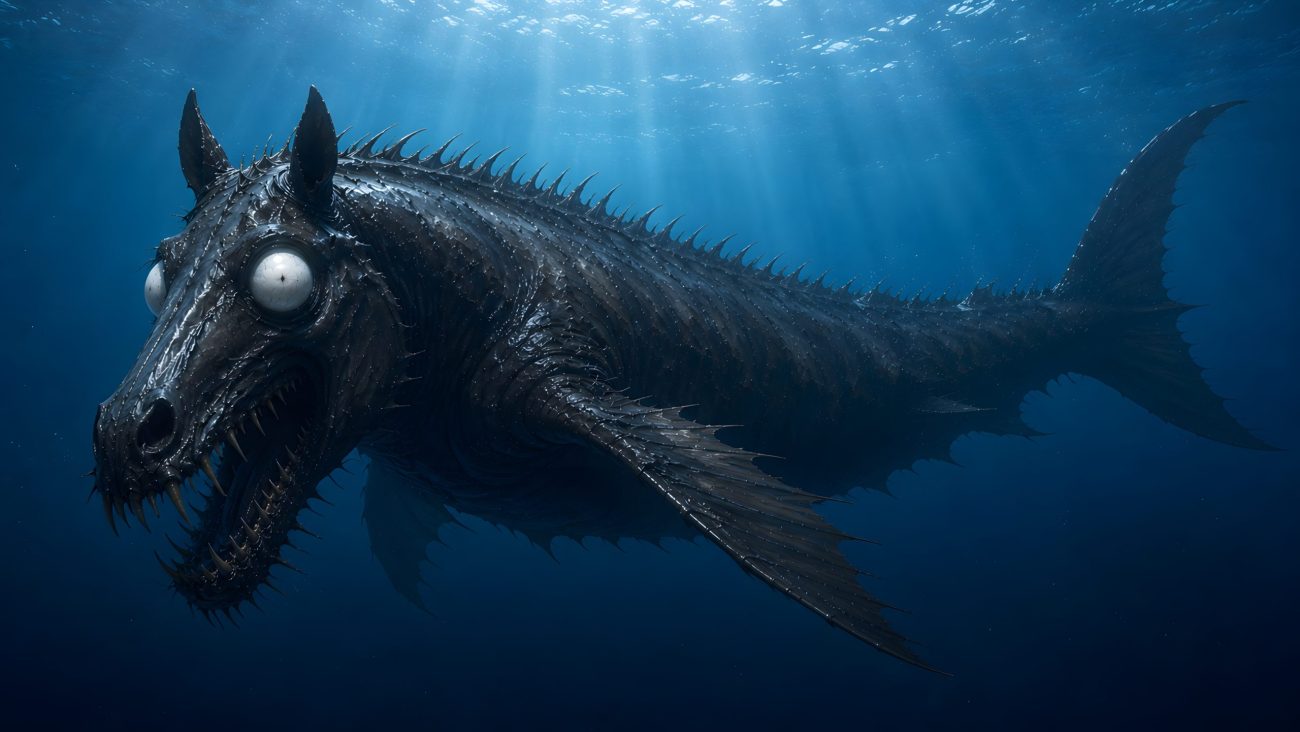
In the rivers and lakes of southern Chile and Argentina there is said to live a dreadful creature known as the Cuero.

It is described as resembling a living bull’s hide, flat and wide, with no hair upon its body. Along its length runs a raised spine, while its edges are lined with hooked claws and sharp points. From its body extend broad fins, and behind it trails a long, whip-like tail. Its eyes, red and swollen, rise on stalks like those of a crab, watching the shores and waters where prey may come.

The Cuero waits quietly near the banks, most often at dusk. When an animal or person comes close, the creature glides forward and spreads itself over its victim like a blanket. Once it has covered them, it drags them beneath the water.

On the underside of its body lies a sucking mouth filled with small teeth. With this it drains the victim’s blood and moisture until nothing remains but a dried body.

People say the size of the Cuero varies, some being no larger than a small animal, others vast enough to cover a man entirely. It is feared wherever it dwells, for few can escape once it has closed upon them.

Only the most skilled shamans are said to be able to destroy one. They use thorny branches as bait, for when the Cuero attempts to seize the offering, the sharp spines pierce its body and hold it fast, making it vulnerable.

Thus the Cuero is remembered as a silent hunter of the waters, shaped like a hide yet alive, waiting beneath the surface for the moment to strike.


Sources

Trincau, R. (1918). VII. El Indo y el Cuero. In S. R. de Saunière (Ed.), Cuentos populares araucanos y chilenos: recogidos de la tradición oral (p. 70). Santiago: Imprenta Universitaria.

Wikipedia contributors. (n.d.). Cuero (leyenda). Wikipedia, from https://es.wikipedia.org/wiki/Cuero_(leyenda)


Orco Mamman

Tradition / Region: Argentine Mythology
Alternate Names: Mother of the Hill
Category: Mountain dweller


The Myth

High in the mountains, where gold and silver sleep in dark veins beneath the rock, there dwelt a radiant woman known as Orco Mamman—the Mother of the Hill.

She was beautiful beyond compare. Her hair fell long and shining down her back, and she would sit upon the heights, slowly brushing it with a golden comb. The metals beneath the earth were under her care—gold, silver, iron, and all the hidden treasures buried deep within the mountain’s bones.

The miners who climbed the slopes knew of her. As long as they took only what they needed and honored the mountain, she allowed them to pass unharmed. The tunnels rang with hammers, and caravans of mules carried ore down winding paths.

But when greed took hold—when men gouged too deeply into the mountains, tearing them open and weakening their heart—Orco Mamman grew wrathful.

She would rise from the heights and move unseen among the ridges. As the caravans descended, heavy with stolen metal, she would push them from behind. Carts, mules, and men alike would tumble into dark ravines, swallowed by the abyss below.

Those who survived spoke in hushed voices of a glimpse—a flash of golden hair in the wind, the glint of a comb, a woman standing silently at the edge of a precipice.

From that time on, the wise miners remembered: the mountain is alive, and its Mother watches.


Sources

Wikipedia contributors. (n.d.). Legendary creatures of the Argentine Northwest region. In Wikipedia, The Free Encyclopedia. Retrieved February 14, 2026, from https://en.wikipedia.org/wiki/Legendary_creatures_of_the_Argentine_Northwest_region


Manchachicoj

Tradition / Region: Argentine Mythology
Alternate Names:
Category: Demon, Gnome


The Myth

Manchachicoj was said to be a small and deformed being, born of an unnatural union between a demon and a terrestrial witch. Though his body was misshapen, he possessed a strange charm: elegant in manner, seductive in speech, and gifted with a romantic soul that did not match his monstrous origins.

He lived in the Salamanca, the legendary place of sorcery and forbidden knowledge, where demons, witches, and spirits gathered beyond the reach of ordinary people. From this shadowed world, Manchachicoj would emerge, drawn again and again toward humanity by an unfulfilled longing.

His fate was tragic. No matter how refined his words or how sincere his devotion, Manchachicoj was doomed to fall in love with young human women who could never truly belong to him. Each love was impossible from the start, divided by nature, destiny, and fear. He could enchant and fascinate, but never remain. His presence carried danger and sorrow, and his romances ended in separation, loss, or despair.

Thus Manchachicoj became a symbol of cursed desire: a being caught between worlds, elegant yet grotesque, condemned to wander in search of a love he could approach but never keep.


Sources

Wikipedia contributors. (n.d.). Legendary creatures of the Argentine Northwest region. In Wikipedia, The Free Encyclopedia, from https://en.wikipedia.org/wiki/Legendary_creatures_of_the_Argentine_Northwest_region