El Toro el Súpay

Tradition / Region: Argentine Mythology
Alternate Names: Devil Bull; Toro Supray
Category: Cow


The Myth

In the lands of Santiago del Estero, near the Saladillo River, people speak of a fearsome creature called the Toro el Súpay.

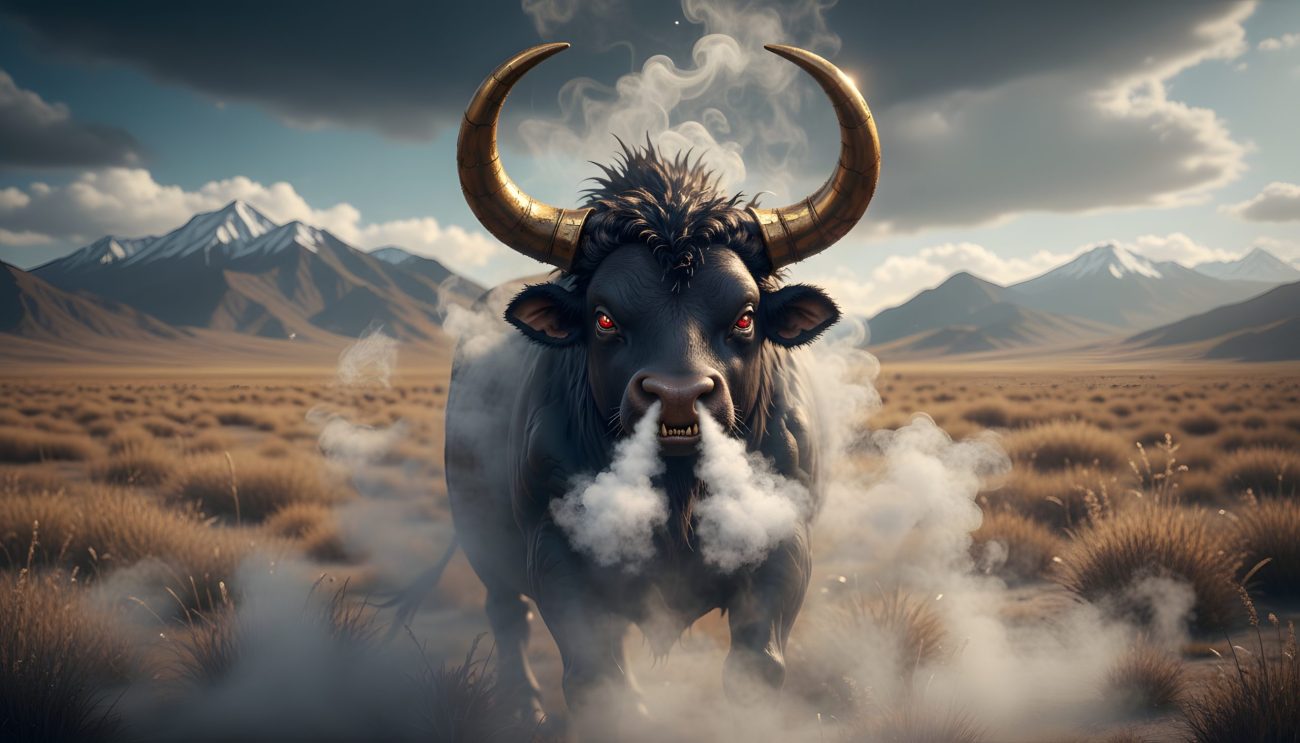
This bull is said to be enormous beyond any natural size. Its head appears partly human and partly bovine, set upon a strong upright neck. Its mane and tail bristle, and smoke pours from its nostrils. Some say its horns shine like gold, flashing in the light as it moves.

Though terrible to behold, the bull is not always a bringer of harm. It is believed to guard the herds of the one who owns it, ensuring that livestock thrive and multiply beyond ordinary fortune. Yet such prosperity is never free, for people say the owner must have made a pact with the Supay, the devil of the region.

The truth of this bond is revealed only when the master dies. At that moment, the Toro el Súpay gathers the soul of the dead and drives away every animal belonging to him. By dawn, while mourners may still sit beside the body, the corrals stand empty, and no beast remains.

Thus the Toro el Súpay is remembered as a bull of dark blessing, one that brings wealth in life but claims all in death, leaving behind only silence where herds once stood.


Sources

Colombres, A. (1984). Seres sobrenaturales de la cultura popular argentina. Ediciones Del Sol, p. 48.


Cuero

Tradition / Region: Chilean Mythology, Argentine Mythology
Alternate Names:
Category: Cow


The Myth

In the rivers and lakes of southern Chile and Argentina there is said to live a dreadful creature known as the Cuero.

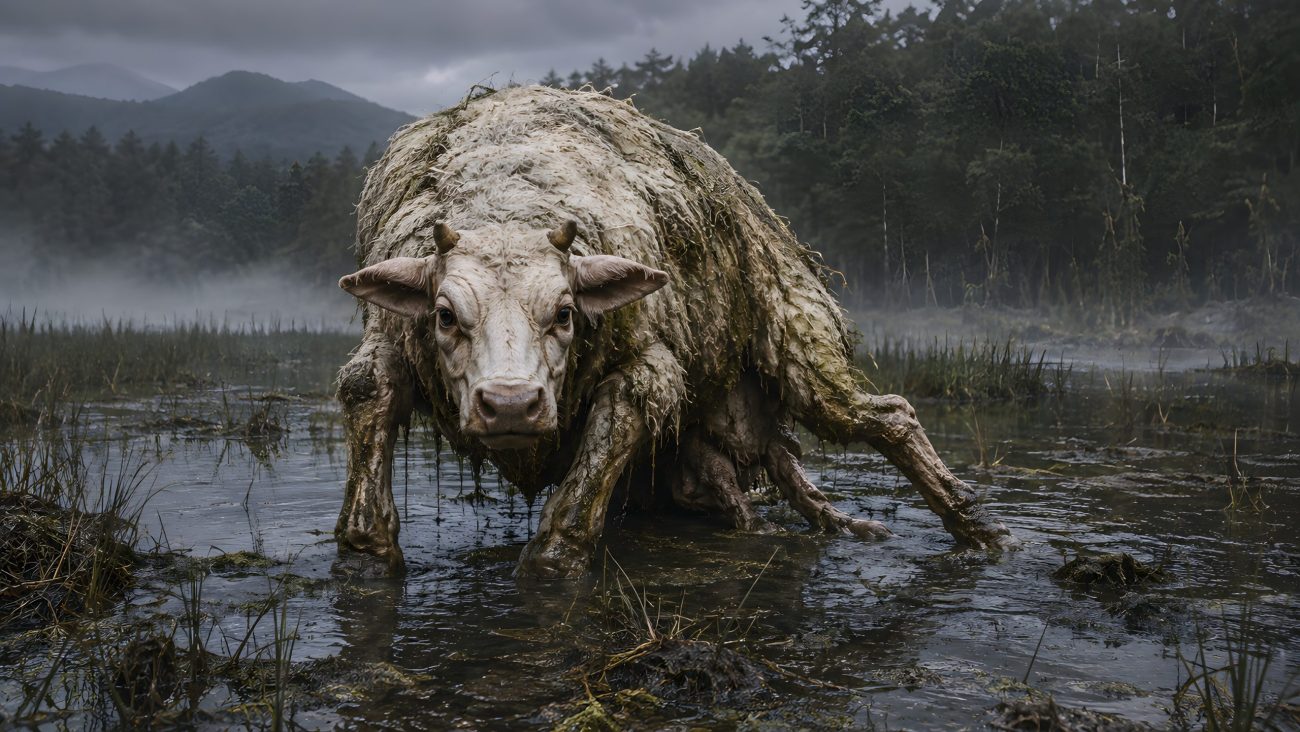
It is described as resembling a living bull’s hide, flat and wide, with no hair upon its body. Along its length runs a raised spine, while its edges are lined with hooked claws and sharp points. From its body extend broad fins, and behind it trails a long, whip-like tail. Its eyes, red and swollen, rise on stalks like those of a crab, watching the shores and waters where prey may come.

The Cuero waits quietly near the banks, most often at dusk. When an animal or person comes close, the creature glides forward and spreads itself over its victim like a blanket. Once it has covered them, it drags them beneath the water.

On the underside of its body lies a sucking mouth filled with small teeth. With this it drains the victim’s blood and moisture until nothing remains but a dried body.

People say the size of the Cuero varies, some being no larger than a small animal, others vast enough to cover a man entirely. It is feared wherever it dwells, for few can escape once it has closed upon them.

Only the most skilled shamans are said to be able to destroy one. They use thorny branches as bait, for when the Cuero attempts to seize the offering, the sharp spines pierce its body and hold it fast, making it vulnerable.

Thus the Cuero is remembered as a silent hunter of the waters, shaped like a hide yet alive, waiting beneath the surface for the moment to strike.


Sources

Trincau, R. (1918). VII. El Indo y el Cuero. In S. R. de Saunière (Ed.), Cuentos populares araucanos y chilenos: recogidos de la tradición oral (p. 70). Santiago: Imprenta Universitaria.

Wikipedia contributors. (n.d.). Cuero (leyenda). Wikipedia, from https://es.wikipedia.org/wiki/Cuero_(leyenda)