Eintykára

Tradition / Region: Paraguay Mythology
Alternative names: Golden Honey Bee
Category: Insect


The Myth

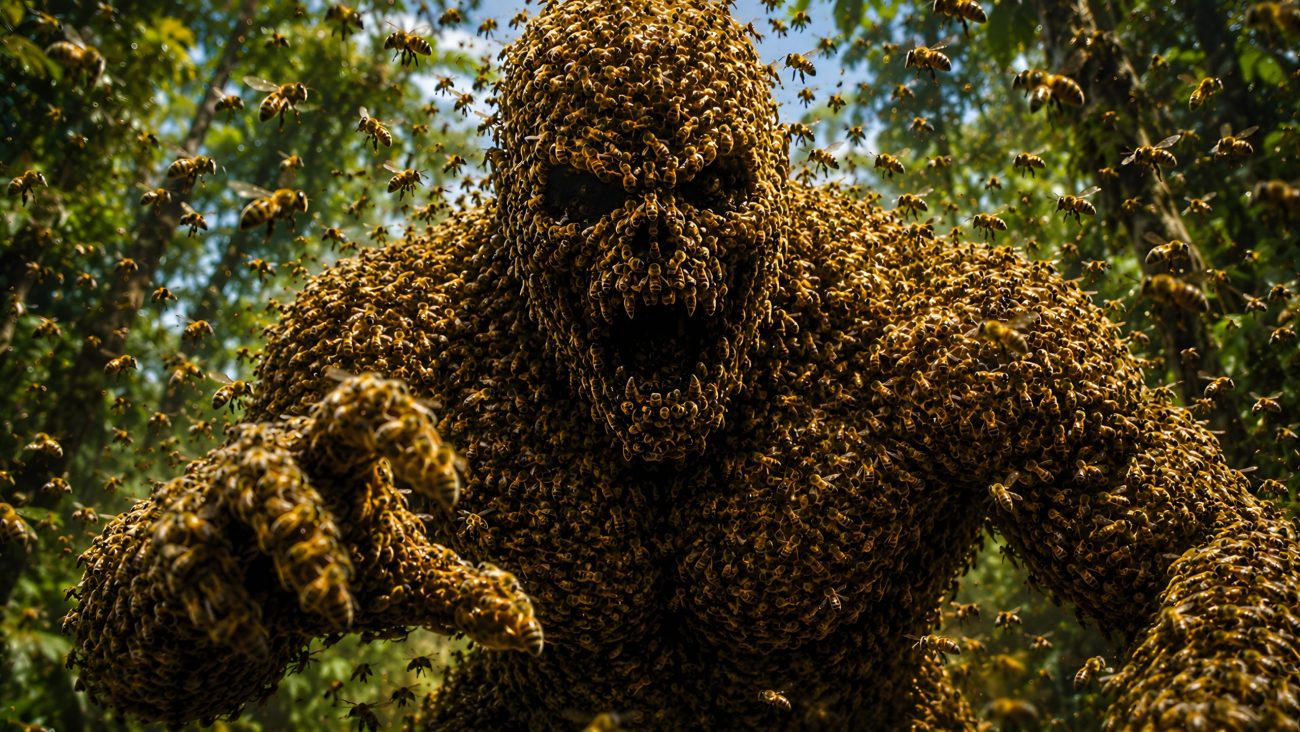
The Eintykára are stingless bees renowned for producing golden honey with unusual properties. Their hives are marked by long tubular entrances, and the bees possess a remarkable power: by gathering together in great numbers, they can take the form of a human being.

Long ago, an elderly unmarried woman passed the same Eintykára hive every day. Fascinated by its shape, she often joked and fantasized aloud, wishing that the hive were a handsome man who could become her husband. Over time, she began speaking to the hive affectionately and even referred to it as her husband.

One night, a stranger appeared before her. He was extraordinarily handsome, with milky-white skin and hair the color of golden honey. He revealed that he was Eintykára, the very hive she had spoken to for so long, and that he had come to take her as his wife and provide for her people.

The two married and had children. Eintykára proved to be unusually wise and tireless, becoming admired throughout the village. He seemed never to eat. Instead, he would disappear into the forest, transform into a swarm of bees, gather nectar, and then return to human form. From his labors came beeswax and golden honey, which he generously shared with everyone. According to tradition, some fair-skinned members of the Chamacoco people are descendants of Eintykára and his children.

Another Eintykára once joined a different Chamacoco settlement and lived among the people. However, the village was attacked by enemies who set the houses ablaze. As the bee-man attempted to escape by transforming into a swarm, too many of his bees were consumed by the flames. Unable to survive the loss, he perished alongside the people he had chosen as his own.

Thus, the Eintykára are remembered not merely as magical bees, but as shapeshifting beings capable of becoming human, bringing prosperity and honey to those they love, and even founding entire bloodlines among the Chamacoco people.


Sources

A Book of Creatures. (2015, July 10). Eintykára. Retrieved June 13, 2026, from https://abookofcreatures.com/2015/07/10/eintykara/
Pombero

Tradition / Region: Paraguay Mythology, Brazilian Mythology, Argentine Mythology
Alternative names: Pomberito, Karai Pyhare, Pyrague, Kuarahy Jára, Cho Pombé, Lord of the Night
Category: Goblin


The Myth

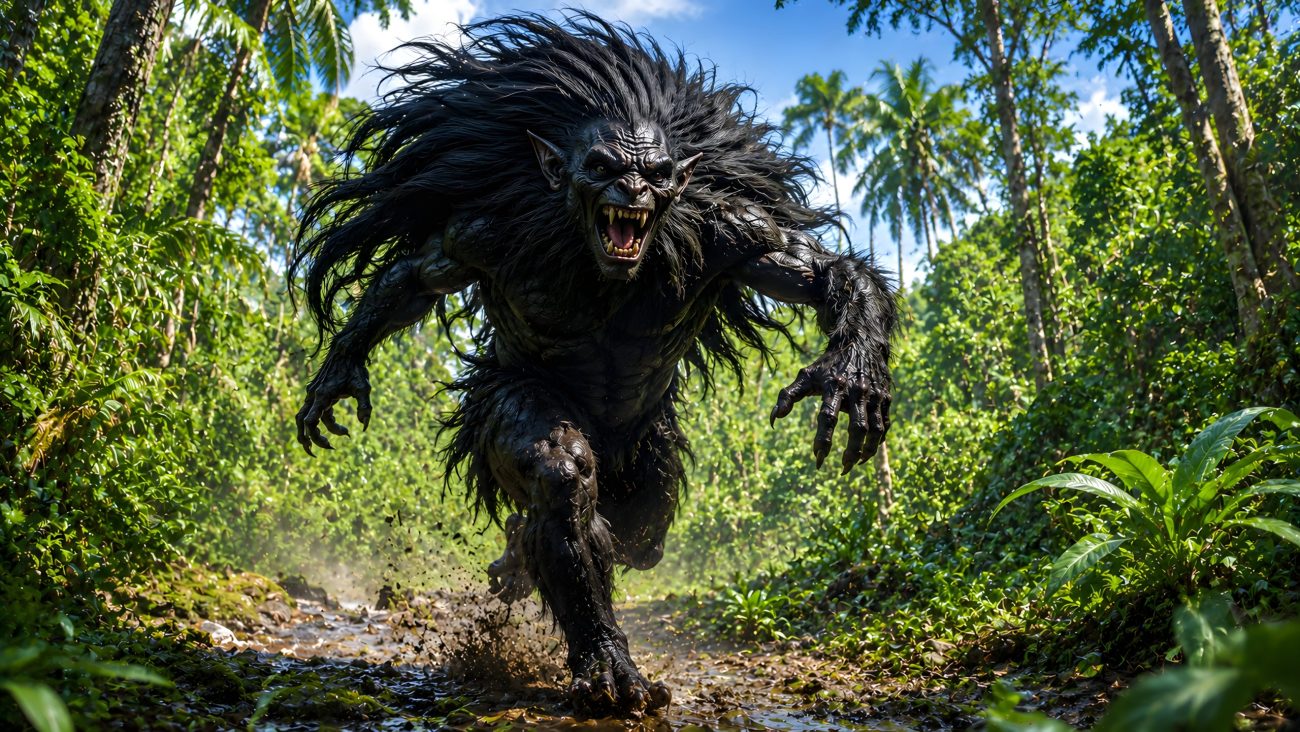
The Pombero is a mysterious nocturnal being that inhabits forests, abandoned houses, barns, and lonely rural places throughout the Guaraní-speaking world. Usually active after dark, he is known as the Lord of the Night and is one of the most feared and respected figures in Paraguayan folklore.

He is commonly described as a short, ugly humanoid with extremely short arms and hairy hands and feet. His feet allow him to move silently through the forest, while the touch of his hairy hands is said to send a cold shiver through those he touches. The Pombero possesses many supernatural abilities, including invisibility and the power to squeeze through impossibly narrow openings.

Before appearing, he often announces his presence with strange whistles and the songs of nocturnal birds, which he can imitate perfectly. Because of this, he is regarded as a protector of birds and is said to punish children who hunt them with slingshots.

Although generally considered a mischievous spirit rather than an outright monster, the Pombero delights in causing trouble. He steals eggs, honey, and chickens, scatters grain and food stores, releases livestock, and frightens horses so that riders are thrown to the ground.

He is also associated with mysterious pregnancies and is sometimes blamed for fathering children born unusually hairy or unattractive. In darker traditions, he is said to kidnap lonely or ungrateful young women, force his affection upon them, and violate them. Similar stories are also attributed to the Guaraní being Kurupi.

Because of his unpredictable nature, people seek to appease the Pombero with offerings. Cigars and rum are his favorite gifts, though honey is also considered acceptable. Families in rural Paraguay often leave these offerings outside at night to prevent his mischief.

Those who regularly honor him may gain his friendship. A satisfied Pombero is believed to protect homes, animals, and possessions, and sometimes rewards his benefactors with small gifts of his own.

Thus, the Pombero remains one of the most enduring figures of Guaraní folklore—a silent lord of the forests who walks unseen through the night, bringing either mischief or protection depending on how he is treated.


Sources

Wikipedia contributors. (n.d.). Pombero. In Wikipedia. Retrieved June 13, 2026, from https://en.wikipedia.org/wiki/Pombero


Teju Jagua

Tradition / Region: Paraguay Mythology, Brazilian Mythology
Alternate Names: Teju Jagua, Teju Jagua’i
Category: Dog, Snake, Cave dweller


The Myth

Teju Jagua is the firstborn son of Tau and Kerana, and the eldest of the seven cursed monsters of Guaraní tradition. Because Tau had angered the heavens, all of his children were born deformed and monstrous, and Teju Jagua was the first sign of that curse.

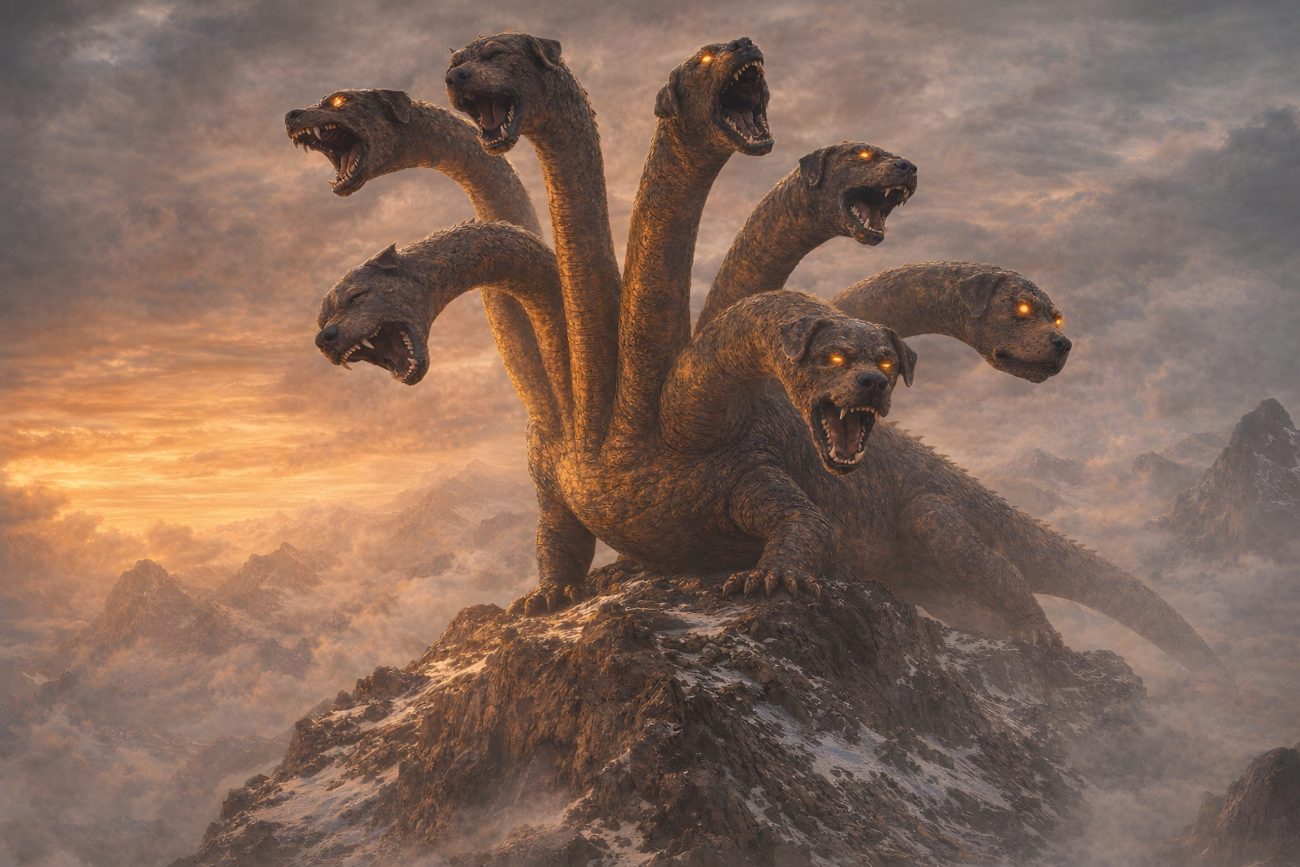
He is described as a gigantic reptilian creature with multiple dog heads — most often seven — each with blazing eyes that can shoot fire. Some stories say he has only a single enormous dog head, but all agree that his body is vast, heavy, and awkward, making it difficult for him to move swiftly.

Although his appearance is the most terrifying of the seven brothers, his nature is not cruel. Tupã, the great god, softened his spirit so that he would not be savage. Instead of preying on people, Teju Jagua lives quietly in caves and hidden places.

He feeds on fruit rather than flesh, and his brother Yasy Yateré brings him honey, which is his favorite food. Because of this peaceful life, he is remembered not as a destroyer but as a guardian.

Teju Jagua became lord of the caves and protector of buried treasures. He is said to dwell among gold and precious stones, and after long years rolling among them, his skin grew smooth and shining.

Thus he is feared for his monstrous form and fiery gaze, yet also respected as a watchful keeper of hidden riches beneath the earth.


Gallery


Sources

Wikipedia contributors. (n.d.). Teju Jagua. In Wikipedia, from https://en.wikipedia.org/wiki/Teju_Jagua


Interpretive Lenses

Religious Readings
  • Christian Ascetic Deep Dive
Philosophical Readings
  • Nietzschean Deep Dive
Psychological Readings
  • Jungian Deep Dive
Esoteric Deep Dive
  • Hermetic Deep Dive
Political / Social Readings
  • Marxist Deep Dive

Luison

Tradition / Region: Paraguay Mythology, Argentine Mythology
Alternate Names: Luisõ, Luisón, Lobizón
Category: Dog


The Myth

Luison is one of the seven monstrous sons born to Tau, a spirit of evil, and Kerana, a mortal woman. Of their seven children, Luison is the seventh and most accursed. He is feared throughout Guaraní tradition and in parts of Paraguay, Argentina, and neighboring regions.

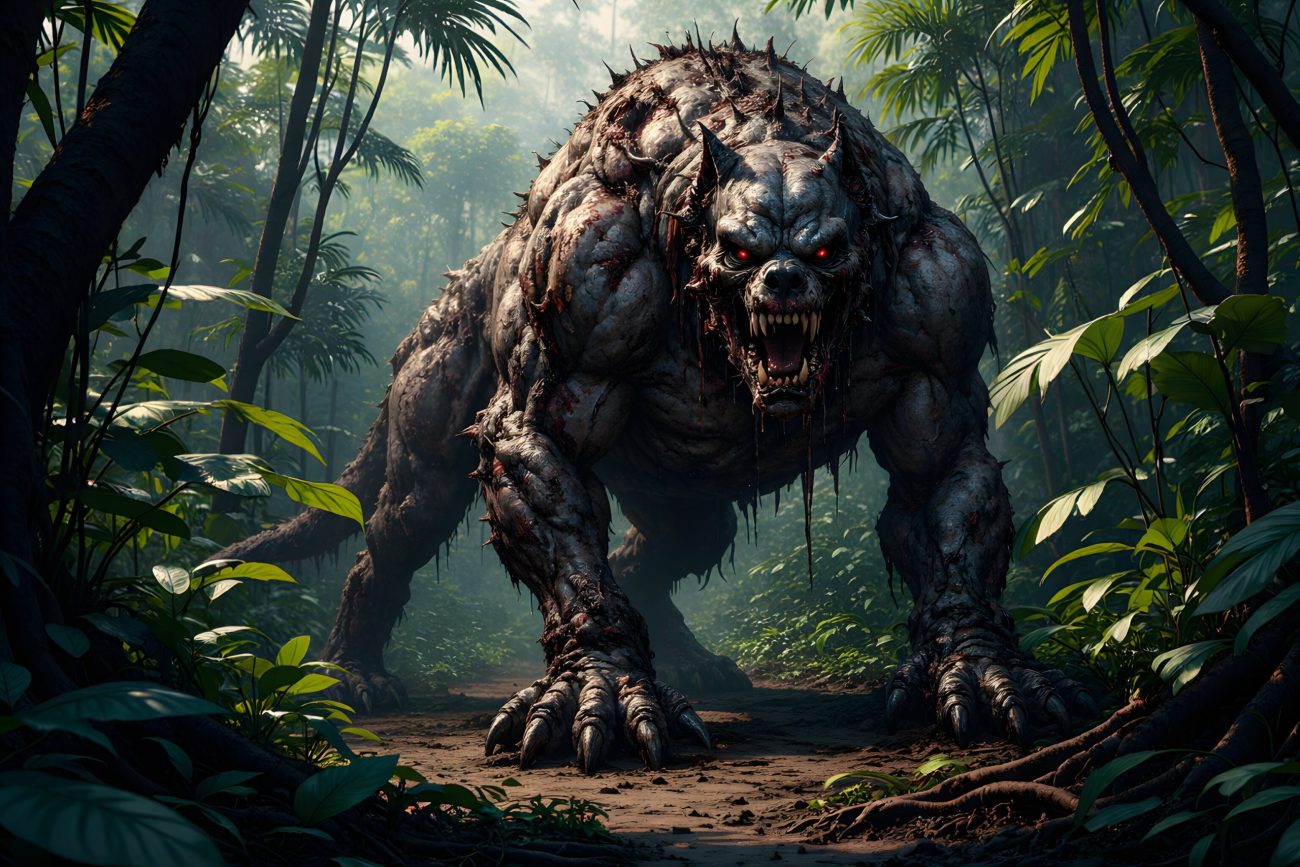
Luison appears as a hideous, giant dog-like creature, grotesque in form and repulsive to behold. He prowls at night, haunting graveyards and lonely places, feeding on carrion and the corruption of the dead.

According to the legend, the curse did not remain only with the original beast. It spread into the human world. Families believed that if a household had seven sons in succession, the youngest would be destined to become Luison. On his thirteenth birthday, the transformation would begin. The boy would change into a monstrous dog-creature and wander the night, driven by hunger and doom.

Because of this belief, traditions arose to prevent the curse. In some regions, the seventh son would be given special protection, baptized with powerful rituals, or even adopted by a godfather of high status so the curse could be broken.

Though feared as a devourer of the dead, Luison is also remembered as a tragic figure — a being born not by choice, but by fate, condemned to roam between the worlds of the living and the dead.


Sources

Wikipedia contributors. (n.d.). Luison. In Wikipedia, from https://en.wikipedia.org/wiki/Luison