Waira

Tradition: Japanese mythology
Alternative Names: Waira
Category: Cow


The Myth

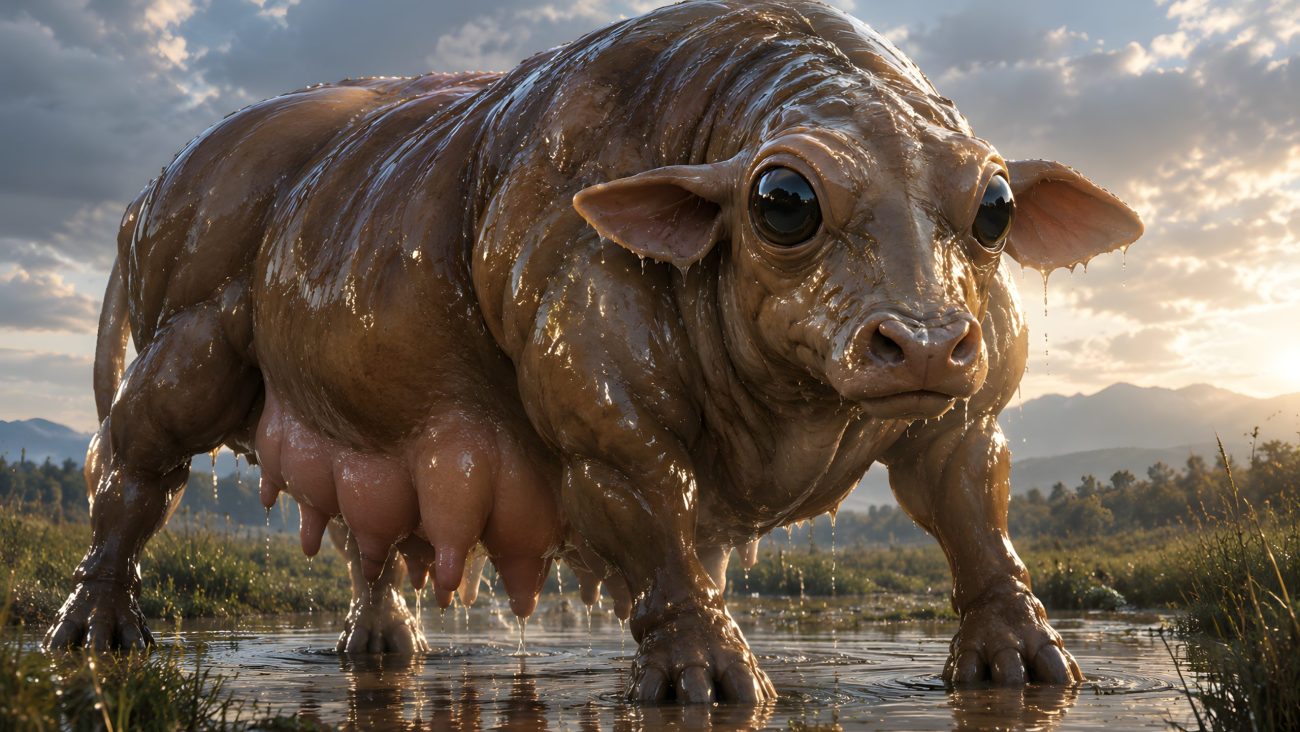
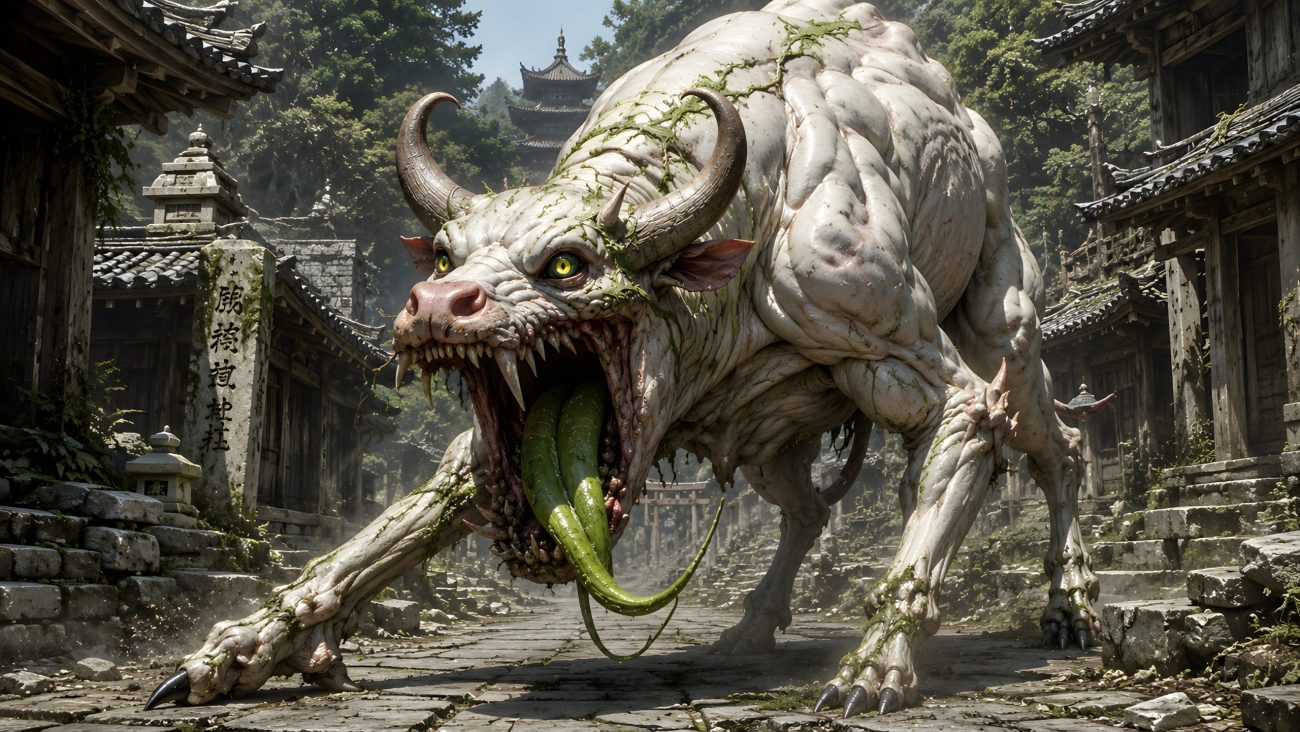
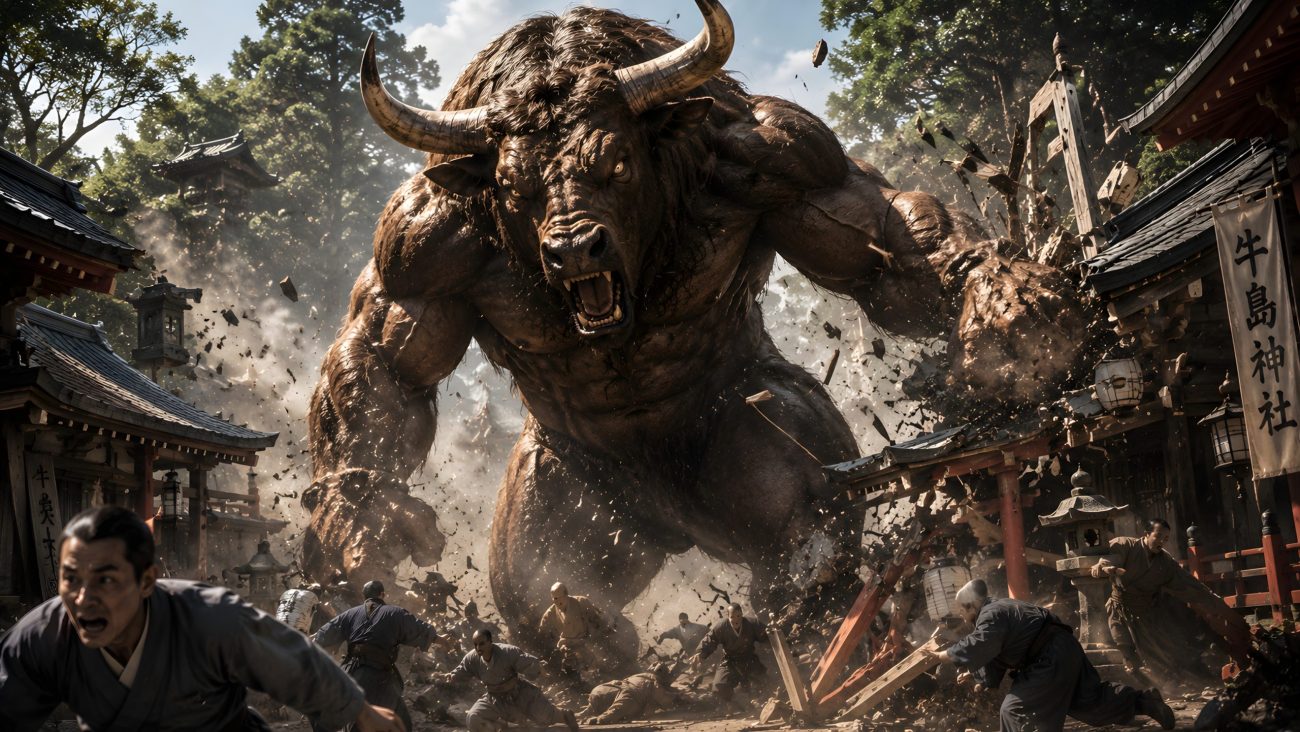
The Waira is a rare and reclusive yōkai, few of which have ever been encountered. It is an ugly beast with a large body resembling that of a cow, but with four long limbs, each ending in a single sharp claw. Male Waira are mottled in earthy brown colors, while females are red.

Waira live deep in the mountains, particularly around heavily wooded temples and shrines. They are associated with Otoroshi and are believed to guard temples and shrines against wicked people.

Their powerful claws also serve another purpose. Waira use them to dig through the earth and uncover small animals hidden beneath the ground. Moles, mice, rabbits, and other small creatures make up their diet.

The Waira is said to have a strange origin. Because of its coloring and the mountainous, wooded environments in which it is found, it is believed that the creature may be a transformed yōkai born from an ordinary toad after reaching an advanced age.

The Waira is also speculated to have some connection with the Otoroshi. The two creatures share the same kind of habitat and are often encountered together, leading to the belief that they may be related in some way.

The origin of the name Waira is uncertain. Since the name is not written using kanji, there are few clues to its original meaning. The most commonly accepted explanation is that Waira is a regional corruption of kowai, meaning scary. This interpretation has also been taken as further support for a possible connection between the Waira and the Otoroshi.


Sources

“Waira.” Yokai.com. Accessed August 30, 2026. https://yokai.com/waira/?srsltid=AfmBOorxkYQbS-rokMmMloUPhpiJKdZaztDthwaYnRMY1FNsUxVqjJNG


White Cow of Lewis

Tradition: Scottish mythology
Alternative Names: Bu-Vinda
Category: Cow


The Myth

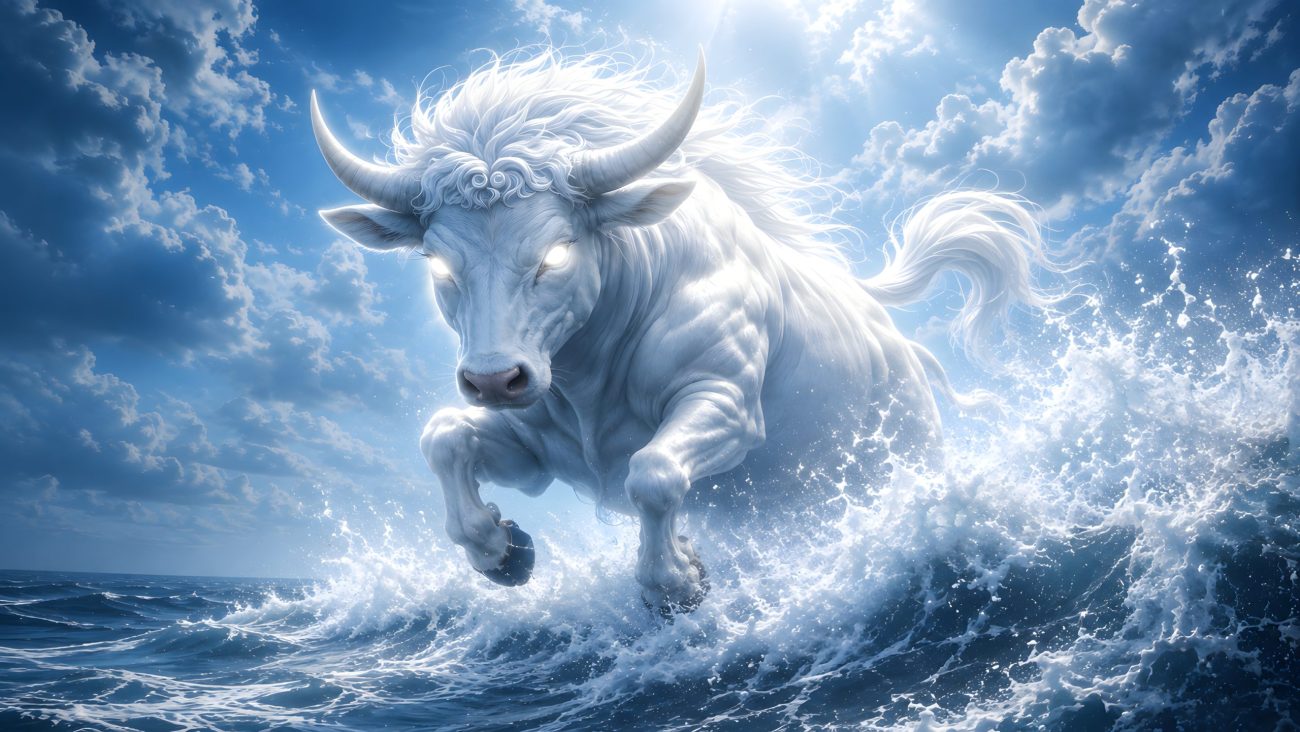
The White Cow of Lewis is a supernatural cow with pure white hair that shines in the moonlight. It can speak like a human being and possesses a miraculous supply of nourishing milk. It is later revealed to be a beautiful woman known as Bu-Vinda, who says that she has many names and is associated with Dagda and Aengus.

During a harsh winter famine on the Isle of Lewis, the harvest had failed and the islanders’ food supplies were running dangerously low. Many people had already been forced to slaughter their cows for food, leaving them without the milk and cheese they depended upon. The people gathered together what remained of their supplies and agreed to share them equally, but the elders soon realized that the food would last only about two weeks, while the growing season was still a month away.

Desperate, the elders led the people to the standing stones, where they prayed to the gods for help and offered special tribute to the father god associated with fertility and the land, whom some called Dagda. As they returned to the village that evening, a storm appeared to be approaching.

Aine, who had been forced to sacrifice her own cow during the famine, noticed something moving near the shore. One of the elders warned her to return home before the storm arrived, but she slipped away and ran toward the sea.

A sudden wind threw Aine onto her back. When she looked up again, the storm had mysteriously vanished. Standing only a few feet away from her was a magnificent white cow, its pure hair shining beneath the moonlight.

The cow spoke to her and told her that it had been sent to help the islanders in their time of need.

Aine led the strange creature back toward the village, where the astonished islanders gathered around it. The White Cow then explained that it had come to help them survive the famine. Each person could receive a pail of milk every day for as long as necessary, and because the milk was a gift from the gods, it would provide all the nourishment they required.

One of the younger elders remained suspicious and asked how they could know that the creature was truly a gift from the gods rather than something evil. The cow told them to meet it at the standing stones at first light. It would fulfill its promise there, and Aine could drink the milk herself to prove that it was genuine.

At first light, Aine stood beside the standing stones with her pail and drank the fresh milk. Her hunger immediately disappeared, and she felt stronger than she had ever felt before.

The other islanders then lined up and received their milk. Each person found that the milk completely satisfied their hunger. Day after day, the White Cow continued to provide its miraculous nourishment, allowing the islanders to survive.

On the final day, the widow who lived in the north came to receive her share. Unlike the others, she was known for keeping herself apart from the community. When she bent down to milk the cow, she placed a sieve beneath it instead of a pail.

The sieve could never become full, and therefore the cow could not fulfill its promise. It realized that the woman was deliberately tricking it and declared that she was a witch who had depleted its strength. Since the pail could not be filled, the cow could provide no more.

The White Cow then told Aine that the islanders had already received enough nourishment to survive the remaining two weeks of winter. They would not starve.

The creature ran toward the ocean and leapt into the sea, disappearing from sight.

That night, Aine saw the White Cow transform into a beautiful woman. The woman thanked her for her help and apologized for having to leave.

When Aine asked who she was, the woman replied that some called her Bu-Vinda, although she had many names. She said that some also knew her as the partner of Dagda and the mother of Aengus, but that she had been many things to many people. To the people of Lewis, she said, she would simply be remembered as the White Cow.

The islanders survived the winter. Soon the crops were growing again, animals emerged from their burrows, lambs were born, fish became plentiful, and food once again filled the islanders’ tables. The White Cow eventually became only a whisper of a legend, but the people remembered the mysterious creature that had appeared from the sea and given them the nourishment they needed to survive.


Sources

White, David. “The White Cow of Lewis.” Folklore Scotland. Accessed August 30, 2026. (folklorescotland.com)
https://folklorescotland.com/the-white-cow-of-lewis/
Vaca de Lumbre

Tradition: Mexican Mythology
Alternative Names: Vaca de Lumbre
Category: Cow


The Myth

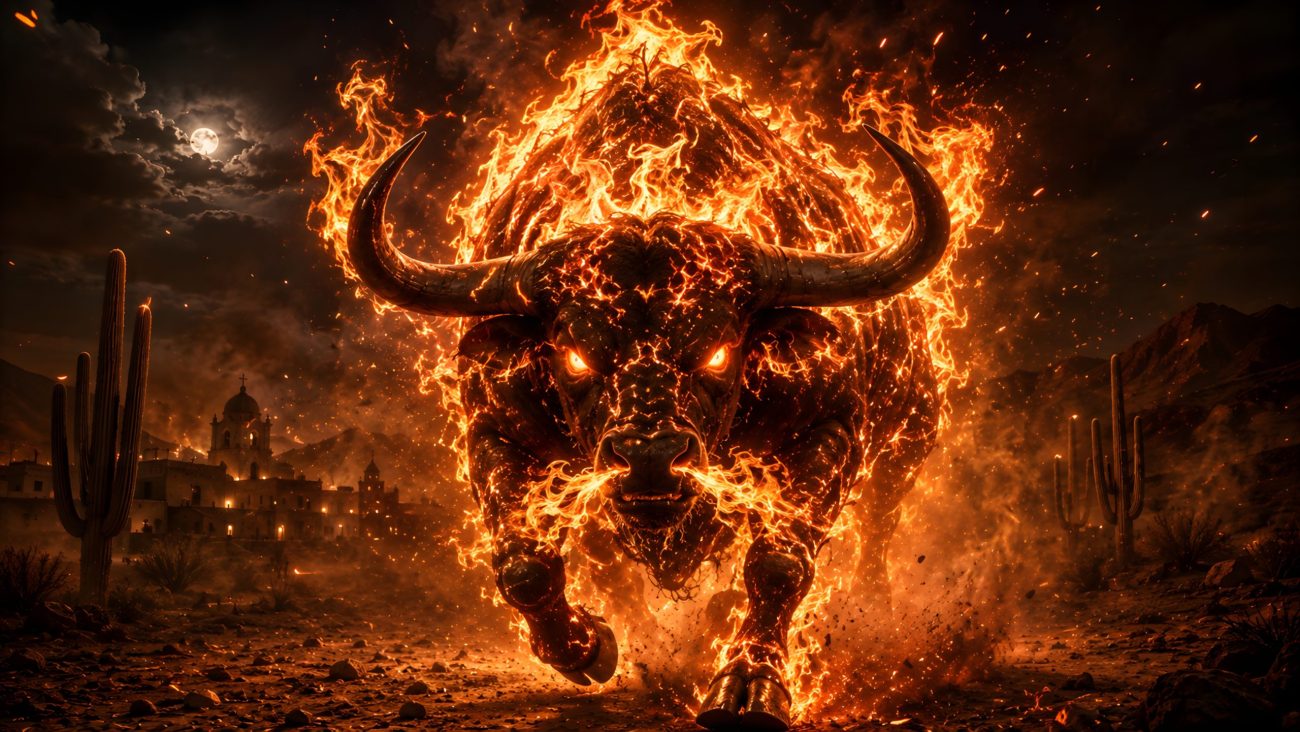
The Vaca de Lumbre is a demonic cow from Mexican folklore that appears at night and runs through the streets of villages and towns. Despite its frightening appearance, it is said not to harm anyone.

The creature is described as a cow surrounded by flames. Its body seems to burn with smoke, sparks, and even flames pouring from its nostrils, giving it the appearance of a cow completely engulfed in fire.

The Vaca de Lumbre is said to appear only at night and, according to some traditions, repeatedly runs through the same place rather than wandering from one location to another.

In old Mexico City, it was believed that the Vaca de Lumbre was born exclusively on the Potrero de San Pablo. According to the legend, the fiery cow would appear there at night, running through the area while surrounded by its flames.

The creature was considered demonic, but its purpose was not necessarily to attack people. One explanation states simply that the Vaca de Lumbre runs at night because all children are supposed to be asleep. Its nocturnal nature therefore became part of the warning surrounding the legend.

Stories of the Vaca de Lumbre were also connected with other legends of fiery or ghostly cattle. Similar traditions were reported in Spanish folklore, including a Basque legend concerning a ghostly, fiery cow.

Another parallel was noted with the Granadan legend of El Belludo, a ghostly horse said to roam the streets of the city in the form of a demonic dog. The Vaca de Lumbre belongs to this broader group of supernatural animals associated with fire, night, and strange appearances.

A similar legend was also recorded in Texas. According to one account, when someone attempted to remove buried treasure from a particular place, an enraged bull with fire shooting from its nostrils would suddenly appear and attack the person digging there.

The Vaca de Lumbre therefore appears in Mexican folklore as a fiery supernatural cow whose terrifying appearance is more important than any actual violence. It runs through villages and towns at night, appearing as a burning cow that emerges from the darkness before disappearing again.


Sources

“Vaka de Lumbre.” New Bestiary (Bestiary.us). Accessed August 30, 2026. https://www.bestiary.us/vaka-de-lumbre


Vodyanaya Korova

Tradition: Russian Mythology
Alternative Names: Water Cow, Vodianaya Korova
Category: Cow


The Myth

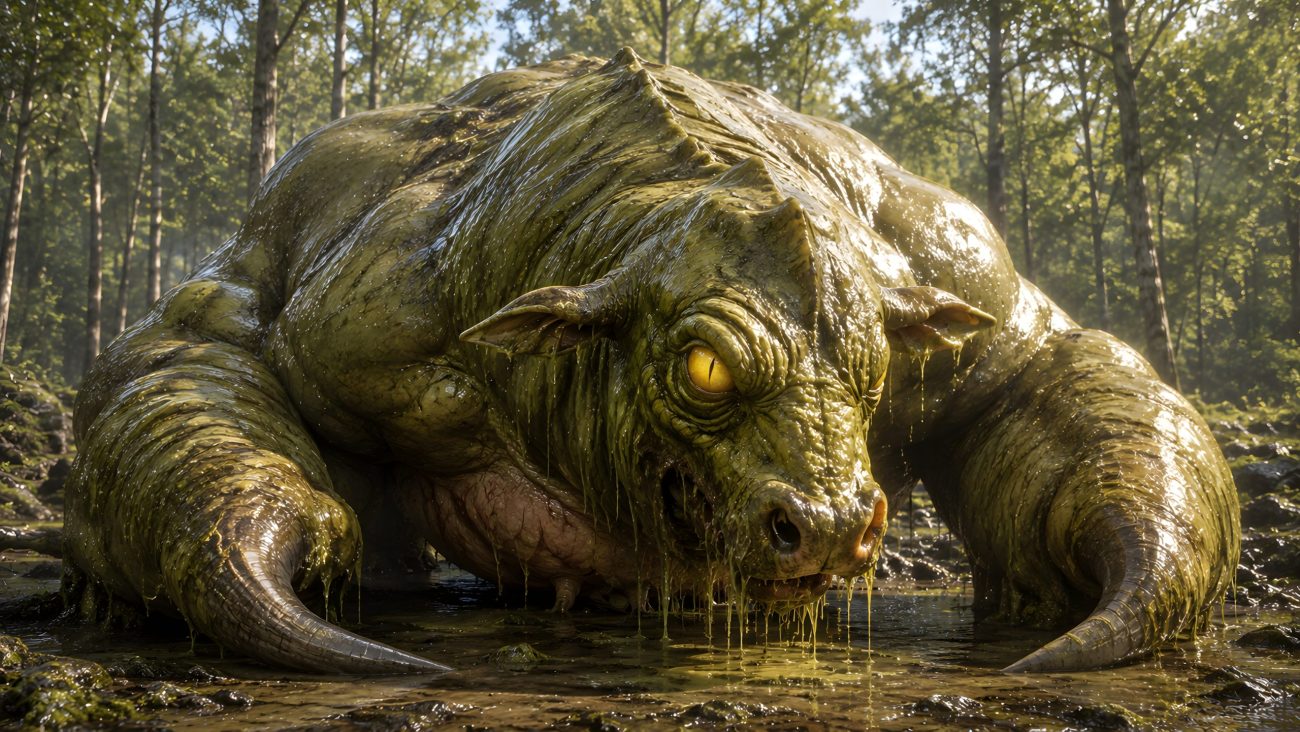
The Vodyanaya Korova is a mythical water cow from the folklore of the Russian North. It is described as an enormous, heavy, well-fed and exceptionally large cow, usually brown in color, though black, mottled, red-and-white, and black-and-white cows are also found in different traditions. Its coat is smooth and glossy, and it is usually completely hornless. The cow is exceptionally fertile and always produces abundant milk, making it a creature strongly associated with life, fertility, and abundance.

The water cows live beneath the waters of rivers, lakes, and sometimes the sea. On warm summer nights they emerge from the depths and come ashore onto islands, riverbanks, or flooded meadows, where they graze. One tradition tells of a small, perfectly round and apparently bottomless lake with an island in its center. During the summer, four mysterious cows emerge from the water onto this island to graze. In other accounts, an entire herd appears.

Whenever a person approaches the grazing cows, however, the strange creatures immediately flee back into the water. The lake itself may suddenly become violently agitated, and a whistle or other sound can rise from its depths. At this signal the cows rush into the water and disappear beneath the surface. Sometimes a mysterious water spirit is said to drive the herd back into the lake, just as a farmer would drive ordinary cattle into a stable when danger approaches.

The waters from which the cows emerge are not ordinary bodies of water. They are sometimes described as bottomless, representing the primordial waters from which the world itself emerged. The island in the center of the lake represents the first piece of land rising from those waters. The water cow that steps onto it is therefore more than an enchanted animal: it is connected with the creation of the earth itself.

In these traditions, the cow’s grazing actually causes the land to develop. The first patches of earth are still unstable, sometimes imagined as small pieces of land floating upon the water. The cows walk across them, sinking into the soft earth almost up to their muzzles without drowning. As they graze, the land becomes covered with green vegetation. The cow therefore simultaneously represents the earth and the force that brings the earth into being.

The Vodyanaya Korova is also associated with extraordinary abundance. A person who succeeds in capturing one may discover that it never seems to diminish or disappear. Such a cow can become larger, fatter, and more productive than any ordinary animal, producing enormous quantities of milk. One tradition tells of cows giving two buckets of milk at a time. A peasant who acquired such a creature could become wealthy from its inexhaustible productivity.

The cow’s hide itself possesses supernatural power. Every hair of the magical animal is said to contain the potential to become an animal of its corresponding kind. In one story, after a peasant slaughtered a water cow, its mysterious hide disappeared. An unknown being associated with the round lake had taken it back into the depths, returning the magical hide to the waters from which the creature had originated.

Other traditions describe the herd being accompanied by a supernatural milkmaid. She appears whenever the cows come out of the water and disappears with them when they return to the depths. She possesses a golden milking vessel that does not sink in the water. Whenever a person attempts to seize it, however, the vessel immediately disappears beneath the surface. Whoever could obtain the magical vessel was believed to have a chance of capturing the water cows themselves.

The Vodyanaya Korova is therefore not simply a strange cow living in a lake. In the oldest layer of the tradition, it is connected with the primordial waters and the creation of the earth. Each time the mysterious herd emerges and grazes upon the land, the ancient act of creation is symbolically repeated. When a human approaches and the cows flee back beneath the water, the process ends and the world returns to its beginning, ready to be renewed again.


Sources

Krinichnaya, N. A. “Водяная корова в севернорусской мифологии” (The Water Cow in Northern Russian Mythology). Русская речь (Russian Speech), no. 5 (2014), pp. 101–109.


Ushi-onna

Tradition: Japanese mythology
Alternative Names: Cow Woman
Category: Cow


The Myth

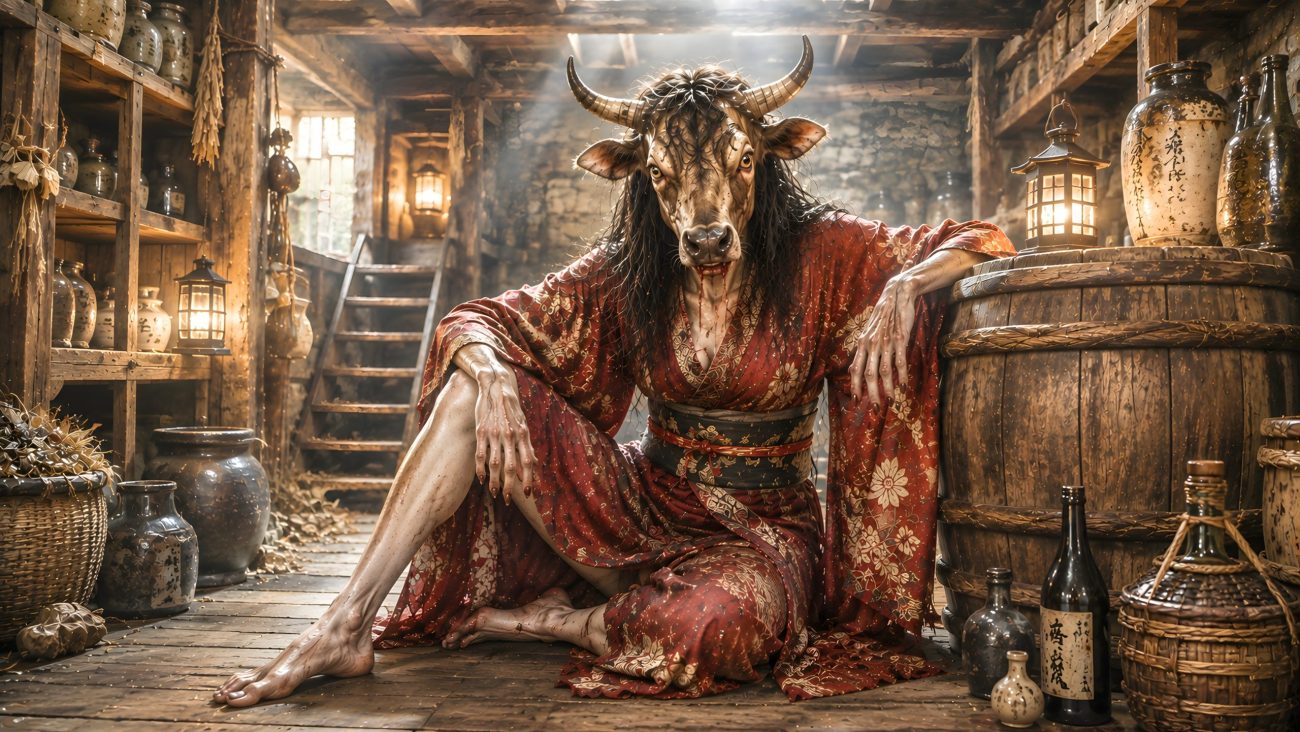
The Ushi-onna is a frightening yokai said to have appeared around Mount Rokko in Hyogo Prefecture. It is described as a woman with the head of a cow and the body of a human, usually wearing a red kimono. Encountering her was believed to bring misfortune or cause an accident.

One version of the legend tells of a girl born before the Second World War with the head of a cow and the body of a human. She was supposedly born in a certain mansion or at a place connected with the slaughtering of cattle. Because of her strange appearance, she was imprisoned inside a room and kept hidden from the outside world.

When the air raids devastated the Ashiya and Nishinomiya areas, the buildings where she had been confined were destroyed. According to the rumor, the cow-woman escaped from the ruins and disappeared into the surrounding area.

Other stories placed her around Mount Kabuto in Nishinomiya. In one account, a person encountered what appeared to be a cow wearing a red kimono, with blood dripping from its mouth. Another rumor claimed that after the Great Kobe Air Raid, a woman wearing a kimono and possessing the face of a cow was seen eating animal carcasses among the ruins of a shrine on Mount Kabuto.

Further rumors connected the creature to a house that had dealt in beef cattle before the war. According to this version, a calf was born with part of its body possessing an abnormal human-like form. The creature was locked inside a room, but after the air raids destroyed the surrounding area, it escaped.

The stories were later associated with the motif of Sakyo Komatsu’s 1968 short story Kudan no Haha, which was set in Ashiya. The exact relationship between the story and the earlier rumors is uncertain, but the two traditions share the disturbing image of a human-cow hybrid appearing in the Ashiya and Nishinomiya region.

The legend eventually became particularly associated with Washirinji Temple in Nishinomiya. From around the late 1970s onward, young people began visiting the temple at night as a test of courage, hoping to encounter the cow-woman.

A rumor spread that the Ushi-onna would appear if someone walked around the shrine on the temple grounds three times. As more people began visiting at night and causing disturbances, the temple attempted to stop them by putting up a sign claiming that, unfortunately, the cow-woman had moved away.

Thus the Ushi-onna became a modern Japanese urban legend: a cow-headed woman in a red kimono, associated with wartime destruction, abandoned ruins, blood, and nighttime encounters around the mountains of Hyogo.


Sources

Takahashi, Toshihiro. “牛女 [うしおんな] (Ushi-onna).” 新版TYZ 妖怪図鑑 (New TYZ Yokai Encyclopedia). July 25, 2021. https://tyz-yokai.blog.jp/archives/1078437909.html


Ushi-Momo

Tradition: Japanese mythology
Alternative Names: Ushi-Momo
Category: Cow


The Myth

Ushi-Momo is the name of a monster said to exist in the Inshu Tottori region of Japan.

The available source only states that a monster with the name Ushi-Momo is known in the region. No further description of its appearance, behavior, origin, or story is provided.


Sources

Takahashi, Toshihiro. “牛モーモー [うし-] (Ushi-Mōmō).” 新版TYZ 妖怪図鑑 (New TYZ Yokai Encyclopedia). December 29, 2009.
https://tyz-yokai.blog.jp/archives/1010652677.html


Ushi-Kubi

Tradition: Japanese mythology
Alternative Names: The Cow’s Head
Category: Cow


The Myth

Ushi-Kubi, meaning “Cow’s Head,” is a terrifying Japanese ghost story or urban legend concerning a tale that is said to be so frightening that it must never be told.

According to the legend, anyone who hears the story of the Cow’s Head will be overcome by terror, lose their mind, or even die. Because of this, the story itself is never supposed to be told. Only its title has supposedly survived, while the actual contents remain unknown.

The story is sometimes said to have been passed down since the Edo period. It is also said that the tale was simply too terrifying to be written down, and therefore survived only through oral transmission.

The mystery surrounding Ushi-Kubi is part of the horror. The frightening idea is not necessarily that there is a particular monster or event within the story, but that somewhere in the world there is supposedly a ghost story so horrifying that merely hearing it can kill the listener. The actual existence of such a story, however, is itself uncertain.

Because the contents are unknown, people have repeatedly invented their own explanations of what the Cow’s Head story might contain. On Japanese internet message boards, various theories and fabricated versions have circulated, including stories connecting it with cannibalism during the Tenpō famine.

In 1960, the writer Sakyo Komatsu published a novel titled The Cow’s Head. The story concerns a protagonist who attempts to discover the contents of the terrifying ghost story known as “The Cow’s Head.” Komatsu later stated that his story was based on a rumor that had already circulated within the mystery community. If this account is accurate, stories about the famous but unsubstantiated Cow’s Head legend were already circulating before 1960.

Later collections of Japanese supernatural folklore have treated Ushi-Kubi as an example of a “monster that must not be spoken of.” Similar legends involve supernatural stories, names, or subjects that supposedly cause death or disaster simply by being spoken about.

A literary work titled The Cow’s Head was also published by Ishizumi Haruhiro in the 1926 issue of Bungei Ichiba. Ishizumi reportedly heard the story from his father. However, whether this 1926 story is actually connected to the Cow’s Head legend known today remains unclear.

Thus, the defining feature of Ushi-Kubi is precisely that its terrifying story is never revealed. The legend survives through the claim that the story exists, while its supposed contents remain unknown.


Sources

Takahashi, Toshihiro. “牛の首 [うし‐くび] (Ushi-kubi).” 新版TYZ 妖怪図鑑 (New TYZ Yokai Encyclopedia). April 19, 2021. https://tyz-yokai.blog.jp/archives/1078437883.html


Ushigozen

Tradition: Japanese mythology
Alternative Names: Cow Lady
Category: Cow


The Myth

Ushigozen is a cow-like monster associated with an ancient incident at Asakusa. It is described as a monstrous creature resembling a cow-demon.

In 1251, during the third year of the Kenchō era, a strange creature resembling a cow appeared near Asakusa in Musashi Province. It suddenly ran toward Sensō-ji Temple, where approximately fifty monks had gathered in the temple’s refectory.

As the creature appeared, twenty-four of the monks immediately fell ill and became unable to rise from their beds. Seven others died instantly.

Another account tells that, around the same period, a monstrous creature resembling a cow demon emerged from the Asakusa River. It ran about wildly before suddenly disappearing by jumping into a shrine on the opposite bank.

The shrine was Ushigozen Shrine, now known as Ushijima Shrine. According to the tradition, when the creature entered the shrine, it dropped a sacred treasure known as the cow-jewel onto the altar.

Ushigozen Shrine itself was traditionally founded during the Jōgan era, between 859 and 879. The monk Jikaku Daishi Ennin is said to have received an oracle from an old man who was an incarnation of Susanoo-no-Mikoto. The figure commanded him to build a shrine and promised that, whenever unrest threatened the land, he would protect it by appearing in a form capable of subduing demons, wearing the head of a bull around his neck.

Because of this tradition, the creature that attacked Sensō-ji has sometimes been interpreted as the fierce spirit, or aramitama, of Ushigozen. Another interpretation identifies it as an incarnation of Susanoo-no-Mikoto, with the attack possibly reflecting a religious conflict between the traditions associated with Sensō-ji and Ushigozen Shrine.

The creature that appeared at Asakusa is regarded as one of the earliest recorded examples of the Japanese ox-demon, or ushioni. In later retellings, the name Ushigozen itself came to be treated as the name of the supernatural creature.


Sources

Takahashi, Toshihiro. “牛の首 [うし‐くび] (Ushi-kubi).” 新版TYZ 妖怪図鑑 (New TYZ Yokai Encyclopedia). April 19, 2021.


Ushi-Fufu

Tradition: Japanese mythology
Alternative Names: –
Category: Cow


The Myth

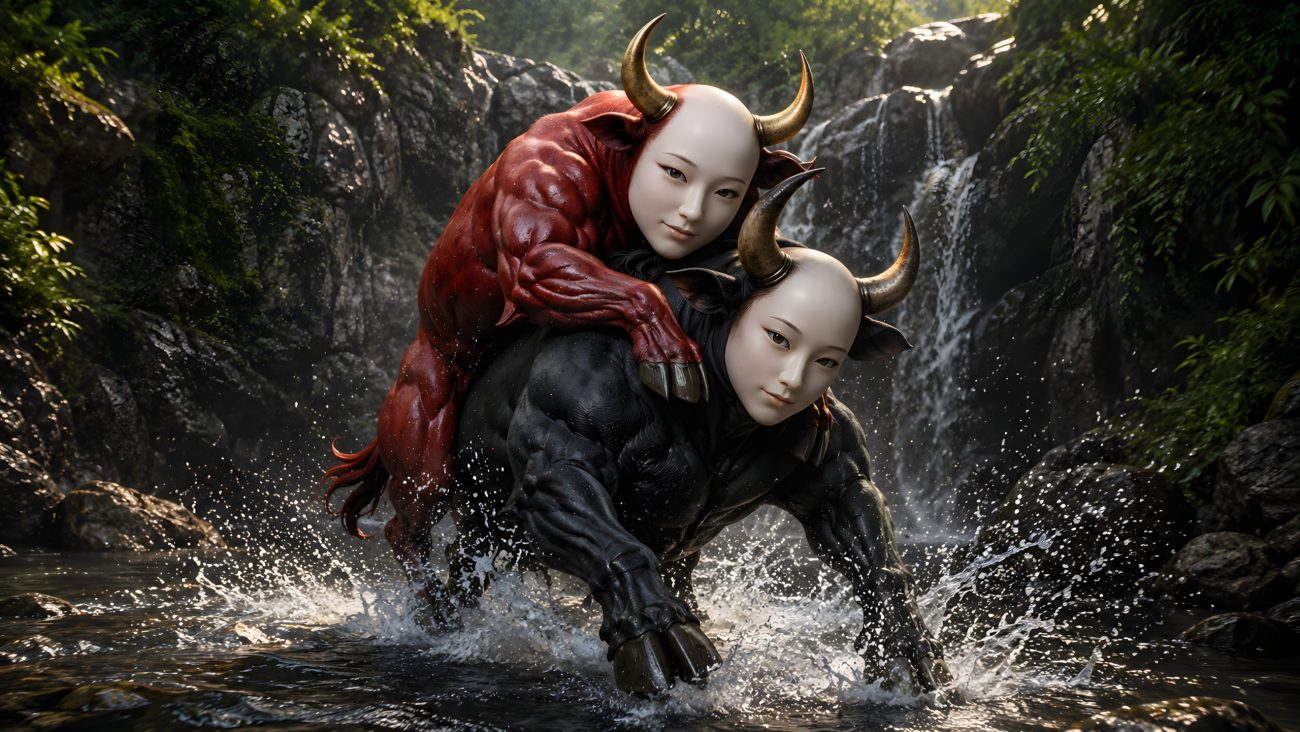
Ushi-Fufu is a pair of supernatural beings with human heads and cow-like bodies. Both figures have two horns growing from their heads and hooves split into two parts.

The male has a black body with a white abdomen, while the female has a red body. The male is also depicted with exposed genitals.

The source provided does not give any further story or legend concerning Ushi-Fufu beyond their depiction as a pair of cow-like beings associated with Hell.


Sources

“獣;ケモノ,夫婦;フウフ,畜生道;チクショウドウ (Kemono; Fūfu; Chikushōdō).” Kaii/Yōkai Image Database, International Research Center for Japanese Studies. 2006. https://www.nichibun.ac.jp/cgi-bin/YoukaiGazou/card.cgi?identifier=U426_nichibunken_0058_0007_0000


Uri Bull

Tradition: Swiss Mythology
Alternative Names: The Snow-White Bull, The Bull of Sürenen
Category: Cow


The Myth

The Uri Bull is a legendary snow-white bull associated with the Sürenenalp above Engelberg in the Swiss Alps. According to the legend, it was created and raised for the purpose of confronting a monstrous creature that had brought a curse upon the mountain.

High in the Alps above Engelberg lay the Sürenenalp, once regarded as the richest pasture in the region. A shepherd living there committed a grave act of sacrilege. Out of misguided love, he baptized a silvery-white sheep using stolen holy water. The act transformed the sheep into a raging and apparently invulnerable monster that drove both people and cattle from the mountain.

No weapon could wound the creature, while prayers and exorcisms were unable to drive it away. The Sürenenalp consequently became cursed and dangerous ground.

Desperate to end the threat, the people of Uri sought the assistance of a wandering scholar who was versed in forbidden arts. He devised a strange remedy: a bull would be raised specifically to confront and destroy the monster.

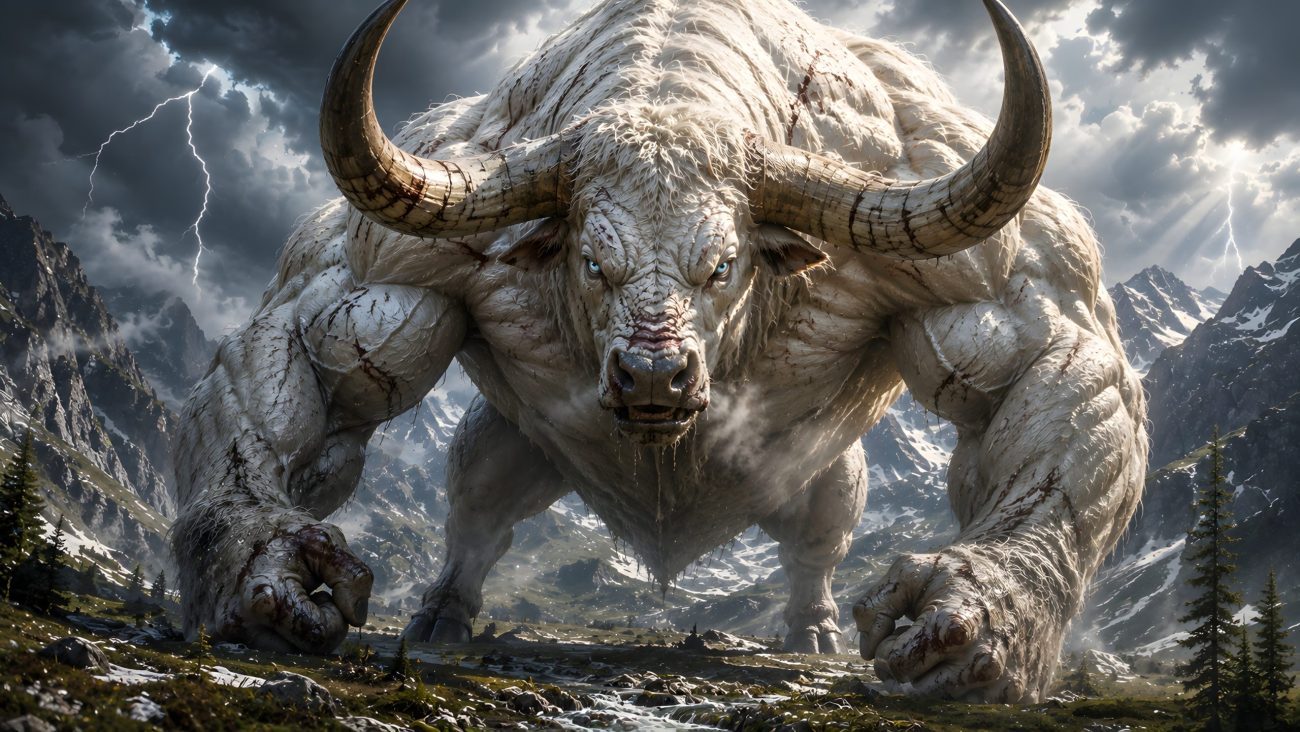
A snow-white bull was chosen and raised with great ritual care. During its first year it was given the milk of one cow. In its second year it drank the milk of two cows, and this continued each year until its ninth year, when it consumed the milk produced by nine cows. Through this extraordinary nourishment, the bull grew to enormous size and acquired tremendous strength.

When the bull was finally ready, a virgin dressed entirely in bridal white led it up to the Sürenenalp. She held the bull by a ring attached to its nose. When the monstrous sheep charged, the maiden released it.

The white bull lowered its horns and thundered toward the creature. The two monsters met in a terrible battle. The struggle was so violent that the mountain shook and the sky darkened. Storm clouds gathered around the combat until the fighting disappeared from sight. Lightning split the heavens while thunder rolled through the valleys.

When the storm finally cleared, the cursed sheep had been destroyed. Nothing remained of the monster except a torn and bloody mound. The maiden who had led the bull to the mountain had vanished without a trace.

The bull, however, had also died. It was discovered near the icy source of the Aa River, where it had apparently drunk too deeply from the freezing water after the exhausting battle.

With the destruction of the monster, the pastures of the Sürenenalp were finally freed from the curse. In remembrance of the white bull that had sacrificed itself to save the mountain, the people of Uri named the stream where it died the Bull’s Brook and adopted the head of the bull as their enduring emblem.

The Uri Bull therefore became both the monster-slayer of the Sürenenalp and a sacred symbol of the canton of Uri.


Sources

Guerber, H. A. (1899). Legends of Switzerland. p. 224.