Zilant

Tradition: Tatar and Russian Mythology
Alternative Names: Zilant, Zilant the Flying Serpent
Category: Dragon, Cow


The Myth

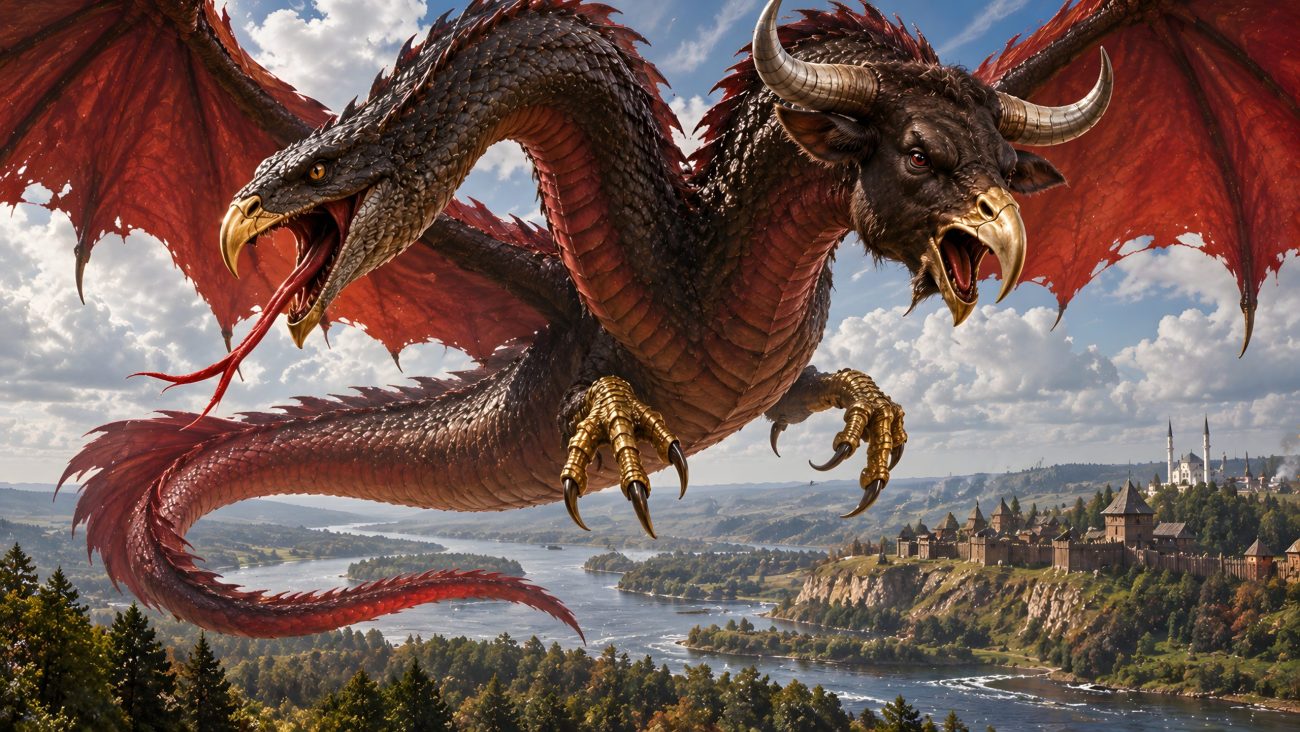
Zilant was a two-headed flying serpent. One head was that of a snake, while the other was that of an ox. With the snake’s head, it devoured young horses and beautiful maidens brought to it as sacrifices. With the ox’s head, it ate grass.

According to legend, the site of Kazan was once inhabited by countless snakes, each as thick as a log. Zilant was their leader. The snakes became such a danger that the people sought a way to destroy them.

The Khan consulted the sorcerer Hakim, who advised him to cut down the surrounding forest and brush and gather it into a great pile of straw. In spring, when everything had dried and the snakes had crawled out from beneath the ground, the straw was to be burned.

The plan was carried out. The snakes were surrounded by the blazing fire and burned alive. The flames and smoke were so intense that people, horses, and camels died from them.

After the destruction of the snakes, the Khan placed Zilant on his coat of arms to commemorate the event.

The image of Zilant later became associated with Kazan and was depicted as a black winged dragon with scarlet wings and tail, a golden beak and claws, and a scarlet tongue. The creature became an enduring symbol of the city.


Sources

“Ostrovetskii Tsmok.” New Bestiary (Bestiary.us). Accessed September 19, 2026. https://www.bestiary.us/ostrovetskii-tsmok


Vodyanaya Korova

Tradition: Russian Mythology
Alternative Names: Water Cow, Vodianaya Korova
Category: Cow


The Myth

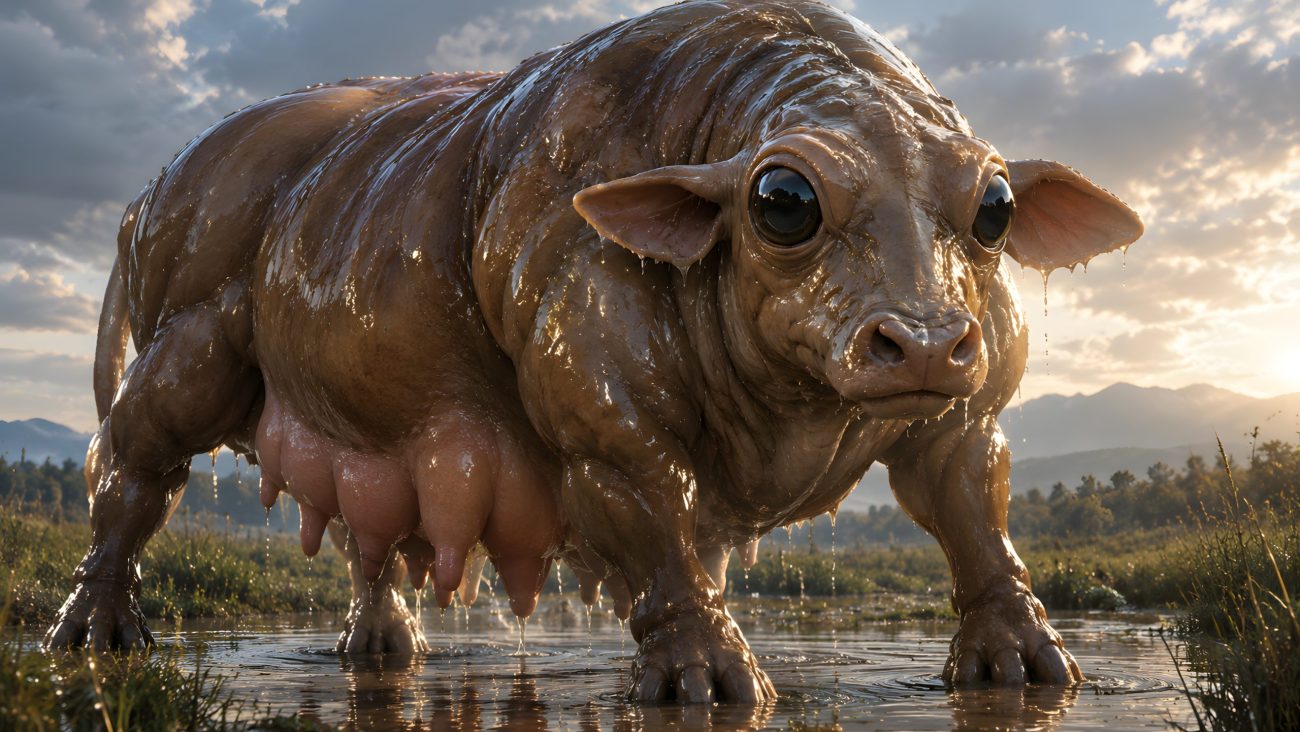
The Vodyanaya Korova is a mythical water cow from the folklore of the Russian North. It is described as an enormous, heavy, well-fed and exceptionally large cow, usually brown in color, though black, mottled, red-and-white, and black-and-white cows are also found in different traditions. Its coat is smooth and glossy, and it is usually completely hornless. The cow is exceptionally fertile and always produces abundant milk, making it a creature strongly associated with life, fertility, and abundance.

The water cows live beneath the waters of rivers, lakes, and sometimes the sea. On warm summer nights they emerge from the depths and come ashore onto islands, riverbanks, or flooded meadows, where they graze. One tradition tells of a small, perfectly round and apparently bottomless lake with an island in its center. During the summer, four mysterious cows emerge from the water onto this island to graze. In other accounts, an entire herd appears.

Whenever a person approaches the grazing cows, however, the strange creatures immediately flee back into the water. The lake itself may suddenly become violently agitated, and a whistle or other sound can rise from its depths. At this signal the cows rush into the water and disappear beneath the surface. Sometimes a mysterious water spirit is said to drive the herd back into the lake, just as a farmer would drive ordinary cattle into a stable when danger approaches.

The waters from which the cows emerge are not ordinary bodies of water. They are sometimes described as bottomless, representing the primordial waters from which the world itself emerged. The island in the center of the lake represents the first piece of land rising from those waters. The water cow that steps onto it is therefore more than an enchanted animal: it is connected with the creation of the earth itself.

In these traditions, the cow’s grazing actually causes the land to develop. The first patches of earth are still unstable, sometimes imagined as small pieces of land floating upon the water. The cows walk across them, sinking into the soft earth almost up to their muzzles without drowning. As they graze, the land becomes covered with green vegetation. The cow therefore simultaneously represents the earth and the force that brings the earth into being.

The Vodyanaya Korova is also associated with extraordinary abundance. A person who succeeds in capturing one may discover that it never seems to diminish or disappear. Such a cow can become larger, fatter, and more productive than any ordinary animal, producing enormous quantities of milk. One tradition tells of cows giving two buckets of milk at a time. A peasant who acquired such a creature could become wealthy from its inexhaustible productivity.

The cow’s hide itself possesses supernatural power. Every hair of the magical animal is said to contain the potential to become an animal of its corresponding kind. In one story, after a peasant slaughtered a water cow, its mysterious hide disappeared. An unknown being associated with the round lake had taken it back into the depths, returning the magical hide to the waters from which the creature had originated.

Other traditions describe the herd being accompanied by a supernatural milkmaid. She appears whenever the cows come out of the water and disappears with them when they return to the depths. She possesses a golden milking vessel that does not sink in the water. Whenever a person attempts to seize it, however, the vessel immediately disappears beneath the surface. Whoever could obtain the magical vessel was believed to have a chance of capturing the water cows themselves.

The Vodyanaya Korova is therefore not simply a strange cow living in a lake. In the oldest layer of the tradition, it is connected with the primordial waters and the creation of the earth. Each time the mysterious herd emerges and grazes upon the land, the ancient act of creation is symbolically repeated. When a human approaches and the cows flee back beneath the water, the process ends and the world returns to its beginning, ready to be renewed again.


Sources

Krinichnaya, N. A. “Водяная корова в севернорусской мифологии” (The Water Cow in Northern Russian Mythology). Русская речь (Russian Speech), no. 5 (2014), pp. 101–109.
Ukher Bookholdoy

Tradition: Buryat Mythology, Russian Mythology
Alternative Names: Ukher Bookholdoy
Category: Cow


The Myth

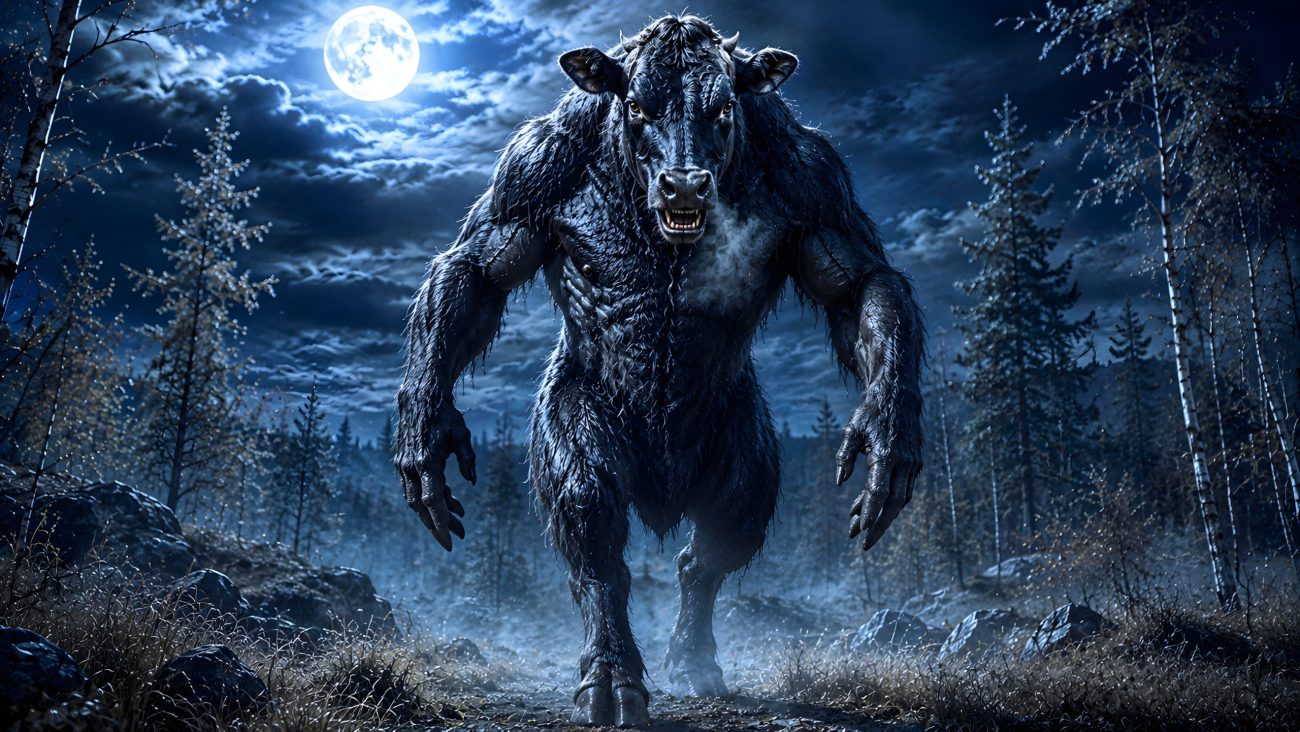
Ukher Bookholdoy is a werewolf spirit from the lower mythology of the Buryats. It takes the form of a hornless and tailless cow and appears at night.

The creature walks on its hind legs, despite having the appearance of a cow. Its hornless head, lack of a tail, and unusual way of walking distinguish it from an ordinary cow.


Sources

“Ukher-Bookholdoi.” New Bestiary (Bestiary.us). Accessed August 30, 2026. https://www.bestiary.us/ukher-bookholdoi


Korov’ya smert

Tradition / Region: Russian Mythology
Alternative names: Cattle Death, Tovaricha Death, Black Infirmity
Category: Cow


The Myth

Cow’s Death is the personification of the death and disease that strikes cattle. Among the Eastern Slavs, she was believed to appear particularly around the day of Agafya the Cow-keeper.

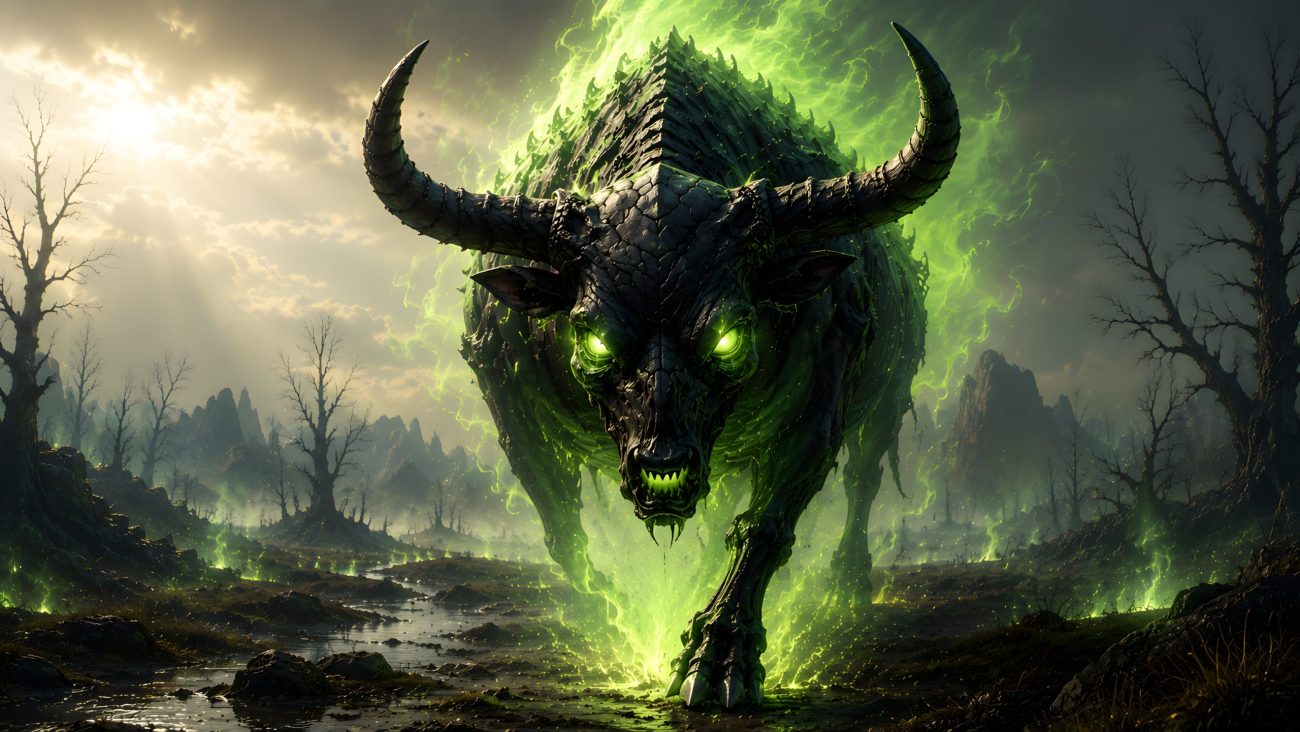
She could take different forms. Sometimes she appeared as a black cow, cat, or dog; in other traditions she appeared as a cow skeleton or as an old, frightening woman with hands like rakes. It was also believed that she could be brought into a village by a visitor, traveller, or witch.

When cattle began dying, villagers performed rituals to drive Cow’s Death away. One of the most important was the plowing of the village. Women gathered secretly at night, took up clubs, sickles, and other objects, and plowed a furrow around the settlement. The procession made tremendous noise with pans, scythes, sickles, and other household objects to frighten Death away.

The villagers also drove their cattle through specially prepared ditches or tunnels, kindled a fire by friction, and sometimes wove a piece of cloth in a single day as part of the protective rites.

During the procession, the women called upon the cattle god Veles, identified in Christian tradition with Saint Blaise, asking that Cow’s Death leave the village.

If a cat or dog appeared during the ritual, it could be killed because the villagers believed Cow’s Death might be hiding in the form of an animal.

Old worn bast shoes soaked in tar were also hung in barns as protection against Cow’s Death.


Sources

“Коровья смерть (Korov’ya smert’).” Wikipedia: The Free Encyclopedia (Russian Wikipedia). Wikimedia Foundation. Accessed August 21, 2026. https://ru.wikipedia.org/wiki/Коровья_смерть


Komol

Tradition / Region: Russian Mythology
Alternative names: Komokol, Komorkol
Category: Cow


The Myth

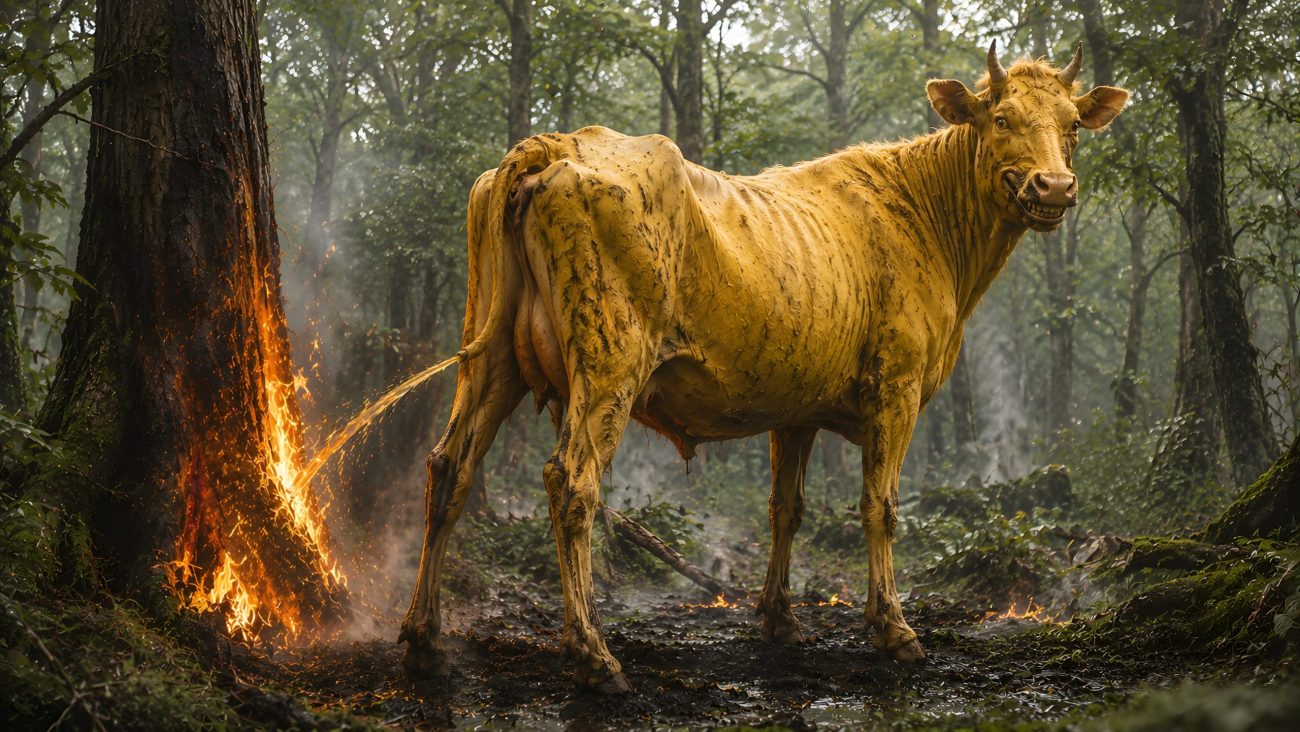
Komol is a fierce beast described in Slavic bestiary tradition. It possesses a strange and deadly defense: its urine can burn anything it touches.

If Komol urinates on a wooden board or a tree, the object is said to be completely burned by the following hour. The creature is depicted as a horned beast, although the surviving descriptions provide little information about its appearance.


Sources

“Комол (Komol).” New Bestiary (Bestiary.us). Accessed August 16, 2026. https://www.bestiary.us/komol