Chudo-Yudo

Tradition: Russian Mythology
Alternative Names: Chudo-Yudo, Chudo-Iudo, Чудо-Юдо, Chuda-Yuda
Category: Dragon


The Myth

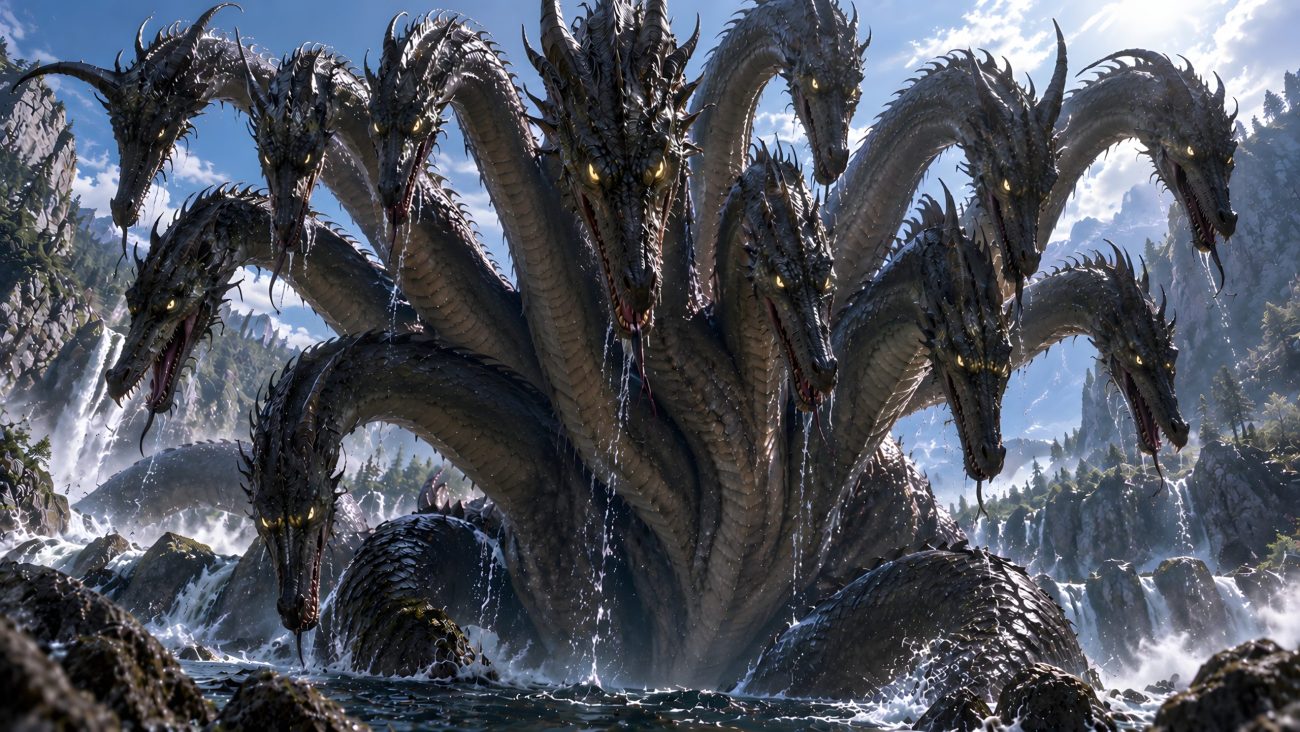
The Chudo-Yudo is a monstrous, many-headed dragon that dwells in or beyond the waters. It can take on human-like forms, speak like a person, and even ride a horse. Some tales portray it as the brother of Koschei the Deathless, born from Baba Yaga, while others present the creature as a monstrous embodiment of Baba Yaga herself.

The Chudo-Yudo is associated with the Water of Life and Death and may guard these magical waters. Its name was traditionally invoked during times of drought, when people sought relief from the absence of rain.

The creature appears with different numbers of heads, most famously six, nine, or twelve. In tales of Ivan Bykovich and the Storm-Bogatyr, these many-headed dragons emerge from the Black Sea and confront the heroes. They are monstrous serpents that must be fought and destroyed.

Yet cutting off the heads of a Chudo-Yudo is not enough. Even a severed head can be picked up and restored to the body. In one tale, the creature simply touches the severed head with a fiery finger and it becomes attached again, allowing the monster to continue fighting as though nothing had happened.

The Chuda-Yuda are sometimes encountered beyond the River Smorodina, a foul-smelling river that separates the world of the living from the realm of the dead. To reach their domain, a hero must cross the Kalinov Bridge, the White-Hot Bridge spanning the boundary between worlds.


Sources

“Slavic dragon.” Wikipedia: The Free Encyclopedia. Wikimedia Foundation. Accessed September 20, 2026. https://en.wikipedia.org/wiki/Slavic_dragon

Brosno Dragon

Tradition: Russian Mythology
Alternative Names: Brosnya, Бросня
Category: Dragon


The Myth

The Brosno Dragon, known as Brosnya, is a mysterious dragon-like creature said to dwell in the depths of Lake Brosno in western Russia. It is said to be an enormous lake monster, rarely seen and feared by those living around the lake.

During the eighteenth and nineteenth centuries, people told of a gigantic creature that would rise from the depths in the evening. Whenever anyone approached the shore or came too close, it would immediately disappear beneath the water again.

The creature also became the subject of darker tales. During the Second World War, it was said that Brosnya rose from the lake and swallowed a German airplane whole.

Some believe the monster may still lurk beneath Lake Brosno, although its existence remains uncertain. Explanations for sightings have included ordinary animals such as beavers or an exceptionally large pike.


Sources

“Brosno dragon.” Wikipedia: The Free Encyclopedia. Wikimedia Foundation. Accessed September 20, 2026. https://en.wikipedia.org/wiki/Brosno_dragon


Zilant

Tradition: Tatar and Russian Mythology
Alternative Names: Zilant, Zilant the Flying Serpent
Category: Dragon, Cow


The Myth

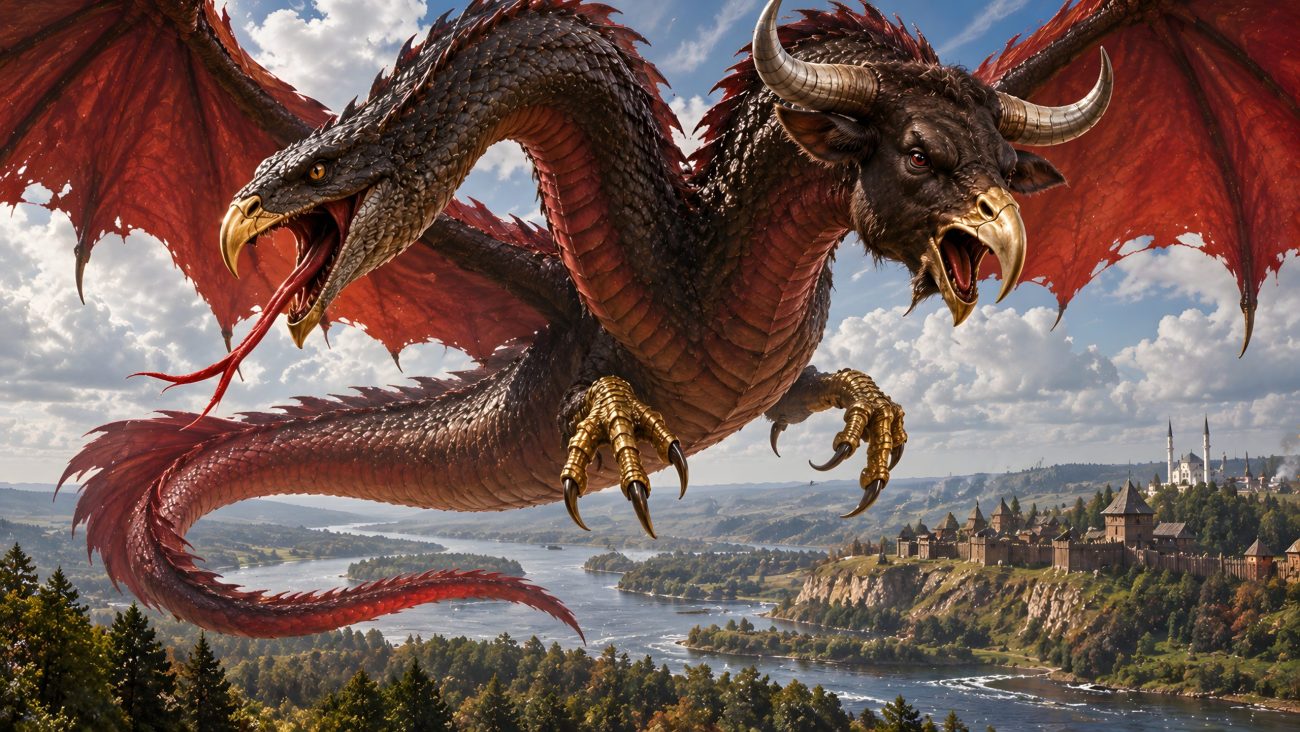
Zilant was a two-headed flying serpent. One head was that of a snake, while the other was that of an ox. With the snake’s head, it devoured young horses and beautiful maidens brought to it as sacrifices. With the ox’s head, it ate grass.

According to legend, the site of Kazan was once inhabited by countless snakes, each as thick as a log. Zilant was their leader. The snakes became such a danger that the people sought a way to destroy them.

The Khan consulted the sorcerer Hakim, who advised him to cut down the surrounding forest and brush and gather it into a great pile of straw. In spring, when everything had dried and the snakes had crawled out from beneath the ground, the straw was to be burned.

The plan was carried out. The snakes were surrounded by the blazing fire and burned alive. The flames and smoke were so intense that people, horses, and camels died from them.

After the destruction of the snakes, the Khan placed Zilant on his coat of arms to commemorate the event.

The image of Zilant later became associated with Kazan and was depicted as a black winged dragon with scarlet wings and tail, a golden beak and claws, and a scarlet tongue. The creature became an enduring symbol of the city.


Sources

“Ostrovetskii Tsmok.” New Bestiary (Bestiary.us). Accessed September 19, 2026. https://www.bestiary.us/ostrovetskii-tsmok