Bichura

Tradition: Tatar Mythology, Russian Mythology
Alternative Names: Bichura, Бичура, Бичура́
Category: House dweller


The Myth

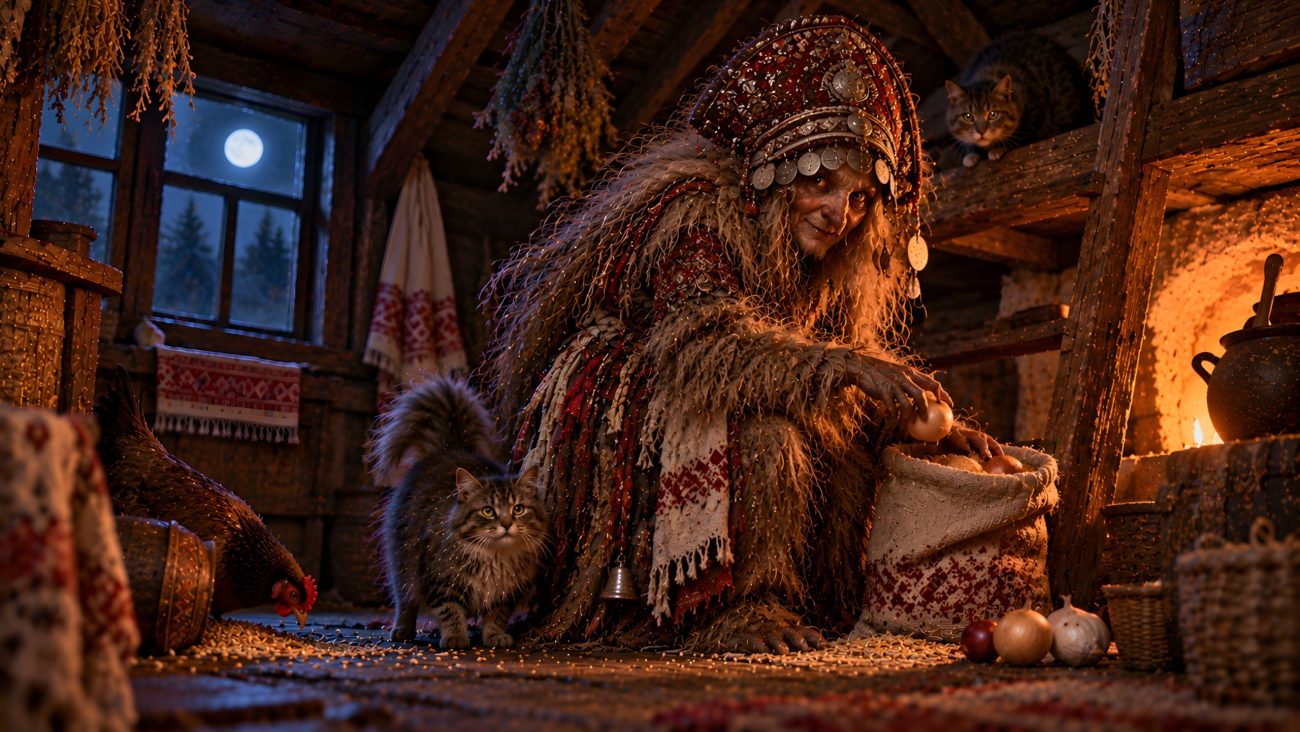
Bichura is a domestic spirit in Tatar folklore, usually appearing as a short woman wearing an ancient headdress. It is closely associated with the Slavic kikimora and is sometimes described as taking the form of a cat or a dog. Bichura inhabits the home, often residing in the attic, cellar, or other parts of the household. Although it can cause disturbances and frighten the inhabitants, its relationship with a family is not always hostile.

Bichura is known for its mischievous behaviour. It may scream, laugh, play tricks, drag sleeping people from their beds, or make strange noises at night. Some accounts describe it as pulling blankets away from sleepers or throwing objects around the house. Its presence can be especially frightening because the creature may remain unseen while causing disturbances. In some traditions, hearing Bichura’s cries is considered an ominous sign, believed to foretell the imminent death of a member of the household.

Despite its troublesome nature, Bichura can also bring prosperity. It may help with household work, bringing food and other useful things to the family it inhabits. Some stories claim that a household with a Bichura can become wealthy, while families that lose the spirit may fall into poverty. Its behaviour is therefore unpredictable: it can be both a source of domestic mischief and a supernatural benefactor.

One Tatar tale tells of a miller who hears a noise in the house and discovers Bichura hiding near the stove. The creature appears as a small woman wearing an ancient headdress. The miller attempts to strike it with a stick, but Bichura escapes. The story reflects the difficulty of controlling a spirit that inhabits the home and can disappear before it is caught.

Another account describes a Russian peasant and his wife sleeping in their house when the man suddenly falls from his bed and breaks his thigh. His wife initially believes that he has suffered a nightmare or that someone has attacked him. However, the injury is attributed to Bichura, which had pushed him from the bed. The tale presents the spirit as a dangerous presence capable of inflicting physical harm on sleeping household members.

Bichura’s relationship with wealth is illustrated in another story about a Tatar family whose household becomes increasingly prosperous. Their livestock thrives, and their possessions multiply, until a neighbour becomes jealous and steals the spirit from them. After Bichura leaves, the family’s prosperity disappears, and their fortune declines. The neighbour who takes the spirit becomes wealthy in turn, demonstrating the belief that Bichura’s presence could determine a household’s economic success.

Bichura is not always described as an individual spirit. Some traditions speak of several Bichuras inhabiting a house, while others suggest that the creature can have a family of its own. Its similarities to the Slavic kikimora and the Bashkir bisura demonstrate that related household spirits appear across neighbouring traditions, although their precise characteristics vary.

Bichura represents the unpredictable relationship between humans and supernatural household inhabitants. It can disturb sleep, frighten residents, and even cause injury, yet it can also provide material prosperity and assistance. The spirit’s favour is therefore valuable but uncertain: a household may benefit greatly from its presence, while losing it can bring misfortune and poverty.


Sources

“Bichura.” New Bestiary (Bestiary.us). https://www.bestiary.us/bichura

Shurale

Tradition: Tatar Mythology, Bashkir Mythology, Russian Mythology
Alternative Names: Şüräle, Shurale, Shurayle, Yarymtyk, Urman Iyase
Category: Forest Dweller


The Myth

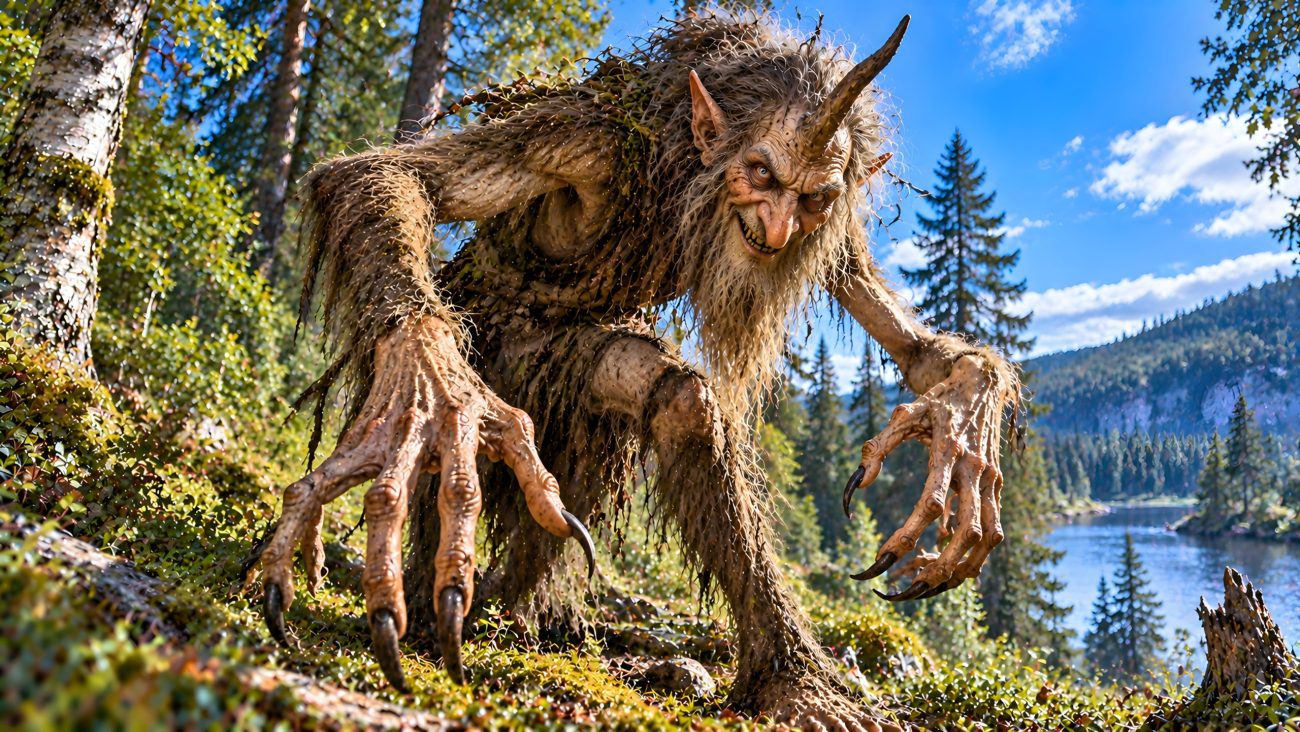
The Shurale is a supernatural forest spirit from Tatar and Bashkir folklore, usually described as a hairy, humanoid creature with a long, horn-like protrusion on its forehead, a narrow face, and long fingers. It is often depicted with a hunched body, shaggy hair, and an unsettling appearance. In some tales, it resembles a thin, horned man with a long beard, while other descriptions emphasize its elongated limbs and unusually long fingers. The Shurale lives deep in the forest, hiding among the trees and rocks, where it delights in frightening and tricking anyone who enters its domain.

The Shurale is a mischievous and dangerous trickster that enjoys luring travellers into the woods. It may disguise itself as a human or appear in the form of a familiar person, leading unsuspecting victims away from safety. It is particularly fond of tickling people with its long fingers until they die from exhaustion or laughter. The spirit can also ride horses, steal livestock, and torment people who travel through its forest. In some stories, it is captured by trapping its long fingers in a split tree, leaving it helpless while its captor escapes. The Shurale’s supernatural strength and cunning make it a formidable opponent, but its own mischievous nature can lead it into traps.

The Shurale is also a central figure in Tatar and Bashkir fairy tales, where it often serves as a test of human cleverness and courage. One famous story tells of a man who encounters the spirit in the forest and outwits it by trapping its fingers in a tree. The Shurale cries out in pain and begs to be released, but the man escapes, leaving the creature stranded. Other tales describe the Shurale as a guardian of the forest who punishes those who damage trees or disrespect nature. Although frightening and sometimes deadly, the Shurale is not always portrayed as purely evil; it can also be a supernatural being whose actions reflect the dangers and mysteries of the wilderness.


Sources

“Shurale.” New Bestiary (Bestiary.us). Accessed October 11, 2026. https://www.bestiary.us/shurale


Zilant

Tradition: Tatar and Russian Mythology
Alternative Names: Zilant, Zilant the Flying Serpent
Category: Dragon, Cow


The Myth

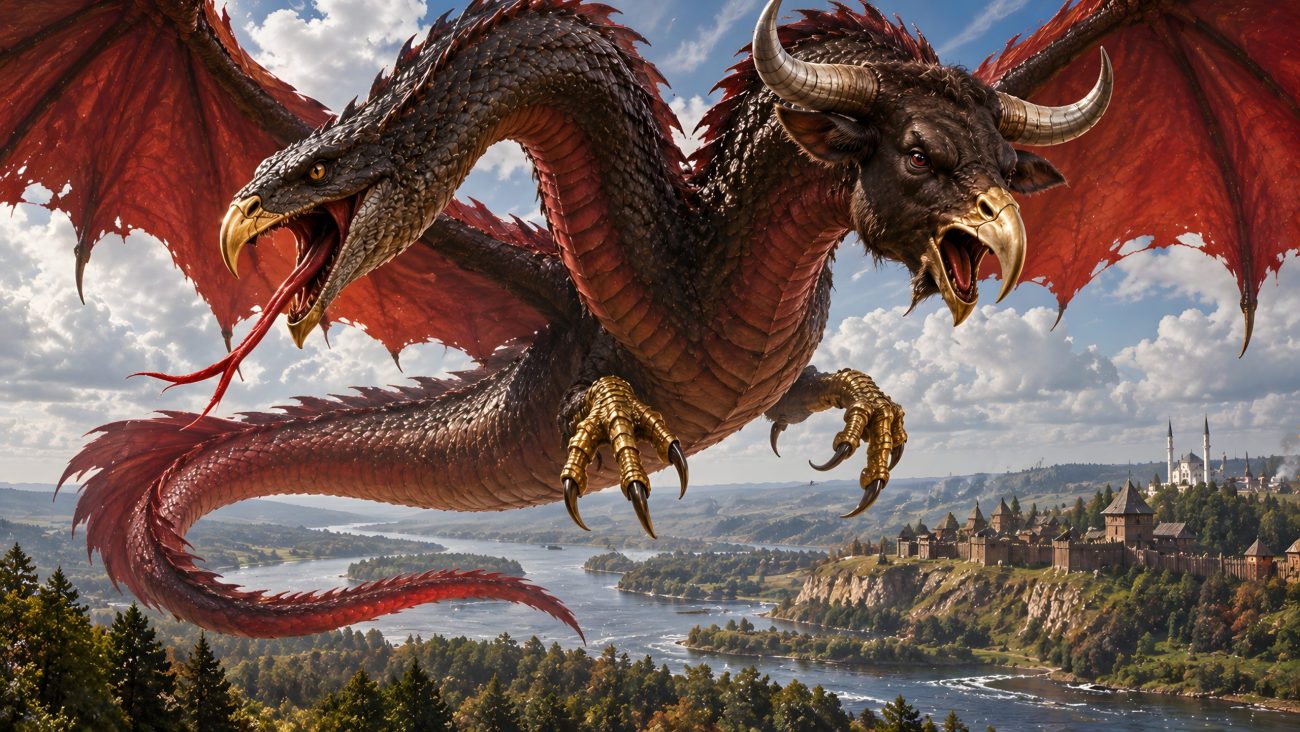
Zilant was a two-headed flying serpent. One head was that of a snake, while the other was that of an ox. With the snake’s head, it devoured young horses and beautiful maidens brought to it as sacrifices. With the ox’s head, it ate grass.

According to legend, the site of Kazan was once inhabited by countless snakes, each as thick as a log. Zilant was their leader. The snakes became such a danger that the people sought a way to destroy them.

The Khan consulted the sorcerer Hakim, who advised him to cut down the surrounding forest and brush and gather it into a great pile of straw. In spring, when everything had dried and the snakes had crawled out from beneath the ground, the straw was to be burned.

The plan was carried out. The snakes were surrounded by the blazing fire and burned alive. The flames and smoke were so intense that people, horses, and camels died from them.

After the destruction of the snakes, the Khan placed Zilant on his coat of arms to commemorate the event.

The image of Zilant later became associated with Kazan and was depicted as a black winged dragon with scarlet wings and tail, a golden beak and claws, and a scarlet tongue. The creature became an enduring symbol of the city.


Sources

“Ostrovetskii Tsmok.” New Bestiary (Bestiary.us). Accessed September 19, 2026. https://www.bestiary.us/ostrovetskii-tsmok