Tradition: Tatar Mythology, Russian Mythology
Alternative Names: Bichura, Бичура, Бичура́
Category: House dweller
The Myth
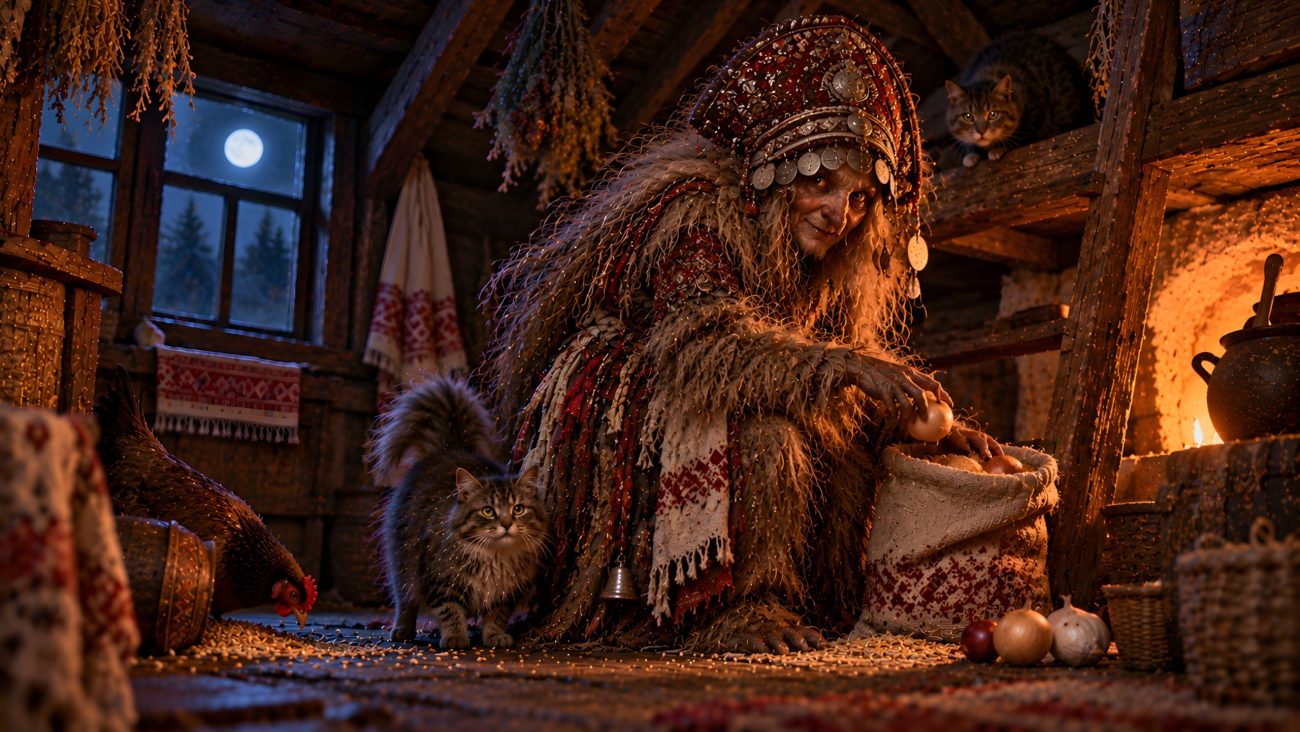
Bichura is a domestic spirit in Tatar folklore, usually appearing as a short woman wearing an ancient headdress. It is closely associated with the Slavic kikimora and is sometimes described as taking the form of a cat or a dog. Bichura inhabits the home, often residing in the attic, cellar, or other parts of the household. Although it can cause disturbances and frighten the inhabitants, its relationship with a family is not always hostile.
Bichura is known for its mischievous behaviour. It may scream, laugh, play tricks, drag sleeping people from their beds, or make strange noises at night. Some accounts describe it as pulling blankets away from sleepers or throwing objects around the house. Its presence can be especially frightening because the creature may remain unseen while causing disturbances. In some traditions, hearing Bichura’s cries is considered an ominous sign, believed to foretell the imminent death of a member of the household.
Despite its troublesome nature, Bichura can also bring prosperity. It may help with household work, bringing food and other useful things to the family it inhabits. Some stories claim that a household with a Bichura can become wealthy, while families that lose the spirit may fall into poverty. Its behaviour is therefore unpredictable: it can be both a source of domestic mischief and a supernatural benefactor.
One Tatar tale tells of a miller who hears a noise in the house and discovers Bichura hiding near the stove. The creature appears as a small woman wearing an ancient headdress. The miller attempts to strike it with a stick, but Bichura escapes. The story reflects the difficulty of controlling a spirit that inhabits the home and can disappear before it is caught.
Another account describes a Russian peasant and his wife sleeping in their house when the man suddenly falls from his bed and breaks his thigh. His wife initially believes that he has suffered a nightmare or that someone has attacked him. However, the injury is attributed to Bichura, which had pushed him from the bed. The tale presents the spirit as a dangerous presence capable of inflicting physical harm on sleeping household members.
Bichura’s relationship with wealth is illustrated in another story about a Tatar family whose household becomes increasingly prosperous. Their livestock thrives, and their possessions multiply, until a neighbour becomes jealous and steals the spirit from them. After Bichura leaves, the family’s prosperity disappears, and their fortune declines. The neighbour who takes the spirit becomes wealthy in turn, demonstrating the belief that Bichura’s presence could determine a household’s economic success.
Bichura is not always described as an individual spirit. Some traditions speak of several Bichuras inhabiting a house, while others suggest that the creature can have a family of its own. Its similarities to the Slavic kikimora and the Bashkir bisura demonstrate that related household spirits appear across neighbouring traditions, although their precise characteristics vary.
Bichura represents the unpredictable relationship between humans and supernatural household inhabitants. It can disturb sleep, frighten residents, and even cause injury, yet it can also provide material prosperity and assistance. The spirit’s favour is therefore valuable but uncertain: a household may benefit greatly from its presence, while losing it can bring misfortune and poverty.
Sources
“Bichura.” New Bestiary (Bestiary.us). https://www.bestiary.us/bichura