Tradition: Buryat mythology, Mongolian mythology
Alternative Names: Black Demons
Category: Demon
The Myth
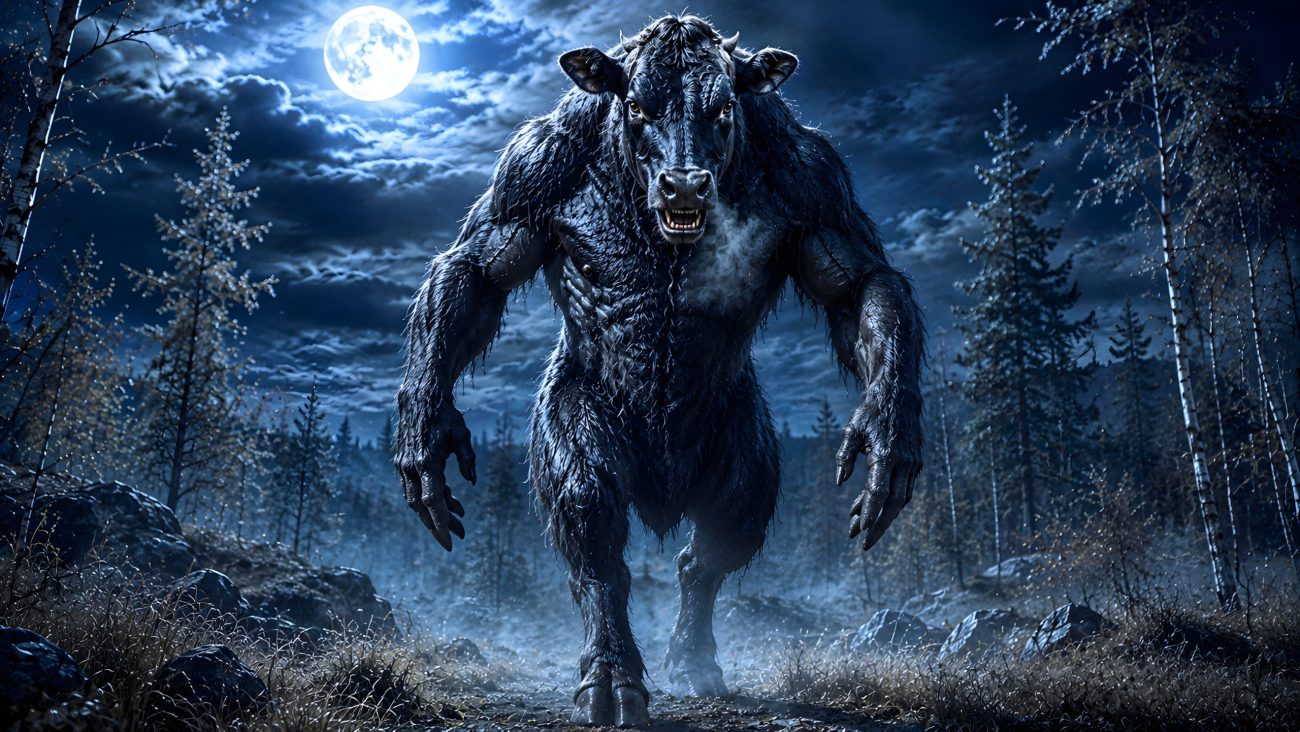
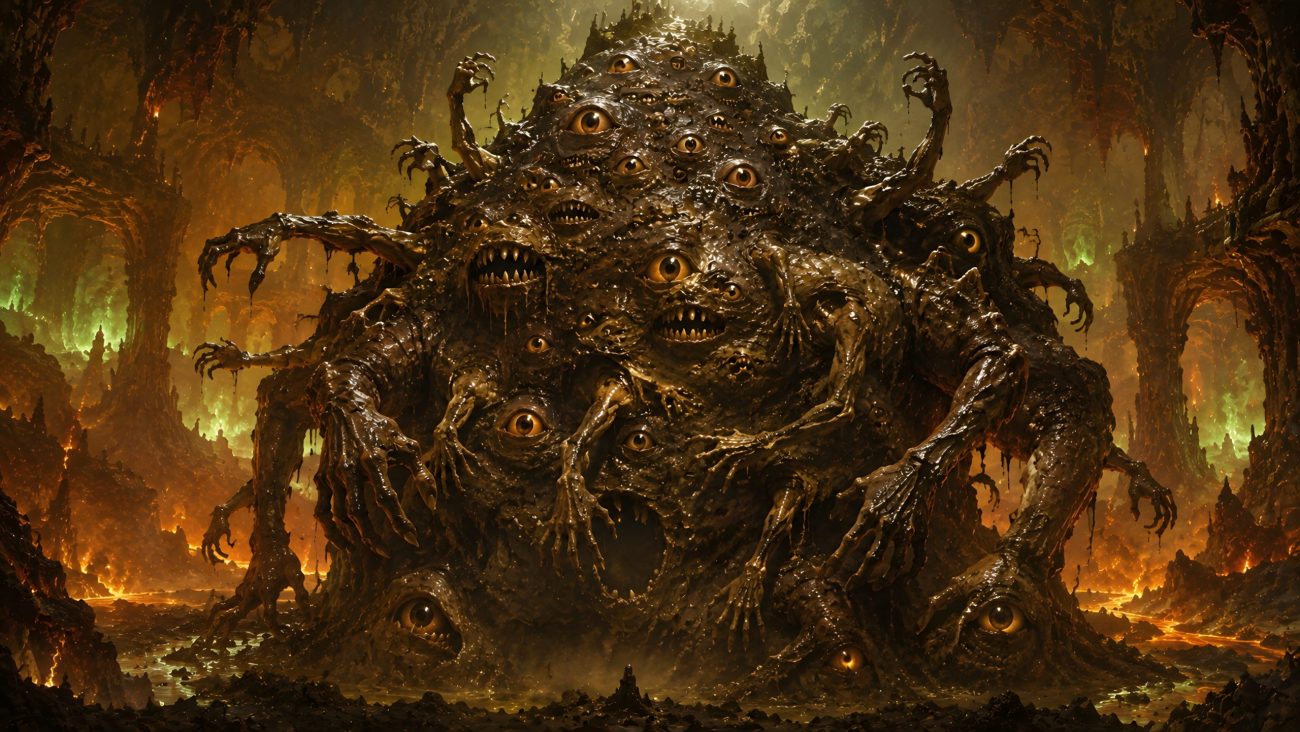
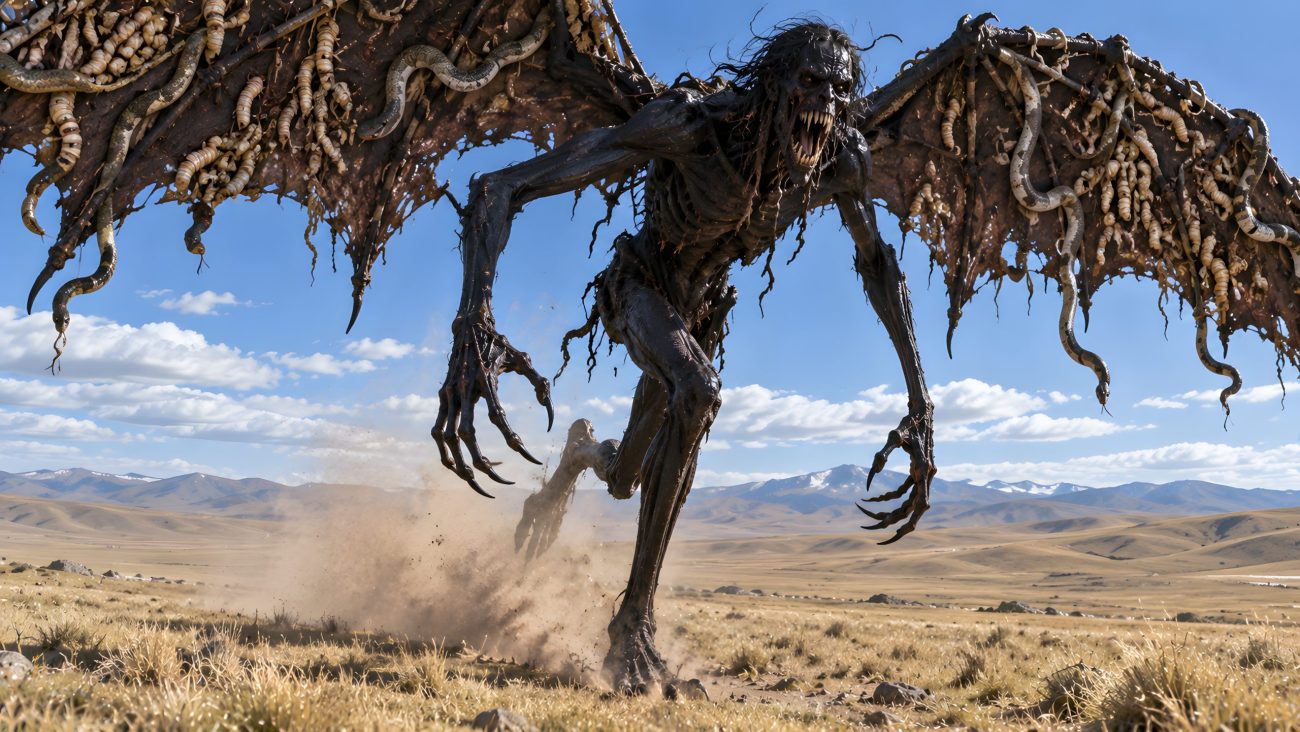
The Black Demons are a group of evil spirits appearing among the supernatural forces that bring destruction and suffering to the human world. Their exact appearance is not described in the source.
Nine hundred evil spirits and ninety Black Demons came to the land of the three Tugshen khans. They laid waste to the country and brought calamity and suffering upon its people. The fortune of the people was thrown into disorder. Rivers were polluted at their sources, plants were corrupted at their roots, and the rich, fertile land began to wither and die. What had once been beautiful and pure became filled with maggots, snakes, and worms.
The people and animals feared that they would all eventually be destroyed. They went to the shamaness Sharnaihan Shara, whose skin was tanned like cooked meat and who was famous for never being defeated. Pressured by the people and animals gathered around her, she took up a broken ladle and began shamanizing.
She called upon the fifty tenger of the western skies, the many gods and protector spirits, and her grandmother Manzan Gurme. She told them of the nine hundred evil spirits and ninety Black Demons who had brought disaster upon the three Tugshen khans and destroyed the prosperity of their land.
Then Sharnaihan Shara threw her ladle toward heaven, sending it upward to the table of her grandmother Manzan Gurme.
The nine hundred evil spirits and ninety Black Demons then declared that they would gather together beneath the full moon, carrying with them their jealousy and hatred. As they spread across the land, the people and animals were devastated. Herds of cattle and horses disappeared like melting ice and snow, while the demons traveled along rivers, gathered at creeks, met upon mountains, and moved along the roads, roaring and thundering.
Manzan Gurme saw the destruction and discovered its cause. The neck of Atai Ulaan Tenger had fallen to the earth and become the immensely powerful Gal Nurma Khan. He had prepared and sent the nine hundred evil spirits and ninety Black Demons to bring calamity to the three Tugshen khans and their homeland.
Manzan Gurme became enraged. She tore apart her black silk scarf and her decorated silk scarf and took up her enormous felt beating stick. She then went to the home of Etseg Malaan Tenger.
When she arrived, Etseg Malaan and Ehe Yuuren welcomed her and offered her a place of honor and a drink. After they had drunk together, Manzan Gurme told them about the suffering of the people. She described how the lonely and orphaned people were dying by day and night, being twisted and stretched, cut down like hay, and broken like reeds. Those who traveled were eaten on the roads, while those who remained at home were swallowed in their own houses.
She demanded to know who was responsible and who would correct the disaster. She declared that it was the responsibility of Etseg Malaan to correct it.
After she left, Etseg Malaan told Ehe Yuuren that the greatest offender was Han Hormasta Tenger. He declared that Han Hormasta himself must descend to the earth and correct the wrong.
White messengers were then sent in every direction to summon the tenger and gods. They carried the message that the gods should gather and make a wise decision among the stars and a beautiful decision beneath the moon.
The fifty-five tenger of the western heavens gathered in the stars and on the moon. Even the aged Father Etseg Malaan Tenger, who had not attended their meetings for many years, came to this gathering.
The gods discussed who would descend to earth to fight the nine hundred evil spirits and ninety Black Demons. None wanted to go. They feared that once they descended to the earth, they would become polluted and mortal and would never be able to return to heaven.
Etseg Malaan became furious. He declared that Han Hormasta Tenger was the greatest offender and therefore had to descend to earth himself and correct what he had done.
The other gods agreed. They condemned Han Hormasta and demanded that the one who had committed the wrong should correct it himself. Han Hormasta tried repeatedly to speak, but the arguing god princes prevented him from being heard.
Then the red middle son of Han Hormasta Tenger, Bukhe Beligte Baatar, felt pity for his father. He declared that someone had to descend to earth and that, if his elder and younger brothers were unwilling to leave the peaceful high heavens, he would go himself.
The assemblies of the stars and moon accepted his decision as right and fitting. Han Hormasta was relieved to hear his son’s words.
He then summoned his eldest son, Zasa Mergen Baatar, who lived in the high heavens, possessed the power of the tornado, and rode a brown hawk-colored horse. He ordered him to come before the assembly.
Sources
“Geser—Halaa 1 (Part 2): The War among the Tenger.” Buryat-Mongol.com. Translated/compiled online; archived by the Internet Archive Wayback Machine, June 13, 2007.
https://web.archive.org/web/20070613194519/http://www.buryatmongol.com/halaa1a.html