Mosquito of Bukhe Beligte

Tradition: Mongolian Mythology
Alternative Names: None recorded
Category: Insect


The Myth

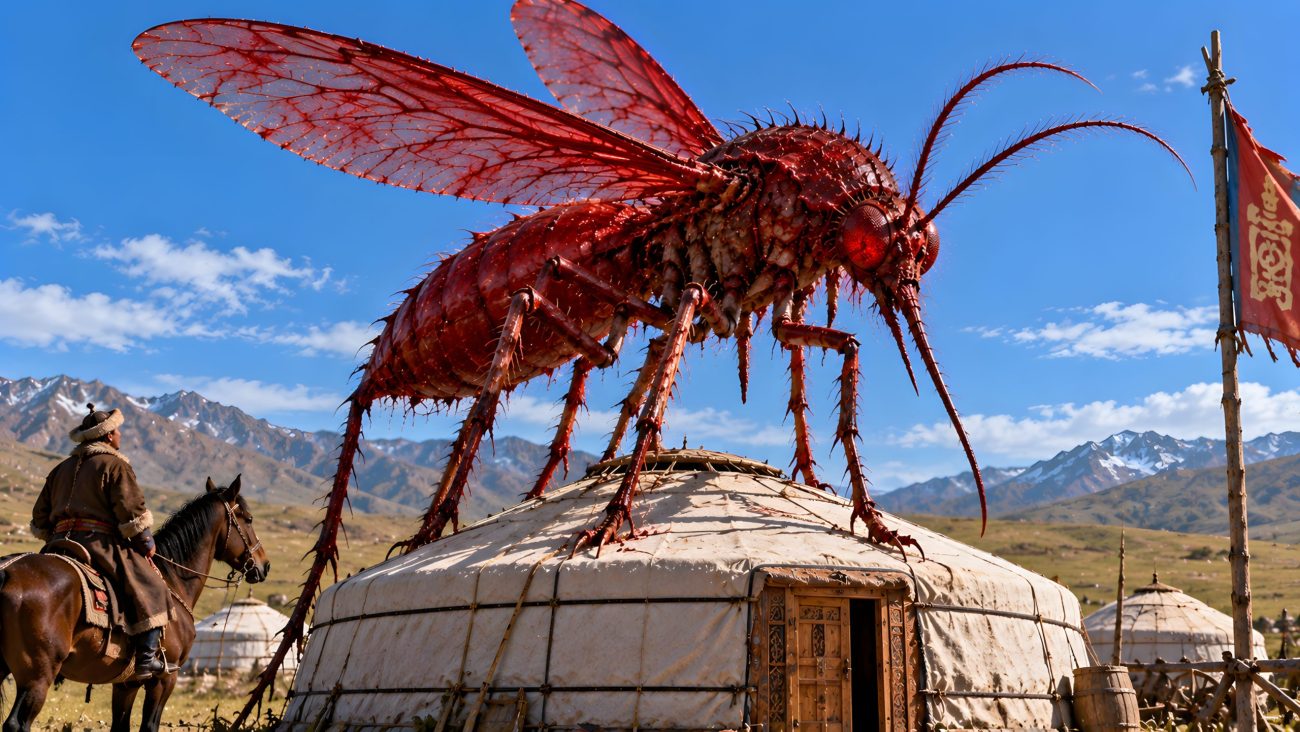
The giant mosquitoes of Mongolian mythology are monstrous insects created by evil spirits and demons. They are described as being as large as scrawny horses, with enormous bodies and a loud, persistent buzzing. Their appearance is terrifying, and they are capable of overwhelming the landscape in vast swarms. According to the legend of the infant hero Bukhe Beligte, these creatures were created to torment him while he slept on a hilltop.

Although only a few days old, Bukhe Beligte was already fighting supernatural enemies. After defeating two black ravens with iron beaks and talons, he was left alone on the hilltop for another night. He prepared seventy snares around his sleeping place. His cries shook the earth, prompting nine hundred evil spirits and ninety black demons to create two giant mosquitoes. These monstrous insects came from a desolate, scorching land in the east, a place of marshy rivers, slippery slopes, and darkness, where demons and evil spirits made their home.

The two mosquitoes flew around the sleeping infant, pestering him with their buzzing. However, they became caught in the seventy snares he had prepared. Bukhe Beligte seized a black whip with eighteen tails and thrashed the enormous insects until they were reduced to a mass of ordinary mosquitoes and gnats, numerous enough to fill a river.

After defeating them, the infant pronounced a powerful oath. From that moment onward, the mosquitoes and gnats would live among the stems of grasses, buzzing about in search of food. Their transformation explained how the terrifying horse-sized insects of the ancient world became the smaller, numerous pests found among vegetation.

Bukhe Beligte celebrated another victory, declaring that he had defeated three enemies before reaching the age of three days. He then fell into a deep sleep. Yet his extraordinary strength continued to trouble his parents. Because of the terrible stench that accompanied him, they eventually abandoned him in a bears’ den. When his father returned the following morning, the boy ran to embrace him. The infant had already killed the black bear that lived there, revealing once again that even at such a young age, Bukhe Beligte possessed immense supernatural power.


Sources

“The Second Branch: Geser Comes Down to Earth (Part 1).” Buryat-Mongol. Internet Archive Wayback Machine, archived June 28, 2007. https://web.archive.org/web/20070628230811/http://www.buryatmongol.com/halaa2.html


Mangadhai

Tradition: Mongolian Mythology
Alternative Names: Mangadhai
Category: Giant


The Myth

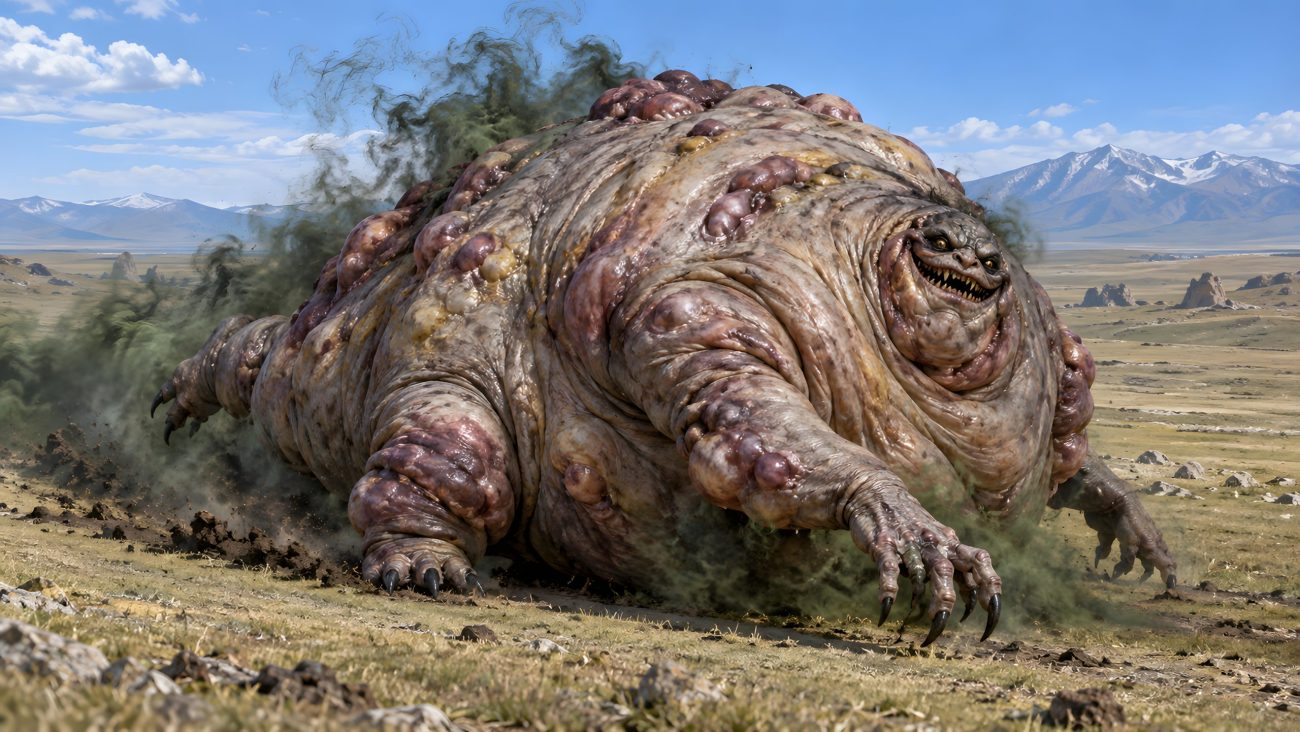
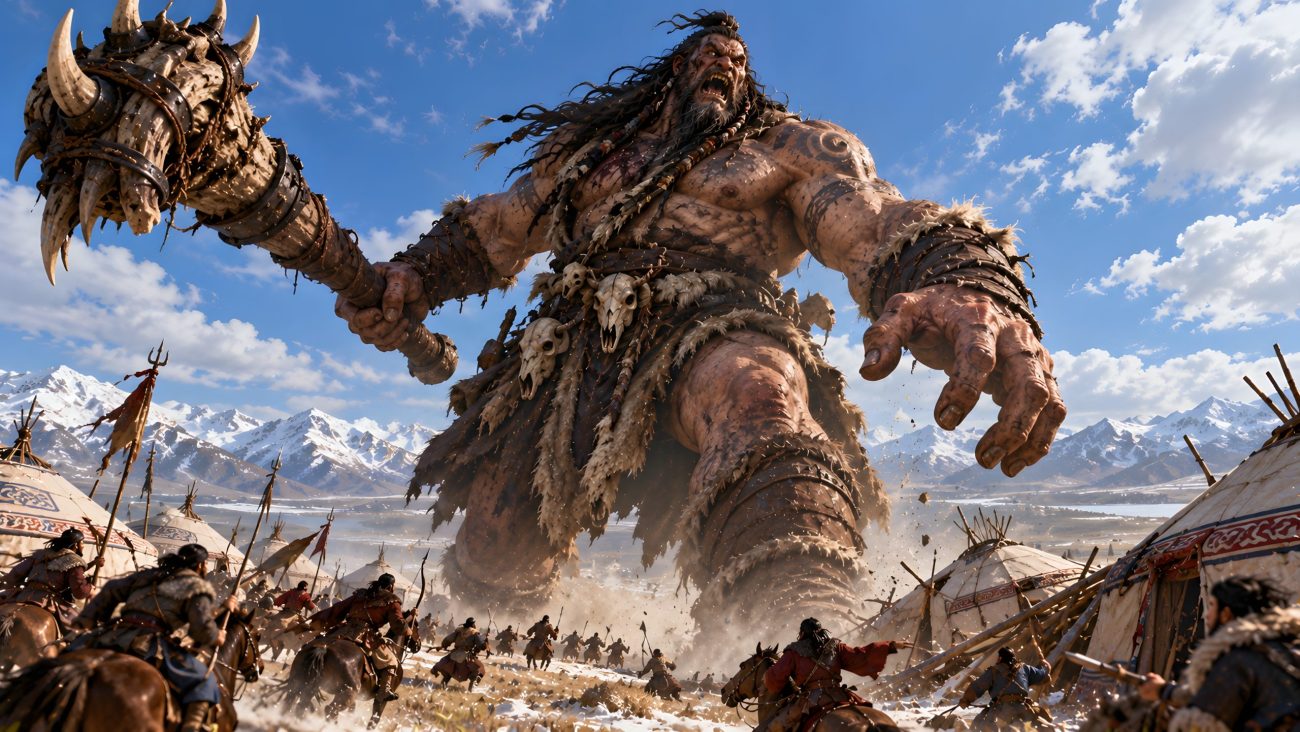
The Mangadhai are monstrous beings in Mongolian mythology who frequently appear as antagonists in traditional folktales. They are portrayed as cruel giants possessing immense physical strength and a destructive nature. Their fearsome presence makes them formidable opponents for the heroes of Mongolian stories.

The Mangadhai represent chaos and destruction, threatening the order of the world through their violence and monstrous power. Heroes in Mongolian myths often confront these beings in dangerous struggles, overcoming them to restore peace and order. Their role reflects the recurring folkloric conflict between destructive forces and the heroes who protect their communities.

The available description provides little detail about the Mangadhai’s physical appearance beyond their immense size and strength, or about any single defining legend. They are principally characterized by their role as powerful monstrous adversaries in Mongolian folklore.


Sources

“Mongolian Culture.” Folklore Earth. https://folklore.earth/culture/mongolian/


Mangus

Tradition: Mongolian Mythology
Alternative Names: Mangas, Mangasht, Mangashti, Mangas, Mangus, Manguz, Mangusai, Mangasdu
Category: Giant


The Myth

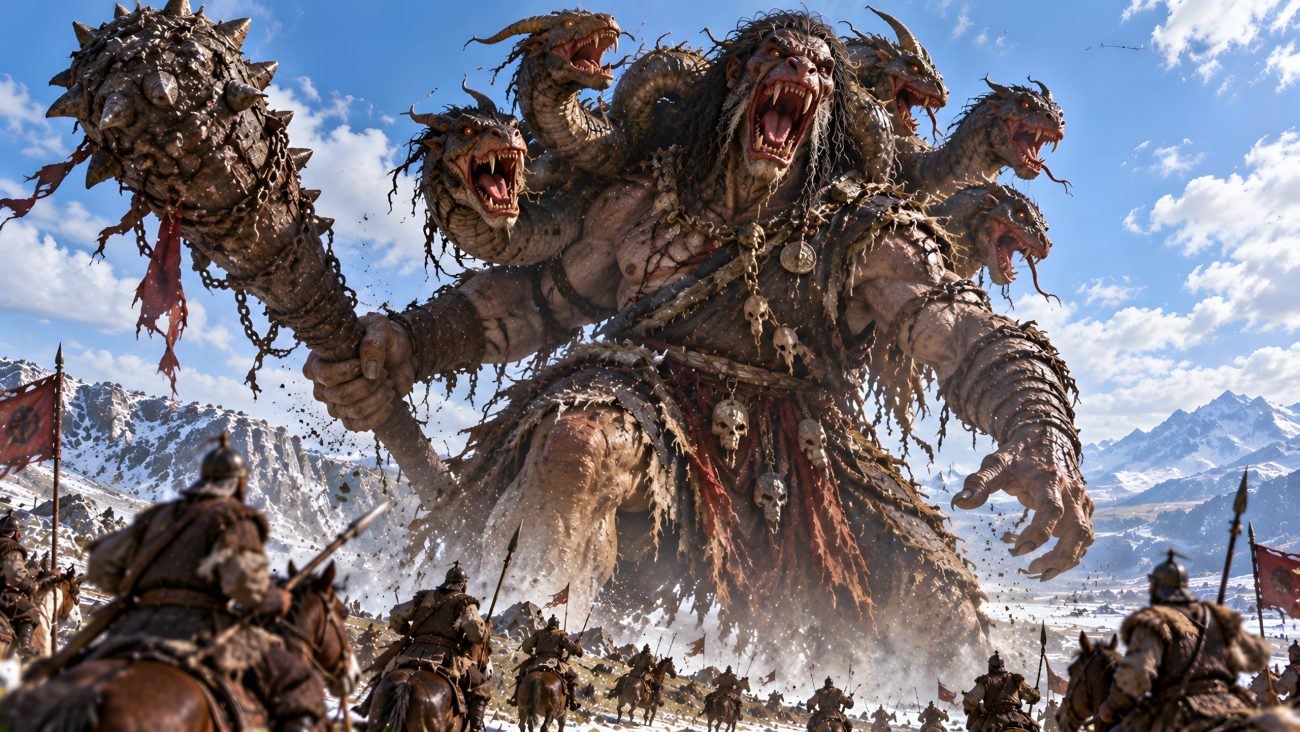
Mangus is a general name in the folklore of Mongolian peoples for various monsters, usually multi-headed giants with serpentine features. Unlike other demonic beings, such as shulmas and chotgor, mangus figures primarily appear as characters in epic and fairy-tale narratives. They are often depicted as enormous, powerful monsters with multiple heads, large mouths, and frightening appearances. Some possess snake-like bodies or other animal characteristics, while others resemble monstrous giants.

In Mongolian myths, mangus commonly serve as antagonists who threaten heroes and their communities. Their stories often involve battles against heroic figures, who must overcome the monsters through strength, cunning, or supernatural assistance. The mangus may guard remote places, dwell in underground lairs, or emerge from the wilderness to attack people. Their extraordinary physical power makes them formidable opponents, but they can also be defeated through the ingenuity of the heroes who confront them.

The appearance and characteristics of mangus vary across Mongolian traditions. Some versions portray them as multi-headed demons, while others emphasize their serpentine features or monstrous size. Related names occur among several peoples of Inner Asia, including the Buryats, Kalmyks, Altaians, Tuvans, and Yakuts. These names do not always refer to precisely the same kind of being, and their meanings and associations differ between traditions.

In some Mongolian tales, mangus figures are associated with the emergence of later monsters or supernatural beings. Their stories have also been interpreted as reflecting encounters between different communities, with the monsters sometimes representing threatening outsiders. However, the origins and historical significance of the mangus tradition remain uncertain. Across its many variations, the mangus remains a powerful monstrous adversary in the epic and fairy-tale worlds of Mongolian peoples.


Sources

“Mangus.” New Bestiary (Bestiary.us). https://www.bestiary.us/mangus


Dakhuul

Tradition: Mongolian Mythology, Russian Mythology
Alternative Names: Dahul, Dakhul
Category: Ghost


The Myth

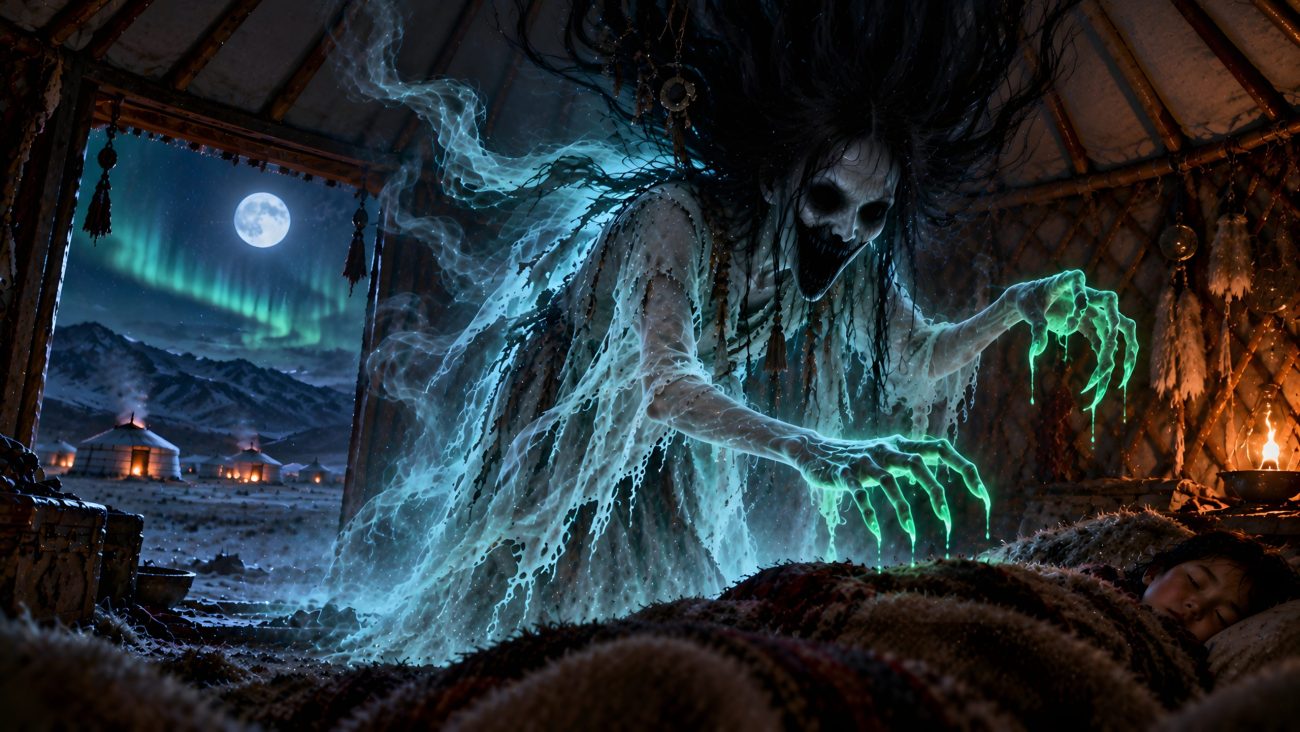
Dakhuul are malevolent spirits in the lower mythology of the Mongols and Buryats, believed to harm children and inflict illnesses upon their victims. These supernatural beings are described as invisible, ghost-like entities that bring sickness and suffering to the living.

According to the tradition, Dakhuul may originate from people who died under particular circumstances, including poor people, virgins, or young women. After death, they are believed to become dangerous undead spirits capable of afflicting the living with illness, with children being especially vulnerable to their harmful influence. The name Dahul is a Latinized variant of Dakhuul.


Sources

“Дакхуул (Dakhuul).” New Bestiary (Bestiary.us). https://www.bestiary.us/dakhuul


Shulmusy

Tradition: Mongolian Mythology, Russian Mythology
Alternative Names: Shulmus, Shulmas, Shumnasy, Chulbusy, Chulgusy, Chulme, Chulmysy, Shimnus, Sholmosy, Shulmy, Shulbus, Shulbys
Category: Frog


The Myth

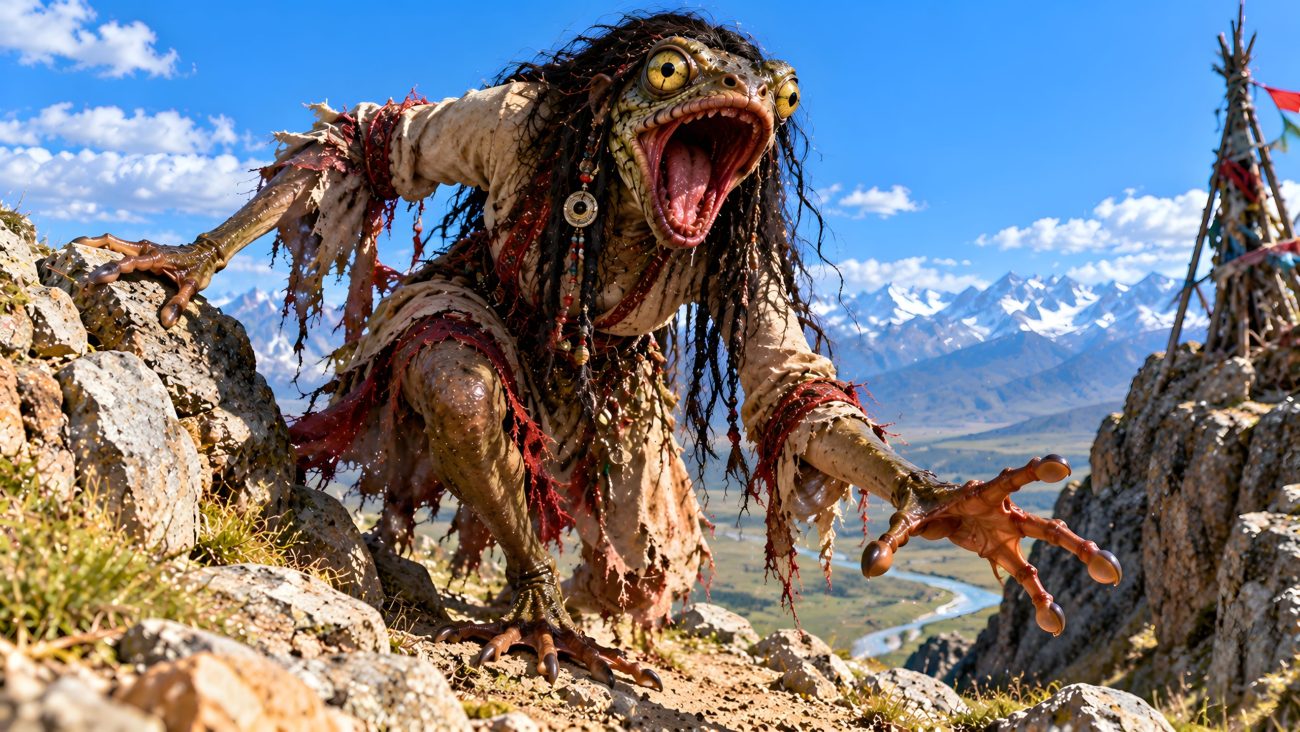
Shulmusy are evil spirits of the underworld who enter the world of the living to spread harm and misfortune. They serve Erlik, the ruler of the underworld, and act as his messengers, bringing illness, stealing human souls, and carrying them down into the realm of the dead. They are often described as appearing in the form of a black whirlwind, resembling their dark master in both appearance and destructive nature.

Despite their terrifying nature, Shulmusy can also take the form of beautiful young women. In this guise, they deceive unsuspecting people and lure travellers into danger. Among the Kalmyks, these spirits may possess strange animal features, such as goat legs, a beard, a camel’s tail in place of a braid, or even the head of a frog. They can disguise themselves as attractive girls who offer travellers poisoned drinks, concealing their deadly intentions beneath a pleasing appearance.

Shulmusy gather in groups known as turgak, meeting at crossroads, mountain passes, and near gorges. These gatherings make such places dangerous to pass through, as the spirits may ambush travellers, spread sickness, or steal their souls. People therefore regard these locations with fear and caution, especially when crossing them near the spirits’ gathering places.


Sources

“Шулмусы (Shulmusy).” New Bestiary (Bestiary.us). https://www.bestiary.us/shulmusy


Avrag Mogoy

Tradition: Mongolian mythology
Alternative Names: Avraga Mogoi, Avraga-Mogoi, Abragha Mogoy, Aburhu Mogoy
Category: Dragon


The Myth

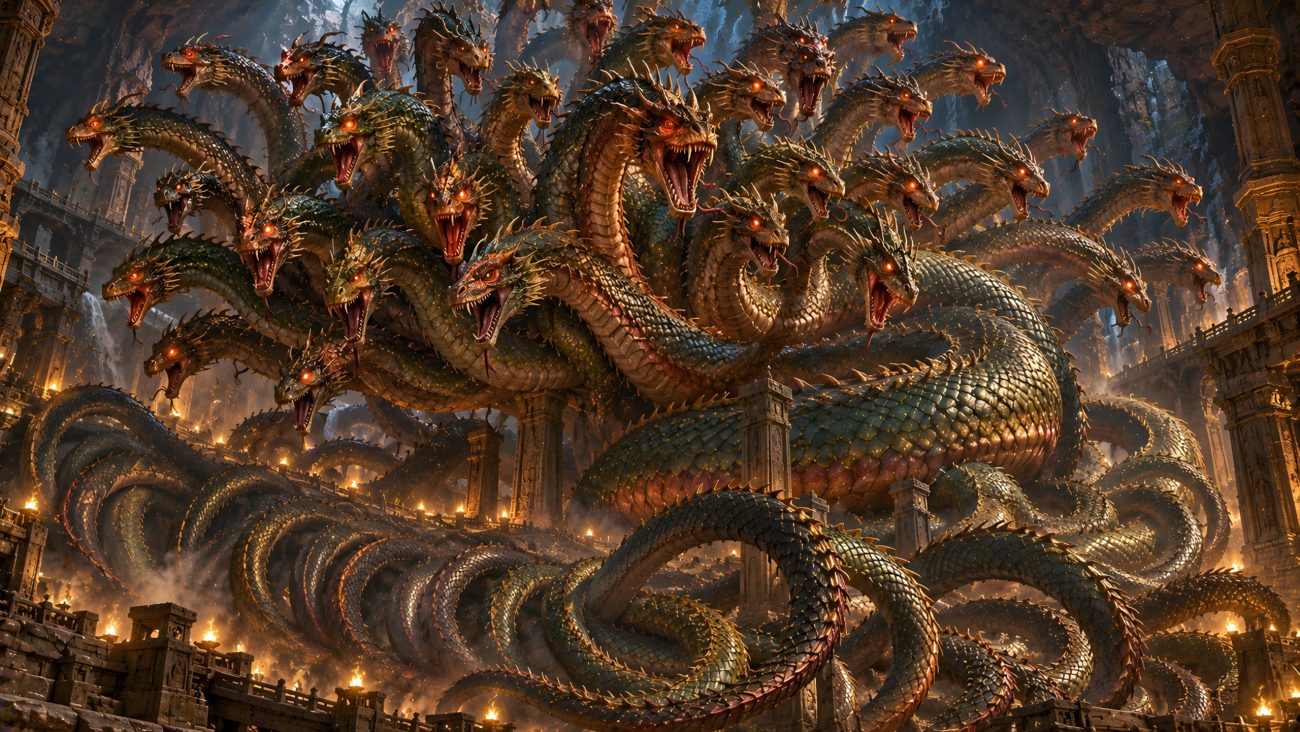
Avrag Mogoy is a gigantic dragon-snake with twenty-seven heads and thirty-three tails. In Mongolian legend, the monstrous serpent is imprisoned within an underground fortress, where it remains a terrifying and powerful creature.

Deep beneath the earth, Avrag Mogoy furiously battles the garuda, the great mythological bird. The struggle between the enormous serpent and the bird is fierce, with the garuda seeking to destroy Avrag Mogoy and the dragon-snake fighting to survive.

The conflict is driven by the garuda’s desire to kill Avrag Mogoy’s chicks. The gigantic serpent therefore becomes locked in a desperate struggle with the great bird beneath the earth, its many heads and countless tails making it an enormous and formidable opponent.


Sources

“Аврага могой (Avraga Mogoj).” New Bestiary (Bestiary.us). Accessed October 3, 2026.
https://www.bestiary.us/avraga-mogoj/ru


Atai Ulaan’s Demon Spawn

Tradition: Buryat mythology, Mongolian mythology
Alternative Names: Demons of Atai Ulaan, Evil Spirits of Atai Ulaan
Category: Demon


The Myth

The demons and monsters of Atai Ulaan were supernatural beings that arose from the severed pieces of the body of Atai Ulaan Tenger after he was defeated and dismembered. Han Hormasta Tenger cut Atai Ulaan’s body into seven pieces and cast them down toward the earth.

As the pieces of his body lay scattered across the earth, they began to decay and rot. Their corruption spread through the world: their effluvia became poisonous mists rising toward heaven, while on earth they spread disease. From the ruined pieces of Atai Ulaan’s body, demons and monsters developed.

These beings became sources of suffering for humans and animals. The land was afflicted by death and disease, while people and animals suffered from hunger, thirst, anthrax, plague, and other calamities. The demons born from Atai Ulaan’s remains joined together in hostility and made war upon the living world.

The head of Atai Ulaan became the particularly powerful demon Arhan Hara Shutger, but the other fragments of his body also produced evil beings. The demons born from these remains became part of the continuing conflict between the eastern and western tenger and were among the supernatural enemies that the hero Abai Geser was destined to fight.

In the mythology, the destruction of Atai Ulaan therefore did not completely end his threat. His shattered body itself became a source of new demons, transforming the remains of the defeated tenger into supernatural forces of disease, destruction, and suffering.


Sources

“Geser—Halaa 3: The Third Branch — Arhan Hara Shutger.” Buryat-Mongol.com. Archived by the Internet Archive Wayback Machine, June 29, 2007.
https://web.archive.org/web/20070629041744/http://www.buryatmongol.com/halaa3.html


Black Demon

Tradition: Buryat mythology, Mongolian mythology
Alternative Names: Black Demons
Category: Demon


The Myth

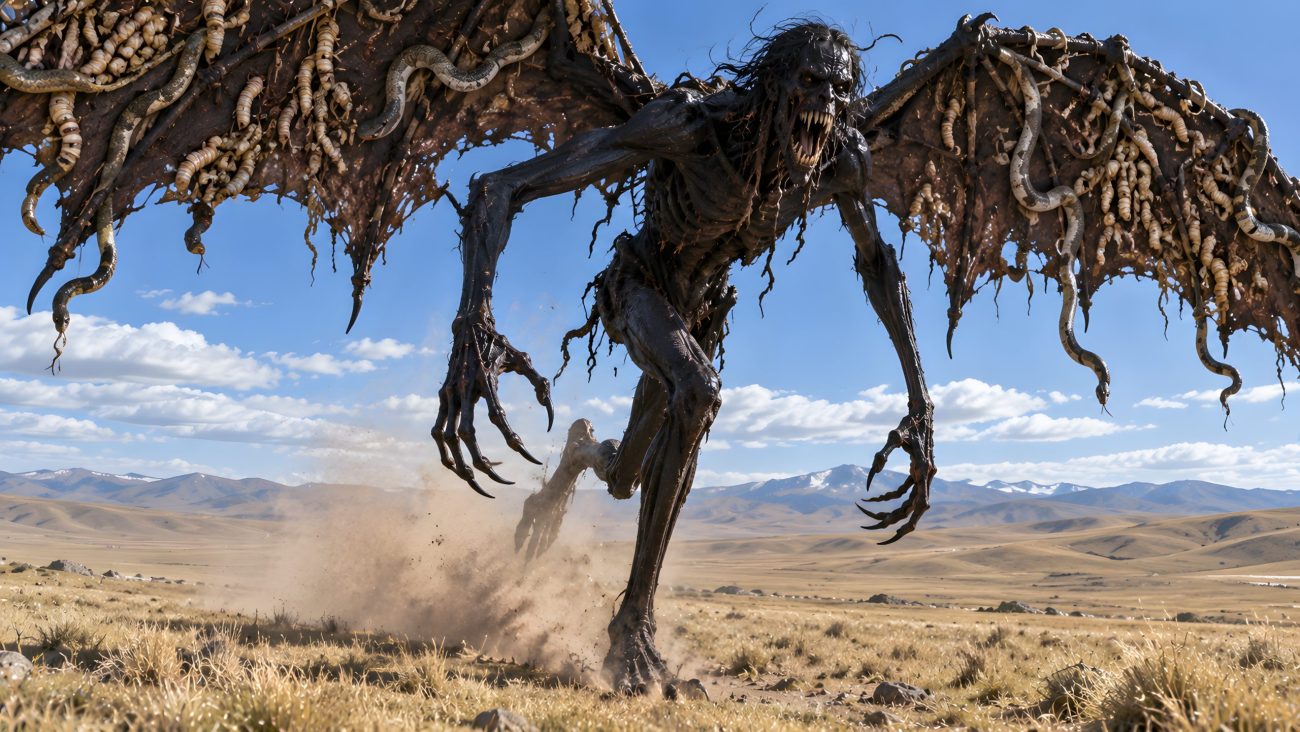
The Black Demons are a group of evil spirits appearing among the supernatural forces that bring destruction and suffering to the human world. Their exact appearance is not described in the source.

Nine hundred evil spirits and ninety Black Demons came to the land of the three Tugshen khans. They laid waste to the country and brought calamity and suffering upon its people. The fortune of the people was thrown into disorder. Rivers were polluted at their sources, plants were corrupted at their roots, and the rich, fertile land began to wither and die. What had once been beautiful and pure became filled with maggots, snakes, and worms.

The people and animals feared that they would all eventually be destroyed. They went to the shamaness Sharnaihan Shara, whose skin was tanned like cooked meat and who was famous for never being defeated. Pressured by the people and animals gathered around her, she took up a broken ladle and began shamanizing.

She called upon the fifty tenger of the western skies, the many gods and protector spirits, and her grandmother Manzan Gurme. She told them of the nine hundred evil spirits and ninety Black Demons who had brought disaster upon the three Tugshen khans and destroyed the prosperity of their land.

Then Sharnaihan Shara threw her ladle toward heaven, sending it upward to the table of her grandmother Manzan Gurme.

The nine hundred evil spirits and ninety Black Demons then declared that they would gather together beneath the full moon, carrying with them their jealousy and hatred. As they spread across the land, the people and animals were devastated. Herds of cattle and horses disappeared like melting ice and snow, while the demons traveled along rivers, gathered at creeks, met upon mountains, and moved along the roads, roaring and thundering.

Manzan Gurme saw the destruction and discovered its cause. The neck of Atai Ulaan Tenger had fallen to the earth and become the immensely powerful Gal Nurma Khan. He had prepared and sent the nine hundred evil spirits and ninety Black Demons to bring calamity to the three Tugshen khans and their homeland.

Manzan Gurme became enraged. She tore apart her black silk scarf and her decorated silk scarf and took up her enormous felt beating stick. She then went to the home of Etseg Malaan Tenger.

When she arrived, Etseg Malaan and Ehe Yuuren welcomed her and offered her a place of honor and a drink. After they had drunk together, Manzan Gurme told them about the suffering of the people. She described how the lonely and orphaned people were dying by day and night, being twisted and stretched, cut down like hay, and broken like reeds. Those who traveled were eaten on the roads, while those who remained at home were swallowed in their own houses.

She demanded to know who was responsible and who would correct the disaster. She declared that it was the responsibility of Etseg Malaan to correct it.

After she left, Etseg Malaan told Ehe Yuuren that the greatest offender was Han Hormasta Tenger. He declared that Han Hormasta himself must descend to the earth and correct the wrong.

White messengers were then sent in every direction to summon the tenger and gods. They carried the message that the gods should gather and make a wise decision among the stars and a beautiful decision beneath the moon.

The fifty-five tenger of the western heavens gathered in the stars and on the moon. Even the aged Father Etseg Malaan Tenger, who had not attended their meetings for many years, came to this gathering.

The gods discussed who would descend to earth to fight the nine hundred evil spirits and ninety Black Demons. None wanted to go. They feared that once they descended to the earth, they would become polluted and mortal and would never be able to return to heaven.

Etseg Malaan became furious. He declared that Han Hormasta Tenger was the greatest offender and therefore had to descend to earth himself and correct what he had done.

The other gods agreed. They condemned Han Hormasta and demanded that the one who had committed the wrong should correct it himself. Han Hormasta tried repeatedly to speak, but the arguing god princes prevented him from being heard.

Then the red middle son of Han Hormasta Tenger, Bukhe Beligte Baatar, felt pity for his father. He declared that someone had to descend to earth and that, if his elder and younger brothers were unwilling to leave the peaceful high heavens, he would go himself.

The assemblies of the stars and moon accepted his decision as right and fitting. Han Hormasta was relieved to hear his son’s words.

He then summoned his eldest son, Zasa Mergen Baatar, who lived in the high heavens, possessed the power of the tornado, and rode a brown hawk-colored horse. He ordered him to come before the assembly.


Sources

“Geser—Halaa 1 (Part 2): The War among the Tenger.” Buryat-Mongol.com. Translated/compiled online; archived by the Internet Archive Wayback Machine, June 13, 2007.
https://web.archive.org/web/20070613194519/http://www.buryatmongol.com/halaa1a.html
Giant Raven

Tradition / Region: Buryat Mythology, Mongolian Mythology, Russian Mythology
Alternative names: Giant Black Ravens
Category: Bird


The Myth

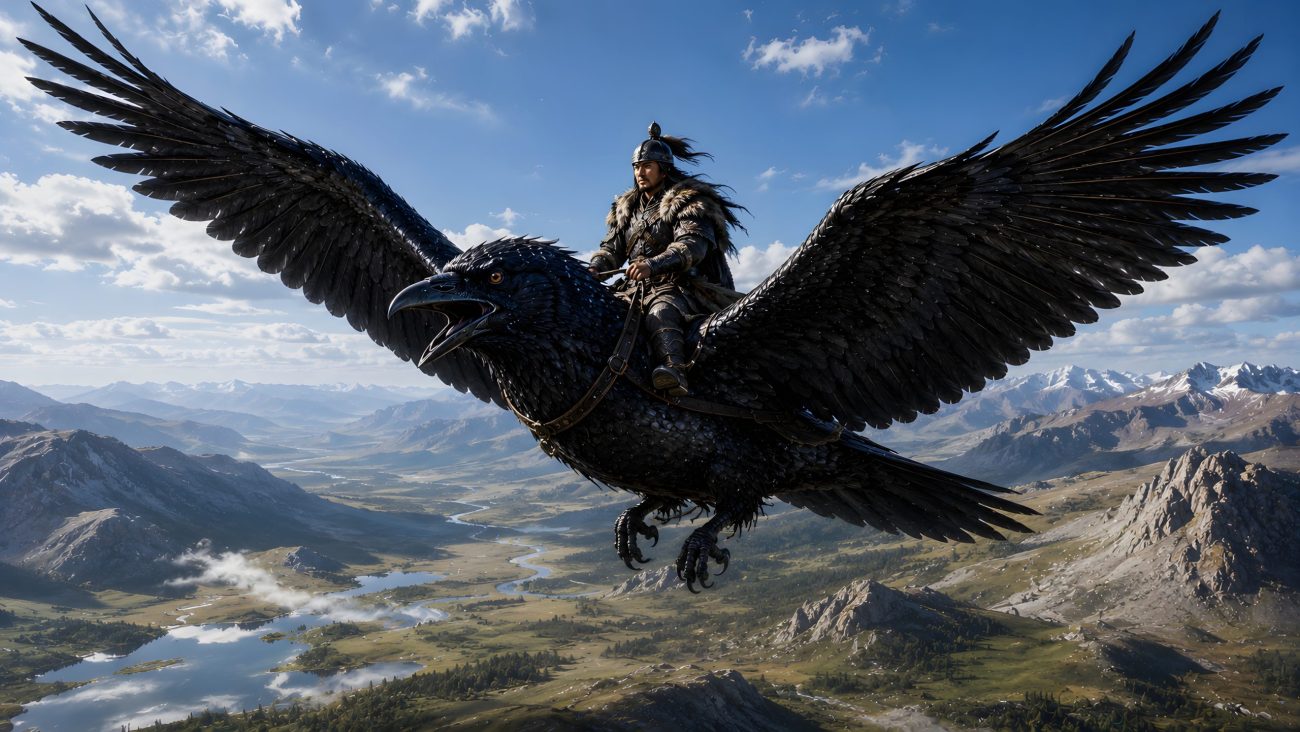
In the Epic of Geser, the Giant Ravens dwell in a dark valley within the kingdom of the mangadhai, the land of evil spirits. The valley is filled with enormous black ravens that lie sleeping until travelers approach, whereupon they rise into the air, circling overhead with harsh caws and croaks. The surrounding cliffs are so steep that even an eagle cannot fly over them, leaving no escape.

As Tumen Jargalan, the wife of Abai Geser, attempts to cross the valley, the ravens gather around her and she finds herself trapped. At that moment, a mysterious naked little red boy appears, riding a white raven while leading a black raven. After hearing where she is going, he tells her she has arrived at the proper time, seats her upon the raven he leads, and flies her safely across the valley of the giant ravens.


Sources

Jamba, T. (Trans.). (n.d.). The Battle with Abarga Sesen Mangadhai (The Seventh Branch). BuryatMongol.com. Retrieved June 29, 2026, from https://web.archive.org/web/20070613200651/http://www.buryatmongol.com/halaa7.html


Giant Magpie

Tradition / Region: Buryat Mythology, Mongolian Mythology, Russian Mythology
Alternative names: Giant Magpies
Category: Bird


The Myth

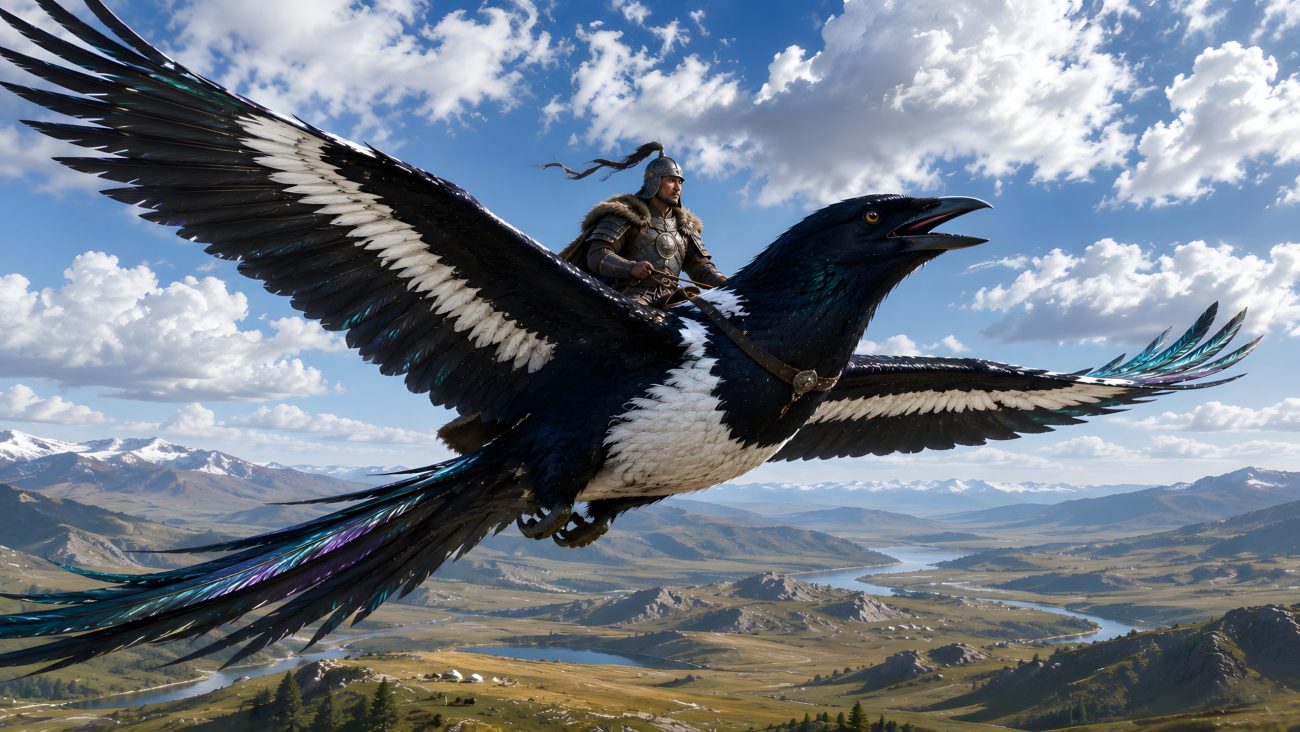
In the Epic of Geser, the Giant Magpies inhabit a terrible valley within the land of the mangadhai, the realm of evil spirits. Each magpie is described as having a body as large as a cow, and they lie sleeping across the valley, blocking all passage. Anyone attempting to cross risks being devoured, while the surrounding cliffs are so high that even an eagle cannot fly over them.

After abandoning her husband, the hero Abai Geser, Tumen Jargalan enters the valley and finds herself trapped among the monstrous birds. As the giant magpies stir and threaten to eat her, a mysterious naked little red boy appears, riding a spotted magpie and leading another. Hearing her purpose, he declares that she has arrived at the proper time, places her upon the magpie he leads, and safely carries her over the valley of the enormous birds.


Sources

Jamba, T. (Trans.). (n.d.). The Battle with Abarga Sesen Mangadhai (The Seventh Branch). BuryatMongol.com. Retrieved June 29, 2026, from https://web.archive.org/web/20070613200651/http://www.buryatmongol.com/halaa7.html