Ongoli Bird

Tradition / Region: Mongolian Mythology, Russian Mythology
Alternative names: Ongoli Bird
Category: Bird


The Myth

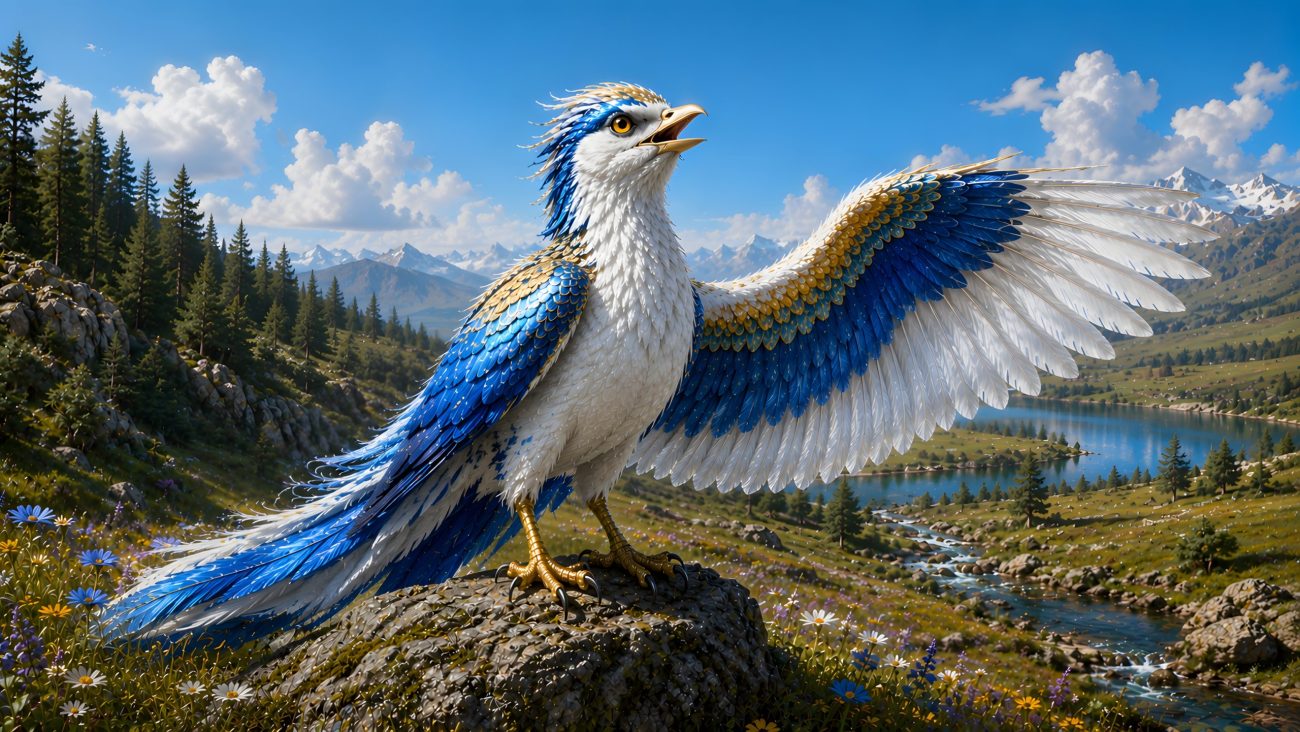
After the hero Abai Geser defeated the mangadhai Abarga Sesen, his wife Tumen Jargalan bewitched him with enchanted food out of jealousy, causing him to lose his memory and remain in the land of the demons as a simple herdsman. Unable to find their missing brother, Geser’s three sisters searched the world until they discovered him tending the demon’s cattle. To rescue him, they transformed themselves into three ongoli birds and flew into the kingdom of the mangadhai.

The three ongoli birds circled around Geser, beating him gently with their wings before disappearing. They then resumed their true forms as his sisters and struck him on each cheek, forcing him to vomit the black substance that had clouded his mind. His memory and strength immediately returned, and the sisters once again transformed into ongoli birds before flying back into the sky. Restored to himself, Abai Geser departed the land of the demons with Tumen Jargalan and continued his journey home.


Sources

Jamba, T. (Trans.). (n.d.). The Battle with Abarga Sesen Mangadhai (Seventh Branch). BuryatMongol.com. Retrieved June 29, 2026, from https://web.archive.org/web/20070613200651/http://www.buryatmongol.com/halaa7.html
Iron Raven

Tradition / Region: Mongolian Mythology, Russian Mythology
Alternative names: Iron-Beaked Raven
Category: Bird


The Myth

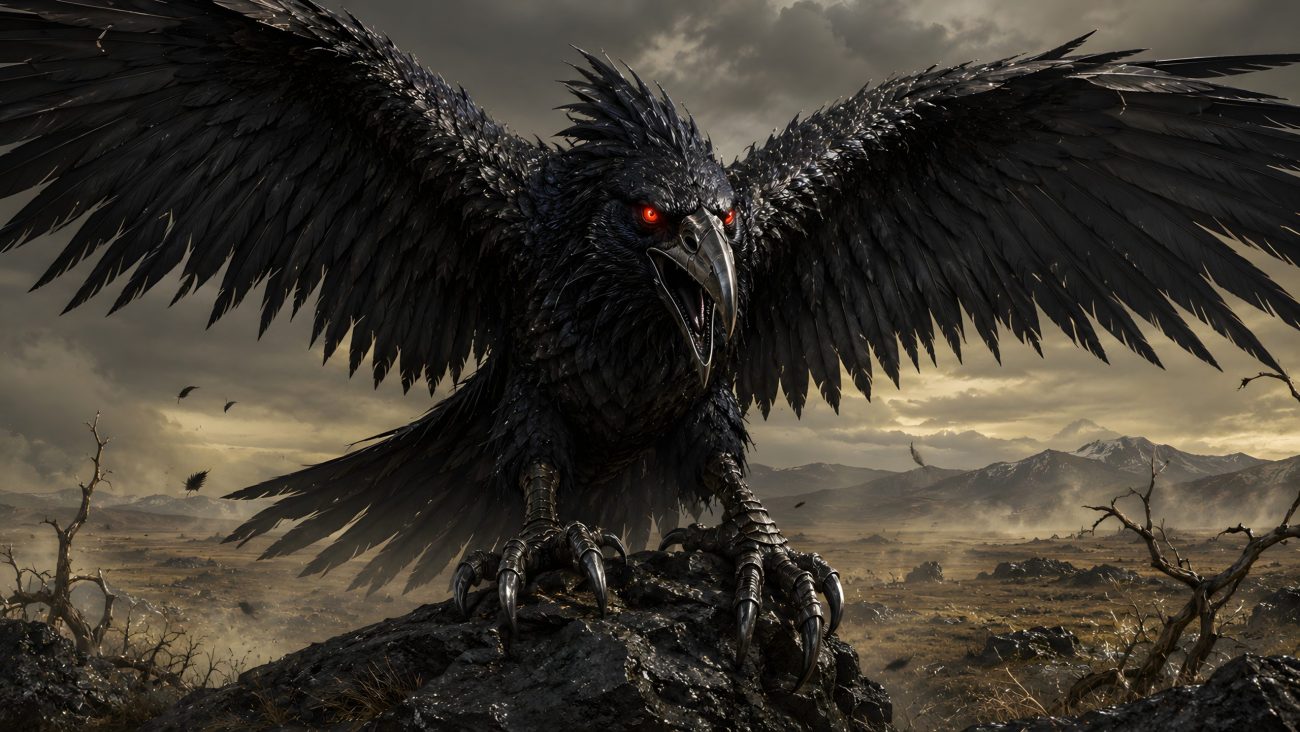
In the Buryat epic of Geser, the forces of evil sought to destroy the infant hero Bukhe Beligte before he could grow to challenge them. After monstrous rats failed in their attempt, the nine hundred evil spirits and ninety black demons created two black ravens and sent them to the child’s cradle. Their purpose was to peck out the infant’s eyes and kill him. Unlike ordinary birds, these ravens possessed beaks and talons made of iron.

As the ravens hovered over him, Bukhe Beligte seized them by their wings and demanded to know what kind of devils they were, flying through the world with iron beaks and claws. He tore away their iron beaks and replaced them with horn beaks, then broke off their iron talons and gave them horn claws instead. Declaring that all ravens would bear horn beaks and claws from that day onward, he released them to live upon the steppe. The infant hero then proclaimed that, though only two days old, he had already defeated his second enemy.


Sources

Jamba, T. (Trans.). (n.d.). The Geser Epic: Second Branch. BuryatMongol.com. Retrieved June 29, 2026, from https://web.archive.org/web/20070628230811/http://www.buryatmongol.com/halaa2.html


Abarga Zagakhan

Tradition / Region: Mongolian Mythology, Buryat Mythology, Russian Mythology
Alternate Names:
Category: Fish


The Myth

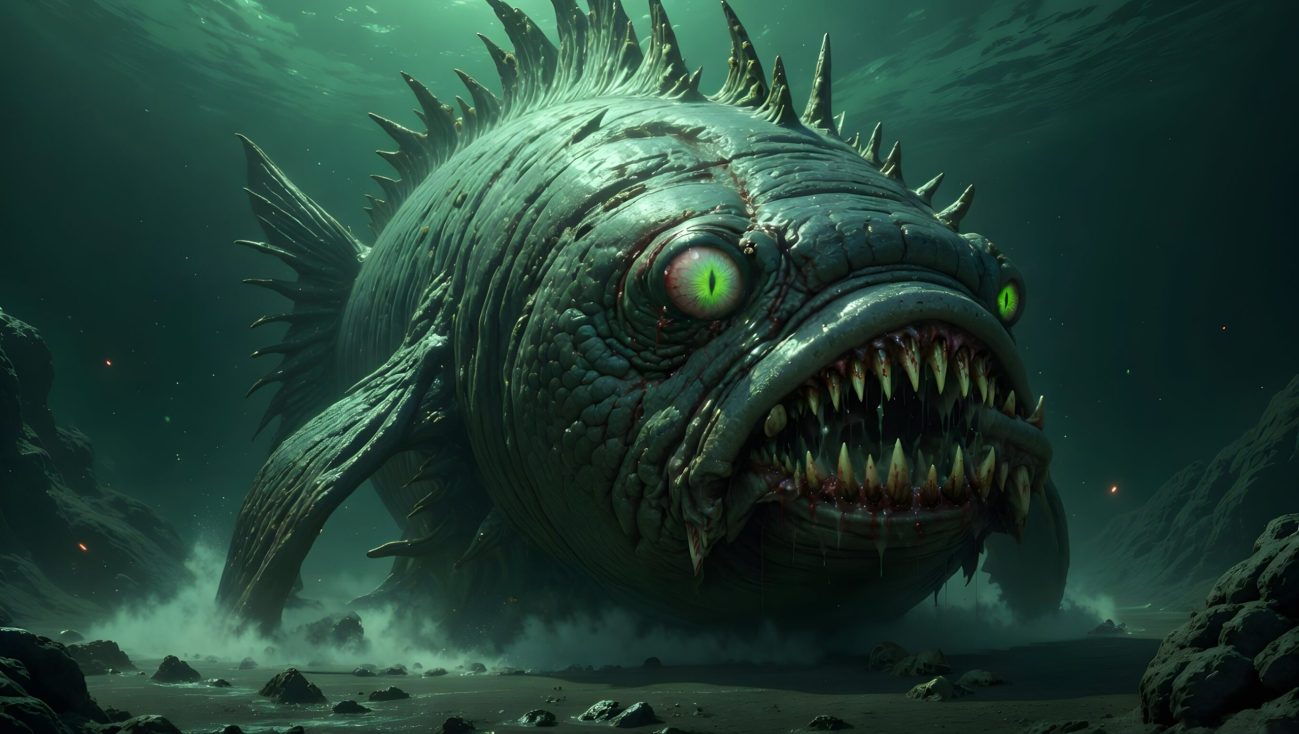
In the deepest waters of the world lives Abarga Zagakhan, the first of all fish and their eternal king. Vast beyond measure, it is said to dwell at the bottom of Lake Baikal, where no light reaches and no human can follow.

Abarga Zagakhan is shaped like a colossal burbot, yet its size surpasses all creatures of water. Thirteen great fins spread from its body, and its mouth is so immense that it can swallow not only people, but entire herds of animals in a single gulp. Even the fearsome Mangatkhai monsters, terrors in their own right, were devoured by Abarga Zagakhan when they strayed too close to its domain.

From this ancient fish all other fish are said to descend. It rules them silently from the depths, unseen but ever-present, a living force beneath the waters. When currents shift or the lake grows restless, some say it is Abarga Zagakhan turning in its sleep.

Thus the people speak of it with awe and fear, as the ancestor, devourer, and sovereign of all that swims.


Sources

Bestiary.us contributors. (n.d.). Abarga-Zagakhan. In Bestiary.us, from https://www.bestiary.us/abarga-zagakhan/