Three-Headed Eagle

Tradition / Region: Russian Mythology
Alternative names: Triple-Headed Eagle; Öksökö (Yakut and Dolgan)
Category: Bird


The Myth

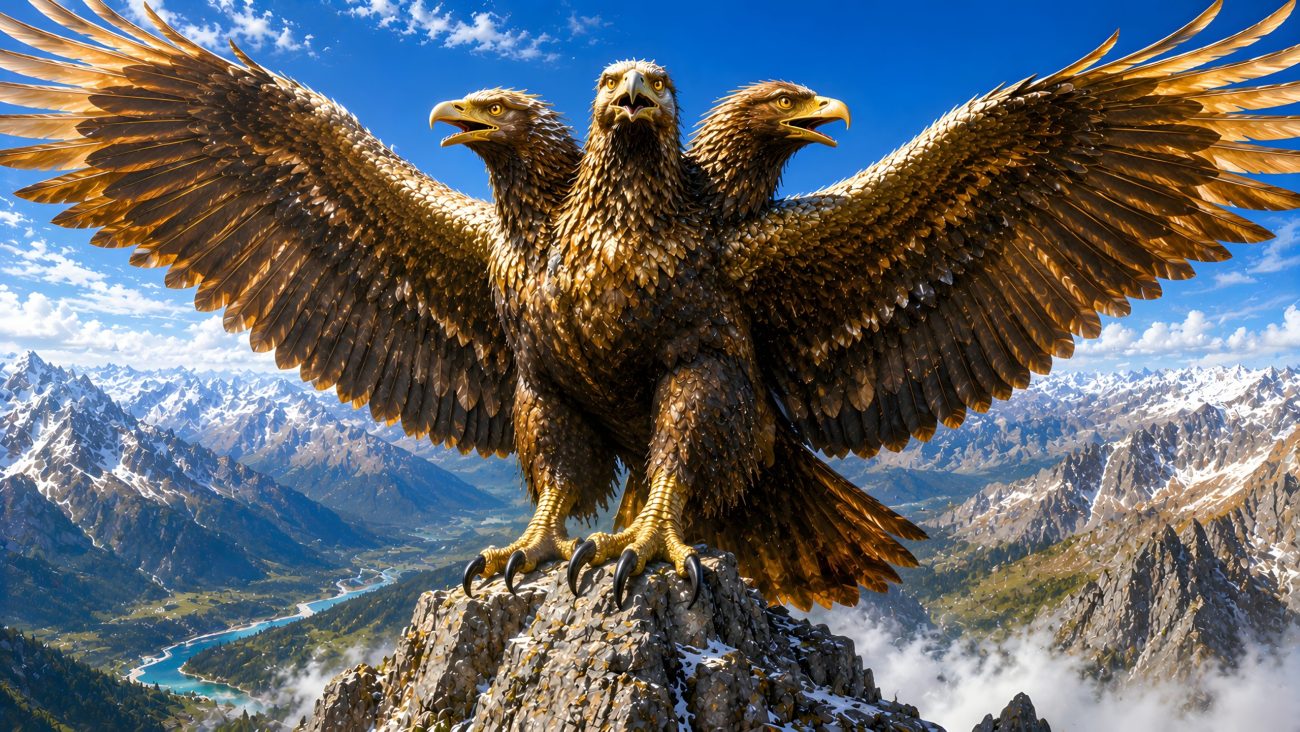
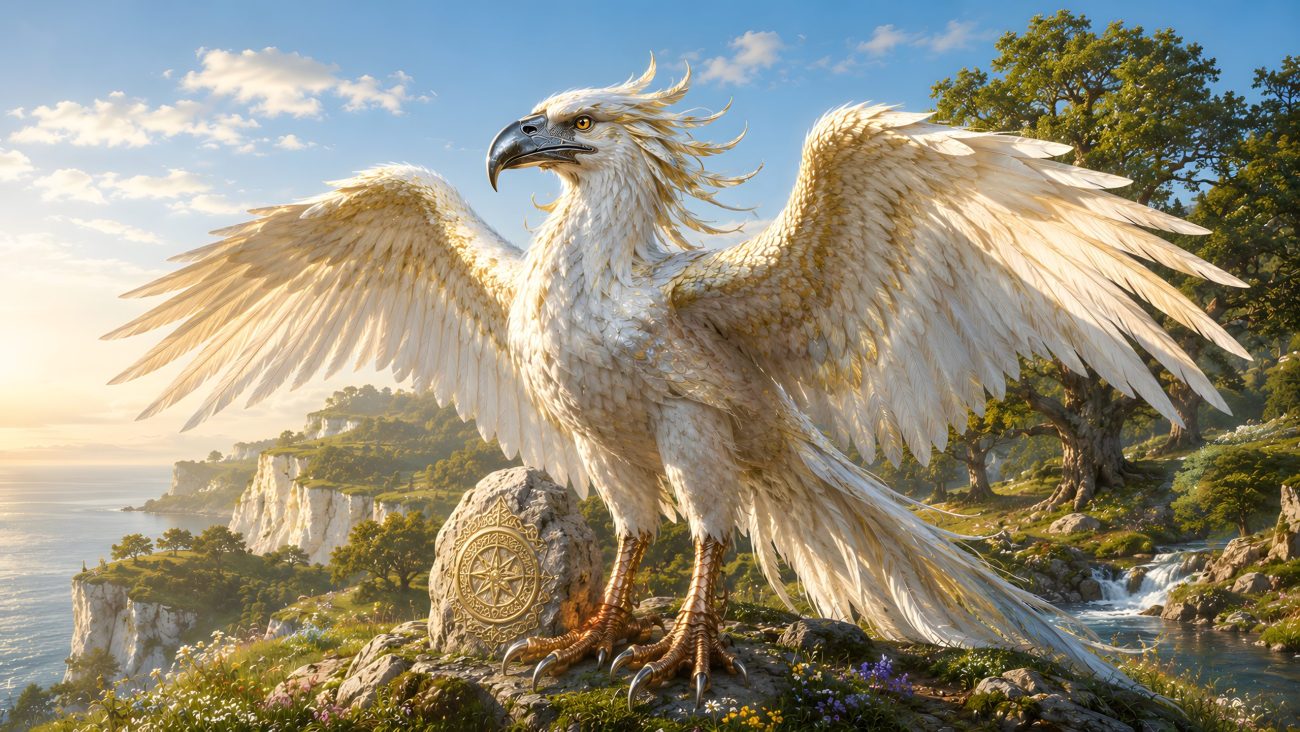
The Three-Headed Eagle is a legendary giant bird that appears in several Eurasian traditions. Unlike the more familiar two-headed eagle, this fearsome creature possesses three heads, making it an even more formidable supernatural being. In Yakut and Dolgan folklore, it is known as Öksökö, which may have either two or three heads depending on the tale.

In a Chechen fairy tale, the Three-Headed Eagle appears as a monstrous adversary that terrorizes the land until it is confronted by a heroic warrior. After a fierce struggle, the hero slays the giant bird, overcoming one of the greatest dangers of the story and restoring peace.

Although the Three-Headed Eagle later appeared in heraldry and religious literature, its mythological role is that of an immense supernatural eagle whose multiple heads emphasize its extraordinary power and make it a worthy opponent for legendary heroes.


Sources

Wikipedia contributors. (n.d.). Triple-headed eagle. In Wikipedia. Retrieved June 29, 2026, from https://en.wikipedia.org/wiki/Triple-headed_eagle
Sirin

Tradition / Region: Russian Mythology
Alternative names: Sirin
Category: Bird


The Myth

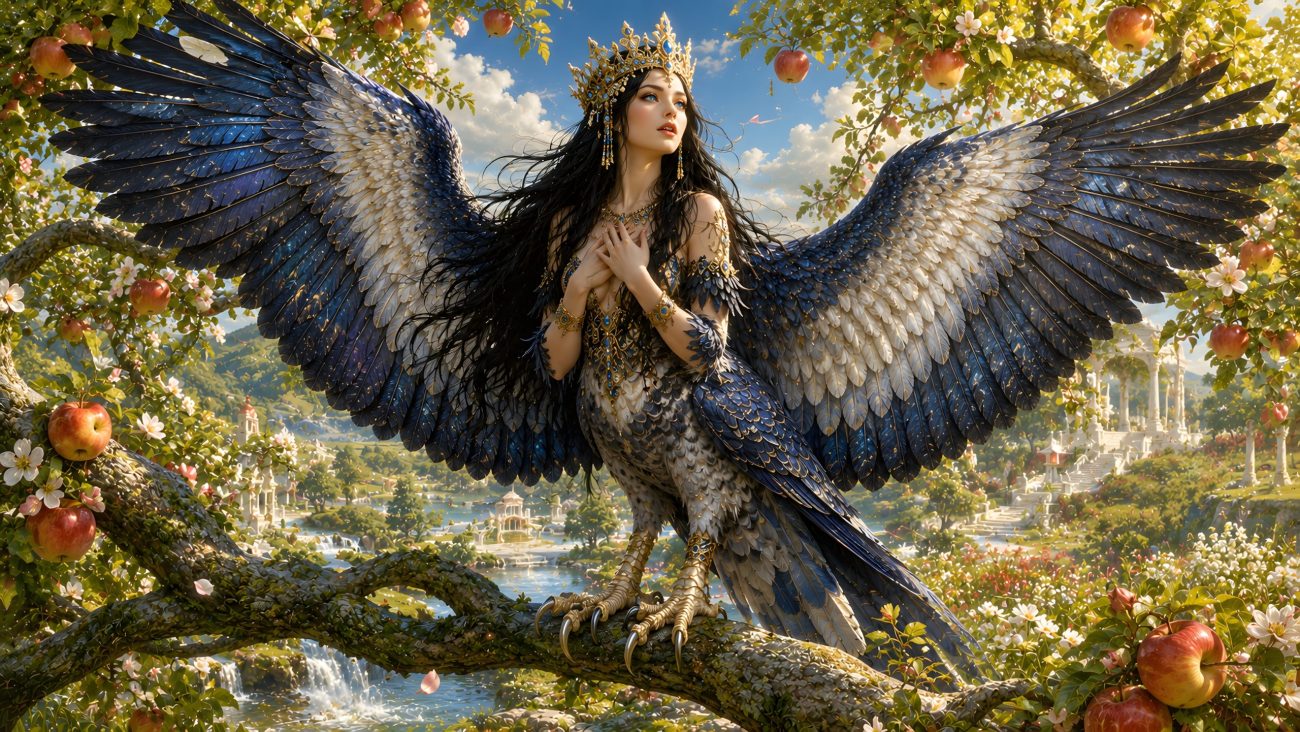
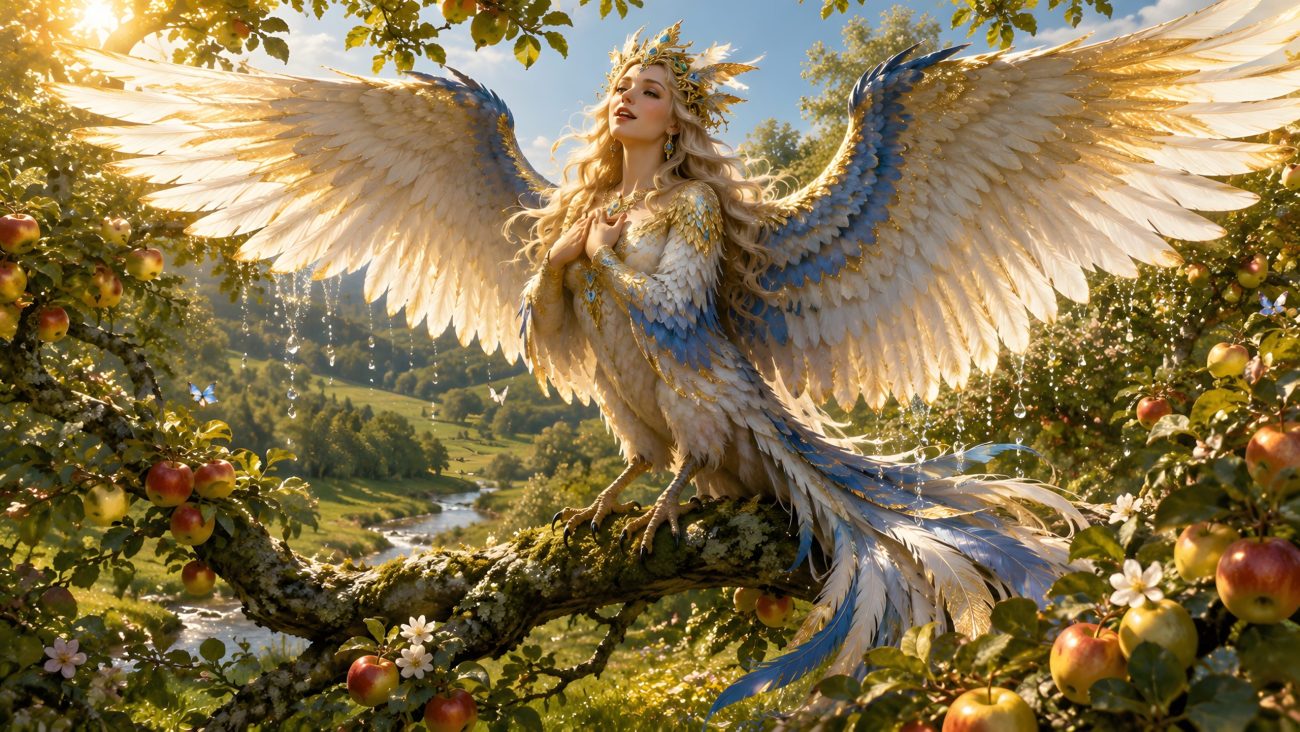
The Sirin is a legendary creature with the head of a beautiful woman and the body of a bird, usually an owl. She is said to dwell in Iriy, the paradise of Slavic tradition, or near the Euphrates River. Often depicted wearing a crown or halo, she is a mysterious being whose enchanting voice is both a blessing and a deadly temptation.

The Sirin’s song is so beautiful that anyone who hears it forgets the ordinary world and longs only to follow her. Those who succumb to her melody wander after the bird until they perish. To protect themselves, people were said to ring church bells, fire cannons, or make other loud noises to frighten the Sirin away before her song could claim another victim.

According to East Slavic tradition, on the morning of the Apple Feast of the Saviour, the Sirin visits an apple orchard and weeps in sorrow. Later that day, her counterpart, the Alkonost, arrives laughing with joy. As the Alkonost brushes the dew from her wings onto the fruit, the apples gain miraculous healing powers, completing the balance between sorrow and happiness represented by the two mythical birds.


Sources

Wikipedia contributors. (n.d.). Sirin. In Wikipedia. Retrieved June 29, 2026, from https://en.wikipedia.org/wiki/Sirin


Gagana

Tradition / Region: Russian Mythology
Alternative names: Gagana
Category: Bird


The Myth

The Gagana is a miraculous bird of Russian folklore, distinguished by her iron beak and copper claws. She dwells on the mythical Buyan Island, where she serves as one of the guardians of the sacred Alatyr Stone alongside the serpent Garafena. Because of her wisdom and supernatural nature, Gagana is frequently invoked in traditional Slavic incantations.

Gagana is said to possess the power to perform miracles and grant aid to those who know the proper words with which to ask for her help. She is also unique among all birds, for she alone can provide the mysterious “milk of the birds,” a miraculous substance known only in legend.

In Russian folklore, Gagana is regarded as one of the oldest and greatest of all birds. Her iron beak and copper claws symbolize her immense strength, while her role as guardian of the sacred island places her among the powerful supernatural beings that protect the hidden treasures and mysteries of the world.


Sources

Wikipedia contributors. (n.d.). Gagana. In Wikipedia. Retrieved June 29, 2026, from https://en.wikipedia.org/wiki/Gagana


Alkonost

Tradition / Region: Russian Mythology
Alternative names: Alkonost
Category: Bird


The Myth

The Alkonost is a legendary bird with the body of a bird and the head of a beautiful woman. She dwells in the underworld alongside her counterpart, the Sirin, and is regarded as the sister of other mythical birds such as Rarog and Stratim.

The Alkonost possesses a voice of extraordinary beauty. Anyone who hears her enchanting song forgets everything they once knew and desires nothing else but to continue listening. She also lays her eggs upon the shore before rolling them into the sea. When the eggs hatch, a mighty thunderstorm erupts, churning the sea into such violent waves that it becomes impossible to cross.

According to East Slavic tradition, on the morning of the Apple Feast of the Saviour, the Sirin visits the apple orchards and weeps in sorrow. Later that day, the Alkonost arrives laughing with joy. As she brushes the dew from her wings, the dew falls upon the fruit, granting the apples healing powers.


Sources

Wikipedia contributors. (n.d.). Alkonost. In Wikipedia. Retrieved June 29, 2026, from https://en.wikipedia.org/wiki/Alkonost


Ongoli Bird

Tradition / Region: Mongolian Mythology, Russian Mythology
Alternative names: Ongoli Bird
Category: Bird


The Myth

After the hero Abai Geser defeated the mangadhai Abarga Sesen, his wife Tumen Jargalan bewitched him with enchanted food out of jealousy, causing him to lose his memory and remain in the land of the demons as a simple herdsman. Unable to find their missing brother, Geser’s three sisters searched the world until they discovered him tending the demon’s cattle. To rescue him, they transformed themselves into three ongoli birds and flew into the kingdom of the mangadhai.

The three ongoli birds circled around Geser, beating him gently with their wings before disappearing. They then resumed their true forms as his sisters and struck him on each cheek, forcing him to vomit the black substance that had clouded his mind. His memory and strength immediately returned, and the sisters once again transformed into ongoli birds before flying back into the sky. Restored to himself, Abai Geser departed the land of the demons with Tumen Jargalan and continued his journey home.


Sources

Jamba, T. (Trans.). (n.d.). The Battle with Abarga Sesen Mangadhai (Seventh Branch). BuryatMongol.com. Retrieved June 29, 2026, from https://web.archive.org/web/20070613200651/http://www.buryatmongol.com/halaa7.html


Iron Raven

Tradition / Region: Mongolian Mythology, Russian Mythology
Alternative names: Iron-Beaked Raven
Category: Bird


The Myth

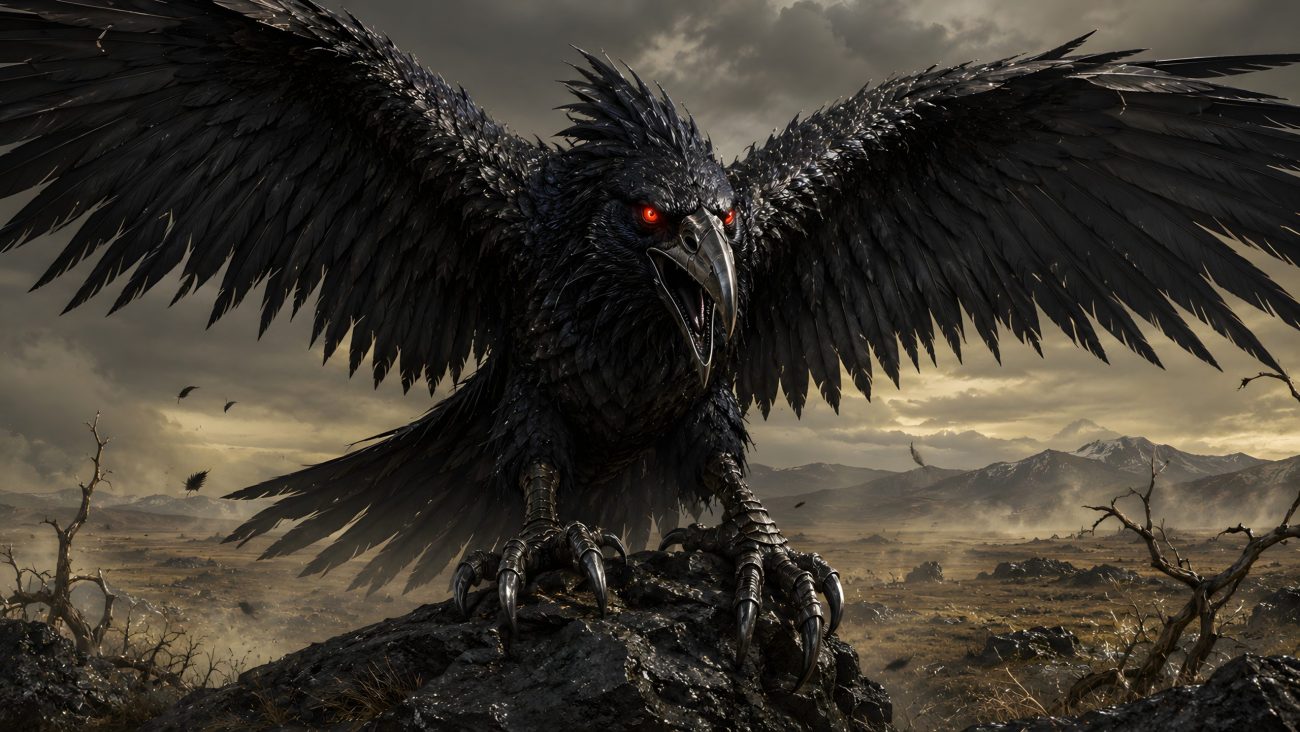
In the Buryat epic of Geser, the forces of evil sought to destroy the infant hero Bukhe Beligte before he could grow to challenge them. After monstrous rats failed in their attempt, the nine hundred evil spirits and ninety black demons created two black ravens and sent them to the child’s cradle. Their purpose was to peck out the infant’s eyes and kill him. Unlike ordinary birds, these ravens possessed beaks and talons made of iron.

As the ravens hovered over him, Bukhe Beligte seized them by their wings and demanded to know what kind of devils they were, flying through the world with iron beaks and claws. He tore away their iron beaks and replaced them with horn beaks, then broke off their iron talons and gave them horn claws instead. Declaring that all ravens would bear horn beaks and claws from that day onward, he released them to live upon the steppe. The infant hero then proclaimed that, though only two days old, he had already defeated his second enemy.


Sources

Jamba, T. (Trans.). (n.d.). The Geser Epic: Second Branch. BuryatMongol.com. Retrieved June 29, 2026, from https://web.archive.org/web/20070628230811/http://www.buryatmongol.com/halaa2.html


Aiy-toyon

Tradition / Region: Yakut Mythology, Russian Mythology
Alternative names: Ayy-toyon
Category: Bird


The Myth

Aiy-toyon is a mighty two-headed eagle that dwells in the ninth heaven according to Yakut belief. Revered as a sacred celestial being, it is regarded as the teacher of shamanism, having bestowed shamanic knowledge upon humanity.

Because of this divine role, the image of Aiy-toyon was traditionally displayed on the garments and drums of shamans, symbolizing its protection, wisdom, and connection between the human world and the highest heavens.

When asked why Aiy-toyon possessed two heads, the Yakuts simply replied that “he is too clever.”


Sources

Bestiary.us. (n.d.). Aiy-toion. In New Bestiary: Encyclopedia of Imaginary Beings. Retrieved June 29, 2026, from https://www.bestiary.us/aiy-toion