Chiyou

Tradition / Region: Chinese Mythology
Alternate Names:
Category: Cow, God


The Myth

In the ancient age before the rise of dynasties, when the tribes of the world still fought for dominion, there ruled a powerful leader named Chiyou, chief of the Nine Li.

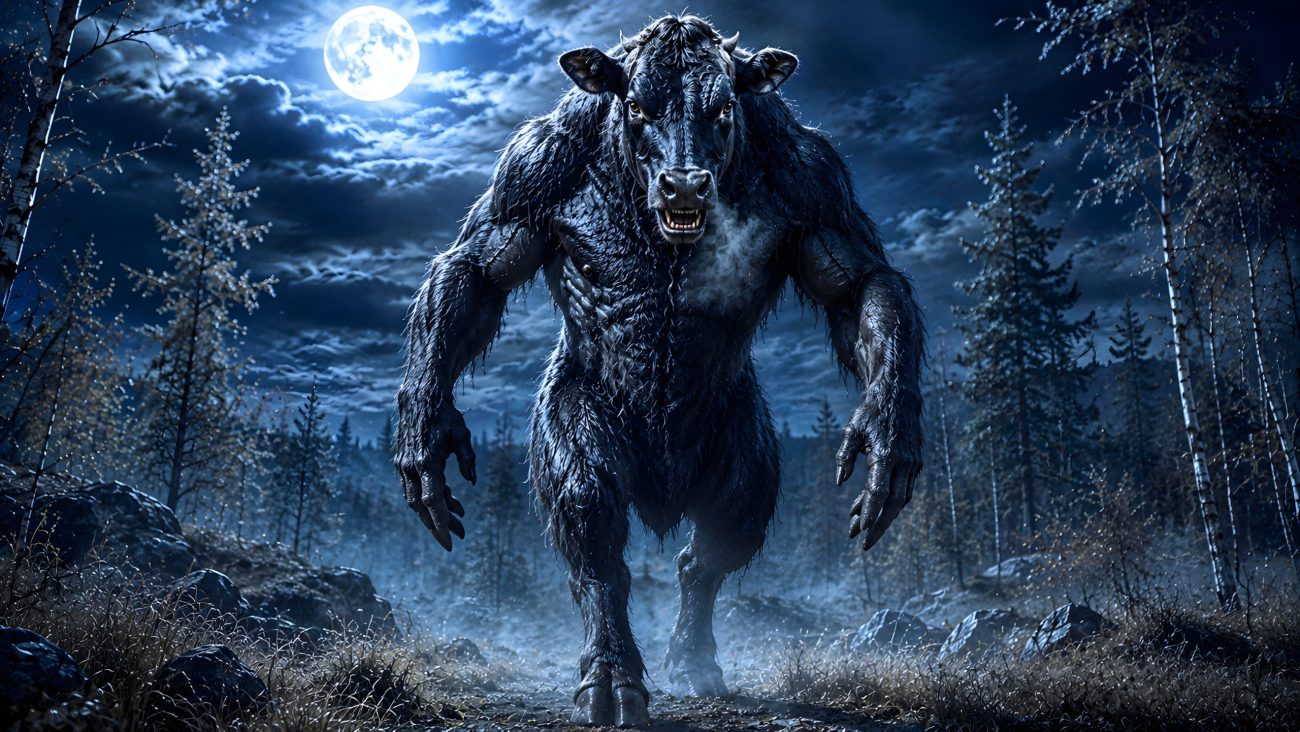
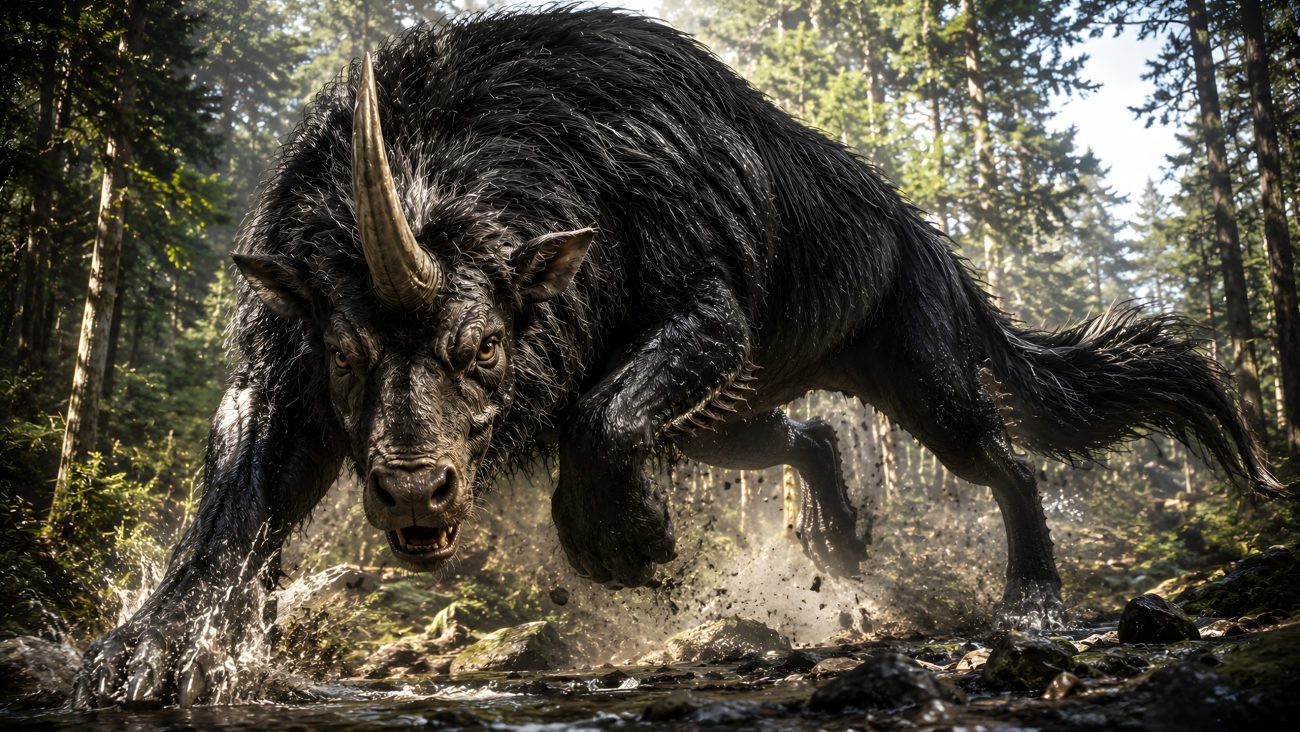
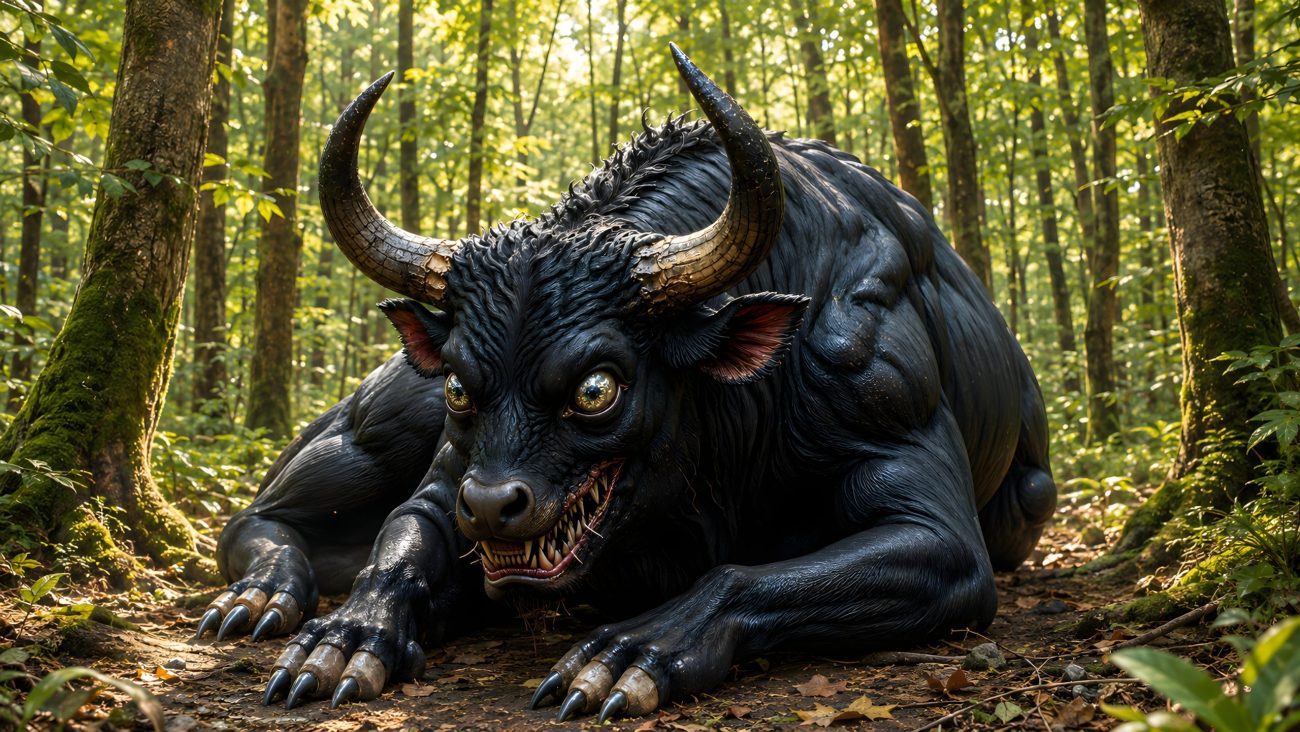
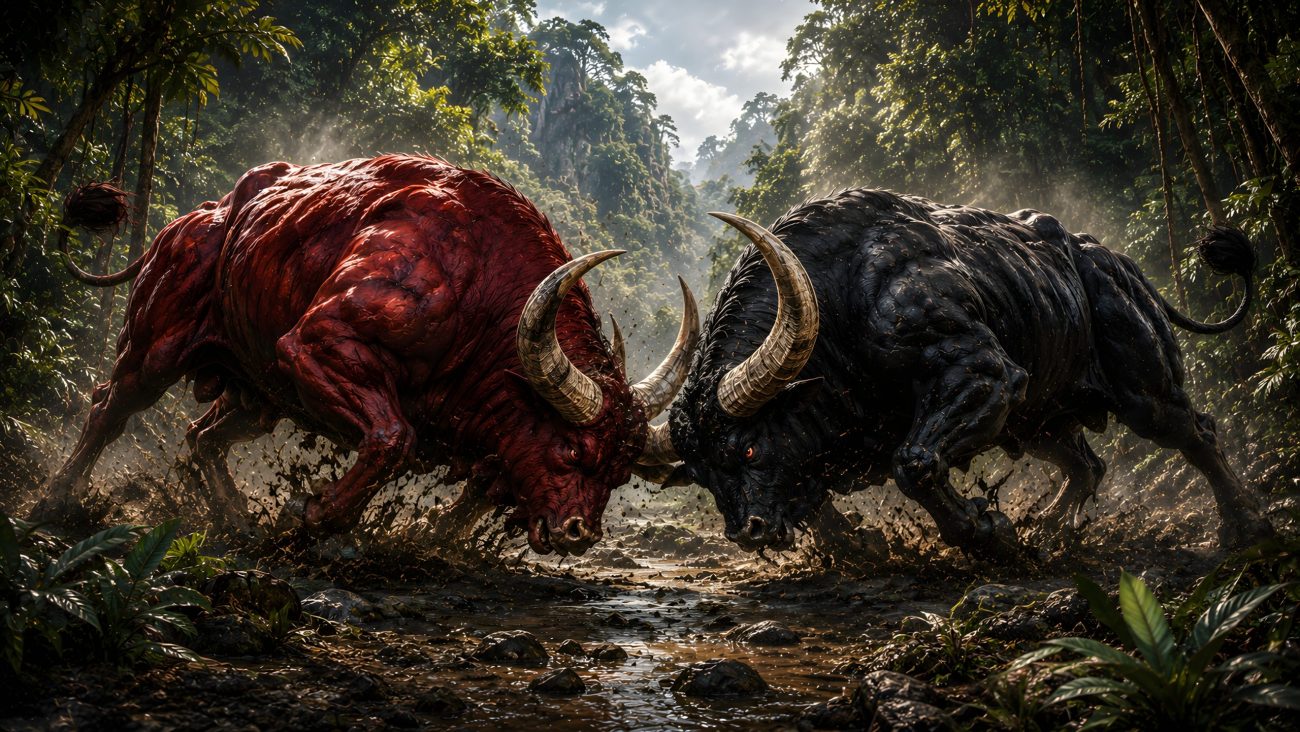
From birth he was unlike other men. His body was human, but his head was that of a bull, crowned with great horns. His brow was said to be as hard as bronze or iron, and his strength was immense. Some said his limbs were like those of a beast, and that he carried many weapons, wielding them with unstoppable force. Wherever he marched, it was as though a great animal thundered across the land.

Chiyou led his people into battle as a bull lowers its head before the charge. He possessed knowledge of ancient magic and commanded the powers of wind and storm. In war he called down rain and thick, blinding fog that swallowed entire armies.

At the great Battle of Zhuolu, he used this power against the Yellow Emperor. A vast mist covered the battlefield so that soldiers wandered helplessly, unable to find their way. Under this shroud Chiyou fought fiercely, supported by his many followers, whether counted as eighty-one brothers or eighty-one tribes bound to him.

Yet in the end the Yellow Emperor overcame him through skill and divine aid. Chiyou fell, and the power of his people was broken.

Though defeated, he was not forgotten. In later times warriors honored him as a spirit of battle, remembering the bull-headed lord whose strength shook the earth and whose fury in war was like that of a charging ox.


Gallery


Sources

Wikipedia contributors. (n.d.). Chiyou. In Wikipedia, The Free Encyclopedia, from https://en.wikipedia.org/wiki/Chiyou


Interpretive Lenses

Religious Readings
  • Christian Ascetic Deep Dive
Philosophical Readings
  • Nietzschean Deep Dive
Psychological Readings
  • Jungian Deep Dive
Esoteric Deep Dive
  • Hermetic Deep Dive
Political / Social Readings
  • Marxist Deep Dive

Chichevache

Tradition / Region: European Mythology, French Mythology
Alternate Names: The Lean Cow; Chichivache
Category: Cow


The Myth

There is said to wander the world a strange and miserable creature known as the Chichevache, the Lean Cow.

Its body is gaunt and skeletal, nothing but hide stretched over bone, and it roams in constant hunger. The reason for its suffering is the strange food upon which it must live. The Chichevache feeds only on wives who are perfectly obedient, patient, and faithful.

Because such women are rarely found, the creature is nearly always starving. Wherever it appears, people understand at once why it looks so thin: if there were many such wives in the world, the cow would grow fat and strong, but instead it wanders weak and wasted.

The Chichevache is said to have a counterpart, another strange beast known as the Bicorn, which feeds on good and long-suffering husbands. Unlike the Lean Cow, this creature is well fed, for such husbands are plentiful.

Thus the Chichevache continues to roam, a pitiful cow driven by hunger, and its thin body serves as a reminder to those who see it that the world offers it little to eat.


Sources

Brewer, E. Cobham. (1898). Dictionary of Phrase and Fable. p. 133.

Pantheon contributors. (n.d.). Chichevache. In Pantheon: Encyclopedia Mythica, from https://pantheon.org/articles/c/chichevache.html


Cheongwoo

Tradition / Region: Korean Mythology
Alternate Names: The Blue Cow; Blue Ox of Danyang
Category: Cow


The Myth

During the time of the Joseon Dynasty, in the mountainous lands near Danyang, people spoke of a strange and powerful ox that appeared among the hills.

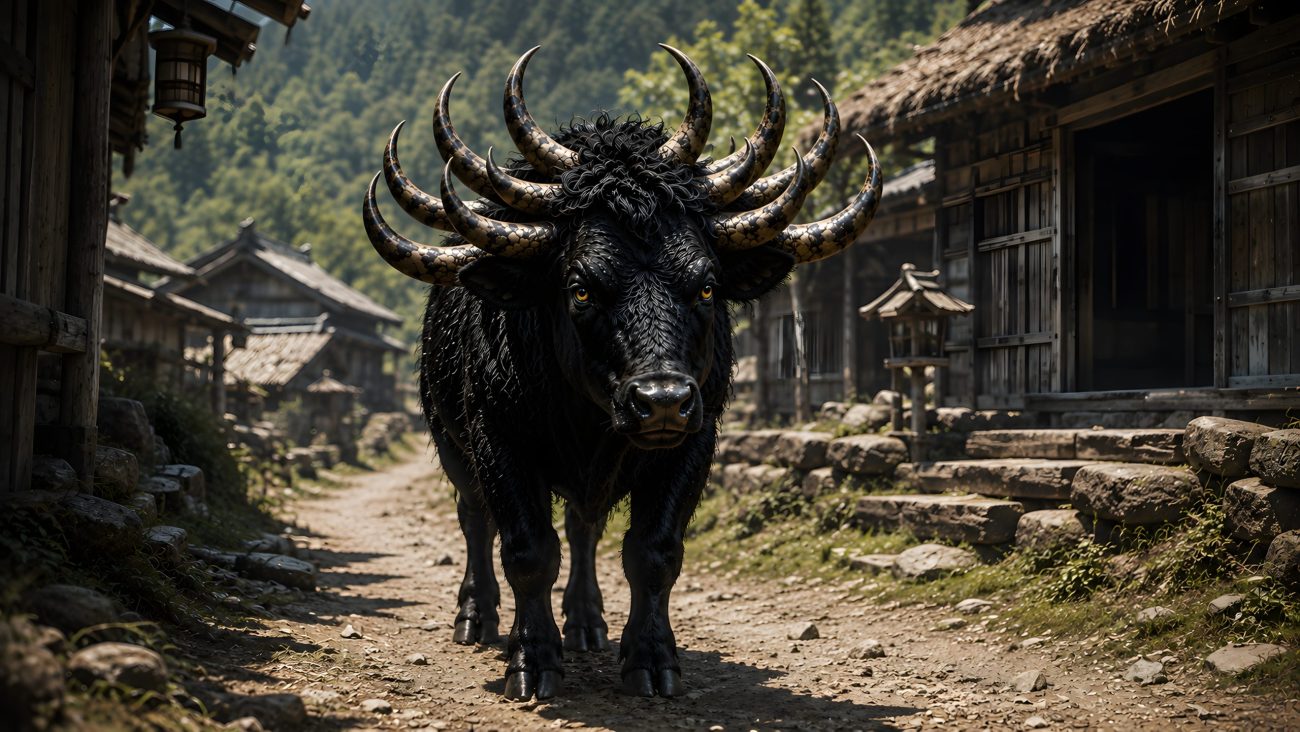
Its body was blue in color, and it stood larger than any ordinary ox. Its head was broad, and its horns spread wide apart, giving it a fearsome and imposing look. Because of its color, it became known as Cheongwoo, the Blue Cow.

Though it seemed wild and strong, the beast was not beyond human control. A man named Yi Ji-beon managed to tame it and made it serve him. Once mastered, Cheongwoo allowed itself to be ridden like a horse, carrying the man across the land.

The creature feared neither cold nor mountain. It moved easily through winter winds and climbed steep slopes without tiring, crossing rocky paths where no common animal could travel. Its strength, endurance, and strange nature made it a wonder among the people.

The tale of Cheongwoo was later written down so that the memory of the blue cow — the mountain beast that bore a man upon its back — would not be forgotten.


Gallery


Sources

Namuwiki contributors. (n.d.). 청우 (한국의 요괴). In Namuwiki. Retrieved from https://namu.wiki/w/%EC%B2%AD%EC%9A%B0(%ED%95%9C%EA%B5%AD%EC%9D%98%20%EC%9A%94%EA%B4%B4)


Interpretive Lenses

Religious Readings
  • Christian Ascetic Deep Dive
Philosophical Readings
  • Nietzschean Deep Dive
Psychological Readings
  • Jungian Deep Dive
Esoteric Deep Dive
  • Hermetic Deep Dive
Political / Social Readings
  • Marxist Deep Dive

Catoblepas

Tradition / Region: Greek Mythology
Alternate Names:
Category: Cow


The Myth

In ancient times, in the distant lands of Africa near the sources of great rivers and marshes, there lived a dreadful creature called the Catoblepas.

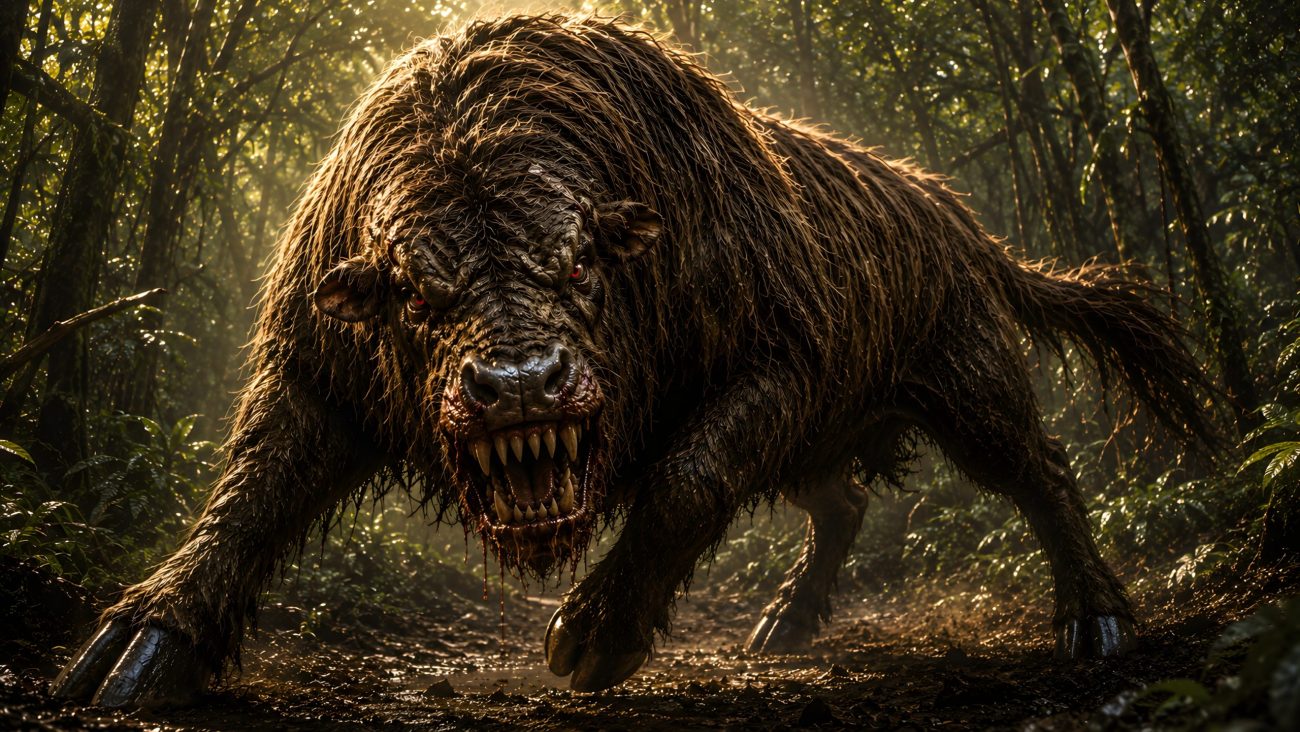
It was shaped somewhat like a bull, though more monstrous and misshapen. Its limbs were heavy, and its head was enormous, so large that it could scarcely lift it from the ground. Because of this weight, the beast always walked with its gaze turned downward. This was considered a mercy, for its eyes were said to bring instant death to any who met them.

Its face was grim and terrible. A mane like that of a horse hung over its head, and its eyes were small, red, and bloodshot. It fed only on poisonous plants that grew in the marshes, and the foulness of its food filled its breath with deadly vapor. When angered or disturbed, the creature released a noxious breath that poisoned the air itself, so that animals and men who inhaled it lost their strength, their voice, and their life.

Because of this, all creatures avoided the places where it dwelled, and even hunters feared to approach its marsh.

Stories were told of travelers and soldiers who unknowingly came near it. Some died from its gaze, others from its breath, until at last men armed with long spears managed to kill the monster from a distance. Its hide was said to have been taken as a trophy and placed in a temple dedicated to a mighty hero.

Yet the terror of the Catoblepas lived on in tales, for it was remembered as a beast so foul and dangerous that even its mere presence could bring death, a creature that kept its head forever bowed, as though the world itself could not bear its sight.


Sources

George of Pisidia. Hexaemeron, p. 29

Bestiary.us, Katoblepas. Retrieved May 28, 2025, from https://www.bestiary.us/katoblepas

Pliny the Elder. Natural Histories, Book VIII, Chapter 32, p. 209–210.


Camahueto

Tradition / Region: Chilean Mythology
Alternate Names:
Category: Cow


The Myth

In the southern lands of Chile, especially among the people of Chiloé and Patagonia, there is said to live a mighty beast called the Camahueto.

It is born in lonely freshwater places — marshes, lakes, or rivers — where its life begins in secret. Some say it comes from a horn of another Camahueto, planted in the earth by a sorcerer so that the creature may grow there. Over many years, sometimes twenty or more, the young beast gains enormous strength and speed. As it matures, a horn grows from its forehead, often said to be bright like silver, and even if broken it will grow again.

When its time comes, the Camahueto leaves the inland waters and journeys toward the sea. It chooses stormy nights for this passage. As it moves down rivers and streams, terrible crashing sounds are heard, and people say the beast drags trees, animals, and even parts of the land itself along its path. Rivers rise suddenly and violently when it passes, as though the waters themselves are driven by its strength.

Once it reaches the ocean, the Camahueto becomes a creature of the deep. There it is said to overturn ships, devour fish and men, and shatter coastal rocks with its horn. Many shipwrecks and strange disappearances along the coast are blamed on its presence.

Yet the beast is not beyond control. Sorcerers are said to master it with a lasso made from thick brown sea-kelp. Those who command it may ride the Camahueto across great distances, though such power is dangerous and feared.

Because of its strength and the strange power believed to lie in its horn, the Camahueto is both dreaded and respected, a creature of land, river, and sea whose coming is always marked by noise, destruction, and awe.


Gallery


Sources

Bestiary.us. (n.d.). Kamahujeto, from https://www.bestiary.us/kamahujeto

García Barría, N. (1997). Tesoro mitológico del archipiélago de Chiloé: bosquejo interpretativo. Andrés Bello, p. 75–79.


Interpretive Lenses

Religious Readings
  • Christian Ascetic Deep Dive
Philosophical Readings
  • Nietzschean Deep Dive
Psychological Readings
  • Jungian Deep Dive
Esoteric Deep Dive
  • Hermetic Deep Dive
Political / Social Readings
  • Marxist Deep Dive

The Calf-Bleater of Sufferloh

Tradition / Region: German Mythology
Alternate Names: The Calf Spirit; The Bleating Steward; The Hoofprint Ghost
Category: Cow, Ghost


The Myth

In the free village of Sufferloh, the people once lived under the protection of Tegernsee Abbey. Each year, out of their own goodwill, they brought a calf to the prelate as a sign of respect. The offering was freely given and caused no resentment among the farmers.

But in time a new monastery steward was appointed. When another year passed, he declared that the gift would no longer be voluntary. From then on, he demanded the first-born calf from the farmers as a fixed obligation. The people obeyed, but bitterness settled in their hearts.

After the steward died, strange happenings began in the monastery passage. At night, a loud bleating echoed through the corridors — the unmistakable cry of a calf. The sound returned again and again, filling the monks with dread.

Not long after, a calf’s hoofprint appeared in the stone floor of the passage. No matter what was done, the mark would not vanish. Even when the tiles were removed, the imprint could still be seen beneath them.

The monks finally sealed the passage in hopes of ending the disturbance. Yet the bleating continued night after night, and peace did not return until the monastery itself was dissolved.

People later said the spirit of the unjust steward had been condemned to wander, crying forever like the calf he once demanded without mercy. Some claimed the ghost was driven first to the Ringspitze, and later, by order of the Pope, to roam the Unnütz mountain with other restless spirits, doomed to bleat through the darkness for all time.


Sources

SAGEN.at contributors. (n.d.). Kalbplärrer. In SAGEN.at – Traditionelle Sagen aus Deutschland: Bayern–Isarwinkel, from https://www.sagen.at/texte/sagen/deutschland/bayern/isarwinkel/kalbplaerrer.html


Bull of Heaven

Tradition / Region: Mesopotamian mythology
Alternate Names:
Category: Cow


The Myth

The Bull of Heaven was a creature of immense and terrifying power, kept under restraint by the gods because its release meant ruin for the world. When it was allowed to roam the earth, famine and destruction were sure to follow.

After the hero Gilgamesh returned to Uruk in triumph, the goddess Ishtar desired him and offered herself as his consort. Gilgamesh rejected her, reminding her of the many lovers she had ruined and cast aside. Humiliated and enraged, Ishtar ascended to the heavens and demanded that her father, the sky-god Anu, release the Bull of Heaven so she might punish Gilgamesh.

Anu warned her that unleashing the Bull would bring years of famine and suffering. Ishtar answered that she had prepared stores of grain enough for gods, humans, and beasts alike. At last, Anu relented and handed the Bull of Heaven over to her.

Ishtar released the Bull upon the land. With its first breath, the earth split open and swallowed a hundred men. With its second breath, another chasm opened, claiming two hundred more. Fields were ruined, the ground cracked beneath its hooves, and terror spread through Uruk as the monstrous bull ravaged the land.

Gilgamesh went out to face the Bull, joined by his companion Enkidu. As the creature charged, Enkidu seized it from behind, gripping its tail and holding it fast. In that moment, Gilgamesh struck, plunging his sword into the Bull’s neck and killing it. They cut out its heart and offered it to the sun-god Shamash in thanks.

When Ishtar saw the Bull of Heaven slain, she climbed the walls of Uruk and cursed Gilgamesh. In defiance, Enkidu tore the Bull’s thigh from its body and hurled it at her. Ishtar gathered her followers and mourned the fallen beast.

But the killing of a divine creature could not go unpunished. The gods met in council and decreed that one of the two heroes must die. Their judgment fell upon Enkidu. Soon after, he was struck by illness and died, having visions of the Underworld before his end.

The death of Enkidu shattered Gilgamesh’s heart and marked the turning point of his life. From the slaying of the Bull of Heaven came not triumph, but grief—and the beginning of Gilgamesh’s search for meaning beyond strength and glory.


Gallery


Sources

Jacobsen, T. (1976). The Treasures of Darkness: A History of Mesopotamian Religion. Yale University Press, pp. 195–215.

Wikipedia contributors. (n.d.). Bull of Heaven. In Wikipedia, The Free Encyclopedia, from https://en.wikipedia.org/wiki/Bull_of_Heaven


Interpretive Lenses

Religious Readings
  • Christian Ascetic Deep Dive
Philosophical Readings
  • Nietzschean Deep Dive
Psychological Readings
  • Jungian Deep Dive
Esoteric Deep Dive
  • Hermetic Deep Dive
Political / Social Readings
  • Marxist Deep Dive
Other
  • How to Invite The Bull of Heaven

Buzhai

Tradition / Region: Kazakh mythology
Alternate Names:
Category: Bogeyman, Cow


The Myth

Across the steppes and valleys of Kazakhstan, parents once warned their children of a being called the Buzhai. It was not like other creatures of legend, for it had no fixed shape or face. No one could say what it truly looked like, and that was what made it feared.

The Buzhai was never seen clearly. It was said to linger in shadows, to hide in dark corners, or to wait just beyond the doorway when night fell. Its power did not lie in claws or teeth, but in uncertainty. Children were told that if they ignored their elders or misbehaved, the Buzhai might come for them, emerging from the darkness without warning.

Because it had no form, every child imagined it differently. To some it was enormous and looming, to others a strange animal with watching eyes, to others still something formless that could not be escaped once noticed. What mattered was not what it was, but that it might be there.

In this way, the Buzhai lived in the imagination rather than the world, a presence felt rather than seen. It endured as a shadow of the unknown, passed from voice to voice, reminding the young that unseen forces might be drawn close by careless behavior, and that the dark always listens.


Sources

Bestiary.us. (n.d.). Bézhəi, from https://www.bestiary.us/b%D3%A9zh%D3%99i


Buntcow

Tradition / Region: German mythology
Alternate Names:
Category: Cow


The Myth

Long ago, there were two herders whose ways shaped their cattle as much as their hands ever could. One was called Rohrdommel, the Bittern, and the other Wiedehopf, the Hoopoe. Both tended cows with care, yet each chose a very different path.

Rohrdommel led his herd into wide meadows rich with flowers and grass. The land was fertile but not heavy, and the cows that grazed there grew lively and bold. They leapt and ran, full of restless joy. When evening came and it was time to return home, Rohrdommel called out to them, crying, “Bunt, herüm!” — “Colorful cow, come around!” But the cows ignored him, dancing and scattering through the fields, unwilling to be gathered.

Wiedehopf, meanwhile, drove his cattle into high, barren hills where the wind blew sand across the ground and food was scarce. There his cows grew thin and weak. When he called to them, urging them to rise and follow, they could not. They lay where they had fallen, too exhausted to stand, no matter how loudly he cried, “Up, up, up!”

So it was said that Rohrdommel’s cows became spirited and wild, while Wiedehopf’s remained frail and helpless, each herd reflecting the land and care chosen for them. In time, the herders themselves vanished from the world of people and were transformed into birds.

Even now, their voices remain. Over the meadows, the Bittern still cries “Bunt, herüm!”, and across the hills the Hoopoe answers “Up, up, up!”—echoes of a time when cattle danced or lay still, and when herders shaped the fate of their herds by the paths they chose.


Sources


Bull Demon King

Tradition / Region: Chinese mythology
Alternate Names: Niú Mówáng
Category: Cow


The Myth

The Bull Demon King was one of the greatest demon lords of the age, feared across mountains and valleys for his immense strength and terrifying presence. He ruled from his cavern on Thunder-Accumulating Mountain, commanding legions of lesser demons and living as a sovereign in his own right. He was the husband of Princess Iron Fan and the father of Red Boy, a fearsome child-demon whose power rivaled that of seasoned warriors.

In the days before Sun Wukong’s rebellion against Heaven, the Bull Demon King stood among a brotherhood of seven mighty demon kings. Together they swore oaths of loyalty, each proclaiming himself a ruler equal to Heaven. Among them, the Bull Demon King was the eldest and most respected, a figure of authority even the Monkey King acknowledged.

Later, when Tang Sanzang and his disciples journeyed westward, they came upon the Flaming Mountains, where fire burned endlessly and blocked their path. To extinguish the flames, Sun Wukong sought the Banana Leaf Fan, a powerful artifact owned by Princess Iron Fan. Trickery and persuasion failed, and the conflict drew out the Bull Demon King himself.

When he entered battle, the Bull Demon King revealed his true form: a colossal white bull, towering hundreds of feet tall, shaking the land with each step. He fought Sun Wukong with overwhelming force, wielding weapons and magic alike. Like the Monkey King, he could change his shape, using disguise and deception to outwit his enemies, even taking on the form of others to reclaim what was taken from him.

The struggle between the two shook mountains and skies, but even the Bull Demon King’s strength was not limitless. At last, the heavens intervened. Celestial generals descended, surrounding him and breaking his resistance. Bound and subdued, the Bull Demon King was taken away to face judgment under higher divine authority.

Thus ended the reign of one of the greatest demon sovereigns of the age—a being of immense power and pride, whose clash with Sun Wukong became one of the most fearsome and unforgettable trials on the journey to the West.


Gallery


Sources

Cheng’en, W. (1987). Journey to the West.
Wikipedia contributors. (2025a, August 14). Bull Demon King. Wikipedia. https://en.wikipedia.org/wiki/Bull_Demon_King#cite_ref-1


Interpretive Lenses

Religious Readings
  • Christian Ascetic Deep Dive
Philosophical Readings
  • Nietzschean Deep Dive
Psychological Readings
  • Jungian Deep Dive
Esoteric Deep Dive
  • Hermetic Deep Dive
Political / Social Readings
  • Marxist Deep Dive
Other
  • How to Invite The Bull Demon King