Iksuyakwoo

Tradition: Korean Mythology
Alternative names: Isu Yakwoo, Yisu Yakwoo (異獸若牛)
Category: Cow


The Myth

In 799, during the reign of King Soseong of Silla, the governor of Uduju sent a report to the king describing a strange beast that had appeared in the region.

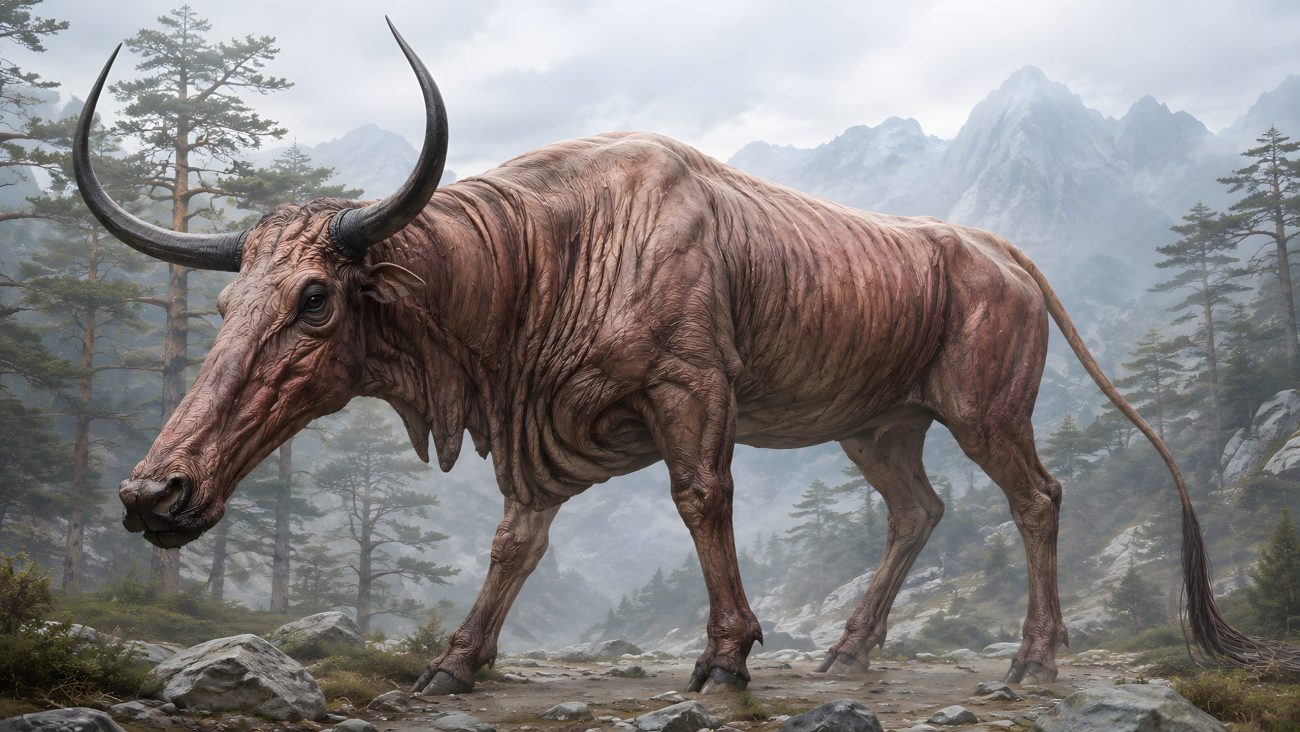
The creature was described as resembling a cow, but it was far larger and stranger than any ordinary cattle. It had a long, massive body, a tail approximately three feet long, no hair, and an unusually long nose. It was seen traveling from Hyeonseongcheon toward Osikyang.

The Silla record gives no name for the creature or any further account of what happened to it. Its description is simply preserved as an “extraordinary beast resembling an ox” (異獸若牛).

Later Korean tradition has sometimes regarded this creature as an early form or possible precursor of the Bulgasari, a famous Korean monster. Its bizarre combination of an ox-like body, hairlessness, enormous size, and elongated nose made it sufficiently unusual to be recorded as an omen-like beast in the Samguk Sagi.


Sources

“이수약우.” 나무위키 (NamuWiki). Accessed August 21, 2026. https://namu.wiki/w/이수약우

Geumdoktae

Tradition / Region: Korean Mythology
Alternative names: Golden Calf, Geumsongaji, Geumsongajijeon, Prince Geumdok
Category: Cow


The Myth

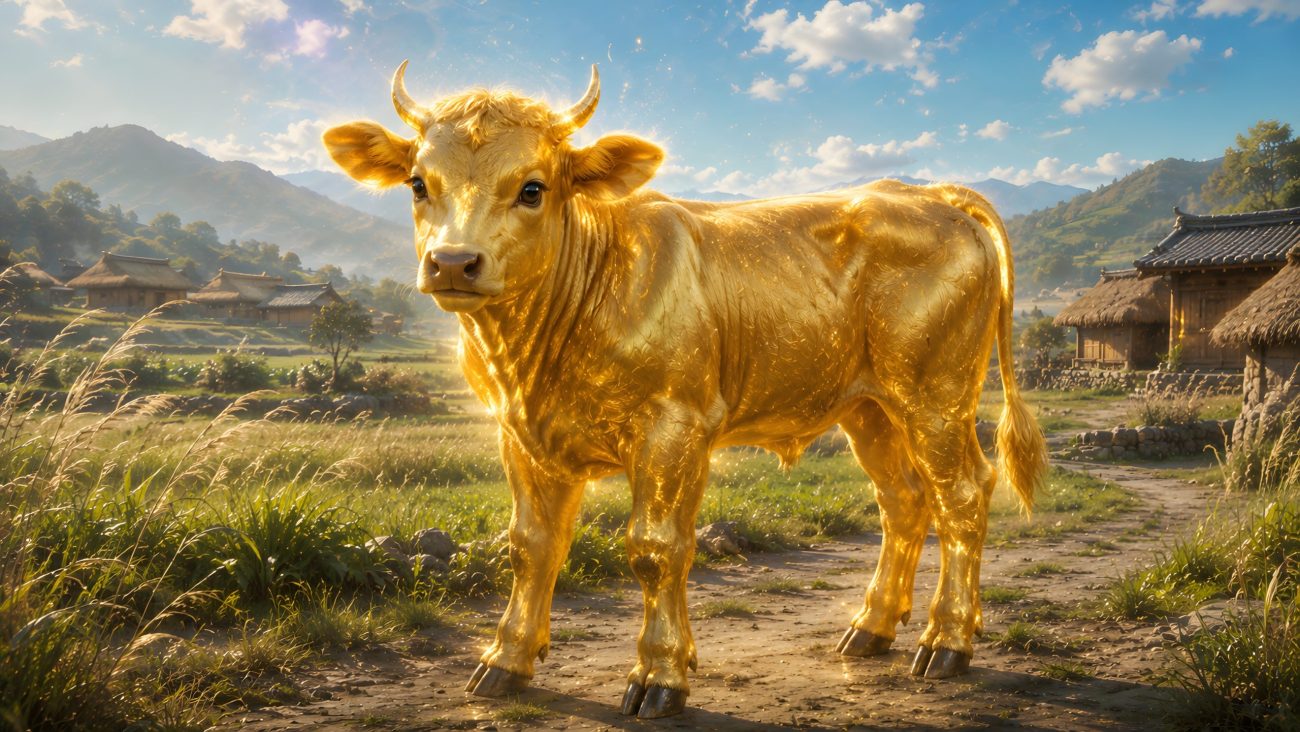
Geumdoktae is a magical golden calf born from a cow after a newborn child is secretly given to the animal. It later transforms between human and animal forms and eventually becomes a handsome man.

According to the tale, a man takes a concubine because he wants a son. While he is away, his wife gives birth to a boy. Jealous of the child, the other wife secretly gives the baby to a cow, which eats it.

When the man returns, the cow gives birth to a golden calf. He becomes deeply attached to the unusual animal and treats it with great affection.

The jealous wife then pretends to become ill and claims that she can only recover by eating the golden calf’s liver. The man orders a butcher to kill the calf and bring him its liver.

The butcher takes pity on the calf and secretly releases it. Instead of killing it, he brings back the liver of a dog.

The golden calf escapes and travels to Seoul. There it encounters a notice announcing that whoever can beat a straw drum will be allowed to marry the daughter of a nobleman. The golden calf approaches the drum and beats it, becoming the nobleman’s son-in-law.

The calf eventually sheds its animal form and becomes a handsome man. He returns to his father together with his wife and reveals the truth about what happened to him. His biological mother is rescued, and the family is reunited.

The golden calf then remains in human form and lives happily with his wife.


Sources

“암소 (Amso).” Encyclopedia of Korean Folk Culture. National Folk Museum of Korea. Accessed August 16, 2026. https://folkency.nfm.go.kr/topic/detail/5748?


Ungnyeo

Tradition / Region: Korean Mythology
Alternative names: Bear Woman
Category: Bear


The Myth

Ungnyeo was originally a bear who lived in a cave alongside a tiger. Both prayed to Hwanung, the divine ruler, asking to become human. He gave them twenty cloves of garlic and a bundle of mugwort, commanding them to remain inside the cave for one hundred days and eat nothing else.

The tiger abandoned the trial after about twenty days, unable to endure the hardship. The bear remained in the cave, and after twenty-one days was transformed into a woman.

Grateful for her new life, Ungnyeo made offerings to Hwanung. However, she had no husband and prayed beneath a sacred tree for a child. Moved by her devotion, Hwanung took Ungnyeo as his wife.

Their son was Dangun, the legendary founder of the Korean nation.


Sources

Wikipedia contributors. (n.d.). Ungnyeo. In Wikipedia. Retrieved June 29, 2026, from https://en.wikipedia.org/wiki/Ungnyeo


Qianlima

Tradition / Region: Chinese Mythology, Korean Mythology
Alternative names: Chollima (Korean), Cheollima (Korean), Senrima (Japanese), Thousand-li Horse
Category: Horse


The Myth

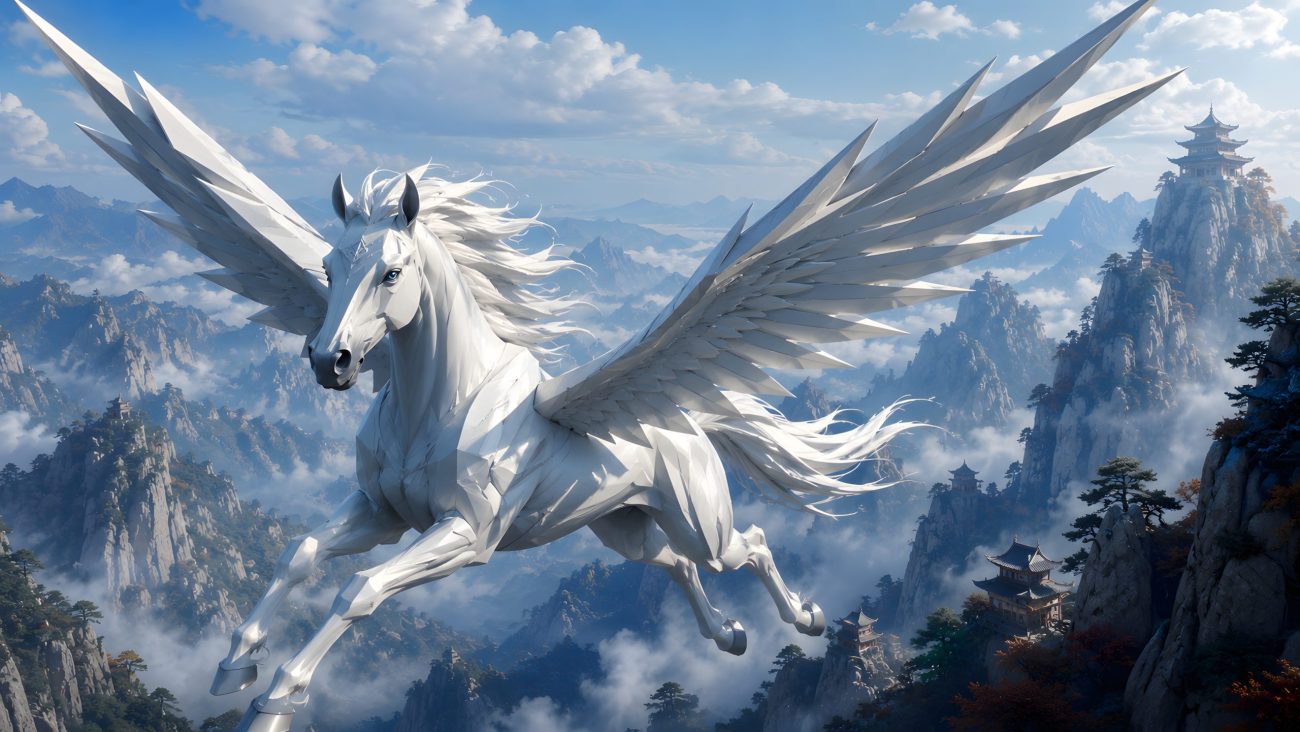
The Qianlima is a mythical winged horse in Chinese tradition renowned for its extraordinary speed and grace. It is said to be capable of traveling one thousand li in a single day, a distance of roughly four hundred kilometers, and is considered so swift and elegant that no mortal can ride it.

Beginning around the 3rd century BCE, the Qianlima became a powerful symbol in Chinese literature. It represented individuals of exceptional talent whose abilities had not yet been recognized. The legendary horse judge Bole was celebrated for his ability to identify a true Qianlima, making the horse a metaphor for gifted people discovered by a wise ruler.

The Qianlima also came to symbolize remarkable horses, including the famous Red Hare, whose speed and endurance embodied the qualities associated with the legendary steed.

Beyond China, the mythical horse became known throughout East Asia. In Korea it is called Chollima or Cheollima, where it became an important national symbol of North Korea and gave its name to the Chollima Movement.


Sources

Wikipedia contributors. (n.d.). Qianlima. In Wikipedia. Retrieved June 29, 2026, from https://en.wikipedia.org/wiki/Qianlima


Chandusa

Tradition / Region: Korean Mythology
Alternative Name: –
Category: Snake, Deer


The Myth

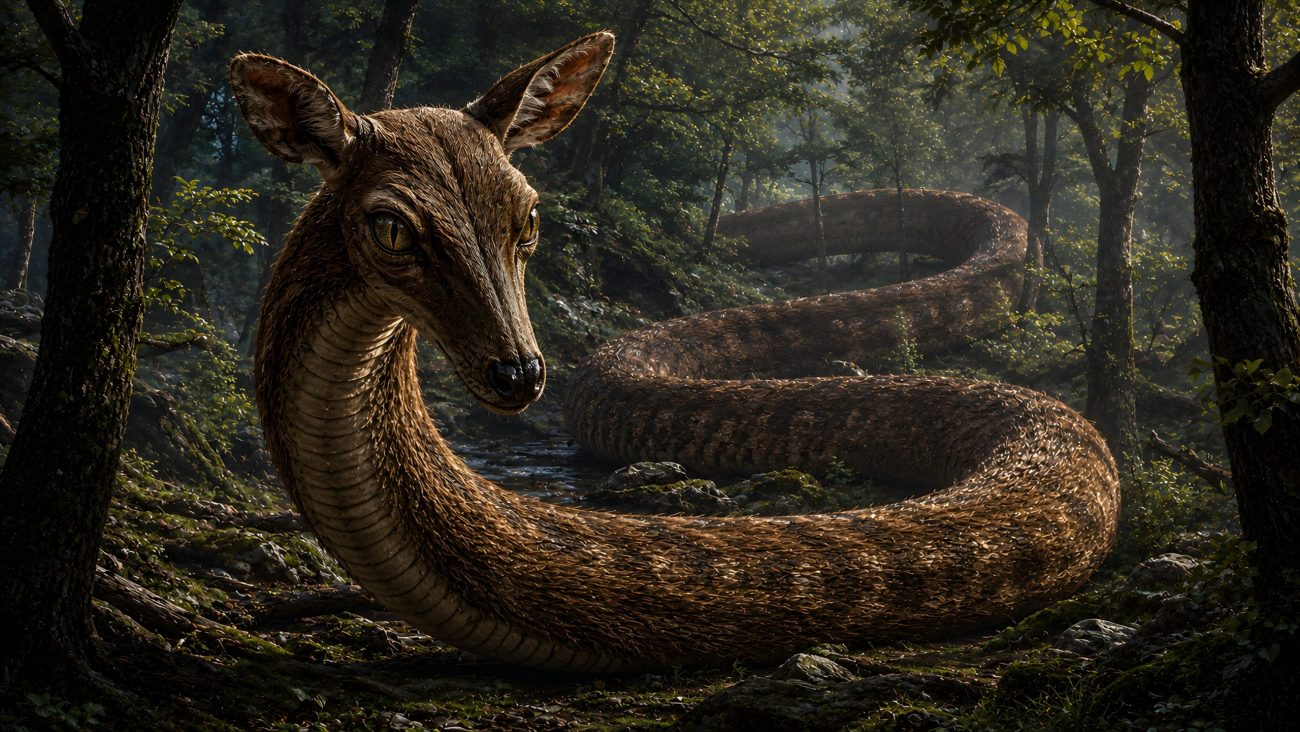
The Chandusa is a mysterious giant serpent from Korean folklore and classical literature of the Joseon period. It is described as an enormous snake around seven meters long with the hornless head of a roe deer. Some traditions considered it related to other strange serpents such as cat-headed snakes and gigantic tesa serpents.

Unlike ordinary snakes, the chandusa was believed to possess supernatural powers. It often appeared near human homes and settlements, especially around gates, courtyards, or walls. Despite its massive size, it lived inside tiny holes or burrows that seemed impossibly deep.

Legends claimed that attempts to block its lair were useless. Stones placed over the hole would mysteriously return to their original position by the next morning, as though the creature had moved them through unnatural means.

One famous story appears in the Taedong Yaseung. The scholar and nobleman Yiam Seong-in reportedly encountered a chandusa near his home at night. He described seeing a massive snake with the head of a roe deer moving near the gate before vanishing into a tiny hole by the southern wall.

After discovering that the creature’s burrow could not be sealed, even with heavy stones, he became convinced the serpent was supernatural. Fearing the creature, he sold his house and moved away entirely.


Sources

Bestiary.us. (n.d.). Chandusa. Retrieved May 10, 2026, from https://www.bestiary.us/chandusa


Bulgae

Tradition / Region: Korean Mythology
Alternate Names: Pulgae
Category: Dog


The Myth

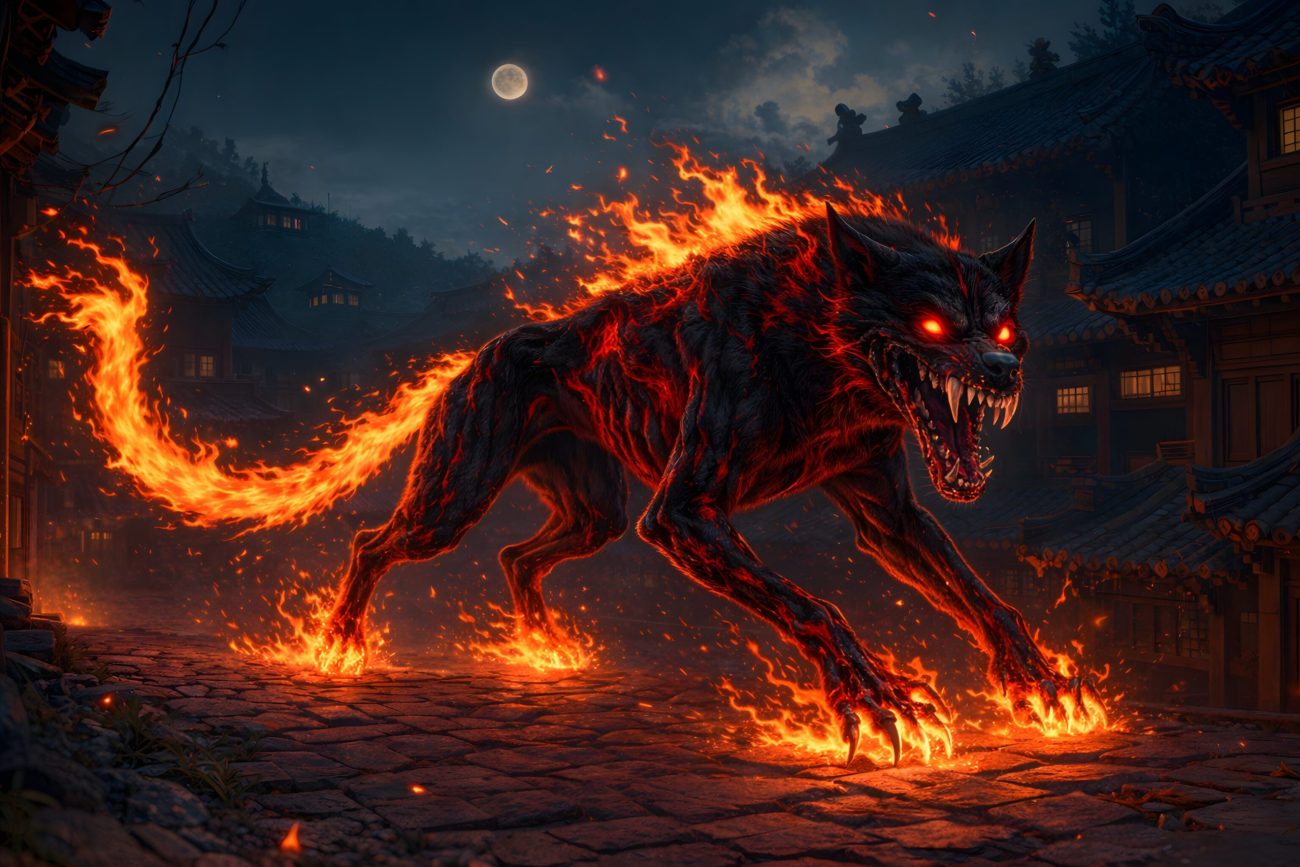
Bulgae are the legendary fire dogs of Korean mythology, fierce supernatural hounds sent from the dark realm known as Gamangnara, the Kingdom of Darkness. Their role in myth is cosmic: they attempt to seize the Sun and Moon, and their attacks are believed to cause eclipses.

According to the traditional stories, the king of Gamangnara grew tired of eternal darkness and longed for light. He sent his powerful fire dogs to capture the Sun and bring it to his realm. But when a Bulgae bit the Sun, it was too hot, forcing the dog to drop it and retreat.

The king then sent another dog after the Moon. This time the Moon proved too cold, freezing the dog’s jaws and making it release its prize. Again and again the king dispatched fiercer hounds, yet none succeeded.

In Korean cosmological belief, solar and lunar eclipses occur when the Bulgae briefly bite the Sun or Moon before being forced to let go and flee back to the Dark World.


Sources

Wikipedia contributors. (n.d.). Bulgae. In Wikipedia, from https://en.wikipedia.org/wiki/Bulgae


Cheongwoo

Tradition / Region: Korean Mythology
Alternate Names: The Blue Cow; Blue Ox of Danyang
Category: Cow


The Myth

During the time of the Joseon Dynasty, in the mountainous lands near Danyang, people spoke of a strange and powerful ox that appeared among the hills.

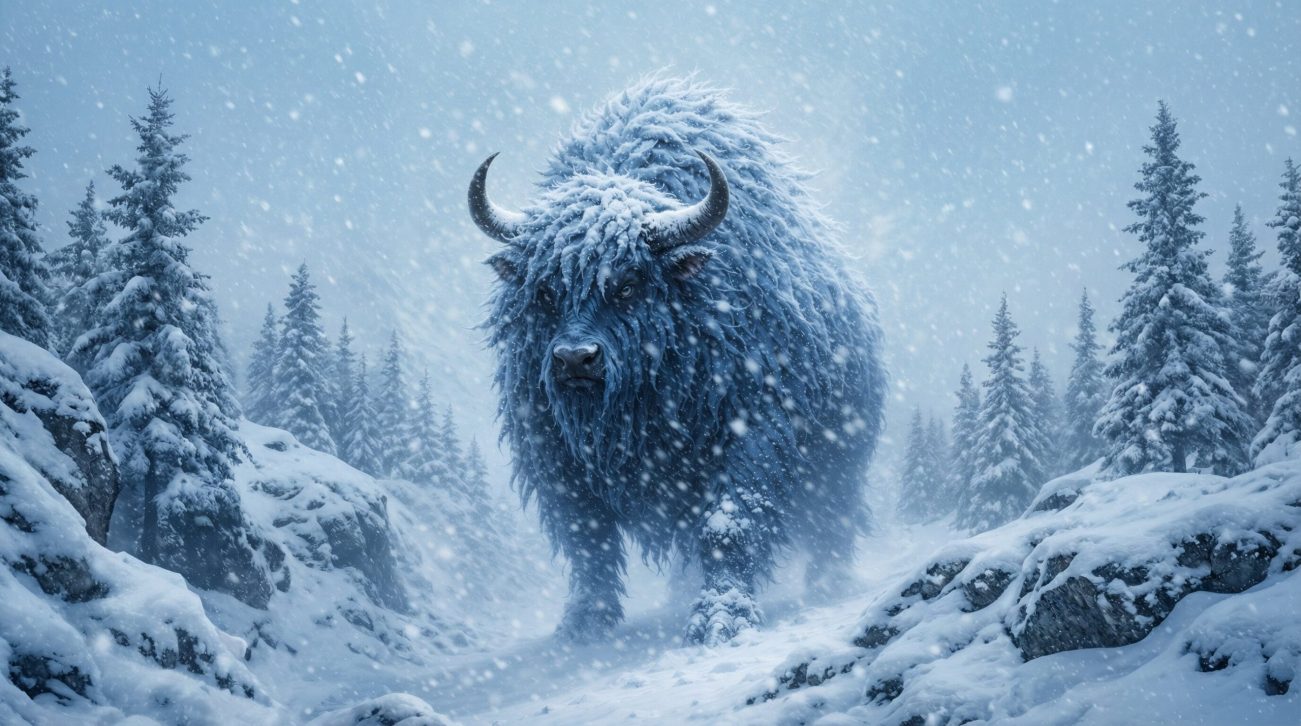
Its body was blue in color, and it stood larger than any ordinary ox. Its head was broad, and its horns spread wide apart, giving it a fearsome and imposing look. Because of its color, it became known as Cheongwoo, the Blue Cow.

Though it seemed wild and strong, the beast was not beyond human control. A man named Yi Ji-beon managed to tame it and made it serve him. Once mastered, Cheongwoo allowed itself to be ridden like a horse, carrying the man across the land.

The creature feared neither cold nor mountain. It moved easily through winter winds and climbed steep slopes without tiring, crossing rocky paths where no common animal could travel. Its strength, endurance, and strange nature made it a wonder among the people.

The tale of Cheongwoo was later written down so that the memory of the blue cow — the mountain beast that bore a man upon its back — would not be forgotten.


Sources

Namuwiki contributors. (n.d.). 청우 (한국의 요괴). In Namuwiki. Retrieved from https://namu.wiki/w/%EC%B2%AD%EC%9A%B0(%ED%95%9C%EA%B5%AD%EC%9D%98%20%EC%9A%94%EA%B4%B4)