Tradition: Korean Mythology
Alternative Names: Korean Ogres
Category: Goblin
The Myth
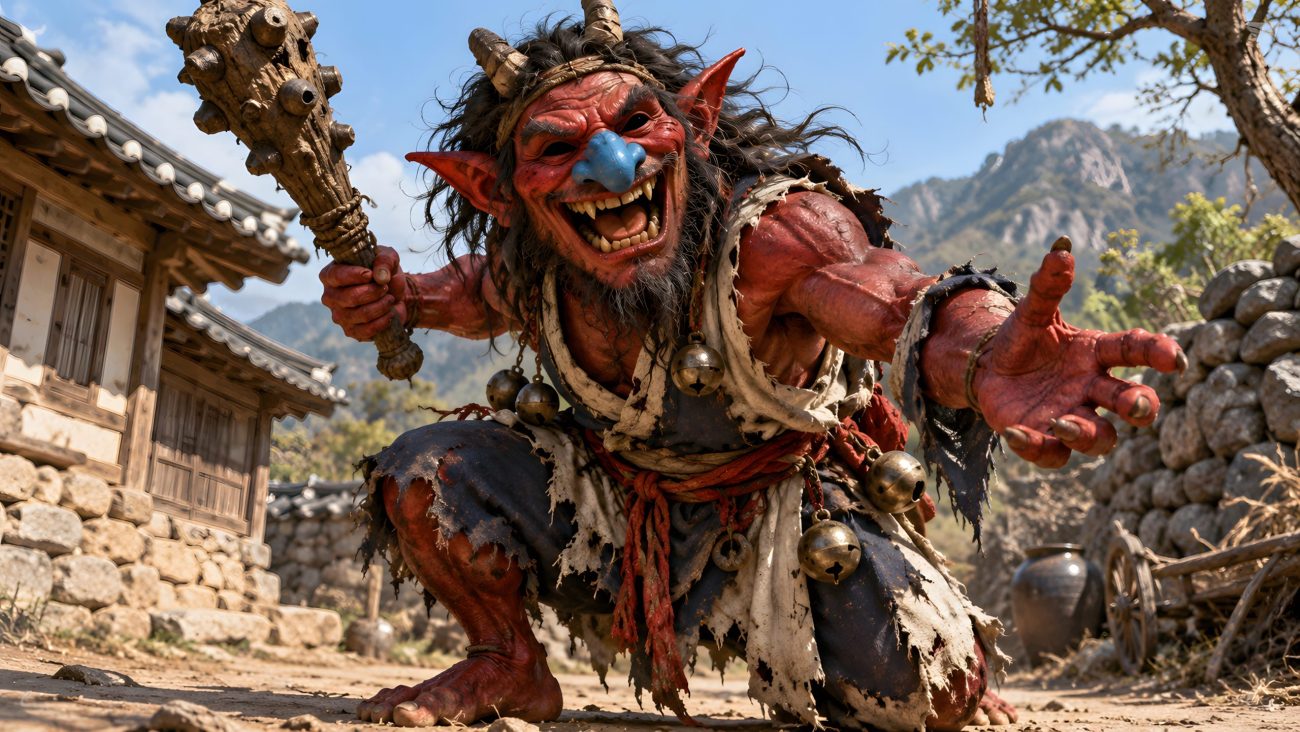
Dokkaebi are supernatural beings from Korean mythology and folklore, renowned for their extraordinary powers and varied appearances. They may look frightening and awe-inspiring, sometimes resembling grotesque figures inspired by traditional Korean roof tiles decorated with dokkaebi patterns. Some depictions show them wearing hanbok, traditional Korean clothing. Unlike ghosts, known as gwishin, Dokkaebi are not formed from the spirits of dead humans. Instead, they arise when inanimate objects, such as old discarded household tools or objects stained with human blood, become possessed by spiritual forces.
Dokkaebi have unpredictable personalities. Some are harmless but mischievous, delighting in playing tricks on people or challenging travellers to ssireum, a traditional Korean wrestling match, before allowing them to pass. They are exceptionally skilled wrestlers and can be difficult to defeat. According to some traditions, however, they have a weakness: exploiting their right side can secure victory. Other accounts describe Dokkaebi as having only one leg, in which case an opponent can win by hooking the leg and pushing the creature over.
One of the most striking signs of their presence is the dokkaebi fire, a mysterious glimmering light or tall blue flame that heralds their arrival. They also possess magical objects that grant remarkable abilities. The dokkaebi gamtu, a magical hat, makes its wearer invisible, while the dokkaebi bangmangi, a magical club, can summon objects and produce things at will. These items reflect the creatures’ ability to manipulate the world through supernatural means.
Despite their frightening appearance and fondness for mischief, Dokkaebi are not necessarily evil. They can bring good harvests, plentiful catches, and great fortune, and they are sometimes regarded as defenders against evil spirits. People may offer them buckwheat jelly, known as memilmuk, and red bean rice cakes during rituals intended to gain their favour. In other traditions, Dokkaebi are blamed for misfortune, fires, and contagious diseases, and ceremonies are performed to drive them away. On Jeju Island, the Durin-gut healing ceremony is said to expel Dokkaebi associated with mental illness. Their role in Korean folklore is therefore complex: they can be mischievous adversaries, supernatural benefactors, or dangerous spirits whose influence must be controlled.
Sources
“Dokkaebi.” Wikipedia: The Free Encyclopedia. Wikimedia Foundation. Accessed October 17, 2026. https://en.wikipedia.org/wiki/Dokkaebi