White Rooster Demon

Tradition / Region: Vietnamese Mythology
Alternative names: White Chicken Demon
Category: Bird


The Myth

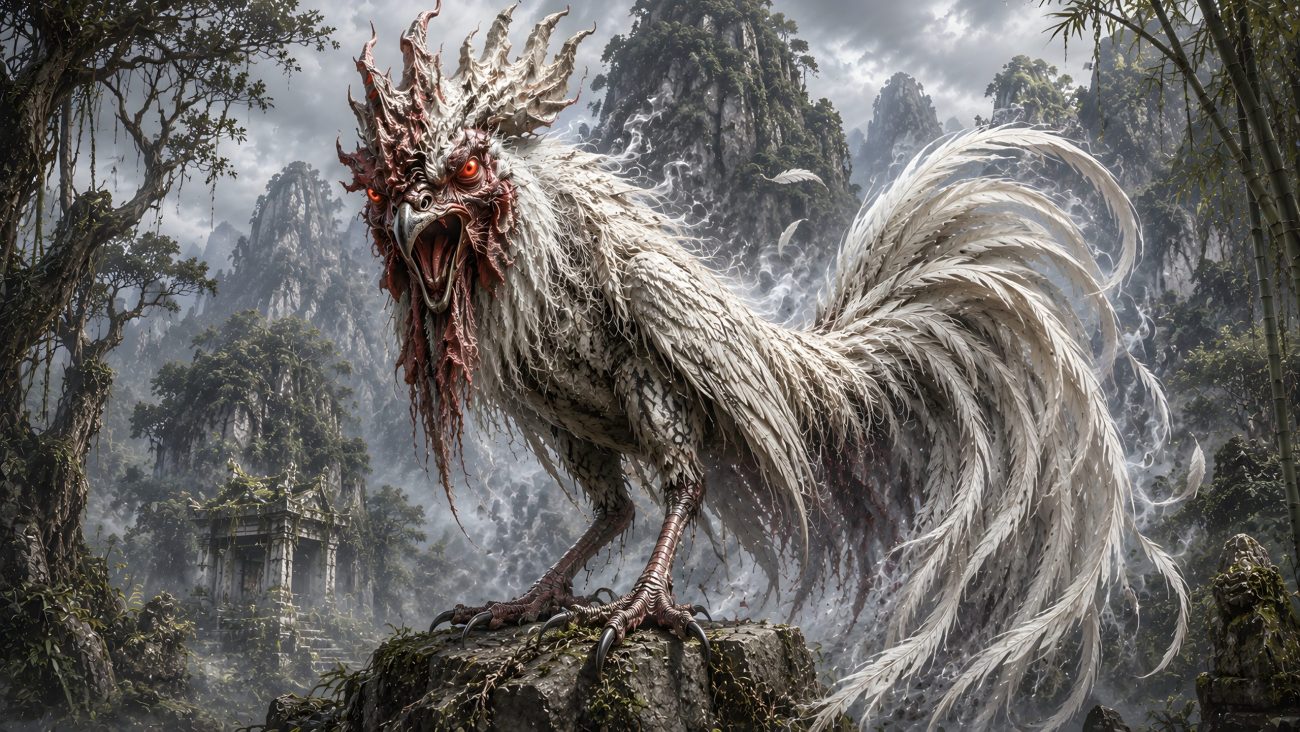
The White Rooster Demon appears in the Vietnamese legend of The Golden Turtle (Rùa Vàng). According to the Golden Turtle, a white rooster that had lived for a thousand years transformed into a powerful demon and dwelt upon Thất Diệu Mountain. The creature was bound to an evil spirit that haunted the region, causing travelers to perish through terrifying supernatural illusions and protecting the forces that prevented King An Dương Vương from completing the construction of Cổ Loa Citadel.

The Golden Turtle revealed that the White Rooster Demon and the innkeeper’s daughter were both manifestations of the same demonic influence. It instructed the king that the rooster had to be sacrificed before the evil spirit could be destroyed. Following this advice, the innkeeper killed the white rooster as an offering. At that very moment, his daughter also fell dead, and the demon’s power collapsed. The king then unearthed and burned the haunted remains hidden beneath Thất Diệu Mountain, ending the curse that had plagued the land.

With the White Rooster Demon destroyed, the evil spirit could no longer interfere with the construction of the citadel. Cổ Loa was completed, allowing An Dương Vương to establish his kingdom under the protection of the Golden Turtle.


Sources

Trần Đình Hoành. (2010, April 30). Lĩnh Nam Chích Quái – Truyện Rùa Vàng. TRẦN ĐÌNH HOÀNH. Retrieved June 29, 2026, from https://trandinhhoanh.wordpress.com/2010/04/30/truy%E1%BB%87n-rua-vang/


White Bird

Tradition / Region: Vietnamese Mythology
Alternative names: White Bird; Watermelon Bird
Category: Bird


The Myth

The White Bird appears in the Vietnamese legend of Mai An Tiêm. After An Tiêm is banished by the Hùng King to a deserted sandy island with his family, he remains confident that Heaven will provide for them despite their isolation and dwindling supplies.

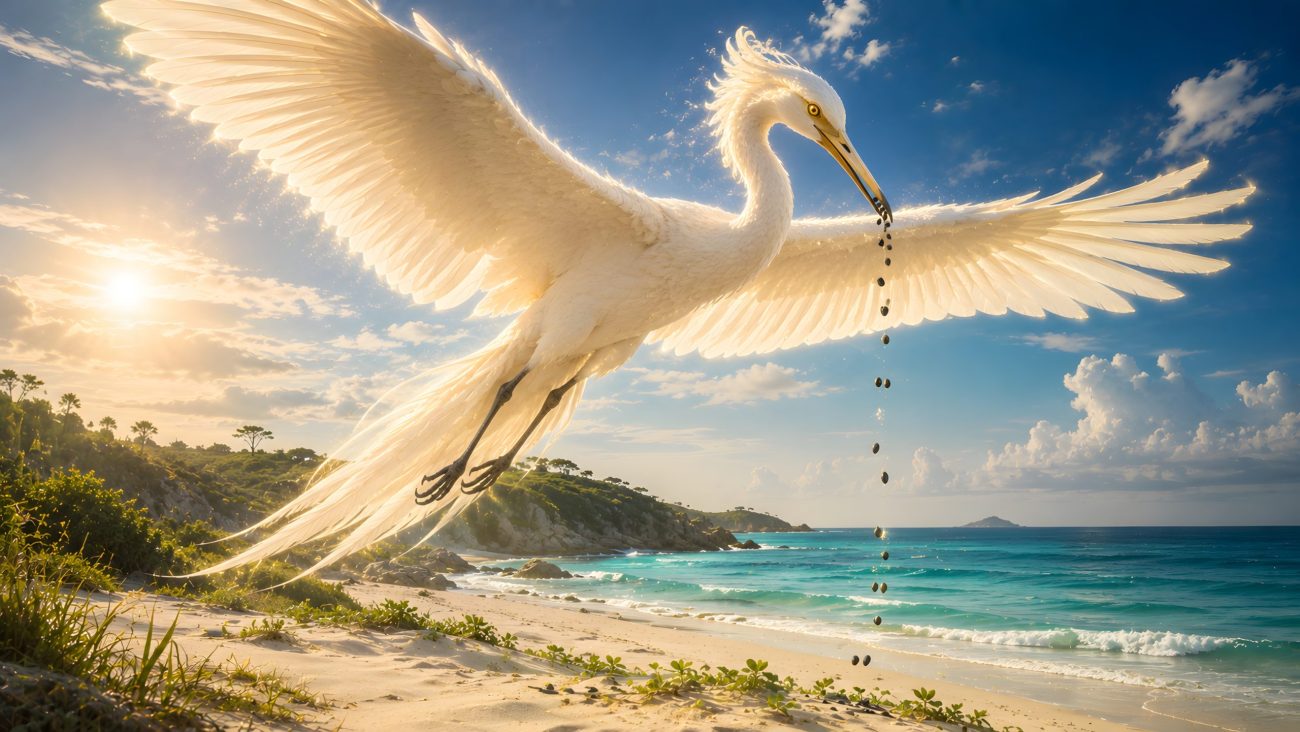
One day, a white bird flies from the west and lands upon the mountaintop. After calling out several times, it drops six or seven strange seeds onto the sand before flying away. The seeds quickly sprout into vigorous vines that produce many large fruits. An Tiêm tastes them and finds them sweet and refreshing, believing they are Heaven’s gift sent to preserve his family.

An Tiêm cultivates the fruit and exchanges the surplus with fishermen and merchants for rice and other necessities. Because the mysterious bird carried the seeds from the west, he names the fruit Tây Qua (“Western Melon”), later known as the watermelon. The fruit spreads throughout the land, and when the king learns that An Tiêm has survived through this miraculous gift, he recalls him from exile and restores his former rank. The White Bird is therefore remembered as the divine messenger whose gift brought the watermelon into Vietnam and saved An Tiêm’s family.


Sources

Trần Đình Hoành. (2010, April 10). Lĩnh Nam Chích Quái – Truyện dưa hấu. TRẦN ĐÌNH HOÀNH. Retrieved June 29, 2026, from https://trandinhhoanh.wordpress.com/2010/04/10/linh-nam-chich-quai-truy%E1%BB%87n-d%C6%B0a-h%E1%BA%A5u/


Thuồng Luồng

Tradition / Region: Vietnamese Mythology
Alternative names: Giao Long, Giao Xà
Category: Crocodile


The Myth

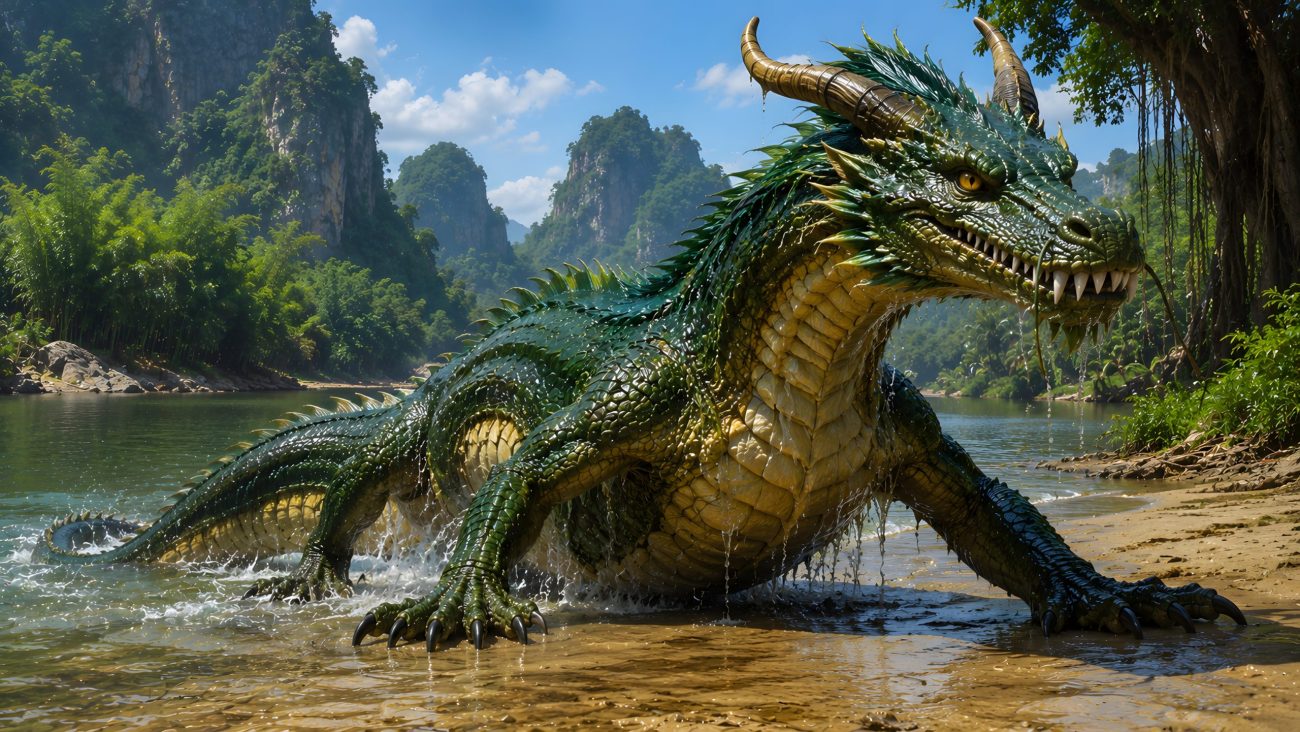
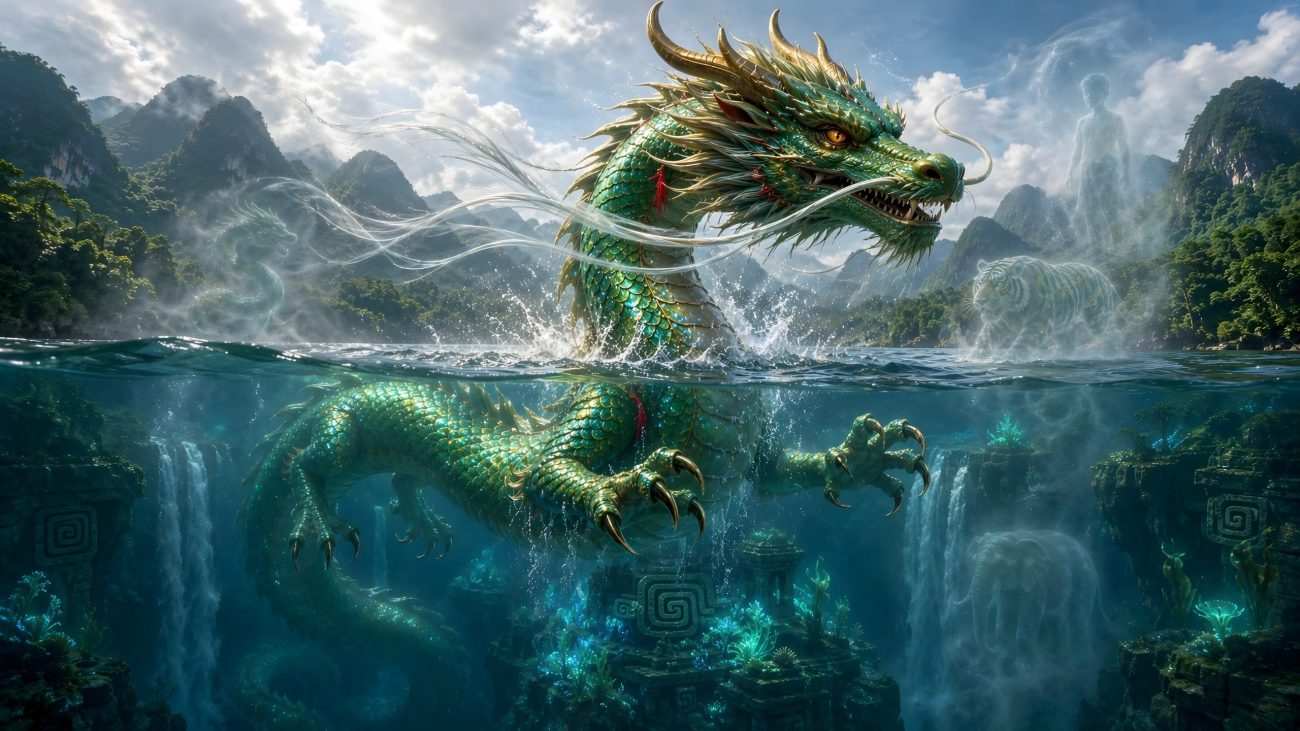
The Thuồng Luồng is a fearsome aquatic monster of Vietnamese folklore, often described as a dragon-like reptile that inhabits rivers and other large bodies of water. It possesses a long, serpentine body, with or without legs, and is commonly said to have horns or a crest upon its head, along with a mouth filled with sharp fangs. Its name Giao Long (“Hybrid Dragon”) reflects its dragon-like appearance while emphasizing that it is not a true dragon.

In popular tradition, the Thuồng Luồng is regarded as a powerful water beast capable of swallowing large animals and even people. Ancient descriptions portray it as resembling a gigantic four-legged serpent covered in thick scales, while later interpretations often compare it to an enormous crocodile. Temples dedicated to the Thuồng Luồng once stood along the great rivers of northern Vietnam, where it was revered as a river deity.

Classical Chinese texts also recount encounters with similar creatures. One legend tells of the warrior Thứ Phi, who leapt into the Yangtze River and slew two Giao Long that had attacked a boat, saving everyone aboard. Another account describes Emperor Wu of Han shooting a Giao Long while traveling by boat. Ancient commentators described the creature as having the body of a snake with four legs, a narrow neck, large scales, and the ability to swallow humans whole.

Over time, some traditions came to associate the Thuồng Luồng with enormous softshell turtles inhabiting the Red River. These giant reptiles were said to bask on sandbanks, lay vast numbers of eggs, and occasionally attack large animals that entered the water. As sightings of these creatures became increasingly rare, stories of the Thuồng Luồng likewise faded, though the monster remains an enduring symbol of the dangers hidden beneath Vietnam’s rivers.


Sources

Wikipedia contributors. (n.d.). Thuồng luồng. In Wikipedia, bách khoa toàn thư mở. Retrieved June 29, 2026, from https://vi.wikipedia.org/wiki/Thu%E1%BB%93ng_lu%E1%BB%93ng


Basho no Sei

Tradition / Region: Chinese Mythology, Vietnamese Mythology
Alternate Names: Basho Essence, Banana Spirit, Plantain Ghost
Category: Plant


The Myth

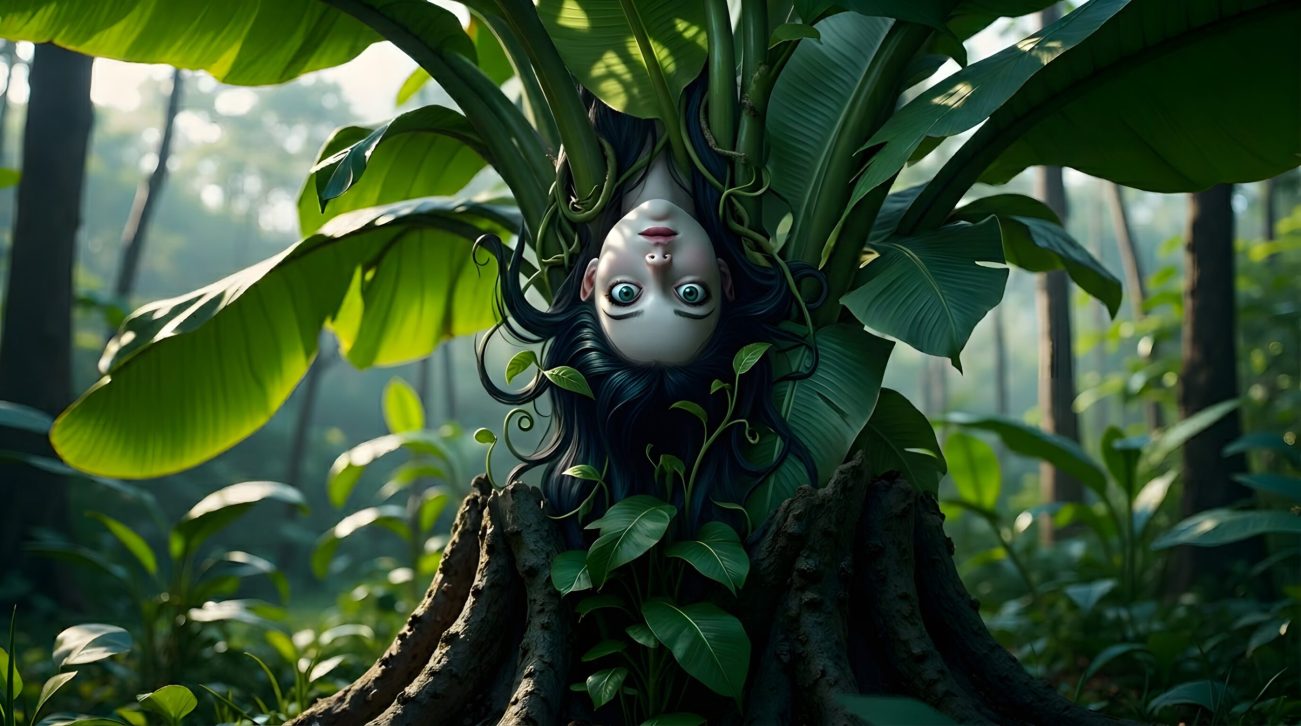
In old stories it is said that even plants may awaken into spirits if they endure long enough in the world. Among the most well known of these is the Basho no Sei, the spirit of the bashō, or plantain tree.

When a banana plant grows old and stands for many years, people believed it could gather strange energy from wind, rain, and moonlight. Over time, this energy would give rise to a spirit within the trunk and leaves. At last, the tree might shed its stillness and take on a ghostly life of its own.

Such spirits were said to appear most often in the form of a woman. In Chinese tales, the banana essence sometimes took human shape to approach travelers or householders at night. Some versions say it deceived people with beauty and soft speech, only to bring harm once it had drawn close.

One story tells of a young monk studying late into the night in a quiet temple in Shinshu. As he read, a beautiful woman entered and spoke gently to him, trying to charm him with her presence. The monk sensed something unnatural and grew angry. Grasping a short blade, he struck at her, and she fled into the darkness, leaving a trail of blood.

At dawn, the monk followed the drops of blood into the courtyard. There he found that the temple’s plantain tree had been cut deeply into its trunk, and its sap ran down like the blood he had seen. From this he understood that the visitor of the night had been the spirit of the bashō itself.

Such tales spread across lands and generations, and people came to say that the banana plant, though soft and harmless in appearance, might hide a spirit if it lived long enough. For this reason, groves of old plantains were sometimes regarded with caution, as places where a quiet tree might one day step into the world in human form.


Sources

Wikipedia contributors. (n.d.). 菟菟鬼. In Wikipedia. Retrieved March 1, 2026, from https://zh.wikipedia.org/wiki/%E8%8A%AD%E8%95%89%E9%AC%BC