Gosoku Usagi

Tradition: Japanese Mythology
Alternative Names: 五足の兎, Five-Legged Rabbit, Moon Rabbit
Category: Rabbit


The Myth

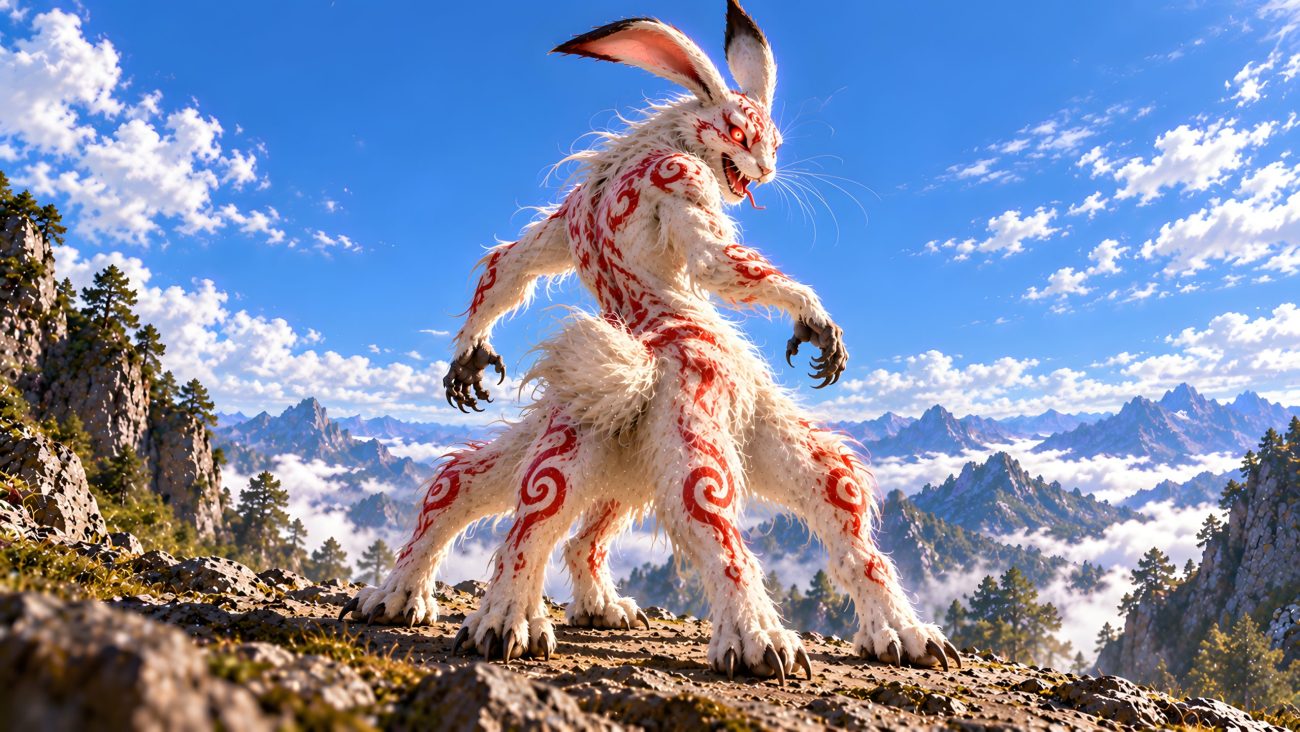
Gosoku Usagi is a supernatural rabbit with five legs that appears in the old Japanese puppet play Atago no Honji. The creature first appears as Katsura Otoko, a mysterious being connected to the Moon who takes the form of a white demon. Its strange appearance and unusual number of legs reveal its supernatural nature.

During the reign of Emperor Bidatsu, two moons mysteriously appeared in the sky, moving in opposite directions. The warrior Nichira recognized one as an evil moon and had a towering wooden structure built so he could shoot it down with a bow and arrow. When the fallen moon struck the imperial palace grounds, it transformed into a great tree. Nichira cut the tree open, releasing a white demon who called himself Katsura Otoko and attacked the warrior. Nichira defeated him and declared that he must be a rabbit, reminding him of the legend of the rabbit that sacrificed itself to feed a hungry holy man. Katsura Otoko then transformed into a five-legged rabbit and fled.

Nichira pursued the creature and caught it again near western Nishiyama in Yamashiro Province. After Nichira cut off its head, the head flew into the sky while the body was torn apart and thrown into a river. The head returned and breathed fire from above, but Nichira struck it down and destroyed it. The story explains the names of Katsura Village and the Katsura River. The rabbit’s unusual number of legs connects it to traditions of the Moon Rabbit, whose extra legs distinguish it from an ordinary hare.


Sources

“Gosoku-usagi.” 新版TYZ 妖怪図鑑 (New TYZ Yokai Encyclopedia). https://tyz-yokai.blog.jp/archives/1084159775.html
Isopotono

Tradition: Japanese Mythology
Alternative Names: イソポトノ, Isepotono, Isopo-tono, Great Rabbit Lord
Category: Rabbit


The Myth

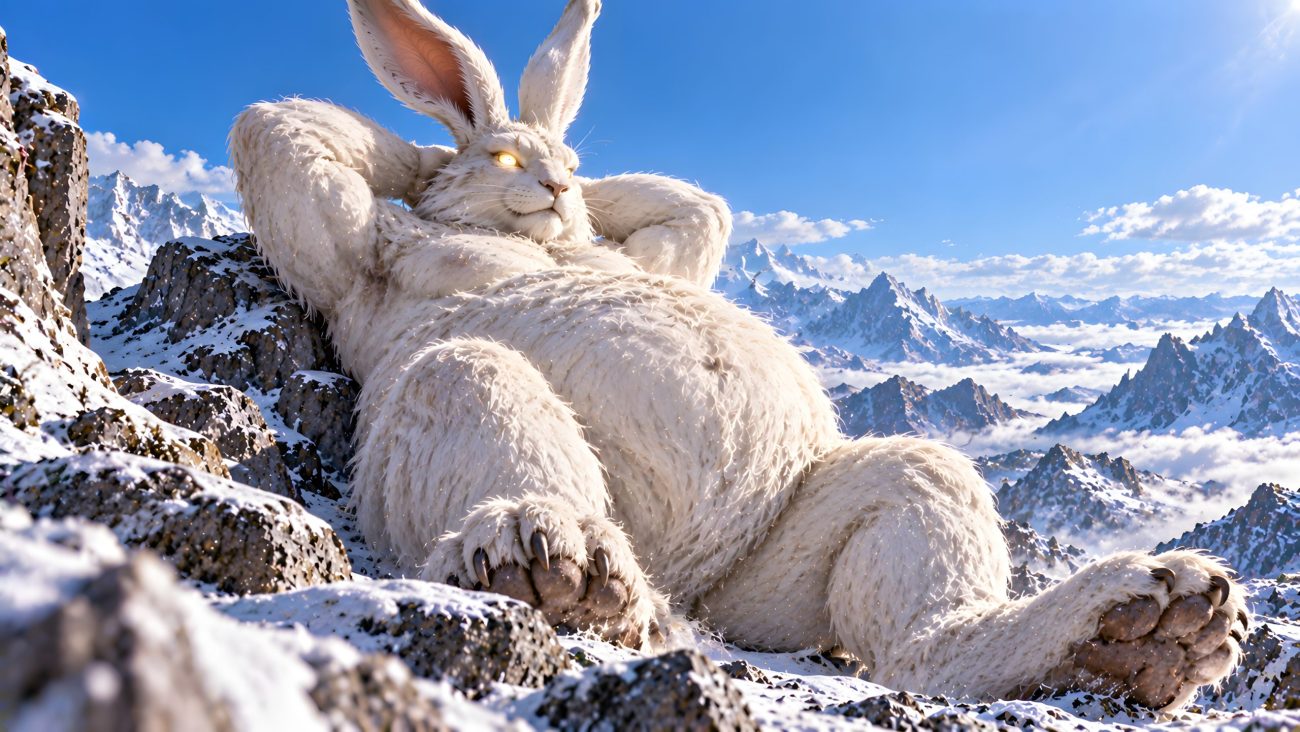
Isopotono is a giant rabbit from Ainu tradition. Its name combines isepo, meaning rabbit, with tono, a title for a lord, king, or powerful person. The creature was said to have lived on Poronupuri, or Mount Umaoi, near the former settlement of Osatsukotan in Hokkaido. Its feet were enormous, and its footprints were as large as the snowshoes used by humans.

The people of Osatsukotan revered Isopotono and the mountain where it lived, offering sake to the great rabbit. In nearby Naganuma, the creature was also regarded as a lord of demons. According to local tradition, Isopotono rode a white horse and defeated evildoers, acting as a powerful figure who punished those who did wrong.


Sources

“Isopotno.” 新版TYZ 妖怪図鑑 (New TYZ Yokai Encyclopedia). https://tyz-yokai.blog.jp/archives/1081433220.html


Dragon King Rabbit

Tradition: Japanese Mythology
Alternative Names: Dragon King Rabbit, White Rabbit of Daio Kokushi
Category: Rabbit


The Myth

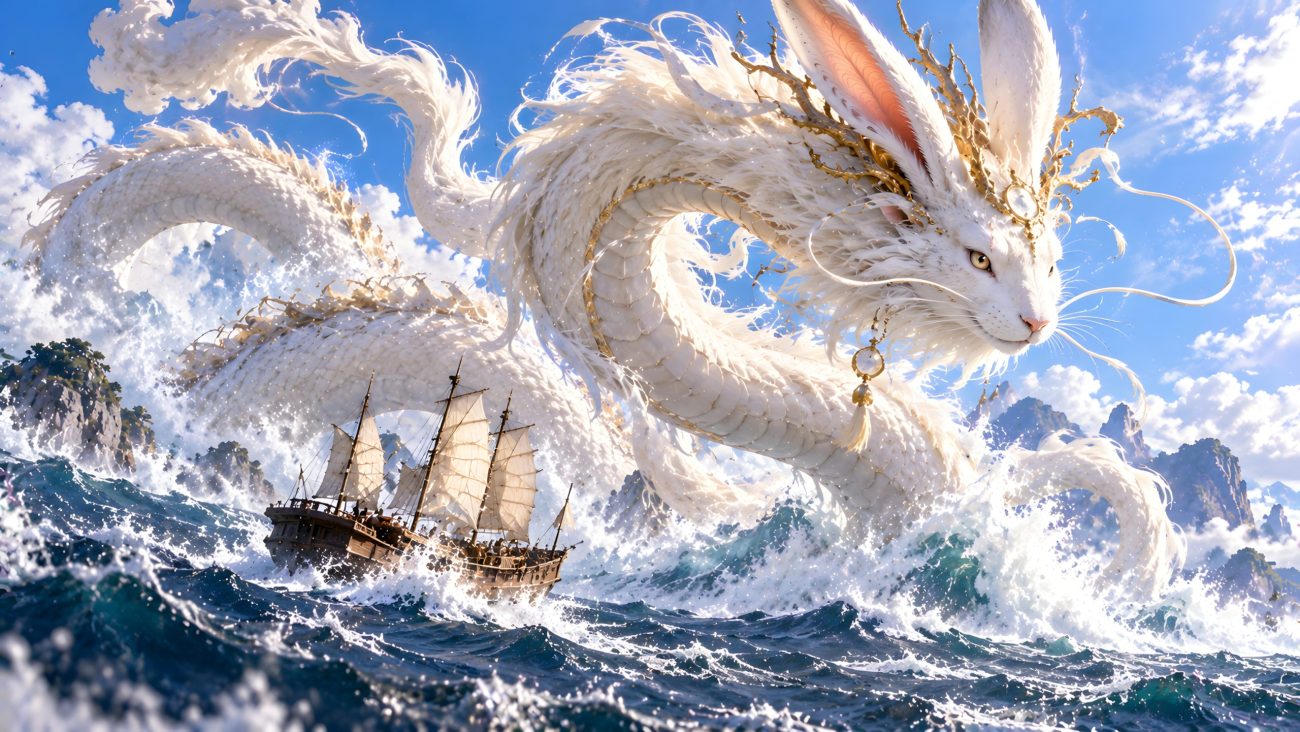
The Dragon King Rabbit was a white rabbit that appeared harmless but possessed a hidden divine nature. When the young monk Daio Kokushi encountered the rabbit, he saved it from a pack of wolves. The rabbit later repaid this kindness by revealing its extraordinary powers.

While Daio Kokushi was travelling by ship, a violent storm threatened to sink the vessel. As the waves grew dangerous and disaster seemed unavoidable, the white rabbit leapt into the sea. The moment it entered the water, the raging waves calmed, and a safe path opened across the ocean, allowing the ship to escape destruction.

Surrounded by a golden glow, the rabbit then rose into the sky and transformed into the Dragon King, revealing itself as an incarnation of the sea god. Though it had appeared as a small, silent animal, the rabbit was in truth a divine protector capable of commanding the sea and saving those in danger.


Sources

“Ryūō-usagi.” 新版TYZ 妖怪図鑑 (New TYZ Yokai Encyclopedia). https://tyz-yokai.blog.jp/archives/1082914475.html


Iwaisepo

Tradition: Japanese Mythology
Alternative Names: イワイセポ, Iwa Isepo, Rock Mountain Rabbit
Category: Rabbit


The Myth

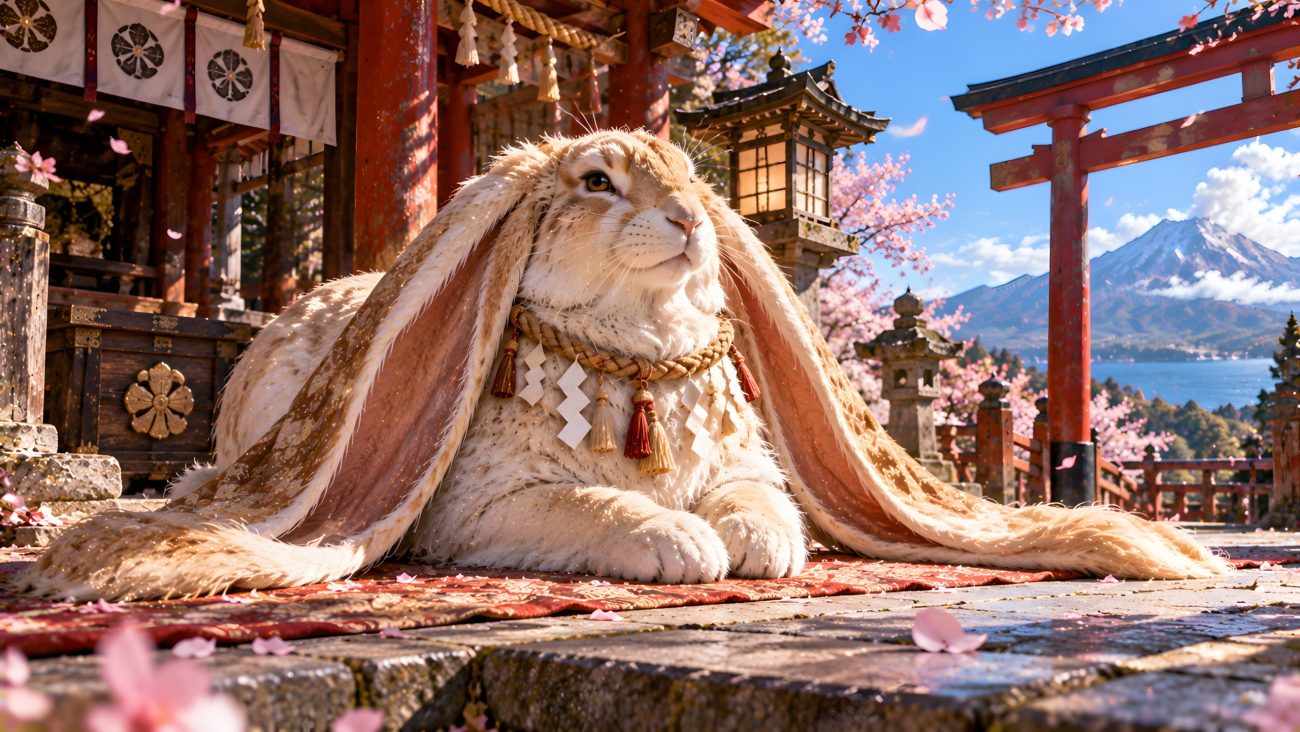
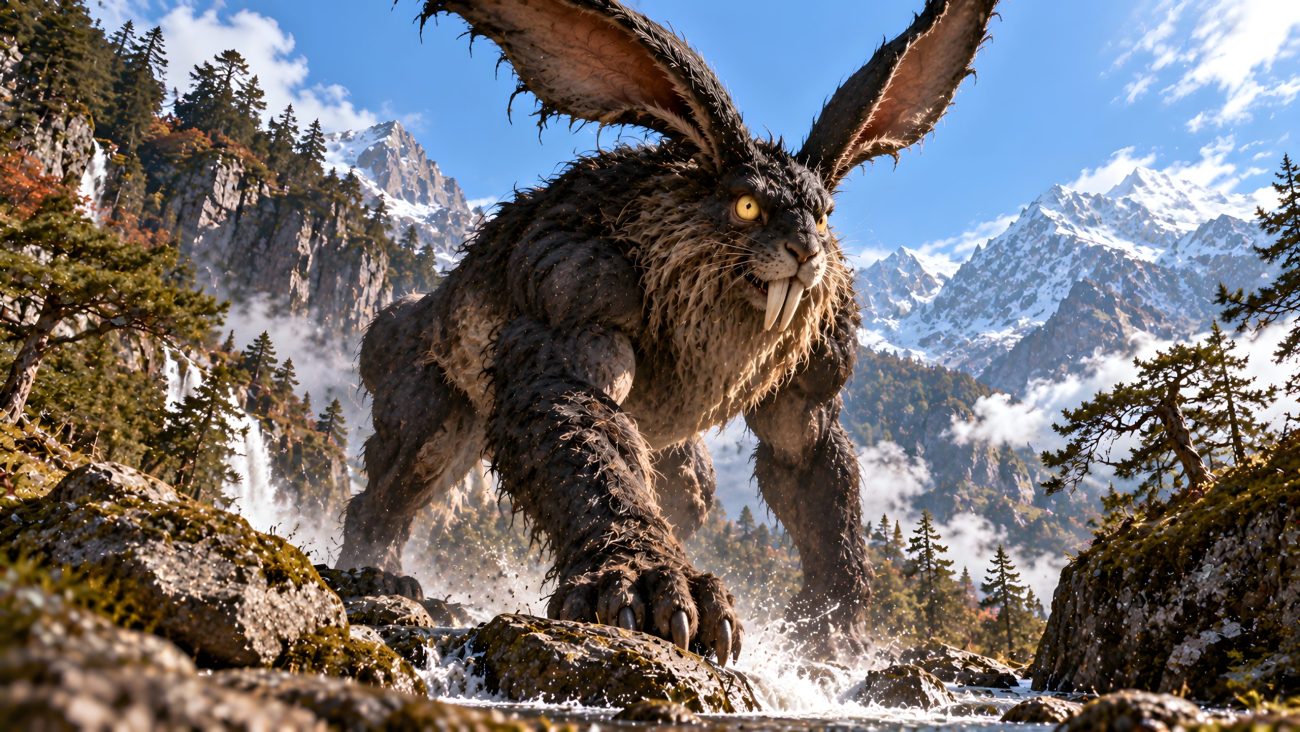
Iwaisepo is a gigantic, rabbit-like demon said to live deep in the mountains. Its name combines iwa, meaning a rocky mountain, and isepo, meaning rabbit. Despite its rabbit-like shape, this creature is far larger than an ordinary hare, with ears said to measure two or three shaku in length.

Its body is black, and its cry sounds like the call of a deer. Iwaisepo is described as an evil spirit inhabiting the mountain wilderness, where its enormous size and strange appearance set it apart from ordinary animals.


Sources

“Iwaisepo.” 新版TYZ 妖怪図鑑 (New TYZ Yokai Encyclopedia). https://tyz-yokai.blog.jp/archives/1081436893.html


Omiminaga-sama

Tradition: Japanese Mythology
Alternative Names: 御耳長様, O-Mimi-Naga-sama, Honoured Long-Eared One
Category: Rabbit


The Myth

Omiminaga-sama is the name given to rabbits by the people of Sakurajima, an island in Kagoshima, Japan. The name treats the rabbit with reverence, and the islanders feared the animal as a god.

According to local belief, anyone who ate rabbit meat would immediately suffer from stomach pain. Even dreaming about a rabbit was considered dangerous, as it was believed to cause illness. These beliefs were recorded by the naturalist Sato Chūryō, who encountered them during his travels around Japan. He noted that similar taboos surrounding particular birds and animals could be found in many parts of the country.


Sources

“Omiminagasama.” 新版TYZ 妖怪図鑑 (New TYZ Yokai Encyclopedia). https://tyz-yokai.blog.jp/archives/1083373710.html


Rabbit Spirits

Tradition: Japanese Mythology
Alternative Names: Ghost Rabbits, Spirit Rabbits of the Coloured Balls
Category: Rabbit


The Myth

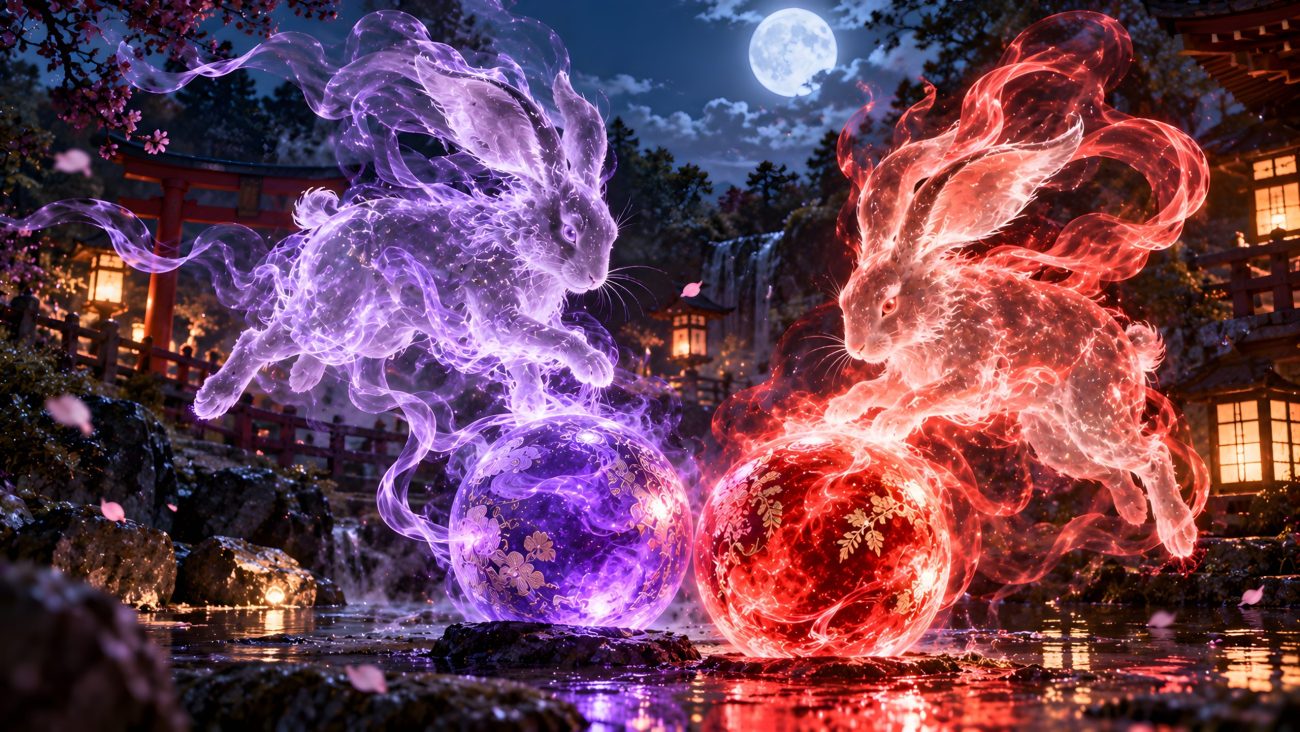
Two mysterious balls, one purple and one red, each contain the spirit of a rabbit. A Japanese girl named Fumiko discovers the balls, but their conditions soon begin to change: the red ball grows larger while the purple one gradually fades away. One night, the rabbit spirit inside the purple ball speaks to Fumiko, revealing that it originally lived in the mountains of Okuyama. The red ball contains the spirit of its sister, and both rabbits were swept away by a flood.

The two rabbits had once been pets belonging to a famous rabbit, but the sister received many more favours and much more attention than her brother. As a result, her spirit grew stronger while his gradually weakened, causing the purple ball to disappear. The brother explains his predicament to Fumiko, who realizes that the two balls must be placed together so the sister can share her energy with him.

When the balls are brought together, the red ball shrinks while the purple ball grows larger. Eventually, Fumiko places both balls inside a well, allowing the two rabbit spirits to remain together for a very long time. Their story reflects the bond between siblings and the importance of sharing strength with those who have been neglected.


Sources

“Usagi-tamashii.” 新版TYZ 妖怪図鑑 (New TYZ Yokai Encyclopedia). https://tyz-yokai.blog.jp/archives/1084281707.html


Ekito

Tradition: Japanese Mythology
Alternative Names: 疫兎, Plague Rabbit
Category: Rabbit


The Myth

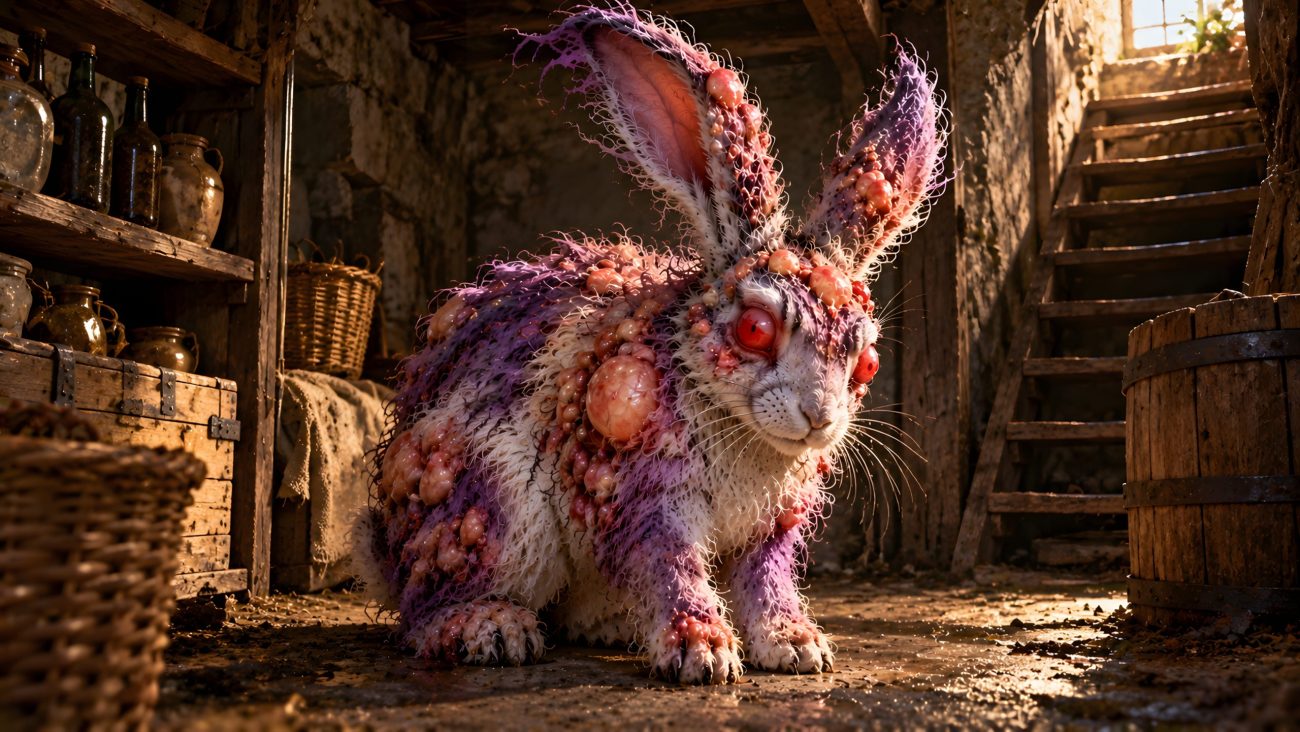
Ekito are said to have been rabbits afflicted with deadly diseases, associated with a devastating plague in nineteenth-century Japan. According to the account, Emperor Kōkaku received a large ship as a gift from the English. Unbeknownst to him, the vessel carried numerous diseased rabbits that would bring suffering to the country.

Rumours claimed that the English had abandoned the rabbits in Japan, allowing the animals to spread illness among the population. The resulting outbreak was associated with the so-called Korori, a deadly disease that reportedly killed many people within just three days.

The Ekito became feared as dangerous creatures whose arrival brought disease and death. In this account, they represent the terror of mysterious illnesses introduced from abroad and the devastating consequences attributed to animals carrying infection.


Sources

“Ekito.” 新版TYZ 妖怪図鑑 (New TYZ Yokai Encyclopedia). https://tyz-yokai.blog.jp/archives/1081520348.html


Enlightened Rabbit

Tradition: Japanese Mythology
Alternative Names: Mind-Reading Rabbit, Thought-Reading Hare
Category: Rabbit


The Myth

The Enlightened Rabbit is an elderly rabbit with the uncanny ability to speak fluently and read human thoughts. During winter, it visits an elderly couple every day, correctly guessing what both the man and woman are thinking. Its intelligence and eerie insight make it seem capable of understanding the human mind completely.

Growing confident in its powers, the rabbit eventually boasts that it can predict anything. However, the old man unexpectedly strikes it with a piece of bamboo. Stunned by this sudden action, the rabbit discovers something it had failed to foresee: humans sometimes act without thinking.

The tale presents the rabbit as a clever and extraordinary creature whose apparent wisdom has limits. Despite its ability to read minds and anticipate thoughts, it cannot account for human unpredictability.


Sources

“The Enlightened Rabbit.” 新版TYZ 妖怪図鑑 (New TYZ Yokai Encyclopedia). https://tyz-yokai.blog.jp/archives/1055780188.html


Mochitsuki Usagi

Tradition: Japanese Mythology
Alternative Names: 餅搗兎, Mochitsuki Rabbit, Rice-Cake-Pounding Rabbit
Category: Rabbit


The Myth

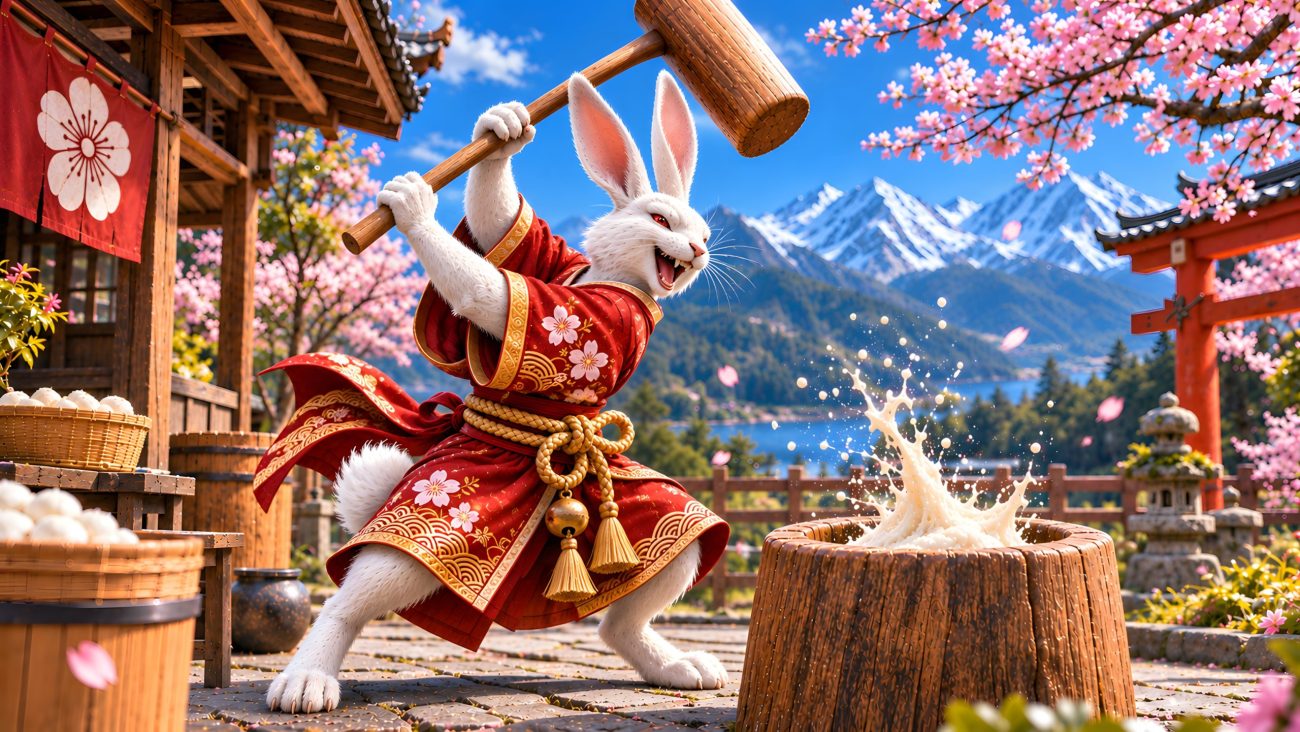
Mochitsuki Usagi, meaning “rice-cake-pounding rabbit,” is a supernatural warrior who appears in the illustrated storybook Kore wa Gozonji no Bakemono ni te Gozasōrō. It serves as a subordinate of Momonguwa, the leader of a monstrous army challenged by the giant yokai Mikoshi Nyūdō. The rabbit wears full samurai armour and carries a wooden mallet used for pounding rice cakes as though it were a weapon.

Despite its martial equipment, the rabbit is distracted by its long ears, worrying constantly about protecting them. During the battle, a monster named Tenaga-hime, fighting for Mikoshi Nyūdō’s army, grabs the rabbit by its ears and makes it cry out in pain. Its concern for its ears proves more troublesome than its duties as a warrior.

The character appears to have been inspired by the familiar image of a rabbit pounding rice cakes on the Moon, a popular interpretation of the patterns visible on the lunar surface. The illustration turns this traditional lunar rabbit into a comical yokai warrior whose most distinctive feature becomes his greatest weakness.


Sources

“Mochi-pounding Rabbit.” 新版TYZ 妖怪図鑑 (New TYZ Yokai Encyclopedia). https://tyz-yokai.blog.jp/archives/1084405576.html


White Rabbit of Inaba

Tradition: Japanese Mythology
Alternative Names: Inaba no Shiro Usagi, 因幡の白兎, Hare of Inaba
Category: Rabbit


The Myth

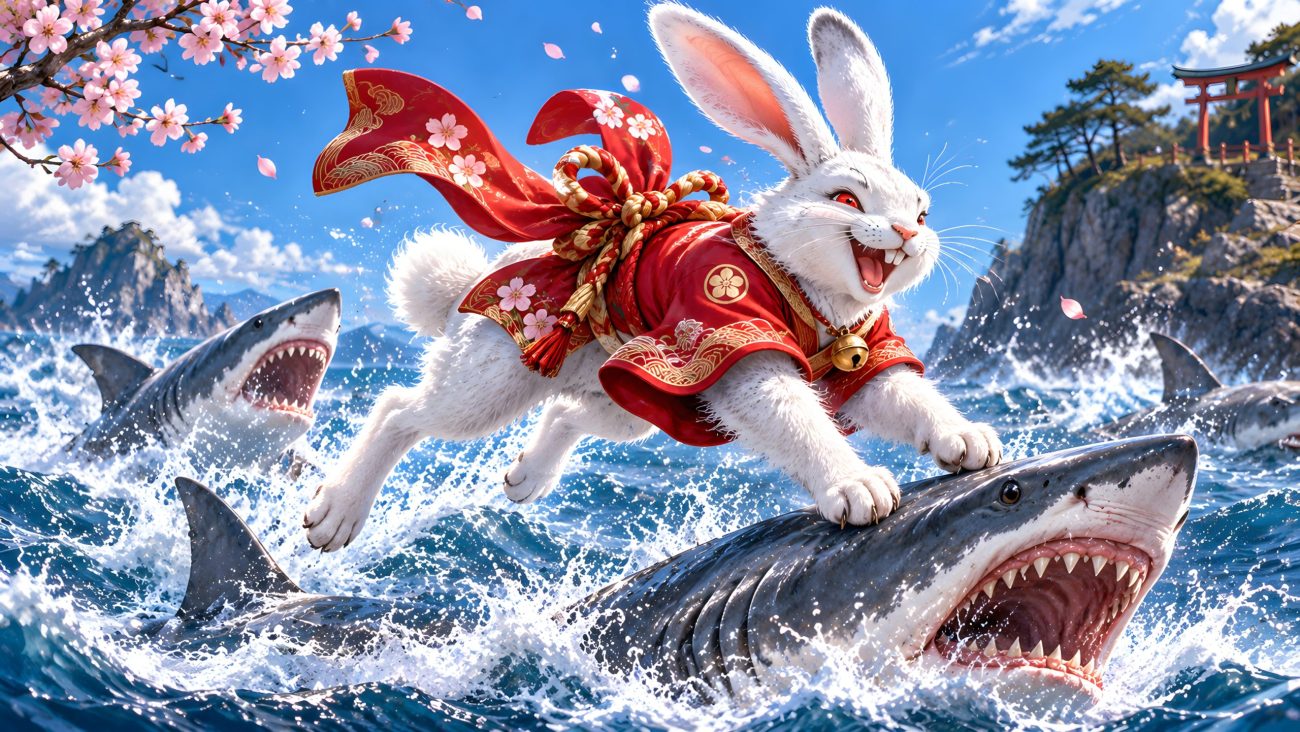
The White Rabbit of Inaba is a clever white hare who tricks sea creatures into forming a bridge across the sea. After convincing them to line up, the rabbit hops across their backs. Just before reaching land, it boasts that it has deceived them. Enraged, the sea creatures tear off its fur, leaving it wounded and in pain.

The rabbit encounters several gods who cruelly advise it to bathe in seawater and let the wind dry its body, making its suffering even worse. Eventually, it meets Ōnamuji, also known as Ōkuninushi, who kindly tells it to wash in fresh water and cover itself with cattail pollen. The treatment heals its wounds, restoring its fur.

Grateful for this kindness, the rabbit predicts that Ōnamuji will marry the beautiful goddess Yakami-hime, despite his many brothers competing for her hand. The prophecy comes true, and the rabbit becomes associated with healing, divine guidance, and matchmaking.


Sources

“Hare of Inaba.” 新版TYZ 妖怪図鑑 (New TYZ Yokai Encyclopedia). https://tyz-yokai.blog.jp/archives/1084458606.html