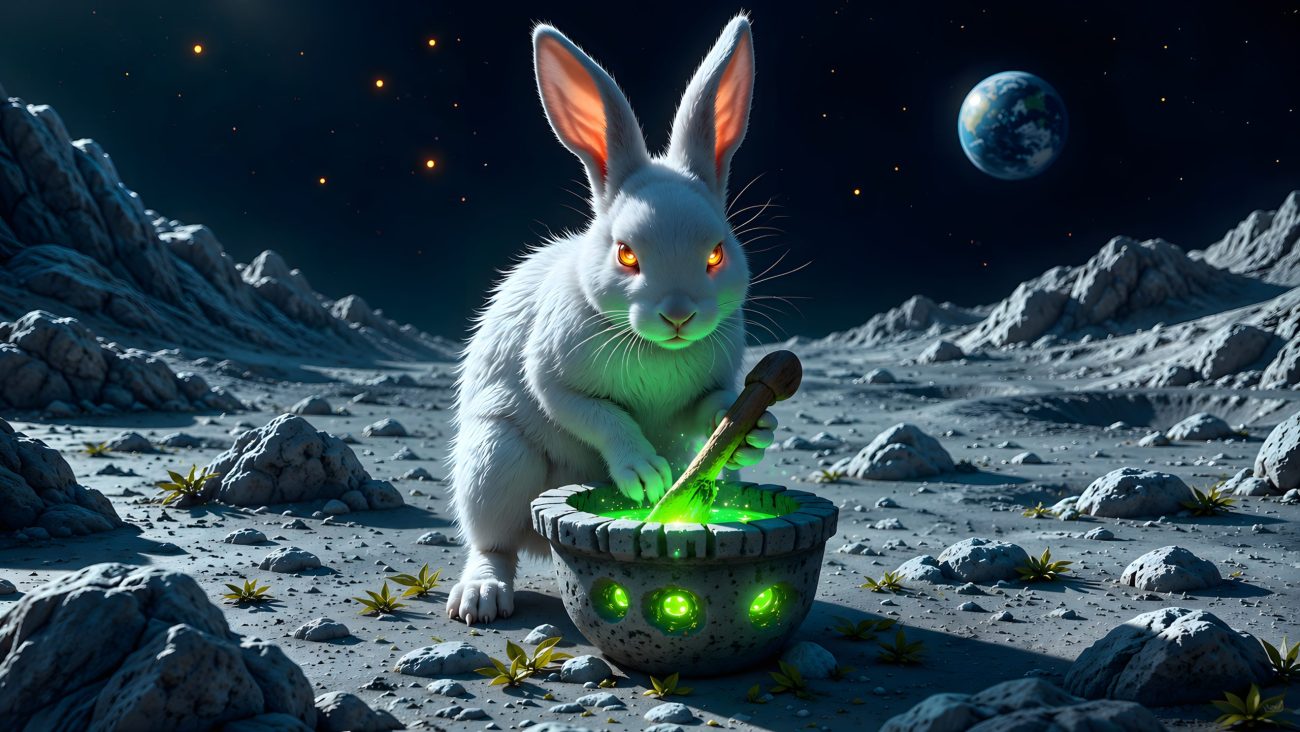
Aka Usagi

Tradition: Japanese Mythology
Alternative Names: 赤い兎, Red Rabbit, Red Hare
Category: Rabbit


The Myth

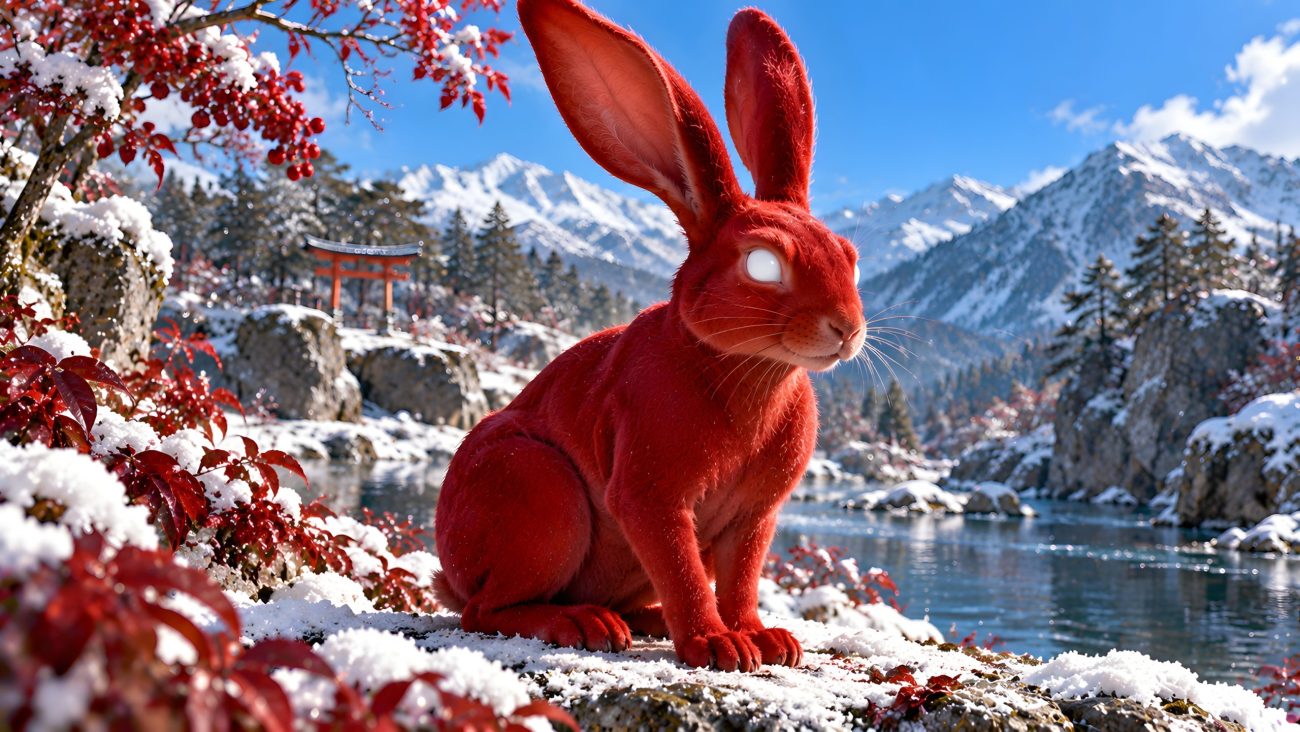
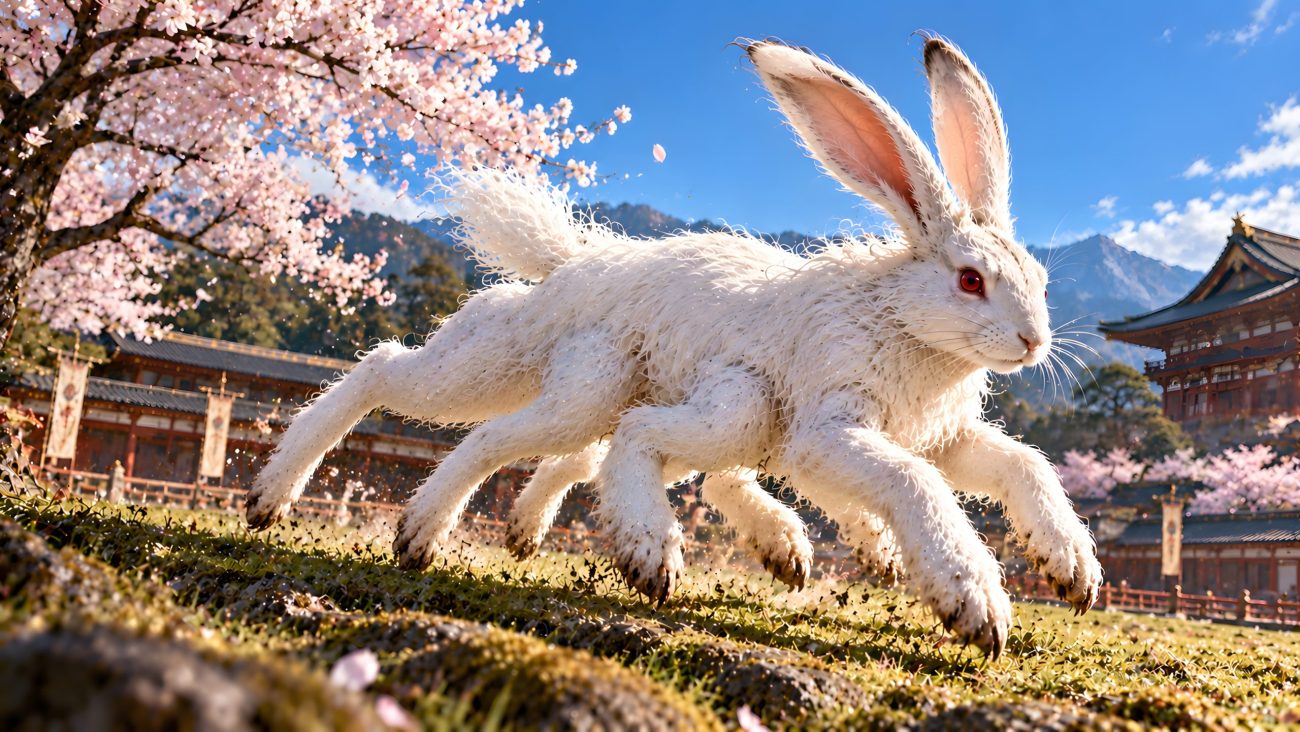
Aka Usagi, meaning “red rabbit,” appears in traditional tales from Narageshita, Kaminoyama, in Yamagata Prefecture, Japan. In one story recorded in Satō-ke no Mukashibanashi (1982), a man hunting rabbits near a mountain stream encounters a red rabbit that darts away at remarkable speed. He pursues it until it disappears into a small thicket in an open field. Using a long wooden tool called a koshikibera, normally used to clear away snow, he digs into the spot where the rabbit vanished. Beneath the snow, he discovers a human corpse.

The dead person is identified as someone from Aioi who had previously gone missing. However, when local people hear about the discovery, they urge the finder to keep silent and avoid becoming involved. They insist that the truth will become apparent when the snow melts in spring. The account was reportedly related as a true incident by the original storyteller, presenting the red rabbit as an uncanny apparition that leads a person to a hidden death.

Another local tale portrays the red rabbit as a messenger of the gods. A white rabbit fleeing from a bear jumps into a field of wild strawberries, staining its fur red. Other animals mistake the transformed rabbit for a divine messenger and begin to revere it. During summer, however, the rabbit bathes in water and its fur returns to its original white colour. Once its disguise disappears, the animals no longer regard it with the same reverence, and its apparent divine authority is lost.


Sources

“Aka-usagi.” 新版TYZ 妖怪図鑑 (New TYZ Yokai Encyclopedia). https://tyz-yokai.blog.jp/archives/1084458407.html


Nami Usagi

Tradition: Japanese Mythology
Alternative Names: 波兎, 波に兎, 波乗り兎, Hato, Wave Rabbit, Rabbit Riding the Waves
Category: Rabbit


The Myth

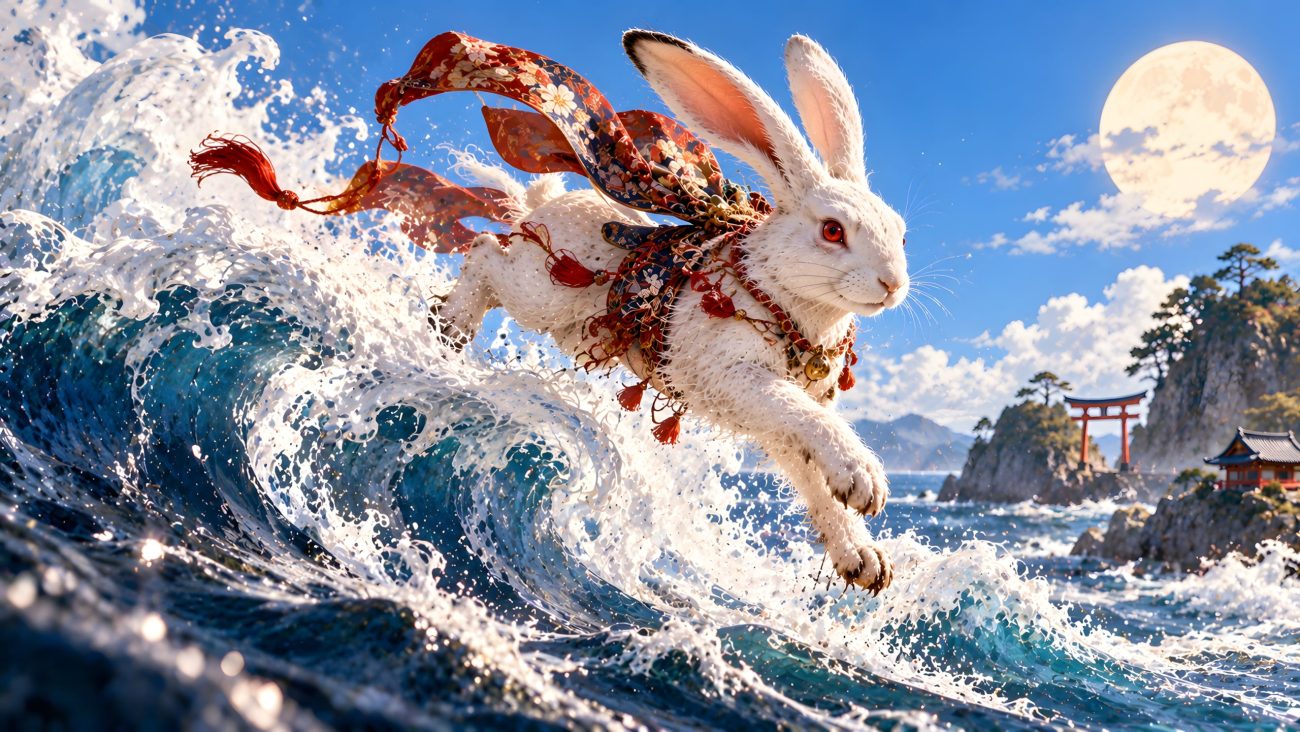
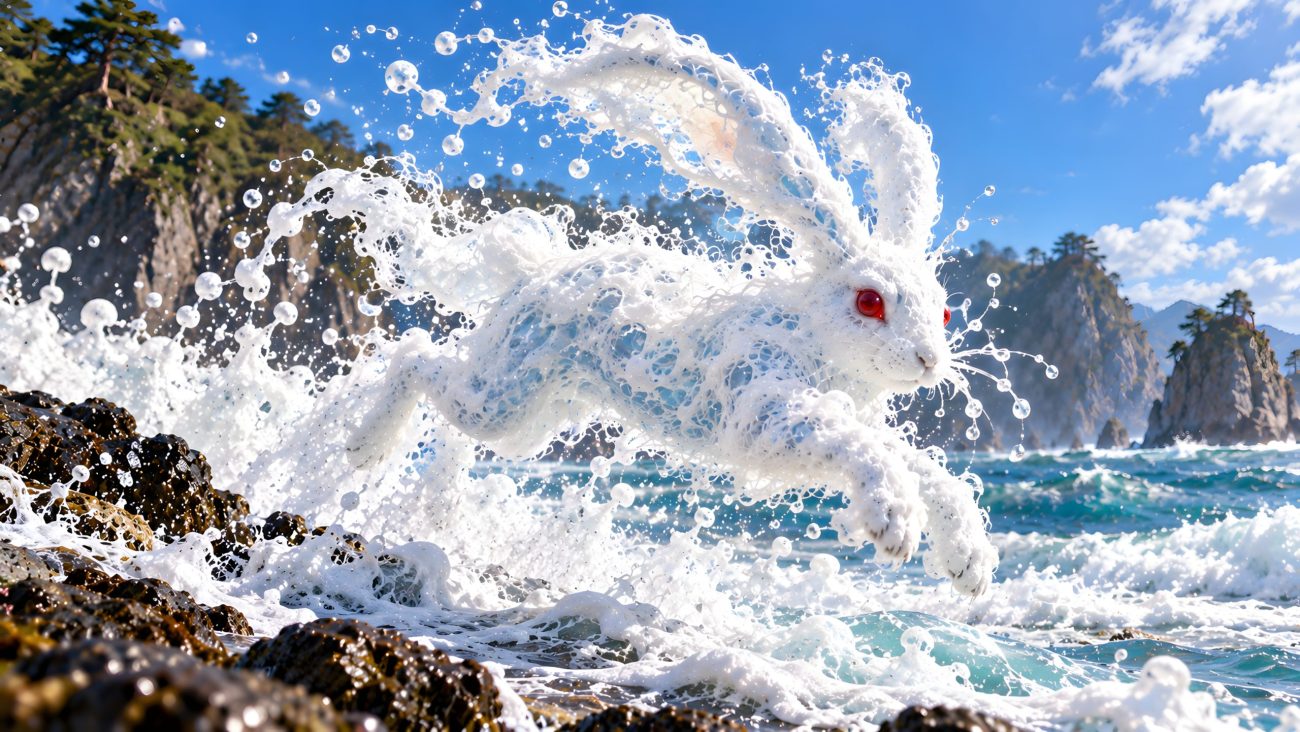
Nami Usagi, meaning “wave rabbit,” is a traditional Japanese artistic motif depicting a rabbit leaping across waves. Also known as Nami ni Usagi or Naminori Usagi, the design became established during the early modern period and has been used as an auspicious decoration on shrine and temple carvings, artworks, household objects, and architectural ornaments. Its origins are uncertain, and several interpretations have developed over time.

One explanation connects the motif with protection against fire. Rabbits riding waves were frequently depicted on roof ornaments, storehouse decorations, and clothing worn during fires, suggesting that the design may have been intended to ward off flames. In Miyoshi, Hiroshima Prefecture, a traditional ceremony known as Ushi Kuyō involves placing a decorated saddle called Tama Usagi on a cow used for puddling rice fields. Its rabbit-and-wave design has been associated with the rabbit as a deity of fertility and agricultural abundance.

Art historians commonly connect the motif to the Noh play Chikubushima. In the play, a courtier travelling across Lake Biwa describes the beauty of trees reflected in the water and moonlight shimmering across the lake, comparing the scene to a rabbit running over the waves. The image refers to the Jade Rabbit associated with the Moon, whose reflection appears to move across the water. The poet Yosa Buson similarly compared moonlight on Lake Suwa to a rabbit crossing the lake. These poetic images may have inspired artists to represent the moonlit waves as a rabbit leaping across them.

Other interpretations link the motif to the myth of the White Hare of Inaba, in which a hare crosses the backs of crocodiles or wani. The scholar Nishida Naoyoshi suggested that the original design may have depicted a rabbit crossing the backs of these creatures before gradually changing into a rabbit riding waves. A further connection appears in a shrine tradition from Yazu, Tottori Prefecture, concerning Dōso Shirousagi Daimyōjin, or White Hare Shrine. According to its origin story, a white hare guided the sun goddess Amaterasu to Mount Reisen and was subsequently worshipped as a local guardian deity. The hare was also regarded as the sacred manifestation of Tsukuyomi, the Moon deity, and rabbit-and-wave carvings found at shrines throughout the region may be connected with this tradition.


Sources

“Namiusagi.” 新版TYZ 妖怪図鑑 (New TYZ Yokai Encyclopedia). https://tyz-yokai.blog.jp/archives/1084424021.html


Usofu-Usagi

Tradition: Japanese Mythology
Alternative Names: 嘘ふ兎, The Lying Rabbit, The False Rabbit, Demon of the Wild Rabbit
Category: Rabbit


The Myth

Usofu-Usagi, meaning “lying rabbit” or “false rabbit,” is a supernatural creature described in Kijidan, a collection of strange tales. The story concerns Kimura Sodayū, a man living in Kamishinmachi, in the mountains near Kanazawa. One night, voices called out to him from outside his house, warning that someone had repeatedly been lurking around his home and spreading lies. Sodayū went outside to investigate, but found nobody. After waiting on his veranda, he heard the mysterious visitor approaching again from the mountain behind his house.

Following the voice through the darkness, Sodayū pursued the intruder toward a small grove. When he reached out to seize the figure, he felt something resembling an animal’s foot. The creature managed to escape, but when Sodayū lit a fire, he discovered that he was still holding a handful of fur resembling a rabbit’s tail. He then remembered that he had cut down a large silk tree near the mountain’s edge four or five days earlier. Because rabbits were believed to make their homes among such trees, he suspected that the mysterious visitor was a rabbit that had become a demon to avenge the destruction of its habitat.

The story was later retold in Folktales of Kaga and Noto, edited by Seizaka Tokio, under the title “The False Rabbit.” That version used regional dialect and attributed the tale to Sanshū Kidan, although the original account appeared in Kijidan, a sequel to that collection. The creature is also listed as “The Lying Rabbit” in the Encyclopedia of Japanese Strange and Yokai (2022). The story presents the rabbit as a supernatural avenger whose strange behaviour is linked to human interference with its natural dwelling place.


Sources

“The Lying Rabbit.” 新版TYZ 妖怪図鑑 (New TYZ Yokai Encyclopedia). https://tyz-yokai.blog.jp/archives/1084401769.html


Obake Usagi

Tradition: Japanese Mythology
Alternative Names: お化け兎, Ghost Rabbit, Shapeshifting Rabbit
Category: Rabbit


The Myth

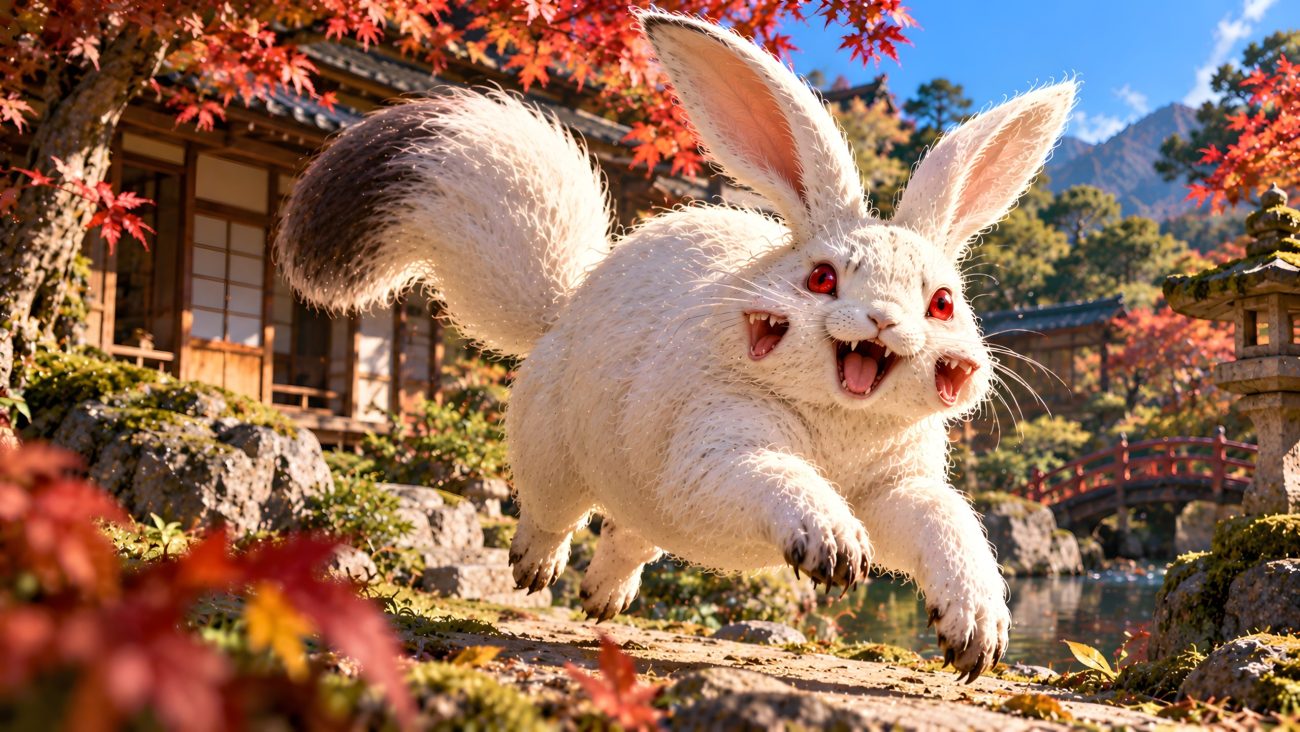
Obake Usagi, meaning “monster rabbit” or “ghost rabbit,” appears in a children’s story written by Yosano Akiko in her collection Otogibanashi Shōnen Shōjo, published in 1910. Despite its name, the creature is actually a tanuki attempting to disguise itself as a rabbit. One day, a boy named Tarō notices a strange white animal hiding behind an artificial hill in his garden. It resembles a rabbit, but its raccoon-dog-like face, large belly, and long tail make its appearance suspicious. Tarō calls his companions Ume and Hanako to investigate.

When Tarō asks whether it is a rabbit, the creature confidently answers yes. Determined to expose the deception, Tarō points out the animal’s supposed inconsistencies. He remarks that rabbits usually have red eyes, and the creature immediately makes its eyes red. When Tarō criticizes its large, black tail, it transforms it into a small, white one. When he says that a rabbit’s hind legs should be longer, the creature promptly lengthens them. Each time Tarō identifies another feature, the shapeshifter alters its body to match, gradually becoming more convincing.

Eventually, Tarō claims that all rabbits have three mouths, referring to the shape of a rabbit’s mouth. Not understanding this expression, the disguised tanuki sprouts three actual mouths on its face. As the children laugh, it becomes increasingly confused, adding more mouths before Tarō persuades it to beat its belly like a traditional tanuki. When the children call it “Mr. Tanuki,” the creature instinctively answers, exposing its identity. It confesses that it disguised itself as a rabbit because rabbits are praised as good creatures, while tanuki are often portrayed as wicked, particularly in tales such as Kachi-kachi Yama. Tarō reassures it that doing good matters more than what others say, and the repentant tanuki abandons its disguise. It befriends the children and returns home with gifts of sweets and mandarins.


Sources

“Ghost Rabbit.” 新版TYZ 妖怪図鑑 (New TYZ Yokai Encyclopedia). https://tyz-yokai.blog.jp/archives/1084316733.html


Yatsuashi no Usagi

Tradition: Japanese Mythology
Alternative Names: 八足の兎, Eight-Legged Rabbit, Eight-Footed Hare
Category: Rabbit


The Myth

Yatsuashi no Usagi, meaning “eight-legged rabbit,” was an extraordinary rabbit reportedly discovered in Yamato Province and presented to the imperial court in the second month of Enchō 2 (924). Its unusual appearance was recorded in volume twenty of the Zenzen Taiheiki. Because such a creature was considered an unprecedented anomaly, the court ordered diviners from the Bureau of Yin and Yang to determine whether its appearance foretold good or bad fortune.

The Abe family’s diviner explained that the rabbit had originated from a male and female rabbit merging into a single creature. Their faces, considered yin in nature, had already disappeared into one, while the legs of both animals remained, producing a rabbit with eight legs. He argued that there was no need for excessive concern over the omen. When courtiers remained uneasy, he declared that eight legs were auspicious: eight represented the culmination of yin, and the character for “foot” also meant “sufficiency,” suggesting that nothing would be lacking. He further compared the rabbit to sacred bronze tripods depicted with eight legs, reinforcing the interpretation that the creature foretold good fortune.

The diviner also cited a story of a rabbit kept by the king of Chu that disappeared after being exposed to moonlight. This tale was used to explain the rabbit’s supposedly elusive yin nature and support the idea that two rabbits could merge into one. Later, when the courtier Taira no Kiyose questioned the monk Jitchibō Hōin of Mount Hiei about the creature, the monk offered a similar explanation. Although unusual animals were not generally considered auspicious, he noted that white animals, such as white phoenixes and white pheasants, were often celebrated as favorable signs. Since the eight-legged rabbit was reportedly white, he considered it potentially auspicious. He also connected the rabbit to the Moon, where the Jade Rabbit resides, arguing that two rabbits had combined into one just as the character 朋 could be formed from two instances of the character for moon. His explanation impressed the court for its apparent logic.


Sources

“Yatsuashi-usagi.” 新版TYZ 妖怪図鑑 (New TYZ Yokai Encyclopedia). https://tyz-yokai.blog.jp/archives/1084178766.html


Usagimuko

Tradition: Japanese Mythology
Alternative Names: 兎婿, Rabbit Son-in-Law, Rabbit Bridegroom
Category: Rabbit


The Myth

Usagimuko, meaning “rabbit son-in-law,” is a figure in Japanese folktales found across regions from Tōhoku to Kantō. The stories follow a marriage between a rabbit and a human woman, usually arranged after the rabbit helps an old man with agricultural work. In exchange for its assistance, the rabbit demands marriage to one of the man’s daughters. Although the older daughters refuse, the youngest often agrees, only to use her cleverness to escape the unwanted marriage and defeat the rabbit. The tale resembles the broader Japanese story type of the monkey son-in-law.

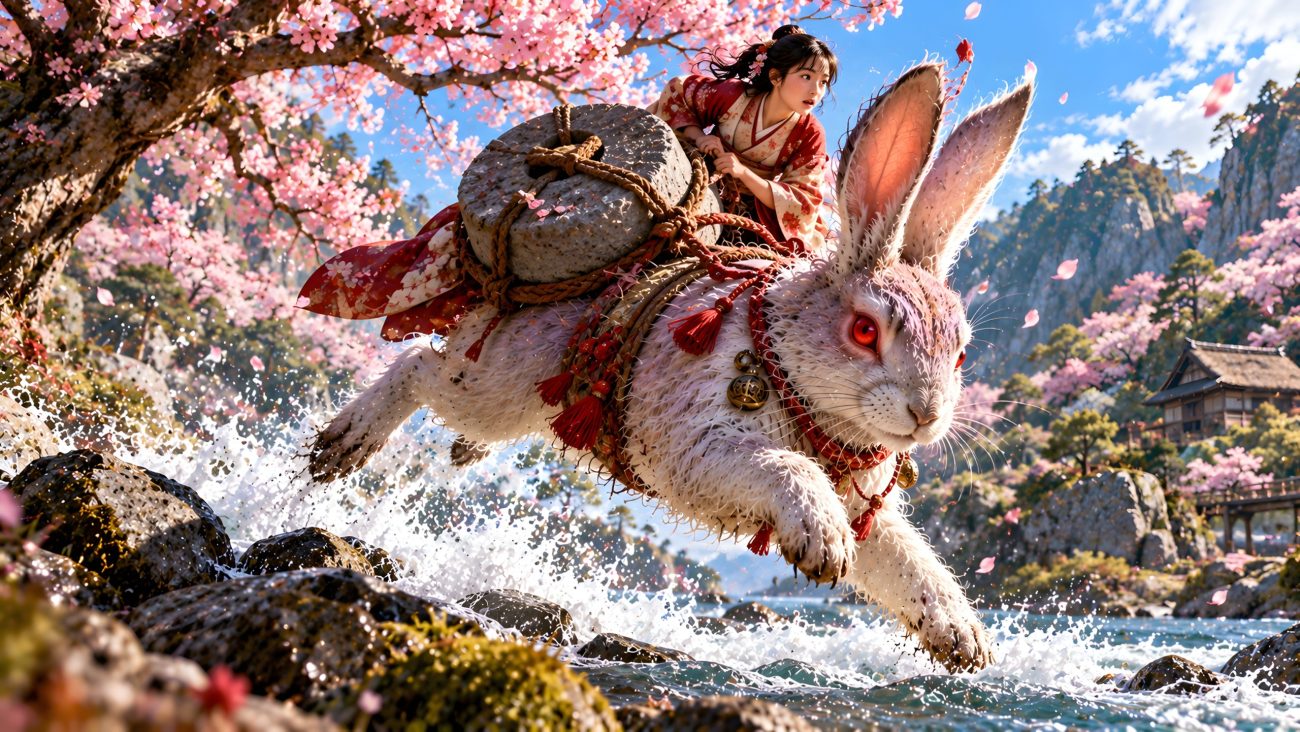
In a version from Mutsu City, Aomori Prefecture, an old man is weeding his bean field when a rabbit offers to help. Grateful for its work, the old man promises that the rabbit may marry one of his three daughters. When the man later regrets his promise and becomes ill with worry, his eldest and second daughters refuse to marry an animal, but the youngest agrees. She asks her grandfather to make a mortar and carries it on the rabbit’s back when it comes to take her into the mountains. During cherry-blossom season, she persuades the rabbit to climb a tree beside a river to collect branches as a gift for her grandfather. With the heavy mortar still on its back, the rabbit climbs high into the tree, breaks a branch, and falls into the river. Unable to escape, it dies, and the youngest daughter returns home to continue caring for her parents.

A similar story was recorded in Niihari Village, Tone District, Gunma Prefecture. There, a rabbit helps an old man digging carrots and demands marriage to his daughter in return for pulling up a long carrot. The eldest daughter rejects the rabbit because of its long ears, while the second also refuses. The youngest becomes its bride and is taken into the mountains. When she later prepares to return home, she carries a heavy stone millstone filled with rice cakes on the rabbit’s back. She then persuades the rabbit to climb a cherry tree to gather branches. The rabbit breaks a branch and falls into the river, where the weight of the millstone prevents it from escaping. In both versions, the youngest daughter outwits the rabbit and returns safely to her family.


Sources

“Usagimuko.” 新版TYZ 妖怪図鑑 (New TYZ Yokai Encyclopedia). https://tyz-yokai.blog.jp/archives/1084241464.html


Usagi no Tatari

Tradition: Japanese Mythology
Alternative Names: 兎の祟り, Curse of the Rabbit, Hare’s Curse
Category: Rabbit


The Myth

Usagi no Tatari, meaning “the curse of the rabbit,” refers to Japanese folk beliefs associating the consumption of wild rabbits with illness and supernatural retribution. A 1937 article in the medical journal Kansai Ikai Jihō recounts an incident in Kawasaki Village, Shibata District, Miyagi Prefecture. On the twenty-eighth day of the twelfth lunar month, four young men caught a rabbit at the foot of Mount Zaō and ate it. Shortly afterwards, their tonsils became swollen and they developed lumps as large as chicken eggs. Medical examinations revealed that they had contracted tularemia, an infectious disease associated with wild rabbits. Local people, however, feared that the illness was a manifestation of the rabbit’s curse.

The physician and tularemia researcher Ōhara Hachirō (1882–1943), who came from Fukushima Prefecture, recorded several regional beliefs concerning rabbits in his book Yato-byō (Tularemia). In Oguni Village, Date District, dead wild rabbits were reportedly found in the mountains from late autumn through the beginning of the new year. Although people had once eaten them without apparent consequences, illnesses resembling fever reportedly became common after larch trees were planted on the mountainside. In Ōura Village, Iwaki District, rabbits that ate young wheat shoots in spring were said to die, and eating them was believed to cause fever. Other accounts attributed rabbit deaths to red berries, claiming that people who ate the affected animals could suffer severe vomiting, diarrhoea, and even death.

In Nakamura Town, Sōma District, people believed that preparing a dead wild rabbit for food would inevitably cause chills and swollen lymph nodes. Rabbits that had lain dead on the ground for an entire night were considered unfit to eat, regardless of the cause of death. These traditions reflect the dangers associated with consuming diseased wild animals. Although the illnesses were interpreted locally as a rabbit’s curse, the historical accounts suggest that folk prohibitions against eating certain rabbits may have preserved practical warnings about a disease that was not yet fully understood.


Sources

“Usagi-tata.” 新版TYZ 妖怪図鑑 (New TYZ Yokai Encyclopedia). https://tyz-yokai.blog.jp/archives/1081457824.html


Isepo Tereke

Tradition: Japanese Mythology
Alternative Names: イセポテレケ, Isepo Tereke, Leaping Rabbit
Category: Rabbit


The Myth

Isepo Tereke is a belief in Ainu tradition connecting rabbits with waves and the dangers of the sea. The name combines isepo, meaning “rabbit,” and tereke, meaning “to jump.” White waves breaking across the sea were described as rabbits leaping. Because speaking the word for rabbit while at sea was believed to bring rough waves and storms, people avoided saying it offshore. Instead, they sometimes used the expression kai kuma, meaning “broken stick,” as a substitute.

In the Horobetsu region, the image of rabbits leaping along the shore also appeared in a traditional lullaby used to soothe babies. Caregivers showed infants the waves breaking against the beach and sang, “Ota ka ta isepo pon tereke,” meaning “A little rabbit jumps on the seashore.”

A local legend tells of a large Ainu settlement at Tonkeshi, near Horobetsu, which was governed by six chiefs. One day, a man named Tonuuwoushi from Hidaka saw a rabbit standing on a hill near the settlement. The animal stretched its forelegs toward the sea as though beckoning something from offshore. Suspecting that a tsunami was approaching, Tonuuwoushi shouted a warning and urged the inhabitants to flee. The chiefs ignored him, and the settlement was soon overwhelmed by the waves.

Another tradition from the Shiraoi region describes the kamuy, or divine spirit, of an old rabbit driving a plague spirit resembling dense fog back out to sea. This tale is also known as Isepo Tereke, further associating the rabbit with the sea and its potentially destructive forces.


Sources

“Isepotereke.” 新版TYZ 妖怪図鑑 (New TYZ Yokai Encyclopedia). https://tyz-yokai.blog.jp/archives/1081441215.html


Moon Rabbit

Tradition: Chinese Mythology, Japanese Mythology, Korean Mythology, Vietnamese Mythology, American Mythology
Alternative Names: Jade Rabbit, Yutu, 玉兔, Moon Hare, Lunar Rabbit
Category: Rabbit


The Myth

The Moon Rabbit, also known as the Jade Rabbit or Moon Hare, is a mythical rabbit or hare believed to inhabit the Moon. Its image originates from interpretations of the dark markings on the lunar surface, which resemble a rabbit. The creature appears in traditions across East Asia, including China, Japan, Korea, and Vietnam, as well as in some Indigenous American cultures. In East Asian mythology, the Moon Rabbit is commonly depicted pounding ingredients with a mortar and pestle. The substance it prepares varies between traditions: Chinese and Vietnamese accounts often describe it making the elixir of immortality, while Japanese and Korean versions commonly portray it preparing rice cakes, such as mochi or tteok. Some Chinese depictions also show the rabbit making medicine for mortals or preparing mooncakes.

In Chinese tradition, the Moon Rabbit is frequently associated with Chang’e, the goddess of the Moon, for whom it prepares the elixir of life. References to a lunar hare appear in early Chinese literature, including the Chu Ci, a collection of poems compiled during the Western Han period. Later sources also mention the Jade Hare and Gold Hare, names used poetically for the animal on the Moon and, by extension, for the Moon itself. The image of the rabbit preparing medicine remained influential in Chinese poetry and art, including depictions embroidered on imperial robes.

A Buddhist story offers another explanation for the rabbit’s presence on the Moon. In the Jataka tales, a monkey, an otter, a jackal, and a rabbit resolve to practise charity on the full-moon day. When an old man asks them for food, the other animals gather what they can find, but the rabbit can offer only grass. To demonstrate its generosity, it throws itself into a fire so that the man can eat its flesh. The rabbit remains unharmed, and the old man reveals himself to be Śakra, king of the gods. Moved by the rabbit’s selflessness, he places its likeness on the Moon so that its virtue will be remembered. The rabbit is consequently regarded in this story as a Bodhisattva. A Japanese version recorded in the Konjaku Monogatarishū features a fox and a monkey as the rabbit’s companions.

The Moon Rabbit also appears in the Chinese novel Journey to the West. In one episode, a celestial rabbit escapes from the Moon Palace and disguises herself as a woman, intending to marry the monk Tang Sanzang and absorb his vital yang essence. Sun Wukong discovers her identity and battles her. Before he can defeat her, the celestial figure Taiyin Xingjun arrives and reveals that the creature is the Jade Rabbit, a guardian of the mystical elixir in the Moon Palace. Taiyin Xingjun explains that the rabbit secretly escaped from the palace and asks Sun Wukong to spare her. The Monkey King agrees, and the rabbit is returned to the Moon. The Moon Rabbit is also closely connected with lunar festivals across Asia, including China’s Mid-Autumn Festival, Japan’s Tsukimi, Korea’s Chuseok, and Vietnam’s Tết Trung Thu, where it forms part of the imagery and traditions associated with the Moon.


Sources

“Moon Rabbit.” Chinese Wikipedia. Wikimedia Foundation. https://zh.wikipedia.org/wiki/%E6%9C%88%E5%85%94