Iksuyakwoo

Tradition: Korean Mythology
Alternative names: Isu Yakwoo, Yisu Yakwoo (異獸若牛)
Category: Cow


The Myth

In 799, during the reign of King Soseong of Silla, the governor of Uduju sent a report to the king describing a strange beast that had appeared in the region.

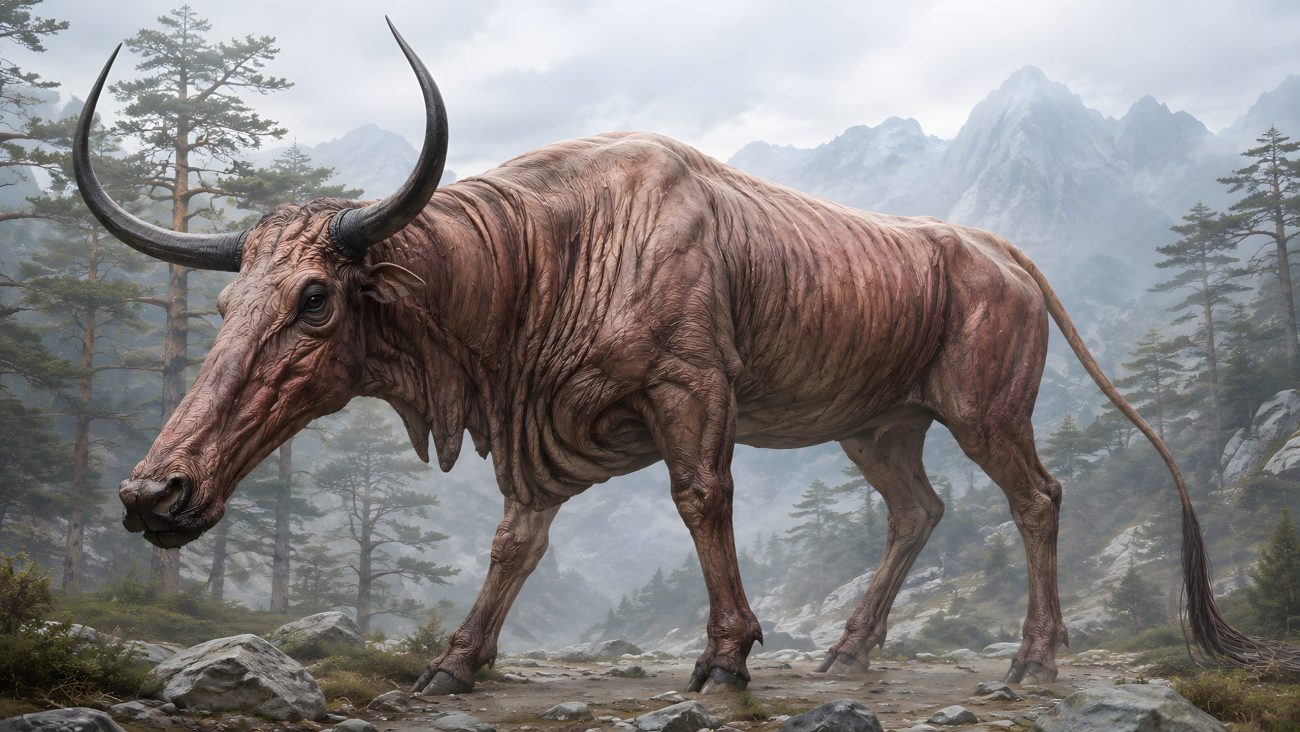
The creature was described as resembling a cow, but it was far larger and stranger than any ordinary cattle. It had a long, massive body, a tail approximately three feet long, no hair, and an unusually long nose. It was seen traveling from Hyeonseongcheon toward Osikyang.

The Silla record gives no name for the creature or any further account of what happened to it. Its description is simply preserved as an “extraordinary beast resembling an ox” (異獸若牛).

Later Korean tradition has sometimes regarded this creature as an early form or possible precursor of the Bulgasari, a famous Korean monster. Its bizarre combination of an ox-like body, hairlessness, enormous size, and elongated nose made it sufficiently unusual to be recorded as an omen-like beast in the Samguk Sagi.


Sources

“이수약우.” 나무위키 (NamuWiki). Accessed August 21, 2026. https://namu.wiki/w/이수약우

Geumdoktae

Tradition / Region: Korean Mythology
Alternative names: Golden Calf, Geumsongaji, Geumsongajijeon, Prince Geumdok
Category: Cow


The Myth

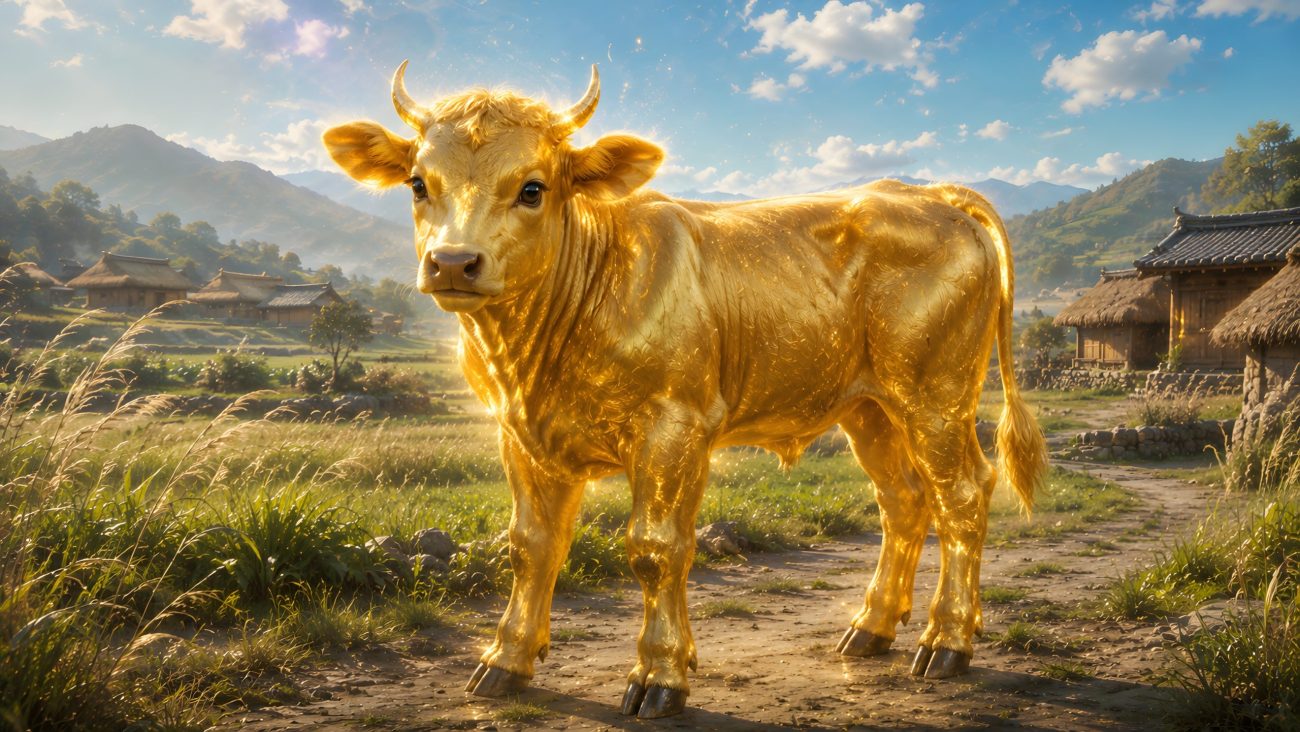
Geumdoktae is a magical golden calf born from a cow after a newborn child is secretly given to the animal. It later transforms between human and animal forms and eventually becomes a handsome man.

According to the tale, a man takes a concubine because he wants a son. While he is away, his wife gives birth to a boy. Jealous of the child, the other wife secretly gives the baby to a cow, which eats it.

When the man returns, the cow gives birth to a golden calf. He becomes deeply attached to the unusual animal and treats it with great affection.

The jealous wife then pretends to become ill and claims that she can only recover by eating the golden calf’s liver. The man orders a butcher to kill the calf and bring him its liver.

The butcher takes pity on the calf and secretly releases it. Instead of killing it, he brings back the liver of a dog.

The golden calf escapes and travels to Seoul. There it encounters a notice announcing that whoever can beat a straw drum will be allowed to marry the daughter of a nobleman. The golden calf approaches the drum and beats it, becoming the nobleman’s son-in-law.

The calf eventually sheds its animal form and becomes a handsome man. He returns to his father together with his wife and reveals the truth about what happened to him. His biological mother is rescued, and the family is reunited.

The golden calf then remains in human form and lives happily with his wife.


Sources

“암소 (Amso).” Encyclopedia of Korean Folk Culture. National Folk Museum of Korea. Accessed August 16, 2026. https://folkency.nfm.go.kr/topic/detail/5748?


Cheongwoo

Tradition / Region: Korean Mythology
Alternate Names: The Blue Cow; Blue Ox of Danyang
Category: Cow


The Myth

During the time of the Joseon Dynasty, in the mountainous lands near Danyang, people spoke of a strange and powerful ox that appeared among the hills.

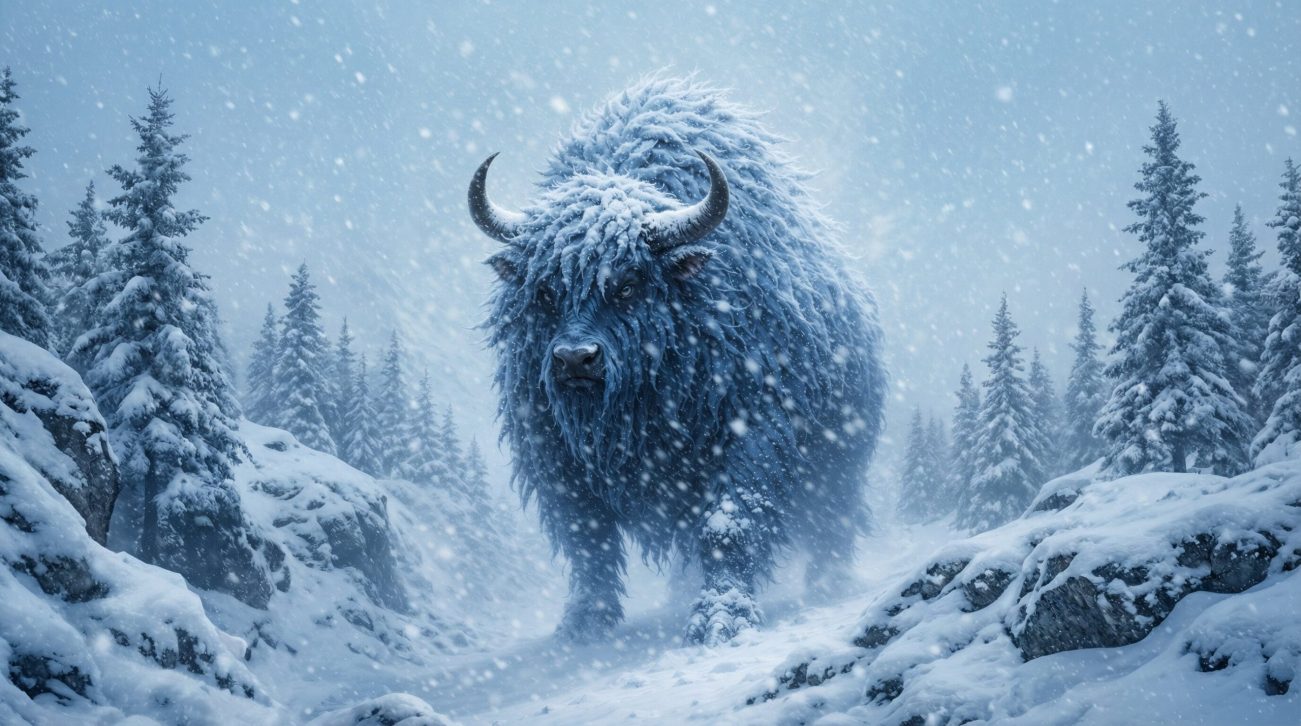
Its body was blue in color, and it stood larger than any ordinary ox. Its head was broad, and its horns spread wide apart, giving it a fearsome and imposing look. Because of its color, it became known as Cheongwoo, the Blue Cow.

Though it seemed wild and strong, the beast was not beyond human control. A man named Yi Ji-beon managed to tame it and made it serve him. Once mastered, Cheongwoo allowed itself to be ridden like a horse, carrying the man across the land.

The creature feared neither cold nor mountain. It moved easily through winter winds and climbed steep slopes without tiring, crossing rocky paths where no common animal could travel. Its strength, endurance, and strange nature made it a wonder among the people.

The tale of Cheongwoo was later written down so that the memory of the blue cow — the mountain beast that bore a man upon its back — would not be forgotten.


Sources

Namuwiki contributors. (n.d.). 청우 (한국의 요괴). In Namuwiki. Retrieved from https://namu.wiki/w/%EC%B2%AD%EC%9A%B0(%ED%95%9C%EA%B5%AD%EC%9D%98%20%EC%9A%94%EA%B4%B4)