Zwergenkuh

Tradition: German Mythology
Alternative Names: Dwarf Cow
Category: Cow


The Myth

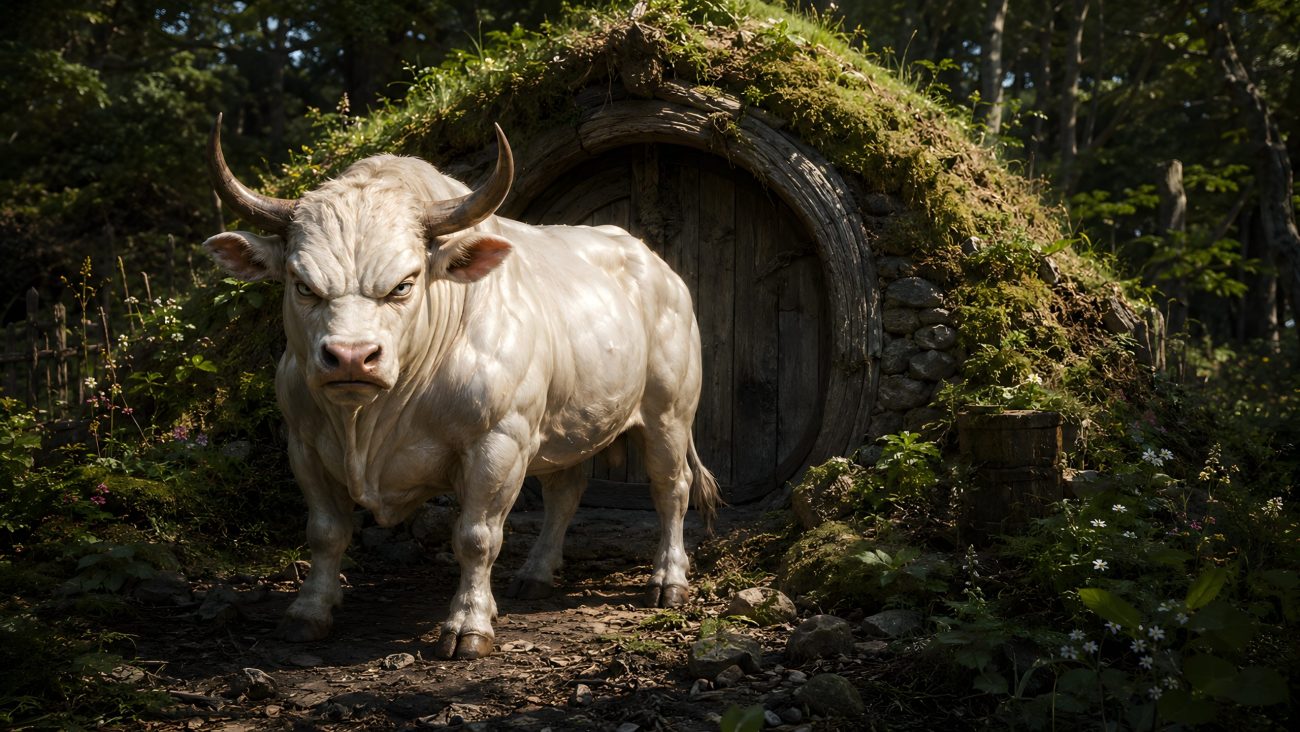
About half an hour from the village of Goldbeck, in the direction of Rinteln, there are caves in a mountain where dwarfs were once said to have lived. Near these caves stood a farmer’s farm, and his herd usually grazed in the area around them. The shepherd noticed that every morning a strange cow would join his animals. She was so smooth and beautiful that she seemed to glitter and shine like gold. Yet every evening, when the shepherd drove the herd home, the mysterious cow would suddenly disappear near the caves.

One evening, the shepherd told his master about the strange animal. The farmer replied, “For that they could surely give you a tip, since you drive their cow out to pasture with yours every day.” The dwarfs, who liked to remain invisibly in the farmer’s house, overheard what he had said.

The following morning, when the shepherd once again drove his herd past the dwarfs’ caves, he found a penny lying in front of one of them. From then on, a penny appeared there every day.

When the farmer heard about this, he said to the shepherd, “If they can do that, surely they can give you breakfast as well.” The next morning, when the shepherd passed the cave again, he found a pancake lying beside the penny. From that day onward, he found a pancake there as well.


Sources

Zaunert, Paul. “Die Zwergenkuh.” In Westfälische Sagen. 1927. Reproduced by SAGEN.at. (sagen.at)
https://www.sagen.at/texte/sagen/deutschland/nordrhein_westfalen/diezwergenkuh.html
Witch as a Calf

Tradition: German Mythology
Alternative Names: Witch as a Calf
Category: Cow


The Myth

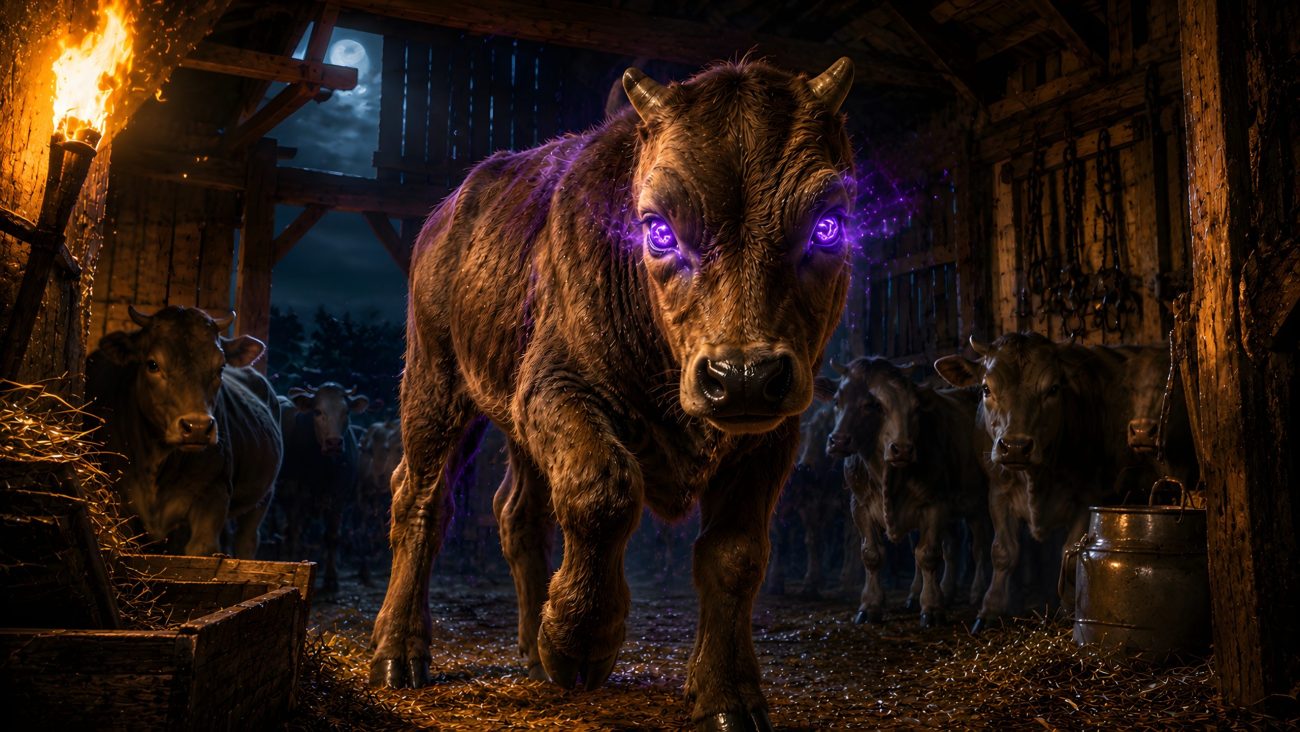
In the Schöllang area of the Allgäu, a farmer was plagued by misfortune in his barn. His cows would not give milk, no matter how much he fed them, and one misfortune after another seemed to fall upon him. The farmer eventually confided his troubles to a man, who gave him strange advice. He told the farmer to get up at midnight and inspect the barn. A calf, he said, would be loose and running around among the other cattle. If the farmer found it, he should not hesitate to cut off both of its ears and then return to bed.

That night, the farmer went to the barn at midnight. Just as he had been told, he found a calf running freely among the other cattle. The farmer took a carving knife and cut off both of the calf’s ears. Having done what he had been instructed to do, he returned to bed without further investigation.

The following morning, the calf was standing unharmed in its usual place. There was nothing apparently wrong with it. But when the farmer looked around the barn, he noticed an old woman sitting in one of the corners. Her ears had been cut off.

The farmer immediately understood what had happened. He shouted, “There you have it!” and chased the old woman out of the stable. After this, the witchcraft that had plagued the farmer and his cattle ceased. His cows once again gave milk, and the farmer and his cattle were happy once more.


Sources

“Hexe als Kalb.” In Allgäuer Sagen, selected from K. A. Reiser’s Sagen, Gebräuche und Sprichwörter des Allgäus, by Hulda Eggart, no. 248, p. 259. Kempten and Munich, 1914. Reproduced by SAGEN.at. https://www.sagen.at/texte/sagen/deutschland/bayern/allgaeu/hexe_kalb.html


Pfronten-Öscher Hund

Tradition: German Mythology
Alternative names: Öscher Hund, Öscher Pudel
Category: Dog, Cow


The Myth

Long ago, people in Pfronten-Ösch frequently saw a huge phantom dog wandering through the area at night. It became known as the Öscher Hund or Öscher Pudel.

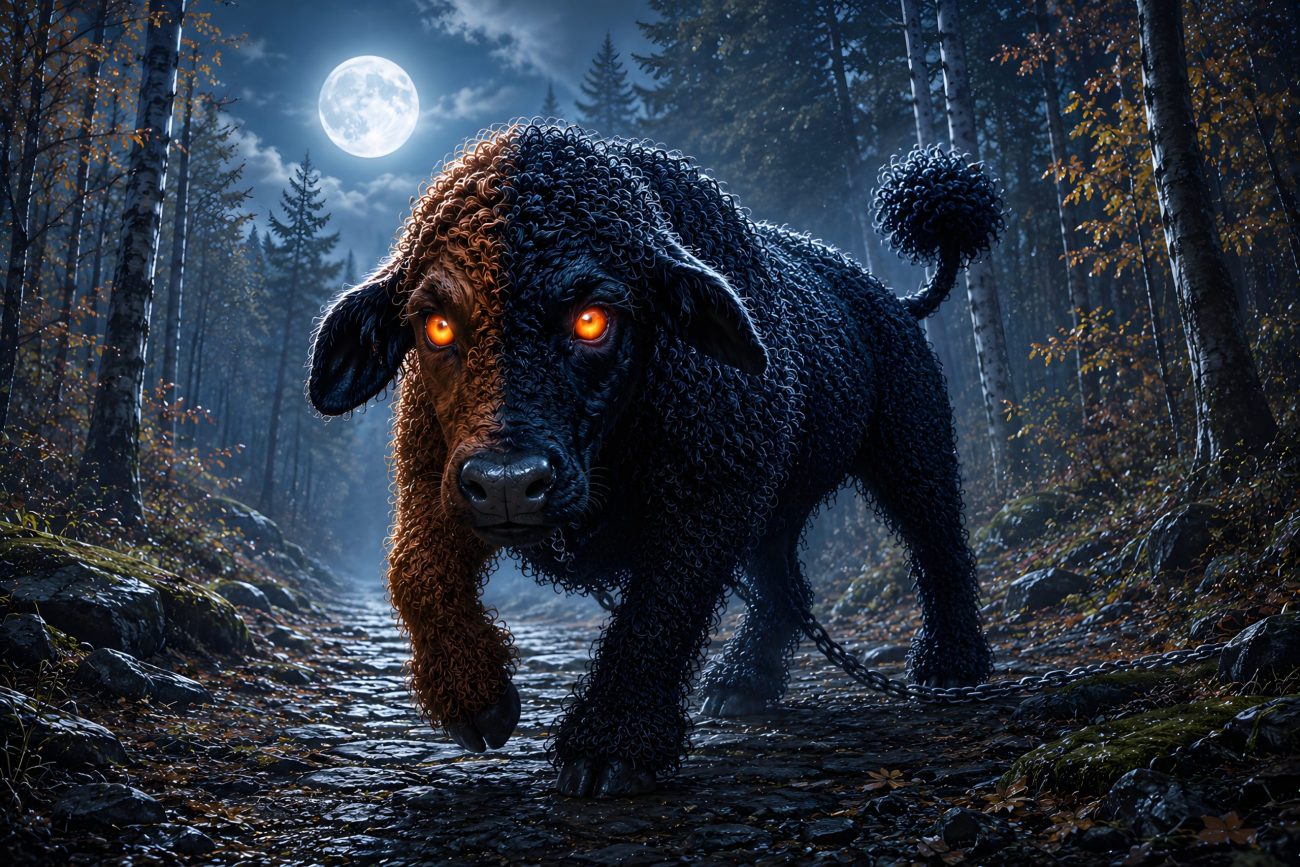
The apparition usually appeared shortly after midnight. It was enormous, about the size of a calf, and its strange appearance made it even more frightening: it was described as being half calf and half dog.

A night watchman who encountered the creature more often than most once found himself being followed by it. The apparition approached him accompanied by the terrifying rattling of chains. Eventually it came so close that he was able to see it clearly.

The creature was divided in color, being half fox-colored and half black. Its eyes were enormous and fiery, said to be as large as the full moon, making it a horrifying sight.

When the night watchman reached the Bärenwirt, however, the Pudel suddenly disappeared. Instead, he heard a terrible crashing noise, as though all the houses of Ösch were collapsing at once.

The Öscher Hund could also be seen by people who did not normally believe in ghosts. Yet it was not visible to everyone. According to the legend, only people born under a particular sign were capable of seeing the apparition.

One Christmas Eve, for example, the creature approached two travelers walking along the road and accompanied them for a considerable distance. One of the men could see the phantom clearly, while his companion could see nothing at all.


Sources

“Der Pfronten-Öscher Hund.” In Hulda Eggart, ed., Allgäuer Sagen, selected from K. A. Reiser’s Sagen, Gebräuche und Sprichwörter des Allgäus, no. 194, pp. 198–199. Kempten and Munich, 1914. Reproduced by SAGEN.at. Accessed August 29, 2026. https://www.sagen.at/texte/sagen/deutschland/bayern/allgaeu/hund.html


Ochsenkopf

Tradition: German Mythology
Alternative names: Ochsenkopf
Category: Cow


The Myth

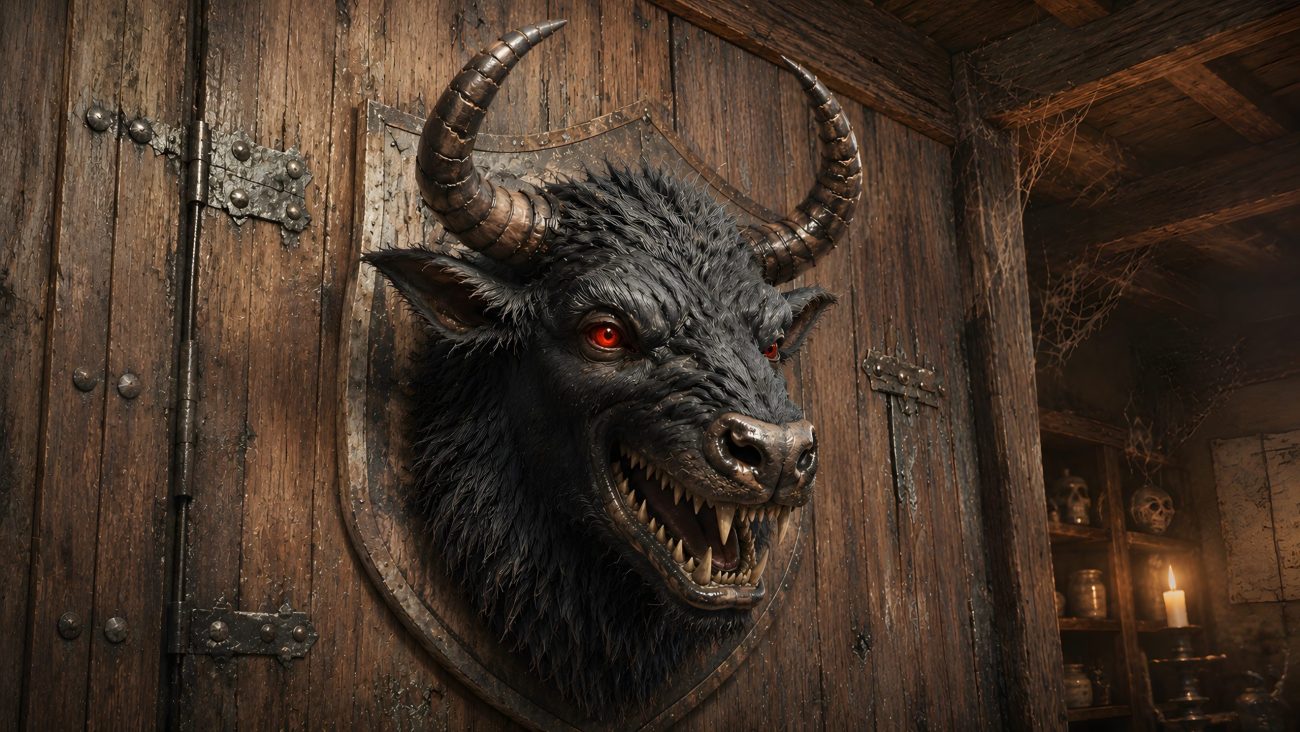
At the Brümmerhof, a historic farmstead dating from 1644 and now located on the grounds of the Agricultural Museum in Hösseringen, an ox head hangs in the gable.

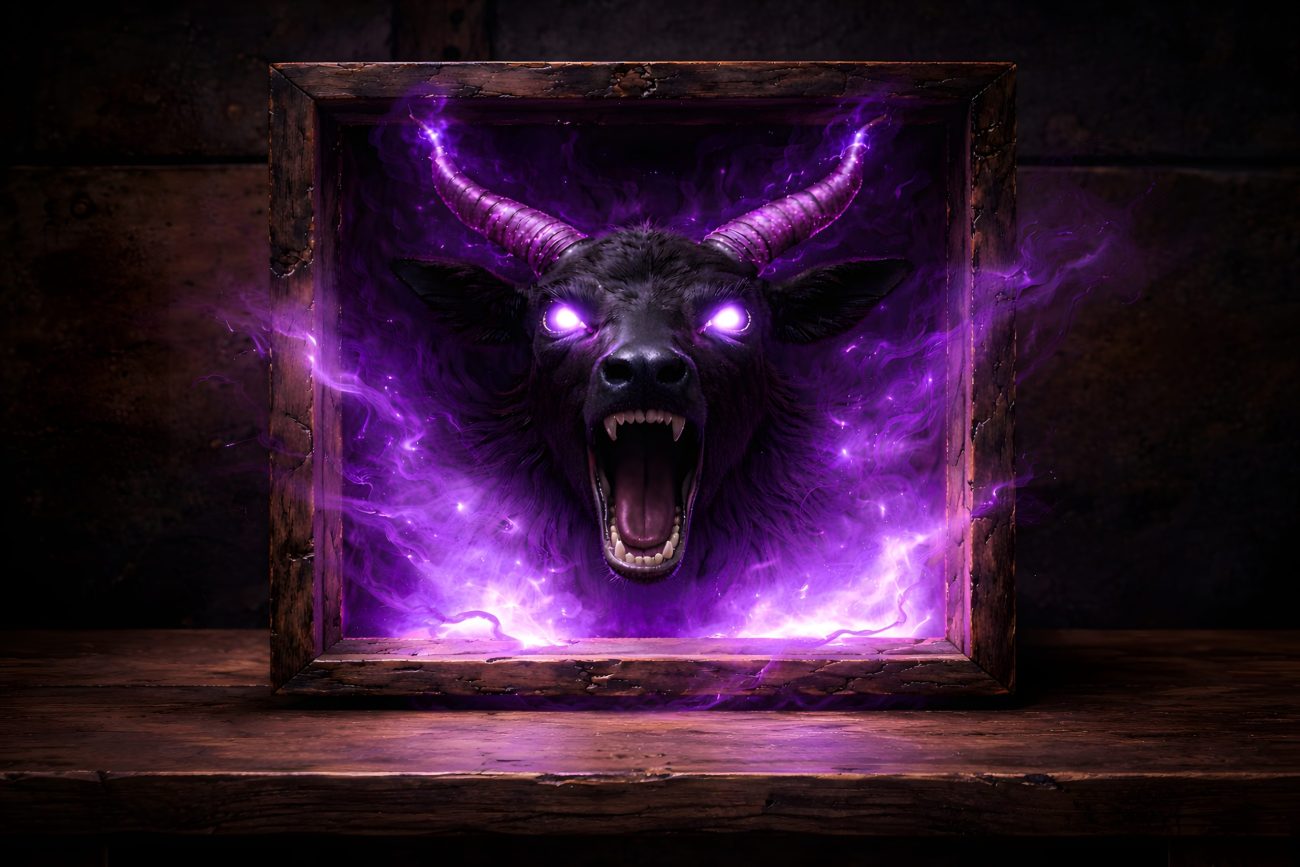
According to the local legend, the ox head has an important protective function. If it were ever removed or disappeared, the farm’s livestock would begin to die one after another.

The deaths would occur in a particular order. The largest animals would die first, beginning with the horses. The deaths would then progress through the livestock until finally reaching the smallest animals, with the chickens dying last.

The legend therefore presents the ox head as a supernatural guardian of the farm’s animals. Its continued presence ensures their survival, while its disappearance would herald the destruction of the entire livestock.


Sources

Bengen, Etta, comp. “Der Ochsenkopf.” SAGEN.at – Traditionelle Sagen aus Deutschland, Niedersachsen. Source: Will-Erich Peukert, Niedersächsische Sagen I (Göttingen, 1964), p. 4. Accessed August 29, 2026. https://www.sagen.at/texte/sagen/deutschland/niedersachsen/bengen/ochsenkopf.html


Muhkalb

Tradition: German Mythology
Alternative names: Moo Calf
Category: Cow


The Myth

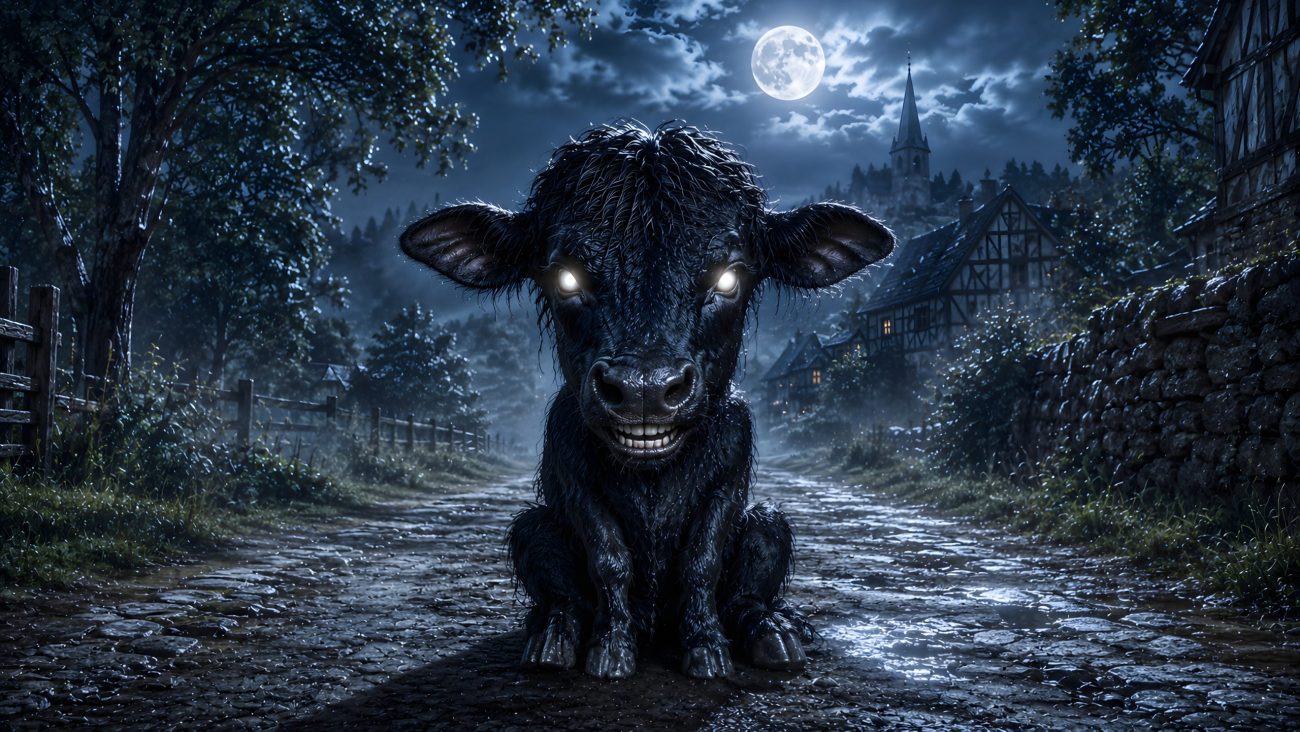
The Muhkalb is a legendary creature found in folklore from Rheinhessen, the Rheingau, and other parts of southwestern Germany. It is usually described as an enormous calf with the head of a fully grown cow and glowing eyes. In some traditions, it appears as a hybrid of a bull and a maiden.

The Muhkalb appears only at night and terrifies people with its terrible bellowing. It is said to leap onto the backs of its victims and, in some accounts, trample them to death.

The legends surrounding the creature vary considerably between different locations. In Jugenheim, the Muhkalb was said to be the transformed spirit of an unfaithful nun who had drowned herself and her child in a well. As punishment, she was condemned to wander as a cow-calf, warning lovers against committing similar acts.

In Lorch, the Muhkalb was said to inhabit the dark gateway of the Hilchenhaus. It particularly tormented adulterers, usurious wine merchants, and brawlers. According to one local legend, around 1550 it even saved the town from bankruptcy by driving away officials of the Elector of Mainz who had come to collect war debts.

In Heilbronn, a butcher during the Thirty Years’ War was accused of selling dog meat as veal. He denied the accusation and swore that, if it were true, he would be reborn as a calf. He soon died of the plague, and thereafter was said to haunt the city at night in the form of the Muhkalb.

In Saarbrücken, the creature was described as a calf that appeared in the streets during the evening and grew to an unnatural size before shrinking again. It could also change its appearance, taking the forms of a dog, cow, donkey, or horse. Some accounts described it simply as a headless calf.


Sources

“Muhkalb.” Wikipedia: Die freie Enzyklopädie (German Wikipedia). Wikimedia Foundation. Accessed August 29, 2026. https://de.wikipedia.org/wiki/Muhkalb


The Calf-Bleater of Sufferloh

Tradition / Region: German Mythology
Alternate Names: The Calf Spirit; The Bleating Steward; The Hoofprint Ghost
Category: Cow, Ghost


The Myth

In the free village of Sufferloh, the people once lived under the protection of Tegernsee Abbey. Each year, out of their own goodwill, they brought a calf to the prelate as a sign of respect. The offering was freely given and caused no resentment among the farmers.

But in time a new monastery steward was appointed. When another year passed, he declared that the gift would no longer be voluntary. From then on, he demanded the first-born calf from the farmers as a fixed obligation. The people obeyed, but bitterness settled in their hearts.

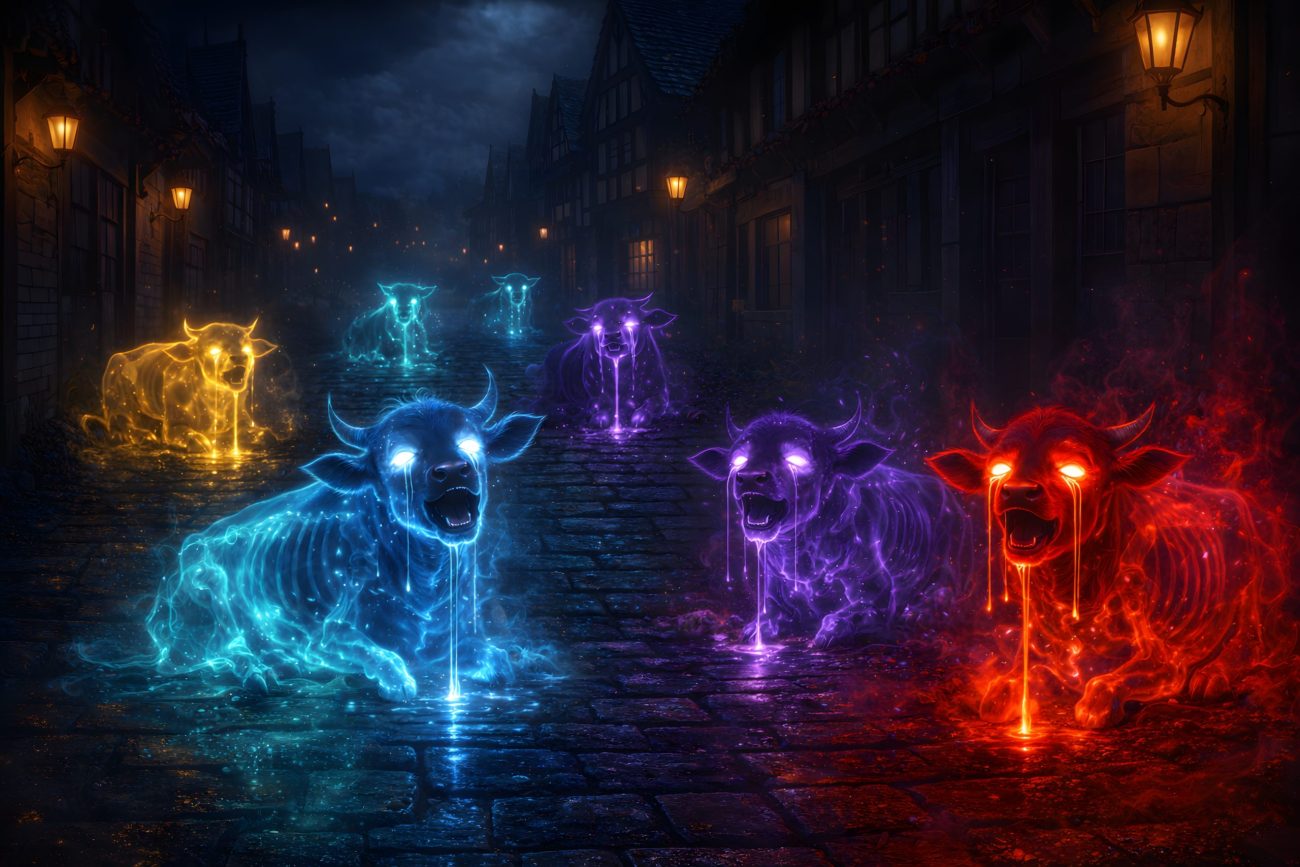
After the steward died, strange happenings began in the monastery passage. At night, a loud bleating echoed through the corridors — the unmistakable cry of a calf. The sound returned again and again, filling the monks with dread.

Not long after, a calf’s hoofprint appeared in the stone floor of the passage. No matter what was done, the mark would not vanish. Even when the tiles were removed, the imprint could still be seen beneath them.

The monks finally sealed the passage in hopes of ending the disturbance. Yet the bleating continued night after night, and peace did not return until the monastery itself was dissolved.

People later said the spirit of the unjust steward had been condemned to wander, crying forever like the calf he once demanded without mercy. Some claimed the ghost was driven first to the Ringspitze, and later, by order of the Pope, to roam the Unnütz mountain with other restless spirits, doomed to bleat through the darkness for all time.


Sources

SAGEN.at contributors. (n.d.). Kalbplärrer. In SAGEN.at – Traditionelle Sagen aus Deutschland: Bayern–Isarwinkel, from https://www.sagen.at/texte/sagen/deutschland/bayern/isarwinkel/kalbplaerrer.html


Buntcow

Tradition / Region: German mythology
Alternate Names: —
Category: Cow


The Myth

Long ago, there were two herders whose ways shaped their cattle as much as their hands ever could. One was called Rohrdommel, the Bittern, and the other Wiedehopf, the Hoopoe. Both tended cows with care, yet each chose a very different path.

Rohrdommel led his herd into wide meadows rich with flowers and grass. The land was fertile but not heavy, and the cows that grazed there grew lively and bold. They leapt and ran, full of restless joy. When evening came and it was time to return home, Rohrdommel called out to them, crying, “Bunt, herüm!” — “Colorful cow, come around!” But the cows ignored him, dancing and scattering through the fields, unwilling to be gathered.

Wiedehopf, meanwhile, drove his cattle into high, barren hills where the wind blew sand across the ground and food was scarce. There his cows grew thin and weak. When he called to them, urging them to rise and follow, they could not. They lay where they had fallen, too exhausted to stand, no matter how loudly he cried, “Up, up, up!”

So it was said that Rohrdommel’s cows became spirited and wild, while Wiedehopf’s remained frail and helpless, each herd reflecting the land and care chosen for them. In time, the herders themselves vanished from the world of people and were transformed into birds.

Even now, their voices remain. Over the meadows, the Bittern still cries “Bunt, herüm!”, and across the hills the Hoopoe answers “Up, up, up!”—echoes of a time when cattle danced or lay still, and when herders shaped the fate of their herds by the paths they chose.


Sources


Bull of Bardowick

Tradition / Region: German mythology
Alternate Names: —
Category: Cow


The Myth

In the time when Bardowick was a rich and powerful city, its people rose in pride and defied their lord, Duke Henry the Lion of Brunswick, refusing him entry through their gates. Enraged by this insult, the duke laid siege to the city. For two days his forces pressed against Bardowick’s defenses, yet made no progress.

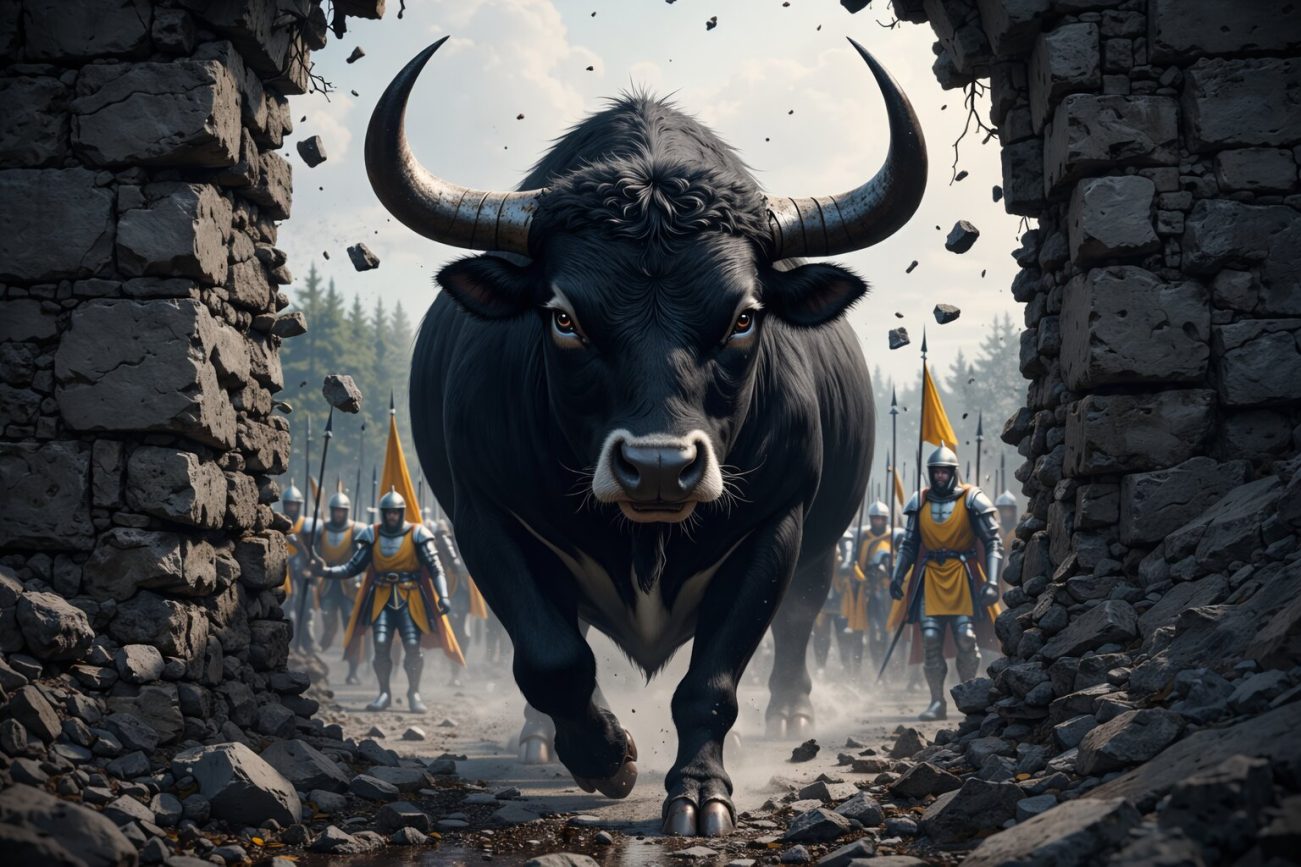
During the siege, a bull wandered calmly into the ducal camp. The soldiers soon realized that it was the town bull of Bardowick, a familiar animal that roamed freely and knew every path and crossing of its home. Seeing opportunity, Duke Henry ordered the bull released and commanded his men to follow it quietly.

The bull, untroubled and unaware, returned toward the city. It moved along the outer defenses, crossed a shallow ford, and passed through a narrow, crumbling opening in the stonework—a place long overlooked and poorly guarded. By instinct alone, the bull revealed the city’s hidden weakness.

That same night, the duke’s soldiers followed the path the bull had taken. They crossed the ford, slipped through the broken stone, and poured into Bardowick. The city was taken and destroyed. Many were slain, others fled, and Bardowick was reduced to ruins. Only the cathedral was spared from the devastation.

Though the city never regained its former glory, the memory of the bull endured. It was remembered not as an innocent creature, but as the animal whose unwitting loyalty betrayed its home and led the enemy inside. Even generations later, the tale remained sharp with shame. It is said that one should never ask the people of Bardowick about the bull, for the memory of the beast that led destruction home still stirs anger in every heart.


Sources


Boxed Calf

Tradition / Region: German mythology
Alternate Names: —
Category: Cow, Familiar


The Myth

It was said that those who wished to possess a brood penny—a coin that multiplied itself each night—had to make a bargain with the devil. On Christmas Eve, while church bells rang for Mass, they went alone to a crossroads. There they laid thirty coins in a circle and counted them forward and backward without a single mistake. If their tongue slipped, their neck would be twisted. If they succeeded, the devil added a thirty-first coin, and the cursed wealth was secured.

Near Wittenberg, a peasant woman was believed to own such a coin. In her house stood a box she guarded closely. One evening, she ordered her maid to boil the milk from the very first cow she milked, pour it over white bread, and place it in the box before doing anything else.

The maid delayed. She milked all the cows first, then boiled the milk and carried the pot to the box.

When she opened it, she saw a small calf inside—pitch black, cramped within the chest, its mouth stretched wide as if waiting to be fed. Terrified, the maid poured the boiling milk straight into its mouth.

At once the calf sprang from the box and raced through the house. Flames erupted in its wake, and the house was set ablaze.

Soon after, the woman was arrested and confessed. From that time on, brood pennies were seized wherever they were found and locked away in public treasuries, so that no boxed calf would ever again be secretly fed in the dark.


Sources

AGEN.at contributors. (n.d.). Der Brutpfennig. In SAGEN.at – Grimms Märchen & Sagen, from https://www.sagen.at/texte/sagen/grimm/derbrutpfennig.html


Bokeler Bulle

Tradition / Region: German mythology
Alternate Names: Bokel Bull
Category: Cow


The Myth

At the southern edge of the Breitenhees, near the quiet village of Bokel, the Ilmenau River rises from a chain of small ponds and flows eastward, murmuring softly through meadow and hollow. The people say this sound is no ordinary current, but the bathing of a hidden being—the Bokeler Bulle.

Near the village lies a place known as the Bull’s Hollow. Each year, when May arrives and the nights grow long and dark, the bull is said to emerge. At the stroke of midnight, it leaves the waters and moves silently into the village stables, seeking the cows of Bokel. From these secret unions are born calves of extraordinary size and strength, yet they are wild and unruly, never fully tame, and often slaughtered before they can grow dangerous.

The Bokeler Bulle is feared, and few dare to wander the area on May nights. Shepherds keep their distance, knowing the bull can be fierce when angered. Once, a young apprentice shepherd from Günne encountered the creature. The bull lowered its head and charged, its snort shaking the air. In terror, the shepherd cried out to the Holy Virgin Mary, and at that very moment the bull vanished, leaving him unharmed.

In gratitude for his escape, the shepherd later carved a magnificent door and gave it to the chapel in Bokel. Thus the legend endured: of a powerful bull rising from the river, of danger and deliverance, and of a hidden presence that still murmurs beneath the waters of the Ilmenau.


Sources

Meyer, C. (1950). Stadt und Kreis Uelzen. Ein Heimatbuch. Uelzen, p.166

SAGEN.at – DER KUHBANNER. (n.d.). https://www.sagen.at/texte/sagen/liechtenstein/seger/kuhbanner.html