Manticore

Tradition / Region: Iranian Mythology, Persian Mythology
Alternative Name: Mantichore, Martichora
Category: Lion


The Myth

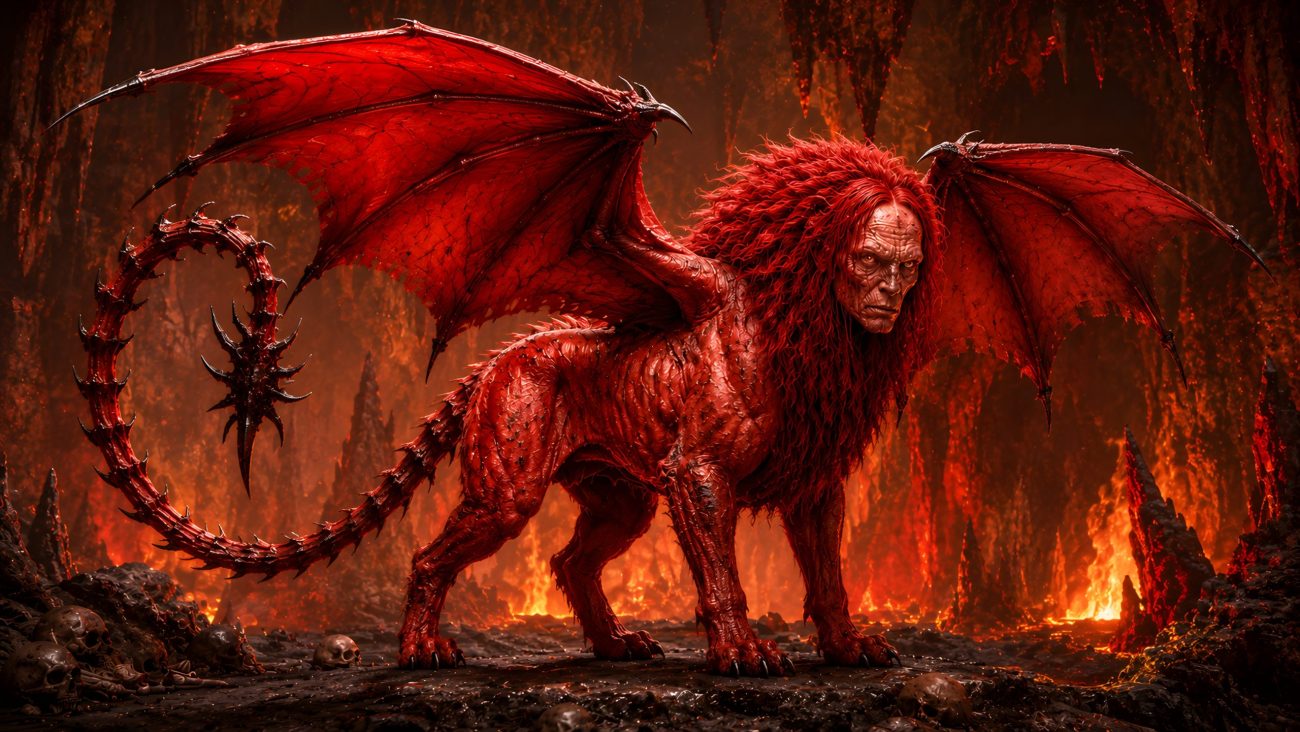
The Manticore is a monstrous creature from Persian mythology later adopted into Greek and medieval European legends. Its name means “man-eater,” reflecting its terrifying appetite for human flesh.

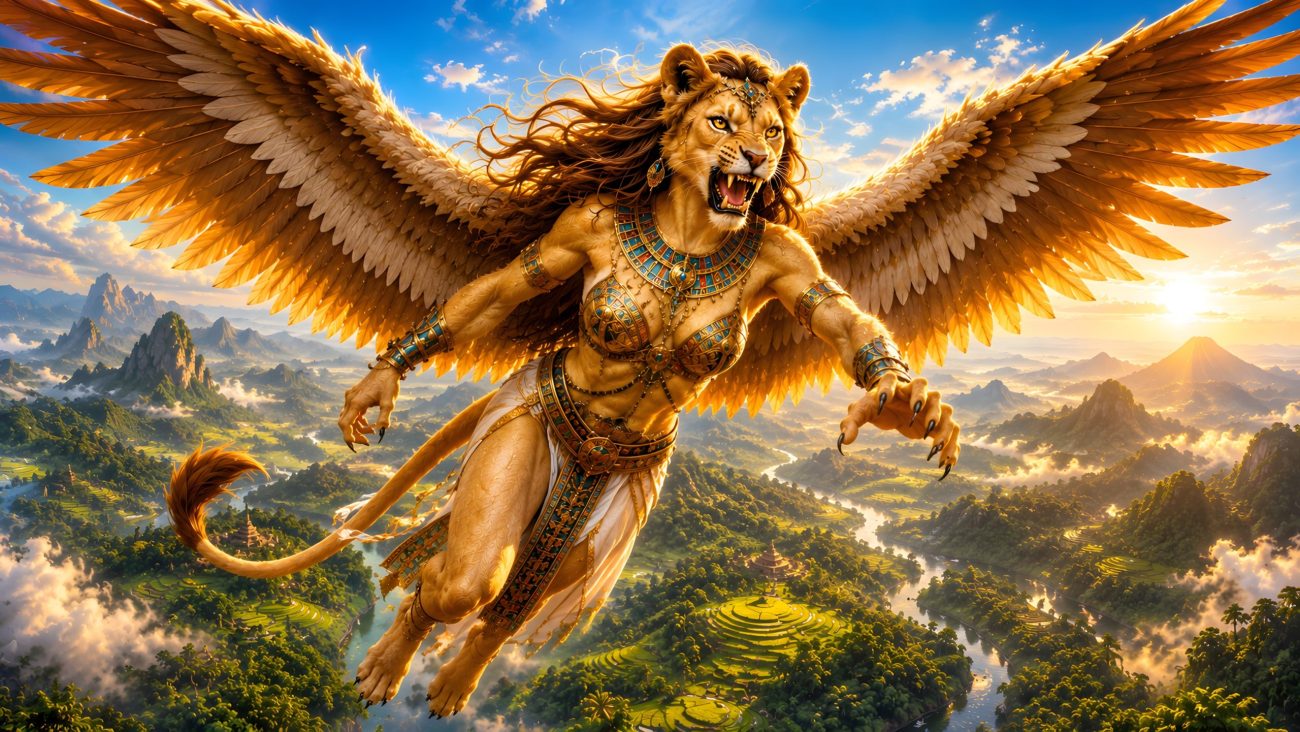
The creature is most commonly described as having the body of a lion, the face of a human, and the tail of a scorpion. Some legends describe the tail as being covered in venomous spines or quills that can be launched like arrows at enemies. It was also said to possess three rows of teeth and a powerful voice resembling a trumpet or pipe.

Ancient writers claimed the manticore lived in India or the distant eastern lands beyond Persia. It was feared as a swift and aggressive predator capable of overpowering humans and animals alike. According to the earliest stories, the beast would devour its victims entirely, leaving no bones behind.

Greek physician Ctesias recorded one of the earliest descriptions of the creature after hearing stories from Persian sources during the Achaemenid Empire. Later Roman writers such as Pliny the Elder repeated and expanded the legend, helping spread the manticore throughout medieval Europe.

During the Middle Ages, the manticore became a common creature in bestiaries and medieval art. Illustrations often portrayed it with a human-like face, massive claws, a lion’s body, and a deadly spiked tail. Some depictions gave it wings or exaggerated monstrous features, though these additions varied between manuscripts.

The manticore eventually became a symbol of savagery, hidden danger, and insatiable hunger in folklore and literature.


Sources

Wikipedia contributors. (n.d.). Manticore. In Wikipedia. Retrieved May 10, 2026, from https://en.wikipedia.org/wiki/Manticore


Brunswick Lion

Tradition / Region: German mythology
Alternative names: –
Category: Lion


The Myth

The Brunswick Lion is not merely a statue or heraldic emblem, but a moral creature shaped by medieval imagination. In the Heinrichssage, the lion emerges as an independent symbolic actor whose meaning extends far beyond the human figures around it. It embodies ideal loyalty, righteous strength, and natural justice—virtues medieval society believed could exist in animals in purer form than in people.

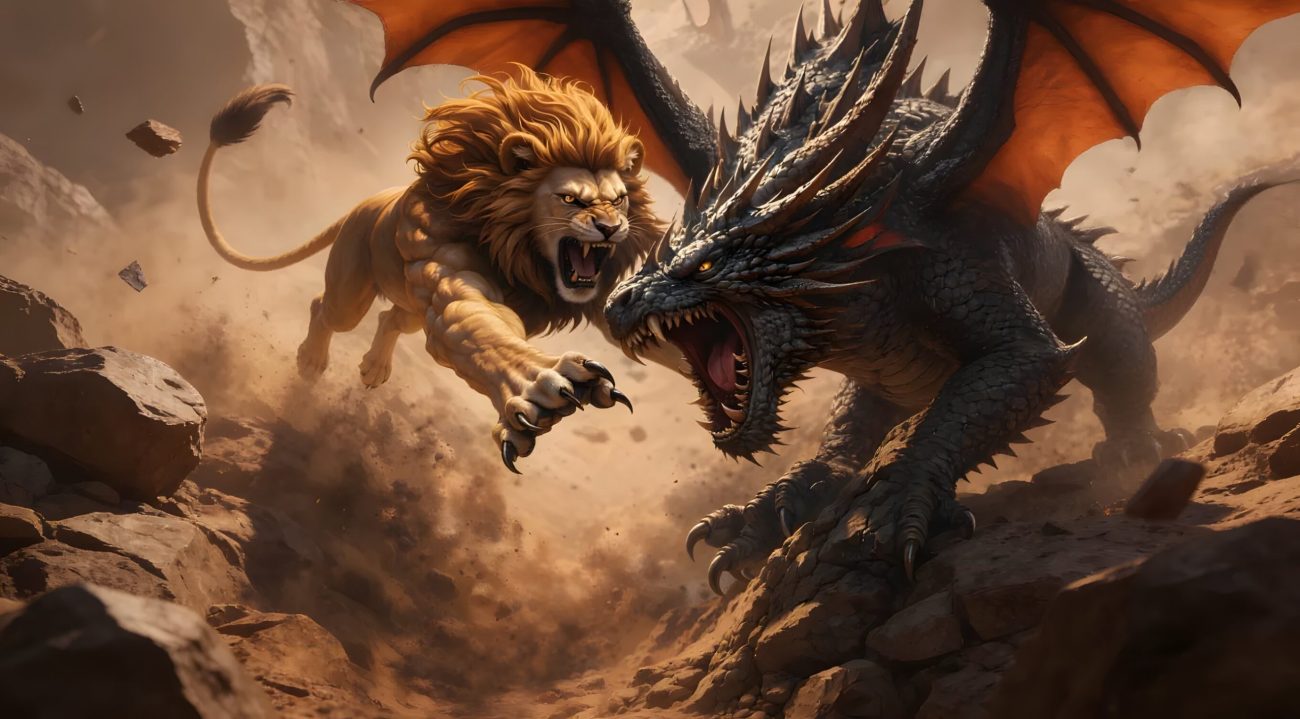
The lion first appears as a combatant against a dragon, a creature universally understood in medieval Europe as a manifestation of chaos, destructive violence, and spiritual corruption. By confronting the dragon, the lion positions itself as a defender of cosmic order. Unlike the dragon’s blind destruction, the lion’s violence is purposeful. It fights not from hunger or rage, but from an instinct aligned with justice, establishing it as a moral warrior.

After the dragon’s defeat, the lion’s role shifts from warrior to companion. Crucially, it is not subdued or enslaved; it chooses companionship. In medieval thought, such voluntary loyalty was the highest form of fidelity. The Brunswick Lion thus represents free allegiance—the idea that true authority is recognized rather than imposed. The lion follows not out of fear, but from recognition of shared virtue.

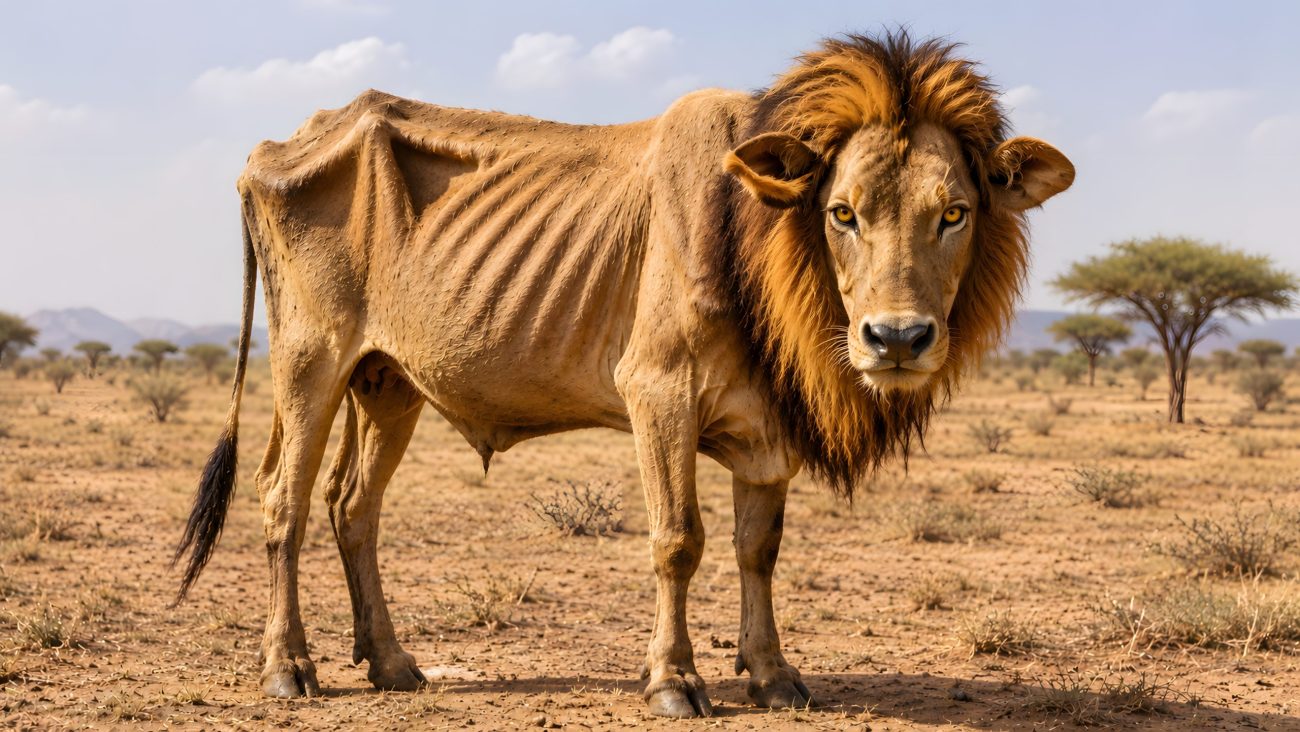
The legend’s defining moment comes after the death of its companion. The lion refuses food and withers away upon the grave, choosing death over a life without the bond it has sworn. This act transforms the lion into a symbol of absolute constancy. Its death is not weakness but proof of unwavering devotion, a loyalty that transcends reward, command, or survival. Medieval audiences would have read this as a moral judgment: true virtue is measured by sacrifice, not power.

Erected as a statue in the heart of Brunswick, the lion assumes an apotropaic role. Like guardian lions across Eurasia, it protects not through violence but through symbolic authority. Its stillness signifies permanence; its posture, vigilance. It stands as a reminder that strength must be restrained by virtue and power justified by loyalty.

Ultimately, the Brunswick Lion represents an ideal moral order in which courage serves fidelity and strength answers to devotion. It is remembered not as a slayer, but as a guardian; not as a conqueror, but as a witness—holding humanity to a standard it could rarely meet.


Beast of the North

Tradition / Region: French mythology
Alternative Name: –
Category: Lion


The Myth

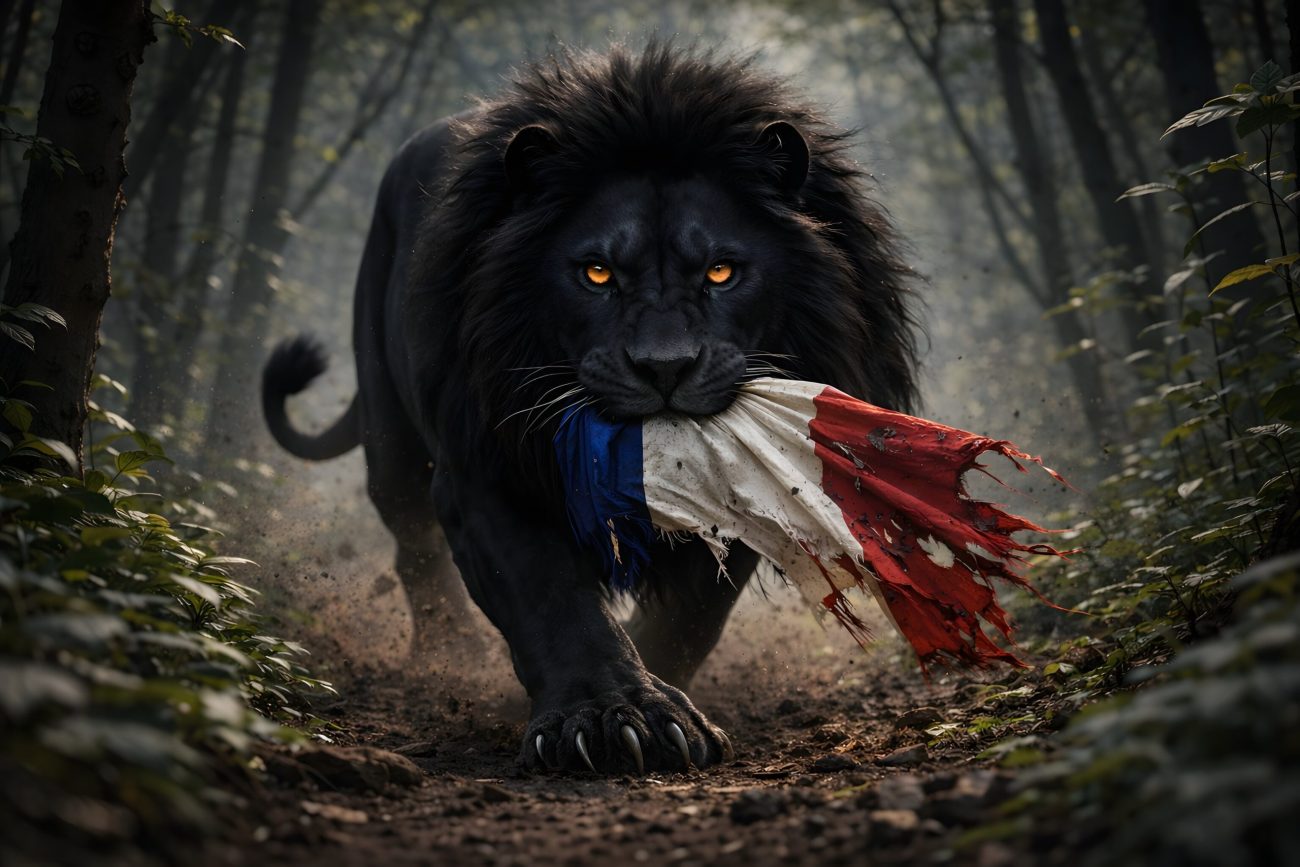
In the forests of Creuse, during the late autumn of 1982, a disturbing presence emerged from the woodland shadows. Livestock across the region—bulls, cows, and sheep—were found brutally killed and mutilated in ways that defied ordinary explanation. The precision of the wounds, the sheer force involved, and the absence of clear tracks convinced many villagers that this was no wolf, dog, or known predator.

A single explanation began to circulate with growing certainty: a lion.

Witnesses spoke of an immense, powerful creature moving silently through the forest, watching from the trees before striking under cover of darkness. One man reportedly came face-to-face with the beast during a hunt, yet could not identify it clearly—only its overwhelming presence, its unnatural size, and its unblinking, golden gaze. These details fed the belief that something foreign, regal, and terrifying had crossed into rural France.

The idea of a lion roaming the French countryside struck at something deeper than fear of an animal. It became a symbol of nature’s refusal to remain contained, of wild forces intruding upon human order. Fields and forests once seen as familiar were reimagined as domains of an unseen sovereign predator, demanding caution and respect.

Though the attacks eventually stopped and no definitive proof was ever found, the creature was never captured, named, or explained away. The Beast of the North remained unresolved—half incident, half legend. In local memory, it endures as a reminder that even in modern times, the wilderness can still give birth to myths, and that the spirit of the lion—silent, powerful, and untamed—can appear where no one expects it, testing the boundary between the known and the unknown.


Sources

Wikipedia contributors. (n.d.). Bête de Noth. In Wikipedia, from https://fr.wikipedia.org/wiki/B%C3%AAte_de_Noth


Apedemak

Tradition / Region: Kingdom of Kush, Sudan Mythology, Egyptian Mythology
Name: –
Category: Deity, Lion


The Myth

In the lands of Kush, along the life-giving Nile, Apedemak was known as the lion-headed god of war and royal power. He appeared with the body of a man and the head of a lion, radiating strength, authority, and ferocity. In some representations his form was even more fearsome, combining lion, man, and serpent, emphasizing his supernatural nature and his command over chaos and battle.

Apedemak was the divine force behind conquest and kingship. When armies marched and rulers sought to expand their dominion, he was believed to stand behind them, guiding their victories and striking fear into their enemies. He embodied courage, discipline, and the unyielding force of war. To oppose him was to face destruction, for he represented war not as disorder, but as divine judgment.

Yet Apedemak was not solely a god of bloodshed. He was also a giver of life and abundance. In temple reliefs he is shown holding stalks of grain, blessing the land with fertility and ensuring prosperity for those under his protection. Through him, war and life were bound together: victory brought order, and order allowed the land and people to flourish.

His worship was centered at great temple complexes such as Naqa and Musawwarat es-Sufra. These sanctuaries served as places where kings received divine legitimacy. By honoring Apedemak, rulers affirmed that their power flowed not merely from human strength, but from a god who embodied both might and rightful authority.

To the people of Kush, Apedemak was more than a warrior god. He was the living symbol of sovereignty itself—the roar of the lion behind the throne, the unseen hand guiding the fate of kingdoms, and the divine presence that bound war, rule, and fertility into a single, commanding force.


Sources

Wikipedia contributors. (n.d.). Apedemak. In Wikipedia, from https://en.wikipedia.org/wiki/Apedemak


Nurikabe

Tradition / Region: Japan (Edo-period yōkai scrolls)
Alternate Names:
Category: Yōkai / Lion / Dog


The Myth

In illustrated yōkai scrolls from Japan, a creature known as the Nurikabe appears in a form unlike the better-known invisible wall of later folklore. This Nurikabe is a tangible beast with four legs and a powerful body. Its most striking feature is its enormous face, which bears three eyes that shine with an unnatural blue light. It has large, drooping ears like those of an elephant and two black tusks that curve outward. Its body is painted white, giving it a ghostly and imposing appearance. Some describe it as resembling a dog or a lion, though it does not fully match any known animal.

In the scrolls where it appears, the Nurikabe is shown near crashing waves. Behind it emerge figures such as Umi-otoko, a human seaman, and Umi-bōzu, a fearsome sea spirit. This setting places the Nurikabe at the boundary between land and sea, standing where the human world meets the supernatural. It does not act directly against the figures shown, but its presence dominates the scene, suggesting a powerful being that guards or obstructs passage.

The scroll depicting this Nurikabe is dated to the early nineteenth century. No clear written legend accompanies it, and its precise origin is unknown. It is uncertain whether this beast represents a specific local tradition or whether it was created by the artist as a yōkai form inspired by existing beliefs. Its connection to the later Nurikabe known for blocking travelers’ paths is not clearly stated in the original material.

As it appears in the scroll, the Nurikabe remains an enigmatic creature: a massive, watchful being standing firm amid waves and spirits, neither clearly hostile nor welcoming, marking a place where movement forward is uncertain and dangerous.


Interpretive Lenses

Religious Readings
Philosophical Readings
Psychological Readings
Esoteric Deep Dive
Political / Social Readings
Other