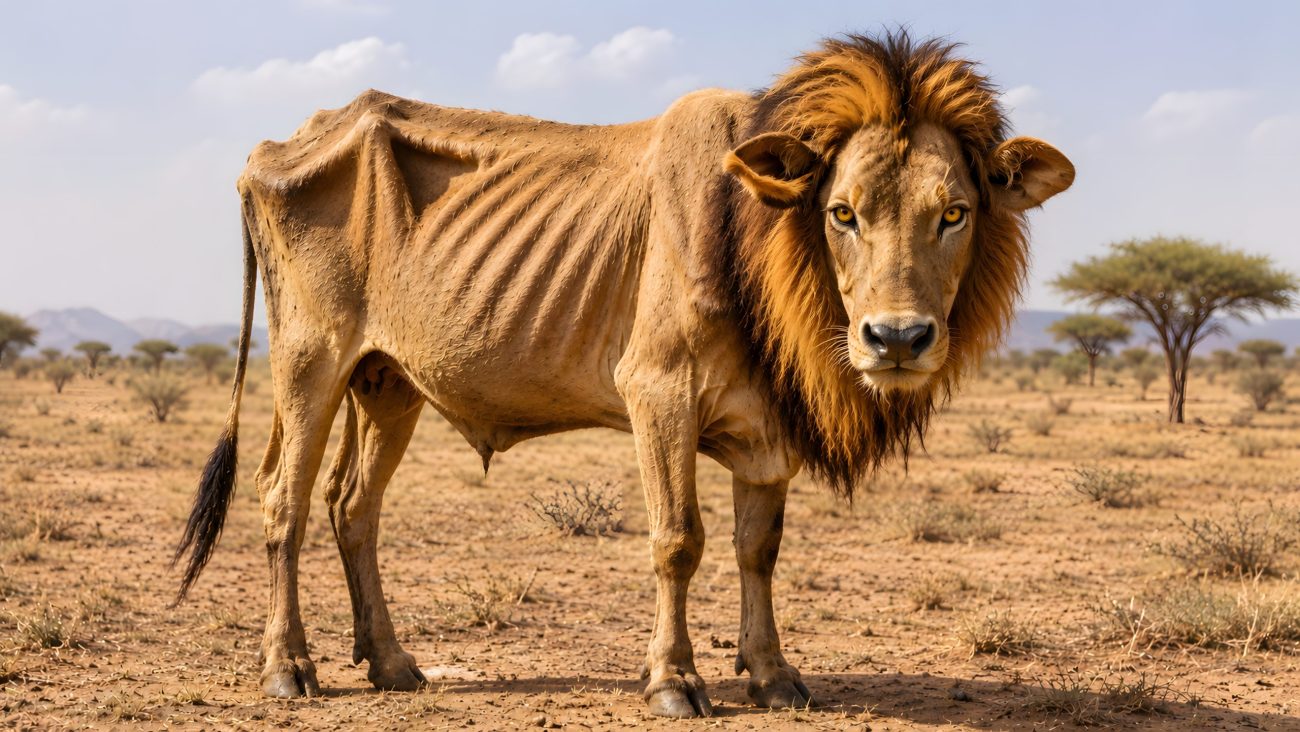
Tradition / Region: Sudanese Mythology
Alternative names: Lion Cattle, Hornless Cattle of the Lions
Category: Lion, Cow
The Myth
Among the Dinka, hornless cattle were believed to be dangerous and unnatural animals closely connected to lions and wilderness spirits. Unlike ordinary cattle with horns, hornless cattle were feared for their aggression and strange behavior. Folktales claimed they did not truly belong to human beings at all, but to lions.
One famous story tells of two brothers both named Deng. One was born to a human mother, while the other was the son of a lioness who had raised both boys together as brothers. Although the lioness cared for them for many years, she eventually turned against the human Deng and attacked him out of jealousy and beastly hunger. After many struggles, the lioness was killed by her own son to protect his brother.
Later, the lioness’s relatives sought revenge. The two brothers traveled into the land of the lions to confront Miyar, the lion-chief and cousin of Deng of the lioness. After reaching the lion settlement, Deng challenged Miyar and killed him in combat.
The death of the lion chief caused panic throughout the camp. The lions fled into the wilderness, and with them fled the strange hornless cattle that belonged to them. According to the tale, these hornless cows transformed into lions and lionesses and disappeared into the forest alongside their masters.
Only the ordinary horned cattle remained behind for the human brothers to take home.
The story explains an old Dinka belief that hornless cattle possessed something wild and dangerous within them. They were thought to follow lions naturally, behave more fiercely than ordinary cattle, and even share a spiritual connection with predatory beasts. In folklore, hornless cattle were not fully separated from the world of lions, but stood somewhere between domesticated animal and supernatural creature.
Sources
Deng, F. M. (1974). Dinka folktales: African stories from the Sudan. New York: Africana Publishing Company.