Gold Coal Burners of Echternach

Tradition / Region: Luxembourgish Mythology
Alternative names: None known
Category: Cave dweller


The Myth

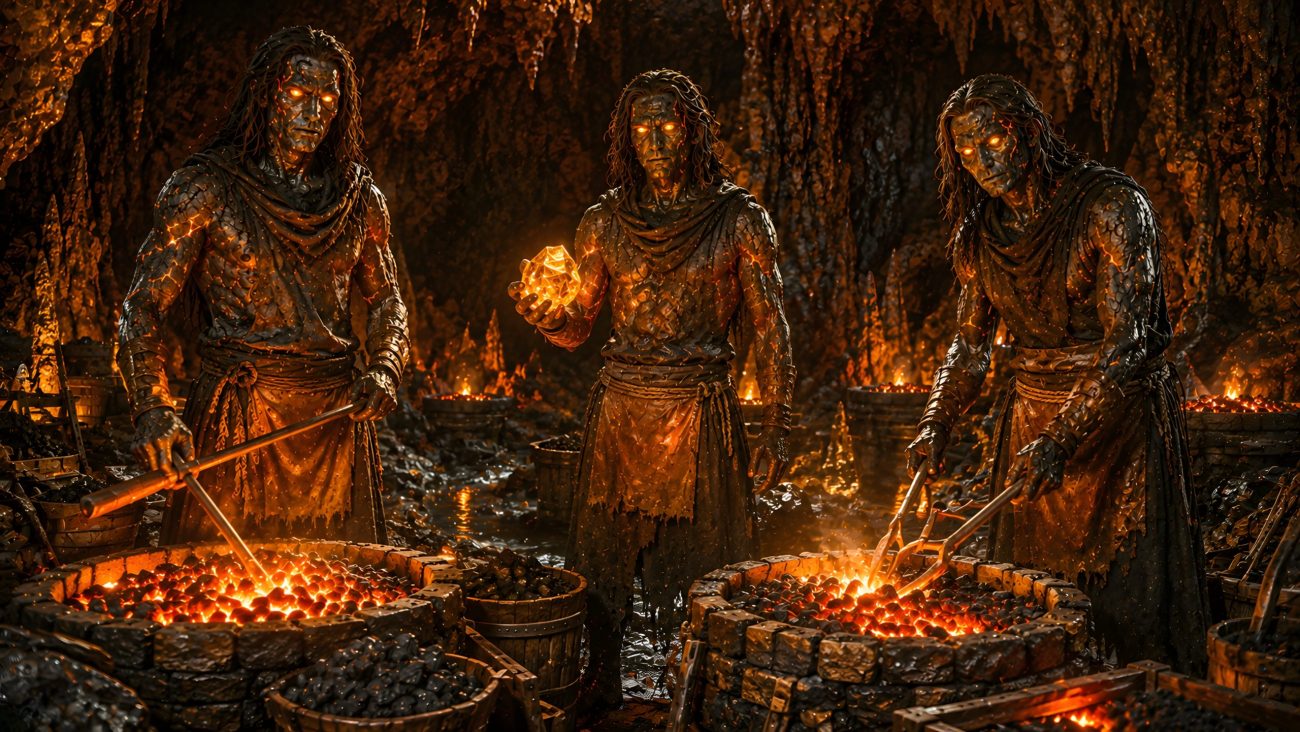
The Gold Coal Burners appear as three silent black figures who burn charcoal on the Großwiese beneath the Speltzbusch near Echternach. They are said to appear only once every hundred years and carry out their work in complete silence.

According to the legend, anyone brave enough to approach the mysterious charcoal burners and touch one of their burning coals will see it instantly transform into gold. The fortunate person is then allowed to keep the golden coal.


Sources

De la Fontaine, Edmond. Luxemburger Sagen und Legenden. Luxembourg: Jos. Beffort, 1882.


Katzenkönig

Tradition / Region: Luxembourgish Mythology
Alternative names: King of the Cats
Category: Cat


The Myth

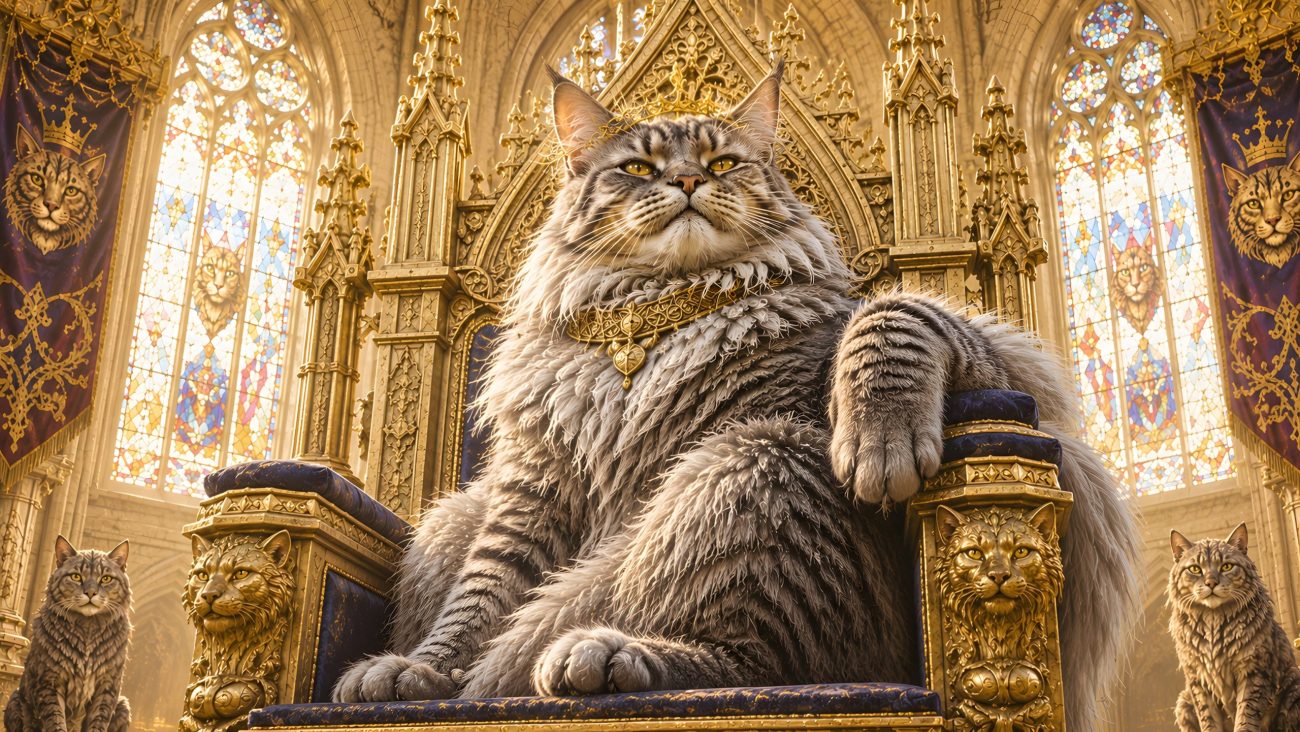
The Katzenkönig appears as an ordinary tomcat that is secretly the ruler of all cats. Upon learning that the reigning Cat King has died, it immediately assumes the throne and vanishes from the human world.

According to the legend, a man was passing a house in a village when he heard a cat calling up toward the attic hatch, announcing that Ame is dead. Later, after returning home, he repeated the strange incident to his family. As soon as the household tomcat heard the words, it cried out, If Ame is dead, then I am the King of the Cats. With that, it leapt up the chimney and disappeared forever, having gone to claim its new royal place among the cats.


Sources

De la Fontaine, Edmond. Luxemburger Sagen und Legenden. Luxembourg: Jos. Beffort, 1882. Accessed July 28, 2026. https://viewer.eluxemburgensia.lu/ark:70795/rvks9k


Katzengespann

Tradition / Region: Luxembourgish Mythology
Alternative names: Cat Team
Category: Cat


The Myth

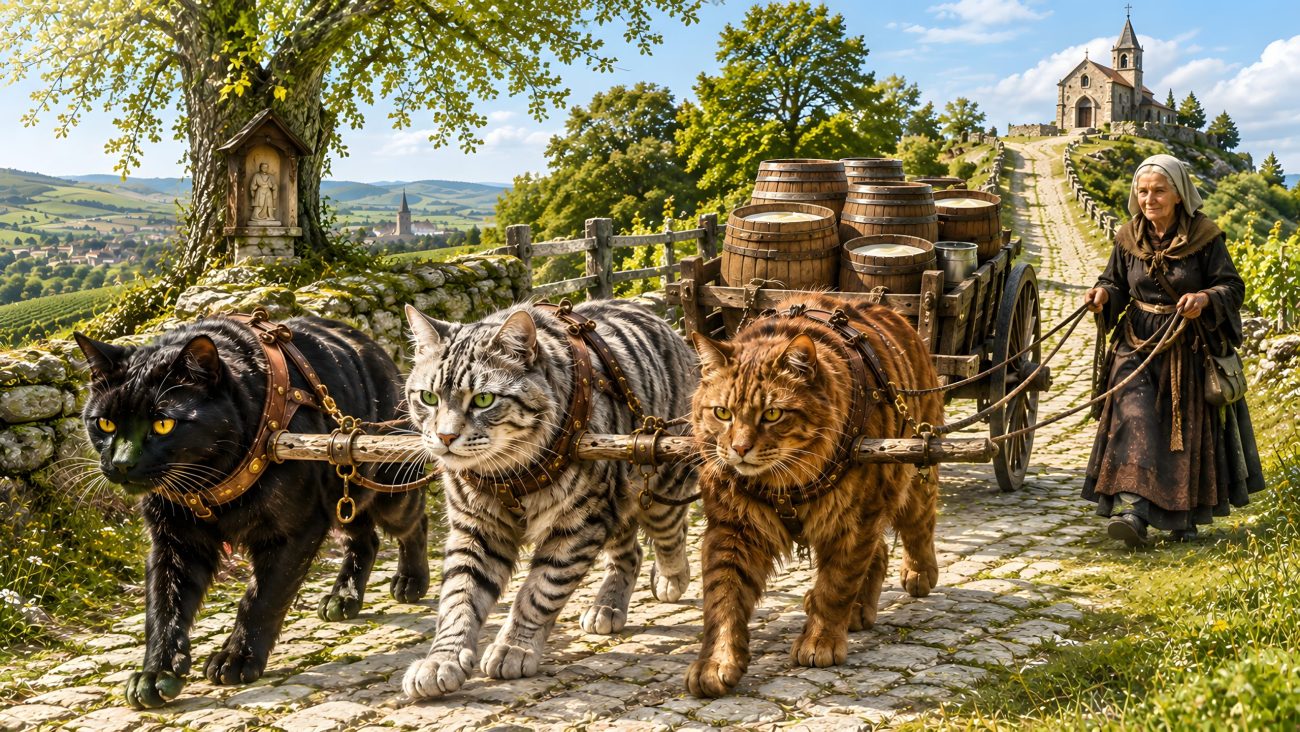
The Katzengespann consists of three cats harnessed together to pull a wagon. They serve as the supernatural draft animals of a witch.

According to the legend, near the village of Nittel stood a high hill topped by a chapel. One evening, after finishing his prayers there, the local pastor was walking down the steep path when he encountered an elderly woman from his parish. To his astonishment, she was hauling a wagonload of buttermilk up the mountain, not with horses, but with three cats pulling the cart.

Although shocked by the sight, the pastor concealed his surprise and calmly remarked that she seemed to have a very heavy load. The old woman, who was in fact a witch, replied, Just look how my horses are stretching out their tails.

Realizing he had encountered witchcraft, the pastor immediately made the sign of the cross and hurried home without another word.


Sources

De la Fontaine, Edmond. Luxemburger Sagen und Legenden. Luxembourg: Jos. Beffort, 1882. Accessed July 28, 2026. https://viewer.eluxemburgensia.lu/ark:70795/rvks9k


Zudringliche Katze

Tradition / Region: Luxembourgish Mythology
Alternative names: The Intrusive Cat
Category: Cat


The Myth

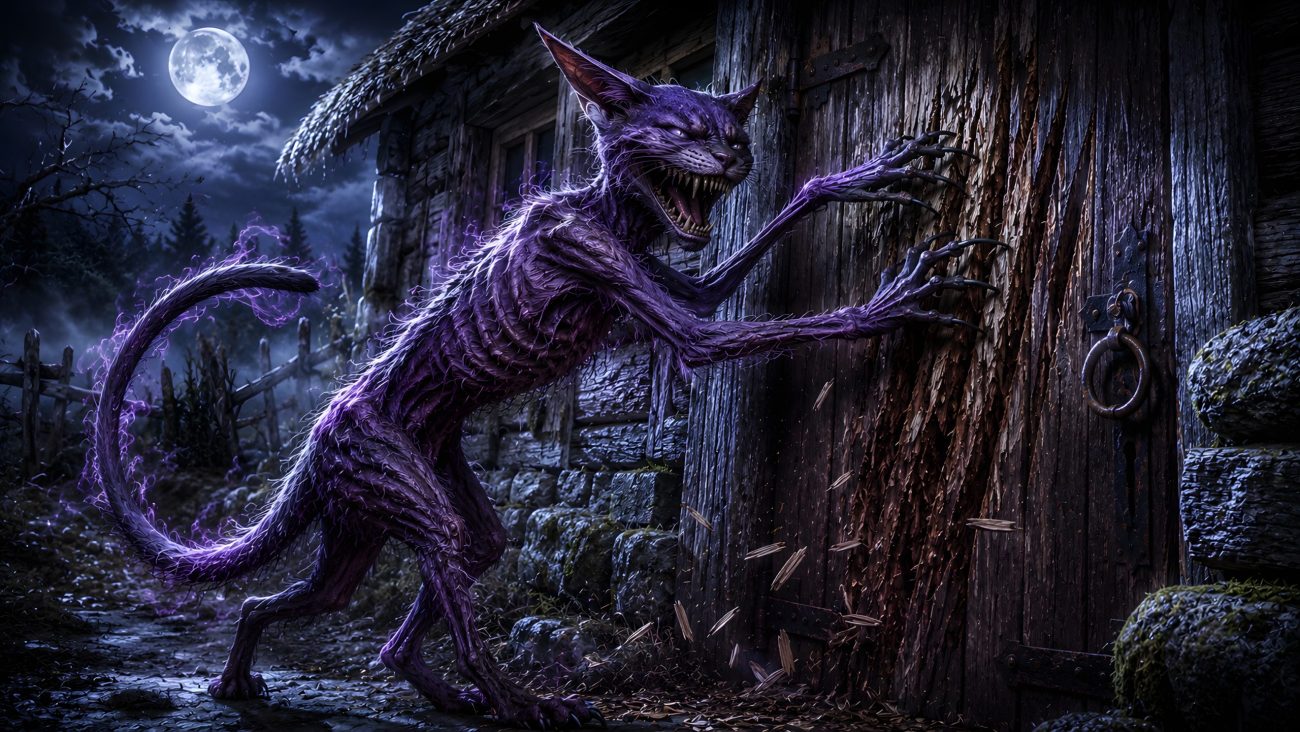
The Zudringliche Katze appears as an ordinary cat that visits people at night, speaks with a human voice, and is believed to be a witch in animal form.

According to the legend, a young woman from Bons entered service at a farm in Hamm. After she had lived there for a few weeks, a mysterious cat began visiting her bedroom door at night. The animal softly scratched at the door and repeatedly called in a strange voice, Margaret, open the door.

The servant refused to let it in. Eventually, she grew tired of the nightly disturbance. One night she leapt from her bed, flung the door open, and hurled one of her shoes at the cat with all her strength. The cat immediately disappeared, and everything fell silent.

The next morning, the young woman searched for her shoe, but it had completely vanished without a trace. According to the tradition, this proved that the mysterious cat had been a witch in disguise.


Sources

De la Fontaine, Edmond. Luxemburger Sagen und Legenden. Luxembourg: Jos. Beffort, 1882. Accessed July 28, 2026. https://viewer.eluxemburgensia.lu/ark:70795/rvks9k


Vogel Greif

Tradition / Region: Luxembourg Mythology
Alternative names: Greif; Vogel Greif
Category: Bird


The Myth

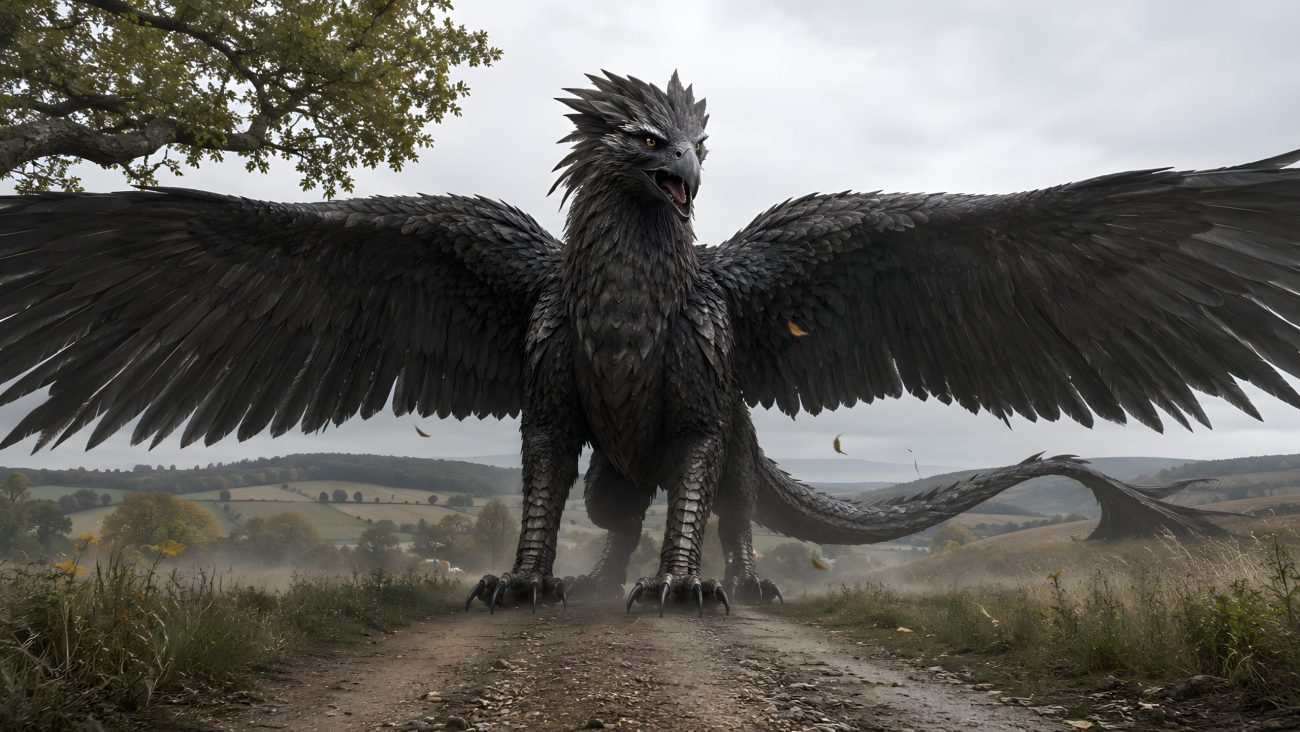
Near the village of Bous, beside the road leading to Stadtbredimus, lies a field known as Neckelswuos, a place long feared for its supernatural happenings. Travelers tell of phantom pigs racing through wagon wheels, a ghostly sow followed by seven piglets, a floating skull, a woman clothed only by her long hair, and a great black dog haunting the area.

One night, around midnight, a blacksmith from Stadtbredimus passed through Neckelswuos. As he traveled along the road, he suddenly saw an enormous bird-like creature hovering above him. The being was so vast that its body covered the entire width of the road, while the tips of its wings stretched far into the fields on both sides. Terrified, the blacksmith believed it to be a Greif or perhaps a dragon, and fled from the place in panic.


Sources

La Fontaine, E. de. (1882). Luxemburger Sagen und Legenden. Jos. Beffort. Retrieved June 29, 2026, from https://archive.org/details/luxemburgersagen00lafouoft


Raul’s Phantom Horse

Tradition / Region: Luxembourgish Mythology
Alternative names: The Black Phantom Horse
Category: Horse


The Myth

According to a Luxembourgish legend, the robber knight Raul lived with his brothers in the castle of Gräfingen, where they enriched themselves through theft and plunder. Raul possessed an extraordinary coal-black horse that surpassed all others in speed and intelligence. It could sense enemies and danger, safely carry its master across the most treacherous paths, and leap over ditches and rivers with ease.

At last, the robber knights were defeated. Raul’s brothers were captured by armed peasants, tied to the tails of their own horses, and dragged to death before being brought back to the castle. As the attackers stormed the fortress and set it ablaze, they drove the horses carrying the corpses through the gates.

Rather than surrender, Raul mounted his faithful horse and rode along the top of the castle walls while the flames consumed the fortress. Startled by the fire, the horse leapt from the high wall into the burning courtyard. Raul’s clothes caught fire, but the horse escaped unharmed and burst through the castle gate.

Witnesses saw Raul riding like a blazing meteor through the astonished crowd. Horse and rider raced across the plain before plunging down the steep hillside into the River Eisch, where the flames were extinguished and both vanished beneath the water.

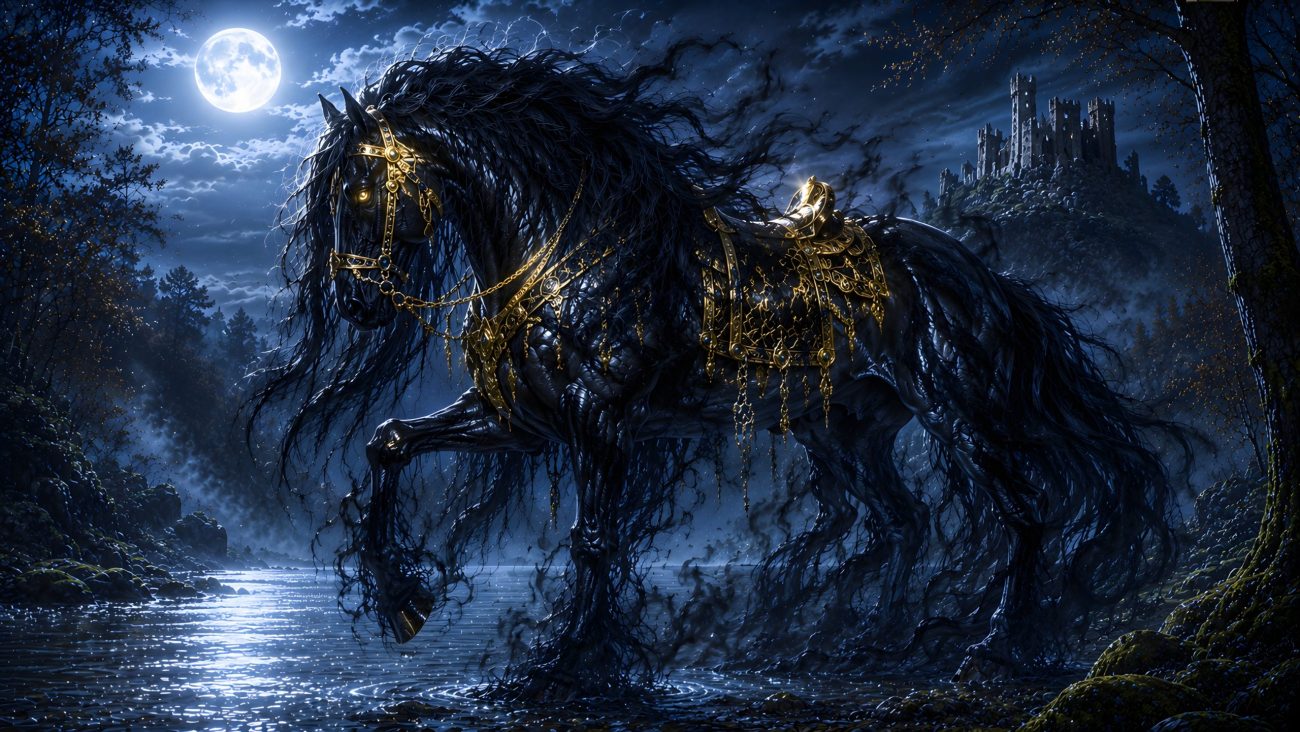
From that day onward, Raul’s horse has wandered the quiet banks of the Eisch searching for its lost master. It appears as a coal-black stallion with a mane so long it reaches its hooves, though when it runs the mane rises into the air with a whistling sound. Its golden bridle and saddle shine in the darkness.

Anyone who is frightened by the phantom horse becomes so confused that they inevitably fall into the river. Those who remain fearless cause the black horse to flee and disappear beneath the water. Legend also says that whoever dares to mount the ghostly steed will be carried to the hidden underground vault where Raul and his brothers concealed their immense treasure.


Sources

de la Fontaine, E. (1882). Nr. 134. Die Schätze der Raubritter. (pp. 66–68). In Luxemburger Sagen und Legenden. Jos. Beffort.


Witch of Bitschter Pond

Tradition / Region: Luxembourg Mythology
Alternate Names: The Old Witch of Bits; Matchmaking Witch of the Bits Pond
Category: Witch, Forest dweller, Lake dweller


The Myth

In earlier times, the Bitschter Pond lay in the deep valley between Buderscheid and the Pirmesknapp. The large body of water stretched from the Buderscheid mill to the Pirmesberg hill, surrounded by dense, wild forest. People said the place was haunted, for many spirits were believed to dwell there.

Among them lived the infamous old witch of Bits. She practiced fortune-telling and matchmaking, and young men and women who longed for marriage would seek her out. The witch possessed a mysterious bottle in which there was an egg and a crucified Christ. By means of this bottle, she told those who consulted her whom they would marry, where that person lived, and what they must do to win them.

At night, she was said to fly like a bird over the pond, crying out with a hoarse, croaking voice. Around the pond, other witches gathered, and in the moonlight they danced wildly in the trees, making music and raising a dreadful noise. They were also seen hovering around the Pirmesberg, reveling in the forest and floating through the air.

At last the witch’s deeds became known. She was seized and blown into the Bitschter Pond. At once a violent thunderstorm broke out, flooding the waters and turning the place into a great quagmire.

Even long afterward, people said the place was not a pleasant one, and many were afraid to pass the site of the old pond at night.


Gallery


Sources

sagen.at contributors. (n.d.). Der Bitschter Weiher. In sagen.at, from https://www.sagen.at/texte/sagen/luxemburg/Bischter_Weiher.html


Interpretive Lenses

Religious Readings
  • Christian Ascetic Deep Dive
Philosophical Readings
  • Nietzschean Deep Dive
Psychological Readings
  • Jungian Deep Dive
Esoteric Deep Dive
  • Hermetic Deep Dive
Political / Social Readings
  • Marxist Deep Dive

Haunting at the Enerèweschter Weiher

Tradition / Region: Luxembourg Mythology
Alternate Names: Spirits of the Enerèweschter Pond
Category: Ghost, Lake dweller


The Myth

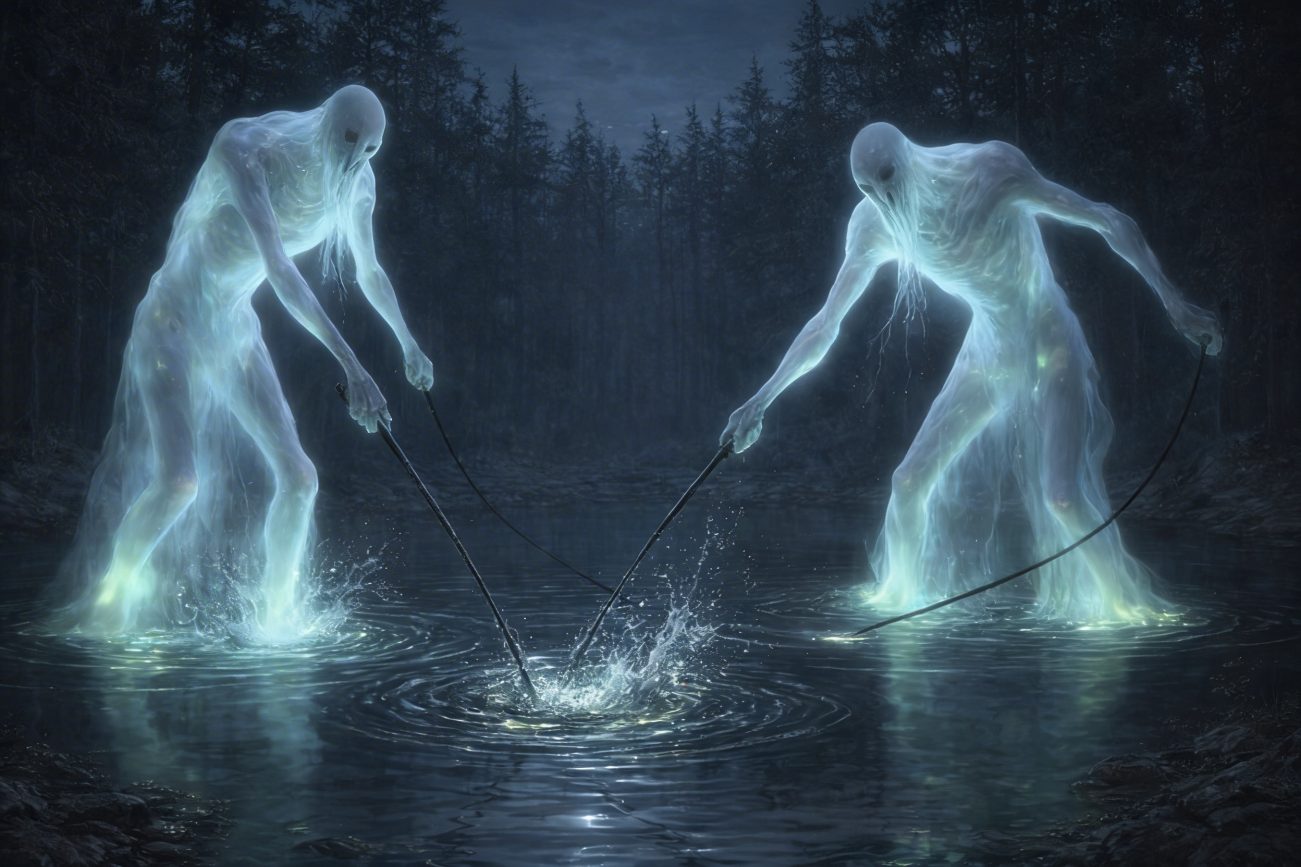
Many years ago, on Friday nights, two enormous human figures were said to appear at the pond called Enerèweschter Weiher in the forest near Lintgen. Each carried a long whip and lashed the water with such force that the noise echoed far and wide. At the same time, strange cries of “Hoo-hoo! Hoo-hoo!” rang through the night.

Afterward, the figures would perform a circle dance around the pond. Whenever anyone tried to approach them, they vanished at the slightest sound, leaving only a loud splash behind in the water.

One night, several daring young men from the village hid behind thick tree trunks, each armed with a club, determined to uncover the truth. As midnight drew near, they again heard the whipping and the eerie cries, and they saw the figures dancing. At a signal, they rushed forward and struck with all their strength. But their blows met nothing. They heard only a splash in the pond, and then all was still.

From that time on, the haunting ceased. Yet even today, some villagers believe that invisible spirits still play their tricks at the Enerèweschter Weiher.


Gallery


Sources

sagen.at contributors. (n.d.). Der Spuk am Enerèweschter Weiher zu Lintgen. In sagen.at, from https://www.sagen.at/texte/sagen/luxemburg/Spuk_Lintgen.html


Interpretive Lenses

Religious Readings
  • Christian Ascetic Deep Dive
Philosophical Readings
  • Nietzschean Deep Dive
Psychological Readings
  • Jungian Deep Dive
Esoteric Deep Dive
  • Hermetic Deep Dive
Political / Social Readings
  • Marxist Deep Dive

Washerwomen at the Kaselter Bach

Tradition / Region: Luxembourg Mythology
Alternate Names: Storm washerwomen of Kaselter Bach
Category: Ghost


The Myth

Near Lintgen, at the source of the Kaselter Bach, there once stood a tall beech tree. People said that shortly before a thunderstorm, musicians dressed in red would often appear there and play soft music.

At the same time, from the edge of the spring came the loud knocking and banging of washerwomen beating their laundry in rhythm with the music. According to the legend, these women caused rain and storms by splashing water upward with their washing sheets, sending it into the clouds.

No one dared to watch or disturb them. It was said that even the strongest man would have been crushed or killed by a single blow from these washerwomen.

One traveler, who dared to whistle when he heard the ghostly music, was immediately struck by lightning. And two shoemaker’s apprentices, returning drunk from the Lorenzweiler fair and cursing the apparition, were found the next day beside the Kaselter stream with torn clothes, battered faces, and fractured skulls.

Thus the people avoided the place whenever storms gathered.


Gallery


Sources

sagen.at contributors. (n.d.). Wäscherinnen am Kaselter Bach bei Lintgen. In sagen.at, from https://www.sagen.at/texte/sagen/luxemburg/Waescherinnen_Lintgen.html


Interpretive Lenses

Religious Readings
  • Christian Ascetic Deep Dive
Philosophical Readings
  • Nietzschean Deep Dive
Psychological Readings
  • Jungian Deep Dive
Esoteric Deep Dive
  • Hermetic Deep Dive
Political / Social Readings
  • Marxist Deep Dive

Washerwomen at the Pond Rahloch

Tradition / Region: Luxembourg Mythology
Alternate Names: Rahloch washerwomen
Category: Ghost, Lake dweller


The Myth

Between Sandweiler and Itzig lies a pond known as the Rahloch, a place once regarded as eerie and feared.

One night, a lone wanderer passed by the pond and heard the sharp echo of washerwomen’s sheets sounding through the still air. As he approached, he saw several old women standing at the water’s edge, silently beating laundry before them.

Seeing nothing strange in their work, he called out, “You are washing very late!” But the women gave no answer. Thinking to jest, he spoke again: “Ah, you wretched women, won’t you wash my clothes too?”

Hardly had he spoken when the women rushed upon him and beat him so severely that he fell senseless to the ground. When he later came to, he found his clothes completely soaked, and realized that the washerwomen had stripped him and washed them while he lay unconscious.

Filled with terror, he fled home as fast as he could. Only the next day did he notice that his hair had turned gray from the fright.


Sources

sagen.at contributors. (n.d.). Die Wäscherinnen am Weiher „Rahloch“. In sagen.at, from https://www.sagen.at/texte/sagen/luxemburg/Waescherinnen_Rahloch.html