Spear-Bearer

Tradition: Luxembourg Mythology
Alternative Names: Der Lanzenträger, The Lancer
Category: Ghost


The Myth

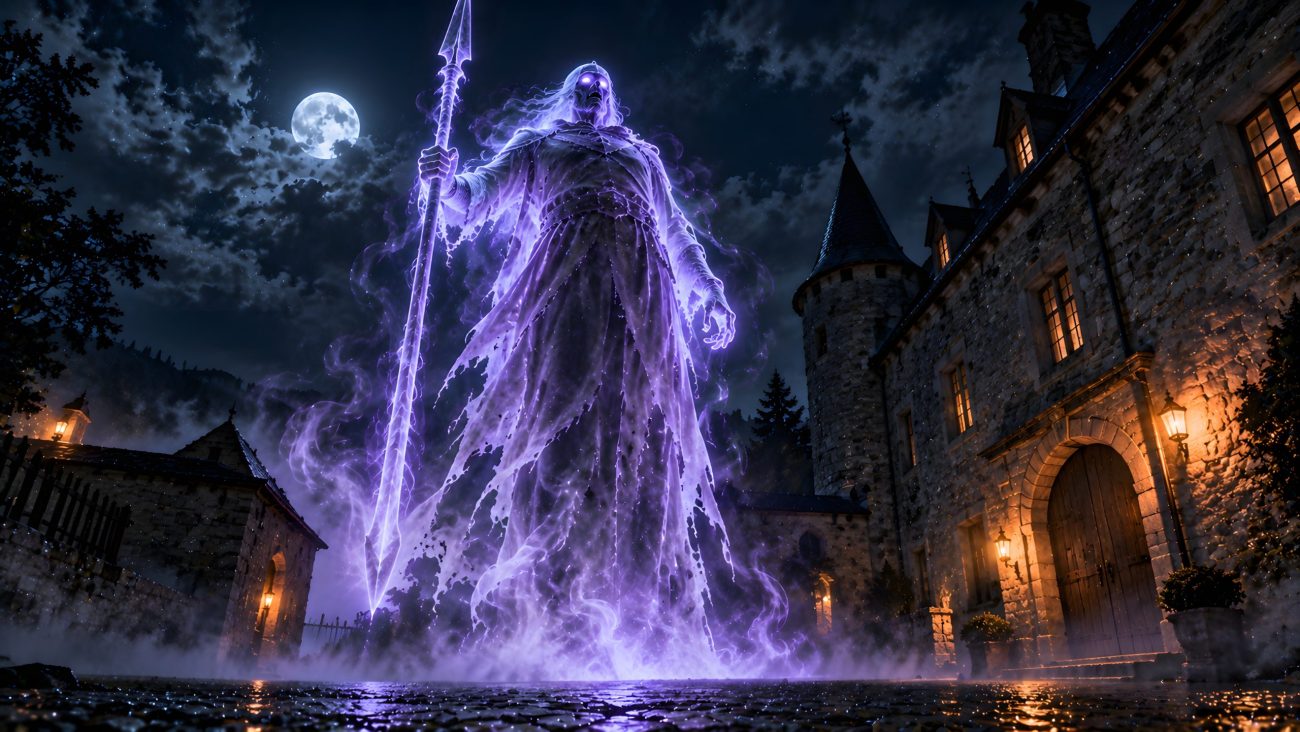
The Spear-Bearer is a mysterious apparition said to appear at midnight before the main entrance of the tenant farmer’s house in the courtyard of Born Castle in Luxembourg. The figure takes the form of a man holding a spear in his hand and remains completely silent.

As he stands before the entrance, the Spear-Bearer gradually grows taller and taller until his head reaches the height of the castle roof. Once he has attained this enormous size, he suddenly disappears. His silent appearance, unnatural growth, and unexplained disappearance make him a haunting presence associated with the grounds of Born Castle.


Sources

La Fontaine, Edmond de. Luxemburger Sagen und Legenden. Gesammelt und herausgegeben von Ed. de la Fontaine. Luxemburg: Jos. Beffort, 1882.


Irreführende Fuch

Tradition: Luxembourg Mythology
Alternative Names: The Misleading Fox
Category: Fox


The Myth

Der irreführende Fuchs, meaning the Misleading Fox, is a mysterious supernatural fox said to haunt a small woodland called Hambesch and the neighbouring fields of Ham near Greiveldange, Luxembourg. The creature has made these places uncanny since ancient times and is known for its malicious tricks. Former stable boys frequently reported seeing it, and even in more recent times, the fox has occasionally appeared to continue its strange mischief.

In one account, an older man from Greiveldange encountered the fox early one morning while walking through Hambesch. On this occasion, the animal had only three legs. Although the man had known the woodland since childhood and was thoroughly familiar with its paths, the moment he saw the strange fox, he could no longer find his way. He wandered about in growing desperation throughout the day, unable to escape the familiar woods.

Only late in the evening did the lost man encounter a swineherd tending his herd. The swineherd guided him out of the woodland and helped him finally return home. The fox’s strange appearance and its ability to make a person lose their way reveal its supernatural nature, marking it as a deceptive creature that uses its uncanny presence to confuse even those who know the land well.


Sources

La Fontaine, Edmond de. Luxemburger Sagen und Legenden. Luxemburg: Jos. Beffort, 1882.

Prügelgeist Fuch

Tradition: Luxembourgish Mythology
Alternative Names: The Fox as a Beating Spirit
Category: Fox


The Myth

Der Fuchs als Prügelgeist, meaning the Fox as a Beating Spirit, is a mischievous supernatural fox associated with the Hamberg near Remich and the surrounding countryside of Luxembourg. Unlike an ordinary fox, this strange creature can vanish without a trace and inflict punishment through invisible supernatural forces. It appears deceptively harmless, but those who provoke it may suffer a relentless and humiliating attack.

One evening, an innkeeper from Remich was returning from Ehnen and strolling peacefully across the Hamberg when he noticed a fox sitting on its hindquarters beside the path. The animal seemed to stare at him mockingly. Angered by what he considered the fox’s insolence, the innkeeper approached and delivered a powerful kick. However, his foot struck only a soft, barely perceptible mass, and the fox immediately disappeared.

Before the astonished innkeeper could recover, an invisible force unleashed a hail of slaps against his face. He fled as quickly as he could, but no matter how fast he ran, the blows continued to rain down upon him. Only when he finally reached the territory of Stadtbredimus, exhausted and breathless, did the supernatural beating cease. The encounter taught him that the strange fox was no ordinary animal and that provoking it could bring a relentless punishment from an unseen assailant.


Sources

La Fontaine, Edmond de. Luxemburger Sagen und Legenden. Luxemburg: Jos. Beffort, 1882.

Headless Calf

Tradition: Luxembourg Mythology
Alternative Names: The Ghost of the Chapel at Mertert
Category: Sheep


The Myth

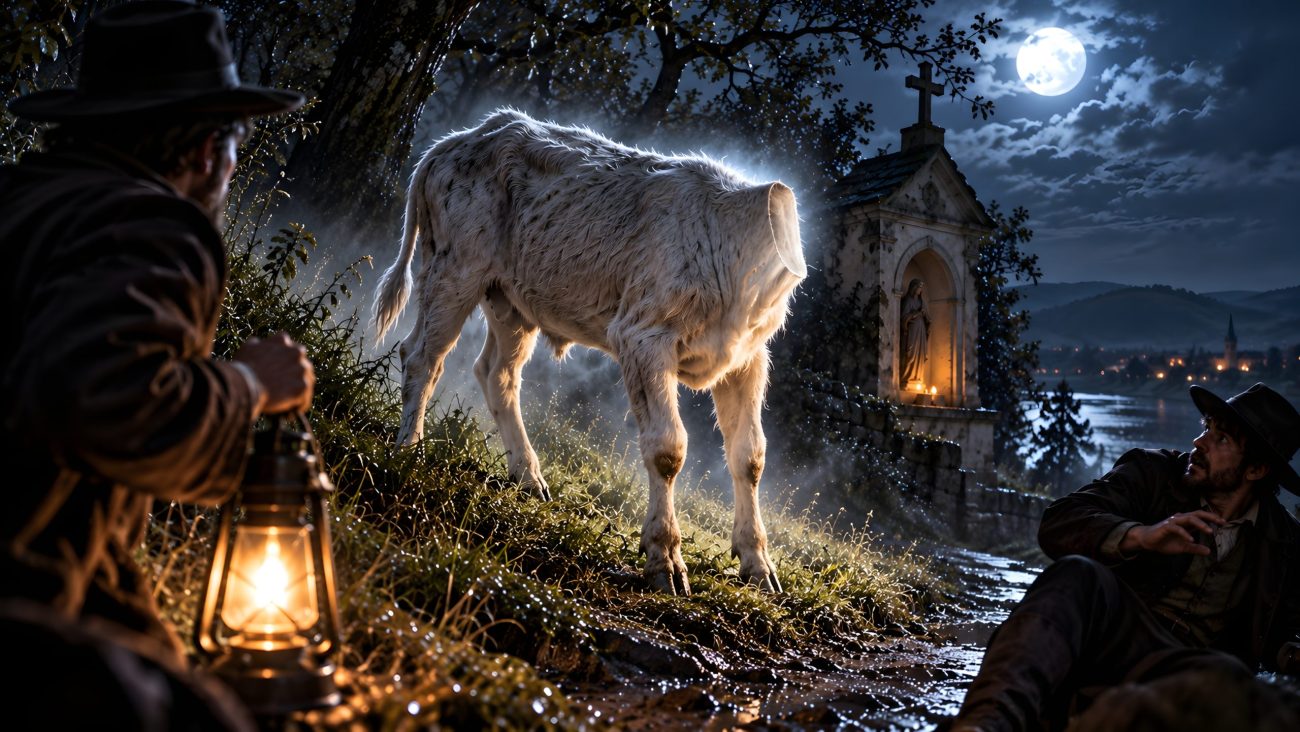
The ghost haunting the road between Mompach, Mertert, and Wasserbillig is a mysterious supernatural being capable of taking the forms of various animals. For generations, it haunted the place where a road from Mompach joined the main road between Mertert and Wasserbillig. The location was notorious for strange accidents involving travellers and wagon drivers. Horses would suddenly fall, wheels would break, and sometimes all four wheels of a wagon would break at once.

One moonlit night, a bold boatman was walking from Mertert to Wasserbillig with a companion when they noticed a calf standing on a small slope beside the road. The boatman climbed up to catch it, but slipped back down as soon as he reached for the animal. He tried again, only for the same thing to happen. This time, however, the calf had transformed into a sheep. Frustrated, he made a third attempt, carefully crawling up the steep slope. Once again, he slipped, and when he looked up, the sheep had become a headless calf.

Alarmed, the boatman abandoned his attempts and turned toward his companion, who had already fled. He hurried away himself, but the headless calf followed closely beside him all the way to Wasserbillig. There, in the sudden stillness of the night, he heard a strange rustling in the trees, and the apparition finally disappeared. After a cross at the haunted spot was replaced by a chapel, the ghost seemed to have been subdued and appeared only rarely.


Sources

La Fontaine, Edmond de. Luxemburger Sagen und Legenden. Luxemburg: Jos. Beffort, 1882.


Leemännchen

Tradition: Luxembourg Mythology
Alternative Names: Leemänchen
Category: Forest Dweller


The Myth

The Leemännchen is a ghostly being that haunts the wooded areas of Aspelt and Rumelange, as well as the surroundings of Gentingen along the Our River. It delights in leading travellers astray, confusing them as they make their way through the darkness. Although its appearance is not described, its presence can be recognised by its eerie cries echoing through the night.

One night, a traveller who had drunk enough wine to feel unusually courageous passed through the area and heard the Leemännchen calling out. Irritated by the noise, he shouted at the spirit, telling it to keep quiet and boasting that he knew the way better than it did. Immediately, an invisible hand struck him so violently on the head that he staggered twenty paces away.

The blow left a permanent mark. For the rest of the traveller’s life, the five fingerprints of the Leemännchen remained visible on his skull, where no hair would ever grow again. The encounter taught him that mocking the ghostly guide was a dangerous mistake, even for someone who believed himself brave enough to face the darkness.


Sources

La Fontaine, Edmond de. Luxemburger Sagen und Legenden. Luxemburg: Jos. Beffort, 1882.


Feuerkugel

Tradition: Luxembourg Mythology
Alternative Names: The Firebal
Category: Flame


The Myth

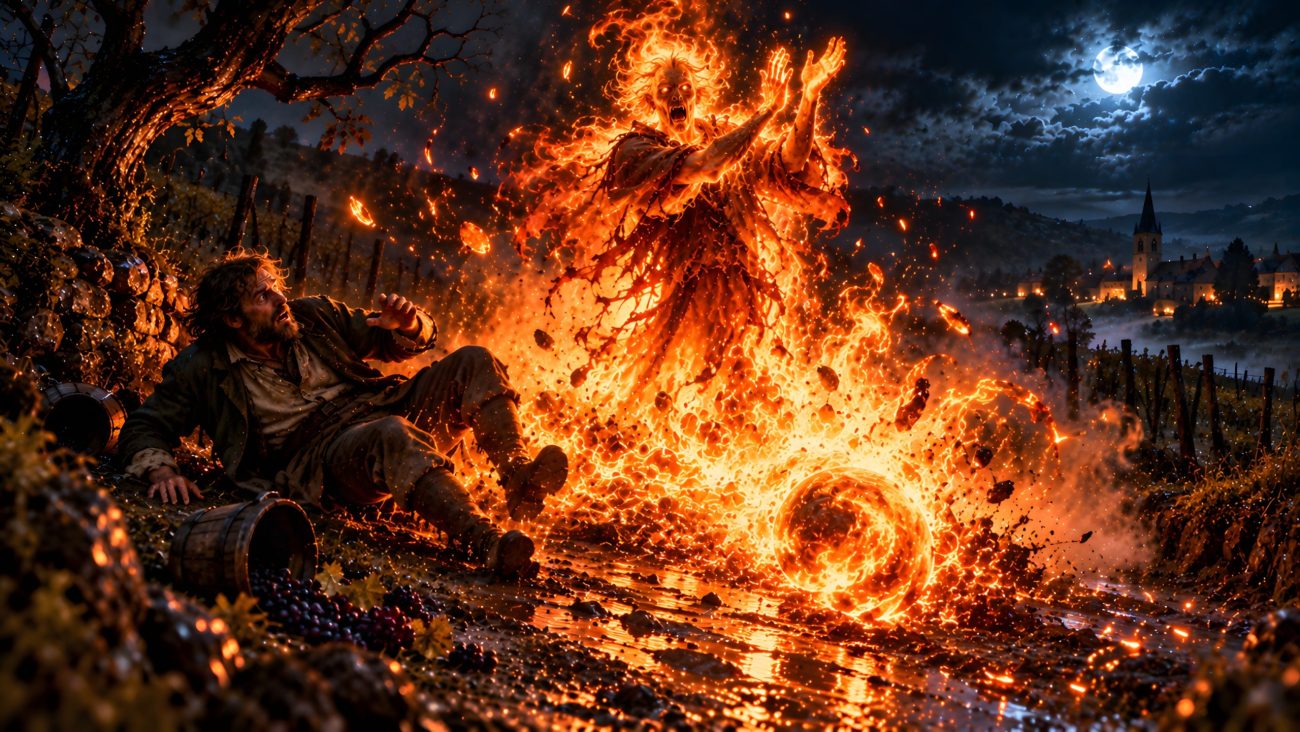
Die Feuerkugel is a supernatural ball of fire that haunts the Höllenfeld near Bech, Luxembourg. It appears like a living bowling ball, rolling along the road and persistently moving beneath the feet of anyone who tries to step around it. Its strange movements make it almost impossible to avoid, as though it deliberately seeks to trip those who encounter it.

One evening, a winemaker from Bech passed the Höllenfeld late at night. He had often boasted that he had walked past the place a thousand times, at every hour of the night, without ever witnessing anything unusual. This time, however, a fireball appeared on the road before him. It rolled toward his feet, repeatedly threatening to slip beneath whichever foot he put forward. Unable to escape its path, the winemaker watched as the ball grew larger and larger before rising into the air and hovering above his head.

Suddenly, the enormous fireball exploded with a terrifying bang. A blazing figure sprang onto the road in front of the deathly pale winemaker, clapped its hands, and vanished. The encounter shattered the man’s confidence, and the once fearless winemaker could never again be persuaded to pass the Höllenfeld after nightfall.


Sources

La Fontaine, Edmond de. Luxemburger Sagen und Legenden. Luxemburg: Jos. Beffort, 1882.


Sammelplatz der Irrlichter

Tradition: Luxembourg Mythology
Alternative Names: The Gathering Place of the Will-o’-the-Wisps
Category: Flame


The Myth

The Sammelplatz der Irrlichter, meaning the Gathering Place of the Will-o’-the-Wisps, is a notorious haunted area in the fields of Ertchessteil near Bech, along the Moselle River in Luxembourg. For generations, the place has been feared throughout the surrounding countryside because of the mysterious wandering lights that gather there. Nowhere else were the Irrlichter said to be so numerous or so daring, appearing in groups of dozens to torment those who passed through after dark.

The will-o’-the-wisps delighted in leading late-night travellers astray, luring them into dangerous swamps before clapping their hands in malicious amusement at their victims’ misfortune. They pursued those who fled in terror, chasing them through the darkness and making escape difficult. Yet the spirits were not entirely fearless: a traveller who stood their ground courageously and quickly made the sign of the cross could force them to retreat helplessly.

The tricks played by the Irrlichter at Ertchessteil were remembered as especially notorious, and many of their deceptions resembled those told in other local legends. The field remained famous as their principal gathering place, where the wandering lights assembled in great numbers to frighten travellers and lead them into danger.


Sources

La Fontaine, Edmond de. Luxemburger Sagen und Legenden. Luxemburg: Jos. Beffort, 1882.


Geldfeuer bei Bous

Tradition: Luxembourg Mythology
Alternative Names: –
Category: Flame


The Myth

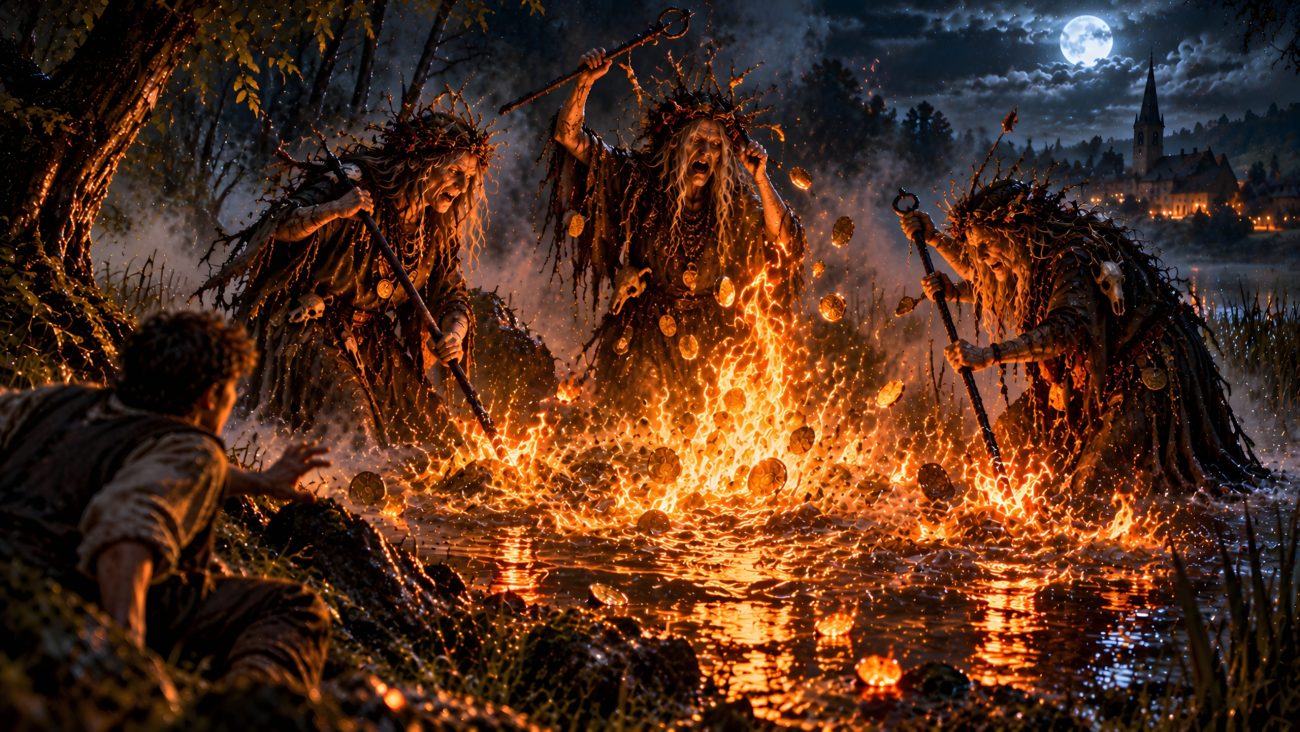
Das Geldfeuer bei Bous, meaning the Money Fire of Bous, is a mysterious supernatural flame said to appear at night upon the surface of a small pool called the Weiherchen, situated between the villages of Bous and Erpeldingen in Luxembourg. The pool is fed by a natural spring, and its waters were once the setting for a strange and frightening encounter involving a fire believed to reveal hidden wealth.

One night, people from Bous witnessed a money fire burning in the middle of the water. Hoping to claim the treasure associated with the mysterious flame, a young man ran toward it. However, he soon returned in terror, having witnessed something far more sinister than a simple fire.

In the water, he had seen three witches striking the surface with iron rods, whipping it in an attempt to raise evil mists. The sight frightened him away from the flame, leaving the supposed treasure untouched and revealing the dangerous supernatural forces lurking beneath the appearance of easy riches.


Sources

La Fontaine, Edmond de. Luxemburger Sagen und Legenden. Luxemburg: Jos. Beffort, 1882.


Geldfeuer beim Johannisberg

Tradition: Luxembourg Mythology
Alternative Names: –
Category: Flame


The Myth

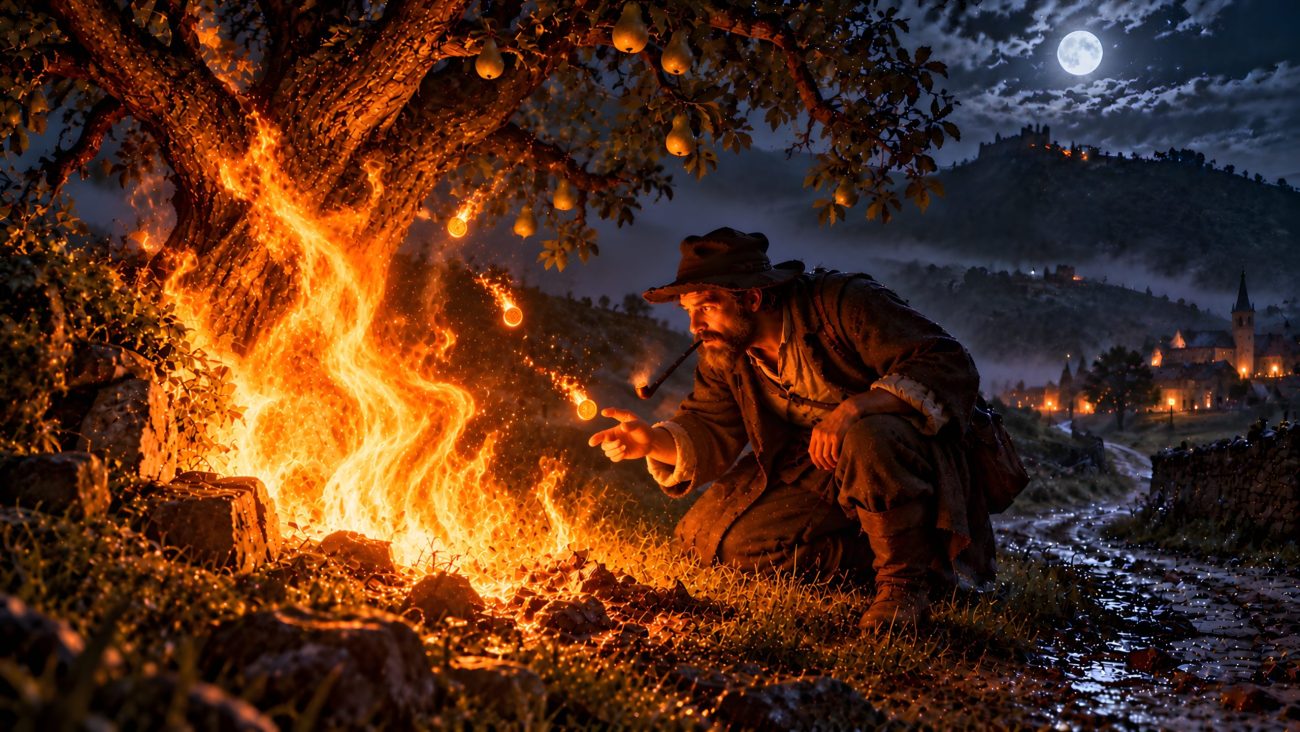
Das Geldfeuer beim Johannisberg, the Money Fire of Johannisberg, was a mysterious flame that appeared at night beneath an old pear tree at the foot of Johannisberg, near a path leading from Budersberg to Kayl in Luxembourg. The tree still stood around 1865, and the remains of building foundations were later discovered nearby. The place was associated with a strange fire that could reveal hidden gold to anyone fortunate enough to encounter it.

One night, a man from Kayl was passing the old pear tree when he noticed a cheerful little fire burning beneath its branches. Assuming that shepherds had lit the fire and then abandoned it, he casually picked up a glowing coal to light his pipe before continuing on his way. He thought nothing more of the incident until he arrived home and discovered a tiny grain of gold lying inside his pipe.

Realizing what he had found, the man hurried back to the pear tree, hoping to discover the mysterious fire again and perhaps obtain more gold. But when he returned, the flame had vanished completely. The brief encounter had revealed the fire’s extraordinary nature, yet the opportunity to find it again had disappeared as mysteriously as the light itself.


Sources

La Fontaine, Edmond de. Luxemburger Sagen und Legenden. Luxemburg: Jos. Beffort, 1882.


Feurige Mann

Tradition: Luxembourg Mythology
Alternative Names: –
Category: Flame


The Myth

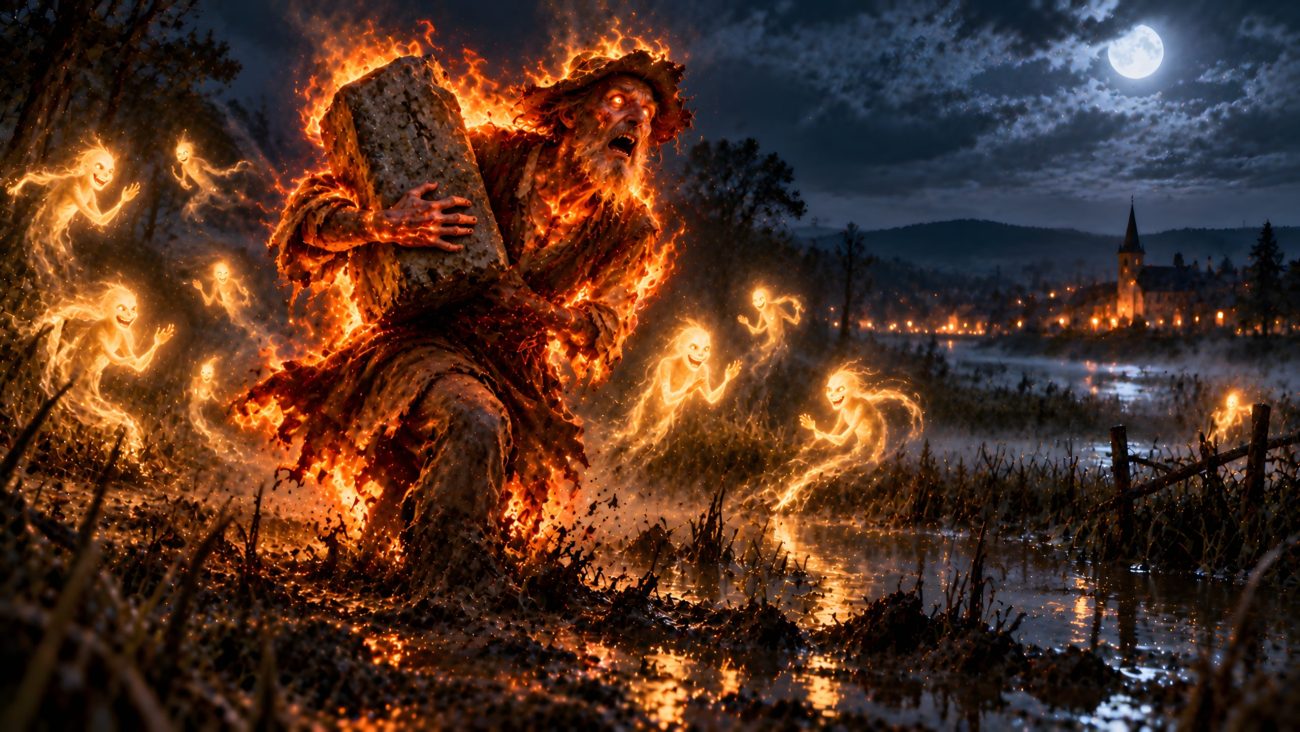
Der feurige Mann, the Fiery Man, is the restless spirit of a notorious miser from Nennig, a village opposite Remich. Known as Kronenmichel, he amassed considerable wealth through greed and dishonest dealings. He hoarded grain and money, exploited others for profit, and moved boundary stones to steal land from his neighbours. His ill-gotten fortune brought him riches in life, but after death he was condemned to wander the countryside as a tormented spirit.

One night, while returning home from a market, Michel fell victim to the will-o’-the-wisps. The mischievous lights arranged themselves to resemble the welcoming lights of his hometown, deceiving him into believing he was following the right road. Instead, they led him into a dangerous marsh. As he wandered deeper into the bog, the ground swallowed him gradually, while the lights danced around him and clapped their hands in delight. Michel cursed and swore terribly, but his struggles were useless. At last, the mud closed over his head, and the countryside fell silent.

Since then, Kronenmichel has haunted the fields around Nennig at night, carrying a glowing boundary stone upon his shoulder. He runs restlessly across the land, tormented by the same dishonest act that defined his life. From time to time, he cries out in despair, “Where shall I put this boundary stone?” Unable to escape his punishment, the greedy man is condemned to search eternally for a place to set down the stone he once moved to steal another person’s land.


Sources

La Fontaine, Edmond de. Luxemburger Sagen und Legenden. Luxemburg: Jos. Beffort, 1882.