Feuerkugel

Tradition: Luxembourg Mythology
Alternative Names: The Firebal
Category: Flame


The Myth

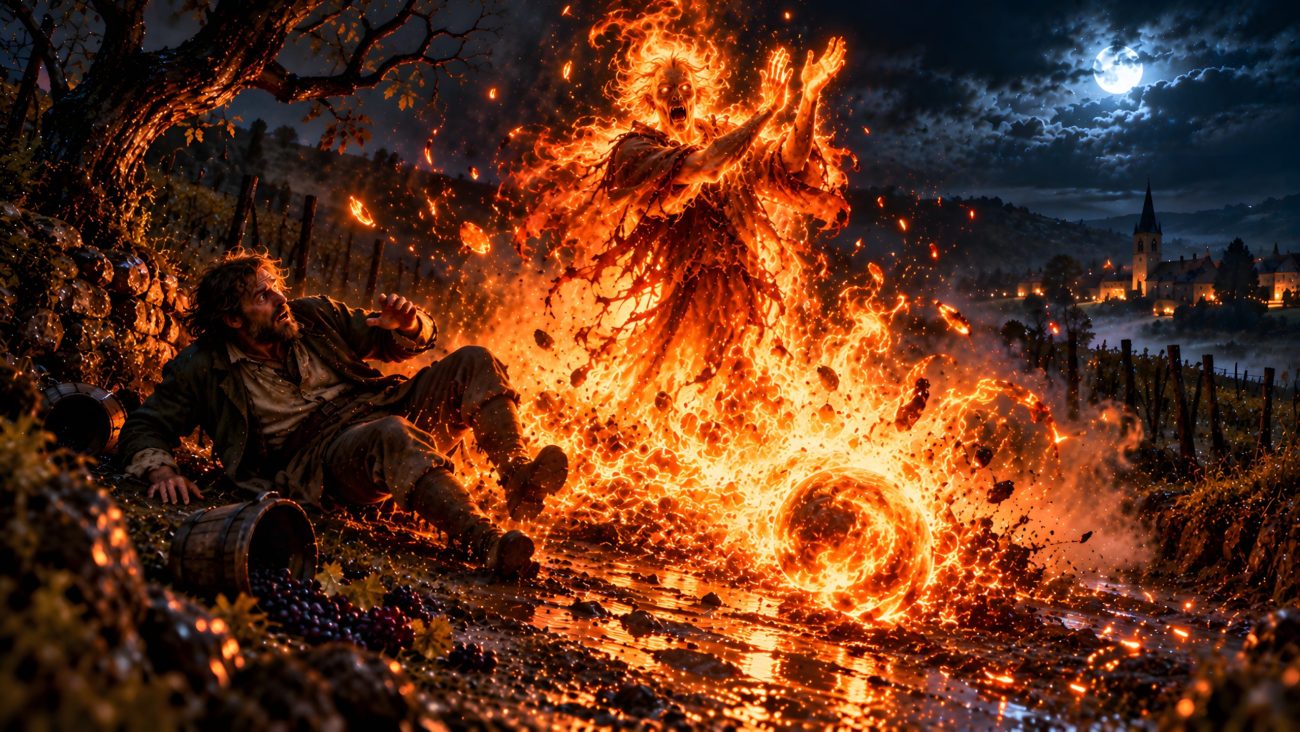
Die Feuerkugel is a supernatural ball of fire that haunts the Höllenfeld near Bech, Luxembourg. It appears like a living bowling ball, rolling along the road and persistently moving beneath the feet of anyone who tries to step around it. Its strange movements make it almost impossible to avoid, as though it deliberately seeks to trip those who encounter it.

One evening, a winemaker from Bech passed the Höllenfeld late at night. He had often boasted that he had walked past the place a thousand times, at every hour of the night, without ever witnessing anything unusual. This time, however, a fireball appeared on the road before him. It rolled toward his feet, repeatedly threatening to slip beneath whichever foot he put forward. Unable to escape its path, the winemaker watched as the ball grew larger and larger before rising into the air and hovering above his head.

Suddenly, the enormous fireball exploded with a terrifying bang. A blazing figure sprang onto the road in front of the deathly pale winemaker, clapped its hands, and vanished. The encounter shattered the man’s confidence, and the once fearless winemaker could never again be persuaded to pass the Höllenfeld after nightfall.


Sources

La Fontaine, Edmond de. Luxemburger Sagen und Legenden. Luxemburg: Jos. Beffort, 1882.

Sammelplatz der Irrlichter

Tradition: Luxembourg Mythology
Alternative Names: The Gathering Place of the Will-o’-the-Wisps
Category: Flame


The Myth

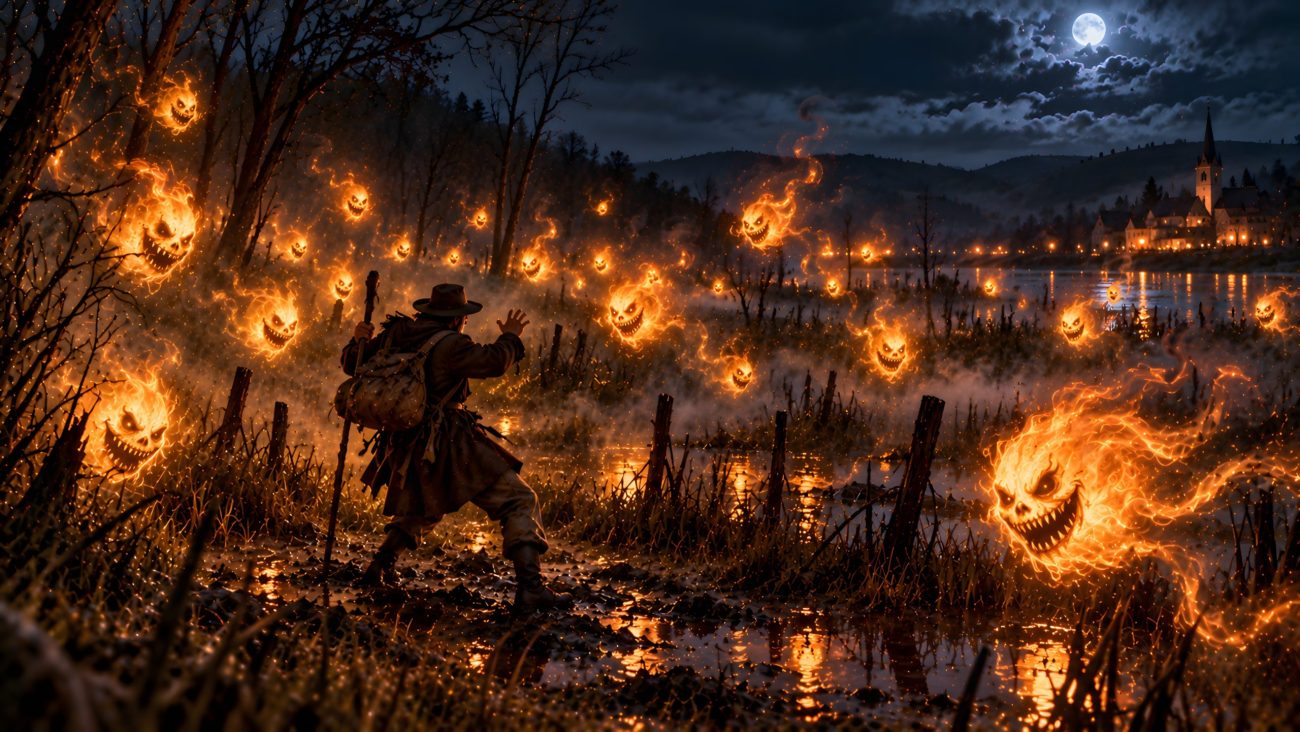
The Sammelplatz der Irrlichter, meaning the Gathering Place of the Will-o’-the-Wisps, is a notorious haunted area in the fields of Ertchessteil near Bech, along the Moselle River in Luxembourg. For generations, the place has been feared throughout the surrounding countryside because of the mysterious wandering lights that gather there. Nowhere else were the Irrlichter said to be so numerous or so daring, appearing in groups of dozens to torment those who passed through after dark.

The will-o’-the-wisps delighted in leading late-night travellers astray, luring them into dangerous swamps before clapping their hands in malicious amusement at their victims’ misfortune. They pursued those who fled in terror, chasing them through the darkness and making escape difficult. Yet the spirits were not entirely fearless: a traveller who stood their ground courageously and quickly made the sign of the cross could force them to retreat helplessly.

The tricks played by the Irrlichter at Ertchessteil were remembered as especially notorious, and many of their deceptions resembled those told in other local legends. The field remained famous as their principal gathering place, where the wandering lights assembled in great numbers to frighten travellers and lead them into danger.


Sources

La Fontaine, Edmond de. Luxemburger Sagen und Legenden. Luxemburg: Jos. Beffort, 1882.

Geldfeuer bei Bous

Tradition: Luxembourg Mythology
Alternative Names: –
Category: Flame


The Myth

Das Geldfeuer bei Bous, meaning the Money Fire of Bous, is a mysterious supernatural flame said to appear at night upon the surface of a small pool called the Weiherchen, situated between the villages of Bous and Erpeldingen in Luxembourg. The pool is fed by a natural spring, and its waters were once the setting for a strange and frightening encounter involving a fire believed to reveal hidden wealth.

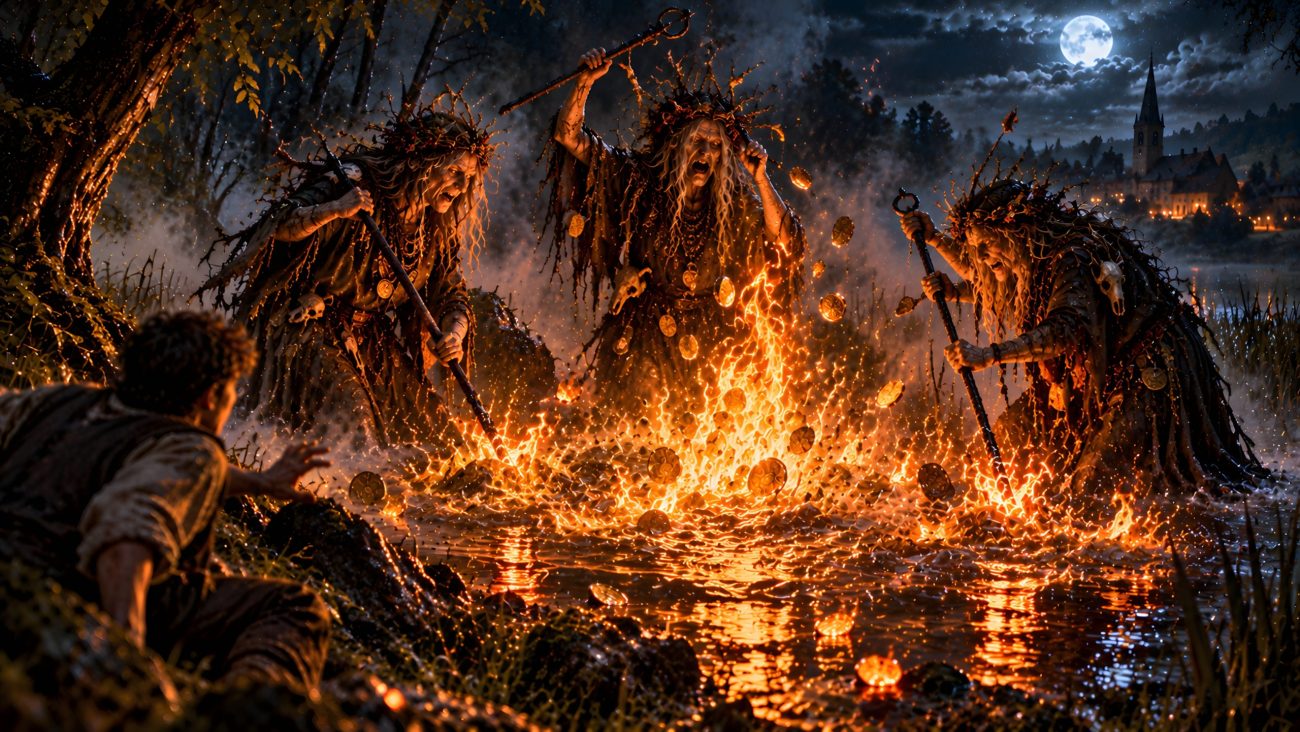
One night, people from Bous witnessed a money fire burning in the middle of the water. Hoping to claim the treasure associated with the mysterious flame, a young man ran toward it. However, he soon returned in terror, having witnessed something far more sinister than a simple fire.

In the water, he had seen three witches striking the surface with iron rods, whipping it in an attempt to raise evil mists. The sight frightened him away from the flame, leaving the supposed treasure untouched and revealing the dangerous supernatural forces lurking beneath the appearance of easy riches.


Sources

La Fontaine, Edmond de. Luxemburger Sagen und Legenden. Luxemburg: Jos. Beffort, 1882.

Geldfeuer beim Johannisberg

Tradition: Luxembourg Mythology
Alternative Names: –
Category: Flame


The Myth

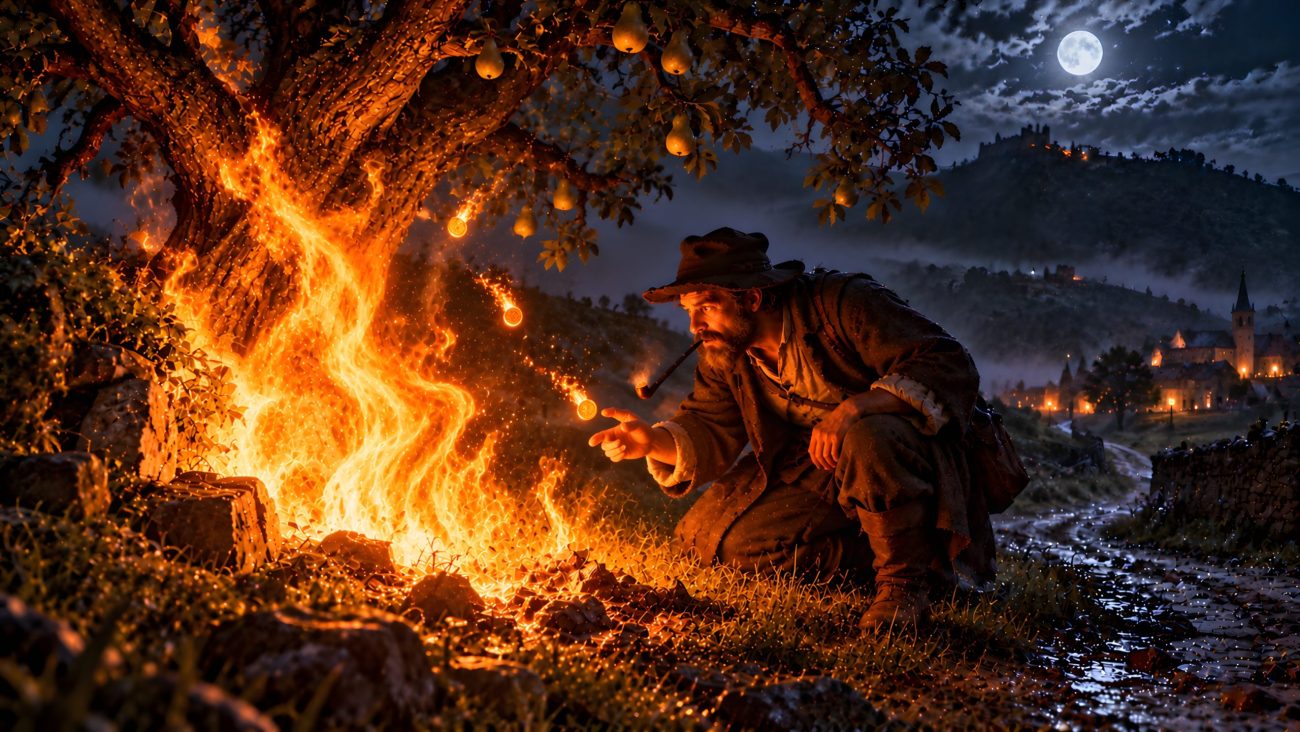
Das Geldfeuer beim Johannisberg, the Money Fire of Johannisberg, was a mysterious flame that appeared at night beneath an old pear tree at the foot of Johannisberg, near a path leading from Budersberg to Kayl in Luxembourg. The tree still stood around 1865, and the remains of building foundations were later discovered nearby. The place was associated with a strange fire that could reveal hidden gold to anyone fortunate enough to encounter it.

One night, a man from Kayl was passing the old pear tree when he noticed a cheerful little fire burning beneath its branches. Assuming that shepherds had lit the fire and then abandoned it, he casually picked up a glowing coal to light his pipe before continuing on his way. He thought nothing more of the incident until he arrived home and discovered a tiny grain of gold lying inside his pipe.

Realizing what he had found, the man hurried back to the pear tree, hoping to discover the mysterious fire again and perhaps obtain more gold. But when he returned, the flame had vanished completely. The brief encounter had revealed the fire’s extraordinary nature, yet the opportunity to find it again had disappeared as mysteriously as the light itself.


Sources

La Fontaine, Edmond de. Luxemburger Sagen und Legenden. Luxemburg: Jos. Beffort, 1882.

Feurige Mann

Tradition: Luxembourg Mythology
Alternative Names: –
Category: Flame


The Myth

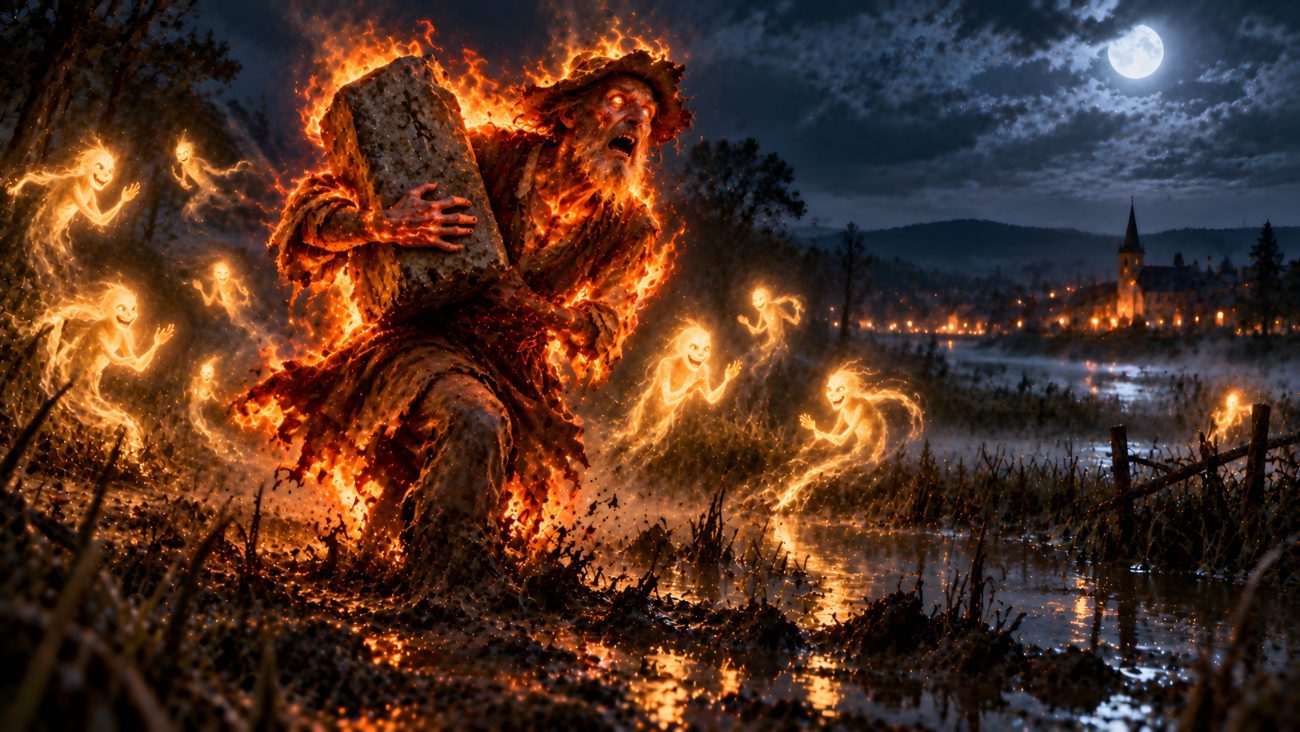
Der feurige Mann, the Fiery Man, is the restless spirit of a notorious miser from Nennig, a village opposite Remich. Known as Kronenmichel, he amassed considerable wealth through greed and dishonest dealings. He hoarded grain and money, exploited others for profit, and moved boundary stones to steal land from his neighbours. His ill-gotten fortune brought him riches in life, but after death he was condemned to wander the countryside as a tormented spirit.

One night, while returning home from a market, Michel fell victim to the will-o’-the-wisps. The mischievous lights arranged themselves to resemble the welcoming lights of his hometown, deceiving him into believing he was following the right road. Instead, they led him into a dangerous marsh. As he wandered deeper into the bog, the ground swallowed him gradually, while the lights danced around him and clapped their hands in delight. Michel cursed and swore terribly, but his struggles were useless. At last, the mud closed over his head, and the countryside fell silent.

Since then, Kronenmichel has haunted the fields around Nennig at night, carrying a glowing boundary stone upon his shoulder. He runs restlessly across the land, tormented by the same dishonest act that defined his life. From time to time, he cries out in despair, “Where shall I put this boundary stone?” Unable to escape his punishment, the greedy man is condemned to search eternally for a place to set down the stone he once moved to steal another person’s land.


Sources

La Fontaine, Edmond de. Luxemburger Sagen und Legenden. Luxemburg: Jos. Beffort, 1882.

Goldkohlen zu Bayern

Tradition: Luxembourg Mythology
Alternative Names: –
Category: Flame


The Myth

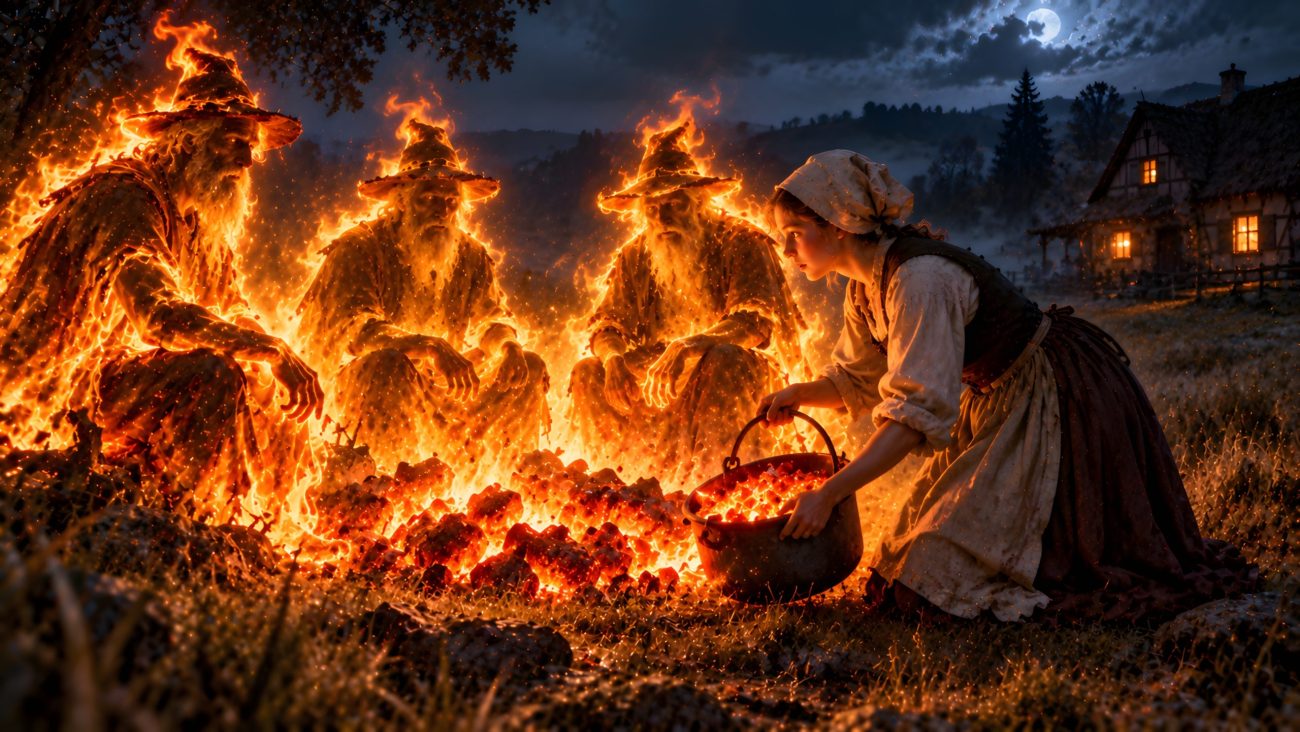
Die Goldkohlen zu Bayern, meaning the Golden Coals of Bayern, is a legend about a mysterious fire burning in a field near a farmhouse. The fire is tended by three unknown men who sit silently around the flames. To anyone who sees it, the fire appears to offer ordinary glowing coals, but its true nature is revealed only through a strange encounter with a servant girl.

One early morning, while it was still dark, a maid from Bayern went outside to gather fire so she could cook soup. Seeing the flames burning in a nearby field, she approached the three men and filled a pot with glowing coals to take back to the house. Yet when she placed the coals on the hearth, they immediately went out. She returned to the field and tried again, but the second pot of coals also extinguished as soon as she brought it home. When she came for a third pot, one of the previously silent men finally spoke, warning her, “Now you need not come again.”

The third batch of coals also went out on the hearth. Frightened by the strange events and the man’s warning, the maid told the farmer and his wife what had happened. They sent her back to bed, then went into the kitchen themselves. There, instead of extinguished coals, they discovered a large quantity of gold coins lying on the hearth. The farmer and his wife kept the treasure for themselves, while the maid’s strange encounter with the silent men had unknowingly led them to a hidden fortune.


Sources

La Fontaine, Edmond de. Luxemburger Sagen und Legenden. Luxemburg: Jos. Beffort, 1882.

Blendende Licht

Tradition: Luxembourg Mythology
Alternative Names: The Blinding Light
Category: Flame


The Myth

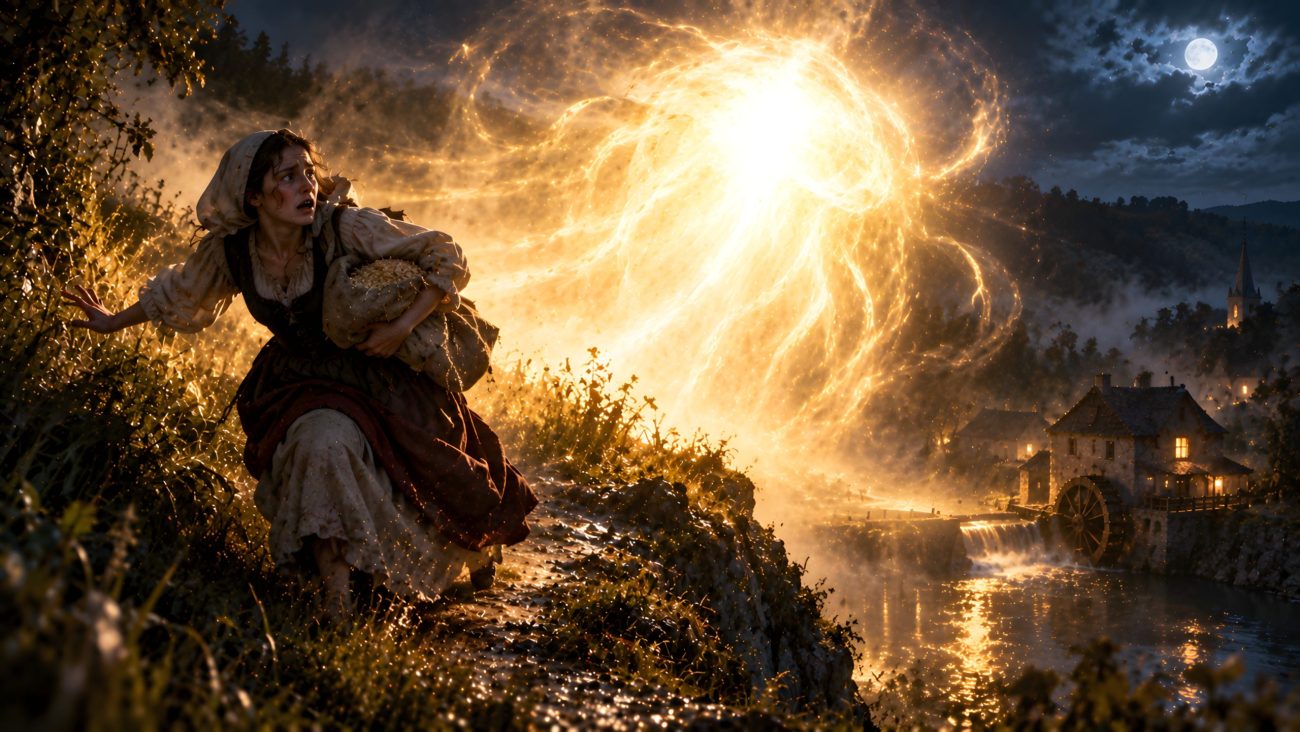
Das blendende Licht, meaning the Blinding Light, is a terrifying supernatural glow that appears at night and surrounds those who encounter it. Its radiance grows increasingly intense as it approaches, eventually enveloping its victim in a dazzling brilliance that makes it impossible to see clearly or find a way to escape. The light is associated with a sinister, almost devilish enchantment that can lead unsuspecting travellers into mortal danger.

One night, a woman from Remich mistook the bright moonlight for the approach of dawn. Believing morning had arrived, she set out carrying a measure of grain toward the Herder Mill near Bous. When she reached the hill above the mill, she noticed a light shining in the valley and initially assumed it came from the mill itself. However, the light gradually moved toward her, growing larger and brighter until it surrounded her in a blinding glow.

Terrified, the woman called upon all the saints in heaven for help and ran frantically in every direction, but the dreadful light continued to close around her. In desperation, she cried out, “I believe in God the Father!” At once, the enchantment vanished. Only then did she realize, with renewed horror, that she was standing on the steep, high bank of the millpond. Had she taken just one more step, she would have plunged into the water and drowned.


Sources

La Fontaine, Edmond de. Luxemburger Sagen und Legenden. Luxemburg: Jos. Beffort, 1882.