Iku-Turso

Tradition / Region: Finnish Mythology
Alternate Names: Iku-Tursas, Iki-Tursas, Meritursas, Tursas, Turisas
Category: Sea dweller, Giant


The Myth

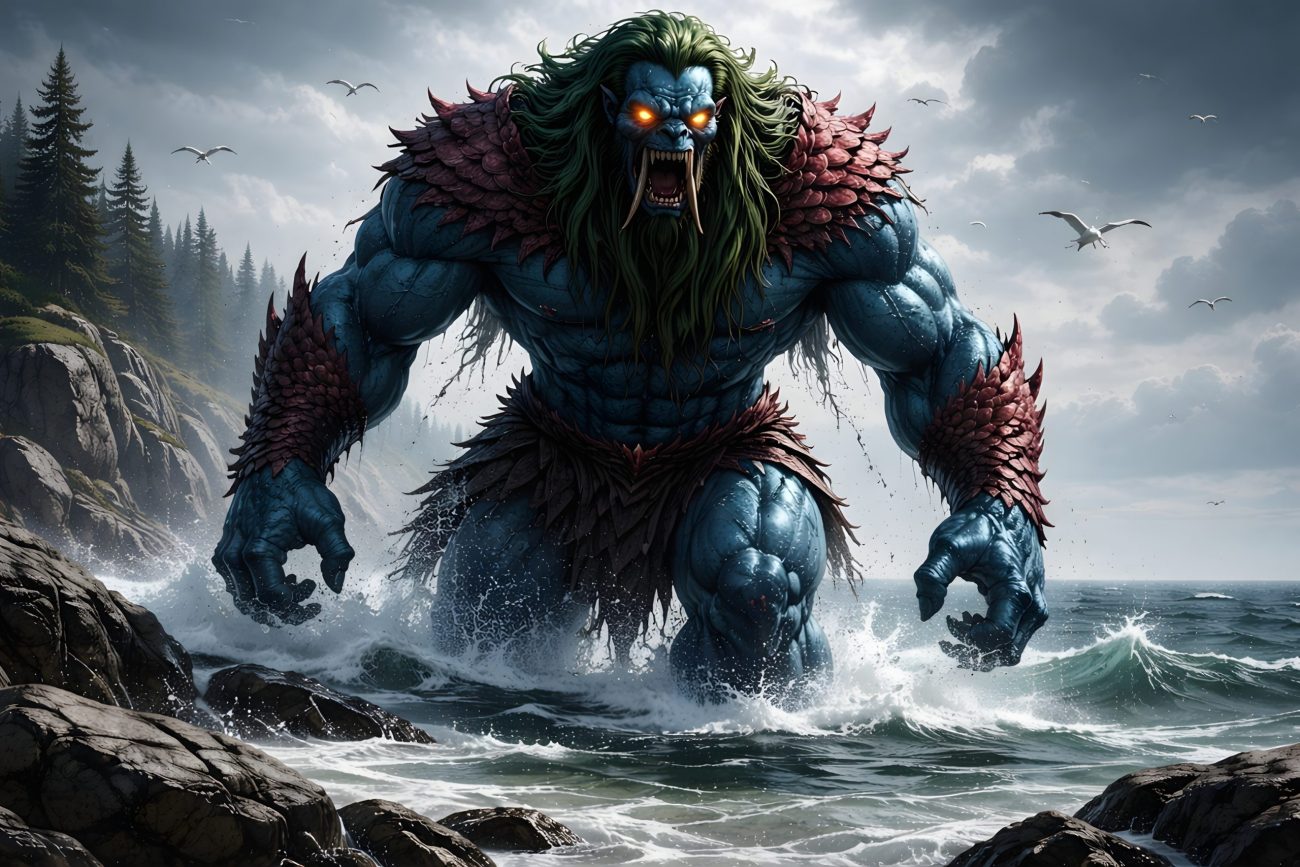
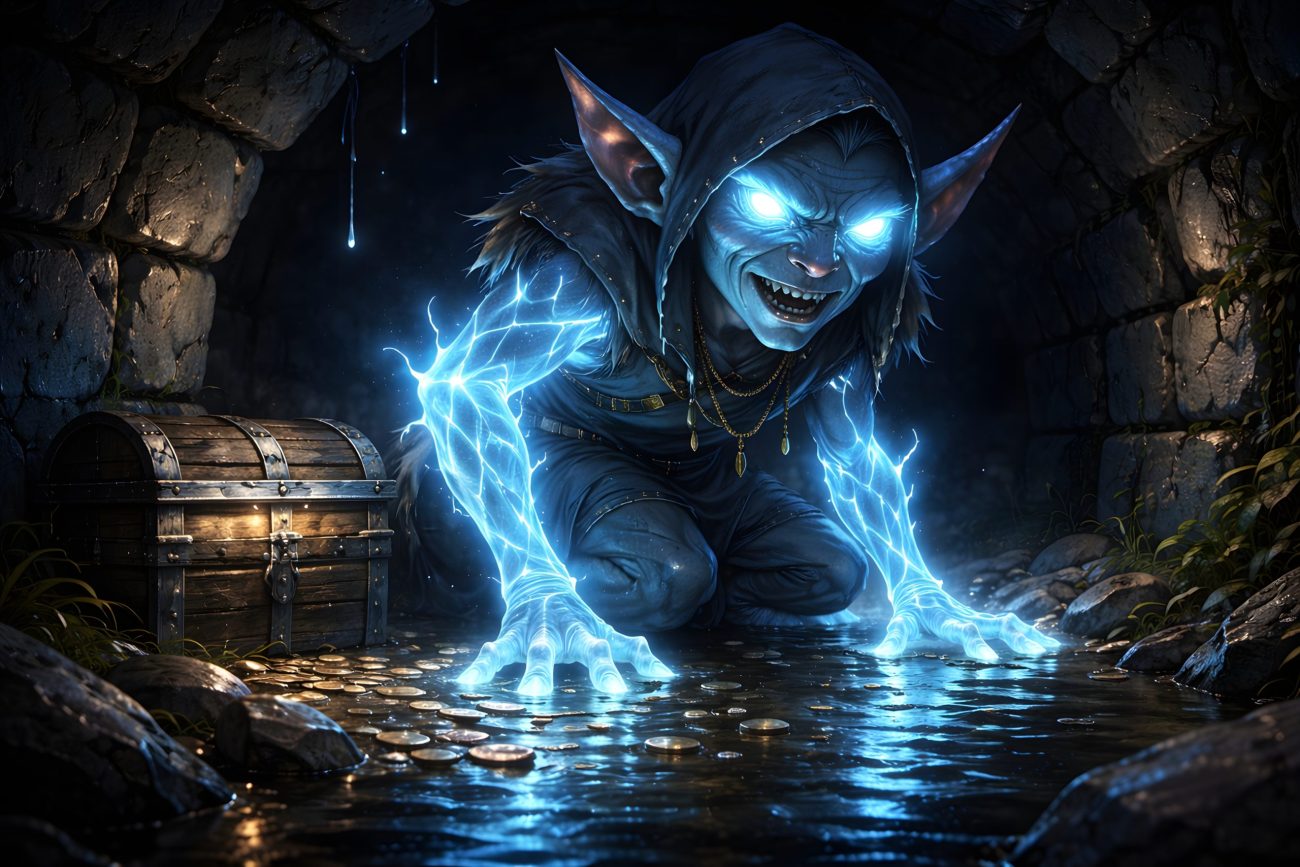
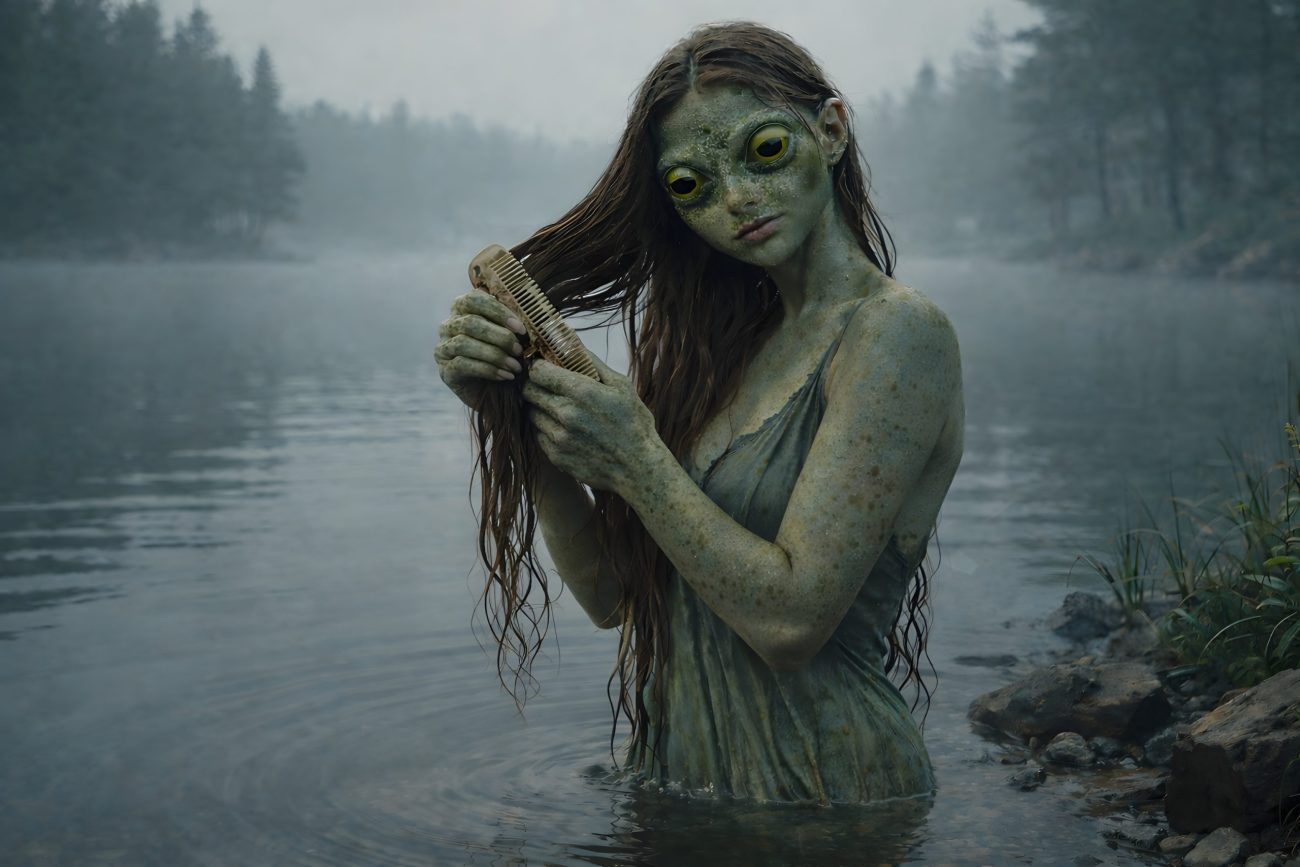
Iku-Turso is a fearsome and ancient being of Finnish mythology, most often portrayed as a monstrous creature of the sea. He is described as a malevolent force rising from the depths, associated with destruction, chaos, and primal power.

In mythic tradition, Iku-Turso is not always a single, clearly defined entity. Some stories treat him as one great being, while others suggest multiple related giants or spirits sharing the name. Despite this ambiguity, he is consistently tied to immense strength and dangerous supernatural influence.

In epic tradition, especially in the Kalevala, Iku-Turso emerges from the ocean as a destructive force. At one point, he burns gathered hay, and from the ashes grows a colossal oak tree. This tree becomes so vast that it blocks out the sun and the moon, plunging the world into darkness until it is finally cut down.

He is also depicted as a threat to heroes. When summoned from the sea by Louhi, he rises with the intent to destroy the heroes of Kalevala and reclaim a powerful magical artifact. However, he is ultimately confronted by Väinämöinen, who overpowers him and forces him, through magical command, to swear never to rise from the sea again.

In other traditions, a sea form known as “Meri-Tursas” is connected to the origins of disease, linking the being not only to physical destruction but also to sickness and suffering in the world.

Iku-Turso represents
an ancient, chaotic power of the deep — a giant whose emergence brings fire, darkness, and ruin, and whose defeat restores balance to the world.


Sources

Wikipedia contributors. (n.d.). Iku-Turso (creature). In Wikipedia, from https://en.wikipedia.org/wiki/Iku-Turso_(creature)
Paasselkä Devils

Tradition / Region: Finnish Mythology
Alternate Names: Paasselän pirut
Category: Flame


The Myth

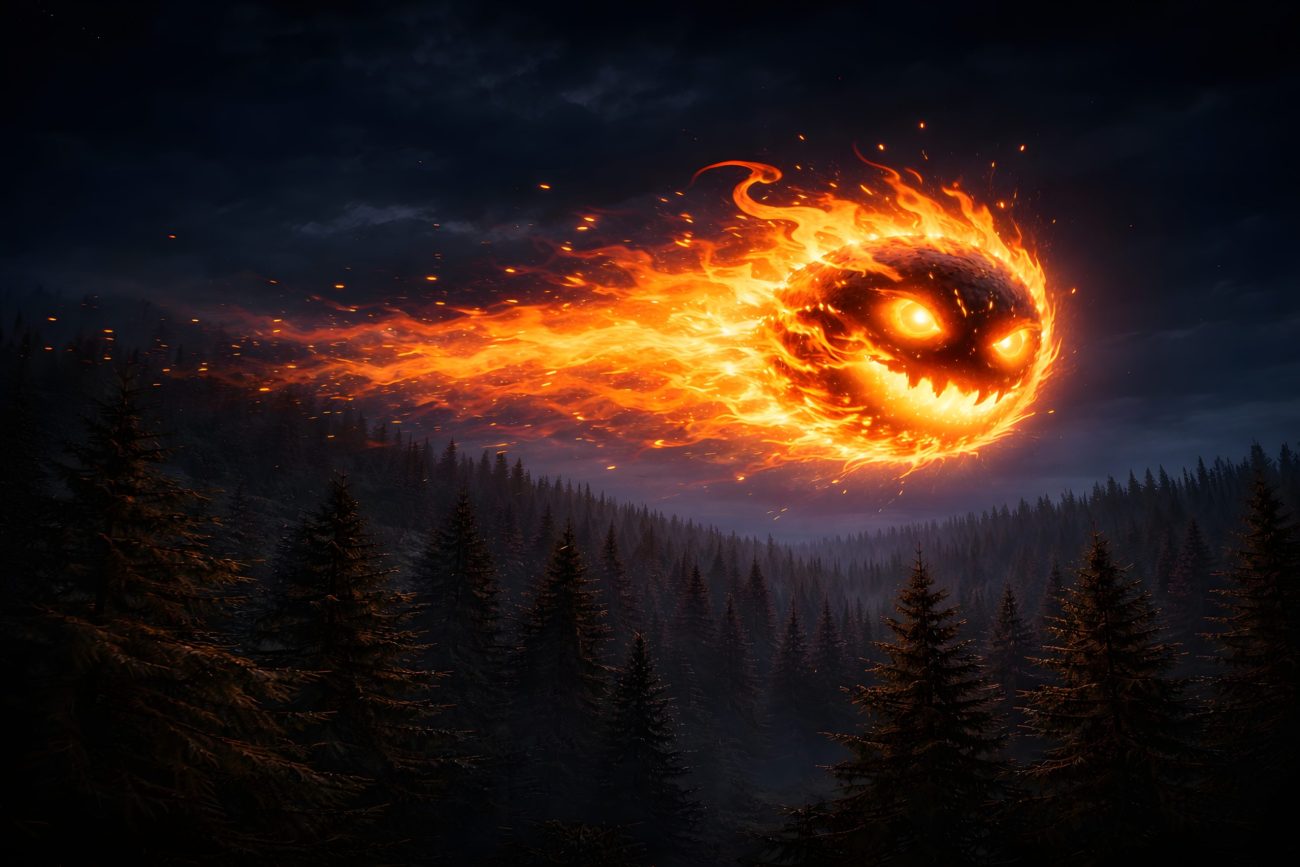
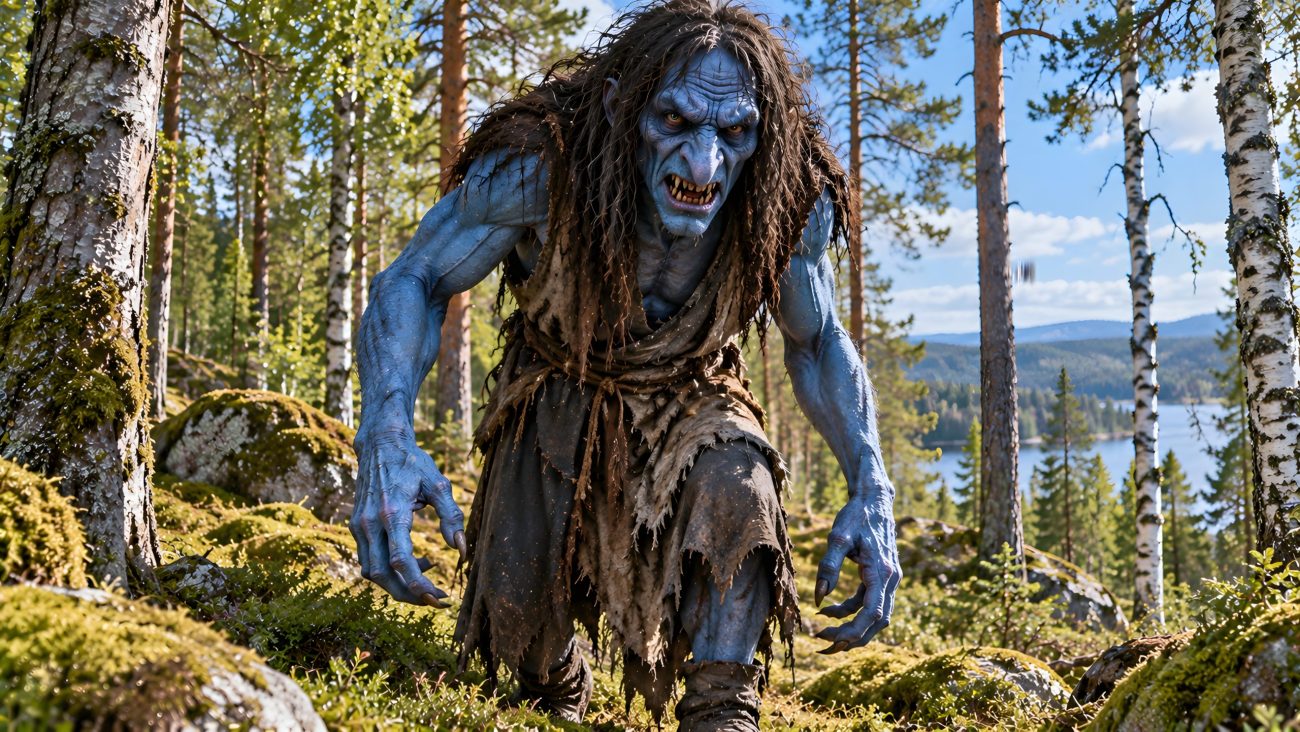
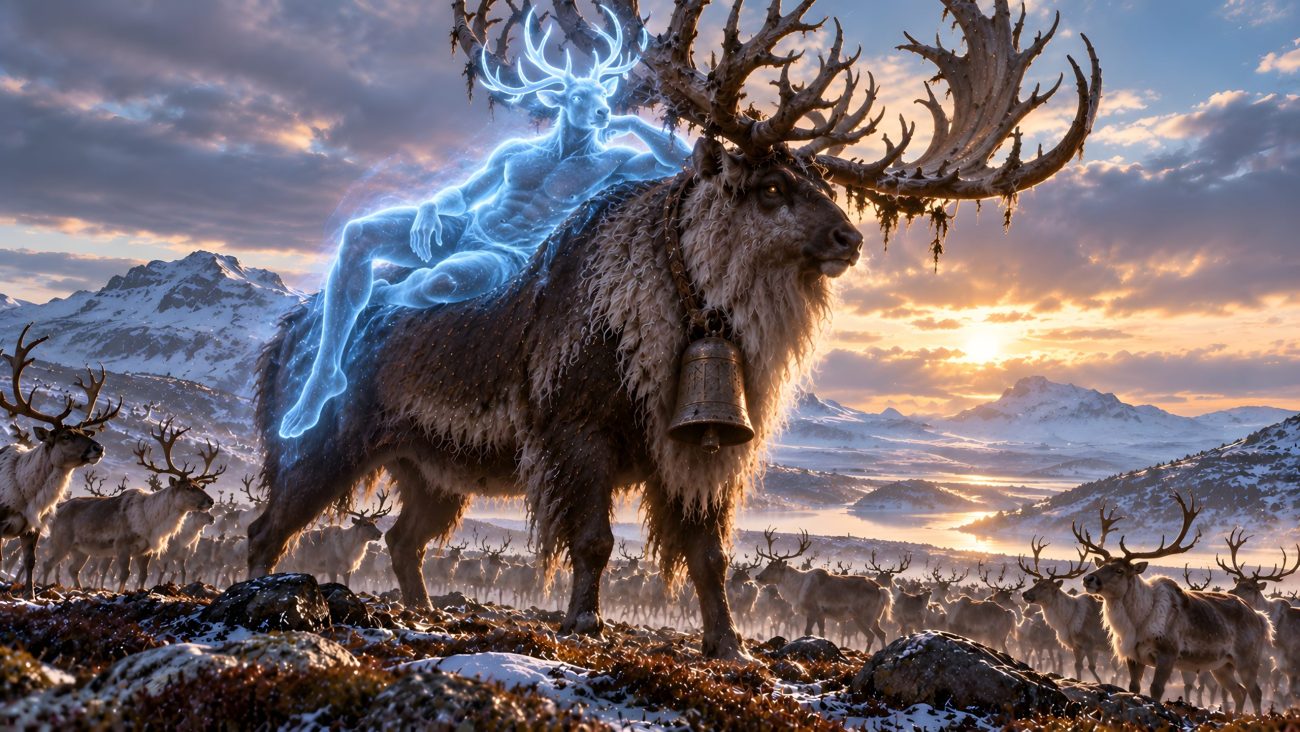
The Paasselkä Devils are mysterious glowing lights said to appear over Lake Paasselkä and the surrounding forests and swamps. In folklore, they are not merely natural lights, but supernatural beings with a will of their own.

They are most often seen as floating balls of fire or light hovering above the water or drifting through the night air. Sometimes a single light appears, while at other times several move together across the landscape.

What makes them feared is their strange, almost intelligent behavior. The lights may follow boats, approach people, or suddenly flee when pursued. They can remain still for long periods, then dart away at incredible speed, as if reacting to human presence.

Because of this, locals came to believe that these lights were living entities — spirits or demons — rather than simple natural phenomena. Their unpredictable movements and eerie glow gave them a sinister reputation.

In older belief, encountering these lights was considered dangerous. They were thought to mislead travelers, lure people into unsafe places, or bring misfortune.

The Paasselkä Devils represent
a haunting presence in the wilderness — lights that watch, move, and react, as if something unseen is alive within them.


Sources

Wikipedia contributors. (n.d.). Paasselkä devils. In Wikipedia, from https://en.wikipedia.org/wiki/Paasselk%C3%A4_devils


Ajatar

Tradition / Region: Finnish Mythology
Alternate Names: Ajattara, Aijotar
Category: Snake


The Myth

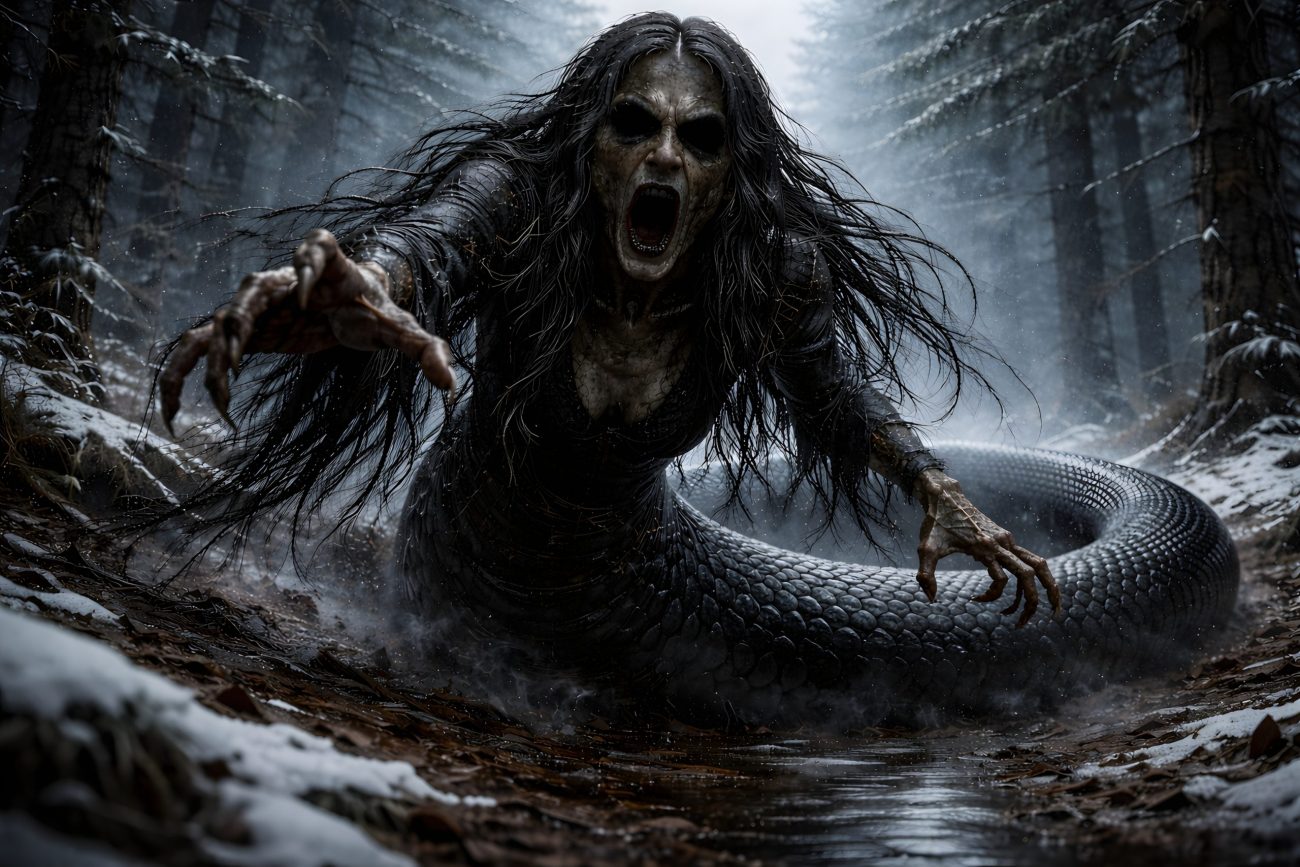
Ajatar is a dark and malevolent female spirit of Finnish folklore, associated with forests, disease, and serpents. She is feared as a bringer of pestilence, wandering through wild places and spreading illness wherever she goes.

She is described as a terrifying figure: her long hair trails down to her heels, and her breasts hang to her knees, emphasizing her unnatural and disturbing form. This appearance links her to other wild female spirits across Northern Europe, but Ajatar is far more sinister in nature.

Closely connected to forces of evil such as Hiisi and Lempo, Ajatar operates as a servant or embodiment of destructive powers. Through these associations, she is believed to infect humans with sickness and misfortune.

Serpents are strongly tied to her myth. In some traditions, snakes are said to originate from her domain or even from her very being, reinforcing her role as a primal force of danger and corruption. Because of this, she is sometimes imagined not just as a woman, but as a half-serpentine creature or even a dragon-like entity.

Ajatar is also known for leading people astray. Those who wander too deep into the forest may fall under her influence, becoming lost, confused, or afflicted with sudden illness.

Her name is often interpreted as “the pursuer,” reflecting her relentless nature —
a spirit that chases, afflicts, and does not easily release those who fall under her shadow.


Sources

Wikipedia contributors. (n.d.). Ajatar. In Wikipedia, from https://en.wikipedia.org/wiki/Ajatar


Haltija

Tradition / Region: Finnish Mythology
Alternate Names: Haltia
Category: Spirit


The Myth

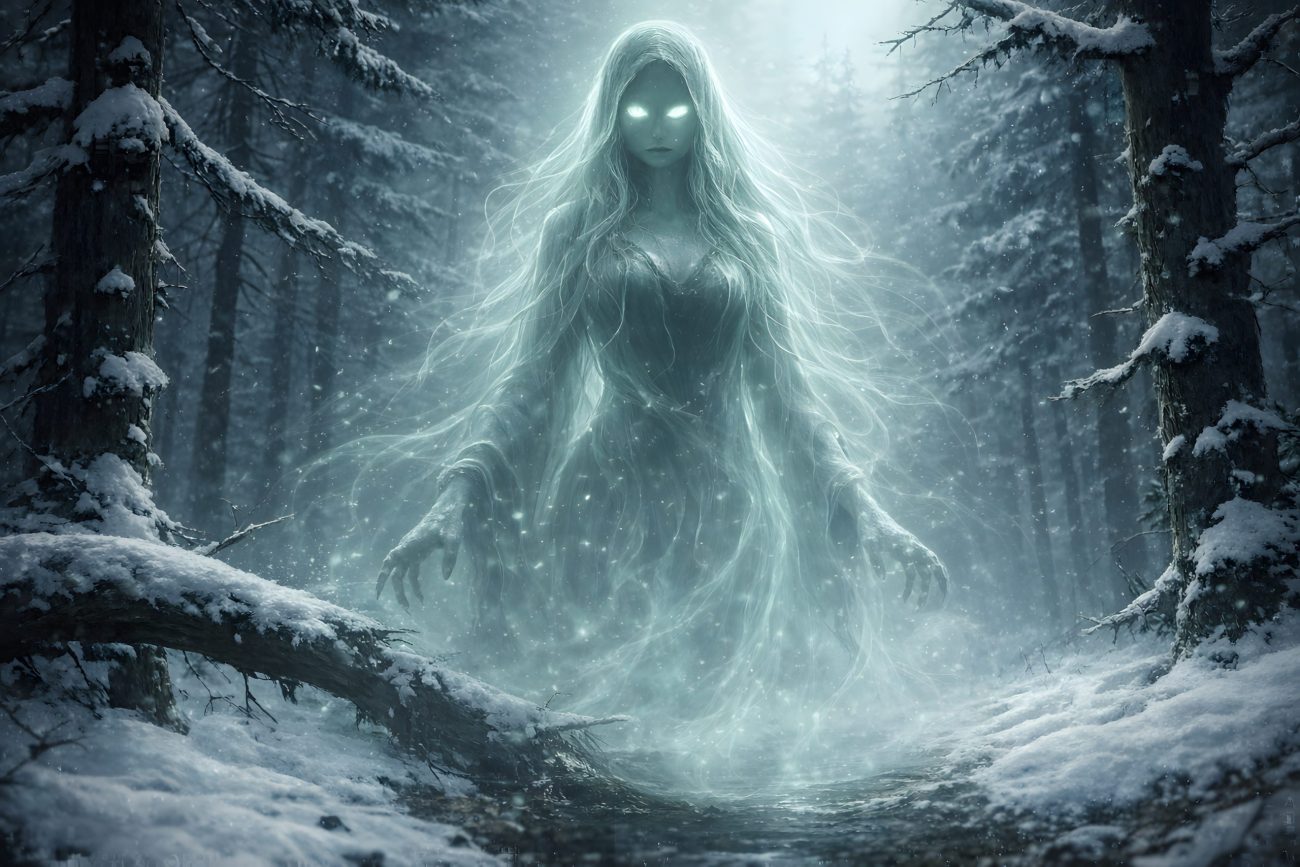
A haltija is a supernatural being tied to a specific place, creature, or domain. It exists as the unseen inhabitant and protector of that domain, maintaining its order, balance, and wellbeing.

Each haltija is bound to a particular location or function. Some guard forests, waters, homes, or farms, while others are connected to animal species or even individual people. A haltija may also arise from the dead, especially if a person is buried in their home, becoming a protective presence linked to that place.

Haltijas act as guardians of nature and life. A forest haltija protects the forest and may help or punish humans depending on how they behave within it. A water haltija dwells in lakes or rivers and governs those waters. A haltija tied to animals ensures their continuation by returning them to the earth after death.

Within human spaces, haltijas protect daily life. The home haltija watches over the household, the sauna haltija guards the sauna, and the mill haltija oversees the mill. These spirits require respect, and improper behavior in their domain may bring misfortune.

Offerings were made to haltijas when settling new land or using resources, acknowledging their authority over that place.

A haltija differs from a god in scope. Rather than ruling over vast forces, it governs a specific area or function, acting as a localized power.

It represents a fundamental belief:
every place, being, and domain has its own unseen guardian that must be respected.


Sources

Wikipedia contributors. (n.d.). Haltija. In Wikipedia, from https://en.wikipedia.org/wiki/Haltija


Menninkäinen

Tradition / Region: Finnish Mythology
Alternate Names: —
Category: Spirit, Goblin


The Myth

Menninkäinen are small spirit beings that dwell in isolated or hidden places. They were originally regarded as generally friendly toward humans and associated with quiet, remote environments.

Over time, their image changed, and they came to be described as goblin-like creatures. They are often linked with hidden treasures and are said to guard them, enjoying riddles, tricks, and contests of wit or dominance.

Their dwelling places vary in different traditions. Some accounts place them deep in forests and natural landscapes, while others describe them as inhabiting more unexpected locations, including human-made environments.

Despite these variations, they remain beings connected to secrecy and hidden spaces, interacting with humans through challenges, games, or encounters tied to what they guard.


Sources

Kielitoimiston sanakirja contributors. (n.d.). menninkäinen. In Kielitoimiston sanakirja, from https://www.kielitoimistonsanakirja.fi/#/mennink%C3%A4inen?searchMode=all

Wikipedia contributors. (n.d.). Menninkäinen. In Wikipedia, from https://en.wikipedia.org/wiki/Mennink%C3%A4inen


Näkki

Tradition / Region: Finnish Mythology
Alternate Names: Näkk, related to Nix, Vetehinen
Category: Spirit


The Myth

Näkki is a dangerous water spirit that inhabits lakes, ponds, wells, and deep or murky waters. It represents the hostile and deadly side of water, especially in places where the depth or current is hidden.

It waits in ambush for swimmers, pulling them beneath the surface and drowning them. It is often said to dwell in the deepest parts of water, under bridges, near docks, or in whirlpools. Because of its nature, people used protective sayings before entering or leaving the water, acknowledging its presence.

In some traditions, Näkki appears at first in a harmless or even inviting form, sometimes seen sitting on rocks and combing long hair. This appearance hides its true nature, which is revealed only when it attacks. Its real form is described as monstrous, sometimes frog-like, scaly, or made entirely of seaweed, making it impossible to overcome in water.

Regional beliefs distinguish it from other water beings. In some areas, Näkki is the one that physically seizes swimmers, while another spirit brings illness. In others, it is simply another name for older water spirits, including a maternal figure of the waters.

Näkki also appears in ritual and song, where diseases are cast into the water for it to take, placing it among forces that receive and contain harm.

It represents the danger of unseen depths:
a spirit that lures, seizes, and drags the living into the water below.


Sources

Mythus Fandom contributors. (n.d.). Näkki. In Mythus Fandom, from https://mythus.fandom.com/wiki/N%C3%A4kki

Wikipedia contributors. (n.d.). Nixie (folklore). In Wikipedia, from https://en.wikipedia.org/wiki/Nixie_(folklore)


Firefox

Tradition / Region: Finnish Mythology
Alternate Names: Tulikettu, Tulirepo, Tulikko
Category: Fox


The Myth

Deep in the forests of the far north, and in the lonely wilderness where few people travel, there is said to live a rare and wondrous fox known as the Firefox.

By day it appears as a dark, almost black fox, slipping silently through the trees and hiding in remote dens where almost no one ever sees it. But when night falls, the creature reveals its true nature. Its tail begins to glow and sparkle, scattering fire-like light as it moves. Some say the sparks trail behind it, lighting the darkness as it runs across the snow.

Stories tell that when the fur of a Firefox is brushed in a certain way, it shines with a strange radiance, giving off a light unlike ordinary flame. Because of this, its hide was believed to be precious beyond measure. It was said that in earlier times, people used the leather of such a fox to illuminate dark storehouses safely, without the danger of open fire.

Hunters dreamed of encountering the Firefox, for capturing one was believed to bring wealth for the rest of their lives. Yet the creature lived far from human paths, hidden in the northern wilds, and very few ever claimed to have seen it.

Thus the Firefox remained a creature of distant forests and winter nights — a fox whose tail burned with light, glimpsed only by the fortunate or the lost beneath the northern sky.


Sources

Wikipedia contributors. (n.d.). Firefox (mythology). In Wikipedia. Retrieved March 1, 2026, from https://en.wikipedia.org/wiki/Firefox_(mythology)


Ahtin Taikahärkä

Tradition / Region: Finnish mythology
Alternate Names: Ahti’s Magic Bull
Category: Cow


The Myth

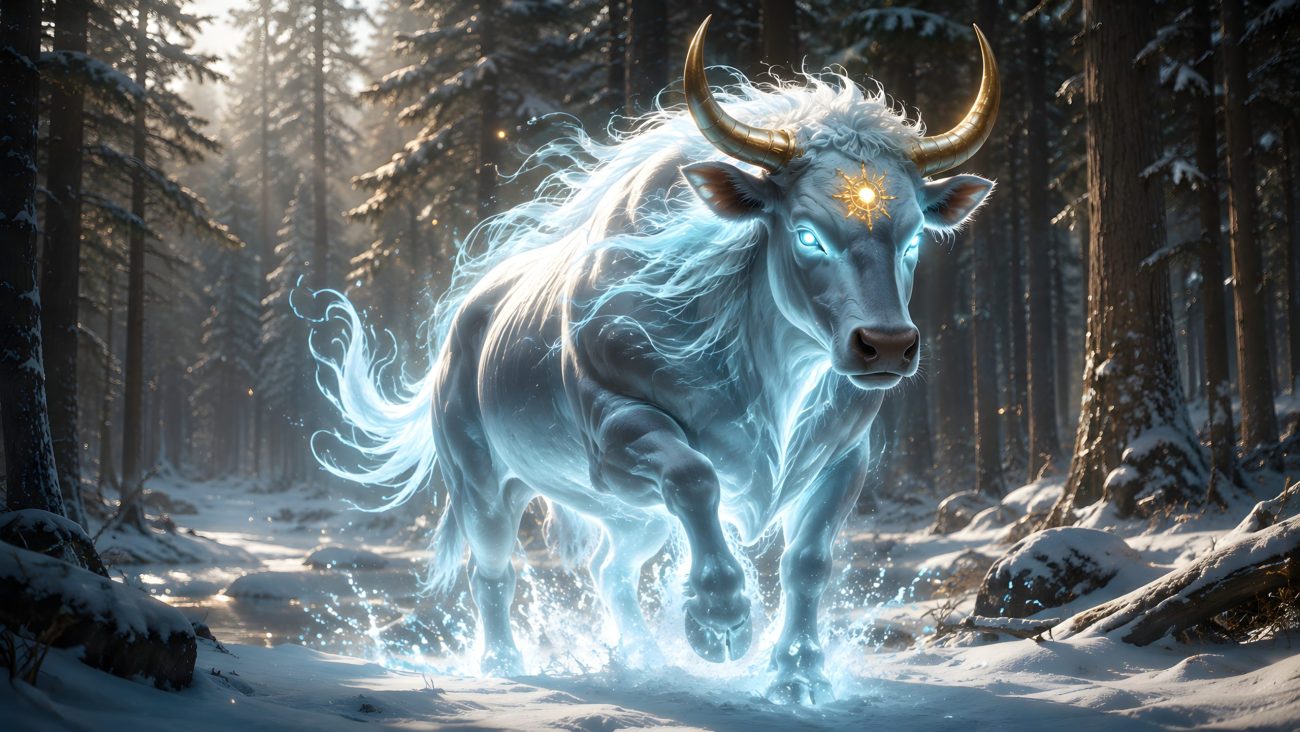
By the will of Ahti, King of the Islands, a wondrous creature was brought fully into the world. It was no spirit or illusion, but a living bull of immense size and strength. Its horns shone like gold and silver, and its body pressed heavily upon the earth as though the land itself struggled to bear it.

The bull wandered in quiet majesty. When it came upon a small lake, it lowered its great head and drank deeply, lingering at the water’s edge as if bound to that place. Its breath was slow and powerful, and the world seemed to pause around it.

Far away in the northern land of Pohjola, its ruler became aware of the bull’s existence. In response, he created a wolf—lean, fierce, and driven by a single purpose—and sent it forth to hunt the magical beast.

In time, bull and wolf met.

Their clash was brief and violent, and the outcome was already woven into fate. The wolf brought the bull’s life to an end, and the creature with horns of gold and silver vanished from the world.

What remained was only the memory of its creation: a life summoned by divine power, brilliant and real, yet destined to endure only for a moment before being reclaimed by the forces set against it.


Gallery


Sources


Kalevala: The Epic Poem of Finland: RUNE XXVII, the Unwelcome Guest
(J. M. Crawford, Trans.). (1888).


Interpretive Lenses

Religious Readings
  • Christian Ascetic Deep Dive
Philosophical Readings
  • Nietzschean Deep Dive
Psychological Readings
  • Jungian Deep Dive
Esoteric Deep Dive
  • Hermetic Deep Dive
Political / Social Readings
  • Marxist Deep Dive
Other
  • How to Invite The Ahtin Taikahärkä

Tuuslar

Tradition / Region: Estonian Mythology, Finnish Mythology
Alternate Names:
Category: Sorcerer


The Myth

A Finnish Tuuslar once fled across the sea to the island of Lavassaare, pursued by enemies who sought to destroy him. As he fled, he used his magic to defend himself. He transformed fish in the surrounding waters into terrifying sea monsters, hoping to frighten his pursuers away. Even so, they continued after him and reached the small island.

When the enemies landed, the Tuuslar took a handful of feathers from his beak and blew them into the air. At once, warriors fell from the sky like hail, filling the island and driving the attackers into panic. Terrified, they fled, leaving the Tuuslar alone on Lavassaare.

The Tuuslar remained on the island for many years. From there, he played tricks on the people living along the Viru coast, using his witchcraft to deceive and trouble them. At last, he departed, flying away on the back of a great northern eagle, and was never seen again.

After his departure, the island of Lavassaare stood empty for a long time. People feared to land there, believing the Tuuslar’s magic still lingered. Eventually, peaceful Finns arrived and settled the island. These settlers were said to have lost their witchcraft spells, and their descendants are believed to live on the island to this day.

According to the legend, children are sometimes seen playing and throwing feathers into the air, saying, “Let’s try—can we get shepherds?” remembering the Tuuslar’s magic.

Another tale tells that a Finnish Tuuslar once threw a stone at the sleeping Kalevipoeg, but missed. The stone was said to remain near the Suigu farm in Viru-Jaagupi, marking the place where the spell failed.