Skarbnik

Tradition / Region: Polish Mythology, Ukranian Mythology, Belarusian Mythology
Alternate Names: Kladenets; Dzedka
Category: Cave dweller


The Myth

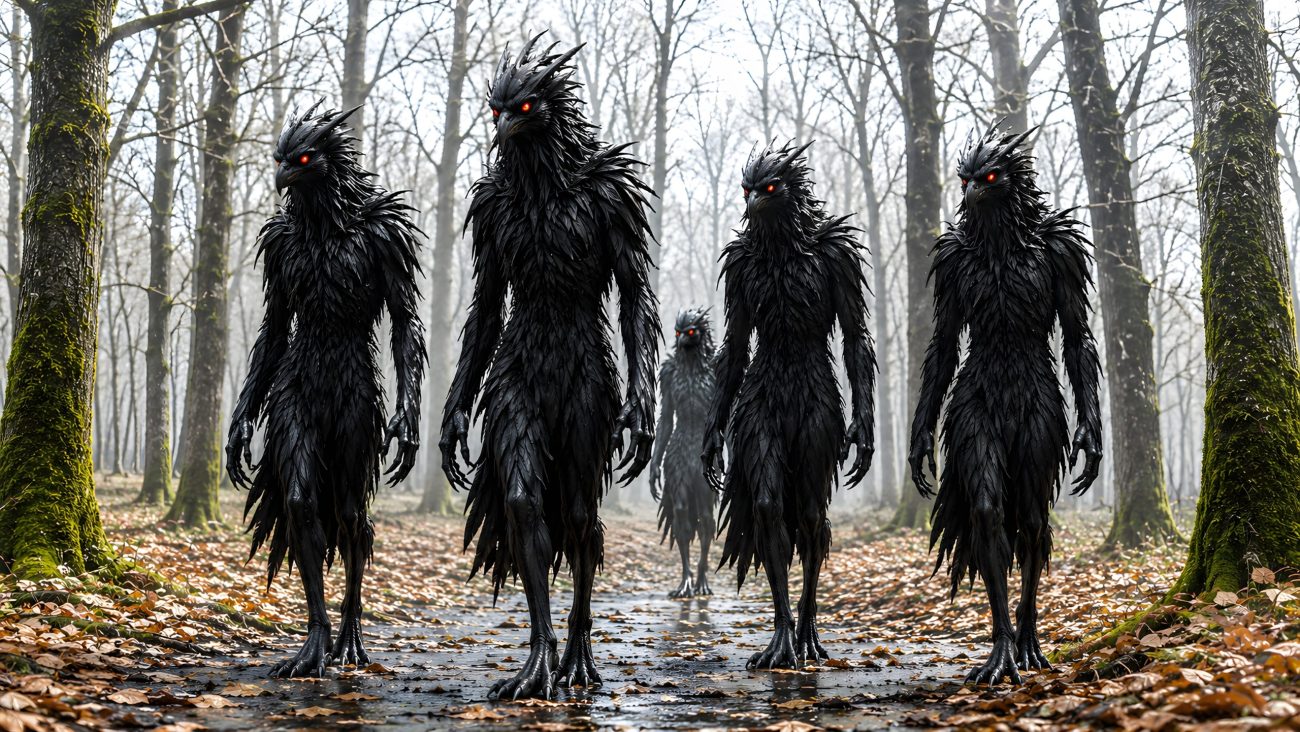
Deep beneath the earth, in the winding tunnels of mines and forgotten shafts, dwells the Skarbnik—the Treasurer of the underworld. He is the unseen guardian of gems, crystals, and precious metals, watching over the hidden wealth buried in stone.

Miners speak of him in hushed voices. To those who work honestly and show respect, Skarbnik is a silent protector. When tunnels groan and timbers strain, he may guide a worthy miner away from danger. When a man loses his path in the dark labyrinth underground, a whisper, a faint glow, or the echo of a step may lead him safely back. At times, Skarbnik rewards diligence by revealing a rich vein of ore, leading the faithful straight to silver, coal, or gold.

But Skarbnik is not gentle with the wicked.

Those who curse in the tunnels, mock the spirit, or treat the mine with arrogance soon feel his wrath. It is forbidden to whistle underground, to hurl stones in anger, or to cover one’s head in disrespect. Such acts insult the Treasurer. First comes a warning—a sudden shower of loose soil striking the offender, small clods thrown from unseen hands. If the warning is ignored, harsher punishment follows. Tunnels collapse without mercy. Dark chasms open beneath careless feet. Stones fall from above with deadly aim.

To the greedy and cruel, Skarbnik is a relentless judge. To the humble and respectful, he is a guardian and guide.

Thus the miners say that no one truly works alone beneath the earth. The Treasurer watches always, weighing the hearts of men as carefully as the ore they seek.


Sources

Wikipedia contributors. (n.d.). Karzełek. In Wikipedia, The Free Encyclopedia. Retrieved February 13, 2026, from https://en.wikipedia.org/wiki/Karze%C5%82ek


Dzedka

Tradition / Region: Belarusian mythology
Alternate Names: Kladenets (Russian), Skarbnik (Polish)
Category: Gnome, Spirit


The Myth

Dzedka appears in the world as an old, humble man. He walks slowly along roads, across fields, and through the quiet edges of villages. His beard is long and red, his eyes glow faintly red as well, and his clothes are plain and worn. With his sack over his shoulder, he looks no different from a poor beggar, and many pass him without a second glance.

Yet to meet Dzedka is never accidental.

When a person comes close to him without realizing who he is, a strange drowsiness falls over them. Their legs grow heavy, their thoughts blur, and they sink into sleep right there by the roadside or in the grass. While they sleep, Dzedka opens his bag and leaves behind a gift.

When the sleeper awakens, Dzedka is gone. In his place lies a sum of money—sometimes small, sometimes exactly what the person secretly needed. It is said that this money brings no curse or misfortune, only relief and opportunity.

For those who are already wealthy but unhappy, Dzedka’s gift is different. Instead of money, he grants a dream. In that dream, he shows them what is missing from their lives and what they must change to find true happiness. When they wake, the knowledge remains clear in their mind, like advice given by a wise elder.

Dzedka never demands gratitude, offerings, or prayers. He gives silently and disappears, leaving only fortune, insight, and the sense that kindness may walk the world disguised as poverty.


Sources

Wikipedia contributors. (n.d.). Dzedka. In Wikipedia, The Free Encyclopedia, from https://en.wikipedia.org/wiki/Dzedka


Beast of Sho

Tradition / Region: Belarusian mythology
Alternate Names:
Category: Cow


The Myth

In the village of Sho, people spoke in hushed voices of a terrifying being that was not a tale for children, but something seen with waking eyes. They said it appeared as a flying calf, malformed and unnatural, with a huge swollen head, no horns, and a shape that filled those who saw it with dread.

One woman told how her sister feared a certain barn where a man had once hanged himself. A cow was kept there, and each morning she brought hay in a basket, turning on the light and placing the feed carefully, yet she refused to climb into the hayloft itself.

One winter morning, as she stood outside, she heard footsteps. A door on the sloping side of the barn slowly began to open. At first it was only a crack. They owned a small black dog named Filka, and she wondered if it might be him, though she knew he could not open the door.

Suddenly the door flew wide and slammed against the wall.

Something burst out—but it was no dog.

It was as large as a calf. In the snow she saw it clearly: a massive head, a short thick neck, legs that looked as though they wore boots, and a long tail bent upward at the end. The creature ran past the hut and along the path. It did not go into the cellar. Instead, it rose into the air and flew away, its long tail dragging across the snow until it vanished.

The woman swore she had seen it plainly and had been frozen with terror. Others dismissed her words, saying such things could not exist. But in Sho, the story endured, and the memory of the flying calf lingered like a shadow over the barn and the snow-covered path where it had passed.


Sources

Bestiary.us. (n.d.). Chudovishche s Sho (Beast of Sho), from https://www.bestiary.us/chudovishche-s-sho

Lobach, U. A. (Ed.). (2011). Полацкі этнаграфічны зборнік. Вып. 2, Ч. 1: Народная проза беларусаў Падзвіння [Polatsk Ethnographic Collection. Vol. 2, Pt. 1: Folk Prose of the Belarusans of Padzvinnie]. Новаполацк: ПДУ. p. 89-90.


Belun

Tradition / Region: Belarusian Mythology
Alternate Names:
Category: House dweller


The Myth

Belun is a field spirit in Belarusian mythology, most often described as a kind and benevolent being. He appears in the form of an old man with a long white beard, dressed in white and carrying a white staff. Though his appearance is humble and sometimes odd, Belun is associated with good fortune, guidance, and quiet help.

According to common belief, Belun appears to poor people working or walking in rye fields. He is said to show himself as an elderly man with snot running from his nose and a bag hanging around his neck. When he meets someone, he asks them to wipe his nose. If the person agrees and does so, gold pours from Belun’s bag, after which he immediately disappears. The amount of money received depends on what is used to wipe his nose: wiping it with the hand yields only a small amount, while using a scarf, hat, or the hem of a coat allows more gold to spill out—only as much as the chosen cloth can hold.

This belief is reflected in Belarusian sayings. The phrase “Posyabrivsya z Belunom”—“I became friends with Belun”—means that someone has suddenly become wealthy or fortunate. Another saying, “It’s dark in the forest without Belun,” expresses the belief that Belun serves as a guide for those who lose their way.

Beyond granting wealth, Belun is also believed to help travelers who are lost in forests. Without speaking or revealing himself clearly, he is said to lead people back to the right path, guiding them safely to roads or villages. During harvest time, Belun is thought to be present in the fields, silently helping reapers work successfully.

In one story, a man spent the night sleeping in a rye field within a forest clearing. At dawn, he awoke to find a short, gray-haired old man bending a stalk of rye and brushing its ear against his face. The old man squinted and smiled slyly, and a large drop of dew glistened on the tip of his nose. The man immediately realized this was Belun and prepared to wipe his nose to gain wealth. But before he could act, the old man dissolved into a light cloud of pollen and vanished into the clear morning sky.

Thus, Belun remains a figure of quiet generosity and elusive fortune—a spirit who helps the humble, rewards kindness, and disappears as suddenly as he appears.


Sources

Bestiary.us contributors. (n.d.). Belun. In Bestiary.us, from https://www.bestiary.us/belun


Shatans

Tradition / Region: Belarusian Mythology
Alternate Names: Shatany
Category: Spirit


The Myth

Shatans are strange, odd-looking beings known in Belarusian folklore. They are not considered evil or dangerous, but are instead symbols of idleness and laziness, representing a life without purpose or direction.

Shatans live in a mindless and aimless way. From morning until night, they wander about without any clear goal, never engaging in useful work. Their constant roaming serves no purpose, and those who encounter them may feel drawn into the same pointless drifting, becoming distracted or restless themselves.

They are unable to communicate properly, even among their own kind. When shatans meet one another, they do not form friendships or cooperation. In moments of danger or difficulty, they do not help each other, nor do they attempt to offer rescue or support. Each shatan exists alone, isolated even when surrounded by others.

In folklore, more aggressive supernatural beings—such as witches or other angry spirits—are said to mock, torment, or harass shatans. Being timid and cowardly, shatans usually flee or hide rather than defend themselves. In some tales, they are even killed by hostile spirits, unable or unwilling to protect themselves.

When shatans grow tired of their endless wandering, they sometimes sit down to spin bast shoes. These shoes, however, wear out very quickly, as the shatans soon return to their ceaseless roaming. The repeated making and wearing out of shoes reflects the futility of their existence—work done without meaning, undone almost as soon as it is completed.

Through the figure of the shatan, folklore presents a quiet warning: a life spent without effort, purpose, or responsibility leads only to exhaustion, vulnerability, and emptiness.


Sources

Wikipedia contributors. (n.d.). Shatans. In Wikipedia, The Free Encyclopedia, from https://en.wikipedia.org/wiki/Shatans


Lesavki

Tradition / Region: Belarusian Mythology
Alternate Names: Lesavkas
Category: Forest dweller, Spirit


The Myth

Lesavki are described as small forest spirits in East Slavic folklore. According to some accounts, they are said to be the children of the Leshy and the Kikimora; in other versions, they are described as the Leshy’s grandfather and grandmother, reflecting differing traditions about their origin and place within the forest world.

In appearance, lesavki are said to be very small, gray, and hedgehog-like, resembling little shaggy balls of hair. They live hidden among last year’s fallen leaves on the forest floor, where they are easily overlooked. Their presence is more often sensed than seen.

Their period of activity lasts from late summer until mid-autumn. During this time, lesavki are constantly in motion: they revel, dance in circles, lift leaves, rustle, and scurry about, filling the forest with quiet movement and soft, restless sounds. After exhausting themselves, they are said to wash and then fall into a long sleep, remaining dormant for an extended period.

Lesavki are known for their mischievous behavior toward humans. They may lead travelers astray, sprinkle dust onto their heads, or wrap them in cobwebs, causing confusion and disorientation in the forest. Those who wander carelessly may suddenly lose their way, unaware that lesavki are nearby, quietly playing their tricks.

Through these stories, lesavki appear as small but active spirits of the forest floor, embodying its hidden life, movement, and playful danger, and reminding humans that the woods are never truly empty or still.


Sources

Bestiary.us contributors. (n.d.). Lesavki. In Bestiary.us, from https://www.bestiary.us/Lesavki


Babar

Tradition / Region: Belarusian Mythology
Alternate Names:
Category: Bogeyman, House dweller


The Myth

Among the Belarusian Budak people living in the Nizhny Novgorod region, Babar was a creature known primarily as a figure of fear used to discipline children.

Babar was not part of heroic tales or elaborate legends. Instead, it existed in everyday speech and warning. Parents and elders invoked Babar’s name to frighten children into obedience, especially when they misbehaved or refused to listen.

No detailed appearance or specific actions are recorded. Babar functioned as an unseen presence, defined by fear rather than form. Its power lay in suggestion—the idea that something dangerous was watching or waiting.

Through Babar, children learned where they should not go and how they should behave. The creature remained vague and undefined, which made it more effective, as imagination filled in what stories did not describe.


Sources

Bestiary.us contributors. (n.d.). Eterari. In Bestiary.us, from https://www.bestiary.us/eterari/


Bolotnik

Tradition / Region: Belarusian Mythology, Polish Mythology, Russian Mythology, Ukrainian Mythology
Alternate Names: Balotnik, Bolotianyk, Błotnik, Swamp Devil, Swamp Old Man
Category: Swamp dweller


The Myth

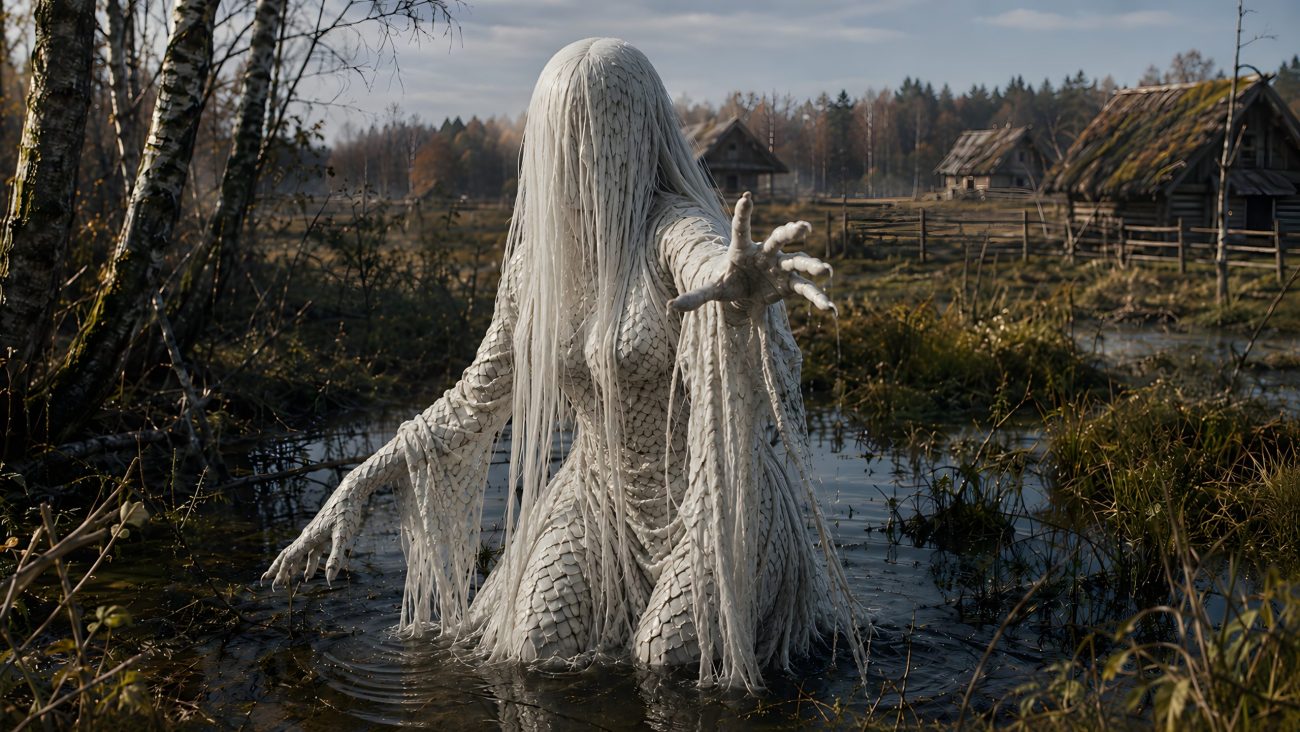
Bolotnik is a male swamp spirit who inhabits bogs, marshes, and quagmires, places long feared in Slavic tradition as dangerous and unclean. He is most often described as a man or old man with large frog-like eyes, a green beard, and long hair. His body is covered in mud, algae, fish scales, and swamp growth. In some regions, especially the Vitebsk Governorate, he is said to be eyeless, fat, and motionless, sitting silently at the bottom of the swamp. Other accounts give him long arms and even a tail.

Bolotnik is known to lure people and animals toward the edge of the swamp and drown them. He imitates familiar sounds to deceive travelers, quacking like a duck, mooing like a cow, gurgling like birds, or calling out with human-like cries. At night, he may create strange lights on the surface of the water or grow stupefying plants near the swamp, drawing victims closer. Once a person steps into the mire, Bolotnik seizes them by the feet and slowly drags them down into the depths.

Some legends say Bolotnik lives alone, while others claim he is married to Bolotnitsa, a female swamp spirit. In many regions, swamp spirits were not clearly distinguished and were often confused with other beings such as the vodyanoy, leshy, chort, rusalka, or kikimora. In certain Ukrainian and Belarusian stories, Bolotnik appears deceptively hospitable: he invites passers-by into beautiful rooms filled with music and dancing, offering gifts and feasts. When the illusion fades, the victims find themselves sitting in a swamp, holding only rubbish instead of treasures.

Different types of swamp spirits were sometimes distinguished. Orzhavinik was said to inhabit iron-rich swamps and appeared as a creature with dirty ginger fur, a thick belly, and thin legs. Bagnik lived deep in bogs and never surfaced, grabbing people only by the legs, its presence marked by bubbles and pale lights. Lozoviki dwelled among willows and vines near swamps, entangling travelers before sometimes helping them escape. Another spirit, Virovnik, lived in deep pools within marshes.

Bolotnik was believed to originate like other evil spirits, as a fallen angel cast down from heaven or as a creation of Satan. In some creation legends, swamps themselves were formed when the devil spat out earth he had hidden in his mouth. Medieval sources record that pre-Christian Slavs made sacrifices to swamps, suggesting that such spirits were once propitiated rather than avoided.

Unlike many demons, Bolotnik is not afraid of lightning, as thunderbolts lose their power upon striking swamp water. He is said to perish when swamps are drained or when they freeze solid in winter. In Polish folklore, the błotnik appears as a pitch-black man carrying a lantern, leading travelers astray into marshes, and is sometimes associated with Boruta.

Bolotnik remains a feared embodiment of the swamp itself—deceptive, suffocating, and inescapable—waiting patiently for those who stray too close to the water’s edge.


Vadzyany Byk

Tradition / Region: Belarusian Mythology
Alternate Names: Water Bull, Vadzyany byk
Category: Cow


The Myth

In the lakes of the Ushachi Lakeland, people speak of a creature known as the Vadzyany Byk, the Water Bull. It is said to live beneath the surface of quiet waters, especially in lakes that appear shallow near the shore but suddenly drop into deep, rocky depths. At sunrise and sunset, its presence is announced by a deep, resonant roar that rolls across the water, described as a slow, echoing “woo-woo-woo.”

Those who claim to have encountered the Water Bull describe it as a medium-sized aquatic animal with a powerful body and a broad, spade-shaped tail. It is said to circle the lake endlessly, moving just below the surface. Fishermen tell of seeing ripples and feeling unseen movement beneath their boats, and some recall moments when they were too afraid to cast their lines, convinced that the creature could seize them and drag them into the depths.

The Vadzyany Byk is believed to inhabit dangerous waters filled with large stones and sudden drop-offs, places where drowning is easy and escape difficult. For this reason, it is sometimes called the master of the lake, a being that rules its waters and punishes carelessness. Though many admit they have never seen it clearly, its voice alone is enough to inspire fear and respect.

The Water Bull is also linked to similar beings known as swamp bulls, said to dwell in marshes and wetlands. Its legend appears beyond oral tradition as well, including in stories set in Belarusian landscapes, where such creatures are treated as ancient inhabitants of water and fog.

Rarely seen and never fully understood, the Vadzyany Byk endures as a presence felt more than witnessed — a roaring shadow beneath the surface, guarding the depths of the lake and reminding those nearby that the water is not empty.