Zhyzh

Tradition / Region: Belarusian Mythology
Alternative names: Zhizh, Zhyzhyk
Category: Spirit, Cave dweller


The Myth

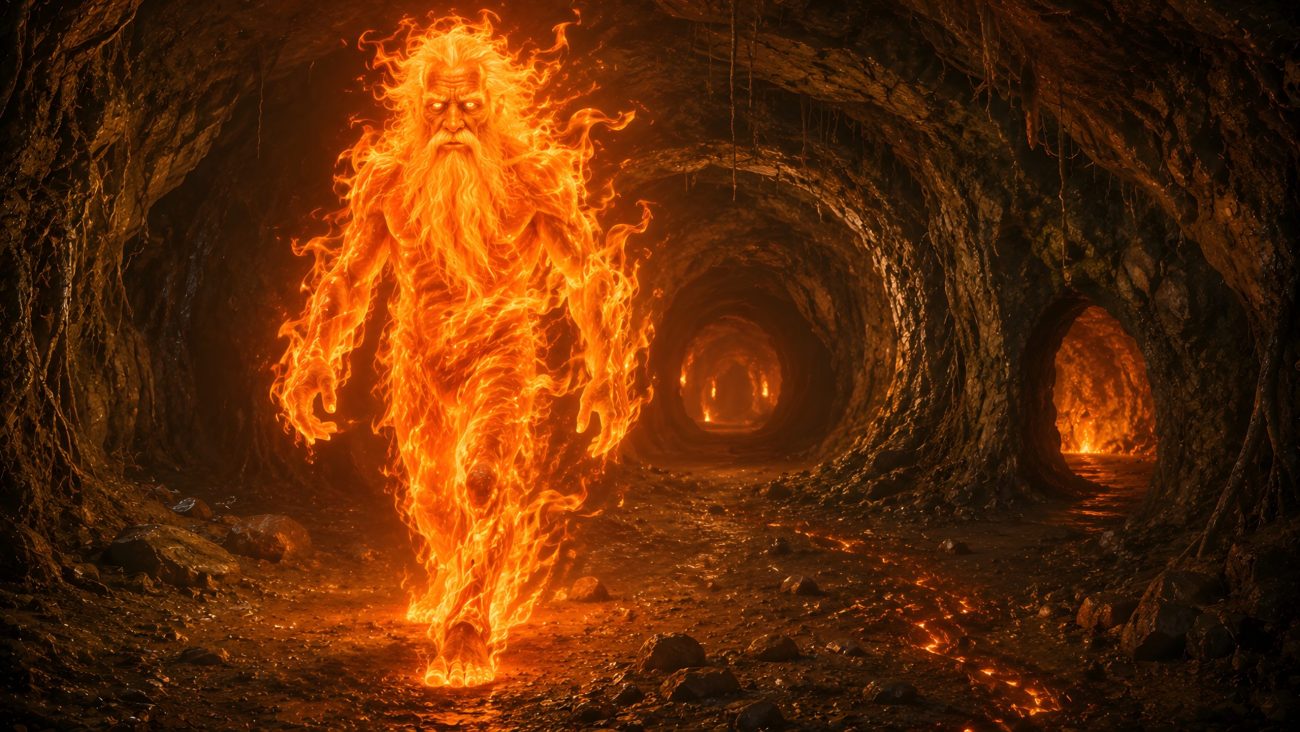
Zhyzh is a fiery underground spirit associated with fire and the earth. He travels beneath the ground, sometimes moving slowly and sometimes rushing through the earth while releasing flames. When he moves quietly, the ground is said to become warm, but when he begins moving rapidly, fires can break out across the land.

According to Belarusian legend, Zhyzh constantly wanders through the underground. When he walks slowly, only the soil is warmed by his passage. But when he gathers speed, flames rise from beneath the earth and spread across forests, hayfields, meadows, and fields.

People believed that spontaneous fires could be caused by Zhyzh moving beneath the ground. The places where he passed could become scorched, and the earth itself could dry out from the heat.

In some traditions, Zhyzh was regarded as the Belarusian god of fire, comparable to the fire deities known among neighboring peoples. His fiery nature was not always destructive, however, as his slow movement beneath the earth could warm the soil.

When Zhyzh became angry and began rushing through the underground, his flames were said to burst through to the surface. Forests, meadows, and crops could then catch fire, while the earth became dry and scorched beneath the heat.


Sources

“Жыж (Zhizh).” New Bestiary (Bestiary.us). Accessed August 15, 2026. https://www.bestiary.us/zhyzh
Vanatühi

Tradition / Region: Estonian Mythology
Alternative names: Vanapagan, Old Devil, Old Empty One
Category: Cave dweller, Giant


The Myth

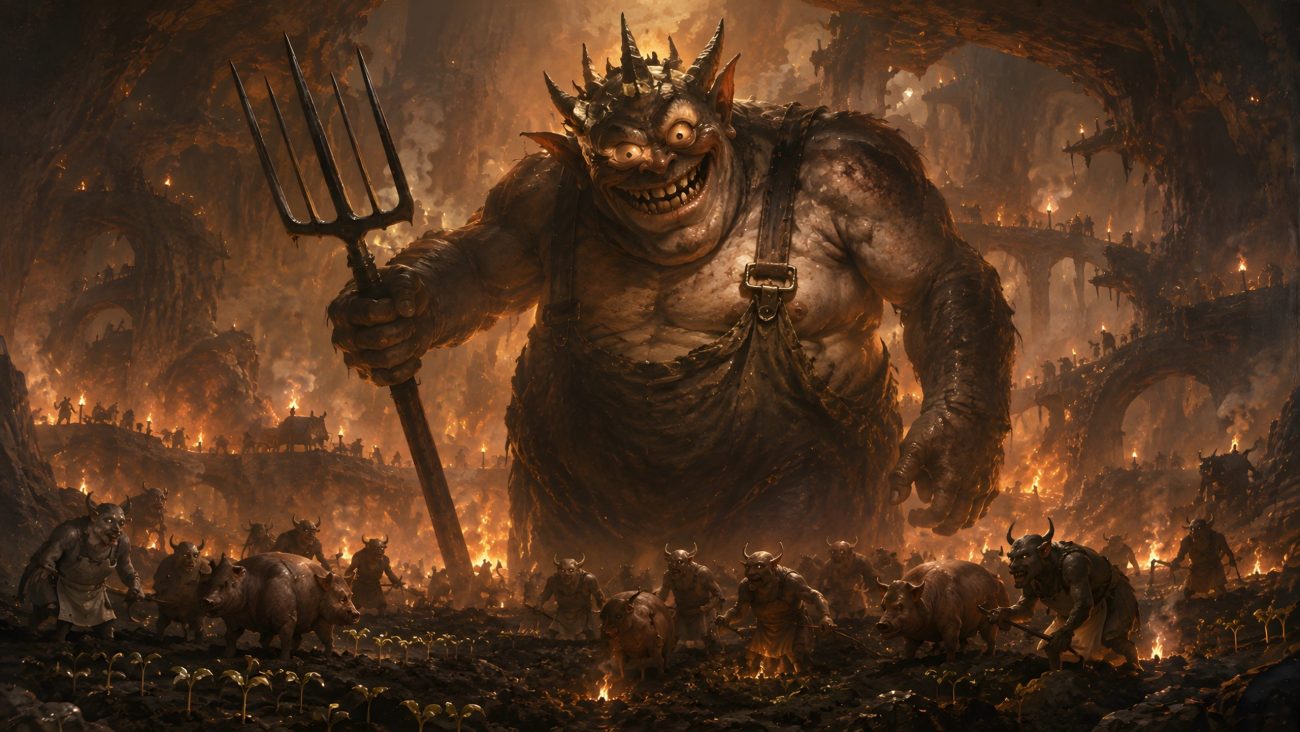
Vanatühi is a gigantic supernatural being who lives in the underworld and is described as a great farmer. He is more foolish than malicious and often becomes the victim of tricks played by humans and other supernatural beings. He is sometimes depicted wearing a hat made from fingernails that gives him the power to become invisible.

In Estonian folktales, Vanatühi appears as the great ogre who is repeatedly outwitted by his clever servant Kaval Ants, or Crafty Hans. Although Vanatühi possesses enormous strength and supernatural powers, his stupidity allows Kaval Ants to deceive him and escape from difficult situations.

In one tale, Vanatühi steals the musical instrument belonging to Pikne, the god of lightning. Pikne’s instrument is an object of supernatural power, and Vanatühi attempts to keep it for himself. The story follows the wider European tradition of tales in which an ogre steals the musical instrument of a thunder god.

Vanatühi is also the greatest enemy of the giant Suur Tõll of the island of Saaremaa. Their forces fight against one another in a great conflict, and during one of their battles Vanatühi’s forces manage to decapitate Tõll.

In some stories, Vanatühi possesses a remarkable hat made from fingernails. When he places the küüntest kübar upon his head, he becomes invisible, allowing the giant to move unseen despite his enormous size.


Sources

“Vanapagan.” Wikipedia: The Free Encyclopedia. Wikimedia Foundation. Accessed August 15, 2026. https://en.wikipedia.org/wiki/Vanapagan


Skarbnik

Tradition / Region: Polish Mythology, Ukranian Mythology, Belarusian Mythology
Alternate Names: Kladenets; Dzedka
Category: Cave dweller


The Myth

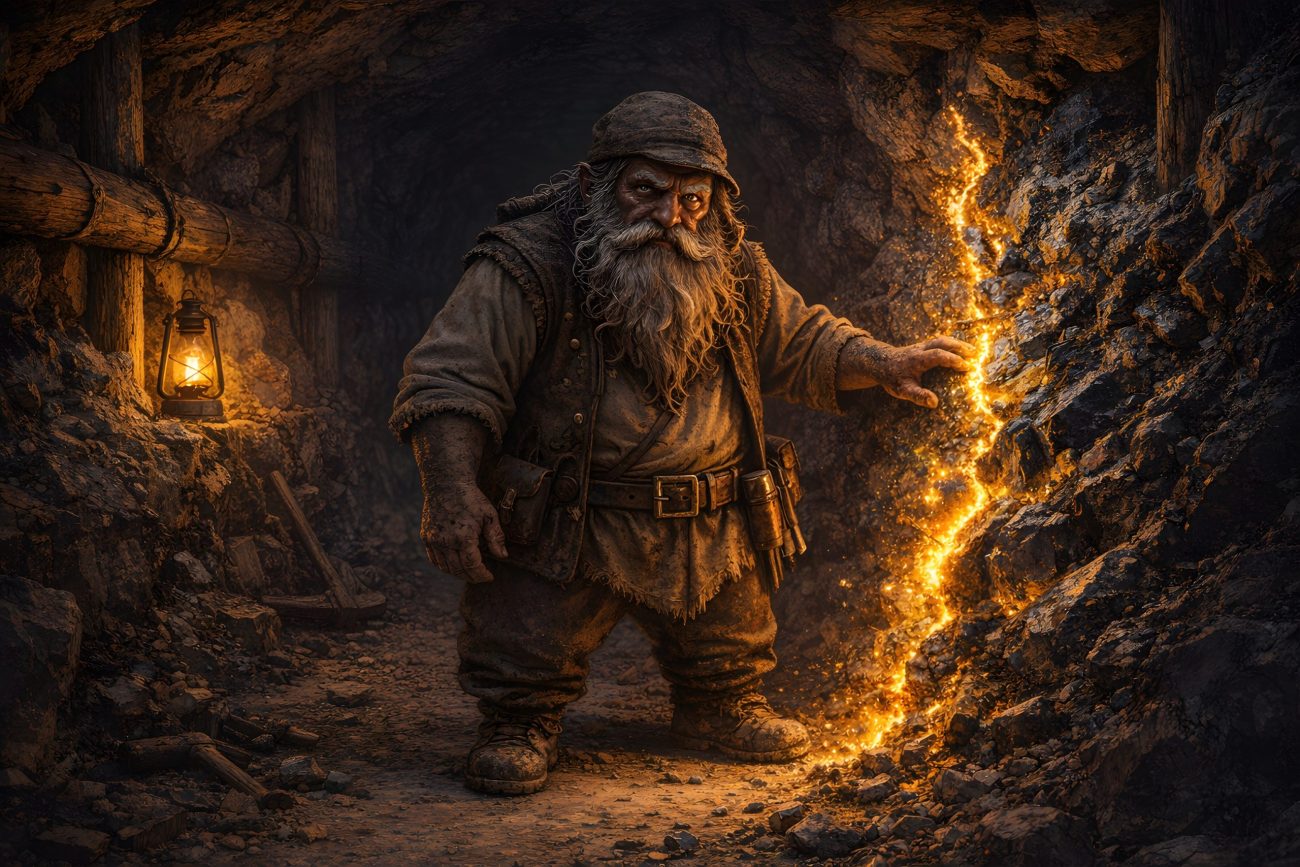
Deep beneath the earth, in the winding tunnels of mines and forgotten shafts, dwells the Skarbnik—the Treasurer of the underworld. He is the unseen guardian of gems, crystals, and precious metals, watching over the hidden wealth buried in stone.

Miners speak of him in hushed voices. To those who work honestly and show respect, Skarbnik is a silent protector. When tunnels groan and timbers strain, he may guide a worthy miner away from danger. When a man loses his path in the dark labyrinth underground, a whisper, a faint glow, or the echo of a step may lead him safely back. At times, Skarbnik rewards diligence by revealing a rich vein of ore, leading the faithful straight to silver, coal, or gold.

But Skarbnik is not gentle with the wicked.

Those who curse in the tunnels, mock the spirit, or treat the mine with arrogance soon feel his wrath. It is forbidden to whistle underground, to hurl stones in anger, or to cover one’s head in disrespect. Such acts insult the Treasurer. First comes a warning—a sudden shower of loose soil striking the offender, small clods thrown from unseen hands. If the warning is ignored, harsher punishment follows. Tunnels collapse without mercy. Dark chasms open beneath careless feet. Stones fall from above with deadly aim.

To the greedy and cruel, Skarbnik is a relentless judge. To the humble and respectful, he is a guardian and guide.

Thus the miners say that no one truly works alone beneath the earth. The Treasurer watches always, weighing the hearts of men as carefully as the ore they seek.


Sources

Wikipedia contributors. (n.d.). Karzełek. In Wikipedia, The Free Encyclopedia. Retrieved February 13, 2026, from https://en.wikipedia.org/wiki/Karze%C5%82ek