Bies

Tradition: Bosnian mythology, Croatian Mythology, Russian Mythology, Ukranian Mythology, Polish Mythology
Alternative Names: Bies, Bes, Bijes, Bisy, Chort, Czort
Category: Demon


The Myth

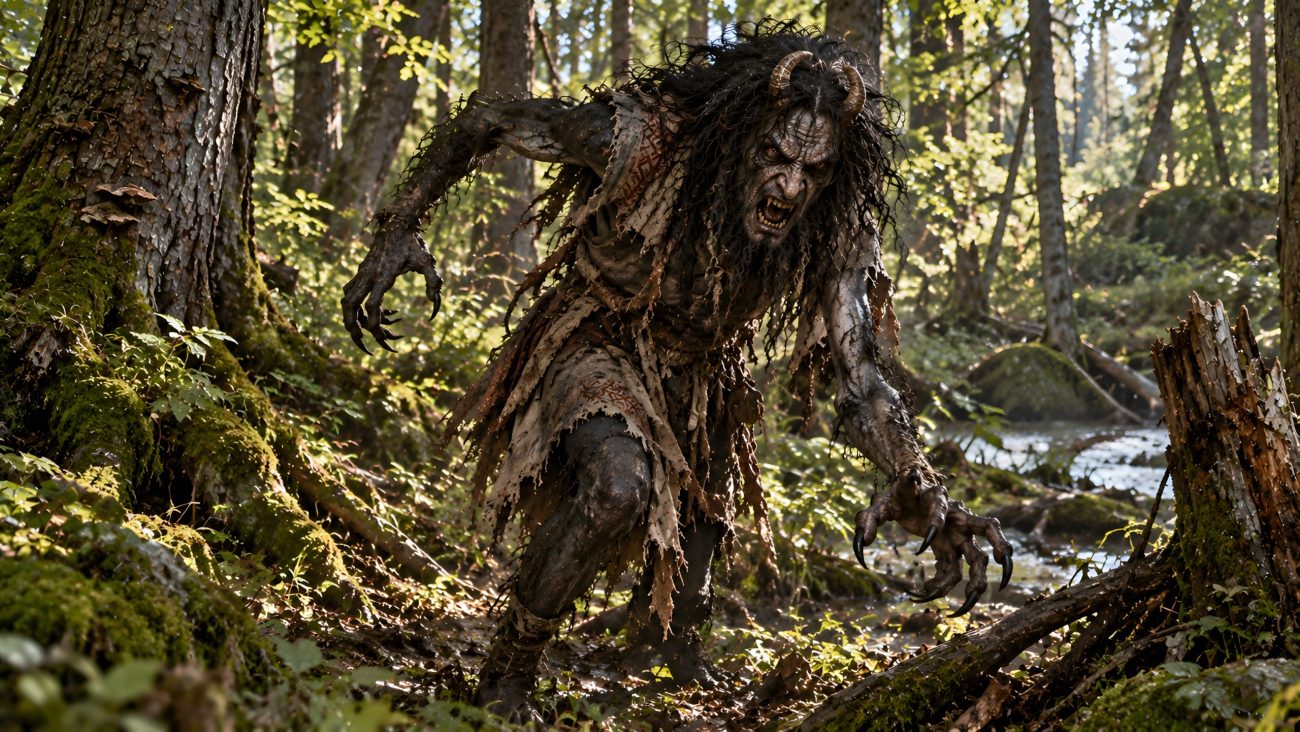
Bies is an evil spirit or demon in Slavic mythology. The word bies is associated with an evil supernatural being and, following the Christianization of Slavic peoples, became closely identified with the Devil and with the demon known as Chort or Czort.

In Christian-influenced tradition, Bies came to represent the Devil or other demonic beings. The plural biesy was used in Russian translations of the New Testament for the devils that possessed the swine in the Gospel of Mark. Related Slavic words also developed meanings associated with madness and uncontrolled behavior. In Slovenian, Croatian, and Serbian, the related forms bes and bijes mean “rage” or “fury.”

A separate being called bès is found among the Jah Hut people of Malaysia. These bès are dangerous spirits inhabiting the jungle. They can attack people and cause illness through spirit possession.

The Jah Hut can attempt to tame and contain a bès by carving a small wooden figure called a sepili, representing the particular spirit causing trouble. If the spirit approves of the figure, it may enter it, allowing the people to trap the spirit inside through a special ritual. The sepili must then be taken far away from the village because the bès may become angry when it eventually escapes. Traditionally, the figures were buried deep in the jungle.


Sources

“Bies.” Wikipedia: The Free Encyclopedia. Wikimedia Foundation. Accessed September 10, 2026. https://en.wikipedia.org/wiki/Bies


Tarand

Tradition: Scythian Mythology, Russian Mythology, Ukranian Mythology
Alternative Names: Tarandos, Tarandus, Parandrus, Parandros, Aeternae, Analopos, Antalope, Antholops, Aptaleon, Aptolos, Pantolops
Category: Deer


The Myth

The Tarand is a rare and extraordinary beast said to resemble a large deer or moose. It is described as being about the size of an ox, with a head resembling that of a deer and large, branched antlers. It has cloven hooves, long hair like that of a bear, and an exceptionally tough hide that was said to be strong enough to make shields and breastplates.

Its most remarkable ability is its power to change the color of both its skin and hair. The Tarand can take on the color of whatever surrounds it, becoming the same color as trees, shrubs, plants, flowers, grass, rocks, or the ground. This ability makes it extremely difficult to detect and capture.

The creature was said to inhabit Scythia, particularly among the Scythians called the Geloni. When frightened, it would retreat into its surroundings and take on their colors. When it returned to its natural coloration, it was said to resemble an ass.

Aristotle described the Tarand as an exceptionally rare animal whose hair changed color according to the place in which it stood. He compared its ability to the color-changing skin of the chameleon and polypus, but considered the Tarand remarkable because the transformation affected its hair as well. He described it as being as large as an ox, with the head of a deer.

Pliny the Elder gave a more detailed account. He described the Tarand as an ox-sized creature with a large stag-like head and branched horns, cloven hooves, and deep hair like that of a bear. Its hide was so tough that the Scythians supposedly used it to make protective armor. When the animal hid, its body and hair could imitate the colors of the surrounding trees, plants, flowers, and landscape.

Aelian likewise described the Tarand as a creature from Scythia whose back and size resembled those of a bull. The animal could transform itself completely, hair included, into an astonishing variety of colors. The Scythians were said to cover their shields with its hide and consider it an effective protection against spears.

The Tarand later entered medieval bestiary tradition under forms such as Parandrus. It continued to be described as an animal capable of changing its entire appearance according to its surroundings.

The creature also appeared in later European literature. In François Rabelais’s Pantagruel, the Tarand is described as a bull-sized animal with a stag’s head, branched horns, cloven feet, long bear-like hair, and skin almost as hard as steel armor. Rabelais emphasized that not only the creature’s skin but also its hair could change color according to the objects around it. He even described it changing colors voluntarily according to its fear and emotions.

The Tarand was also said to be unusually tractable when domesticated, despite its rarity and strange abilities. Through these ancient and medieval accounts, it became one of the most remarkable legendary animals associated with the far north and the mysterious natural world beyond the Mediterranean.


Sources

“Tarand (animal).” Wikipedia: The Free Encyclopedia. Wikimedia Foundation. Accessed September 5, 2026. https://en.wikipedia.org/wiki/Tarand_(animal)

Maupun

Tradition / Region: Polish Mythology, Ukranian Mythology
Alternate Names: Maoupunu, Maupunu
Category: Mermaid, Zombie


The Myth

In the marshlands and river regions of eastern Polesia, it is said that not only girls become rusalki after death. Sometimes a boy may share their fate.

If a child dies before baptism, his soul cannot rest. Such a boy may return as a wandering spirit, bound to the waters and the fields. One such spirit is known as Maupun.

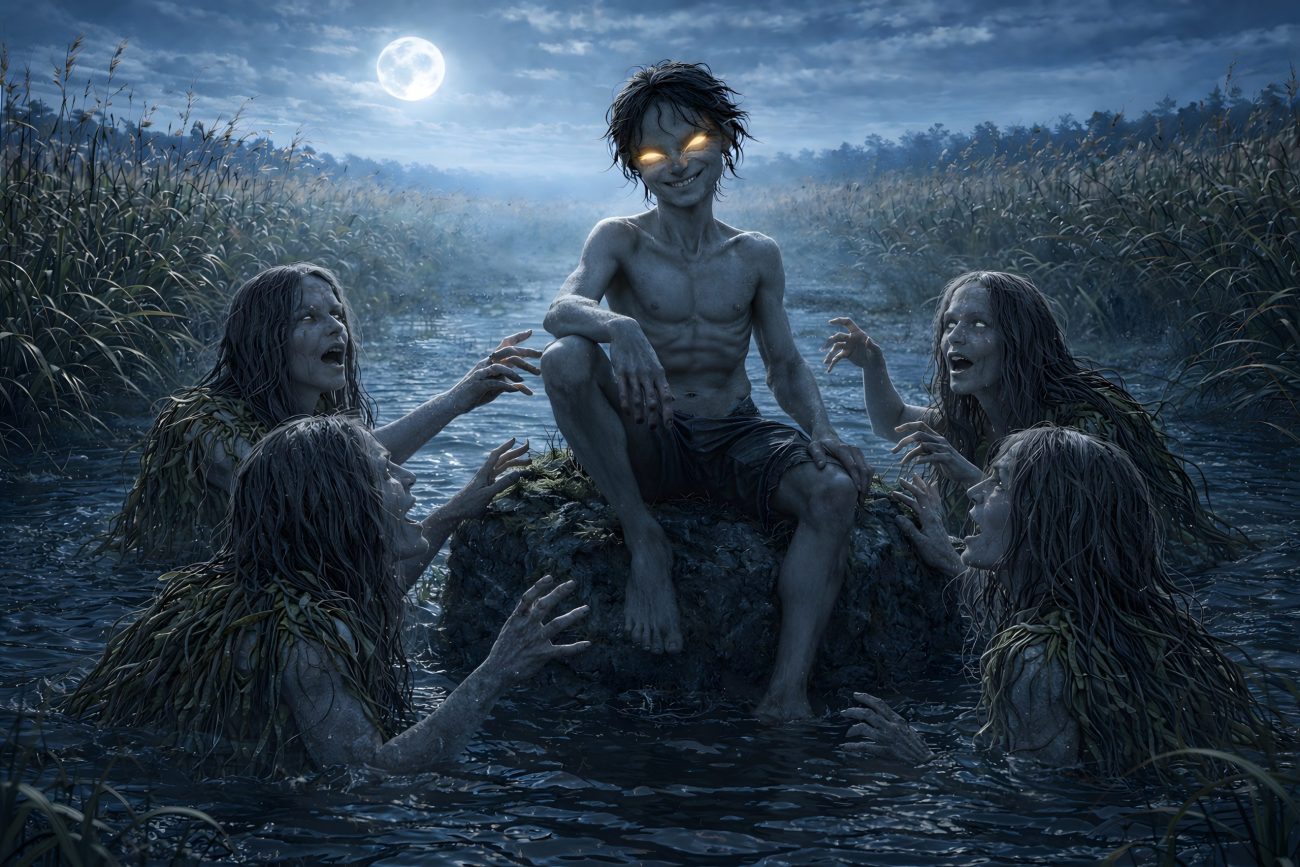
Maupun was once an unbaptized boy. After death he did not pass into the world of the dead, but instead came to dwell among the rusalki—the restless spirits of girls who died before receiving baptism. Over time, he became their leader and chief, ruling over them as they wandered the wetlands and meadows.

The rusalki under Maupun’s command are said to appear as pale girls with bright, shining eyes and wild, shaggy hair. During Trinity Week they leave the waters and roam the rye fields and grassy places, laughing loudly, singing, and playing together beneath the open sky.

But their laughter is dangerous. Anyone who encounters them must flee at once. If they catch a person, they will tickle and clutch them until they die.

And it is Maupun who leads them—
the boy who never received baptism,
now lord of the wandering mermaids of the marsh.


Sources

Bestiary.us contributors. (n.d.). Maupun. In Bestiary.us, from https://www.bestiary.us/maupun/


Skarbnik

Tradition / Region: Polish Mythology, Ukranian Mythology, Belarusian Mythology
Alternate Names: Kladenets; Dzedka
Category: Cave dweller


The Myth

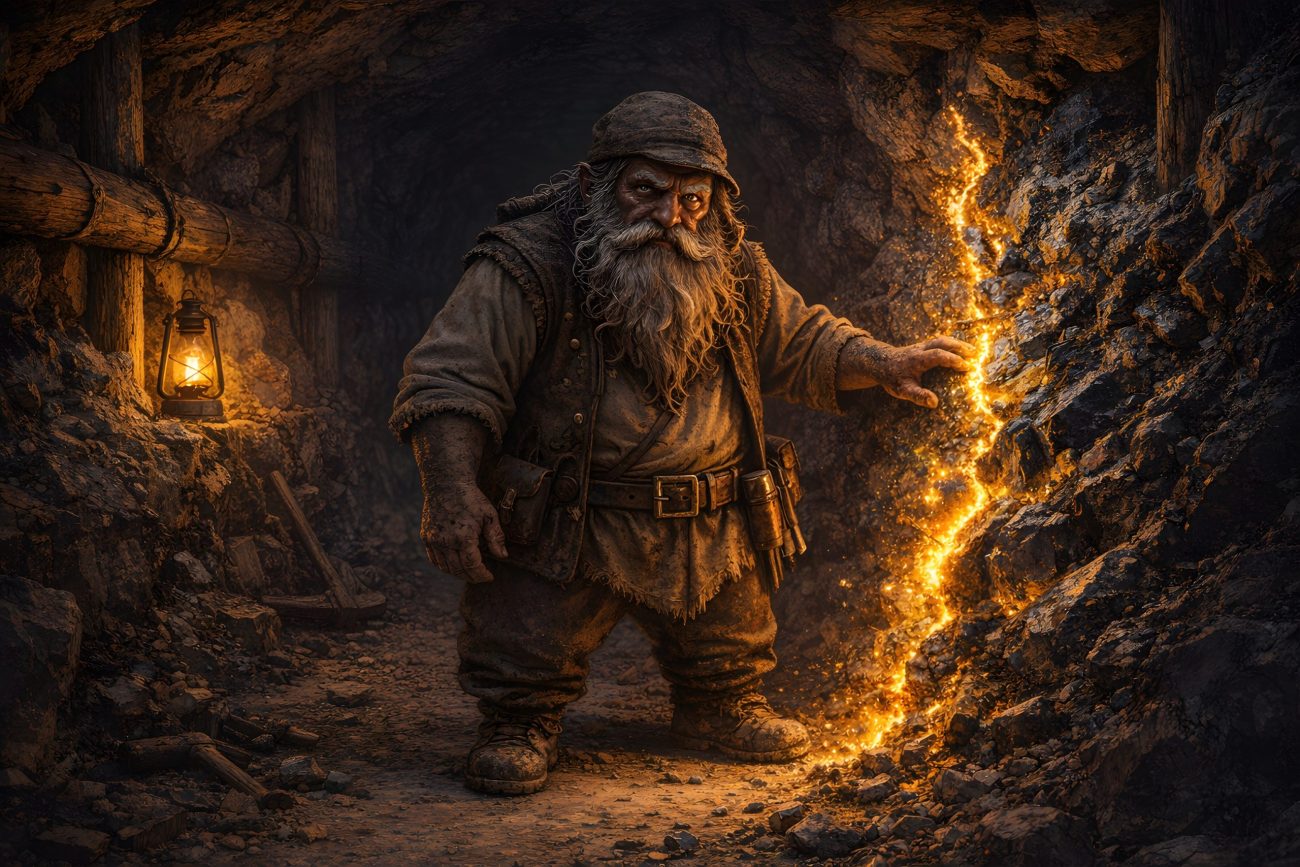
Deep beneath the earth, in the winding tunnels of mines and forgotten shafts, dwells the Skarbnik—the Treasurer of the underworld. He is the unseen guardian of gems, crystals, and precious metals, watching over the hidden wealth buried in stone.

Miners speak of him in hushed voices. To those who work honestly and show respect, Skarbnik is a silent protector. When tunnels groan and timbers strain, he may guide a worthy miner away from danger. When a man loses his path in the dark labyrinth underground, a whisper, a faint glow, or the echo of a step may lead him safely back. At times, Skarbnik rewards diligence by revealing a rich vein of ore, leading the faithful straight to silver, coal, or gold.

But Skarbnik is not gentle with the wicked.

Those who curse in the tunnels, mock the spirit, or treat the mine with arrogance soon feel his wrath. It is forbidden to whistle underground, to hurl stones in anger, or to cover one’s head in disrespect. Such acts insult the Treasurer. First comes a warning—a sudden shower of loose soil striking the offender, small clods thrown from unseen hands. If the warning is ignored, harsher punishment follows. Tunnels collapse without mercy. Dark chasms open beneath careless feet. Stones fall from above with deadly aim.

To the greedy and cruel, Skarbnik is a relentless judge. To the humble and respectful, he is a guardian and guide.

Thus the miners say that no one truly works alone beneath the earth. The Treasurer watches always, weighing the hearts of men as carefully as the ore they seek.


Sources

Wikipedia contributors. (n.d.). Karzełek. In Wikipedia, The Free Encyclopedia. Retrieved February 13, 2026, from https://en.wikipedia.org/wiki/Karze%C5%82ek