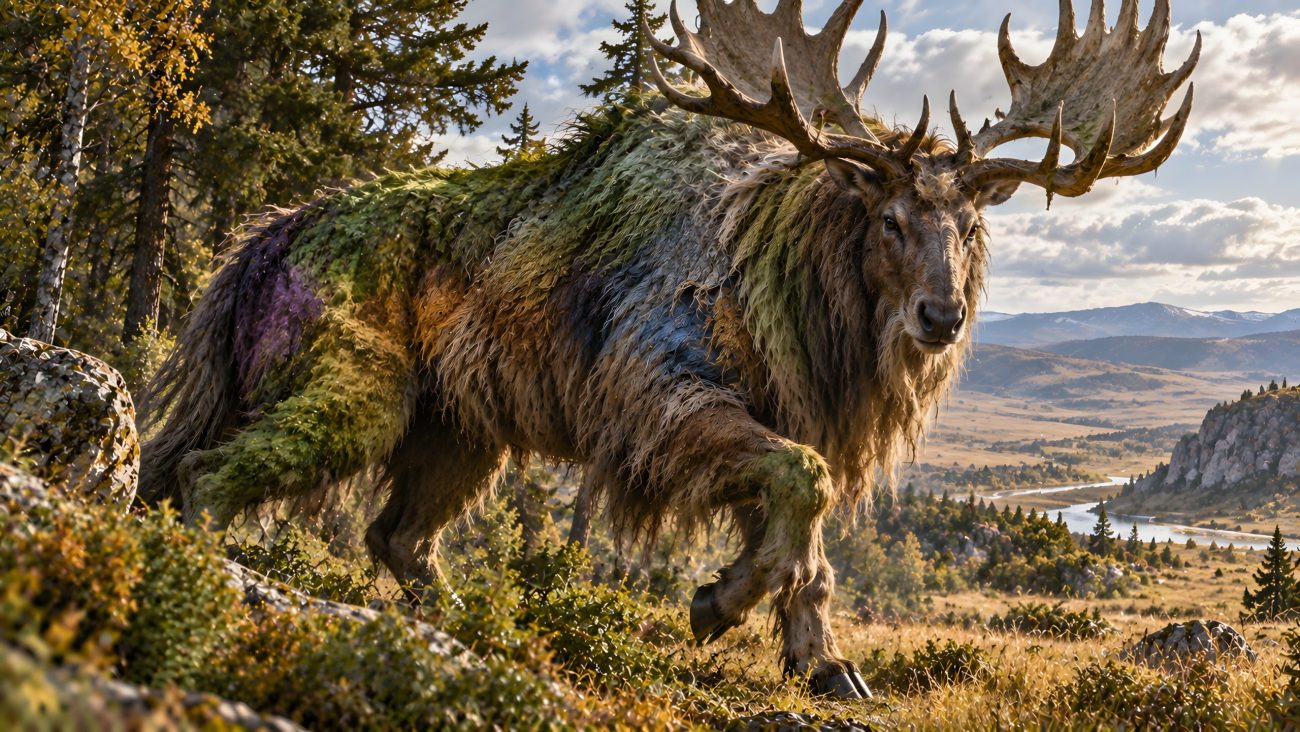
Gofitterrak

Tradition: Sami mythology, Finnish Mythology, Russian Mythology
Alternative Names: Gofitterak, Gofitterak
Category: Deer


The Myth

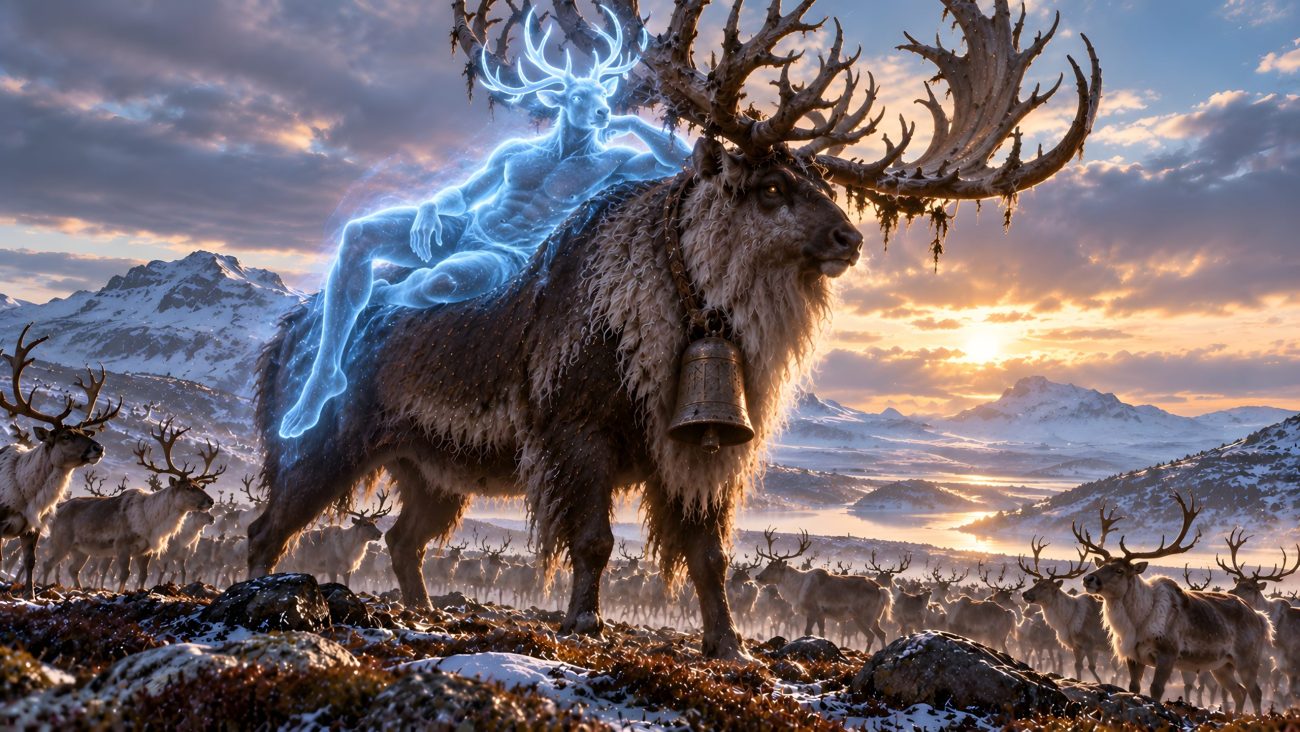
Gofitterrak are wealthy spirits who are masters of wild reindeer herds in Sami mythology. They inhabit the tundra and are associated with the pastures where reindeer graze. They are described as spirits who can be invisible like themselves, yet reveal their presence through the ringing of bells.

Among the mountains, particularly in the kegors—areas covered with lichen where deer graze—and in places covered with grass, the Gofitterrak live with their own herds of deer, cows, and sheep. They sometimes hang bells on their flocks, and by the ringing of these bells the Lapps learn of the spirits’ visible and invisible presence in the pastures.

The herds of the Gofitterrak can be mastered. To do this, a person must have the courage to approach the spirit’s flock while looking only upward and never turning back or looking to either side. The person must then throw a piece of iron into the middle of the flock.

The spirit who tends the herd fears iron and flees when it is thrown. The flock, however, becomes the property of the person who threw the iron away.


Sources

“Гофитэрраки (Gofiterraki).” New Bestiary (Bestiary.us). Accessed September 6, 2026. https://www.bestiary.us/gofiterraki


Sazagan

Tradition: Nogai mythology, Russian Mythology, Turkish Mythology
Alternative Names: Sazagan
Category: Deer, Snake, Deity


The Myth

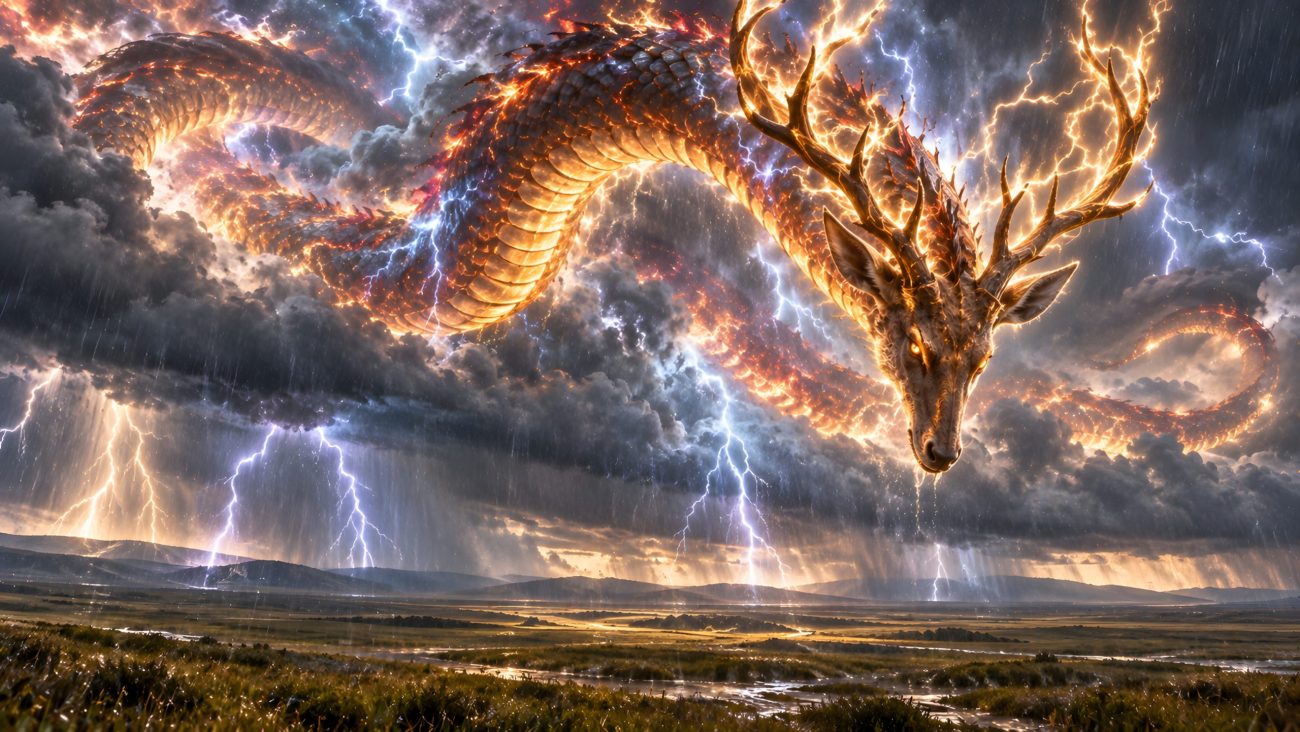
Sazagan is a heavenly being in Nogai mythology, taking the form of a huge fiery serpent with the head of a deer and antlers. Sazagan is associated with lightning, rain, and fertility and is regarded as a powerful being connected with the forces of the sky and weather.

When lightning flashes in the sky, the Nogai traditionally say that “Sazagan is playing, dancing.” Sazagan is regarded as an embodiment of fertility, associated with the generative power of heavenly water: rain, downpours, and lightning. The being has a dual nature, however, bringing both benefit and destruction. Rain fertilizes the earth and provides a source of natural disasters such as floods and hurricanes.

When Sazagan rages in the sky, he is said to shake an uproot trees and blow off roofs. Anyone who witnesses Sazagan dancing during thunderstorms may become infected with causeless laughter.

According to the beliefs of the Kuban Nogai, Sazagan is a personified creature that appears in spring and brings a harvest to the land. Among the Karanogai, it was believed that Sazagan could emerge from the mouth of the giant Topekoz. When this happened, the Karanogai would slaughter a black sheep, wash their faces with the animal’s blood, and light a fire using branches on the freshly flayed hide. They would then wash their hands with milk, pray, and recite words asking Sazagan and Tengri to bring an end to the storm.

When rain continued for too long and thunder rumbled through the sky, people also appealed to Sazagan to stop the storm and prevent the world from being flooded.

The origin of the name Sazagan is uncertain. The first part, “saz,” is associated with melody or music. According to an ancient Nogai myth, Sazagan created viscous clay, saz-balshyk (“singing clay”), with a lightning strike, from which humanity was created. Another legend says that Sazagan playfully created the human form, while Tengri breathed into it and gave it a flying soul.

The second part of the name, “agan,” may derive from the words “yagan” or “yagady,” meaning “it is igniting.” The name Sazagan has therefore been interpreted as meaning something like “igniting the earth” or “igniting melody.”

The name also survived in a popular expression: when teasing someone about their skill or temperament in lovemaking, people may say “sazagandy oynaty,” meaning that someone has “danced Sazagan.”


Sources

“Sazagan.” New Bestiary (Bestiary.us). Accessed September 6, 2026. https://www.bestiary.us/sazagan


Luot-hozik

Tradition: Sami mythology, Russian Mythology
Alternative Names: Luot-hozik
Category: Deer


The Myth

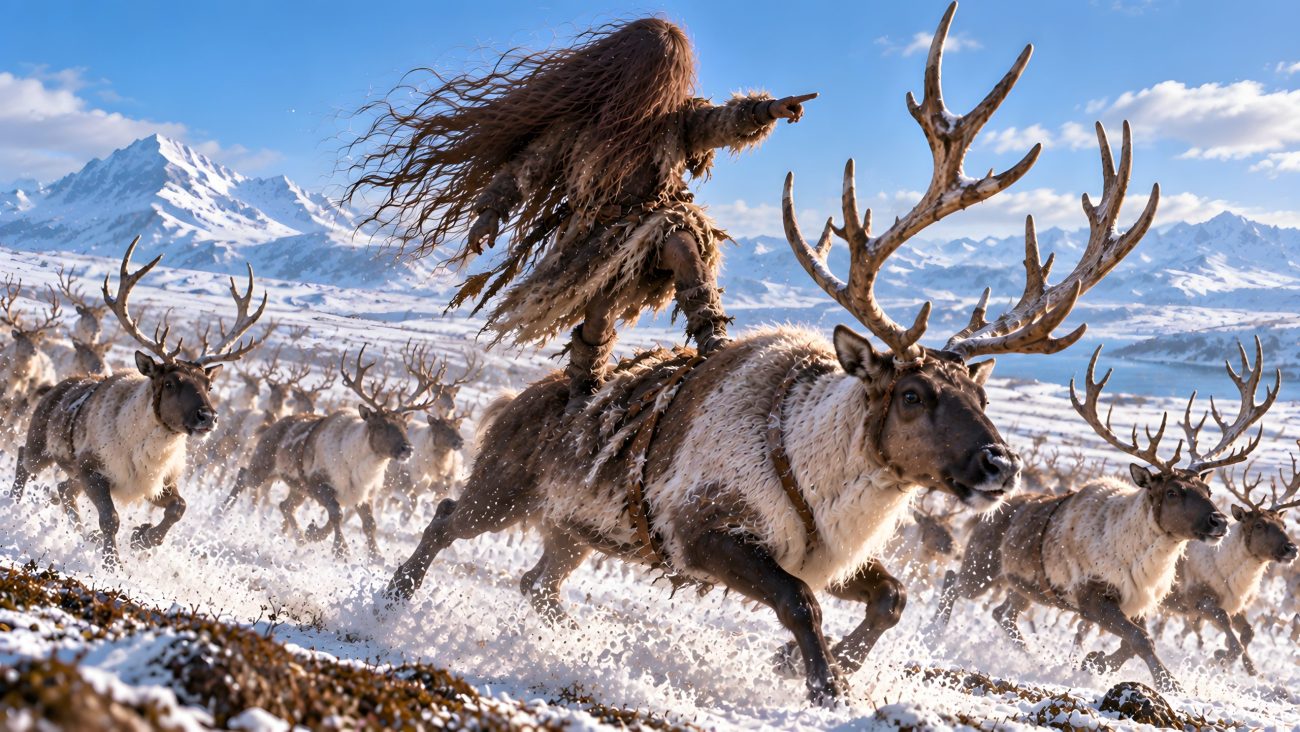
Luot-hozik is a female spirit and patron of reindeer herds who appears in the form of a hairy woman living in the tundra. She protects reindeer and watches over the herds that live in the northern wilderness.

According to Sami mythology, numerous spirits inhabited the land, water, and underworld. Among them were spirits considered masters of wild reindeer herds, while the Mistresses of the Reindeer, Luot-hozik, stood among the protectors of domesticated reindeer. Luot-hozik was believed to live in the tundra, walking on long legs like a human and sometimes appearing as a hairy woman.

The Sami believed that Luot-hozik protected their reindeer and prayed to her for their well-being. She was especially concerned with the herds belonging to the Lapps, or Sami people. She could be particularly displeased when reindeer were released into the wild during the summer, because this exposed them to wolves and other dangers. The Lapps therefore believed that she would protect their animals if they treated her with respect.

When reindeer were driven into the wild, prayers were offered to Luot-hozik. One such prayer asked her to take care of the reindeer and protect them from wolves and other dangers. If the reindeer had been found by autumn, the people thanked her for taking care of their herd.

Luot-hozik was also believed to protect the reindeer from people who tried to steal them. Reindeer were highly valuable possessions among the Sami, and her protection therefore extended not only to the animals themselves but also to the herds belonging to their human owners.

Besides Luot-hozik, other female spirits were believed to protect reindeer from wolves. However, Luot-hozik could not protect the animals from evil people.


Sources

“Луот-кожик (Luot-Khozhik).” New Bestiary (Bestiary.us). Accessed September 5, 2026. https://www.bestiary.us/luot-khozik


Kalir

Tradition: Evenki Mythology, Russian Mythology
Alternative Names: Kalir
Category: Deer


The Myth

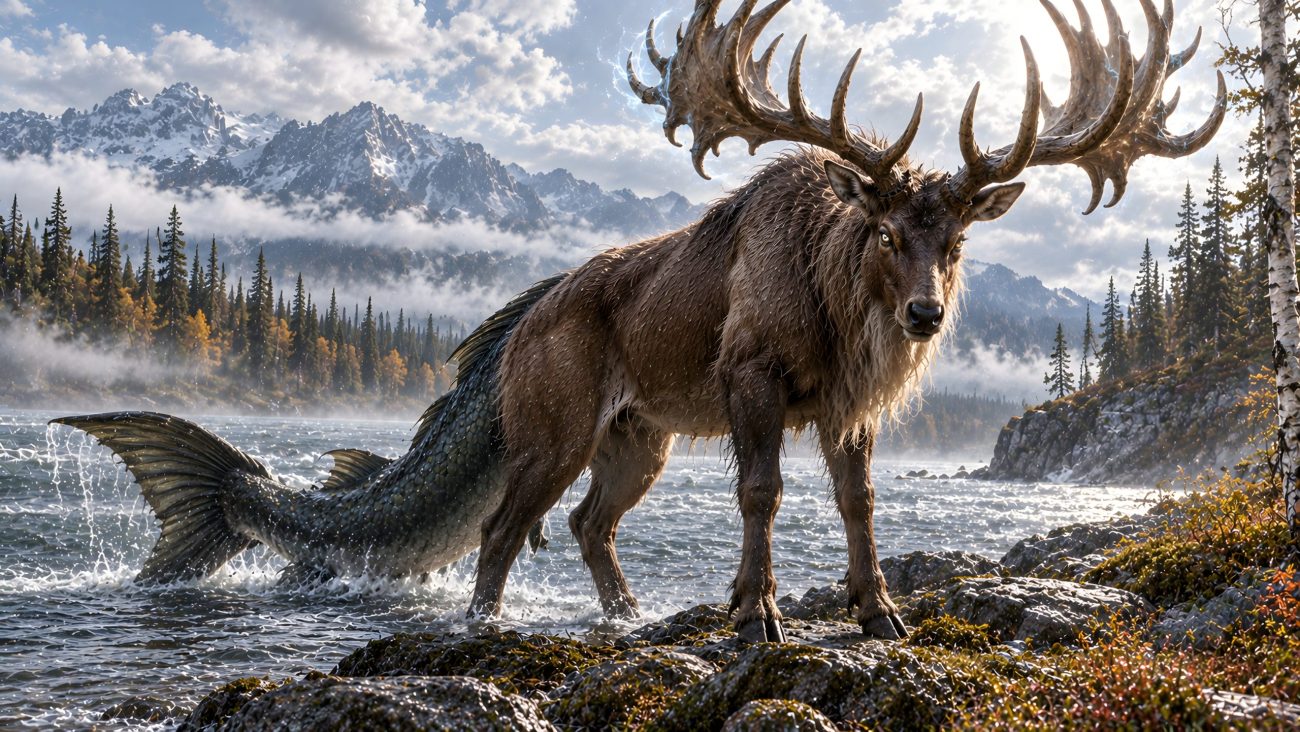
Kalir is a mythical creature from Evenki folklore with the body of a gigantic male wild deer. It has elk antlers on its head and a fish’s tail.

Kalir acts as a spirit assistant to the shaman, serving as a supernatural helper within Evenki shamanic tradition.


Sources

“Калир (Kalir).” New Bestiary (Bestiary.us). Accessed September 5, 2026. https://www.bestiary.us/kalir


Tarand

Tradition: Scythian Mythology, Russian Mythology, Ukranian Mythology
Alternative Names: Tarandos, Tarandus, Parandrus, Parandros, Aeternae, Analopos, Antalope, Antholops, Aptaleon, Aptolos, Pantolops
Category: Deer


The Myth

The Tarand is a rare and extraordinary beast said to resemble a large deer or moose. It is described as being about the size of an ox, with a head resembling that of a deer and large, branched antlers. It has cloven hooves, long hair like that of a bear, and an exceptionally tough hide that was said to be strong enough to make shields and breastplates.

Its most remarkable ability is its power to change the color of both its skin and hair. The Tarand can take on the color of whatever surrounds it, becoming the same color as trees, shrubs, plants, flowers, grass, rocks, or the ground. This ability makes it extremely difficult to detect and capture.

The creature was said to inhabit Scythia, particularly among the Scythians called the Geloni. When frightened, it would retreat into its surroundings and take on their colors. When it returned to its natural coloration, it was said to resemble an ass.

Aristotle described the Tarand as an exceptionally rare animal whose hair changed color according to the place in which it stood. He compared its ability to the color-changing skin of the chameleon and polypus, but considered the Tarand remarkable because the transformation affected its hair as well. He described it as being as large as an ox, with the head of a deer.

Pliny the Elder gave a more detailed account. He described the Tarand as an ox-sized creature with a large stag-like head and branched horns, cloven hooves, and deep hair like that of a bear. Its hide was so tough that the Scythians supposedly used it to make protective armor. When the animal hid, its body and hair could imitate the colors of the surrounding trees, plants, flowers, and landscape.

Aelian likewise described the Tarand as a creature from Scythia whose back and size resembled those of a bull. The animal could transform itself completely, hair included, into an astonishing variety of colors. The Scythians were said to cover their shields with its hide and consider it an effective protection against spears.

The Tarand later entered medieval bestiary tradition under forms such as Parandrus. It continued to be described as an animal capable of changing its entire appearance according to its surroundings.

The creature also appeared in later European literature. In François Rabelais’s Pantagruel, the Tarand is described as a bull-sized animal with a stag’s head, branched horns, cloven feet, long bear-like hair, and skin almost as hard as steel armor. Rabelais emphasized that not only the creature’s skin but also its hair could change color according to the objects around it. He even described it changing colors voluntarily according to its fear and emotions.

The Tarand was also said to be unusually tractable when domesticated, despite its rarity and strange abilities. Through these ancient and medieval accounts, it became one of the most remarkable legendary animals associated with the far north and the mysterious natural world beyond the Mediterranean.


Sources

“Tarand (animal).” Wikipedia: The Free Encyclopedia. Wikimedia Foundation. Accessed September 5, 2026. https://en.wikipedia.org/wiki/Tarand_(animal)