Tradition: Nogai mythology, Russian Mythology, Turkish Mythology
Alternative Names: Sazagan
Category: Deer, Snake, Deity
The Myth
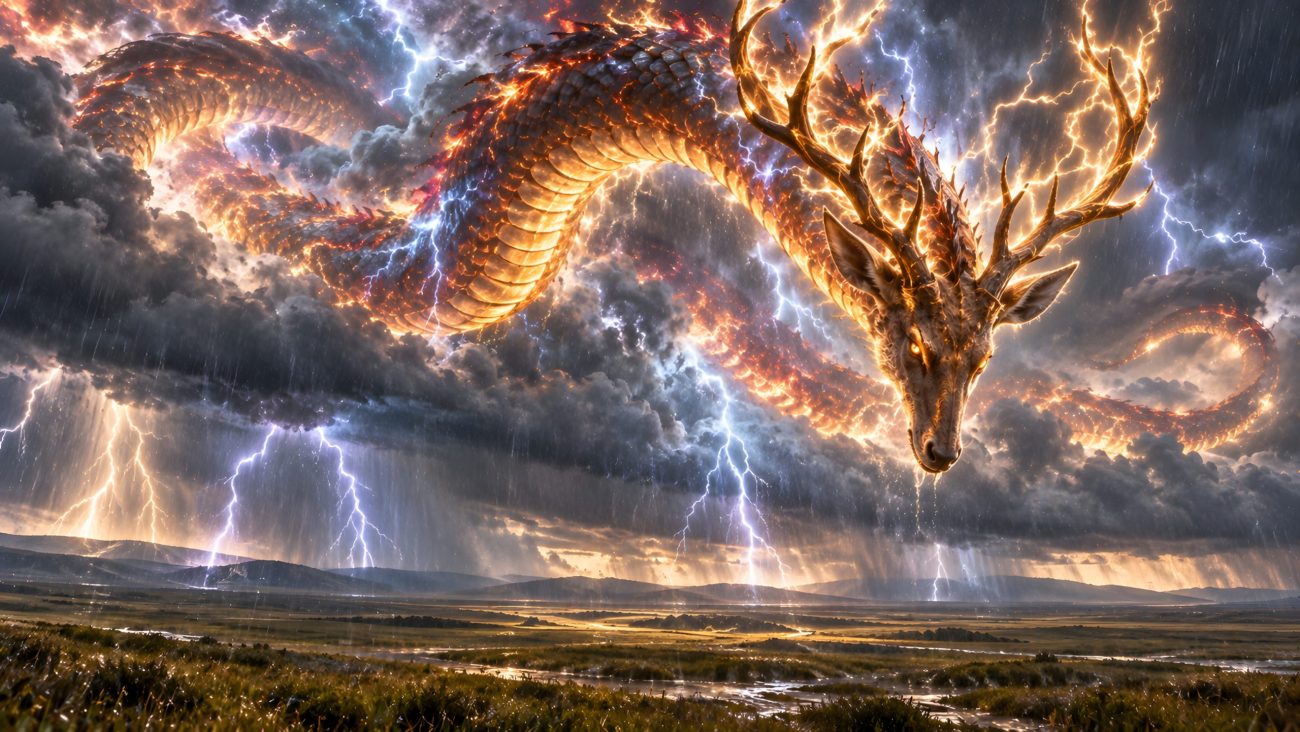
Sazagan is a heavenly being in Nogai mythology, taking the form of a huge fiery serpent with the head of a deer and antlers. Sazagan is associated with lightning, rain, and fertility and is regarded as a powerful being connected with the forces of the sky and weather.
When lightning flashes in the sky, the Nogai traditionally say that “Sazagan is playing, dancing.” Sazagan is regarded as an embodiment of fertility, associated with the generative power of heavenly water: rain, downpours, and lightning. The being has a dual nature, however, bringing both benefit and destruction. Rain fertilizes the earth and provides a source of natural disasters such as floods and hurricanes.
When Sazagan rages in the sky, he is said to shake an uproot trees and blow off roofs. Anyone who witnesses Sazagan dancing during thunderstorms may become infected with causeless laughter.
According to the beliefs of the Kuban Nogai, Sazagan is a personified creature that appears in spring and brings a harvest to the land. Among the Karanogai, it was believed that Sazagan could emerge from the mouth of the giant Topekoz. When this happened, the Karanogai would slaughter a black sheep, wash their faces with the animal’s blood, and light a fire using branches on the freshly flayed hide. They would then wash their hands with milk, pray, and recite words asking Sazagan and Tengri to bring an end to the storm.
When rain continued for too long and thunder rumbled through the sky, people also appealed to Sazagan to stop the storm and prevent the world from being flooded.
The origin of the name Sazagan is uncertain. The first part, “saz,” is associated with melody or music. According to an ancient Nogai myth, Sazagan created viscous clay, saz-balshyk (“singing clay”), with a lightning strike, from which humanity was created. Another legend says that Sazagan playfully created the human form, while Tengri breathed into it and gave it a flying soul.
The second part of the name, “agan,” may derive from the words “yagan” or “yagady,” meaning “it is igniting.” The name Sazagan has therefore been interpreted as meaning something like “igniting the earth” or “igniting melody.”
The name also survived in a popular expression: when teasing someone about their skill or temperament in lovemaking, people may say “sazagandy oynaty,” meaning that someone has “danced Sazagan.”
Sources
“Sazagan.” New Bestiary (Bestiary.us). Accessed September 6, 2026. https://www.bestiary.us/sazagan