Beskud

Tradition / Region: Ukraine Mythology, Poland Mythology, Czech Republic Mythology, Slovakia Mythology
Alternative names: Beskudians
Category: Vampire


The Myth

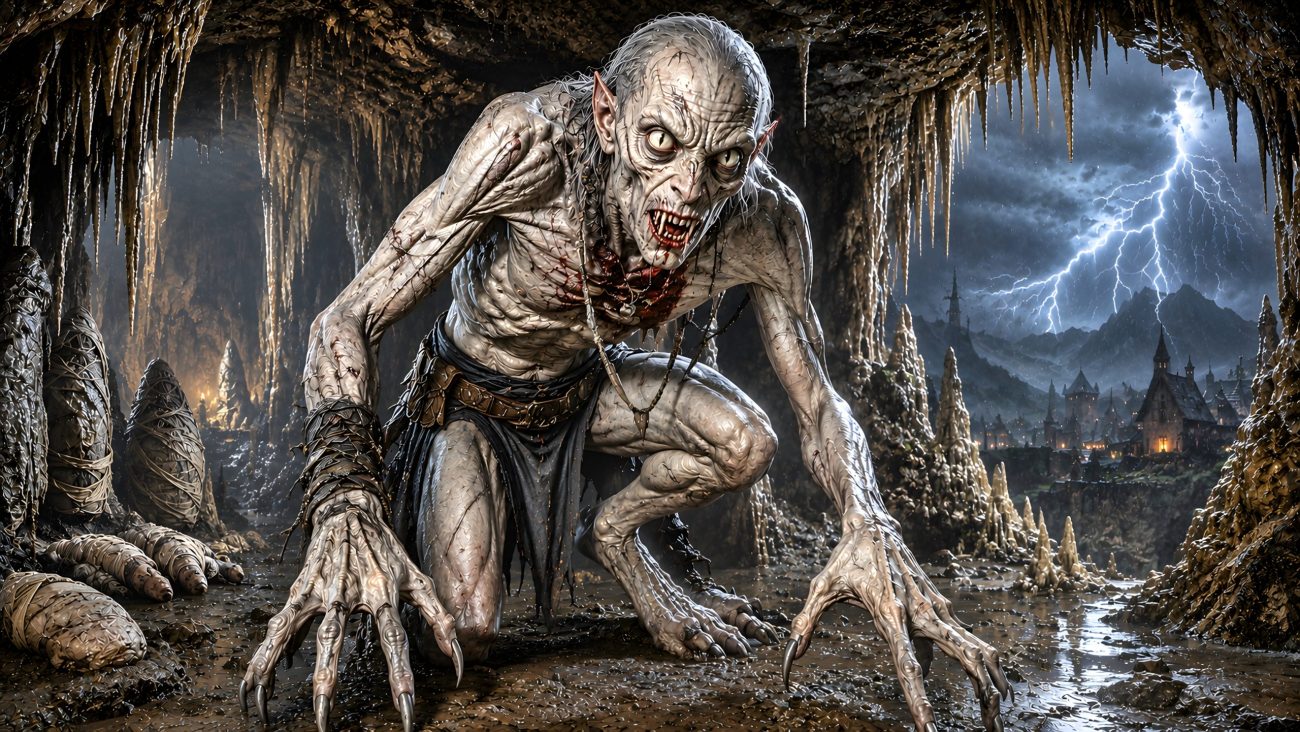
The Beskud is a rare and terrifying blood-drinking creature tied to the caves of the Beskydy Mountains. Unlike ordinary vampires, Beskuds are considered a separate breed of undead entirely. Folklore describes them as gray-skinned beings with slit-shaped catlike eyes, triangular teeth, immense physical strength, and skin so hard that ordinary weapons can barely wound them.

According to legend, the Beskuds were once members of the ancient Bastarnae nobility who willingly accepted a terrible curse before death. They were ritually killed and placed inside cave formations called helictites—strange twisting mineral structures that grow sideways inside the caves of the Moravian Karst and the northwestern Carpathians. Centuries later the cursed dead emerged from these stone cocoons as living blood-drinkers.

Unlike vampires, Beskuds are not created through bites, improper burials, or restless souls. Every Beskud originates directly from one of these ancient helictite cocoons. Even after one creature emerges, another may later form from the same cave structure, creating different Beskuds connected by an obscure mental bond. Destroying the helictite does not destroy the creatures born from it.

The life cycle of a Beskud is highly unusual. Newly emerged Beskuds are weak and unable to survive in sunlight. Even moonlight can temporarily turn them to stone. Hidden in caves, they survive on bats and are protected by older Beskuds until they grow stronger. After roughly a year of feeding, they enter a long hibernation and finally awaken as fully developed adult monsters.

Adult Beskuds can walk beneath the sun, though they strongly avoid open spaces and prefer darkness, storms, and overcast nights. Thunderstorms are considered their favored hunting time. Unlike most undead creatures, they usually attack only people awake after midnight—guards, drivers, thieves, wanderers, and night workers. Sleeping is considered one of the safest protections against them.

A Beskud’s bite drains more than blood. Victims also lose lymph and bodily fluids until they resemble dried mummies. Their attacks leave corpses shriveled and emptied rather than torn apart.

Beskuds are notoriously difficult to kill. They cannot dissolve into mist or transform into animals, but their speed and durability rival vampires. Wooden stakes are almost useless against them because their skin is extremely resistant. Folklore instead recommends silver-edged axes or silver-plated blades capable of severing the head. Decapitation is considered the only reliable way to destroy them.


Sources

Bestiary.us. (n.d.). Beskud. Retrieved May 18, 2026, from https://www.bestiary.us/beskud/


Ocheretyanyk

Tradition / Region: Ukrainian Mythology
Also Known As: Reed Devil, Spirit of the Reeds
Category: Demon, Swamp Dweller


The Myth

The Ocheretyanyk is a mysterious spirit from Slavic folklore associated with reeds, marshes, and wetlands. Its name comes from the Ukrainian word ocheret, meaning “reed,” and the creature was believed to dwell deep within thick reed beds near rivers and swamps.

Very little is known about the Ocheretyanyk compared to other Slavic spirits. Folklore usually describes it as a devil-like being tied to a specific place rather than a wandering demon. It was feared as a strange supernatural presence capable of terrifying travelers who passed too close to the reeds at night.

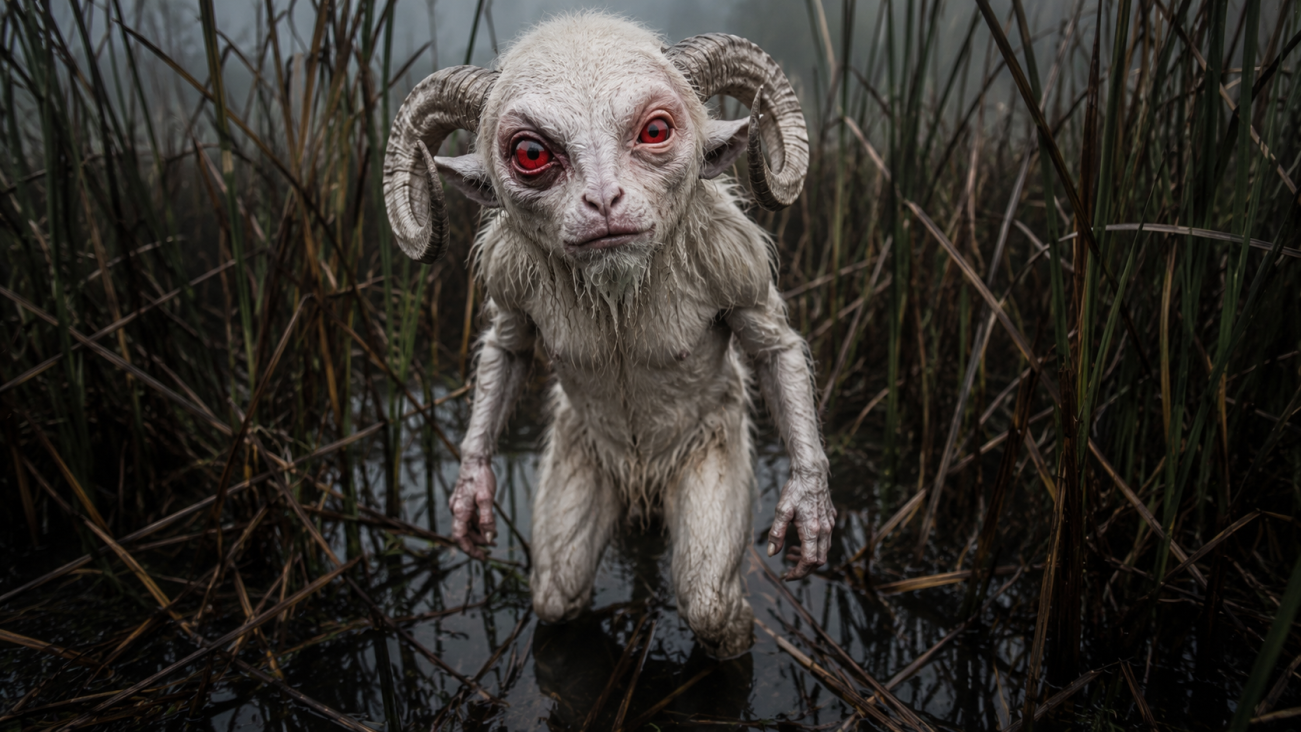
One surviving legend tells of a man riding near a marsh who encountered a strange white ram with claws, screaming unnaturally beside the reeds. Believing it to be an ordinary animal, the man lifted it onto his cart. Immediately the horses became unable to move under its weight. When he tried to throw the creature off, it would not leave the cart no matter how hard he struggled.

Only when the roosters crowed at dawn did the creature finally leap away on its own. Laughing mockingly, it disappeared back into the reeds.

Stories about the Ocheretyanyk often resemble broader Slavic tales about supernatural fear spirits—unknown beings that appear suddenly in strange forms such as animals, objects, or distorted humans in order to frighten people wandering near dangerous places at night.


Sources

Bestiary.us. (n.d.). Ocheretjanyk. Retrieved May 10, 2026, from https://www.bestiary.us/ocheretjanyk/


Viy

Tradition / Region: Ukrainian Mythology
Alternate Names:
Category: Gnome, Cave dweller


The Myth

Viy is the master of what lives beneath the earth.

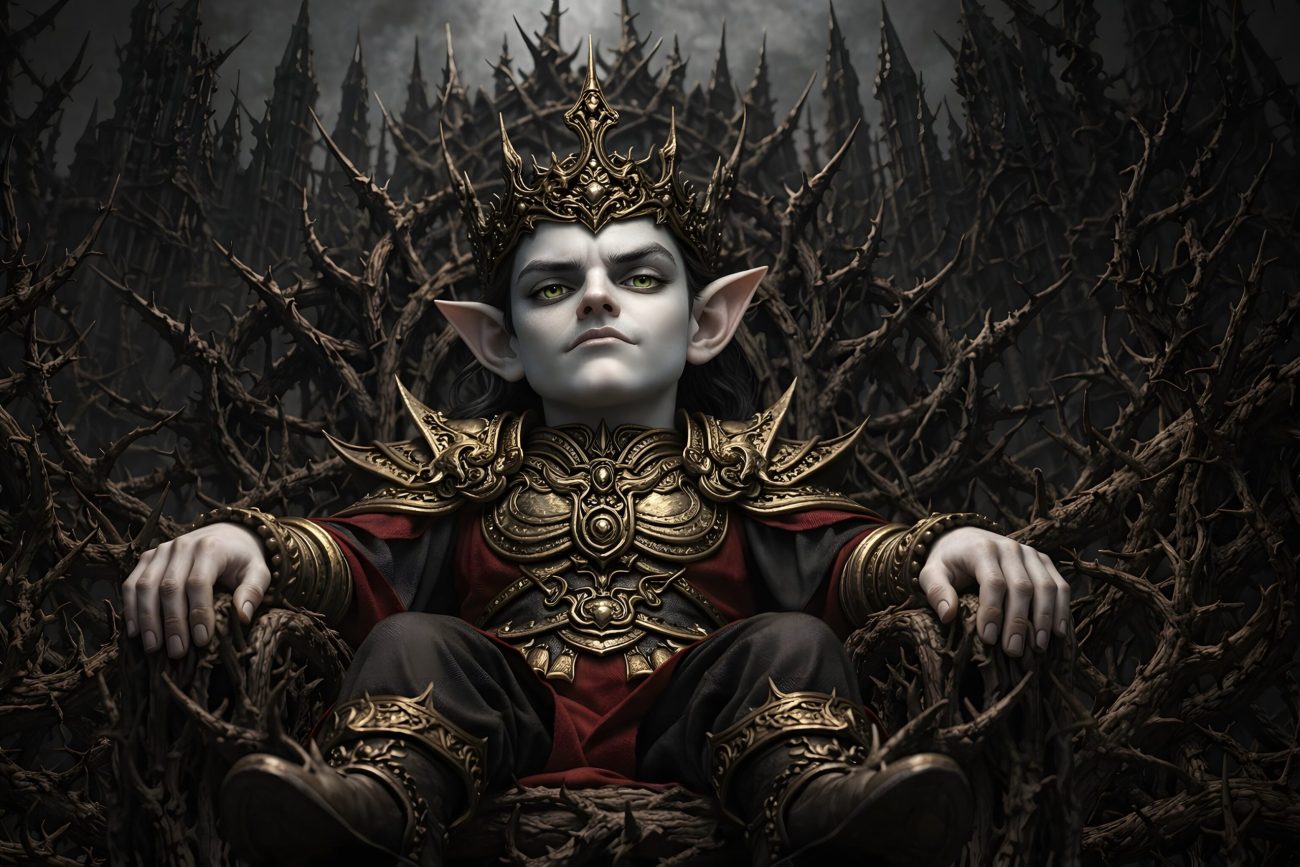
He is said to be the chief of the gnomes and underground beings, an ancient creature so heavy with age and power that his body can scarcely move. His most terrible feature is his eyes. Their eyelids are so vast, thick, and heavy that they drag upon the ground, and Viy himself cannot lift them. When he wishes to see, his servants must raise the lids with iron hooks.

But when his eyes are opened, nothing can hide.

Walls, prayers, circles of protection — all are useless before his gaze. Whatever Viy looks upon is exposed, stripped of concealment, and marked for death. His sight penetrates earth, flesh, and soul alike.

In the tale, Viy is summoned when lesser demons and spirits fail. They call upon him as a final authority, a being whose vision cannot be deceived. When he appears, the ground trembles under his weight. His voice is slow and crushing, and the air grows heavy in his presence.

When Viy’s eyes are lifted and he sees his victim, the victim is doomed. Terror itself seems to answer his gaze, and death follows as a certainty, not as a struggle.

Viy does not chase, does not rage, does not strike. He merely sees.

And that is enough.

He remains a figure of the deep earth and the dark boundary between life and death — a lord not of speed or violence, but of inescapable truth, whose opened eyes end all illusion.


Sources

Wikipedia contributors. (n.d.). Viy (story). In Wikipedia, The Free Encyclopedia, from https://en.wikipedia.org/wiki/Viy_(story)


Petrykivka Mara

Tradition / Region: Ukrainian Mythology
Alternate Names: Petrikov Mara
Category: Plant, Forest dweller


The Myth

The Petrykivka Mara is a strange and grotesque figure from the folklore of Eastern Polesia. Unlike many beings called mara in Slavic traditions—where the name usually refers to a dangerous or demonic entity—this mara is considered harmless, though deeply unsettling in appearance and presence.

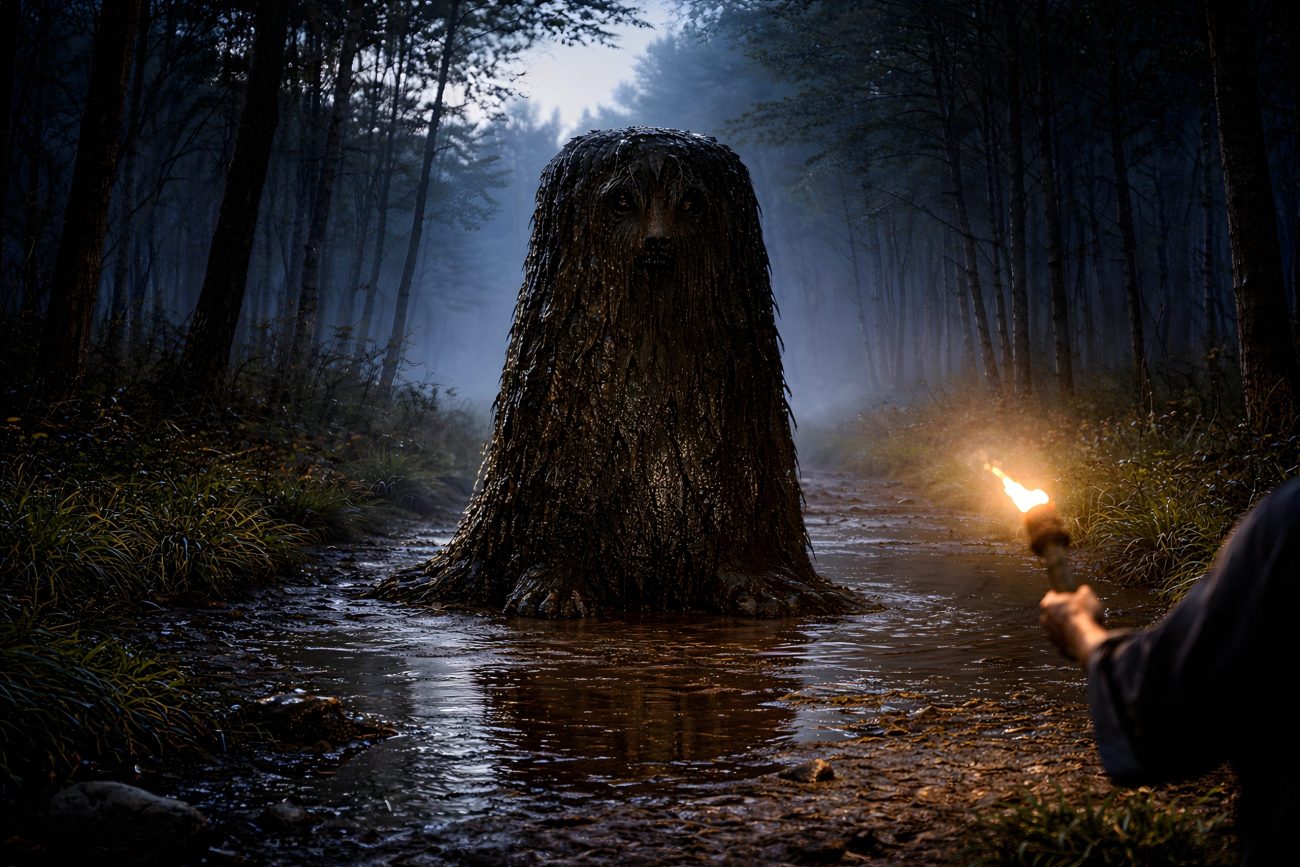
She is described as resembling a thick, upright log or resinous stump, standing vertically on very short legs shaped like badger paws. Her body is massive and heavy-looking, while her legs are disproportionately small. She is always described as black in color. Though frightening to look at, she does not attack or harm people. At most, she startles children or causes confusion and fear, sometimes even becoming a hazard simply by standing in the way.

When the mara moves, she emits metallic sounds, compared to distant blows on a cast-iron cauldron. These noises announce her presence before she is fully seen. Despite her intimidating size, she is said to be terrified of children, reacting to them with fear rather than aggression.

In later times, the mara came to be represented as a straw scare figure, dressed in rags. In this form, she appears suddenly, stands motionless, or slowly follows people who are walking. She never commits any harmful act, but her presence is described as oppressive, filling those who encounter her with a heavy sadness, as if their heart were being clawed at and their soul weighed down.

One well-known story comes from the town of Petrikov, where during the summer months, at dawn each day, a mara appeared at the entrance to the town. She took the form of a log twice the height of a man, standing on short badger-like legs. She would remain motionless, moaning with a human voice, and vanish again at dawn. How the people eventually rid themselves of her is unknown.

The memory of this being lived on not only in stories but also in speech. A saying arose that later became a proverb. When someone is annoying or persistently clinging, people say:
“I’m tired of you like the Petrikov mara. Why are you clinging to me like the Petrikov mara? Get off me, Petrikov mara.”

In this way, the Petrykivka Mara remains in folklore as a figure of silent oppression and strange persistence, frightening not through violence, but through her unsettling presence alone.


Sources

Bestiary.us contributors. (n.d.). Mara Petrikovskaya. In Bestiary.us, from https://www.bestiary.us/mara-petrikovskaya


Bolotnik

Tradition / Region: Belarusian Mythology, Polish Mythology, Russian Mythology, Ukrainian Mythology
Alternate Names: Balotnik, Bolotianyk, Błotnik, Swamp Devil, Swamp Old Man
Category: Swamp dweller


The Myth

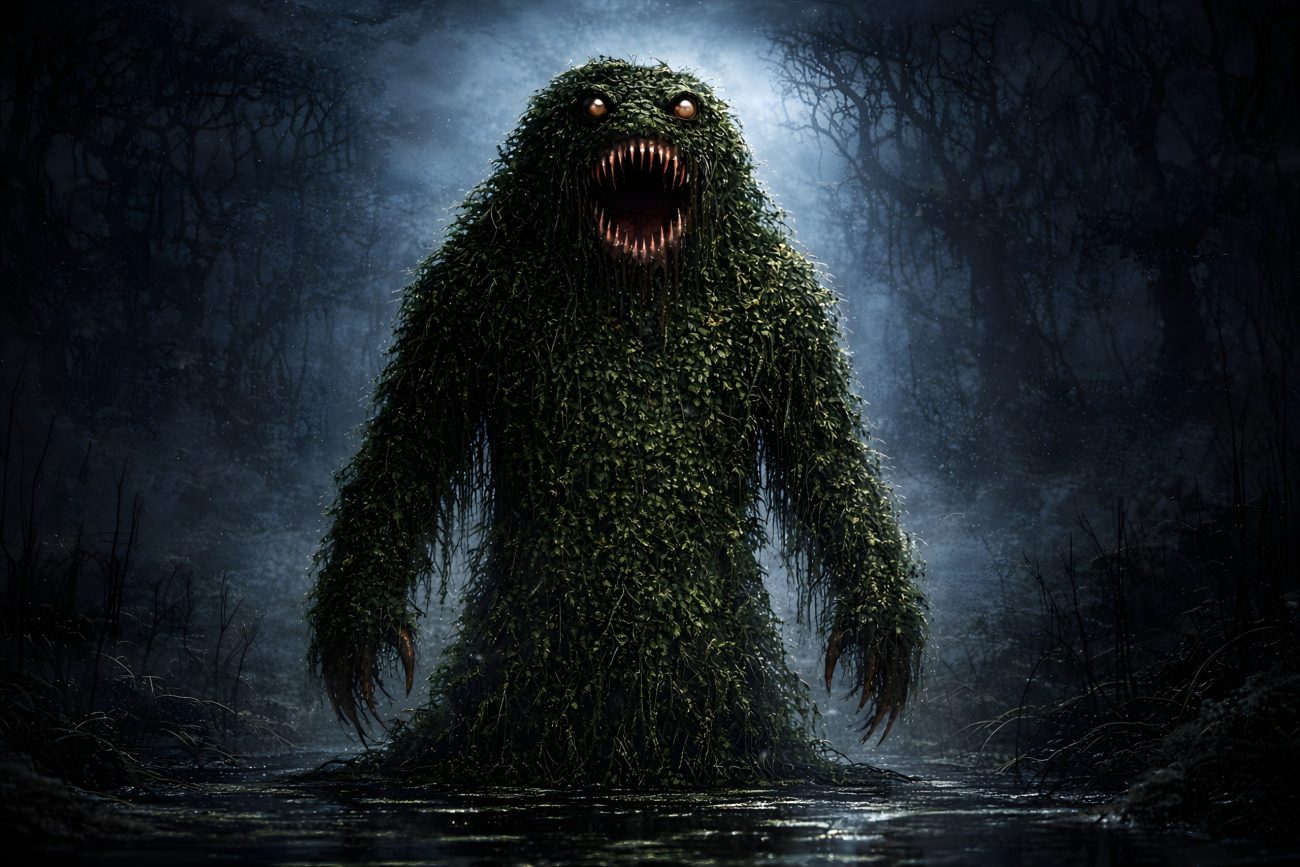
Bolotnik is a male swamp spirit who inhabits bogs, marshes, and quagmires, places long feared in Slavic tradition as dangerous and unclean. He is most often described as a man or old man with large frog-like eyes, a green beard, and long hair. His body is covered in mud, algae, fish scales, and swamp growth. In some regions, especially the Vitebsk Governorate, he is said to be eyeless, fat, and motionless, sitting silently at the bottom of the swamp. Other accounts give him long arms and even a tail.

Bolotnik is known to lure people and animals toward the edge of the swamp and drown them. He imitates familiar sounds to deceive travelers, quacking like a duck, mooing like a cow, gurgling like birds, or calling out with human-like cries. At night, he may create strange lights on the surface of the water or grow stupefying plants near the swamp, drawing victims closer. Once a person steps into the mire, Bolotnik seizes them by the feet and slowly drags them down into the depths.

Some legends say Bolotnik lives alone, while others claim he is married to Bolotnitsa, a female swamp spirit. In many regions, swamp spirits were not clearly distinguished and were often confused with other beings such as the vodyanoy, leshy, chort, rusalka, or kikimora. In certain Ukrainian and Belarusian stories, Bolotnik appears deceptively hospitable: he invites passers-by into beautiful rooms filled with music and dancing, offering gifts and feasts. When the illusion fades, the victims find themselves sitting in a swamp, holding only rubbish instead of treasures.

Different types of swamp spirits were sometimes distinguished. Orzhavinik was said to inhabit iron-rich swamps and appeared as a creature with dirty ginger fur, a thick belly, and thin legs. Bagnik lived deep in bogs and never surfaced, grabbing people only by the legs, its presence marked by bubbles and pale lights. Lozoviki dwelled among willows and vines near swamps, entangling travelers before sometimes helping them escape. Another spirit, Virovnik, lived in deep pools within marshes.

Bolotnik was believed to originate like other evil spirits, as a fallen angel cast down from heaven or as a creation of Satan. In some creation legends, swamps themselves were formed when the devil spat out earth he had hidden in his mouth. Medieval sources record that pre-Christian Slavs made sacrifices to swamps, suggesting that such spirits were once propitiated rather than avoided.

Unlike many demons, Bolotnik is not afraid of lightning, as thunderbolts lose their power upon striking swamp water. He is said to perish when swamps are drained or when they freeze solid in winter. In Polish folklore, the błotnik appears as a pitch-black man carrying a lantern, leading travelers astray into marshes, and is sometimes associated with Boruta.

Bolotnik remains a feared embodiment of the swamp itself—deceptive, suffocating, and inescapable—waiting patiently for those who stray too close to the water’s edge.