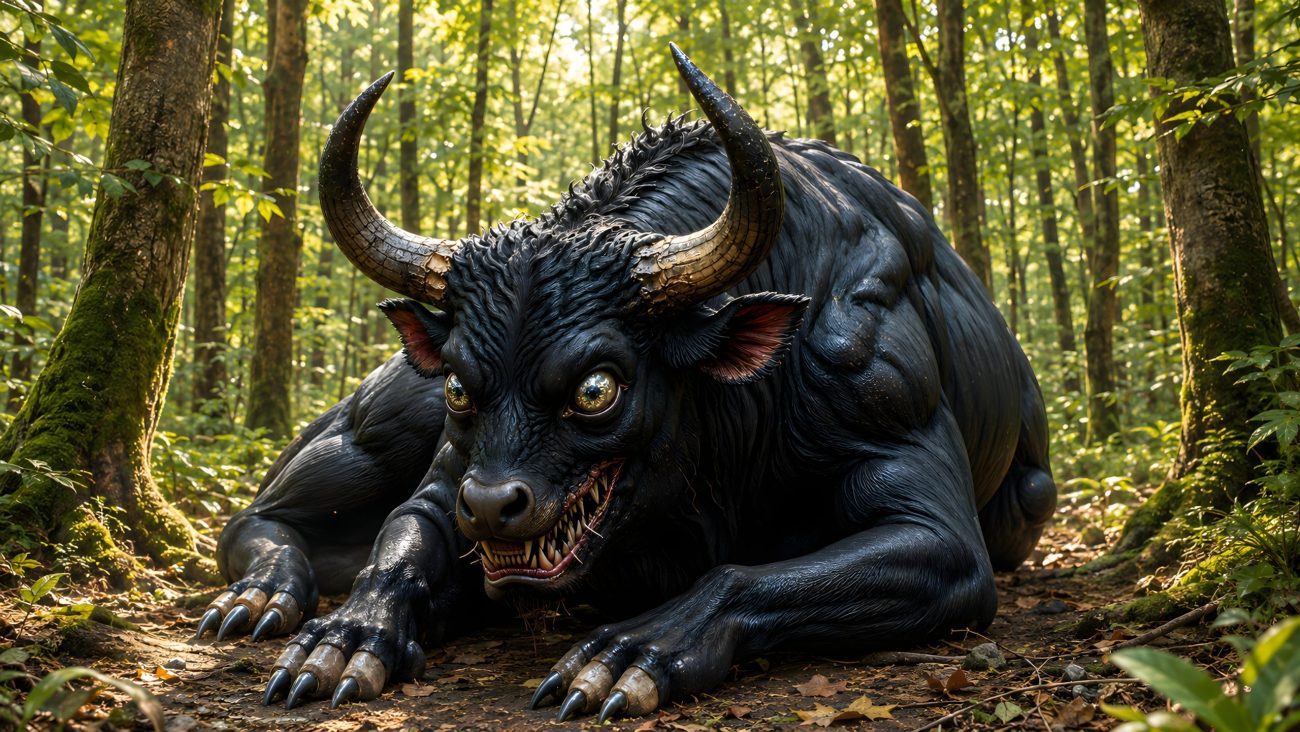
Bzionek

Tradition / Region: Silesian Mythology, Polish Mythology
Alternate Names:
Category: Forest dweller, Gnome, Spirit


The Myth

Bzionek is a guardian spirit known in Silesian superstition, believed to protect villages from evil spells and misfortune. It was imagined in the form of a small man who lived beneath or within elder bushes, especially the black elder growing close to human dwellings. From this association, the spirit took its name.

Because the bzionek was thought to dwell in elder bushes, these plants were treated with great reverence. Cutting them down, digging them up, or burning elder wood in an oven was strictly forbidden, as such acts might offend the spirit and bring harm upon the household or village.

Certain customs were connected to the elder bush and the bzionek. After washing the body of a deceased person, people would pour the used water beneath the elder bush to avert misfortune. In moments of desperation, when a baby was gravely ill, the child might be brought beneath the bush so that the bzionek could drive away the sickness.

The bzionek was not feared as a malicious being, but respected as a quiet protector whose presence demanded careful behavior. Through the elder bush, it stood as a silent guardian between the human world and unseen dangers.


Sources

Bestiary.us contributors. (n.d.). Eterari. In Bestiary.us, from https://www.bestiary.us/eterari/


Bebok

Tradition / Region: Polish Mythology, Silesian Mythology
Alternate Names:
Category: Forest dweller, Swamp dweller, House dweller


The Myth

In Polish and Silesian folklore, the bebok is a supernatural being associated with darkness and fear. It belongs to the family of bogeymen—creatures invoked to warn, threaten, and discipline, rather than to be seen directly.

In Upper Silesia in particular, the bebok is the most familiar and widely used bogeyman. Parents invoke its name to frighten disobedient or unruly children, warning that the bebok will come for those who misbehave or wander where they should not.

According to legend, beboks dwell in places avoided by people: forests thick with shadow, swamps and marshy ground, dark basements, cellars, and similar hidden or neglected spaces. These are places where light fades and sound carries strangely, and where the presence of the bebok is felt rather than seen.

The bebok is not described in detail, for its power lies in suggestion. It exists as a warning embodied—a lurking threat tied to darkness itself. Through fear of the bebok, children are taught caution, obedience, and respect for the boundaries between safety and danger.


Sources

Bestiary.us contributors. (n.d.). Eterari. In Bestiary.us, from https://www.bestiary.us/eterari/


Bolotnik

Tradition / Region: Belarusian Mythology, Polish Mythology, Russian Mythology, Ukrainian Mythology
Alternate Names: Balotnik, Bolotianyk, Błotnik, Swamp Devil, Swamp Old Man
Category: Swamp dweller


The Myth

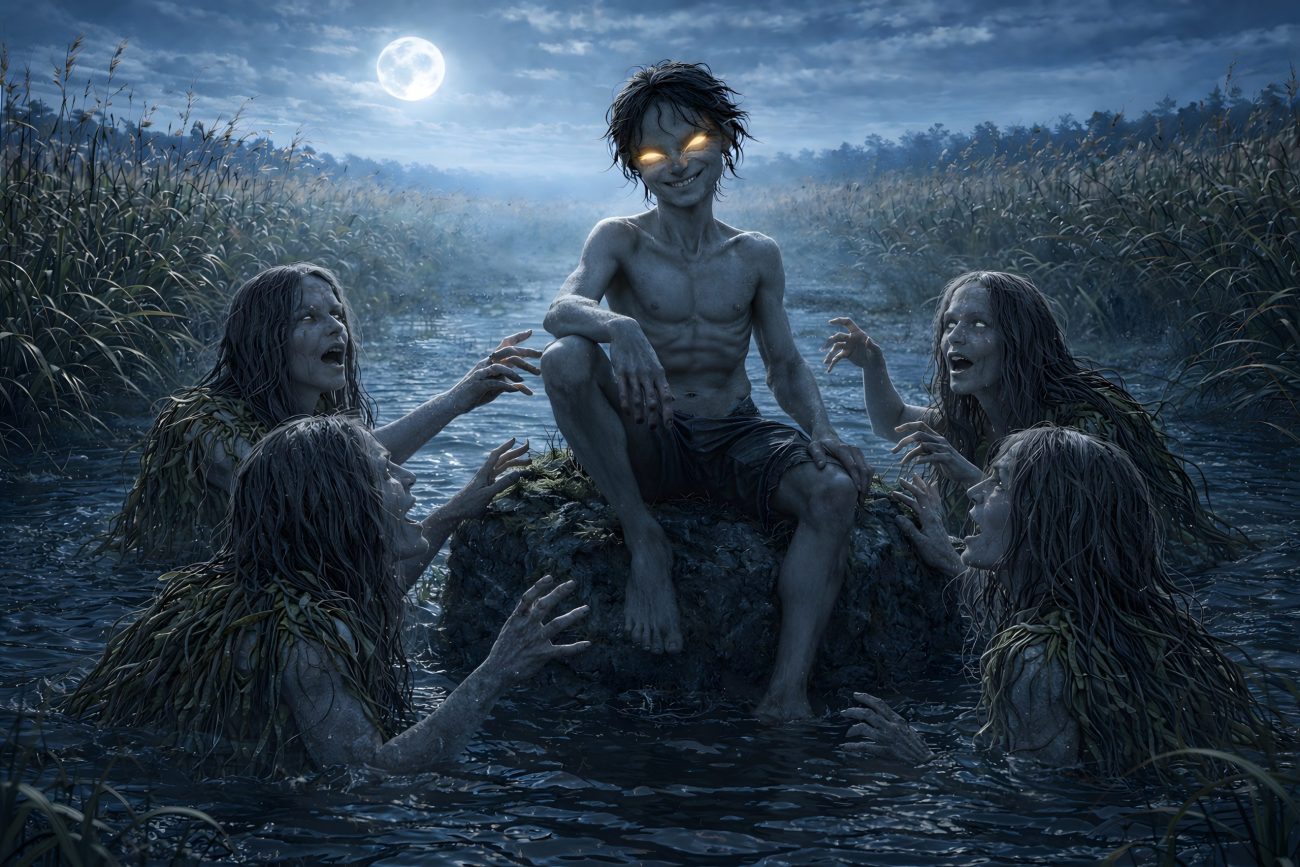
Bolotnik is a male swamp spirit who inhabits bogs, marshes, and quagmires, places long feared in Slavic tradition as dangerous and unclean. He is most often described as a man or old man with large frog-like eyes, a green beard, and long hair. His body is covered in mud, algae, fish scales, and swamp growth. In some regions, especially the Vitebsk Governorate, he is said to be eyeless, fat, and motionless, sitting silently at the bottom of the swamp. Other accounts give him long arms and even a tail.

Bolotnik is known to lure people and animals toward the edge of the swamp and drown them. He imitates familiar sounds to deceive travelers, quacking like a duck, mooing like a cow, gurgling like birds, or calling out with human-like cries. At night, he may create strange lights on the surface of the water or grow stupefying plants near the swamp, drawing victims closer. Once a person steps into the mire, Bolotnik seizes them by the feet and slowly drags them down into the depths.

Some legends say Bolotnik lives alone, while others claim he is married to Bolotnitsa, a female swamp spirit. In many regions, swamp spirits were not clearly distinguished and were often confused with other beings such as the vodyanoy, leshy, chort, rusalka, or kikimora. In certain Ukrainian and Belarusian stories, Bolotnik appears deceptively hospitable: he invites passers-by into beautiful rooms filled with music and dancing, offering gifts and feasts. When the illusion fades, the victims find themselves sitting in a swamp, holding only rubbish instead of treasures.

Different types of swamp spirits were sometimes distinguished. Orzhavinik was said to inhabit iron-rich swamps and appeared as a creature with dirty ginger fur, a thick belly, and thin legs. Bagnik lived deep in bogs and never surfaced, grabbing people only by the legs, its presence marked by bubbles and pale lights. Lozoviki dwelled among willows and vines near swamps, entangling travelers before sometimes helping them escape. Another spirit, Virovnik, lived in deep pools within marshes.

Bolotnik was believed to originate like other evil spirits, as a fallen angel cast down from heaven or as a creation of Satan. In some creation legends, swamps themselves were formed when the devil spat out earth he had hidden in his mouth. Medieval sources record that pre-Christian Slavs made sacrifices to swamps, suggesting that such spirits were once propitiated rather than avoided.

Unlike many demons, Bolotnik is not afraid of lightning, as thunderbolts lose their power upon striking swamp water. He is said to perish when swamps are drained or when they freeze solid in winter. In Polish folklore, the błotnik appears as a pitch-black man carrying a lantern, leading travelers astray into marshes, and is sometimes associated with Boruta.

Bolotnik remains a feared embodiment of the swamp itself—deceptive, suffocating, and inescapable—waiting patiently for those who stray too close to the water’s edge.


Błędne ogniki

Tradition / Region: Polish Mythology
Alternate Names:
Category: Flame


The Myth

In marshes, swamps, and peat bogs, people spoke of small lights that appeared at night, hovering just above the wet ground. These wandering flames were known as Błędne ogniki. They flickered softly, drifting without clear purpose, and were most often seen where the land was treacherous and paths were uncertain.

According to Polish and wider Slavic belief, Błędne ogniki were the souls of the dead. They were commonly said to be the spirits of wicked or dishonest people, especially unjust landowners and fraudulent surveyors who had cheated others during their lives. After death, they were condemned to wander endlessly, glowing faintly as a sign of their unrest and repentance.

The lights were feared by travelers. It was said that Błędne ogniki could lead people astray, drawing them off safe paths and deeper into bogs where they might become lost or perish. To follow the lights was dangerous, and their appearance was usually taken as a bad omen.

In some regions, however, the lights were also linked to hidden treasures buried beneath the earth. In these tales, the glow was believed to come from the lanterns of underground beings guarding their riches. Even so, such encounters were risky, for those who chased the promise of wealth often met misfortune instead.

Thus Błędne ogniki were remembered as restless lights of the night — spirits bound to the land, warning travelers that not every guiding flame leads to safety.


Raróg

Tradition / Region: Polish Mythology
Alternate Names: Raroh, Raróg
Category: Bird, Spirit


The Myth

The Raróg is a being of fire, most often seen as a flaming falcon or hawk streaking across the sky. It is not a creature of nests or forests, but one bound to heat, flame, and the upper reaches of the world. When it moves, it may blaze like a living ember, spiral through the air like a whirlwind, or descend suddenly in a flash of fire.

Some traditions tell that the Raróg may be born in an unusual way. An egg kept warm upon a household stove for nine days and nights can hatch into the spirit. Once it comes into being, it does not remain fixed in shape. At times it appears as a fiery bird, at others as a dragon-like form, a small humanoid spirit, or a spinning column of flame. Like fire itself, its nature is unstable and ever-changing.

The Raróg is said to dwell at the crown of the Slavic world tree, where it guards the entrance to Vyraj, a warm and radiant realm associated with life, renewal, and the seasonal flight of birds away from winter. From this height, it watches the boundary between the human world and a distant paradise beyond decay and cold.

In some regions, particularly in Polish folklore, the Raróg appears in a smaller and gentler form. It is described as a tiny fire-bird that can be carried in a pocket and brings good fortune to the one who possesses it. Even in this form, it remains a creature of flame, closely tied to later legends of the Firebird, whose feathers continue to glow long after being plucked.

Across all its tellings, the Raróg endures as a living embodiment of fire itself — swift, radiant, and dangerous, forever moving between worlds in flickers of flame.