Khokhlik

Tradition: Belarusian Mythology, Polish Mythology
Alternative Names: Chochlik, Khokhlik, Khokhlik, Khokhlik (Podlasie variant)
Category: House dweller


The Myth

Khokhlik is a small household spirit described in Belarusian and Polish folklore as a little devil who assists the domovoi, the guardian spirit of the home. It is associated with the pantry and household supplies, where it may take the form of a cat. According to Polish sources, Khokhlik can guard the pantry, but its assistance depends on how the household is managed. If the housewife is careless, the spirit may cause mischief, knock dishes from shelves, and ruin supplies.

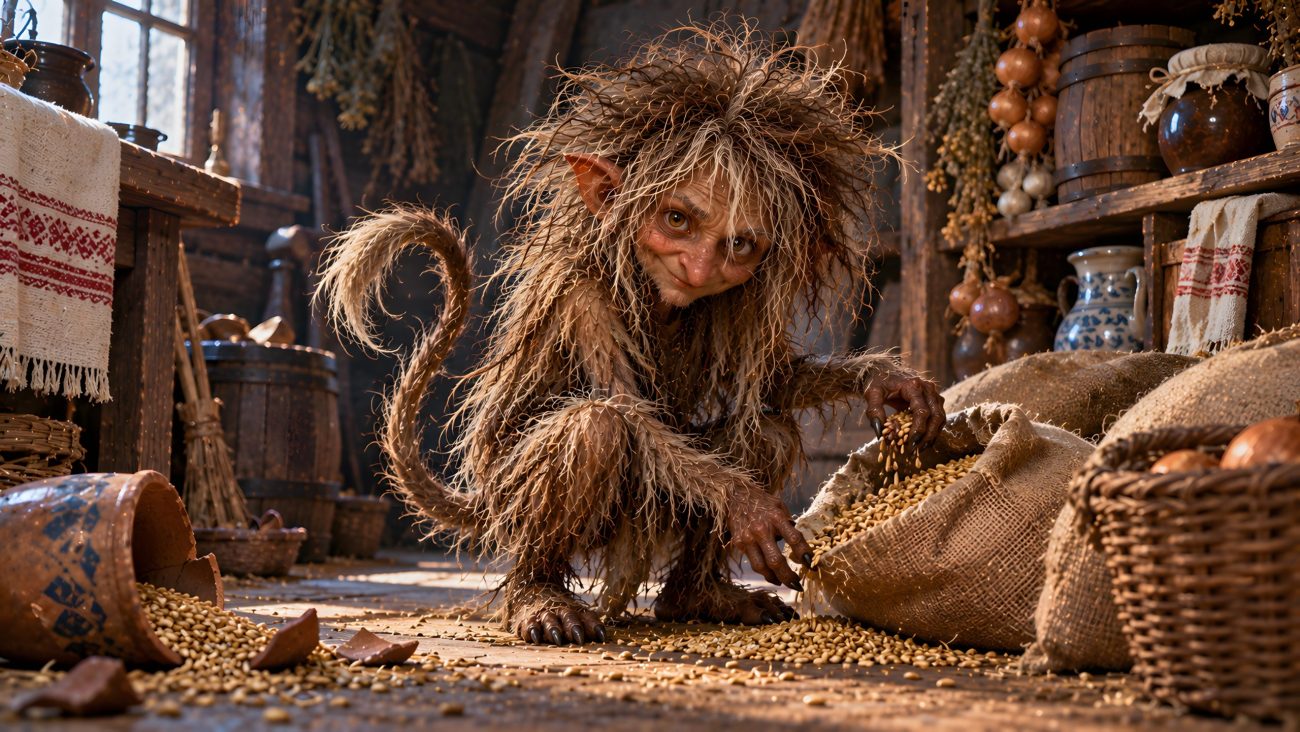
The creature’s appearance is not described consistently. Its name has been connected to words meaning shaggy or unkempt, and some descriptions suggest a small, hairy spirit. The illustration associated with the tradition depicts a squat, hairy humanoid with a long tail, although this is an artistic representation rather than a definitive description found throughout the folklore.

Khokhlik is also associated with forests and people who lose their way. In a local account from the Vetkovsky district of the Gomel region, a witness described the spirit as a guide who leads lost travellers through the woods. A recorded saying reflects this association: when someone became lost, people would say that the Khokhlik had led the way. Other accounts connect the creature with nighttime disturbances and strange noises.

In the folklore of Podlasie, a historical region along the Belarusian-Polish border, Khokhlik is described as having characteristics normally attributed to household spirits and mischievous devils. It may braid the manes of horses during the night, leaving them tangled in the morning. It can also cause horses to become restless or exhausted. Some stories say that a Ukrainian should not ride a horse at night because Khokhlik may ride alongside or torment the animal until it collapses. In one account, horses were protected by placing flax or hemp beneath their hooves.

Khokhlik’s behaviour is therefore contradictory. It may protect household supplies and assist the domovoi, but it can also cause disorder in the home, mislead travellers, and torment horses. Its role varies between local traditions, and the available accounts do not establish a single consistent appearance or set of powers.

Khokhlik illustrates the overlap between domestic spirits, mischievous devils, and forest beings in Belarusian and Polish folklore. Its stories reflect concerns about keeping a household in order, protecting stored food, caring for horses, and finding one’s way through the woods. Although often troublesome, it is not portrayed as uniformly malicious; its actions depend on the particular account and the circumstances in which it appears.


Sources

“Hohlik.” New Bestiary (Bestiary.us). https://www.bestiary.us/hohlik

Didukh

Tradition: Ukrainian Mythology, Polish Mythology
Alternative Names: Didukhy (plural)
Category: House dweller


The Myth

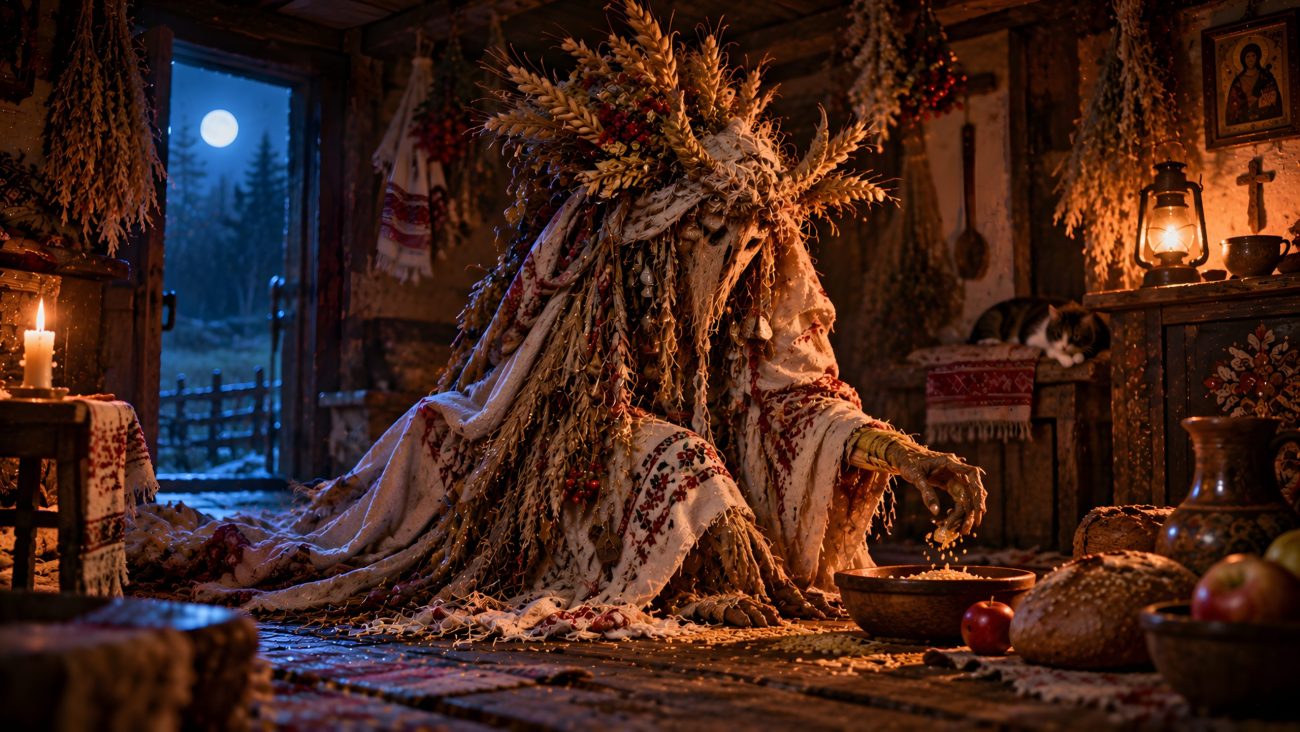
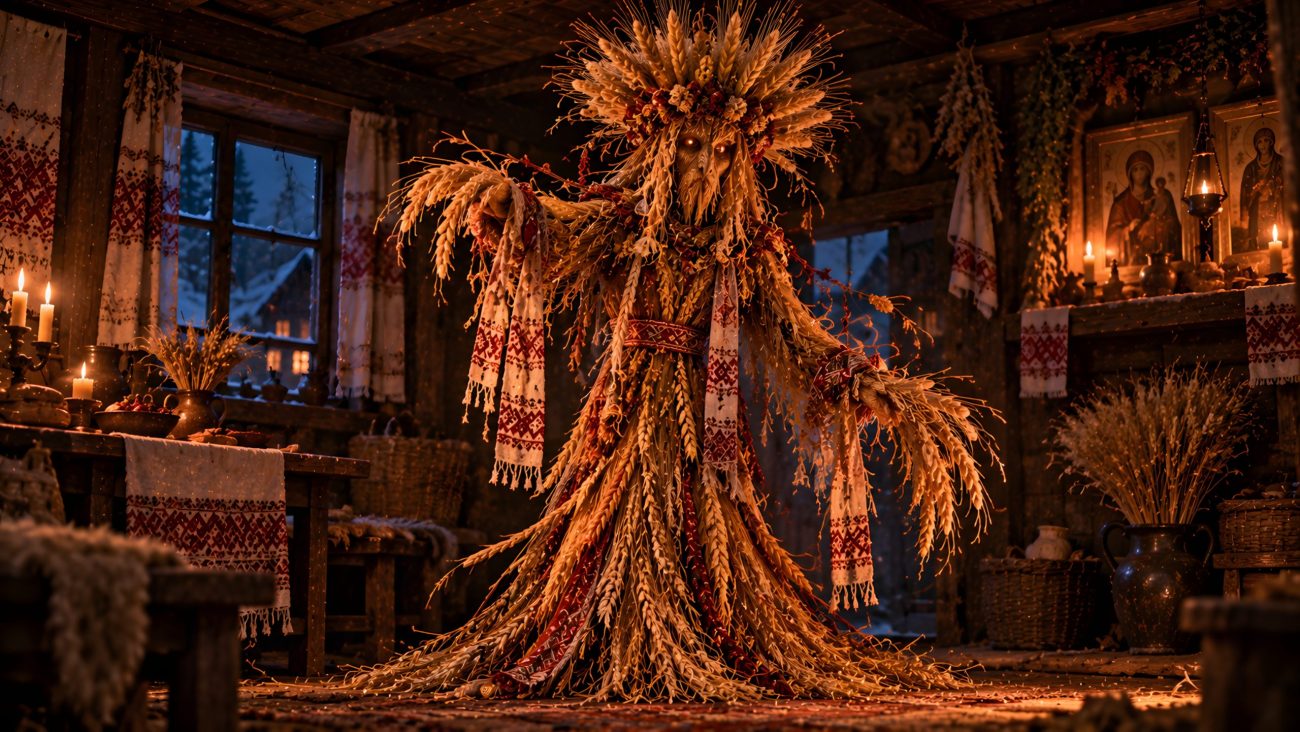
The Didukh is a traditional Ukrainian and Polish Christmas decoration made from a sheaf of wheat. Its name literally means “grandfather spirit,” reflecting its connection to the souls of deceased ancestors. Traditionally, the sheaf is made from the first or last stalks of wheat harvested during the year and decorated with colourful threads and ribbons. Beyond its role as a seasonal decoration, the Didukh represents the household’s hope for abundance, fertility, and a bountiful harvest in the coming year.

The Didukh holds particular spiritual significance during the Christmas holidays. According to traditional belief, the spirits of the household’s ancestors reside within the sheaf during this period. While the Didukh occupies a place of honour inside the home, the souls of the ancestors gather together and bless the family. It therefore serves as a symbolic dwelling for the dead, allowing them to return to the household and participate in its seasonal celebrations.

On Sviat Vechir, or Christmas Eve, the head of the household brings the Didukh inside. It is placed in the pokutia, the corner of the house containing religious icons, alongside kutia, a ritual food, and uzvar, a traditional ritual drink. Its position in this honoured space reflects the importance of welcoming the ancestors and seeking their blessing during the holiday season.

The Didukh remains inside the home until Masnytsia, when it is burned to symbolise the end of winter. This final act marks the conclusion of its seasonal role and the departure of the period in which the ancestors are believed to dwell within it.

The Didukh combines the symbolism of the harvest with the veneration of deceased family members. Its wheat sheaf represents hopes for agricultural prosperity, while its spiritual role connects the living household with its ancestors. Through the ritual placement and eventual burning of the Didukh, Ukrainian and Polish Christmas traditions express the relationship between family continuity, seasonal change, and the abundance of the coming year.


Sources

“Didukh.” Wikipedia: The Free Encyclopedia. Wikimedia Foundation. Accessed October 18, 2026. https://en.wikipedia.org/wiki/Didukh


Płamęta

Tradition: Polish Mythology
Alternative Names: Płamęta
Category: House dweller


The Myth

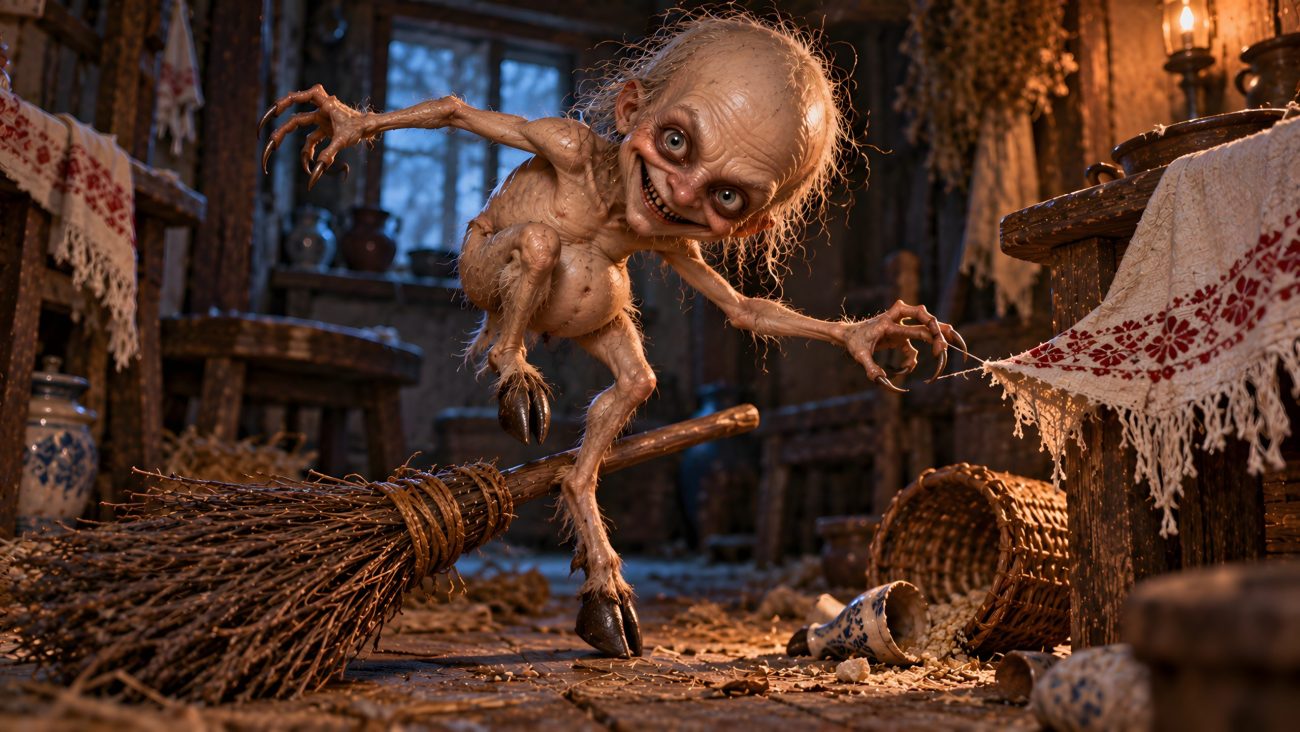
Płamęta is a mischievous household demon found in nineteenth-century beliefs around Tarnobrzeg, in Poland. It is a tiny creature, almost human in form, with a naked body, sparse hair, an unusually large head, and a wide, laughing mouth. Its strange appearance is made even more unsettling by its limbs: instead of hands, it has birdlike claws, while its feet are replaced by hooves.

The creature has a peculiar hiding place beneath a deer broom, a broom made from the shoots of the broom plant. Płamęta remains invisible to people, allowing it to interfere with everyday domestic activities without being seen. Its presence is revealed through the disturbances it causes rather than through direct encounters.

Płamęta delights in making a mess and obstructing household work. It may trip people as they go about their tasks or otherwise interfere with their efforts, turning ordinary chores into frustrating experiences. Its behaviour is that of a troublesome imp that disrupts the order of the home for its own amusement.

One way of dealing with its mischief is to take the broom beneath which it hides and swing it around while sweeping away dirt and filth. If Płamęta continues to cause trouble, the recommended response is to make the sign of the cross and leave the room. The account offers no guarantee that the creature will disappear permanently, but it presents these actions as ways of responding to its disturbances.

Płamęta embodies the idea that ordinary household disorder could be attributed to an invisible supernatural troublemaker. Despite its tiny, almost human appearance, its claws, hooves, and persistent interference make it a source of domestic irritation. Its association with a broom also links the creature directly to the everyday work through which household order was maintained.


Sources

“Płamen̨ta.” Wikipedia, wolna encyklopedia. Wikimedia Foundation. Accessed October 18, 2026. https://pl.wikipedia.org/wiki/P%C5%82am%C4%99ta


Złydnia

Tradition: Polish Mythology
Alternative Names: Złydnie
Category: House dweller


The Myth

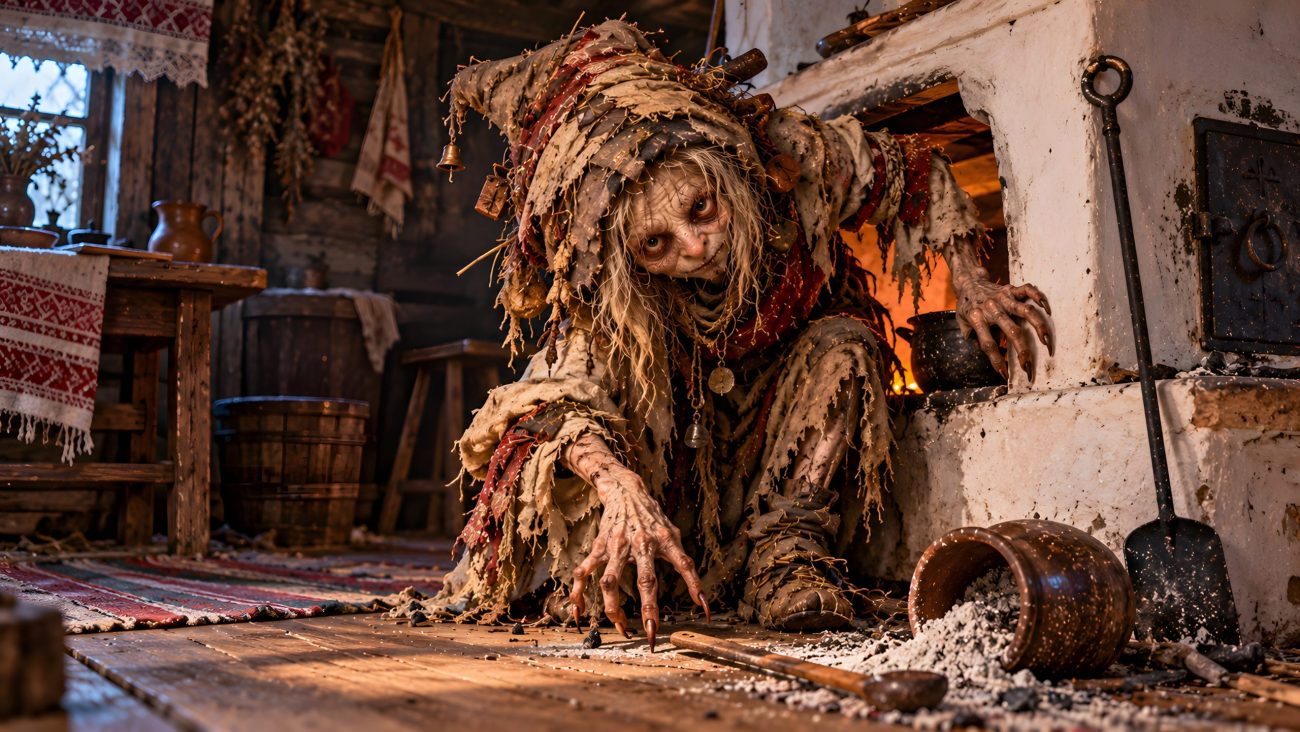
Złydnie are malicious supernatural beings in East Slavic folklore that bring misfortune to households and their inhabitants. They are associated particularly with the space behind the stove, where they settle after entering a home in groups. Their presence is dangerous because they drive away the household’s guardian spirits and replace them with an atmosphere of disorder, fear, and evil influence.

Złydnie were imagined as small, hunched, emaciated creatures with faces resembling those of old children. They wore oversized, torn clothing, including rags, shoes, and hats. Despite their diminutive appearance, they could cause considerable suffering. At night, they made noises around the house, overturned objects, and whispered terrible things into people’s ears, encouraging them to commit evil deeds.

Their harmful influence extended beyond the household. Złydnie tormented domestic animals and could attack people working in the fields. In invisible form, they sat on workers travelling to their fields and drained their strength. Their presence was also blamed for extreme psychological torment, with stories claiming that they could drive people mad and push them toward suicide by hanging or drowning.

Getting rid of Złydnie was difficult because they could escape and find another home. According to the tradition, they had to be caught at night and drowned in a swamp, preferably in a neighbouring village. Even this measure did not guarantee a permanent solution, as the creatures could emerge from the water and immediately seek a new household to inhabit.

Złydnie represent the destructive opposite of benevolent household spirits. Rather than protecting domestic life, they displace its guardians, undermine people’s strength, torment animals, and spread misfortune wherever they settle. Their association with the space behind the stove makes the home itself a battleground between protective household powers and malicious supernatural intruders.


Sources

“Złydnia.” Wikipedia, wolna encyklopedia. Wikimedia Foundation. Accessed October 18, 2026. https://pl.wikipedia.org/wiki/Z%C5%82ydnia


Uboże

Tradition: Polish Mythology
Alternative Names: Ubożęta, Uboża, Bożęta
Category: House dweller


The Myth

Uboże is a protective household spirit in Old Polish beliefs, associated with prosperity and the well-being of the home. The being was understood as a guardian that ensured wealth and good fortune for the household. According to some interpretations, Uboże originated from the souls of deceased ancestors, connecting the prosperity of the living family with the spirits of those who had come before them.

References to Uboże appear in Polish literature from the fifteenth and sixteenth centuries, after which the figure gradually disappeared from the written record. The spirit is comparable in function to the Domowik of Ruthenian beliefs, another supernatural being associated with the household.

A fragment of a fifteenth-century sermon provides a possible glimpse into practices associated with Uboże. It describes how leftovers from dinner were given to the poor, particularly on Thursdays. After eating, the poor were expected to drive away evil spirits. Although this account does not fully explain the relationship between the practice and Uboże, it suggests that food, household welfare, and protection against malevolent supernatural forces were connected in contemporary beliefs.

The name Uboże derives from the root bog-, associated with grace and wealth. Its meaning therefore fits the spirit’s role as a bringer of prosperity. Deriving the name from the word for poverty would contradict the being’s traditional function as a protector of household wealth and well-being.

Uboże represents an older Polish conception of domestic prosperity as something that could depend on supernatural protection. Its possible connection with deceased ancestors also suggests a relationship between household fortune and the continuing presence of the family dead. Although the figure eventually disappeared from the written record, historical references preserve evidence of beliefs in protective spirits that watched over the home and its material well-being.


Sources

“Uboże.” Wikipedia, wolna encyklopedia. Wikimedia Foundation. Accessed October 18, 2026. https://pl.wikipedia.org/wiki/Ubo%C5%BCe


Szpechotka

Tradition: Polish Mythology
Alternative Names: Szperhetka
Category: House dweller


The Myth

Szpechotka is a small demonic creature from Silesian folklore, associated with farms and the observance of religious fasting. Its role was to ensure that members of a household respected fasting rules, particularly on Ash Wednesday and Good Friday. Those who broke these religious obligations risked a terrifying punishment from the creature.

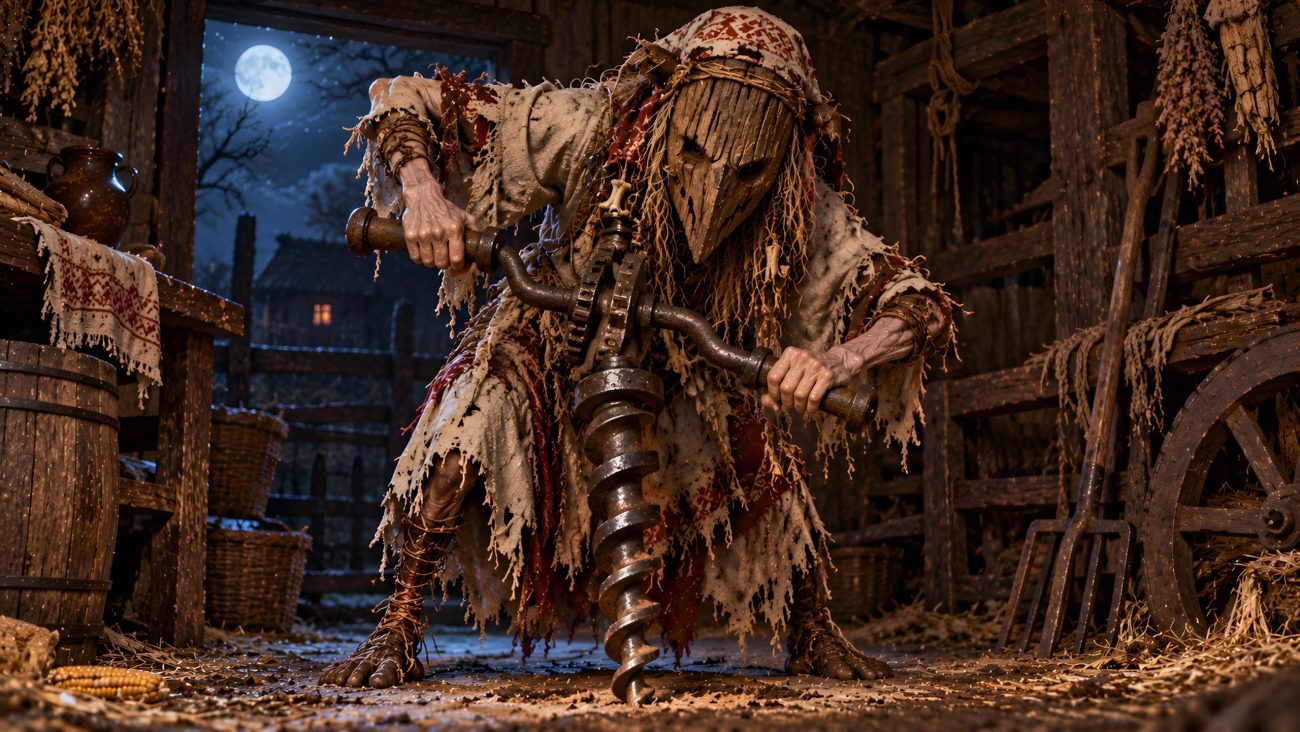
When someone in the household ate forbidden food during a fast, Szpechotka would visit them at night. Armed with a drill, the creature would bore a hole into the offender’s stomach and extract the food they had eaten. The attack took place while the victim slept, and through the creature’s supernatural power, the person would not wake during the ordeal.

The punishment was fatal. Rather than dying immediately, the victim would slowly perish from the damage inflicted during the night. By morning, the person would be dead, making the consequences of breaking the fast absolute and irreversible.

Szpechotka embodies the frightening consequences attached to the violation of religious obligations in traditional Silesian belief. Its role as a supernatural enforcer transformed fasting from a matter of personal discipline into a rule backed by a deadly threat. Through the image of a small farm demon wielding a drill, the tradition conveyed the seriousness of observing sacred days, especially Ash Wednesday and Good Friday.


Sources

“Szpechotka.” Wikipedia, wolna encyklopedia. Wikimedia Foundation. Accessed October 18, 2026. https://pl.wikipedia.org/wiki/Szpechotka


Bożątka

Tradition: Polish Mythology
Alternative Names: Bożątki, Bożonka, Duszyczki, Duszyczkami
Category: House dweller


The Myth

Bożątka are small, quiet household spirits in Polish folklore, believed to be the souls of children who died before being baptised. They are described as harmless, gentle, and obedient beings that inhabit cottages alongside human families. Often invisible to the people around them, they live in huts and settle in small holes or hidden corners, remaining close to the household they inhabit.

Despite their ghostly origins, Bożątka are generally benevolent. They help with domestic work and protect the homes of families who treat them properly. In return for their assistance, householders may leave them a little food in a bowl, particularly milk or other simple offerings. Their presence is considered fortunate, bringing prosperity and protection from evil spirits.

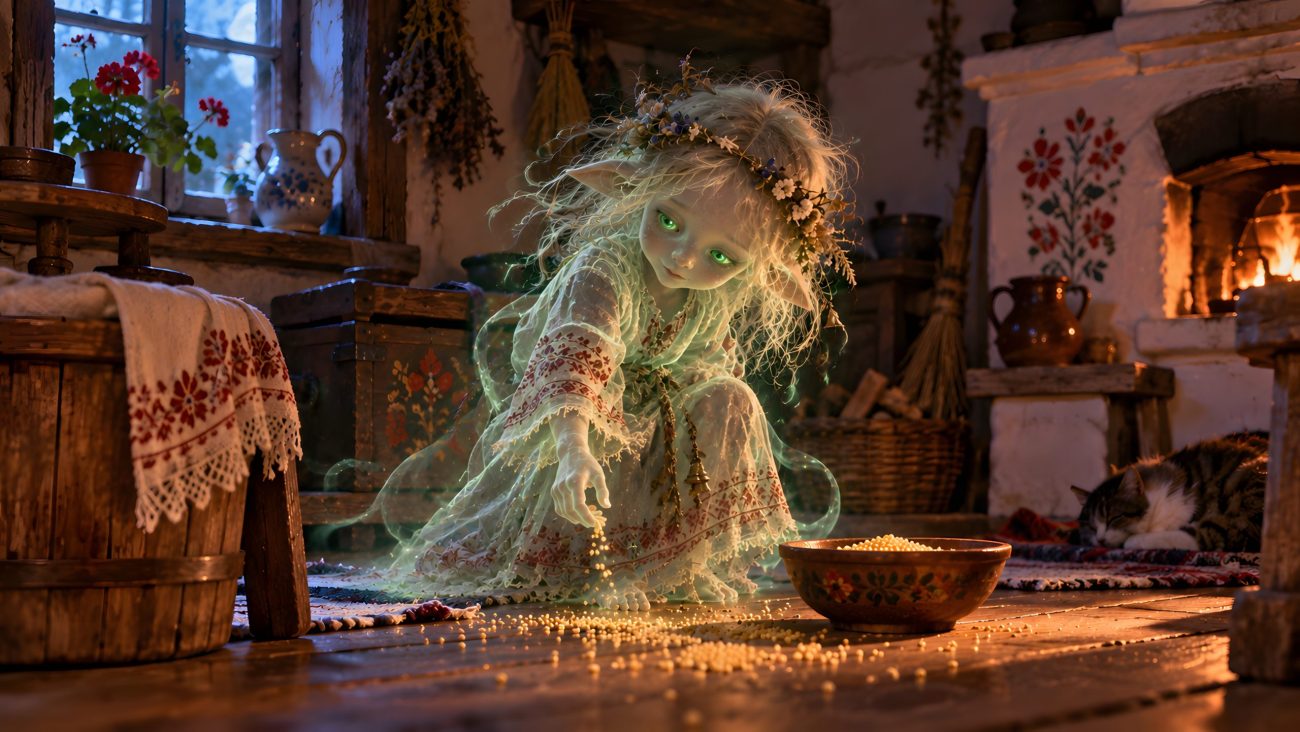
In the Tarnobrzeg region, villagers sometimes expected these spirits to help with household chores. Families in the Mielec area held similar beliefs about the bożąta, and it was customary to sprinkle millet on the floor while reciting a rhyme asking the little beings to remember the children and eat the millet. These practices reflected the belief that the spirits could be encouraged to continue helping the household through small acts of kindness.

In the Silesian Beskids, Bożątka were also associated with the souls of unbaptised children, sometimes called duszyczki, meaning little souls. They were considered gentle, noble, and respectful beings. Although they were sometimes described as grey and inconspicuous, their hearts were believed to remain close to the people they served. Their work was often linked to the prosperity of the household, including the care of livestock and the success of domestic life.

Some traditions describe the spirits as especially helpful to diligent and well-behaved people. They might assist with household tasks, protect animals, and bring good fortune to families that treated them with respect. They could also be offended by neglect or improper treatment, making regular offerings and considerate behaviour important to maintaining their goodwill.

Bożątka resemble the British brownie in their role as invisible domestic helpers, but their origin is specifically connected to the souls of children who died without baptism. They embody a belief that these lost children could remain near the living, helping families and protecting their homes when treated with kindness.


Sources

“Bozhontka.” New Bestiary (Bestiary.us). https://www.bestiary.us/bozhontka/pl